
Student Journalism’s Momentous Year
In 2025, StudentNation published more than 100 original articles. Here are 20 highlights.
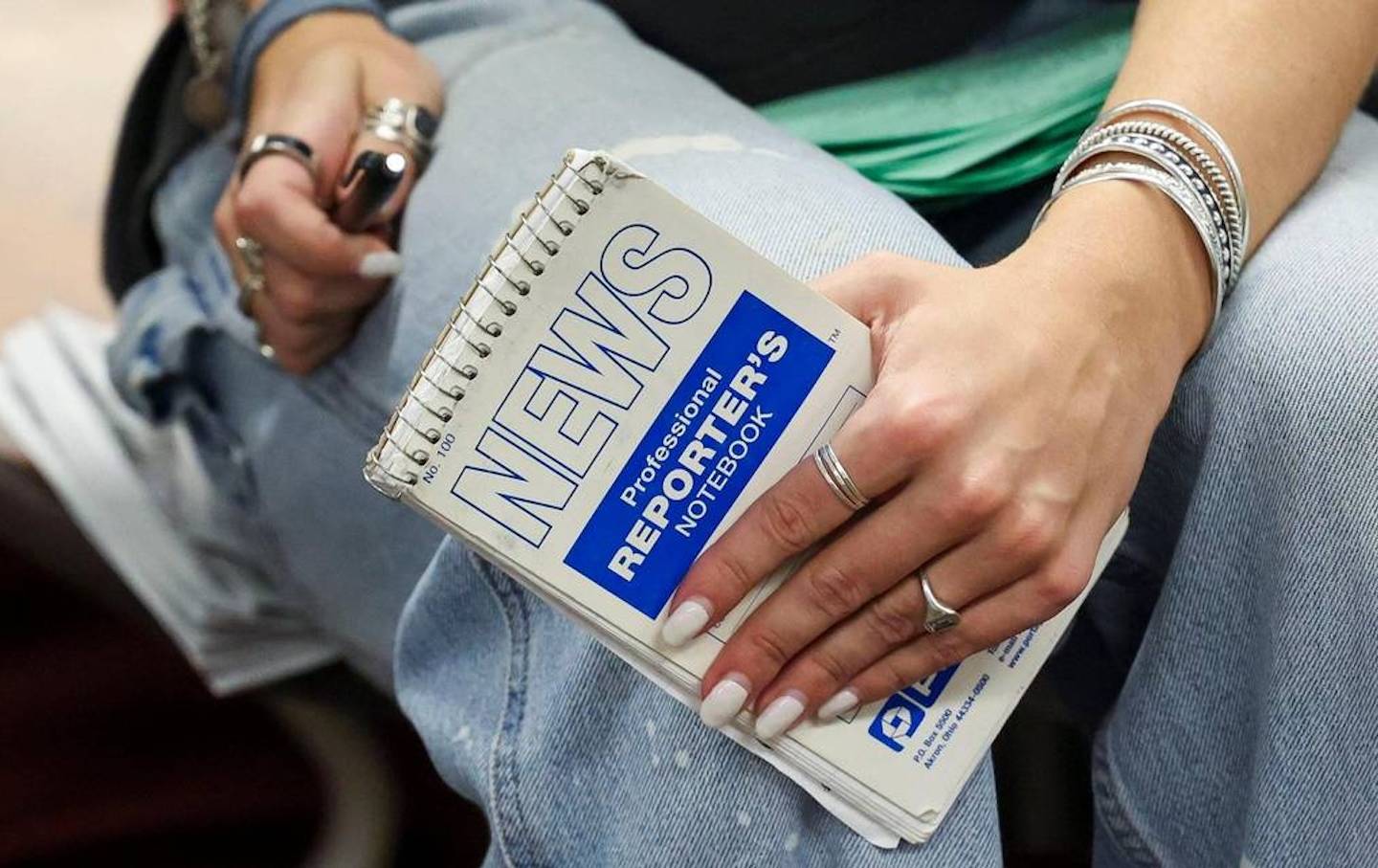
Kentucky Kernel editor in chief holds a reporter’s notebook during a staff meeting at the University of Kentucky.
(Lexington Herald-Leader)
In 2025, StudentNation published more than 100 original articles by student journalists reporting on youth-oriented movements and issues across the country—from the continued protests for Gaza to climate change to immigration to education—all while student writers and activists faced increased repression from the Trump administration and, often, their own universities. We’ve selected 20 of StudentNation’s best articles of the year to highlight the extraordinary range of reporting from the next generation. We’re deeply grateful to the Puffin Foundation whose great generosity to The Nation Fund for Independent Journalism made this work possible.
“The Case for Letting Noncitizens Vote,” by Fatimah Azeem (January 22)
Measures to allow local noncitizen voting failed in the 2024 election, but that hasn’t always been the case throughout American history. “Noncitizen voting, then called ‘alien suffrage,’ was seen as a pathway to foster citizenship and immigrant integration,” writes Fatimah Azeem. “Millions of immigrants from Western and Northern Europe voted, often advancing anti-slavery and pro-worker causes.”
“Columbia Expelled Student Protesters for the First Time in Over 50 Years. But Activists Won’t Back Down,” by Lara-Nour Walton (March 7)
On March 5, protesters were arrested after a sit-in at Milstein Library to demand the reinstatement of three expelled students. Lara-Nour Walton, a StudentNation writer (and later, Nation intern) covered Columbia’s crackdown and explained the significance. “This is the first time in 57 years that the university has expelled anyone for protest, and the only official expulsions associated with Israel’s war on Gaza.”
“Inside Trump’s Decimation of the Department of Education,” by Owen Dahlkamp (March 14)
As the administration announced the firing of nearly half of the Department of Education’s 4,000-person workforce, Owen Dahlkamp spoke to current and former employees about the chaos inside. “The ramifications of this will be enormous,” said one employee, who added that the upheaval from these firings was only just beginning.
“Mahmoud Khalil Is ‘Ready to Fight’ His Unlawful Detention,” by Luca GoldMansour (March 18)
After Khalil, a permanent legal resident whose wife is an American citizen, was arrested by plainclothes ICE officers at his Columbia university housing, Luca GoldMansour spoke with Shezza Abboushi Dallal, a member of Khalil’s legal defense team, about the status of his case and the government’s attack on freedom of speech. “[Universities] can either be collaborators in this repressive agenda or they can actually be in service to their communities as educational institutions.”
“40 Years After the MOVE Bombing, the Scars Remain,” by Hannah Epstein (May 13)
In 1985, Philadelphia police dropped a bomb on 6221 Osage Avenue, then-headquarters of a back-to-earth Black liberation organization called MOVE. “It was a dark day because of what happened,” said Mike Africa Jr., who was only 6 years old at the time of the bombing. But he still remembers everything. “I saw smoke, and a friend of mine said, ‘They dropped a bomb on MOVE.’”
“A Pro-Palestinian Activist Lost His Case, but the ‘Fight From Below’ Continues,” by Benjamin Leynse and Avery Wang (April 7)
Cornell University student Momodou Taal self-deported just weeks after he sued the federal government in response to Trump’s crackdown on pro-Palestinian protest. “I felt more and more as the lawsuit progressed that I was gambling with my freedom,” Taal said in an interview. “It became increasingly obvious that even with a court order, I wouldn’t have protection.”
“Journalism Schools Are Facing Dual Pressures Under Trump,” by Mohamad Rimawi (May 14)
The Trump administration’s attacks on both news outlets and universities has placed journalism schools—and their students—at an alarming intersection. “If CUNY loses that funding and decides they need to reevaluate their budget,” a former associate dean at the journalism school told Mohamad Rimawi, “they could reallocate resources away from Newmark.”
“Trump Wants Thousands of Migrant Children to Represent Themselves in Court,” by Maggie Grether (May 23)
Each year, the Galveston-Houston Immigrant Representation Project provides legal services to 1,500 unaccompanied children through federal funding. But the Trump administration’s cuts threatened to force these children to navigate complex and punishing legal procedures entirely alone. “Some unaccompanied children are so young their feet do not touch the courtroom floor; some have not yet learned to speak.”
“The Gutting of the Department of Education Is Worse Than You Think,” by Elsie Carson-Holt and Adelaide Parker (May 28)
Four experts on public education in the US—Jesse Hagopian, Jennifer Berkshire, Eleni Schirmer, and Paul Reville—spoke about how the dismantling of the Department of Education will hurt students now and in the years to come. “Some of the most damaging effects of abolishing the Department won’t be immediate—they’ll unfold over time, as students grow up in systems stripped of even the most minimal oversight, accountability, or protections.”
“The Great Salt Lake Is a Ticking Time Bomb,” by Adelaide Parker (July 29)
As retreating water levels expose stretches of cracked, arsenic-laden lake bed in Utah, future dust storms will carry an extra hazard, writes Adelaide Parker. “When these storms arrive, the air will turn toxic. Millions of Utahns along the Wasatch Front—including my entire family—will breathe poison.”
“Texas Ended In-State Tuition for Undocumented Immigrants. Students Are Already Feeling the Impact,” by Lajward Zahra (August 4)
Until June, Texas was one of the best states in the country when it came to offering in-state tuition to undocumented students. But after the Department of Justice filed a lawsuit against the state, officials quietly ended the policy. Now undocumented students have to choose between paying out-of-state rates or leaving school altogether.
“How Trump’s Tariffs Shocked Wisconsin Farmers,” by Ava Menkes (August 12)
Wisconsin’s soybean farmers produce about $1.3 billion of revenue each year, as most of the state’s crop is sent to markets in China, Canada, and Mexico. But the administration’s tariff policies thrust these into economic chaos as they suddenly navigated higher input costs and shifts in global trade. “We are closer to big problems than we are to the blue sky if things don’t change soon.”
“The Volunteers Fighting Greece’s Intensifying Wildfires,” by Megan Cameron, Annalisa Jenkins, and Maggie Stewart (August 14)
As climate change brings unprecedented levels of heat and drought, Greece remains on the front lines. Fire seasons are longer, and the fires are harder to extinguish. In 2023, Greece experienced the largest single wildfire to scorch Europe since 1980. Now, the country’s unpaid fire brigades, like the Volunteer Forest Fire Rescue Team in the Ekali suburb north of Athens, are bracing for the worst.
“California’s Small Cannabis Farmers Have Been Left High and Dry,” by Colin Warren (August 25)
“Cannabis has long been part of counterculture in America, and arguably no place and its peoples have done more to fuel the evolution of the plant and its mythos than Humboldt County,” writes Colin Warren. “And yet, perversely, no place has been as left behind by legalization. Through a series of broken promises, legislative missteps, and onerous compliance measures, the small, legacy farmers once on the front lines of normalizing marijuana for decades have been snuffed out.”
“‘We Deserve Life’: Students Speak Out From Gaza,” by Tareq AlSourani and William Liang (September 9)
In Gaza, hours once used to write essays or prepare for exams are now spent waiting in line for food and water. But many students still cling to their books and laptops. “I feel like I am betraying the dead by pretending life goes on, as if the simple act of studying is a kind of lie,” said 18-year-old Yara Nasser. “How can I scribble down equations when my neighbor’s child was buried yesterday?”
“Where Did All the Youth Climate Activists Go?” by Heather Chen (September 24)
In March 2019, when more than a million people assembled in streets across the world to call for climate action, school children led the charge. Fast-forward to 2025. “There were parents pulling wagons with toddlers and thousands of elderly people,” writes Heather Chen of the “Make Billionaires Pay” march ahead of New York City’s Climate Week. “The under-35 crowd, however, looked slim,” hinting that “the task of mobilizing people around the issue of climate change has become more daunting in 2025.”
“Cornell Cut Classes by a Pro-Palestinian Professor After an Israeli Student’s Discrimination Complaint,” by Gabe Levin (September 29)
After the university canceled two classes by Dr. Eric Cheyfitz, an outspoken advocate for Palestinians who has taught at the university for two decades, StudentNation writer Gabe Levin interviewed Cheyfitz, his lawyer, and his students. Following the report, the university agreed to end disciplinary proceedings on the condition that he retired. “They wanted me out of the picture,” Cheyfitz said. “I’m not gagged. I will continue to talk about this case.”
“Why Did Indiana University Axe Its Award-Winning Print Newspaper?” by Ella Curlin (October 24)
Just hours after firing the adviser for the Indiana Daily Student, the university cut the print version of the paper as well—ending 158 years of print journalism two days before the next edition was set to publish. If censorship can happen at the IDS, one of the most acclaimed student newspapers in the nation, that spells bad news for student journalism everywhere, according to Jim Rodenbush, the IDS adviser. “This should be a warning that all bets are off in terms of overreach and oversight of a university.”
“Stanford Students Sue Over Trump’s Crackdown on Political Speech,” by Rani Chor (November 24)
Popular
“swipe left below to view more authors”Swipe →The lawsuit from The Stanford Daily, filed against Secretary of State Marco Rubio and Homeland Security Secretary Kristi Noem, asserts that the plaintiffs’ First and Fifth Amendment rights have been fundamentally violated and targets federal statutes that allow deportation and visa revocation based on political speech. More than 50 college newspapers across the country—from The Tufts Daily to The Northern Light at the University of Alaska–Anchorage—joined an amicus brief in support.
“The Maine Lawsuit That Could Save Democracy From Big Money,” by Thai Loyd (December 11)
Fifteen years after the Supreme Court opened the floodgates to dark money and unchecked spending with Citizens United, a ballot initiative in Maine has exposed a tension in the movement for clean elections: Should advocates pursue state and local reforms, or bet on a high-stakes legal battle that could radically rewrite the rules of campaign finance nationwide?
Become a Sustaining Donor This September
Between the reemergence of right-wing red-baiting and Donald Trump’s use of the chilling National Security Presidential Memorandum–7 to criminalize left political organizing, we’re seeing McCarthyism reborn before our eyes.
This assault on democracy cannot be ignored or wished away. Resisting it requires bravery in the face of threats and repression, a steadfast commitment to the truth, and the unwavering belief that we can—and will—overcome this darkness.
We must have an independent media that sets the record straight, unearths corruption and abuses of power, and advances a politics of justice and dignity for all if we’re to win this fight.
That’s why I’m writing to you today. This September, The Nation needs to add 100 monthly donors to sustain our progressive journalism. Your contribution makes the next investigative report, the next truth-speaking column, and the next pathbreaking essay all possible.
I hope you’ll support our work with a recurring donation today. If you donate $10 or more a month, we’ll send you a brand new “Hands Off the Free Press!” sticker to recognise your commitment to our cause. Please, donate today.
Onward,
Katrina vanden Heuvel
Editor and Publisher, The Nation
More from The Nation

Notes From Evictionland Notes From Evictionland
Eviction is practically baked into the way Britain manages its tenanted homes. Here’s how it played out—over and over again—for my parents.
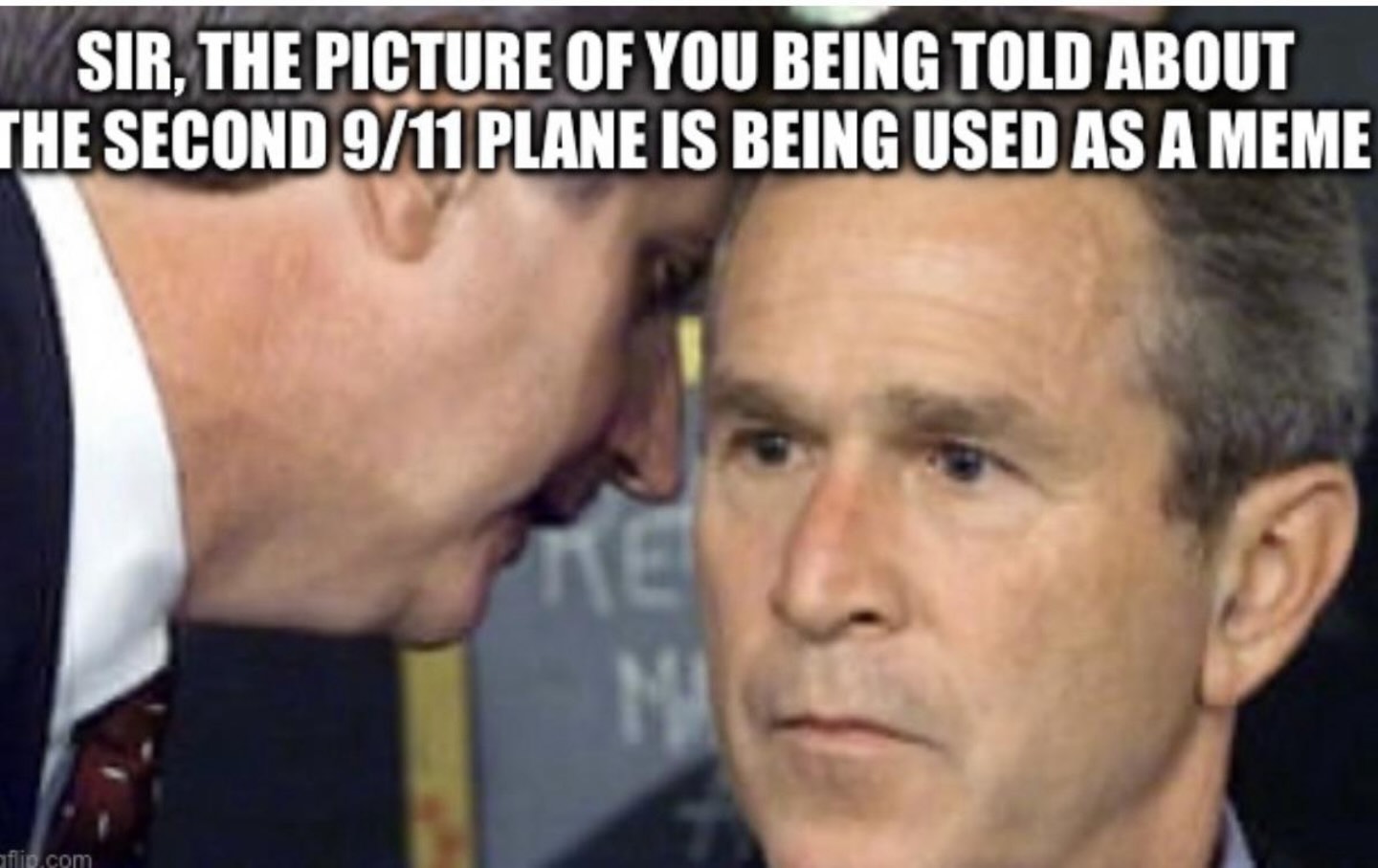
How 9/11 Became a Joke How 9/11 Became a Joke
The 25-year journey from national tragedy to national punchline.
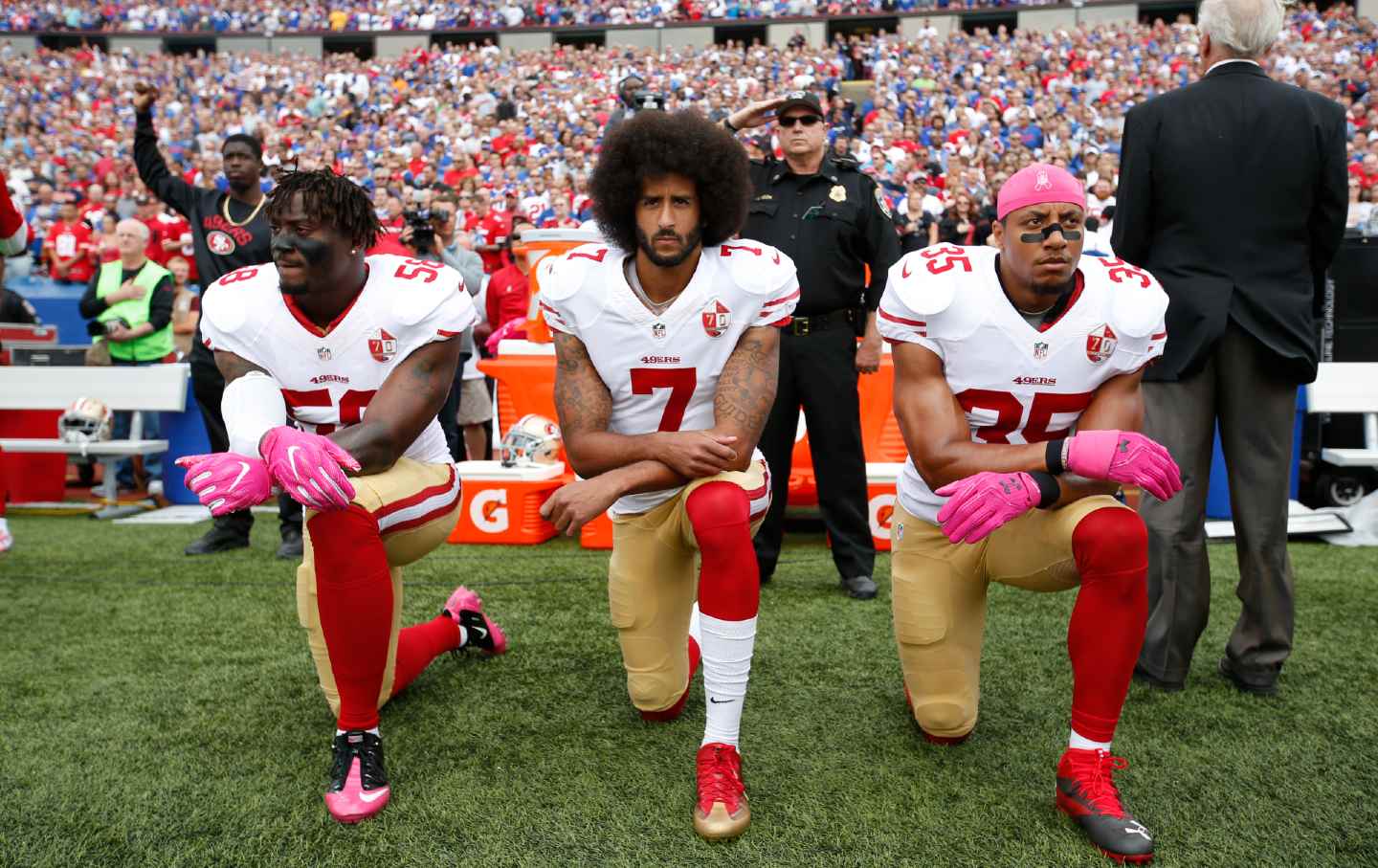
We Can’t Let the Kaepernick Era Be Erased From History We Can’t Let the Kaepernick Era Be Erased From History
Critics say the Black Lives Matter movement in sports went too far. In reality, it didn’t go far enough, and the backlash to it has been brutal.
Letters From the October 2026 Issue Letters From the October 2026 Issue
The long shadow of AIPAC… The AI revolution will not be televised… Speaking of taxes… Reporting on abortion… (online only)
We Are Living Under Roy Cohnian Logic We Are Living Under Roy Cohnian Logic
The political fixer created a career for himself as a self-promoting, ubiquitous hustler. Like Trump, he got away with it by having the right friends.
Angie Nixon Is Fighting for the Right to Read Angie Nixon Is Fighting for the Right to Read
The Florida Senate candidate responded to Republican book-banning schemes by opening a bookstore.

