
The Epstein Scandal Shows the Depth of the White House’s Dysfunction
Infighting and opportunism lead to chaos and endless war.
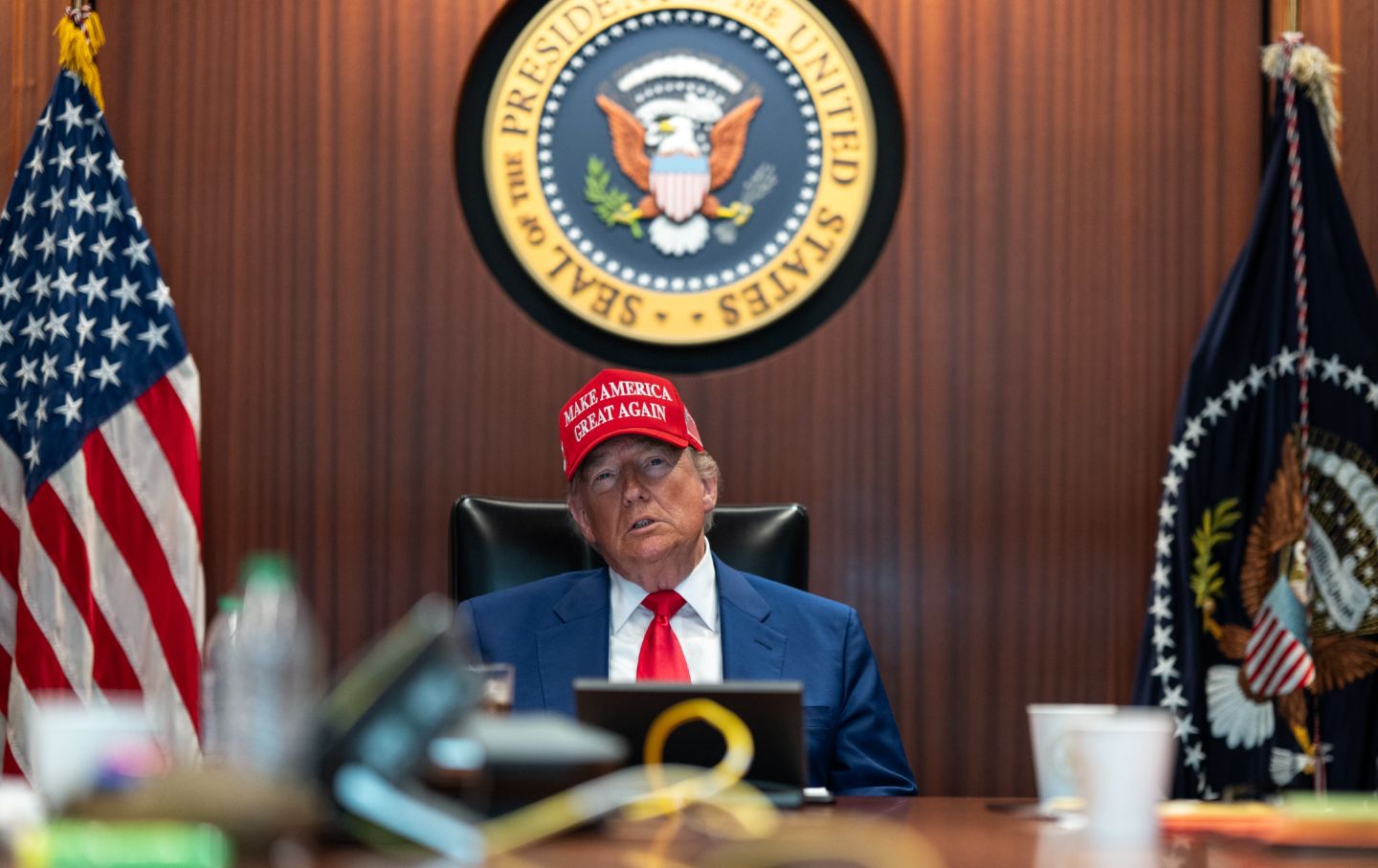
Donald Trump in the Situation Room during a strike on Iran, on June 21, 2025.
(Daniel Torok / The White House via Getty Images)After the Bay of Pigs fiasco in 1961, John F. Kennedy decided that the White House needed a dedicated and secure location where presidents could receive up-to-the-minute intelligence during a national emergency. He commissioned the building of the White House Situation Room, which has ever since been the place where some of the nation’s most fateful decisions have been made. Kennedy’s successor, Lyndon B. Johnson, spent countless hours in the Situation Room as he pursued his disastrous war in Vietnam, as did George W. Bush during his disastrous war in Iraq. During the tense hours when the assassination of Osama Bin Laden was being carried out, Barack Obama and his team monitored the mission in the Situation Room, an event recorded in famous photographs.
In 2025, Donald Trump put the Situation Room to a new use: not as a meeting place to discuss a consequential foreign policy crisis, but rather as a useful cone of silence to plot out a cover-up of a scandal of his own making—specifically, the crisis caused by his long friendship with Jeffrey Epstein. Trump’s repeated and inappropriate use of the Situation Room for this purpose is detailed in Maggie Haberman and Jonathan Swan’s forthcoming book Regime Change: Inside the Imperial Presidency of Donald Trump, excerpted on Wednesday in The New York Times.
The story of Trump’s mishandling of the Epstein case is important in and of itself, but it also provides a window into the larger dysfunction of the current administration. In its failed attempt at a cover-up of the Epstein case, the Trump White House unleashed a carnival of sordid behavior, ranging from the president’s narcissism to the opportunism of his underlings, who constantly fought among themselves as they tried to both please their boss and varnish their public image.
The Epstein scandal has been a self-inflicted wound by the Trump administration in two crucial ways. First and most importantly, Trump’s relationship with the late pedophile is a legitimate cause for concern. Secondly, in the 2024 election, Trump and his leading supporters (many of whom took high-ranking positions in the administration) cynically used the Epstein case to discredit their opponents in the Democratic Party and the so-called deep state. This riled up the MAGA base, who turned against the White House when Trump’s team betrayed its promise of transparency.
Trump’s cynicism in the matter is shocking. As Haberman and Swan note, the White House “needed a gesture of transparency to appease an increasingly angry base, but also a way to convey the message that the president was sympathetic to his supporters’ concerns. Which itself was a problem, because he clearly wasn’t.”
Beyond protecting himself, Trump said that he was concerned that some of his wealthy friends would be implicated in the scandal. The reporters also note that Trump “wanted the whole Epstein issue buried, and he was snapping at anyone who mentioned it.”
This led to a stalling campaign that enraged not just the MAGA base but the broader public as well.
Figures such as Vice President JD Vance, FBI director Kash Patel, former FBI director Dan Bongino, and former attorney general Pam Bondi found themselves enmeshed in a fundamental contradiction. They had called for transparency over Epstein but now served a president who wanted the exact opposite. Vance comes across in the account as a strong advocate for transparency. This apparent stance might be motivated by his need to look good if he runs for president in 2028—or possibly, since the book relies on access journalism, reflects that he was a major source.
The contradictory positions of the Trump administration led to a surreal situation where senior administration officials met in the Situation Room to discuss how to handle claims about Trump’s abusing a trafficked Epstein victim. The story came from Epstein survivor Sarah Ransome, who claimed “she knew a girl in Epstein’s sex-trafficking ring named Jen, who said she had sex with Trump. Ransome also claimed that Jen had told her that Trump had a predilection for nipples and that he had aggressively flicked and sucked hers.”
According to Haberman and Swan, “Some of Trump’s advisers in the Situation Room had never heard of the nipple claim; those who had seemed to have only a passing familiarity with it.”
One Trump adviser, White House counsel David Warrington, suggested the whole thing could be solved by offering a pardon to Epstein’s accomplice Ghislaine Maxwell. Vance wanted Tucker Carlson to interview Maxwell, with the view that this would clear Trump’s name.
Bondi, whose nickname in right-wing circles is “Blondie,” made a major bungle by claiming in a press event to have Epstein’s files on her desk. Bongino was particularly enraged by this fiasco because he came from the world of podcasting and felt he couldn’t afford to be seen betraying his audience. Haberman and Swan report that Bongino fumed, “Blondie fucked this whole thing up.” At a meeting with Bondi, Bongino yelled, “You fucked this thing up from the start. The way you’ve been talking about this — that dumb fucking charade with the Epstein files, the ‘They’re on my desk’ nonsense, all the promises to the folks out there.”
Popular
“swipe left below to view more authors”Swipe →Eventually, Congress forced Trump’s hand thanks to the bipartisan Epstein Transparency Act.
The Epstein case has been a bungled cover-up that highlights just how dysfunctional the Trump administration is. The same infighting and incoherence can be seen in other policies, most crucially in the war with Iran. While Trump has repeatedly indicated that he is looking for an off-ramp to the conflict, the current ceasefire has been merely nominal, marred by constant attacks on both sides. The negotiations remain precarious and could be easily derailed. One problem is that the Trump White House is deeply split. A powerful hawkish faction in the GOP, allied with Israel, is unable to accept the concessions Iran is demanding. Trump’s wild shifts in policies, going from threats of renewed bombings one day to indications that a deal has been struck the next, are further evidence of an administration divided against itself.
Trump’s dysfunctional White House undermines his presidency. More importantly, as the war with Iran shows, it also endangers the wider world.
More from The Nation

What Are Democrats Prepared to Do if Trump Rigs the Election? What Are Democrats Prepared to Do if Trump Rigs the Election?
In this week’s Elie v. U.S, our justice correspondent challenges Democrats' lack of a plan if Trump steals the midterms. Plus: the most racist, and honest, AI add ever.
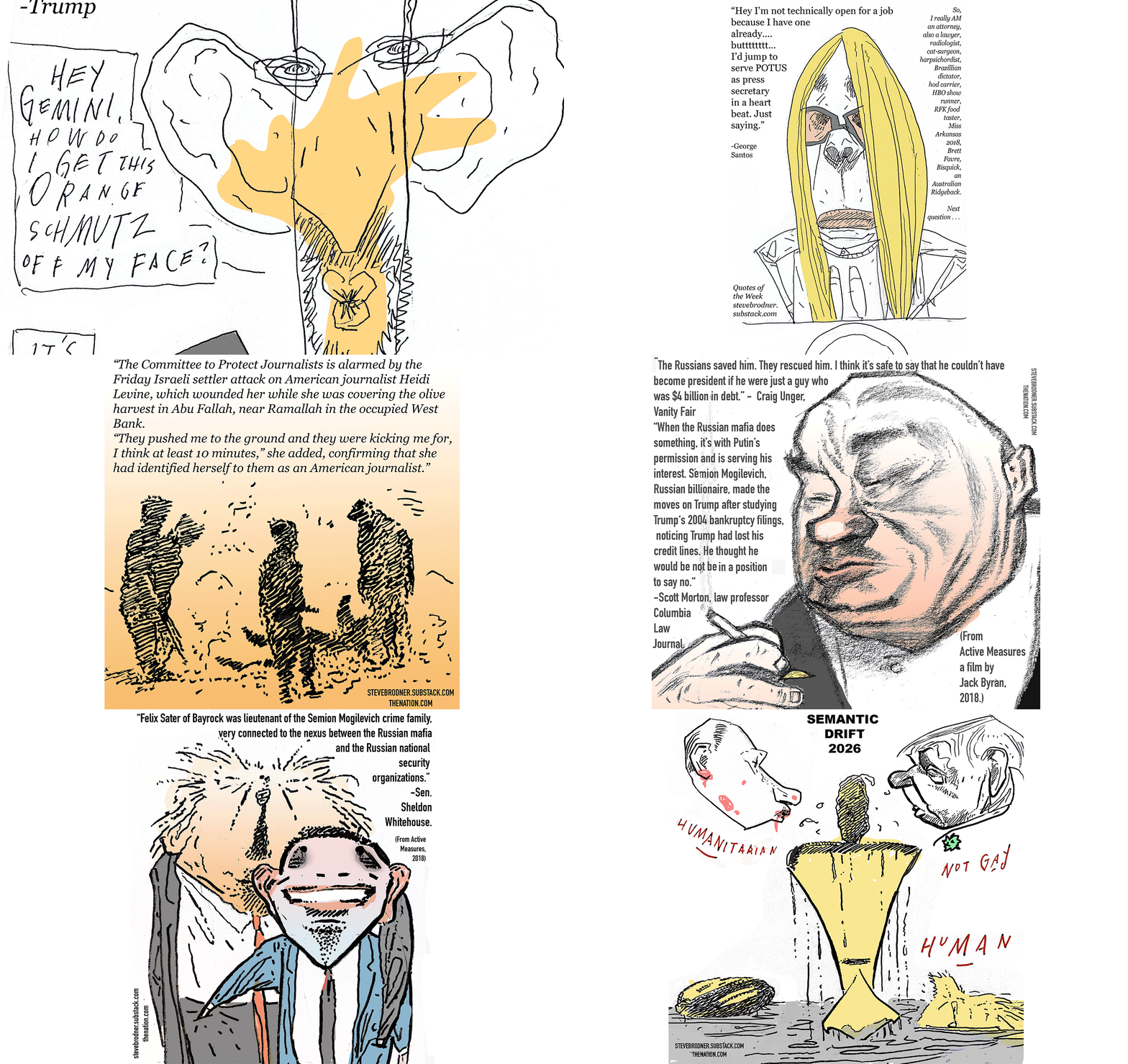
Ramaswamy’s Guide to a Better Vocabulary Ramaswamy’s Guide to a Better Vocabulary
Quotes of the Week.
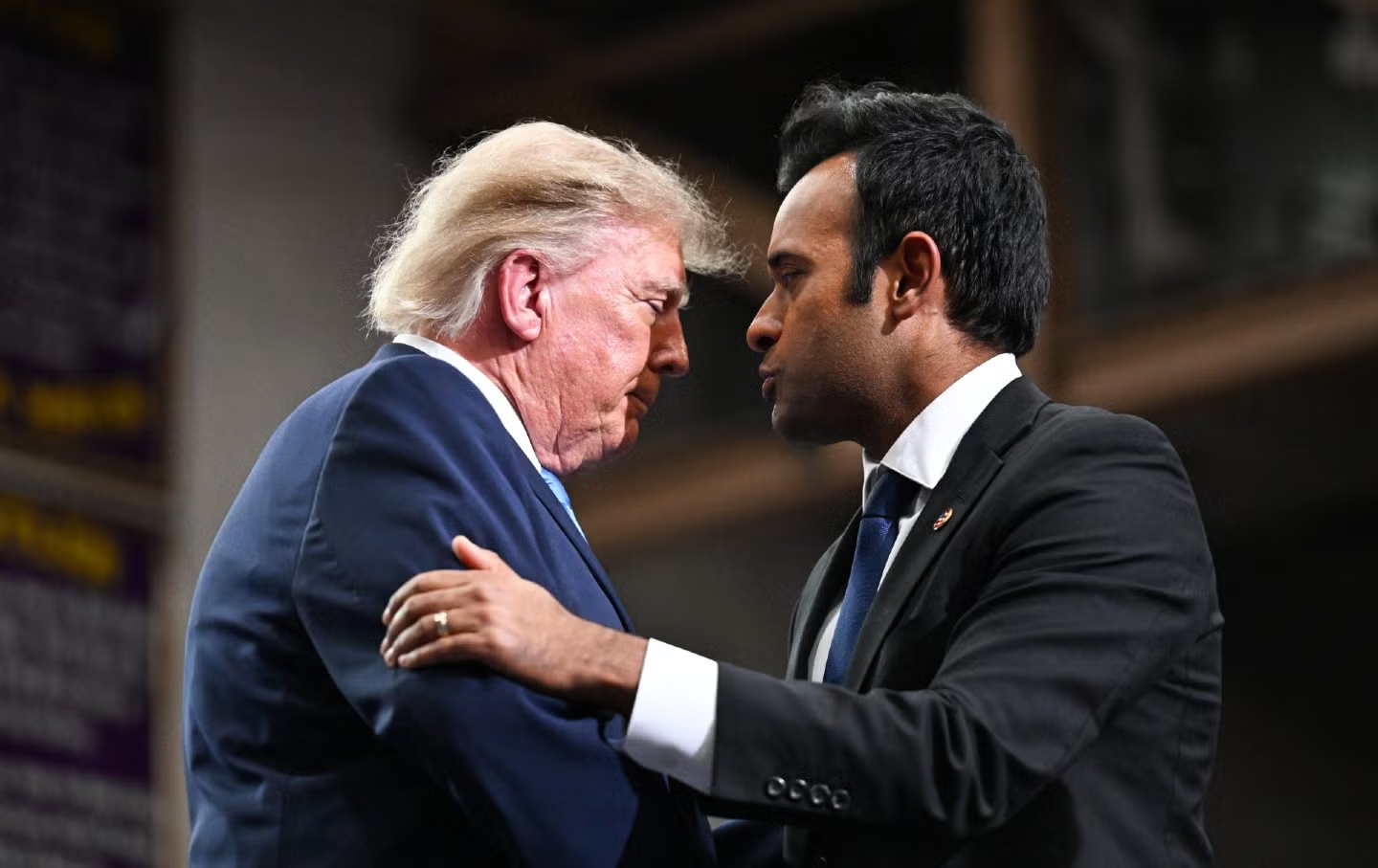
Why Trump Is Embracing Vivek Ramaswamy’s Vile Ad Why Trump Is Embracing Vivek Ramaswamy’s Vile Ad
The president is leaning into the politics of toxic parenting.
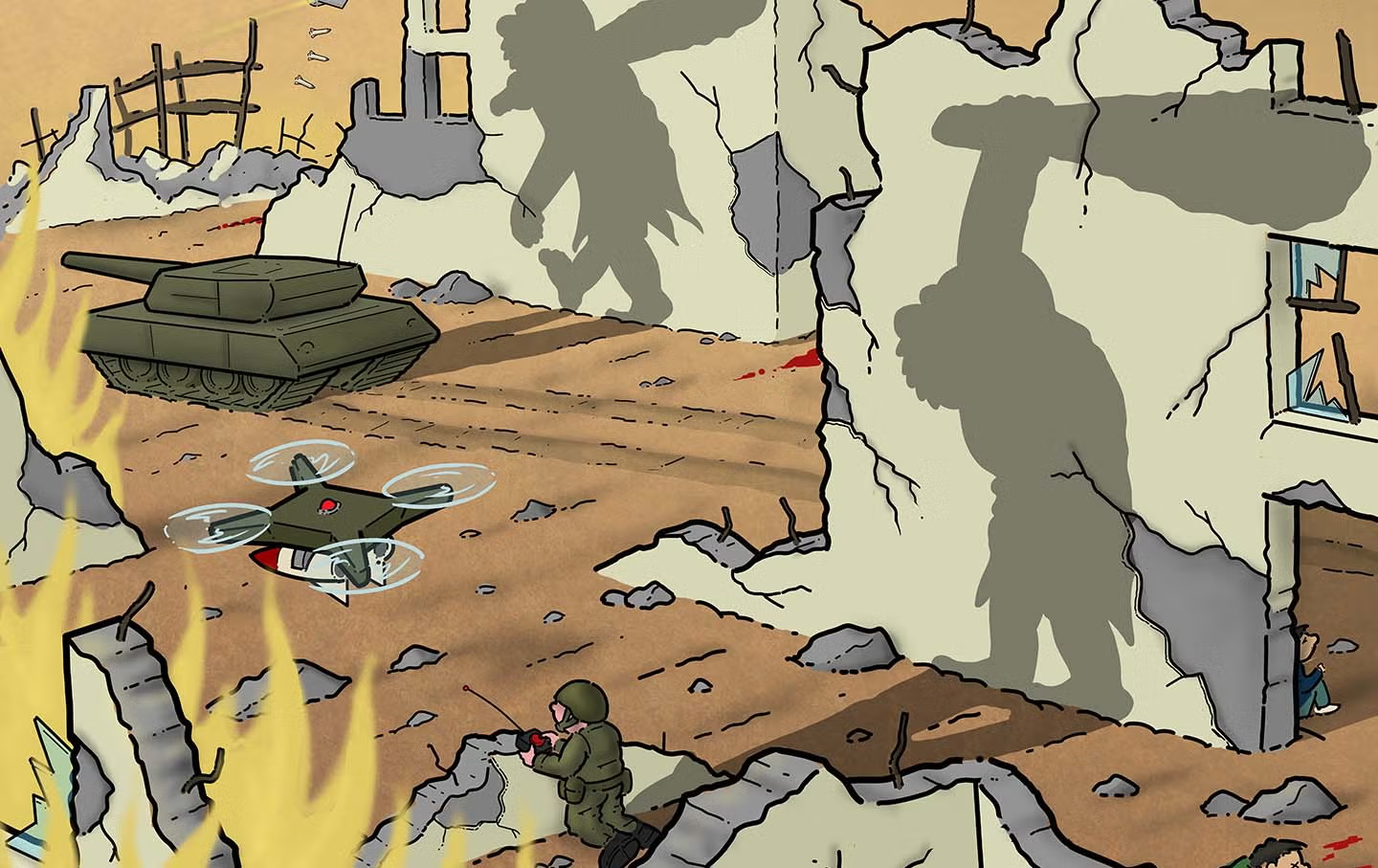
The Shadow Knows The Shadow Knows
High-tech weapons, low-tech intelligence.
Tom Hayden’s Legacy and the New American Left Tom Hayden’s Legacy and the New American Left
It’s been 10 years since he passed away.
The Decades-Long Battle Within the Democratic Party Establishment Between the Heirs of Dean Acheson and Franklin Roosevelt The Decades-Long Battle Within the Democratic Party Establishment Between the Heirs of Dean Acheson and Franklin Roosevelt
The calamitous history of America’s wars of choice.

