Do July Jitters Mean a Nightmare in November?
The center may have held in the EU elections, but Americans are starting to tug their shirt collars.
The votes had barely been counted when The New York Times rushed to offer a dose of reassurance: “In E.U. Elections, the Center Holds.” CNN also picked up the theme: “Far right surges in European Parliament elections but center still holds.” Yet most of the power in the European Union remains with its Council (which is composed of the heads of each member state, and which defines the EU’s priorities) and Commission (roughly, its unelected executive branch)—and the Council is free to ignore Parliament’s opinions. This renders the whole exercise safe for protest votes. But that doesn’t mean the rise of far-right parties across the continent shouldn’t be concerning, even here in the United States.
I still recall the comical choreography of the customs line at Heathrow Airport the day before Britain’s Brexit referendum in June 2016. I was standing between a German woman and her husband, indicating that he should go ahead of me. “After all,” I said, brandishing my newly acquired UK passport, “we Europeans must stick together.” All of us assumed the referendum was doomed to failure.
When it passed, by the narrow but decisive margin of 51.9 percent to 48.1 percent, undoing decades of integration, I got a phone call from a pro-Brexit friend, his triumphant tone tempered by a note of genuine concern. “You know what this means, don’t you?” he said. “Trump is going to win.” I was sure he was wrong on that, too.
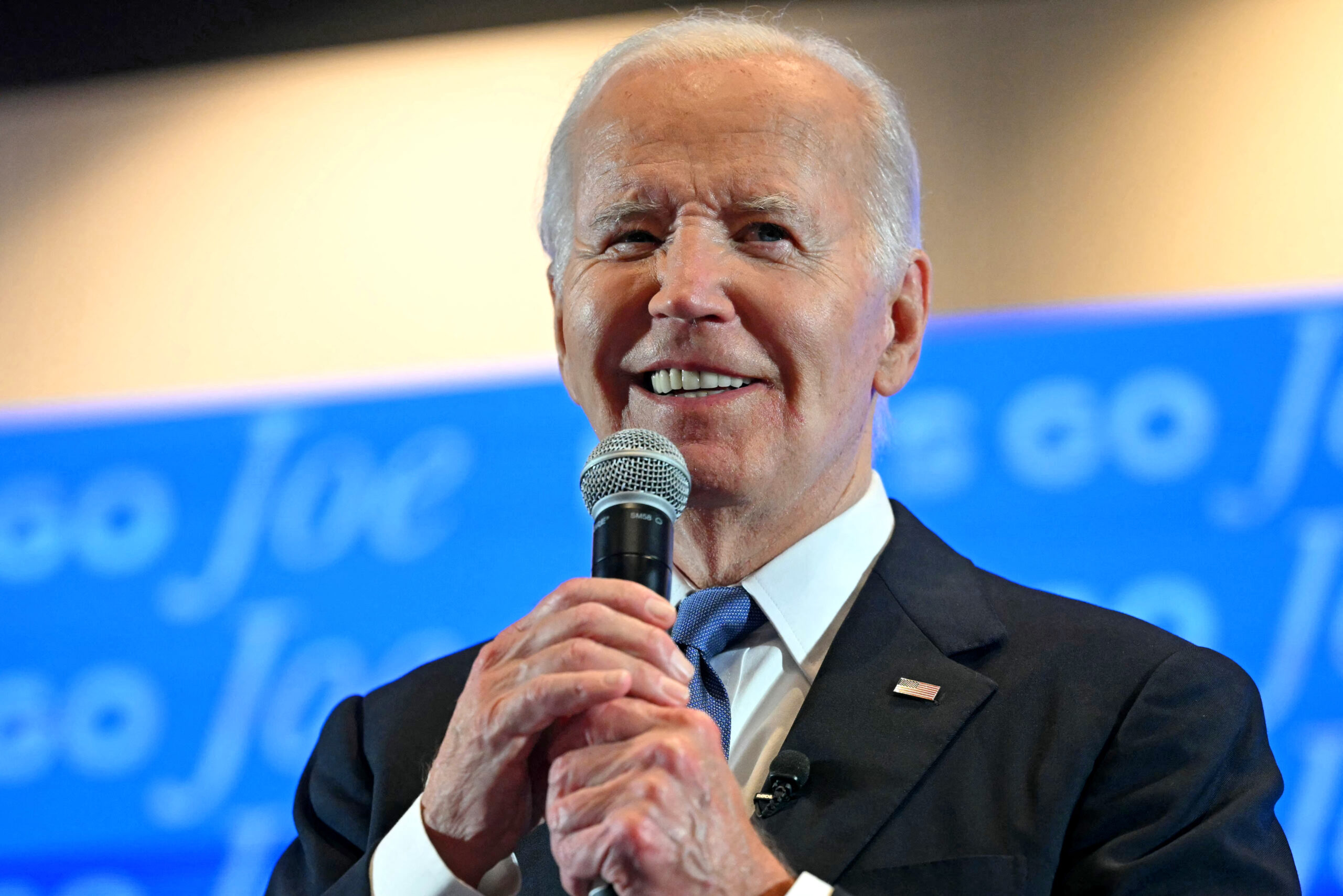
Call it the zeitgeist—or simple confirmation bias—but anyone anxious about Joe Biden’s chances in November can find abundant cause for alarm. And not just because of the latest news from Europe. The president’s loss of support among young voters over his blank-check backing of Israel’s brutal war in Gaza, plus the creeping disapproval among young voters of color owing to both Gaza and the state of the economy, have been amply covered in these pages and elsewhere.
The Times recently reported on discontent among another small but symbolically important bloc: Black farmers. Fueling their anger is the latest broken promise by the Department of Agriculture: A $4 billion debt-relief program aimed at minority farmers (remedying a long legacy of racist lending policies) was successfully stymied by a Florida judge who ruled that it discriminates against whites.
Nation justice correspondent Elie Mystal has repeatedly warned of the political price of the Democrats’ reflexive deferral to a politicized judiciary. I want to make a different argument: that as our country increasingly devolves into a winner-take-all oligarchy where the rich make their own rules—and can cultivate and buy judges to enforce them—the center will not hold. Donald Trump may be offering a fraudulent—and ultimately disastrous—alternative to the status quo, but if Biden positions himself as the defender of the current system, it will be déjà vu all over again in November.
Luckily, there is still time for the president to change course—not only on Gaza but on the economy, where, despite some smart hires, serious infrastructure spending, and low headline unemployment, the benefits remain skewed toward the wealthy, lifting the Dow to record highs while leaving many Americans one serious illness away from bankruptcy. And as Sasha Abramsky reports in this issue, abortion activists may defeat Trump in Arizona. But even if that happens, the status quo—the center—will not deliver peace, security, or prosperity (or, if you prefer: peace, land, and bread). Without them, no government should feel safe in power.
Elsewhere in this issue, Mara Kardas-Nelson exposes the disastrous legacy of microfinance—once touted as a way around the need for structural changes to the economy in developing countries—while Spencer Ackerman and Eric Orner chart who is profiting from the war in Gaza, and Omer Bartov traces the new history of an old hatred.
But it’s not all doom and gloom here. Stephanie Burt illuminates the many lives of Taylor Swift; Kellie Carter Jackson celebrates the radical life and times of Harriet Tubman; Sasha Frere-Jones excavates the Poetry Project; Jillian Steinhauer considers the art of LaToya Ruby Frazier; and Jorge Cotte salutes the television adaptation of Viet Thanh Nguyen’s The Sympathizer. Plus our monthly bouquet of columnists, debates, and editorial voices—and even a visual primer.
Please stay cool.
D.D. Guttenplan
Editor
Support independent journalism that does not fall in line
Even before February 28, the reasons for Donald Trump’s imploding approval rating were abundantly clear: untrammeled corruption and personal enrichment to the tune of billions of dollars during an affordability crisis, a foreign policy guided only by his own derelict sense of morality, and the deployment of a murderous campaign of occupation, detention, and deportation on American streets.
Now an undeclared, unauthorized, unpopular, and unconstitutional war of aggression against Iran has spread like wildfire through the region and into Europe. A new “forever war”—with an ever-increasing likelihood of American troops on the ground—may very well be upon us.
As we’ve seen over and over, this administration uses lies, misdirection, and attempts to flood the zone to justify its abuses of power at home and abroad. Just as Trump, Marco Rubio, and Pete Hegseth offer erratic and contradictory rationales for the attacks on Iran, the administration is also spreading the lie that the upcoming midterm elections are under threat from noncitizens on voter rolls. When these lies go unchecked, they become the basis for further authoritarian encroachment and war.
In these dark times, independent journalism is uniquely able to uncover the falsehoods that threaten our republic—and civilians around the world—and shine a bright light on the truth.
The Nation’s experienced team of writers, editors, and fact-checkers understands the scale of what we’re up against and the urgency with which we have to act. That’s why we’re publishing critical reporting and analysis of the war on Iran, ICE violence at home, new forms of voter suppression emerging in the courts, and much more.
But this journalism is possible only with your support.
This March, The Nation needs to raise $50,000 to ensure that we have the resources for reporting and analysis that sets the record straight and empowers people of conscience to organize. Will you donate today?