In Memoriam: the Rev. Jesse Jackson (1941–2026)
The civil-rights activist and founder of the Rainbow PUSH Coalition changed what’s possible in politics.
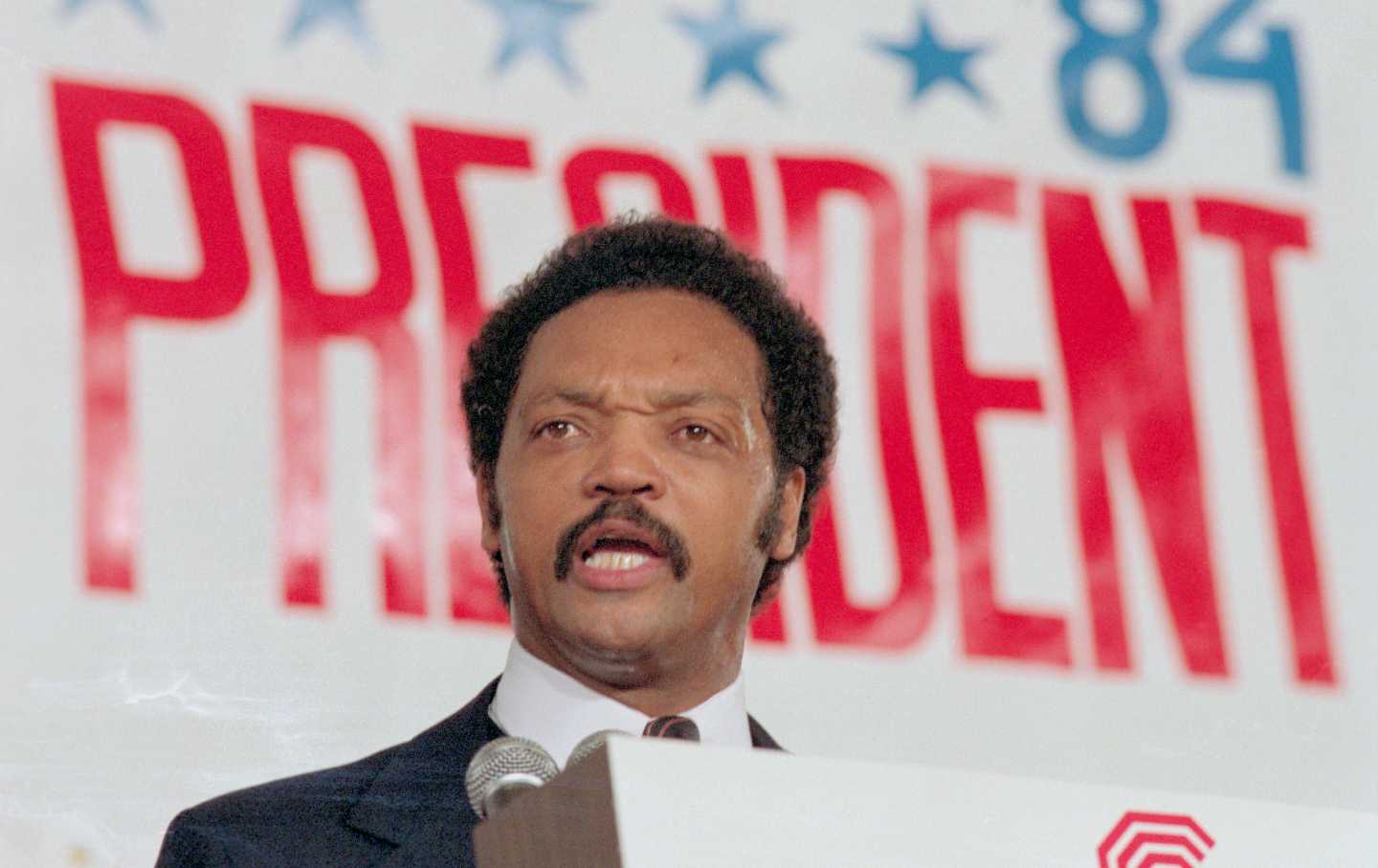
The Rev. Jesse Jackson never stopped campaigning. Even in the last years of his life, when he was suffering from the progressive neurological disorder that slowed his steps and his speech before his death on February 17, at age 84, the reverend kept calling his Rainbow PUSH Coalition together for one more mission, one more crusade for justice. He did so with an urgency that belied his condition and drew old allies and young protégés into fights that were righteous and necessary and, frequently, prescient.
Such was the case in January of 2024, at a point when few political figures were prepared to call out the Israeli assault on Gaza that has now claimed more than 75,000 Palestinian lives and has been identified as a genocide by Amnesty International, Human Rights Watch, and the International Association of Genocide Scholars. In the aftermath of the Hamas attack on Israeli kibbutzim and a music festival, there was a tentativeness to the discourse about how to break the cycle of violence. Yet here was Jesse Jackson, on a frigid morning after a winter storm swept through Chicago, pulling together Muslims, Christians, and Jews, grassroots activists and faith leaders, scholars and members of Congress, to pursue “immediate action to bring an end to the crisis,” preaching about the need to “build upon the historical legacy and current global movements for peace, justice, and liberation.”
His voice may have been halting, but it still rang out with moral clarity, as it had for the better part of 70 years, from the days when Jackson was an essential aide to the Rev. Martin Luther King Jr., to when this son of South Carolina built street-level movements to tackle poverty and corruption in his adopted city of Chicago, began to travel the world as a strikingly successful citizen-diplomat, and, eventually, ran twice for the presidency as the leader of a multiracial, multiethnic “rainbow” insurgency that would forever transform the Democratic Party—clearing the way for the candidacies of Barack Obama, Bernie Sanders, and so many others who were inspired by his courage.
The Nation was one of the few publications that endorsed Jackson’s 1988 campaign, embracing his offer of “hope against cynicism, power against prejudice and solidarity against division.”
“The Jackson campaign is not a single shot at higher office by an already elevated politician,” the editors wrote. “Rather, it is a continuing, expanding, open-ended project to organize a movement for the political empowerment of all those who participate.”
The reverend appreciated that description of his campaign as more than just a candidacy, even if the Democratic Party struggled to wrap its head around the concept. After he delivered one of the greatest addresses in the history of American politics at the 1988 Democratic National Convention, Jackson’s formal bids for the presidency were done. Yet as his longtime aide Robert Borosage observes, “His greatest legacy is that the mission, strategy, message, and agenda of those [1984 and 1988] campaigns remain directly relevant four decades later.”
That didn’t just happen. Jackson kept that vision relevant by mounting new campaigns—not for high office, but for higher ideals. To a greater extent than even his friend and longtime supporter Bernie Sanders, Jackson leveraged the status he’d earned as a contender for the presidency to champion causes on which presidents (and most candidates for the job) were unwilling to spend their political capital. He raced across the country at a moment’s notice to join union picket lines, stood with farmers to save their homesteads, and rallied with Black Americans who knew the civil-rights struggle was unfinished, with women seeking gender equity, with LGBTQ+ couples who wanted to marry, with peace advocates in the far and forgotten corners of the world, and with Palestinians who sought a homeland.
When Jesse Jackson looked at America—and at the world—he saw a gorgeous mosaic of humanity. He wanted the rest of us to see it as well. So he kept campaigning for the day when the storms of cynicism, prejudice, and division would begin to pass, and we might all recognize the promise and the power of the Rainbow.