
What Is the American Economy?
The gap between what the numbers say and how people are feeling has only grown wider.
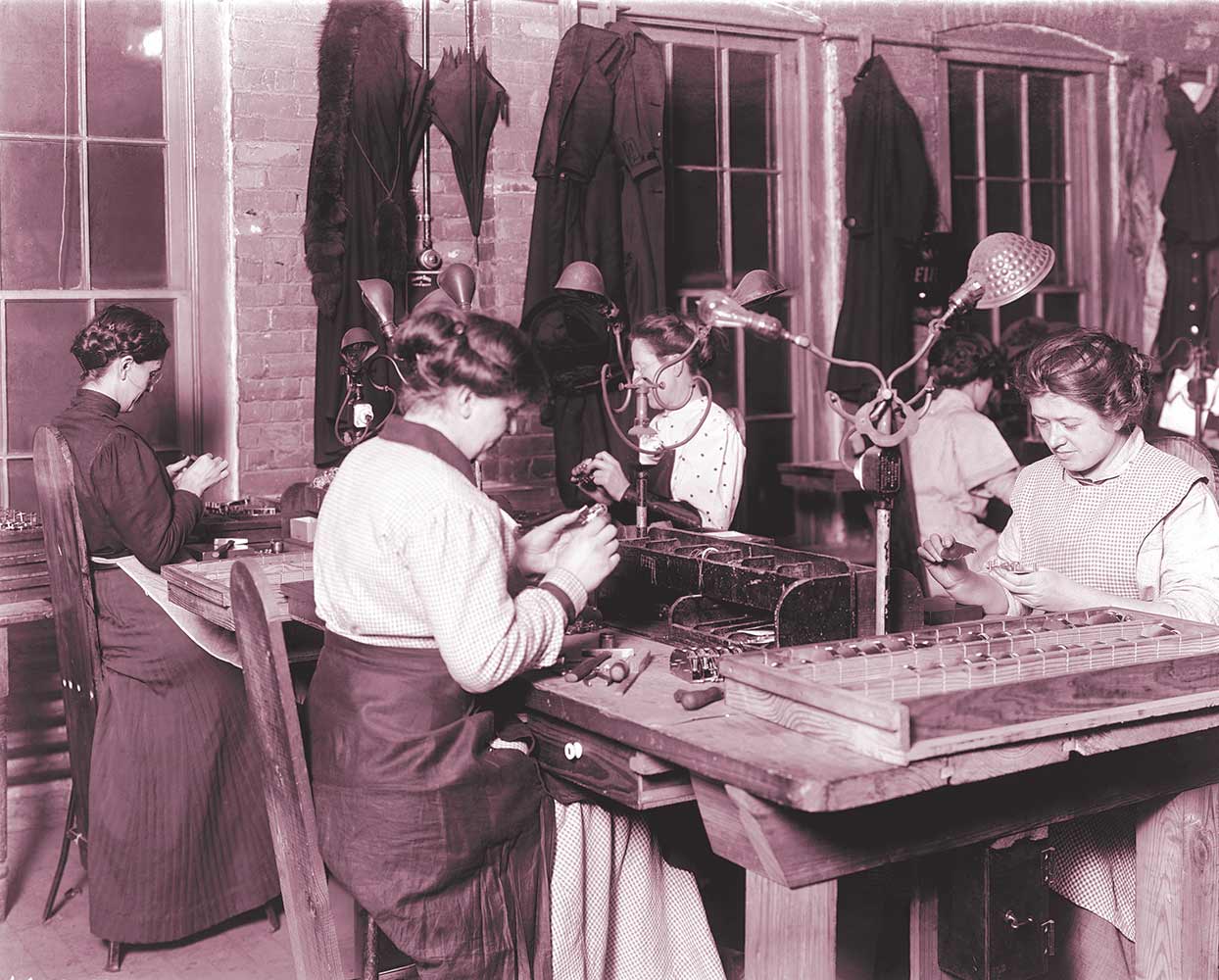
I’m often asked to comment on the American economy—how it’s doing, where it’s going, what it will look like a decade from now, whether it will help the Democrats or the Republicans in the next election. But what is “the American economy”?
The founders of the American experiment provided an outline for an economic system in 1776, and again in 1787. They were revolting against an empire that imposed its demands on them, and they sought to create something new. Over time, they did. But where are we at now that 250 years have passed?
250 Years of Searching for a More Perfect Union
The standard measures we use for the economy show a system that’s functioning fairly well. Look deeper, though, and you will see something so far off track that most inhabitants of the United States may soon be ready to support revolutionary change—just as a good many of their colonial predecessors were when they soured on the British East India Company’s manipulations in the 1770s.
The most common contemporary measure of economic health is the Gross Domestic Product, which shows that the American economy continued to grow at a respectable 0.7 percent annualized rate in the fourth quarter of last year. Consumer spending is up. Corporate investment is up. Inflation, as measured by the Consumer Price Index, was at 2.4 percent. Corporate profits are at record levels. Unemployment is at a relatively low 4.3 percent.
So why are so many people feeling bad about the economy? Every poll shows that Americans are deeply unhappy about the state of things. Consumer sentiment has dropped about 20 percent below where it was a year ago.
If we are to explain the gap between what the numbers are saying and how people are actually experiencing them, we should start with healthcare, housing, utilities, fuel, and financial services. Most of us are paying more for all of these things than we did a year or two ago—not because we enjoy consuming them so much more or because they’re so much better, but because we have no choice. Most big corporations face less competition than ever under Donald Trump, who has effectively ended antitrust enforcement. They’ve been taking advantage of their market power by raising prices, which Trump’s tariffs have lifted even higher. They’ve also been tacking on inexplicable fees at every possible opportunity, have made it almost impossible to reach a human to answer a question, have imposed Kafkaesque processes to figure out or contest bills, and have subjected customers to endless paperwork, ever more elaborate Internet loops, and longer wait times.
Meanwhile, public goods have taken a beating. The environment is becoming more polluted. Banks are taking more risks with other people’s money. Workers are subject to more dangers on the job. The official unemployment rate may be relatively low, but it has become harder to find a job or leave the one you’re in for a better one. While the United States added 1.46 million jobs in 2024—the last year of former president Joe Biden’s administration—it added just 181,000 in all of 2025. That makes 2025 the worst year for hiring since 2003 (apart from the nadir of the Covid pandemic). In 2025, manufacturing lost 108,000 jobs. Until the end of February, when Trump went to war with Iran, the stock-market value of American-based corporations continued to rise, as did the market itself. Until the end of February, the S&P 500 was at near-record heights. But that’s irrelevant to the 90 percent of Americans who own few if any shares of stock.
The standard of living for most people turns on their income, not their capital gains. And although the average pay rate for Americans is rising, the compensation of the super-wealthy has risen so far and so fast that they’re bringing up the average. (Knowing that Shaquille O’Neal and I have an average height of six feet doesn’t give you much insight into the actual difference in size between us.)
Looking at the median pay of Americans gets you closer, because a median means that half are above it and half are below it. But as the middle class shrinks and those at the top live increasingly like royalty while an ever vaster number at the bottom are homeless, unhealthy, and hungry, not even the median describes what’s really going on.
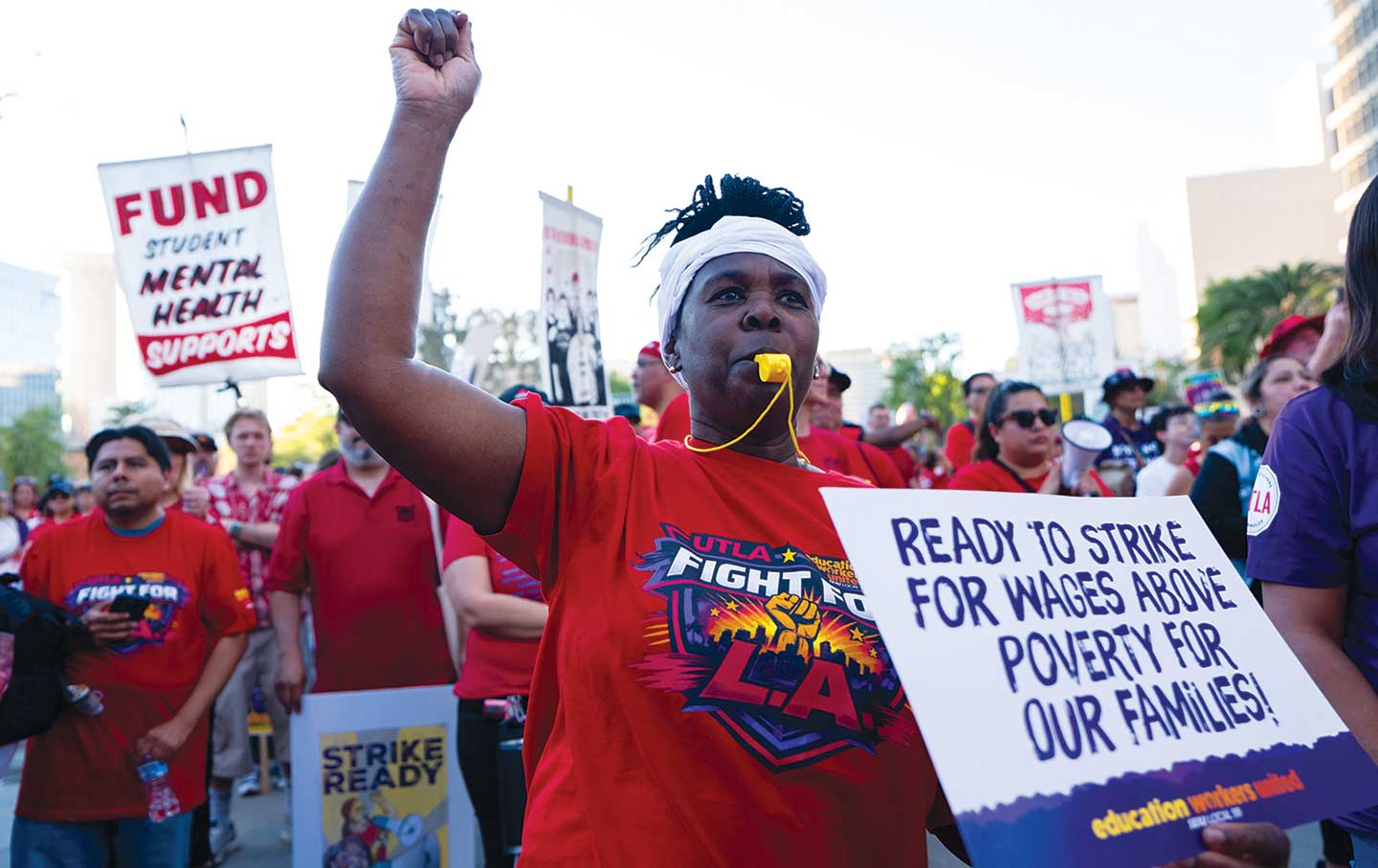
As the French economist Gabriel Zucman has shown, today’s wealth concentration is the highest it’s been in our nation’s history. Nineteen of the country’s largest fortunes have about $3.4 trillion combined—the equivalent of 11 percent of all the goods and services produced in the United States in a year. This is nearly three times more than what the wealthiest Americans were worth at the peak of the Gilded Age, after adjusting for inflation. Under Trump’s watch, billionaire wealth grew 22 percent in 2025, from $6.7 trillion to $8.2 trillion, and the number of billionaires increased from 814 to 935. But most people in the United States are treading water or sinking. What, then, is the American economy? It’s the standard of living of most people living and working and trying to make ends meet in a place called the United States. By this measure, the American economy is crap.
Not only are jobs in short supply, wages lousy, and public services dysfunctional, but so many of the rest of the things that people rely on are falling apart.
The concentration of wealth in America has created an education system in which the super-rich can buy admission to college for their children, a political system in which they can buy Congress and the presidency, a healthcare system in which they can buy concierge care, a climate in which they can buy clean air and water and access to pristine mountains and shorelines, and a justice system in which they can buy their way out of jail. Almost everyone else has been hurled into a dystopia of bureaucratic arbitrariness, corporate indifference, worsening air and water, and legal and financial sinkholes that have become hallmarks of modern American life.
All of this was bad before Trump. He’s made it far worse. The good news is that this is now becoming clear to most Americans. The actual state of the American economy has been hidden behind the GDP, the CPI, the S&P 500, and the unemployment rate. Yet the real economy can no longer be hidden, because most people are experiencing and living it every day and are fearful and furious.
Remember the “reveal codes” in WordPerfect software that gave you a screen view showing the hidden formatting tags embedded in a text? It’s as if most of us are now clicking the reveal codes and seeing the true structure of wealth and power in America. It is not a pretty picture. But seeing it is the beginning of major structural change. When the gap between people’s ideals and known realities reaches a breaking point, we have a real chance for revolutionary reform.
Popular
“swipe left below to view more authors”Swipe →And by that I mean reforming our political-economic system in revolutionary ways—such as getting big money out of politics so we can raise taxes on the wealthy to pay for universal healthcare, childcare, eldercare, and affordable housing. I mean increasing the minimum wage to make it a living wage. Providing everyone with paid family and medical leave, a universal basic income, a good education, and affordable higher education. Busting up monopolies to bring prices down and reduce the political power of concentrated corporate leviathans.
Revolutionary reform also means economic democracy: strengthening unions and giving workers a say in how work is organized. Sharing the profits with workers. Giving them more job security. And it means reversing climate change and saving the planet for future generations.
What’s known as “the American economy” isn’t some autonomous system lying beyond our power to change it. It’s the product of laws and rules governing taxes, antitrust, labor, and the environment—which we have the power to alter.
But we can’t do that today, because Trump and his sycophants and plutocratic backers are in control. But ever more Americans are turning on the reveal codes and seeing the real structure of wealth and power in this country—creating a basis for revolutionary reform. That’s the silver lining in this dark Trumpian cloud. As the gap between what we think the American economy should deliver and what it does deliver becomes apparent to more of us, we’ve got a fighting chance to remake the American economy into a system that works for all of us.
More from The Nation
Black Freedom in an Age of White Oligarchy Black Freedom in an Age of White Oligarchy
Justin Leroy’s The Lowest Freedom points toward the limits of liberty under racial capitalism.
The School Behind the Billionaires and the Billionaire Tax The School Behind the Billionaires and the Billionaire Tax
UC Berkeley will inevitably be behind the defeat or victory of Proposition 40.
Dolly Parton Was a Proud Union Sister Dolly Parton Was a Proud Union Sister
Organized labor is celebrating the life and legacy of an artist who championed working women and carried a union card for almost 60 years.
Of Debt and Deficits and the Dollar System Of Debt and Deficits and the Dollar System
By force of preset agendas, conservatives and liberals react to debt headlines like Pavlov’s dogs.

What Happens When 8 Million People Lose Their Student Loan Repayment Plan? What Happens When 8 Million People Lose Their Student Loan Repayment Plan?
As the Biden-era SAVE plan ends, borrowers are facing unaffordable bills, lost payment records, and errors that have falsely put some into default.
David Ellison’s Delusional Stab at Self-Justification David Ellison’s Delusional Stab at Self-Justification
While the Skydance–Warner Bros. merger is in legal limbo, the CEO seeking to pull it off makes a disingenuous case for it in the court of public opinion.

