
15 Years Ago, Anders Breivik Massacred 77 People. Norway Is Determined to Treat Him Humanely.
Our prisons, ourselves.
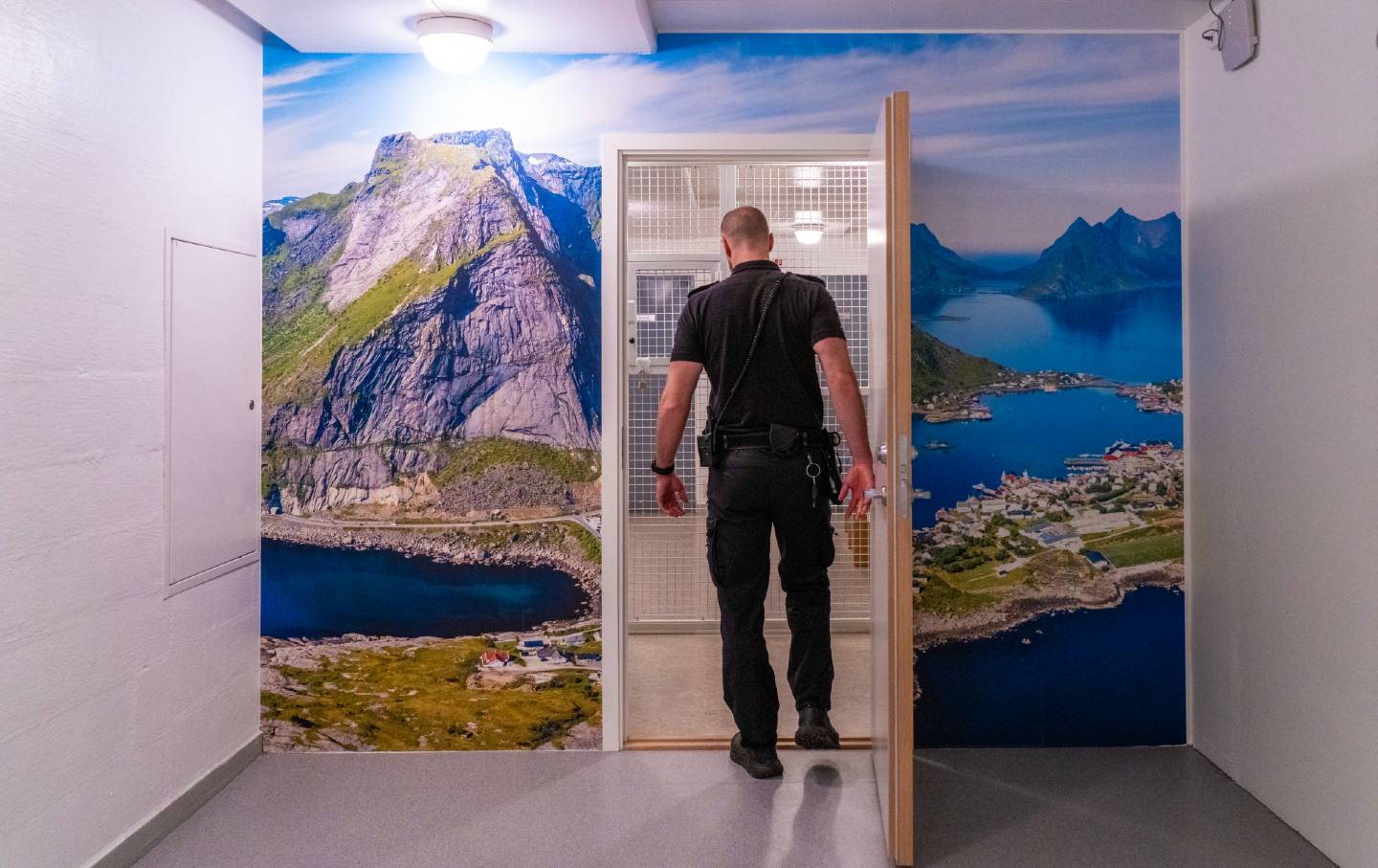
Anders Behring Breivik—the far-right terrorist and mass murderer who is surely the most reviled man in Norway—lives in a two-story suite with a kitchen where he can cook his own meals, a pleasant outdoor yard, and a TV room with armchairs, an Xbox, and scenic photos on the walls.
The contents of the rooms, however, are carefully chosen. Appearances to the contrary, this is a supermaximum-security unit, which has been purpose-built for Breivik by the Kriminalomsorgen—the Norwegian Correctional Service—at its Ringerike Prison.
Ringerike lies just across a broad lake from Utoye island, where on July 22, 2011—15 years ago today—Breivik shot to death 69 people, including 33 children, at a Labour Party summer camp, after killing eight others with a bomb blast in Oslo. To this day, Breivik maintains his virulently anti-immigrant, anti-Muslim, white supremacist beliefs, and desires to spread his message of hate to the world. For this reason, his communicating with both other incarcerated people and the outside world is almost entirely prohibited.
But throughout his imprisonment, Norway has gone to great lengths to mitigate the harmful impact of Breivik’s isolation by providing him with comfortable surroundings and with as much human interaction as can be provided by specially trained prison staff, who are assigned to talk with Breivik, join him in games of cards, and offer him every possible opportunity for rehabilitation, whether he embraces them or not.
I toured Ringerike last fall along with a group made up primarily of US correctional officials and staff, as part of an immersion program on Norway’s famously humane and demonstrably effective prison system. The program is hosted by the public health organization Amend, the University of California, San Francisco, which seeks to promote positive, evidence-based “culture change” within America’s prisons.
That such change is direly needed has long been indisputable on practical as well as humanitarian grounds. With few exceptions, US prisons and jails are grim warehouses that breed violence, mental illness, and recidivism. (According to the most comprehensive study conducted by the US Bureau of Justice Statistics, 77 percent of individuals released from prison in the United States were rearrested for a new crime within five years.) On an average day, more than 120,000 people are held in solitary confinement. Physical and sexual abuse are endemic. Suicide rates are more than double the national average. And these institutions have been shown to be toxic for the people who work in them, as well as for the incarcerated.
The US correctional staff who had come to Norway from Connecticut and Washington State were generally a reform-minded group, and eager to learn about a system where most prison officers express pride in their work, and where the majority of incarcerated people do not commit new crimes after their release from prison.
They listened closely as their Norwegian counterparts explained that the “restriction of liberty” alone should be the punishment for crimes. Additional deprivation, dehumanization, and abuse had no more place in prisons than in any other part of Norwegian society.
Under the “principle of normality,” Norway strives to make “life inside resemble life outside as much as possible.” That’s why most people incarcerated in Norway live in cells that look like IKEA-furnished dorm rooms, choose and cook their own food, work, attend classes, visit with loved ones, and are granted as much autonomy as security needs allow.
Still, everyone in the visiting group seemed stunned as we viewed Breivik’s supermax suite. Why would Norway go to such lengths to provide a humane environment to a man who had committed the most monstrous acts on Norwegian soil since the time of the Nazi occupation—and who showed no signs of remorse for his crimes?
In the days following our visit to Ringerike, I had a chance to speak with Kristian Hesthagen, the man who in 2021 was asked to design the supermax unit in which Breivik lives, and until recently oversaw his imprisonment.
Now an ambassador to Amend, Hesthagen joined Norway’s Correctional Service in 2008 after serving in the Norwegian Army, including time in Afghanistan. He completed the two years of paid training given to all prison officers, and he believes the purpose of their work is to “help people become good neighbors” and “productive citizens.”
This rehabilitative approach makes practical sense, Hesthagen said, since nearly all people in prison will one day be returned to the community. (Breivik will likely be a rare exception: He has been sentenced to “preventive detention,” which can be extended indefinitely in five-year intervals if the Kriminalomsorgen demonstrates that he still cannot be safely released, despite all efforts at rehabilitation.)
But Hesthagen believes equally strongly that countries have a “moral obligation to treat people with dignity and respect.” That obligation applies especially to the incarcerated, who live at the mercy of the state.
Asked specifically about Breivik, Hesthagen acknowledged his own feeling of revulsion at the terrorist’s acts, and said he understood people’s shock at the humane conditions in which he was confined. But he believes Norway’s choice to maintain those conditions is important, not as much for Breivik himself as for the nation that had been so devastated by his crimes. “Who are we, if we’re going to start choosing who has human rights and who does not?”
Popular
“swipe left below to view more authors”Swipe →Hesthagen’s views appear to have been shared by a majority of the Norwegian public, and even the parents of the murdered teenagers, who reportedly accepted the results of Breivik’s trial and opposed even a theoretical use of the death penalty.
According to Nelson Mandela, who spent 27 years incarcerated in South Africa, “It is said that no one truly knows a nation until one has been inside its jails. A nation should not be judged by how it treats its highest citizens, but its lowest ones.”
In our teeming prisons and jails—and now, our exploding immigrant detention system—with their harsh and sometimes deadly conditions, even minor offenders receive far worse treatment than Norway’s most hated citizen. It’s not difficult to see how this appetite for punishment and even cruelty both reflects and infects broader American values.
Norway, despite its generous social welfare system, is not without its problems—including a virulently anti-immigrant far-right party that is gaining ground as Breivik’s racist massacre recedes into the past. And its prisons are not perfect. But by Mandela’s measure, it has surpassed its European neighbors and stands as the polar opposite of the United States.
Norway’s prison system signals its persistent effort to maintain allegiance to a more humane ethos—even if it means giving an Xbox to a mass murderer.
More from The Nation
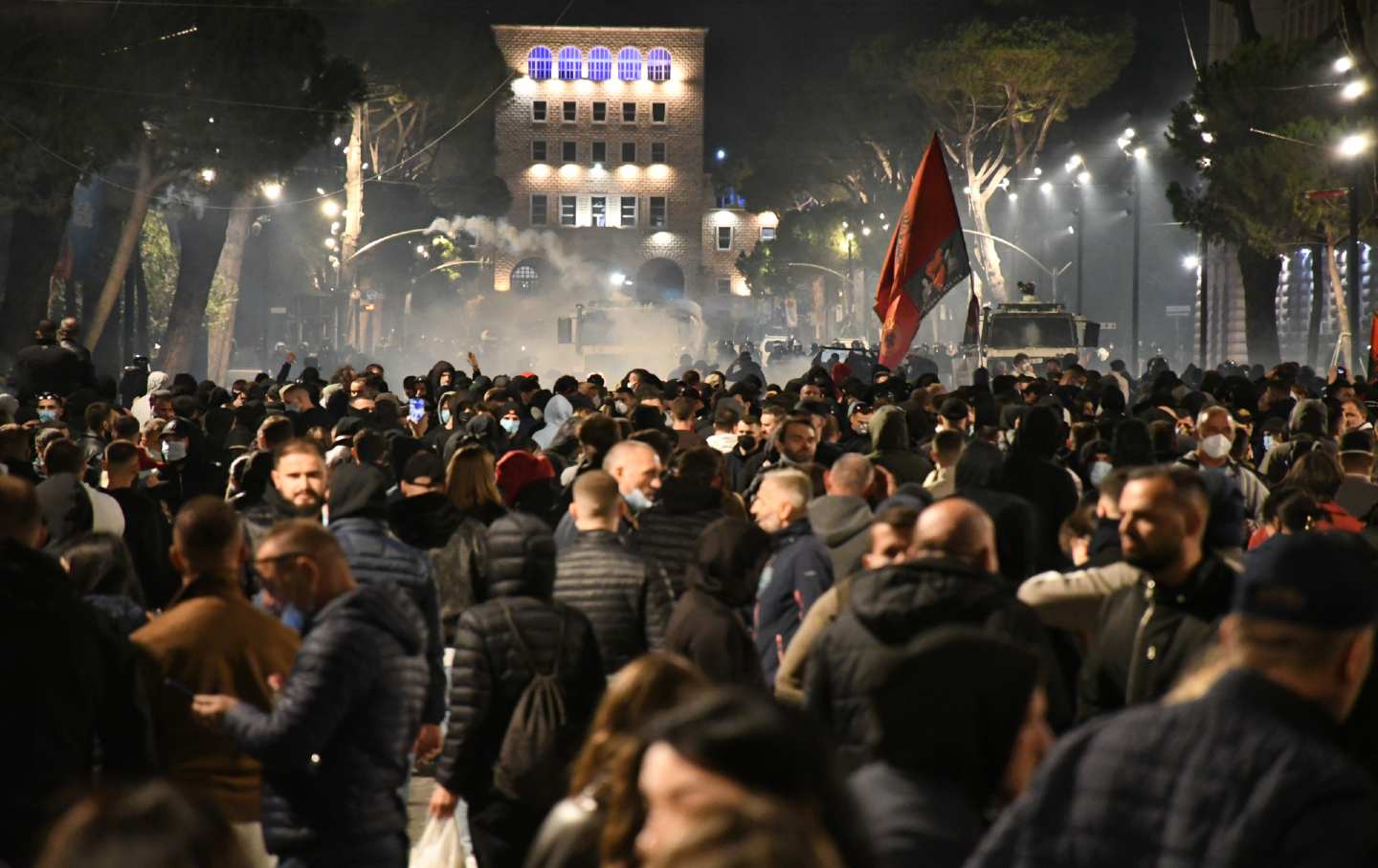
Albanian Student Strikes Spur a Political Crisis Albanian Student Strikes Spur a Political Crisis
A new round of protests against the ruling party’s corruption has Prime Minister Edi Rama giving cops bonuses to crack down on dissent.
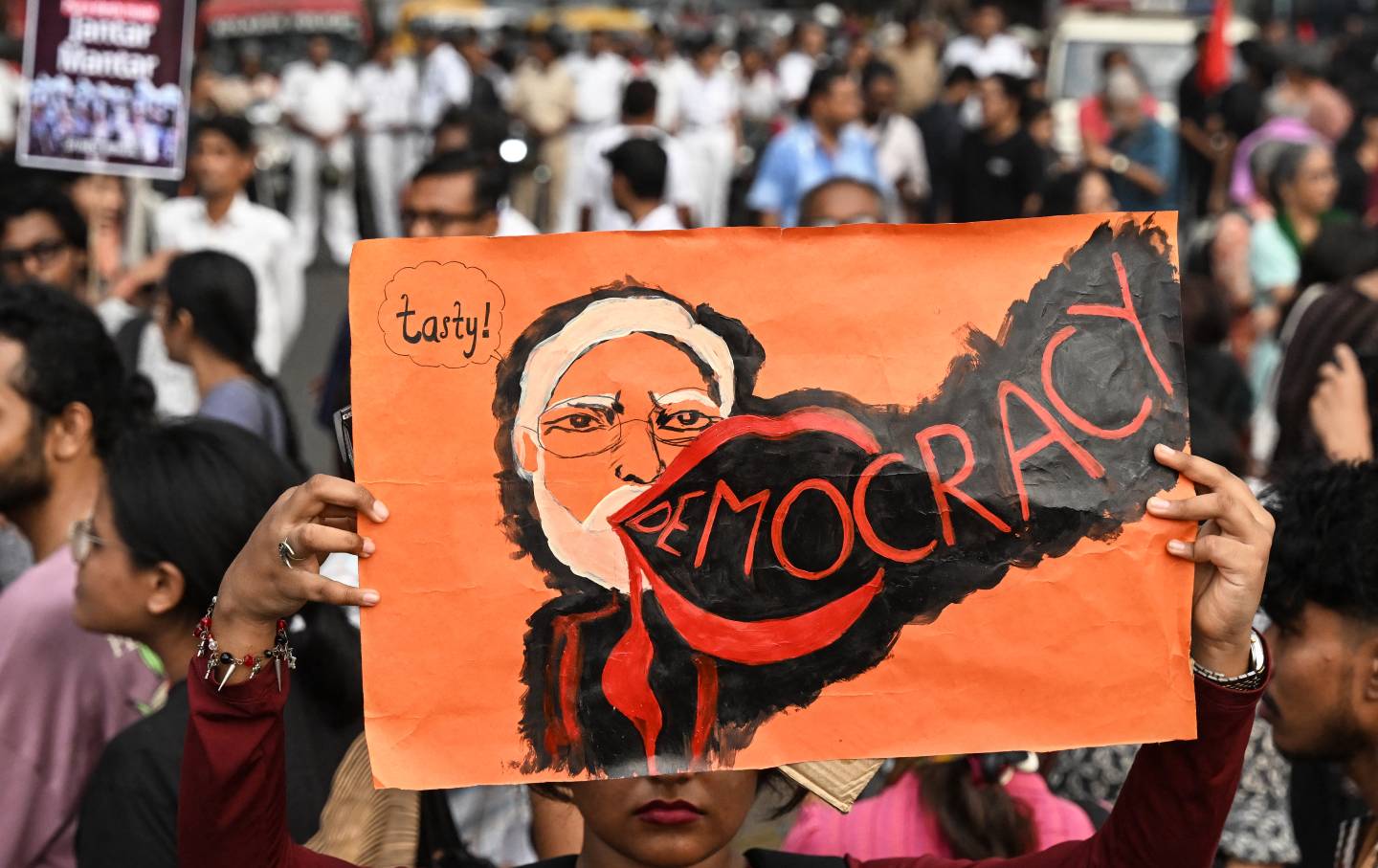
Inside India’s Gen Z Cockroach Janta Movement Inside India’s Gen Z Cockroach Janta Movement
Young Indians are challenging the purge of voter rolls by Modi’s right-wing government. Shrishti Khanna, who was detained by Delhi police while covering the protests, explains.
The Clarion Call of “NAZA” The Clarion Call of “NAZA”
Yuval Abraham and Rachel Szor’s new film not only documents the horrors of the present but give us a glimpse of a possible future too.
The Specter of Lepenism Looms Over France’s Social Crisis The Specter of Lepenism Looms Over France’s Social Crisis
Joining forces with the “yellow vests,” youth demonstrators are raising the alarm in a country falling to the far right.

Progressives Are Backing Puerto Rican Independence. It’s About Time. Progressives Are Backing Puerto Rican Independence. It’s About Time.
More and more leftists are concluding that statehood for the island is not enough.
The Saudi Phase of the Iran War Signals More Chaos to Come The Saudi Phase of the Iran War Signals More Chaos to Come
The conflict that Donald Trump has repeatedly proclaimed an unequivocal American victory keeps spiraling out of control.

