
History Interrupted
The Palestine of Soraya Antonius and Annemarie Jacir.
The Palestine of Soraya Antonius and Annemarie Jacir
In The Lord and in Palestine ’36, the story of Mandatory Palestine comes into focus.
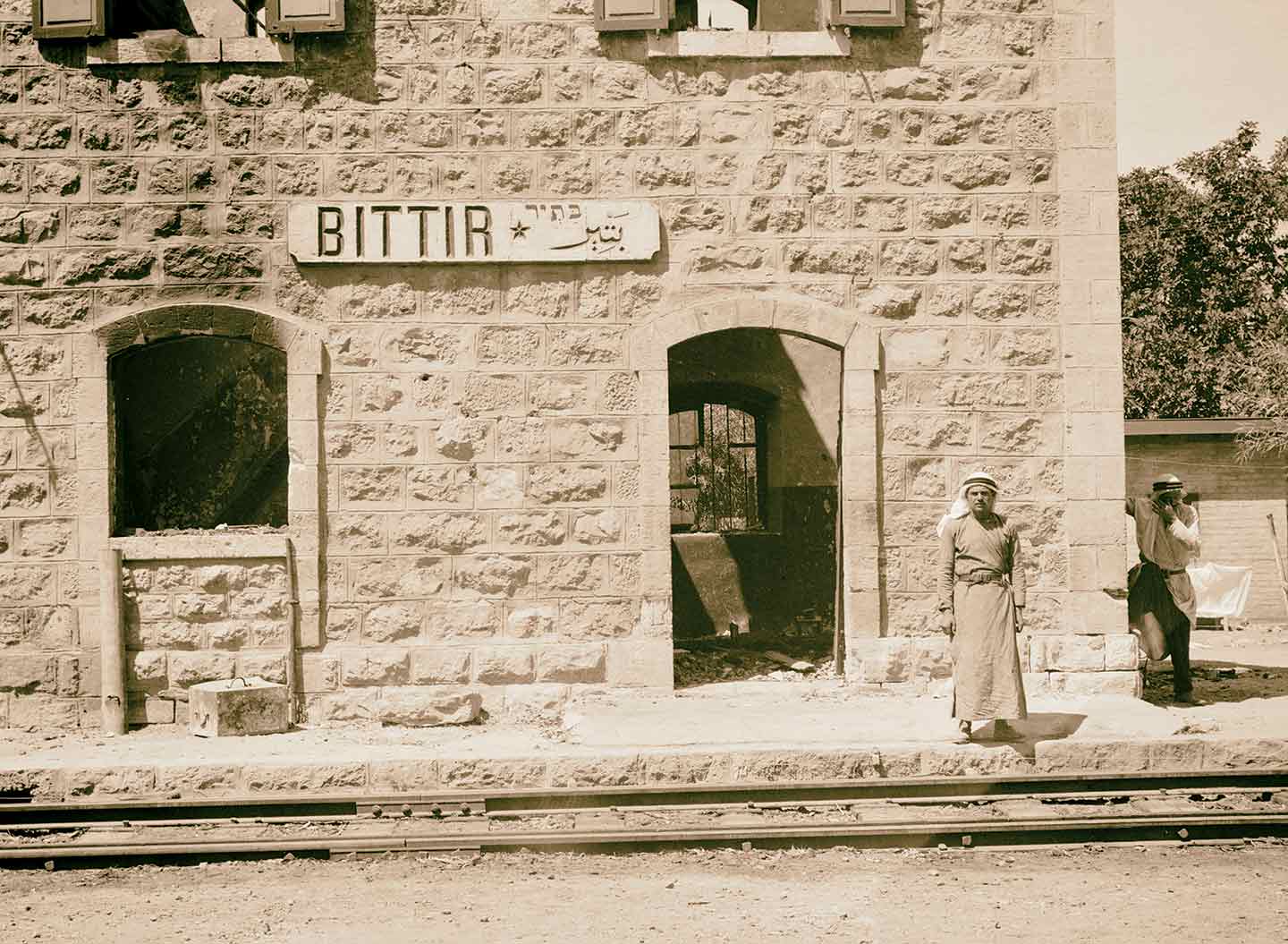
Perhaps no moment in modern history has been more consequential for Palestine than the period between the two world wars. In the early 1920s, Palestinian peasant farmers, only recently free of the Ottoman Empire, had to continue paying heavy taxes on land, cattle, and property to the British Mandate. The Ottomans had accepted payment in kind, but the British demanded cash, regardless of the cost of production or fluctuations in the weather. Unable to keep up with taxes, many farmers were forced to sell their land and become tenants. At the same time, in accordance with the promise it had made in the 1917 Balfour Declaration, the British government facilitated the transfer of land to the Jewish National Fund, which earmarked it for recently arrived immigrants and refugees from Europe. Farmers who had lost their lands could not work in the new settlements, which relied exclusively on Jewish labor, a situation that resulted in increased population density in those areas that remained under Palestinian control.
Books in review
The Lord
Buy this bookThe peasant farmers, locally known as the fellahin, began to migrate to cities in search of work, settling in crowded shanties. But as it turned out, life in Haifa or Jaffa was not any better. The British Mandate set the minimum wage for government jobs at 30 to 50 percent higher for Jewish immigrants from Europe than for Palestinians, out of a racist belief that Europeans were accustomed to a higher standard of living than Arabs. As the historian Mahmoud Yazbak has demonstrated, these economic factors were decisive in setting the stage for an uprising.
In the late 1920s, a Syrian preacher by the name of Iz al-din al-Qassam, who had fought against Italian and French occupiers in Libya and Syria, settled in Haifa and began to seek out and organize the large number of dispossessed farmers and low-wage workers who dwelled in the city’s slums. The discovery that Zionists were smuggling weapons into the port of Haifa inflamed tensions further, and episodes of violence, which were sporadic at first, increased. When the British police killed al-Qassam and some of his followers in late 1935, the discontent among Palestinians reached a new pitch.
In April 1936, a general strike was called. The grand mufti of Jerusalem, appointed to his lifetime position by the British 15 years earlier, brought a handful of local notables together to form the Arab Higher Committee, whose goals were to establish a national representative body in Palestine, put a stop to Jewish immigration, and somehow maintain a leadership role over the revolt. But the uprising remained largely worker-led and would last three years, pitting the poor and poorly armed indigenous people in Palestine against the world’s biggest empire.
In an unprecedented show of force, the British government deployed 100,000 ground troops, demolished thousands of Palestinian homes, destroyed farmers’ crops, detained insurgents without charge, tortured prisoners, executed or exiled rebel leaders, and used civilians as human shields. The violent crushing of the revolt laid the groundwork for what would happen later in Palestine, not only in the shorter term with the founding of Israel and the Nakba of 1948, but arguably also with the war of 1967, the First Intifada, the Second Intifada, and the October 7 attacks. In all of these pivotal events, we can find traces of what the British Mandate set in motion during its colonial administration and what the Palestinian workers’ revolt expressed: anger at dispossession and discrimination, aspirations of social justice, and dreams of self-determination.
This history is the subject of two fascinating works by Palestinian women artists: The Lord, a sophisticated and beautifully written novel by Soraya Antonius, and Palestine ’36, the recent film directed by Annemarie Jacir. Working in different mediums and separated by nearly 40 years, Antonius and Jacir nevertheless share a concern with how history is created: how people weave together concurrent but sometimes disparate events into a coherent narrative of their collective pasts. What happened in Palestine between 1936 and 1939 is “an argument without end,” to borrow Pieter Geyl’s phrase, but by dramatizing it in fiction and film, Antonius and Jacir bring us closer to real life than any historical account ever could.
Soraya Antonius’s The Lord is shaped by a frame narrative. We begin in the 1980s with the narrator and a gentleman friend visiting a former Crusader castle in Lebanon, where they have come in search of a tomb, “a stony mound, as long as a tall man’s height.” The narrator, a journalist, is never identified by name or nationality, but she is familiar with the Arabic spoken by the Syrian children who crowd around her, finds her way around using a Guide Bleu, the French-language travel guide, and converses in English with her companion. The children comment on the couple’s dusty car without ever suspecting that the narrator understands them; in effect, she passes as British.
The tomb that the narrator has come to find belongs to Tareq, a mysterious figure from the era of the Palestinian revolt. To learn more about him, she interviews Miss Alice, an elderly missionary who used to be his teacher in Jaffa. Tareq was a hardworking yet mediocre student—that is, until the final exams of his last year in school, when he turned in papers that should have earned him 95 percent in every subject and 100 percent in three of them. Tareq was accused of cheating and expelled, which drastically changed his family’s fortunes. Graduating from a colonial school would have virtually guaranteed him a job with a good salary. Instead, he becomes a traveling magician, gaining minor fame in the rural villages where he performs.
For the grand finale of his act, Tareq produces a hat, waves it around, and turns it into a scarf. In the annals of prestidigitation, this isn’t much of a trick. And yet because it is performed in Palestine under the British Mandate, and the hat is a silver homburg like the one that the British High Commissioner wears, and the scarf is the keffiyeh of peasant farmers, the scene takes on a political meaning that Challis, a local colonial officer, finds impossible to ignore. Over time, Tareq’s tricks become rather extraordinary: He is said to walk through walls; he puts out brushfires from miles away; and once, in front of an entire village, he makes the High Commissioner’s clothes disappear, revealing him in all his nakedness. Challis becomes fairly obsessed with proving that Tareq isn’t just poking fun at the British occupiers or expressing support for the rebels, but that he is in fact their leader.
As a novel, The Lord stands out for a series of interesting choices that complicate the standard rebellion narrative pitting a male freedom fighter against a male colonial villain. Instead of focusing only on Tareq, the conjuror who drives Challis mad, Antonius also brings in Um Tareq, his cold and calculating mother; Buthaina, a farmer’s wife who has miscarried several times and seeks Tareq’s “blessing” in conceiving again; Frank Egerton, a clear-eyed British journalist; and Kit Farren, the High Commissioner’s assistant, who courts the respectably poor Miss Alice.
Through these characters, we get glimpses of life in rural areas as well as urban centers, as both landscapes undergo massive change under the colonial administration. In the village of Tarshiha, for example, farmers have sold most of their animals to pay fines and taxes, so they can’t offer the visiting Challis and Egerton meat with their dinner. In Jaffa, meanwhile, an entire Palestinian neighborhood in the old city is bombed with dynamite in a “beautification” project. When the project map is passed to Challis, he draws a squiggly line to ensure that Tareq’s family home is destroyed too.
Antonius also explores the overlapping forces that governed the lives of Palestinian women during the British Mandate: the patriarchal order imposed from within, the political occupation imposed from without, and the class dynamics that cut through both. Buthaina is married off at 12 to Abu Ramzi, a widowed farmer who already has teenage children. She spends several years learning how to maintain the household—the description of her daily chores is one of the novel’s most affecting sections—but to preserve her status, she must produce a child. The repeated deaths of her babies drive her to seek out Tareq.
Tareq improvises a mystical cure (clipped nails, a lock of hair, some water) that he intends as a comfort to Buthaina, but to their mutual delight she becomes pregnant and delivers a healthy baby boy. Unfortunately, Challis gets wind of Tareq’s visit to a married woman and uses it to blackmail him. The conjuror’s sleight of hand now produces a Union Jack instead of a keffiyeh. When Buthaina’s house is searched by British officers, all the work she has put into canning, jarring, and otherwise preserving food for her family is destroyed. Dishonored by the rumors spread by Challis and with her home now in ruins, Buthaina has to fend for herself by selling embroidery.
Antonius’s interest in the lives of women in Mandatory Palestine extends to the British as well. Miss Alice displays some sympathy for the struggles of Palestinian women, yet she is unable to set aside her loyalty to the colonial order. To the end, she remains faithful to the civilizing mission of the British Mandate, despite her lowly position as a teacher in her father’s missionary school. When Kit Farren, the High Commissioner’s assistant, takes her on a week-long trip to Jerusalem, Miss Alice frets about the fact that she owns “only one possible dress for dinner, when invited to five or six.” She has high hopes that Farren will make a proposal of marriage to her, which would lift her into a higher social class, but instead he chooses a wealthy aristocrat.
The Lord frequently reminds us that its narrative is spoken—a tape recorder is on—and while we hear the voice of Miss Alice, we also get the unnamed narrator’s observations or reflections. The clues we are offered suggest that she is a woman of the Levantine upper class, likely a Palestinian educated in British schools. This ingenious setup allows us to hear the elderly British teacher recount the story and the narrator to correct or contextualize these memories. For example, in the scene where Miss Alice describes the “beautification” project in Jaffa that resulted in the bombing of Palestinian homes:
“But you mustn’t get angry with me,” said Miss Alice. “It’s not only that more than twenty years have passed: we really and truly didn’t know what was happening until we heard the explosions and saw the people running to the school. They were screaming.”
I was angry though, and there was no one else to take it out on.
The forces of nationality, gender, class, and language shape the lives of all the characters in The Lord, whether it is Tareq, the conjuror; Buthaina, the farmer’s wife; Miss Alice, the schoolteacher; or, for that matter, the narrator herself.
Antonius’s sensitivity to these concurrent forces is perhaps no surprise given the contours of her own life. She was born in Jerusalem in 1932. Her father, George Antonius, was a historian and a diplomat, best known for his book The Arab Awakening, which tells the story of Arab nationalism from the late 19th to the early 20th centuries. Her mother, Katy Nimr, was a socialite and philanthropist who founded Dar al-Awlad, a boys’ orphanage in the city. The couple was wealthy and well-connected, hosting numerous soirées in Karm al-Mufti, their mansion in Sheikh Jarrah, where British Foreign Service officers mingled with Palestinian artists and aristocrats.
The Antoniuses sent Soraya, their only child, to English schools. The experience, she later wrote, provided her with “a long, expensive, and in neutral subjects a good schooling,” but “without the faintest knowledge of the geography, history, economics or literature of one’s own country and this last omission seems to me now the most seriously corrupting of all.” Colonial schools trained the children of the ruling class, hoping to turn them into technocrats who could help maintain within the empire the order imposed from thousands of miles away in the metropole. In many of their pupils, like Soraya Antonius, they left a long-lasting sense of shame and regret.
History can interrupt a person’s destiny, to disastrous effect, the way an avalanche diverts a river from its course. In addition to the insidious trauma of her colonial education, Antonius also witnessed or lived through a series of violent and politically significant events. In July 1946, when she was 14 years old, Soraya and her mother were near the King David Hotel when an explosive device detonated nearby. The two managed to get away just moments before the Irgun, a Zionist paramilitary group, bombed the hotel itself, killing 91 people. When Soraya was 15, the Irgun bombed a house close to Karm al-Mufti, leading her now-widowed mother to flee her home in fear. The Irgun then occupied the mansion and confiscated its assets. An even greater catastrophe unfolded when Soraya was 16 and in boarding school—the Nakba of 1948, in which more than 75 percent of Palestinians were expelled or displaced from their homes. Soraya’s mother moved to Cairo to escape the violence, returning in 1949 to Jerusalem, where she lived in a different house and resumed her philanthropic work at the boys’ orphanage.
By the early 1950s, when Soraya Antonius earned her degree from the Slade School of Fine Art in London, her childhood home was lost, her neighborhood of Sheikh Jarrah had been placed under Jordanian rule, and her native city was divided by the Green Line that separated the newly founded state of Israel from its neighbors. Antonius eventually settled in Beirut, where she worked as a journalist, editor, curator, and activist. Her work spanned very different subjects. She wrote a column for the French-language Lebanese newspaper L’Orient. She edited political articles for Middle East Forum (a now-defunct publication of the Alumni Association of the American University in Beirut). She wrote and produced the documentary film Resistance, Why?, in which Palestinian writers and intellectuals like Ghassan Kanafani shared their views on revolution. Antonius even edited the proceedings of a conference on science and technology in developing countries. In 1980, she published an important document in the Journal of Palestine Studies—a list of 1,229 Palestinian women who were imprisoned by Israel between 1967 and 1979.
Yet something must have felt missing to her, because at the age of 54, Antonius set aside the nonfiction that she’d been producing in one form or another for more than three decades and released a novel. In an article written for the journal Alif, she reflected on the conundrum that so many of us who received colonial educations faced and continue to face: whether to stay silent or write in a language not your own. “I realized that even if I couldn’t write in Arabic,” Antonius observed, “I could still write as an Arab. ”
In approaching the figure of Tareq, Antonius draws a parallel with the most famous miracle worker ever to emerge out of Palestine—Jesus himself. Tareq gives to the poor, heals a desperate woman, stands up to the foreign occupiers, and puts out brushfires “without buckets of water.” Little surprise that Challis, like the Romans before him, wants to make an example out of the Palestinian rebel. “He thinks he can defy us? That cheap little tuppenny pier-head conjuror?” Challis fumes. Where there is a Jesus, there must be a Judas. Late in the novel, a betrayal of great political and personal significance takes place at the hands of an unexpected traitor. And in a nod to the syncretic tradition, the Muslim Feast of the Sacrifice also plays a role.
The use of Jesus as a metaphor naturally brings up the question of Jewish characters in the novel. During the interwar period, hundreds of thousands of European Jews arrived in Palestine—refugees fleeing antisemitism and fascism in their homelands as well as settlers pursuing the Zionist dream of a Jewish ethno-state. In The Lord, there are passing references to some of these Jews: a Hebrew-speaking police inspector as well as Orthodox Jews in a comical scene in which representatives of the Latins, Armenians, Copts, Muslims, Greek Orthodox, and other religious denominations vie for a place in the cortège behind the High Commissioner.
As it happens, the High Commissioner—referred to throughout the novel as “HE,” for “His Excellency”—is Jewish (as was Herbert Samuel, who served as the real-life high commissioner from 1920 to 1925). On a visit with Miss Alice’s school, HE berates a child who playfully pulls him to the ground during a ball game: “You little—you little Arab.” Kit Farren, his assistant, rushes to explain things to Miss Alice. “It’s not at all because he’s Jewish,” Kit says. “HE leans over backward to be fair—the trouble we have with the Jews, you wouldn’t think it, but they expect him to favour them and he won’t.”
Elsewhere, antisemitic prejudice pops up in the dialogue of British characters. “You talk like a Jew,” Egerton complains when Tareq dares to counter the logic of an argument he’s made. Another official, charged with drafting legal papers that would allow British officers to quell the revolt in Jaffa, murmurs, “Thank the Lord we’re not dealing with the Jews.” But aside from these incidental references, The Lord doesn’t interest itself in Jewish characters or the Zionist movement. Its focus remains on the British occupation and the revolt to its rule that started among dispossessed Palestinian farmers and urban workers. If history is an argument, then the one that The Lord wants to have is over colonial occupation and national aspiration.
The anti-colonial struggle is likewise a concern of Annemarie Jacir’s Palestine ’36, which is set in the fictional Palestinian village of al-Basma during the revolt. The opening scenes of the film, composed of colorized archival footage, introduce us to a time and a place on the verge of radical transformation. A teenage boy on a donkey cedes the road to a car. The Alhambra movie theater in Jaffa is open. A British lady, a gentleman in a tarboosh (or fez), a colonial officer in uniform, and a priest in black robes pass each other on the street. Ships wait in the harbor for their cargo to be unloaded, and a train pulls into a station in Jerusalem. “The year you were born,” a title reads, suggesting that the fight for Palestinian liberation did not start with the founding of Israel or the Six-Day War but decades earlier, in the interwar period.
As he gets off the train in Jerusalem, Yusuf (Karim Daoud Anaya) is immediately asked by a British officer to show his identification papers. There are tensions in Nablus; colonial forces are cracking down on protests. But Yusuf is not overly concerned with the headlines shouted by the newsboys. He has come to the city to work as a driver for an aristocratic couple, Amir (Dhafer L’Abidine) and Khuloud (Yasmine Al Massri). The two live in a white stone mansion that bears a striking resemblance to Karm al-Mufti, the Antonius family home in Jerusalem.
When Yusuf arrives at the house, he finds Khuloud dressed in men’s clothes, furiously typing an article under the pen name Ahmad, while a radio plays “El Huerfanito,” a mournful song by the Cuban singer Antonio Machín. Desperate for news of the rebellion against the Mandate, Khuloud peppers Yusuf with questions about his village until Amir pulls the young man aside and shows him the car. Yusuf drives the couple to the inauguration ceremony of the Palestine Broadcasting Service in Ramallah, at which High Commissioner Wauchope (Jeremy Irons) delivers a speech insisting that the service will not be concerned with politics; its main object will be “the spread of knowledge and culture.” Watching the scene, I smiled in the darkness. Then as now, there were people insisting that culture should be entirely divorced from politics. And then as now, they were the very people whom politics favored.
In Yusuf’s home village of al-Basma, life moves at a different rhythm. The widowed Rabab (Yafa Bakri) and her daughter Afra (Wardi Eilabouni) walk across lush fields, passing a newly established Jewish settlement surrounded by barbed wire. “Why did they come to live here?” Afra asks. “Their countries don’t want them,” Rabab tells her. The Palestinian villagers harvest their crops together, all the while worrying about the land confiscations that have affected a neighboring town. In the evening, Rabab’s parents (Kamel El Basha and Succession’s Hiam Abbas) read the newspaper to find out the latest on the protests.
Meanwhile, in Jaffa, Khalid (Saleh Bakri) unloads cargo at the port where weapons smuggled in by the Zionists are discovered. With the influx of European immigrants and refugees providing a new pool of labor in the city, British employers have begun firing Palestinians. “Either we stand up for ourselves, or we sit back and watch,” a dockworker warns. When the British cheat him out of his overtime wages, Khalid joins the revolt, becoming one of its leaders.
At the heart of this sprawling epic is Yusuf’s slow and almost reluctant transformation from a quiet, apolitical worker into a rebel. Several events drive him to political engagement: the transfer by a British court of 35 dunums of village land to a nearby Jewish settlement; the killing of his father in the resulting protest; the jailing of his younger brother; and the shocking disinterest of the Palestinian elite, especially the large landowners, in the plight of the dispossessed farmers. “Our interests are different,” one of Amir’s wealthy friends tells Yusuf. “Is Zionism really so bad for us? For business?” When Yusuf mentions land evictions and the near-starvation of tenant farmers, another aristocrat responds, “I understand it’s a difficult time for you all, but not all villagers pay their debts to the landowners.”
Annemarie Jacir has had a lifelong artistic interest in Palestine. Born in Bethlehem in 1974, she was raised in Saudi Arabia and educated in the United States, where she studied literature and politics. After college, she moved to Los Angeles, where she worked as a production assistant and script reader for a few years. But she found that she wasn’t learning all that much about how to make movies, so she went to graduate school at Columbia, earning a master of fine arts in 2002.
Her first film, Like Twenty Impossibles, was a 17-minute short about a film crew navigating checkpoints during the Second Intifada. It premiered at Cannes in 2003, an honor that propelled her into the limelight. Several other short films followed; then, in 2008, Jacir released her first feature film, Salt of This Sea, about a woman who returns to Palestine after years in the United States to claim her grandparents’ inheritance. It starred the poet Suheir Hammad as well as Saleh Bakri (who appears as the lead rebel in Palestine ’36).
In an interview with the American Film Institute, Jacir said she spent eight years writing, researching, and putting together the financing for her latest film. The preproduction took many months, as her team found and restored a local village, planted the kinds of crops that Palestinians planted in the 1930s, and located or built replicas of British military vehicles and machinery. The principal photography was set to begin in the West Bank on October 14, 2023.
The brutal Hamas attacks put the project on hold. Jacir’s producers warned that she might lose her funding and suggested that she move the production to Morocco, Cyprus, or Greece—but given that the land was such a prominent character in the film, she refused. In the end, Jacir shot part of the movie in Jordan and part of it in Palestine, with the production starting and stopping four times before wrapping. The film premiered at the Toronto Film Festival and was Palestine’s official submission to the 98th Academy Awards in the International Feature Film category, though it was not selected. (Tunisia’s entry, The Voice of Hind Rajab, made the cut.)
Palestine ’36 is a film that rewards a patient viewer. The pace is slow, but Jacir’s attention to detail is keen. We see history being written both in the moment, in Khuloud’s articles, which she is forced to write under a male name in order to protect her position as a woman and as an aristocrat, and in the archival footage that Jacir restored, colorized, and inserted seamlessly throughout the story. In fact, the archive is so well integrated that at times the line between fact and fiction blurs, a nod to the malleability of history.
Popular
“swipe left below to view more authors”Swipe →The sonic landscape of the film is likewise carefully orchestrated. Antonio Machín’s song “El Huerfanito,” which plays in Spanish in the happy early minutes of the film, can be heard again at the end, this time in a rendition that the Syrian singer Asmahan made famous throughout the Arab world, “Ya Habibi Ta’ala,” while a woman’s voice reads out a list of the revolt’s leaders who have been imprisoned or expelled. Like Antonius, Jacir appears to see women as the narrators and guardians of their people’s history.
In the second half of the film, the mood shifts to suspense as Yusuf goes into hiding and we follow the intertwining strands that Jacir weaves into the story, all of them connected by an Ottoman-era gun that Rabab finds and hides. There are moments here that recall Gillo Pontecorvo’s Battle of Algiers, such as when a bomb explodes near the winding stairs of the Old City, or when the British colonial adviser Charles Tegart (Game of Thrones’ Liam Cunningham) delivers a speech about the difficulty of putting down insurgencies, in an echo of Col. Philippe Mathieu.
And yet for all the violence and horror of this period, Jacir manages to find room for the innocence of children, not just in Rabab’s daughter Afra but also her playmate Kareem, the son of the village priest, as well as the children playing in the Jewish settlement while their parents build homes.
Time passes. The descendants of the dispossessed farmers and poorly paid workers who rebelled in 1936 now mostly live in the West Bank in a set of enclaves connected by segregated roads, in the rubble of Gaza after a two-year campaign of genocide, or in exile across the world. But as James Baldwin once said, “People are trapped in history and history is trapped in them.”
In narrating the Palestinian revolt, both Antonius and Jacir sought to draw lines to their present moment. Their works show us that whether it is Beirut in the 1980s or Gaza in the 2020s, the violence that flickers across our screens today has its roots in a colonial history that unfolded in the interwar period. Back then, the British Mandate shut down newspapers, set up checkpoints, imposed curfews, banned the keffiyeh, deported leaders, demolished houses, and confiscated lands. Yet it could not crush the Palestinian people’s demands for dignity and self-determination. Why should these same tactics, which Israel adopted after its founding, work any better? Even if one quibbles with some aspect or other of Antonius’s novel or Jacir’s film, the questions posed by their works of art remain—above all else: Should a people’s desire for freedom and dignity be forever met with violence and repression?
More from The Nation

Brazil’s Workers’ Party Is Not Stopping Brazil’s Workers’ Party Is Not Stopping
With just a few days remaining before the runoff election, supporters of Lula’s party are doing everything possible to rally support behind the president.
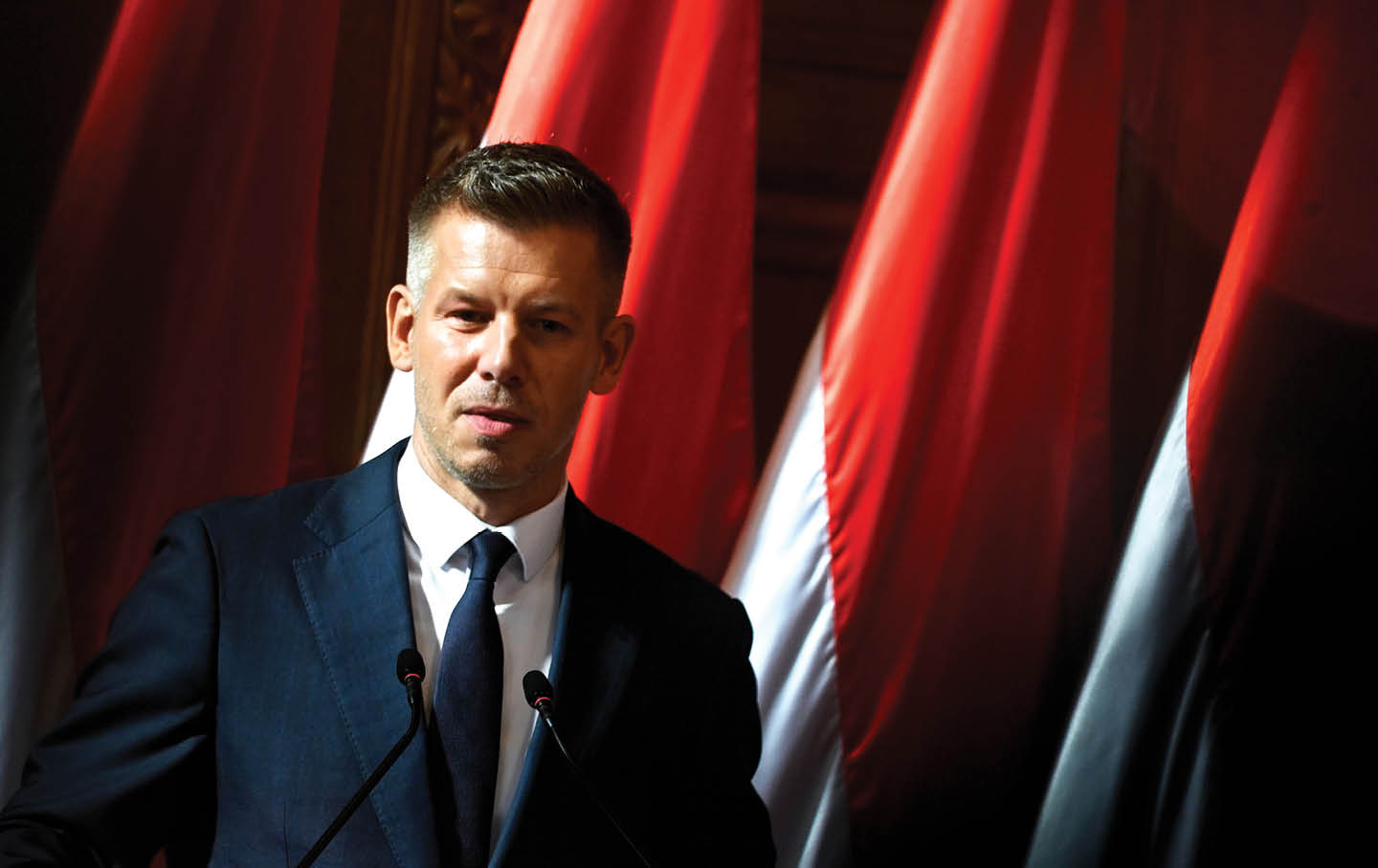

Brazil’s Decision Brazil’s Decision
The moral compass and basic humanity of political leaders really does matter.
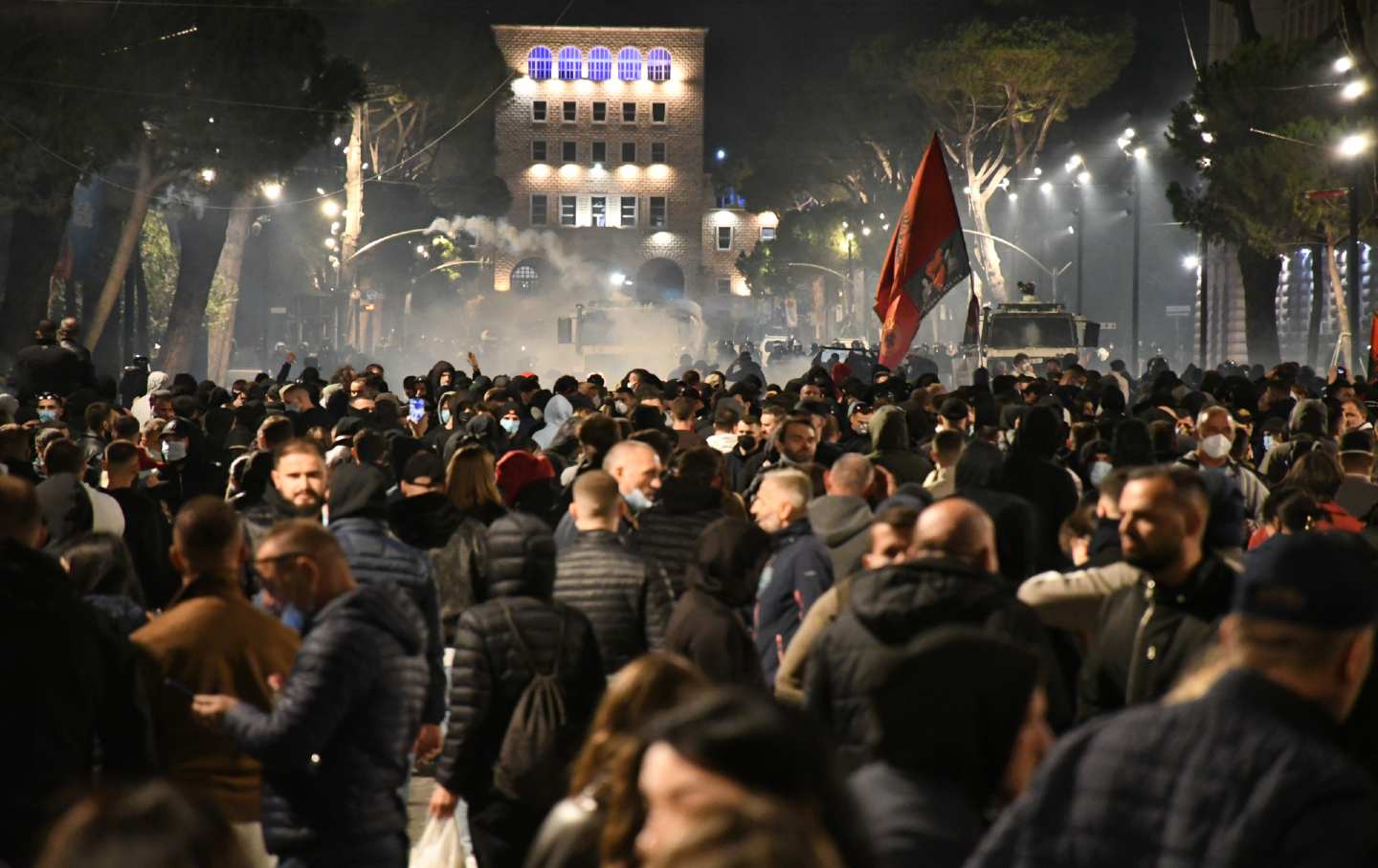
Albanian Student Strikes Spur a Political Crisis Albanian Student Strikes Spur a Political Crisis
A new round of protests against the ruling party’s corruption has Prime Minister Edi Rama giving cops bonuses to crack down on dissent.
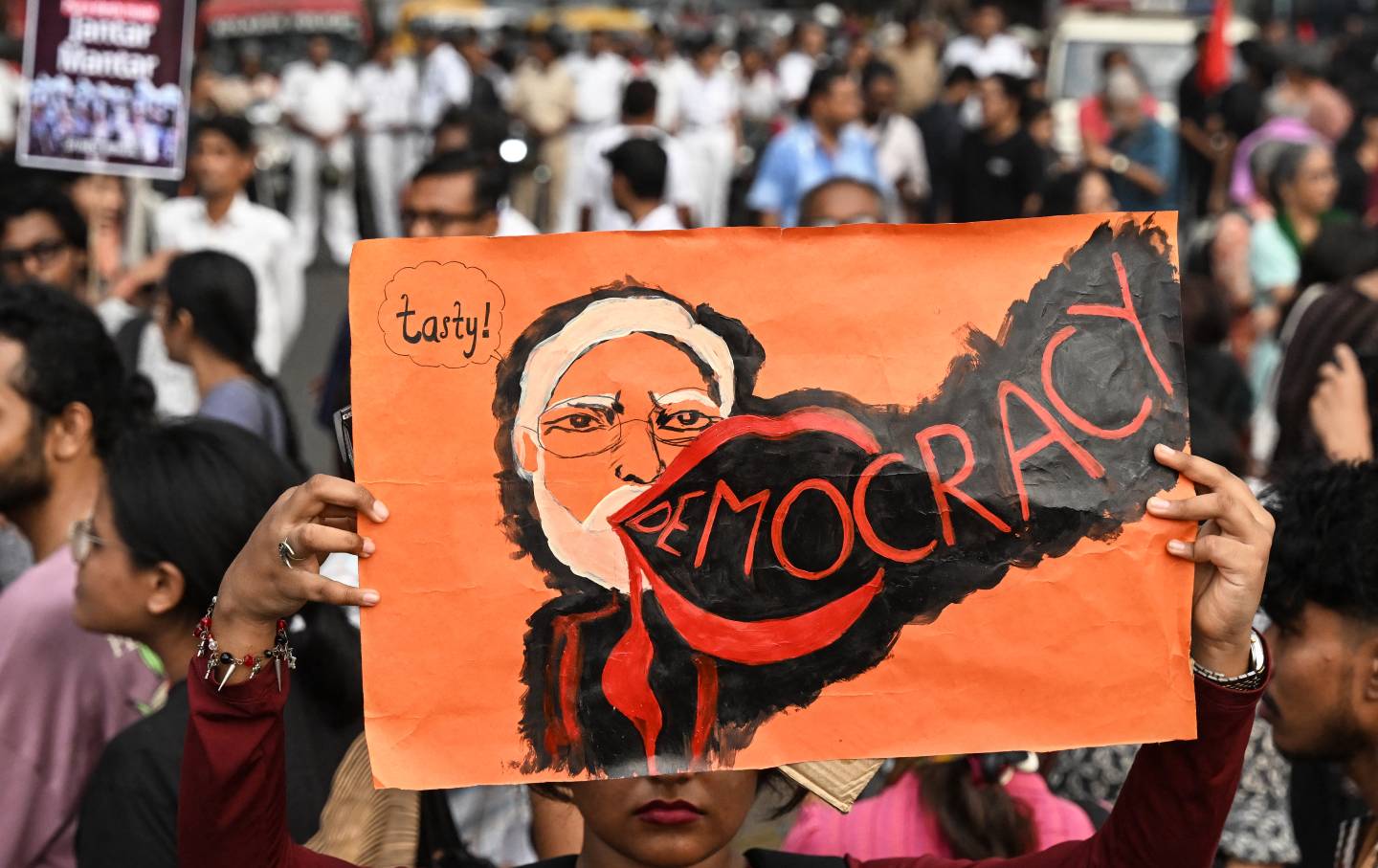
Inside India’s Gen Z Cockroach Janta Movement Inside India’s Gen Z Cockroach Janta Movement
Young Indians are challenging the purge of voter rolls by Modi’s right-wing government. Shrishti Khanna, who was detained by Delhi police while covering the protests, explains.
The Clarion Call of “NAZA” The Clarion Call of “NAZA”
Yuval Abraham and Rachel Szor’s new film not only documents the horrors of the present but gives us a glimpse of a possible future too.

