
The Celebration of the Nation’s Birth Is Still a Sham
If America must observe its 250th anniversary, let it be by taking stock of Reconstruction’s unfinished mission.
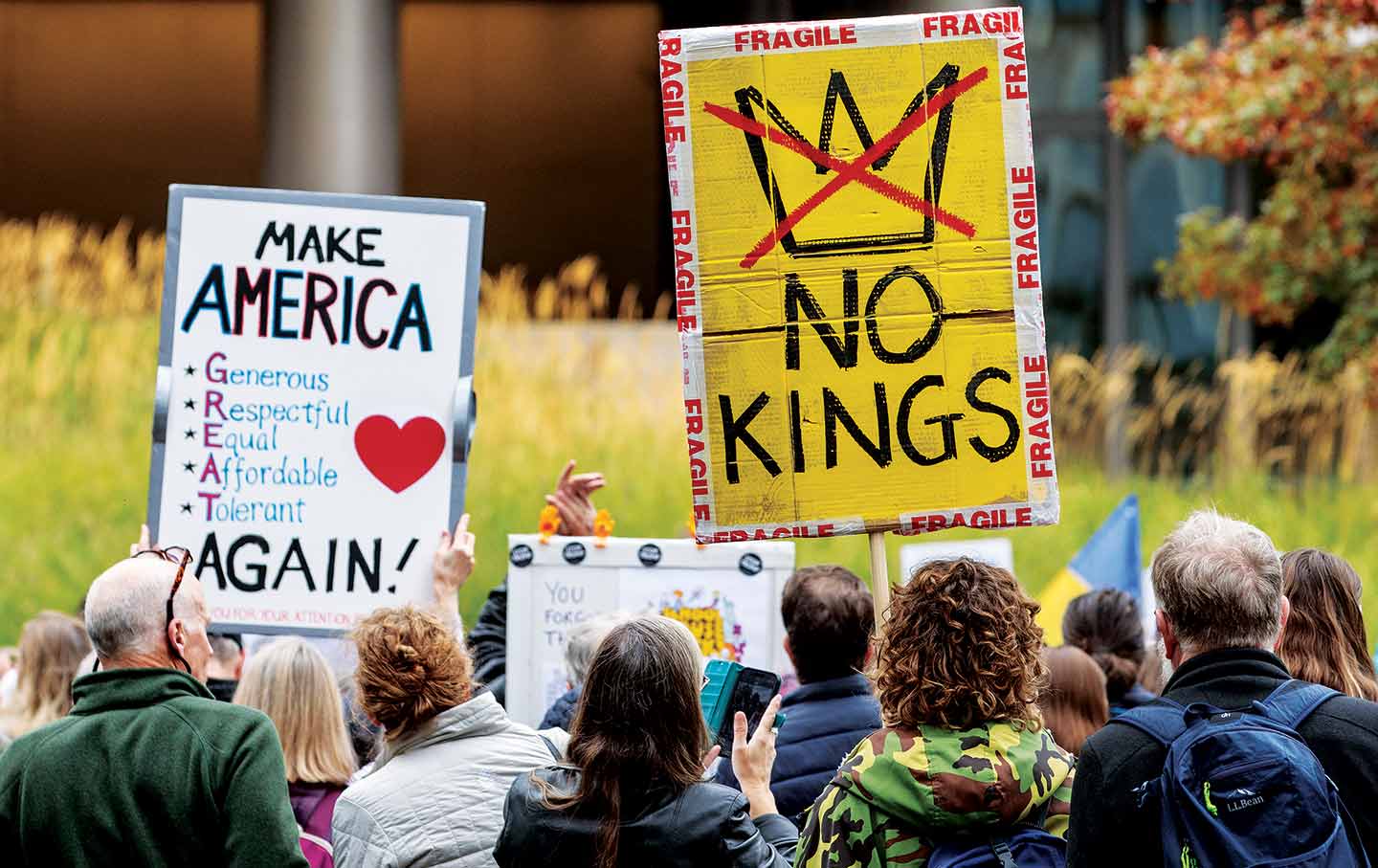
Sic semper tyrannis: The Declaration’s catalog of grievances against King George III sound like Donald Trump’s to-do list.
(Mark Kerrison / In Pictures via Getty Images)
In the summer of 1776, the representatives of 13 former colonies assembled in Philadelphia and formally announced that they were not the unruly subjects of the British crown: They were Americans, and they were committed, ostensibly, to self-rule.
The people who signed the Declaration of Independence made a grand gesture toward democracy. They proclaimed in that founding document that “all men are created equal,” that governments exist to secure the “unalienable rights” of those men, and that the only legitimate source from which governments can derive their powers is the “consent of the governed.” It is little wonder that the Declaration has endured for centuries as a touchstone for freedom movements around the world.
250 Years of Searching for a More Perfect Union
At home, however, the Declaration’s drafters immediately dishonored their own liberatory demands. The government they formed was “defective from the start,” as Justice Thurgood Marshall put it in a 1987 speech commemorating the 200th anniversary of the Constitution. The men who signed and ratified the Declaration of Independence spoke eloquently about liberty and justice while simultaneously committing crimes against humanity—namely, the genocide and dispossession of Indigenous people and the enslavement of Black people. With the opening words of the Constitution, they purported to speak for “we the people,” yet they closed their constitutive process to all but those few white men who owned property. (By one scholar’s count, “the people” who voted in support of the Constitution represented only 2.5 percent of the population.)
Since the nation’s inception, the bigotry and violence on which the country was forged have facilitated the exclusion of much of the country from democracy’s substantive guarantees. And for just as long, many of the people pushed to the margins of American society have regarded the idea of celebrating the nation’s birth—which is to say, the government’s formal memorialization of promises that remain unfulfilled—as a cruel joke.
“Your celebration is a sham,” said Frederick Douglass in his famous speech, “What to the Slave Is the Fourth of July?” Douglass told a roomful of abolitionists in Rochester, New York, that the United States had betrayed the ideals of the Declaration by giving white America “independence” while Black America was still governed by racial tyranny. “Do you mean, citizens, to mock me, by asking me to speak today?” he asked.
More ironic still, Douglass expressed relief in that speech that the year was only 1852, noting that, at 76 years old, America was still a young nation. Now America is 250, and it continues to struggle with many of the same ills. Two and a half centuries after establishing a government by and for “we the people,” the country is still fighting over who gets to be considered part of “we.” As illustrated through the relentless persecution of people presumed to be immigrants, transgender people, and other vulnerable communities, the current government is actively working to limit “the people” entitled to legal protections to a privileged subset, predominantly wealthy white men who are cisgender, heterosexual, and loyal to the current administration.
And the country is still fighting to reject authoritarianism, with millions of Americans taking to the streets to again declare “No Kings.” It would be easy to mistake the list of grievances created by the former colonists, cataloging the injuries inflicted on them by the King of Great Britain and Ireland, for the to-do list of President Donald Trump. “Obstructing the laws for naturalization of foreigners” and “the administration of justice”? Check. Sending “swarms of officers to harass our people” and “transporting us beyond seas to be tried for pretended offences”? Check. “Cutting off our trade with all parts of the world” and “imposing taxes on us without our consent”? Check. (No, really—give us our tariff-refund checks.)
The drafters of the Declaration of Independence and the Constitution signed a promissory note, centuries ago, on which the United States has clearly defaulted. What do we do with 250 years of broken promises? The answer is likely intuitive: fulfill them. It is past time for America to honor its egalitarian commitments, and Americans must compel the country to keep its word. In those same speeches that so trenchantly critiqued the hypocrisy of the framers, Douglass and Marshall—both “founding fathers,” as far as I’m concerned—asserted that regular people have the power to authoritatively interpret the nation’s charters, and should do so in furtherance of social justice.
“Every American citizen has a right to form an opinion of the Constitution, and to propagate that opinion, and to use all honorable means to make his opinion the prevailing one,” Douglass said. Years before Congress explicitly banned chattel slavery, the self-emancipated legal theorist argued that human bondage was already unlawful. “Interpreted, as it ought to be interpreted, the Constitution is a GLORIOUS LIBERTY DOCUMENT,” he said. (Those three words were rendered in capital letters in the text of his speech.)
Marshall later recognized that “when contemporary Americans cite ‘the Constitution,’ they evoke a concept that is vastly different from what the Framers barely began to construct two centuries ago.” Marginalized people did not participate in the literal drafting of the Declaration of Independence or the antebellum Constitution, but it is marginalized people who have given both their meaning. Many of the rights and protections we now regard as fundamental are attributable to “those who refused to acquiesce in outdated notions of ‘liberty,’ ‘justice,’ and ‘equality,’ and who strived to better them,” the first Black Supreme Court justice said.
Throughout American history, Black people have transformed law and society by contending in both word and deed that the abstract principles in the Declaration and the Constitution serve—and must serve—the tangible purpose of fostering an equitable multiracial democracy. In the decades immediately preceding and following the Civil War, for instance, tens of thousands of Black people attended hundreds of political gatherings in which they organized for racial justice, including by making broad claims about the scope of their constitutional rights.
As early as 1844, for example, delegates at the State Convention of the Colored Citizens of Ohio pronounced it legally wrong that Black people were “shut out from the means of education, notwithstanding by the plain and indubitable language of the Constitution, every inhabitant of the State is entitled to those privileges.” In 1848, Black Philadelphians demanded entry through “the doors of the Constitution” as equal citizens by virtue of their being born in the United States. “If we are asked what evidence we bring to sustain our qualifications for citizenship, we will offer them certificates of our BIRTH and NATIVITY,” they avowed. At a National Convention in 1855, Black people declared that slavery unconstitutionally deprived them of liberty “without due process of law.” As a contemporary newspaper recounted, “The thing is settled, and the Constitution is Anti-Slavery, the ‘public sentiment’ of the Convention having so declared it!”
Popular
“swipe left below to view more authors”Swipe →The Constitution means what enough people say it means. And Black people have long argued that it means freedom from oppression, with a corresponding affirmative obligation on the government to foster a pluralistic society with justice for all. The Colored Conventions and other political organizing efforts significantly influenced the drafting of the Reconstruction amendments and shaped the development of constitutional meaning during the nation’s underappreciated Second Founding, the term for the post–Civil War remaking of America.
The freedom struggle gave rise to the 13th Amendment, which constitutionalized the prohibition of slavery, with one loathsome exception for criminal punishments. It led to the expansive 14th Amendment, with provisions that include a guarantee of due process of law for citizens and noncitizens alike, a prohibition on the denial of equal protection under the law to any person, and a grant of power to Congress to enforce these provisions with legislation. And it produced the 15th Amendment, which banned race-based voter discrimination and again empowered Congress to legislatively enforce this command. The legal order that existed prior to the Reconstruction amendments facilitated a caste system and mass exploitation. But the new Constitution championed emancipation and tasked the country with making an inclusive democracy real.
This is, of course, not the history that the Supreme Court cares about. The revolutionary potential of the Reconstruction amendments has been stymied by white-supremacist constitutional interpretation. Relying on “originalism” —the idea that the Constitution’s meaning was forever fixed at the moment of enactment—today’s court examines only the narrowest slices of history, which allows it to feign neutrality while reproducing the democratic deficiencies of the founding era. One could write a book on all the problems with this interpretive approach—and indeed I have, called The Originalism Trap—but for now I will simply say that originalism’s command to freeze the Constitution in time is inherently at odds with Reconstruction’s instruction to effectuate liberatory change.
If America is to celebrate its 250th anniversary, let it be by reinterpreting our founding documents in light of Reconstruction’s unfinished mission. Let it be by expanding our understanding of who is among “the people” and what “we the people” are due. Let it be by embracing inclusive constitutionalism. Once we achieve an equitable multiracial democracy, as the Constitution directs, then we will truly have reason to celebrate.
More from The Nation
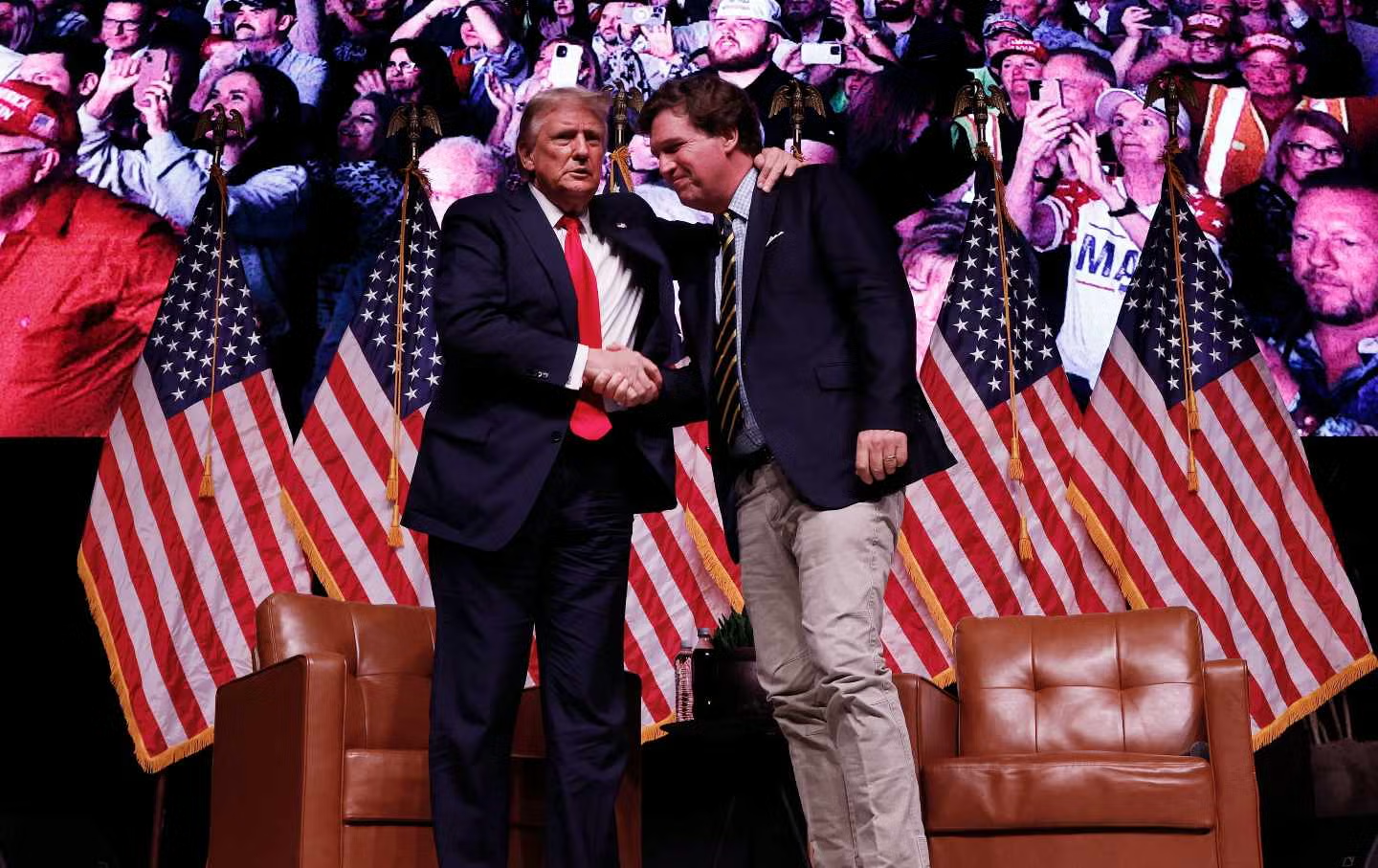
What Trump and Tucker Carlson Have in Common What Trump and Tucker Carlson Have in Common
Carlson has broken with Trump largely over the war in Iran. But on Ukraine and immigration, the two speak very much the same language.

The Jewish Case Against AI The Jewish Case Against AI
Haredi rabbis and the secular left agree: This technology is a threat to the entire social fabric.
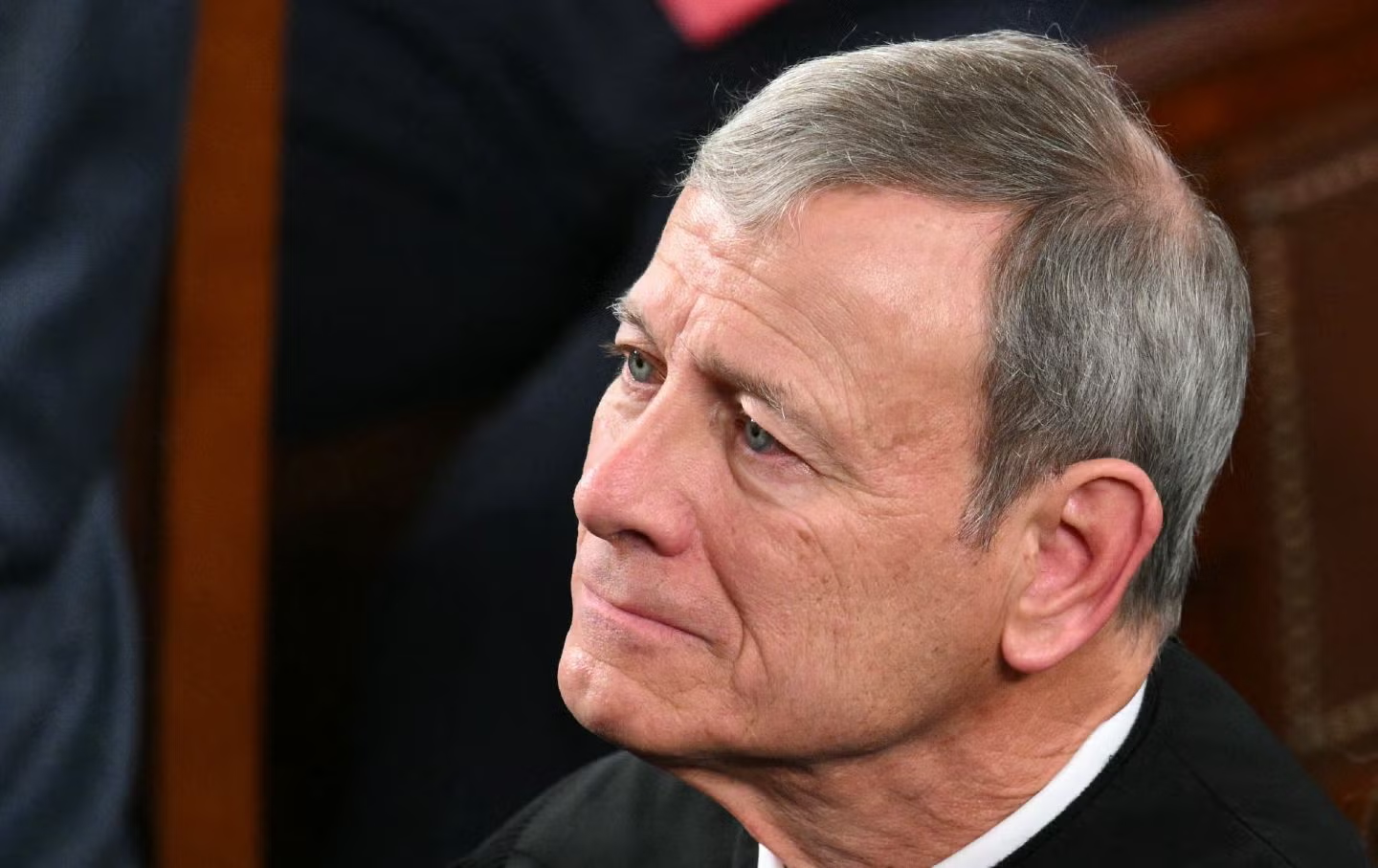
The Fight for Educational Equality Is Also a Fight for a Just Supreme Court The Fight for Educational Equality Is Also a Fight for a Just Supreme Court
The court has severely weakened our ability to make an education system that fulfills the promise of Brown.
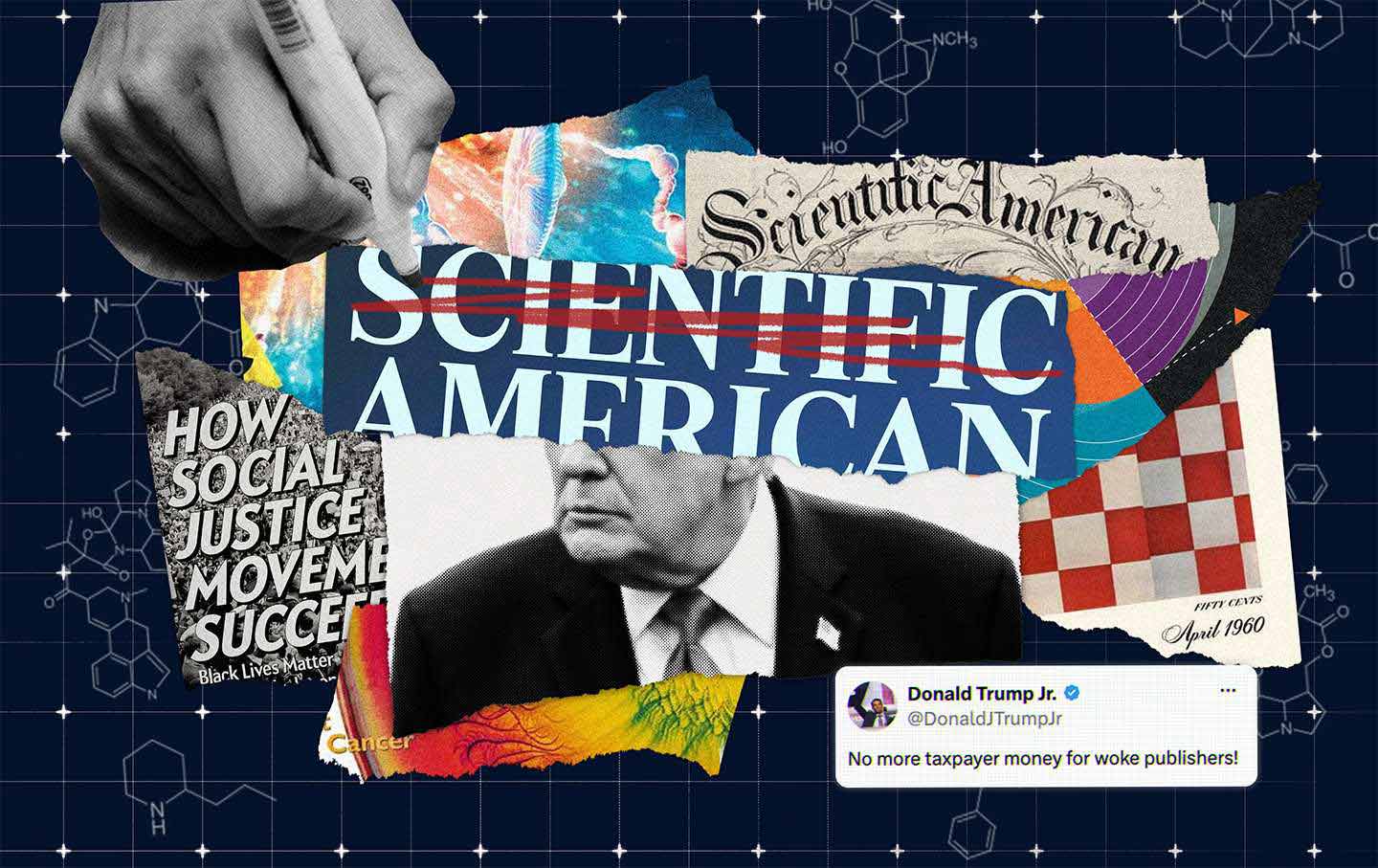
The Fall of “Scientific American” The Fall of “Scientific American”
When the beloved science publication got too political, its corporate owners stepped in. Now its future is uncertain.

The Bookstore Revolution in Taiwan’s Conservative Heartlands The Bookstore Revolution in Taiwan’s Conservative Heartlands
After Taiwan legalized same-sex marriage, gender-themed bookstores are working to build the social acceptance that the law alone couldn’t deliver.
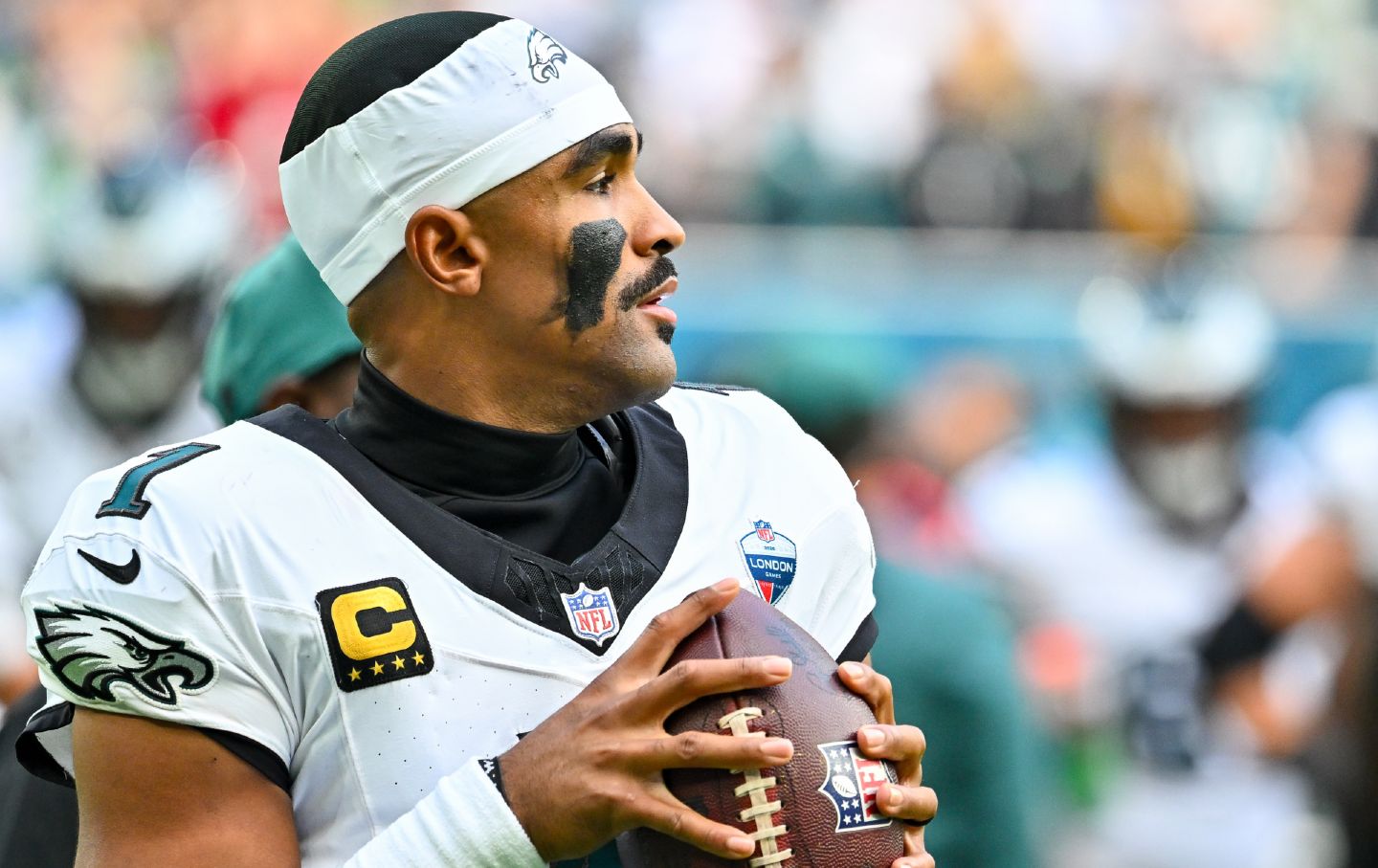
Jalen Hurts Deserved Better. We All Do. Jalen Hurts Deserved Better. We All Do.
In a country that treats workers as expendable parts, Hurts’s playing through a blood clot is just the highest-profile example of the price workers pay in an oligarchy.

