Here Comes the Inevitable Backlash to DSA’s Rise
The Democratic elites are wary of the insurgency.
The Democratic Socialists of America have never been more relevant. And with this rise comes an inevitable backlash—not so much from the voters themselves as the Democratic elites wary of the insurgency and the media organs that, more often than not, reflect their blinkered conception of the world.
Why are Democrats panicking so much about DSA? Why has at least one Atlantic columnist labeled them a “parasite”? This is the price of victory—of becoming, at last, a threat. The socialist left, for almost a century, was nothing more than a footnote on the American political scene. A major force in the Eugene Debs era, with more than a thousand elected officials scattered across the country, the Socialist Party withered in the 1920s and ’30s, a victim of the first Red Scare and attacks from the major political parties. Franklin Roosevelt had weakened them as well, dragging the Democratic Party left and adopting many of the economic policies they had supported. As anti-communism took hold in America, there was no place for any prominent politician using the “s” word, and even when Michael Harrington founded DSA in the early 1980s—unlike the old Socialist Party, his DSA would compete in Democratic primaries—there was little hope that the organization, with just a few thousand members, could decide elections.
The rise of Bernie Sanders changed all that, reinvigorating DSA. Membership boomed. Sanders himself wasn’t a DSA member, but he called himself a democratic socialist. Still, the Democratic establishment could worry only so much. Sanders was defeated twice. DSA members like Alexandria Ocasio-Cortez did begin to win congressional primaries and a handful of socialists entered statehouses and city councils, but there were only so many of them. A centrist Democrat repeatedly denouncing DSA would have seemed a bit silly. Who really cares about DSA? When Donald Trump was defeated and Joe Biden returned to office, DSA maintained its small foothold but effectively stopped growing, and the Democratic establishment could exhale. The socialist fervor, it seemed, had passed.
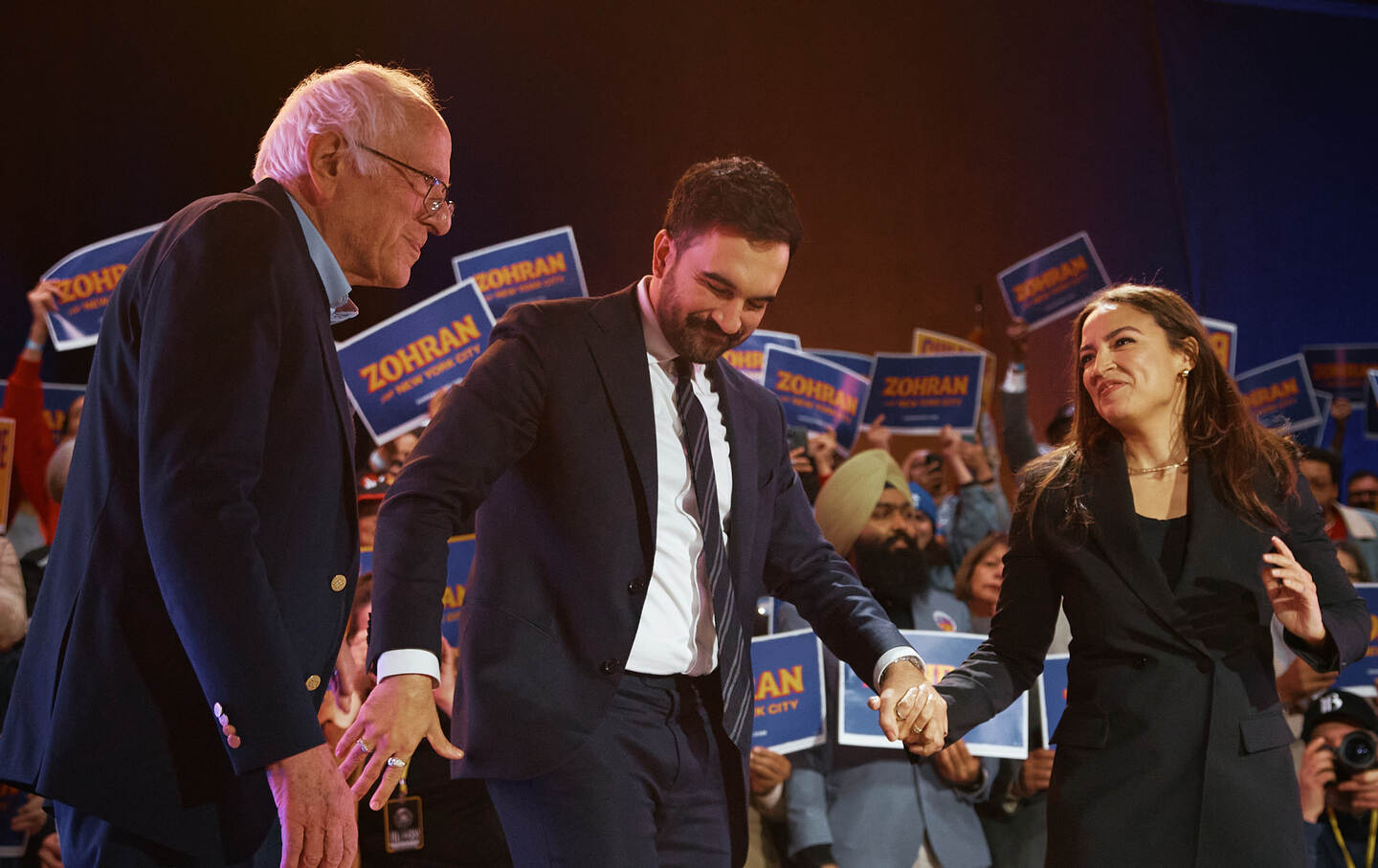
Zohran Mamdani changed all that. A socialist winning America’s largest city was a great shock to the establishment Democrats who believed the DSA moment had come and gone. The primaries last month proved that Mamdani’s victory wasn’t an anomaly, a political fad. Darializa Avila Chevalier, Claire Valdez, Melat Kiros, and Chris Rabb are all heading to Congress. DSA is continuing to grow its presence in state legislatures. As in the 1960s, when a graying Democratic establishment backed the Vietnam War while the youth revolted, many Democrats today clung far too close to Benjamin Netanyahu’s Israel and are paying the price. Pro-Palestine sentiment has reinvigorated the left. This success has driven some pundits and political leaders to declare that DSA members should be thrown out of the Democratic Party. Jamie Harrison, the former chair of the Democratic National Committee, said on X not long ago that socialists who “hate the Democratic Party” should not “run for our nomination.” “Don’t use our resources. Don’t rely on our volunteers,” he posted. “Don’t use our infrastructure. Don’t ask Democrats to invest their time, money, and energy in your campaign.” In his “parasite” Atlantic column, Jamie Kirchick argued that the Democrats should be “prohibiting DSA members from joining their party and throwing out the DSA members already honeycombed within it.”
For an anti-socialist liberal, it’s a nice idea. Make the Democrats the party of Rahm Emanuel and Tom Suozzi and leave it there. The trouble for them is the American political system, one that is flawed but does permit quite a bit of grassroots democracy. There is literally no mechanism for the Democrats to accomplish what Kirchick seeks. Unlike parties in European parliamentary systems, the Democrats and Republicans can’t expel members or control their ballot lines. Both parties, ultimately, are empty vessels, and it’s the competition in the primaries that decides who leads them. Republican elites didn’t want Donald Trump in 2016, but Trump won the primary. He became the party.
Harrison’s argument is especially absurd because there are few “resources” or “infrastructure” a centralized Democratic Party deploys for most races. It’s up to candidates themselves to raise money and recruit volunteers. Eventually, the DNC or a national fundraising arm might arrive to pump cash into competitive, high-profile races, but this is long after the actual organizing is done. The DSA candidates who win certainly do not use Democratic Party resources and “volunteers.” There’s no hotline to call up to request bodies from the DNC. DSA finds their own people. They just understand, as Harrington did, that running in the Democratic Party primary is a much better way to make tangible change than forming a third party and losing more often than not. Ironically, many of the same political leaders and pundits who call for a DSA purge today would be equally livid if they formed a third party tomorrow, contested general elections, and potentially siphoned votes from Democrats.
Democratic socialists are far from a preeminent power in this country. They’ve found success, though, by doing the basic political organizing that establishment institutions used to take much more seriously. In the 20th century, there were genuine Democratic political machines, urban and rural vote-pulling operations that engaged in politics on the granular level. Plenty of them were corrupt. What they did do, though, was show up. Tammany Hall, for all their infamy, didn’t neglect their immigrant-heavy wards. They offered their own social safety net. By the time Ocasio-Cortez had felled Joe Crowley, the boss of the Queens Democratic Party, these kinds of machines had effectively ceased to exist. What Harrison described in his furious post isn’t a reality of American politics anymore.
DSA will keep winning as long as it keeps showing up. Mamdani has demonstrated this in New York, as the omnipresent first-year mayor. (Disclosure: In 2018, when I ran for office, Mamdani was my campaign manager.) The DSA council members and state legislators will have to stay focused on material concerns and maintain robust constituent services. Some of DSA’s success will hinge on how successful Mamdani’s tenure ends up being. Ocasio-Cortez’s potential presidential bid—how far it goes, if she can be competitive or even win—will determine, too, how high the socialist ceiling reaches. We won’t know for a long time. In the interim, the establishment will need a new strategy. The voters are wearying of them.