At Cornell, Students Are Still Seeking Answers
Amid faculty votes of no confidence and perceived administrative mishandling of sexual assault allegations, Cornell students are still searching for accountability.
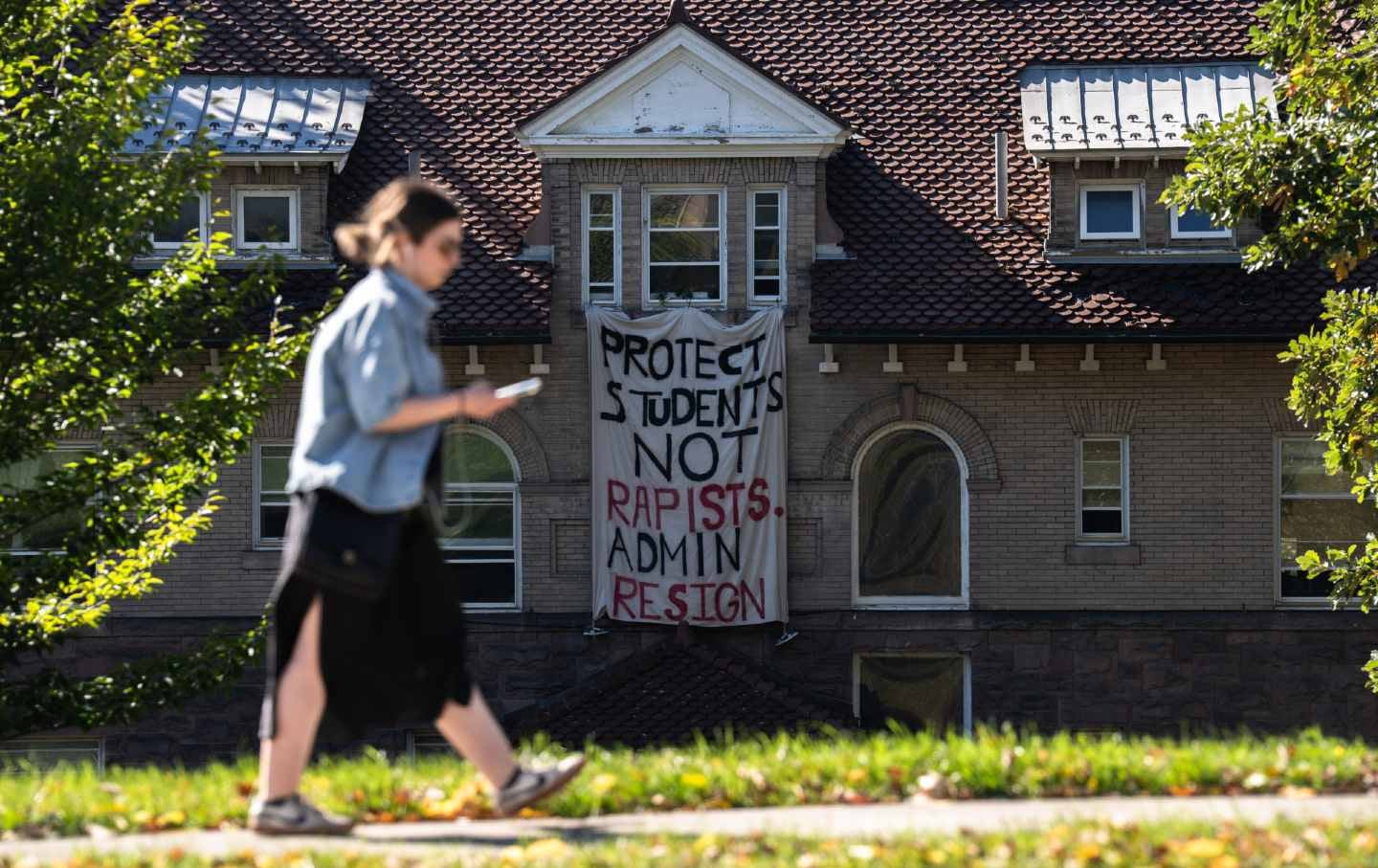
Students are questioning the independence of the New York attorney general’s ongoing investigation into the 2024 rape allegations made by a former student, challenging disciplinary double standards, and demanding accountability from the officials promising reform.
(Matt Burkhartt / For The Washington Post via Getty Images)Accusations that university leaders were evading questions filled a Cornell University community forum on November 16, as approximately 100 students confronted president Michael Kotlikoff and other administrators over the university’s handling of sexual assault.
The gathering came two months after a former Cornell student, identified as Jane Doe, filed a lawsuit alleging that she was drugged and gang-raped by members of the Chi Phi fraternity in October 2024. The allegations, along with questions about Cornell’s investigation and disciplinary response, drew national attention and a wave of student-led protests demanding changes to the university’s sexual assault policies and leadership. On November 6, the Faculty Senate passed a vote of no confidence in the administration’s ability to address sexual assault. And on November 19, the Student Assembly passed Resolution 37 to hold an undergraduate vote of no confidence, with voting open through December 7.
The forum, intended to rebuild trust and transparency after weeks of outrage, instead showcased growing frustration with Cornell’s leadership. Inside Call Auditorium, students questioned the independence of the New York attorney general’s ongoing investigation into the rape allegations, challenged disciplinary double standards, and demanded accountability from the officials promising reform.
“The atmosphere was very tense. No one was there to defend Kotlikoff’s actions. We were all there to voice concerns or get some kind of information out of the administration, and the students were very united in demanding answers,” said student John Hartnett.
For many students, the forum was an opportunity to hear from a president whose administration has spent months dodging responsibility. But the exchanges revealed a greater divide between what Cornell considered progress and what its students considered accountability.
“Kotlikoff said he wants to build trust between the student body and administration, but when he was asked a question, he either deflected or said, ‘We will talk about it later,’” said Saya Taylor.
Taylor questioned Kotlikoff about the school-wide October protest and the faculty vote of no confidence, asking “why administrators have not been held accountable” when “two major constituents have lost trust in the administration.”
Kotlikoff directed Taylor to an ongoing independent review led by former US deputy attorney general Sally Yates, who is examining Cornell’s handling of the Chi Phi allegations and its broader sexual misconduct policies. He told students that the investigation would determine whether mistakes had been made and identify necessary reforms.
But for students who had already spent months demanding action, the promise of yet another investigation proved far from satisfactory. “Admin is always outsourcing responsibility in this investigation,” Hartnett said.
That mistrust became even more apparent when Jack Huber questioned whether Sally Yates, who was retained by Cornell’s Board of Trustees, could conduct a truly independent investigation given her institutional ties.
Huber cited the trustees’ earlier probe into a May 2026 incident in which Kotlikoff drove into two students with his car. The board found him innocent, and now the same governing body is responsible for another high-stakes investigation.
But Hartnett’s demands for accountability went beyond the investigation. He challenged the disparity between Cornell’s Office of Student Conduct and Community Standards (OSCCS), which handles student conduct violations including protest-related cases, and its Title IX process, which addresses allegations of sex-based misconduct.
Both systems are in place for imposing suspensions when “student safety” is at risk. Yet Hartnett questioned why the university has been able to move at “same-day speed” against student protesters while allegations of sexual violence have not resulted in similarly immediate consequences.
“In order to be suspended from OSCCS, you need to threaten safety, and the same is true for Title IX. Someone accused of rape is undoubtedly a threat to safety,” Hartnett said.
According to Hartnett, Kotlikoff answered that the university would “think about the issue,” a response he saw as emblematic of the administration’s reluctance to commit to specific policy changes.
Sol Schoenbach-Lee confronted the president with an analysis of university data published by USA Today: Cornell received 1,216 reports of sexual violence between 2018 and 2024, but only 14 cases resulted in suspensions, while seven resulted in expulsions or dismissals. Schoenbach-Lee asked how Cornell could continue to encourage students to pursue Title IX proceedings when so few reported cases resulted in serious disciplinary action.
Popular
“swipe left below to view more authors”Swipe →“There is disingenuity from the university’s framing of Title IX being the right thing for students to do because statistically, it shows that it underserves and doesn’t help victims seek justice,” Schoenbach-Lee said.
Kotlikoff initially responded, “I don’t know,” to his question.
“It’s disappointing that the administration is approaching the town hall from a recognizable tactic of damage control instead of genuine interaction with the students. The university sort of attempts to twist questions into inspirational messages of ‘We know things are bad’ and ‘We want to do better’ without actually making changes,” Schoenbach-Lee said.
At several points, according to Hartnett, the president criticized students for being disrespectful during some of the exchanges.
“When Kotlikoff said something deflective, the audience would question him directly, which kept happening, and he would say, ‘You guys need to stop being so disrespectful’ to the students,” Hartnett said.
“The audience laughed at Kotlikoff’s response to Jack’s question about the trustees and Yates investigation, and people were laughing because he kept saying absurd things. If we didn’t laugh, we would be in rage,” Taylor said.
The November 16 gathering revealed that the growing crisis of confidence is no longer just a disagreement over which policies should change; for the students who confronted Kotlikoff, the question is whether those responsible for the university’s existing failures can be trusted to lead the reforms themselves.
“This is just another example of Cornell admin not listening to students,” Taylor said. “A whole town hall built on student anger, and they’re still here deflecting.”
More from The Nation
What It Looks Like to Parent Without Gender What It Looks Like to Parent Without Gender
My queer partner and I are raising our new baby in unconventional ways. It’s going to frustrate people on the right and the left.
Will Nithya Raman Take on the Olympics Machine? Will Nithya Raman Take on the Olympics Machine?
As Los Angeles’s mayor-elect, Raman is in the perfect position to raise major questions about the Olympics. Before the election, she seemed ready to do so. Now it’s not so clear.

A New Trump Rule on Tax Credits Could Impoverish Thousands of Legal Immigrants A New Trump Rule on Tax Credits Could Impoverish Thousands of Legal Immigrants
It’s the latest move in the administration’s all-out effort to deny government benefits to immigrants—even those living and working here legally.

Documenting Women Out of Their Cells Documenting Women Out of Their Cells
Over a 10-year period, a photographer captured the lives of women in and out of prison.
Sara Bennett on Photographing Women With Life Sentences Sara Bennett on Photographing Women With Life Sentences
A conversation with Sara Bennett as well as two of the women she photographed for her new book, Looking Inside: Women with Life Sentences.

“We Remain In This Nightmare”: Another Letter From the Hell of ICE Detention “We Remain In This Nightmare”: Another Letter From the Hell of ICE Detention
It is now over seven months since my son, my husband, and I were detained. It feels like being stabbed in the heart again and again.