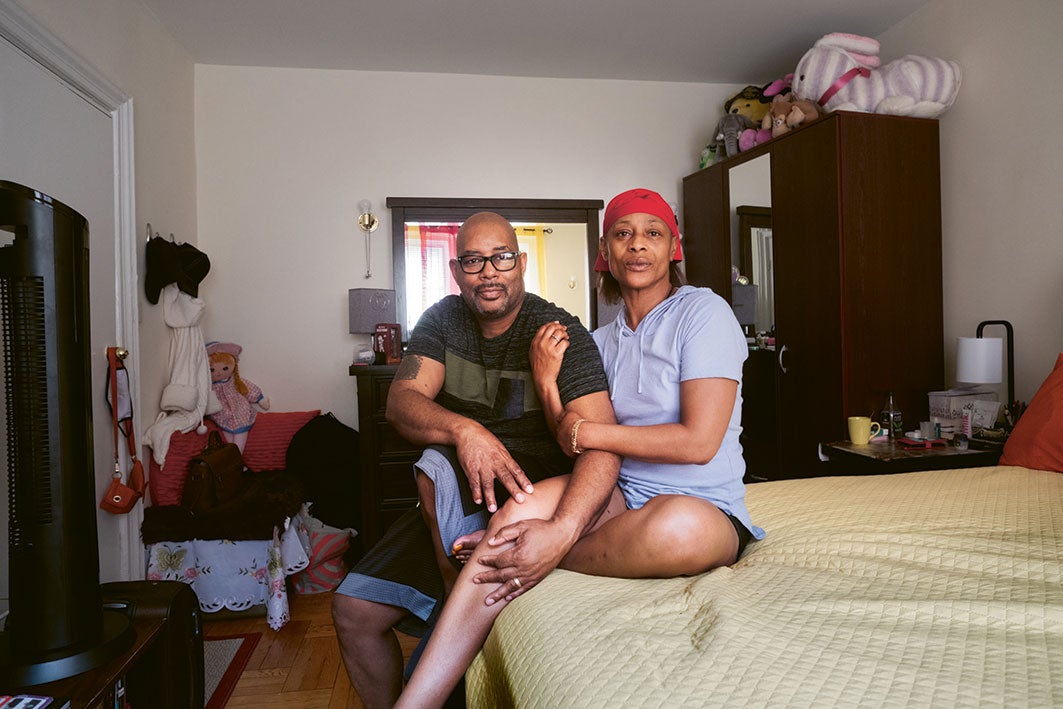
Reunited: Veronica in 2021 at age 53, with her husband of 29 years, Vernon, in their apartment. She was released in 2019 after serving 27 years.
(Sara Bennett)Sara Bennett, a former public defender, spent more than a decade photographing women sentenced to life, mostly for homicide, in New York State’s prisons. A new book of her photographs, Looking Inside: Women with Life Sentences, traces their lives behind prison walls and, for those who have been released after decades behind bars, their reentry into the outside world. It won the 2026 Paris Photo–Aperture PhotoBook Awards, Jurors’ Special Mention Prize.
Judith Clark was one of Bennett’s clients when she was an attorney. She served 38 years of a 75-to-life prison sentence before then-Governor Andrew Cuomo commuted her sentence, enabling her to receive parole. “For me, this book is a family album,” Clark wrote in the afterword. “I spent half my life with everyone in this book.”
Clark is now out of prison. Many of the other women photographed have also been released—some, like Clark, through parole. Others had their sentences reduced through New York’s Domestic Violence Survivors Justice Act, which allows people to petition the courts for resentencing if the crime they were convicted of was linked to abuse they had suffered. Meanwhile, in New York’s three women’s prisons, 174 people are serving life sentences. As of 2024, one in 11 incarcerated women, or more than 6,800 nationally, were serving life sentences.
The Nation spoke with Sara Bennett as well as two women she photographed. Their interviews have been edited for length and clarity. You can view more photos from the book in The Nation’s December issue.
—Victoria Law
Victoria Law: Why did you choose to focus on women convicted of homicide?
Sara Bennett: The reason I focused on women convicted of homicide is that they all have life sentences, which means that you never know if you’re getting out of prison. You might get a sentence of 25 years to life. That means that, after 25 years, you’re eligible for parole, but you don’t know if you’re ever going to get parole. The women I was photographing didn’t know if they were ever getting out.
Some people, like Karen, had 25 years to life. She was denied parole five times and ended up serving 35 years. When I started this project in 2014, everybody was getting denied parole. The parole board would deny you; you’d come back two years later and you’d get denied again. This happened repeatedly. It doesn’t mean that people weren’t “model prisoners.” They had gotten educations, jobs; they were running the prison—but they couldn’t get out.
I never tell the details of a person’s crime [in the book], but I wanted people to know that they were serious crimes.
VL: How did you navigate permission to photograph inside the prison?
SB: I called the Department of Corrections, said who I was and that I wanted to photograph inside prison. They said, “Yes, theoretically, it’s possible.”
As soon as the prison’s media liaison told me that theoretically, I could photograph, I reached out to women I knew inside prison. I told formerly incarcerated women outside [about the project] and asked if they knew anybody still imprisoned.
I wrote to 30 or 35 women. I went to see them and said, “This is who I am, and this is the work I’ve done. I want to do something inside prison. I would like to come and visit you, and we’ll see if you want to do this. I made a zillion trips before I started photographing.”
VL: Talk about the process of gaining the consent of the people you photographed in a place where consent often isn’t possible.
SB: That’s why I went to visit them first and tell them what I was doing. I had no idea where the work was going to go. They would have to do it because they believed in it, and they wanted to be part of it because there was nothing in it for them.
When I gave them the typical photographer consent form, they were just going to sign it. I said, “Let me tell you what this says because this consent form says that I can do anything I want with these photographs forever except for using them commercially. But otherwise, when you allow me to take your photo, you’re giving me carte blanche to do whatever I want with it, and you need to know that.”
Then I said, “Now I’m going to tell you what I’m going to do because this is who I am. If I take your photo and you decide you don’t want to be part of the project anymore, then you tell me that, and I will never use your photo again. But I can’t take it back if it’s already been in a magazine or online.”
A lot of people knew me as somebody’s lawyer. I had a good reputation as a lawyer who did a lot for my clients. I had already photographed people and had made little self-published books. They’d seen those. And so, if they wanted to be part of it, they wanted to be part of it. But you’re also right that consent is difficult when you’re in a situation where you don’t really have any power over your life. So I think a photographer really has to be cognizant of their own ethics and stay true to those ethics.
When I’m in shows and the curator says, “I want to use this, this, and this photo,” l say, “I have to ask the women.” They ask, “Don’t you have a consent form?” And I’ll say, “Yeah, I do, but I still want to ask them and make sure that they’re consenting to this one.”
VL: You had talked about allowing them to withdraw consent at any time. Did that happen?
SB: Only one person, who is still incarcerated, doesn’t want her photo out there anymore. I photographed 50 women.
VL: Talk about your decision to include their writings.
SB: I really wanted their voices to be part of the book. And their handwriting. [The handwritten pages] make people feel more connected than if they were typewritten.
VL: What are some “do”s and “don’t”s when photographing vulnerable people?
SB: I think you have to be you have to be really really respectful of the person that you’re photographing. You have to be aware that there’s a certain power dynamic and that you don’t want to fall into that power dynamic, meaning you don’t want to push them to do things that they don’t want to do.
Don’t do any harm. If you don’t know enough about the subject that you’re photographing, then find a mentor or somebody in the field who knows. When you’re photographing people who are incarcerated, for instance, there’s always the potential for legal cases to arise and anything they said in the past can be harmful. If you don’t know that, you may think that it’s helpful, but it can be very harmful to them. For example, one of the women told me in her writing that she was innocent. I know that if you go to the parole board and claim that you’re innocent, they’re probably going to deny you because they don’t believe you and think you’re not taking responsibility or showing remorse. I said to her, “If you write this, and you’re going to the parole board next year, and they see this statement; it could come back to haunt you.” But if you didn’t know that [and published it], you unintentionally are causing harm.
VL: What do you want readers to take away from this book—and these photographs?
SB: We don’t look enough at all of the harms in society. Prison is the one I focused on. I wanted to show who people in prison are, the kinds of things that they go through, the hardships they have. They’re full, interesting human beings and that’s what I wanted people to see. Then I want the viewer to decide for themselves. This is how we treat imprisoned people in this country. Do you feel OK about that? If you do feel OK, at least you’re doing it with open eyes. If you don’t feel OK about it, then do something about it.
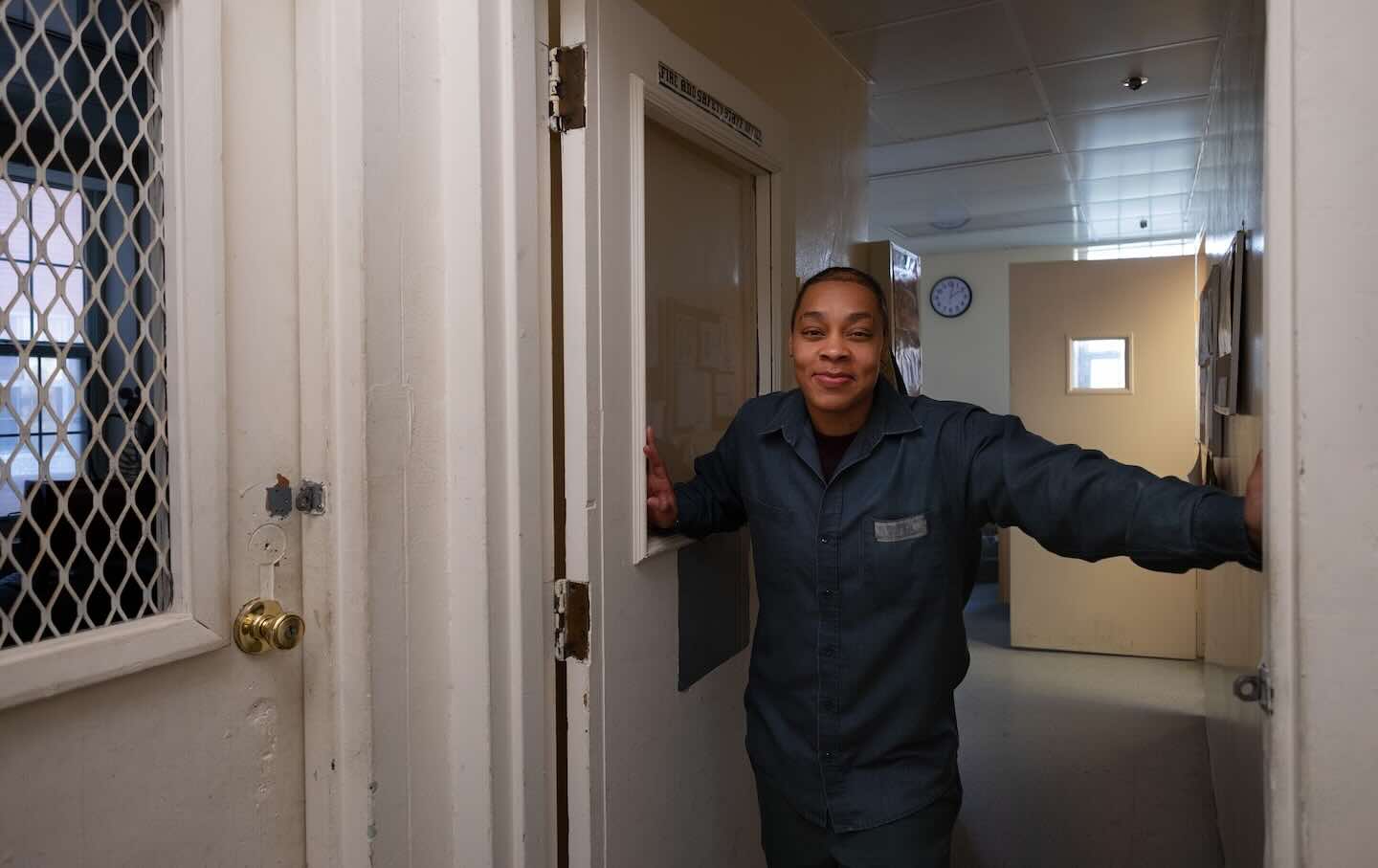
Taylor is locked up on a 22 to life sentence since her 20s. Now in her 40s, she shared her thoughts on participating in Looking Inside over the prison’s electronic messaging system.
How did you first learn about the project?
Judy Clark [who was a mentor to many during her 38 years in prison] asked me if I wanted to participate and then I helped to find other participants. Sara had sent me one of her previous books. She is an amazing photographer. Even though she is no longer an attorney she is still advocating for the freedom of incarcerated women through her photography. She is invested, passionate and truly cares for us.
Why did you decide to participate in Looking Inside?
I love Sara’s work. She is very passionate about the work she does and committed to humanizing the women she photographs. Her work always tells a story that shifts the narrative and it helps to change the trajectory of how incarcerated women are viewed.
What does it mean to have your portrait shared with the wider world?
It makes me feel seen and not forgotten.
Anything else you’d like to add about participating in this project?
Since I participated, I have had the pleasure of seeing many of the women released. Seeing them go home back to back, I have always felt in a unique way that Sara’s advocacy through that project helped. I always wondered who was next. There are only a few women from her last project still incarcerated, and I pray for those of us still inside to soon be released.
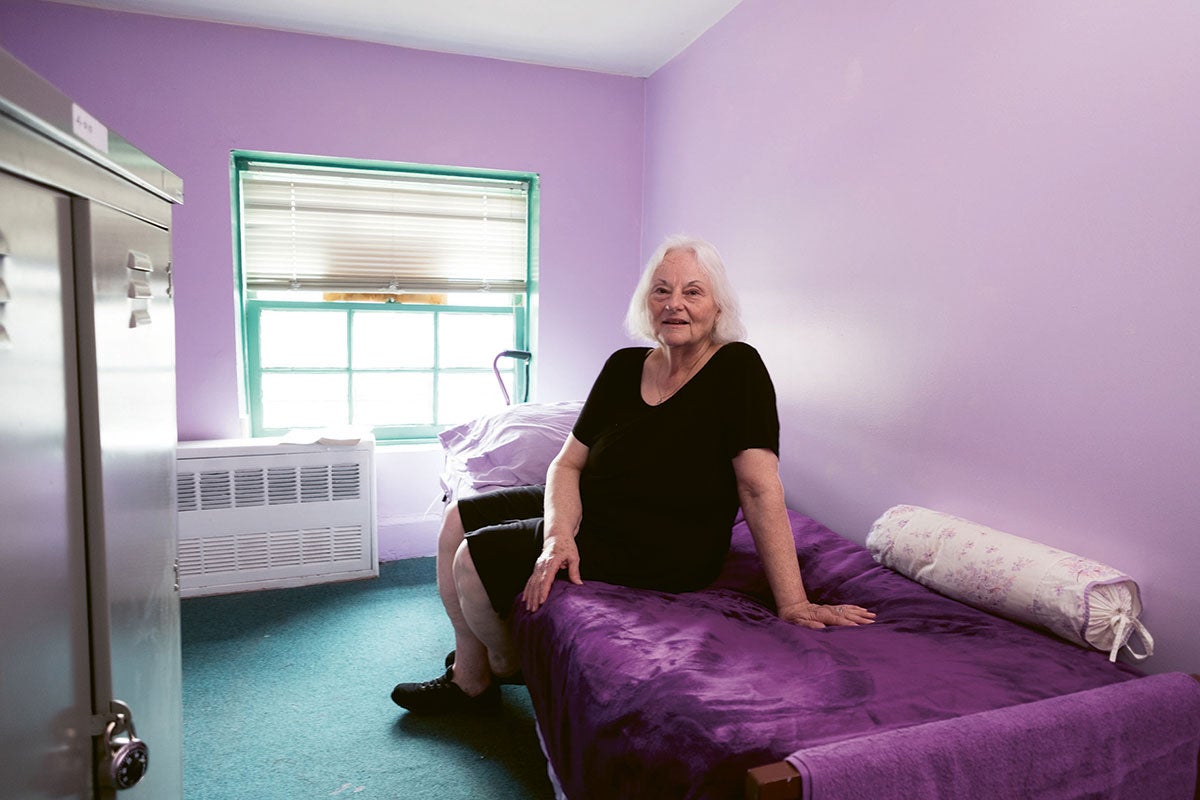
Karen was denied parole five times, extending her 25-to-life sentence to 35 years. She was granted parole at her sixth parole hearing. Bennett photographed her the day before her release and then multiple times after she left prison, including in her first post-prison bedroom.
Popular
“swipe left below to view more authors”Swipe →How did you first learn about the project? And what was your participation like?
I got a letter from Sara that said, “You don’t know me, but I’m a former criminal defense attorney. I’ve turned professional photographer and started a project called Life After Life in Prison. Judy Clark gave me your name. She said it was all over the prison that you made your sixth board and that you’ll be going home soon. I would like to photograph you before you go home, the day you go home, and afterward. I know it’s a big ask because you don’t know who I am, and I don’t. You can say no.”
I wrote her back immediately and said, “I do know who you are. I worked for the Bedford Hills superintendent as her secretary. I worked in the main building right by the front door. I used to see this lawyer coming in to see her clients. One of my friends had you, and you helped get a reduction in her sentence. You came to visit her for free. You helped her go home. So if you come see your clients in prison, I trust you enough to photograph me.”
She called the prison and made arrangements to photograph me the day before I was released. They let us go in the visiting room. There were no visits on weekdays, so it was just us and an officer. She took pictures of me sitting in a chair, waiting to pack out the next morning.
When I got released, I had nobody. Nobody met me. I came out empty-handed. I had my release papers, my ID, and my papers for parole. I got out and there was Sara crouched on the ground with her camera right by the gate. She got a picture of my first step outside with no shackles or handcuffs.
That first year I was home, she followed me everywhere. If I went to a restaurant, she came in and photographed me eating. If I went to do laundry, she photographed me putting the quarters in the machine. She photographed me at Trinity Church. She photographed me at my job interview.
What does it mean to have your portrait and writings in her book?
I love it, because if I can reach anybody else that’s living in a domestic violence situation and thinks that their only way out is to kill their abuser, I want them to learn from me. That’s only a new set of problems, so don’t do it. Don’t be me. I can get you help. There’s resources now.
Now that I have a bigger audience, I can reach people. That’s why I do everything I do with Sara, because I want to reach women who are not OK and who don’t know where to turn.
You’re the only woman in Life Inside to write about your crime. Why did you choose to do so for the book?
If I don’t talk about it, I’m part of the problem. There’s that secrecy. Some of my art is based on that secrecy. No physical violence, emotional violence, financial or sexual violence could exist unless it was secret.
My sister-in-law says to me, “You’ve been out for a long time. Why don’t you just stop?” And I say, “Because there are still people suffering and because my sisters are still in prison. I’ll keep my mouth shut when everybody’s home and nobody else is going in.”
More from The Nation
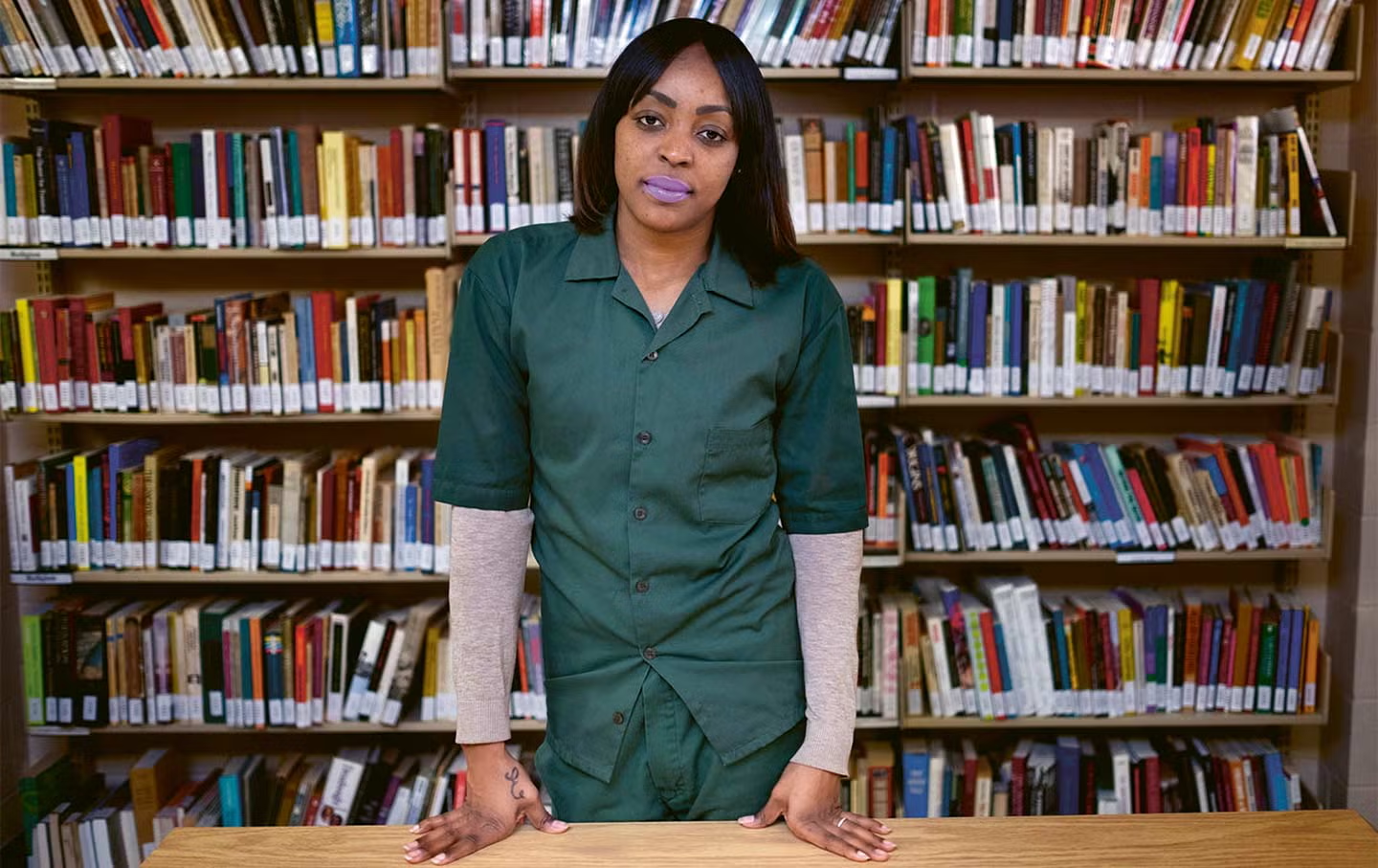
Documenting Women Out of Their Cells Documenting Women Out of Their Cells
Over a 10-year period, a photographer captured the lives of women in and out of prison.
“We Remain In This Nightmare”: Another Letter From the Hell of ICE Detention “We Remain In This Nightmare”: Another Letter From the Hell of ICE Detention
It is now over seven months since my son, my husband, and I were detained. It feels like being stabbed in the heart again and again.
A Rogue DA in No-Man’s Land A Rogue DA in No-Man’s Land
A strange case of prosecutorial misconduct during a murder investigation in the Oklahoma panhandle.
What Gavin Newsom’s Commutations Mean for the Future of the Death Penalty What Gavin Newsom’s Commutations Mean for the Future of the Death Penalty
Officials in some states continue to seek the death penalty while others, like Newsom, have vowed to bring the sentences to a halt.
Black People Have Every Reason to Doubt Official Narratives About a Recent Spate of Hangings Black People Have Every Reason to Doubt Official Narratives About a Recent Spate of Hangings
Prematurely ascribing deaths to suicide does away with questions that deserve real answers.
My Journey Through San Francisco’s Internet Archive My Journey Through San Francisco’s Internet Archive
To most people, the archive is just a portal on their computer. But it’s also a physical space made by a person who has never cared more about the preservation of digital history....

