“We Remain In This Nightmare”: Another Letter From the Hell of ICE Detention
It is now over seven months since my son, my husband, and I were detained. It feels like being stabbed in the heart again and again.
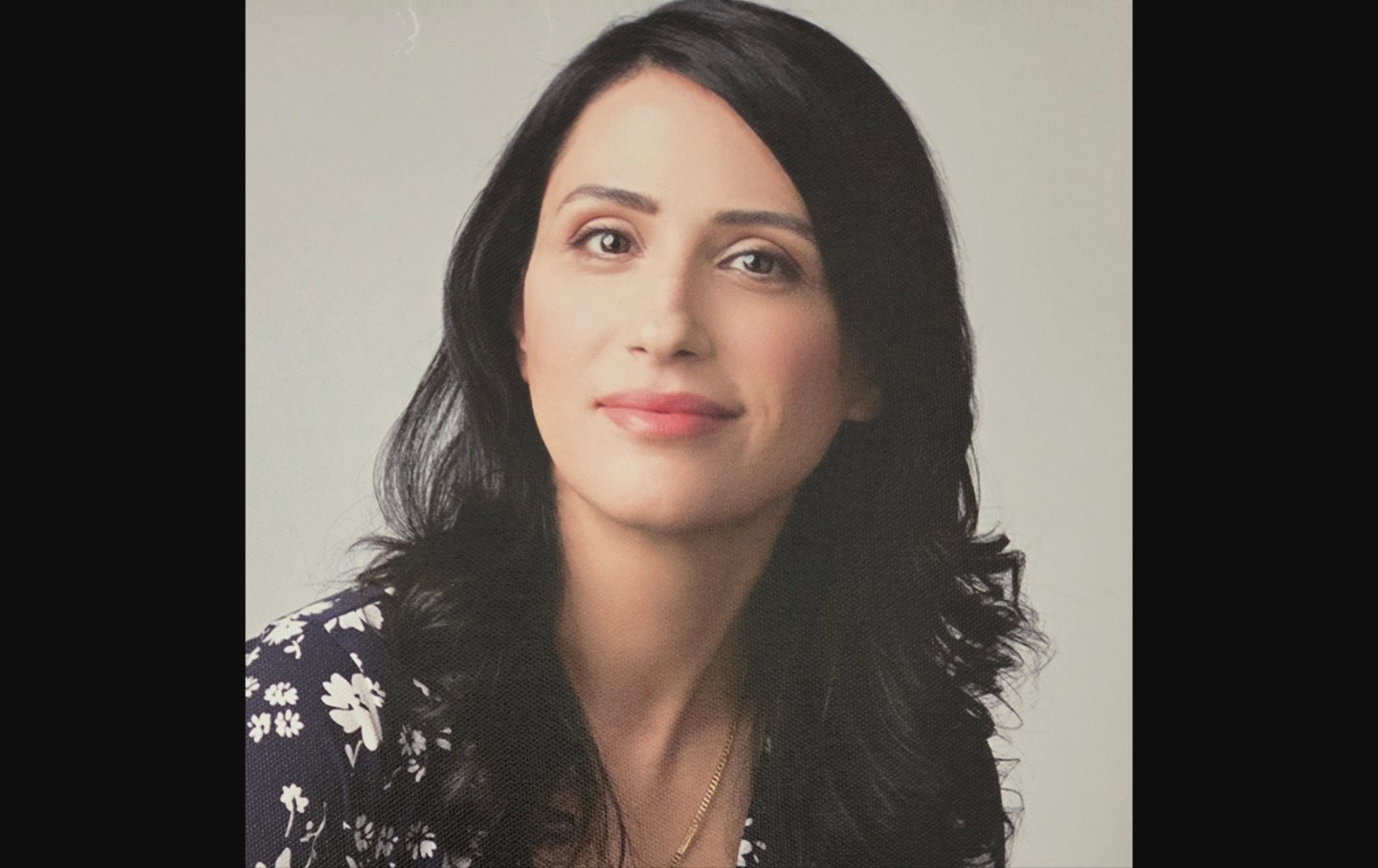
Maryam Tahmasebi
(Photo courtesy of Maryam Tahmasebi)Last August, we published a message from behind the walls of an ICE detention center from Maryam Tahmasebi. Three months later, Maryam, her husband, and their teenage son are all still imprisoned—despite being legal permanent residents with no criminal record. (You can find more details about their case here.)
Today, we are publishing a new dispatch from Maryam, who is being held in the Dilley Immigration Processing Center in Texas. We will be publishing additional pieces by her in the months ahead.
How do you keep track of time when it does not move linearly—when days last forever and decades seem to go by in a flash?
I used to think about this as a child. Waiting all day for the hour of cartoons I could watch on TV felt endless, but entire summers were over in the blink of an eye.
These days, I’m feeling the nonlinear passage of time—but for very different reasons.
It is now over seven months since my son, my husband, and I were detained and locked in ICE detention, despite having no criminal records, settled immigration status with valid permanent residency, and no charges of any personal misconduct. (You can read more details about our case in the piece I wrote for The Nation in August.) My son and I are still detained in the Dilley Immigration Processing Center in Texas, while my husband remains separated from us, detained in the South Texas ICE Processing Center in Pearsall. And, while there are many horrors in this life of detention, the warping of time has felt especially cruel.
Over seven months. Two hundred and twenty days. Over half a year. Every one of them lived, endured, and marked by harm. In whatever scale I put these numbers, they feel surreal and terrifying. This has been, without doubt, the longest traumatic experience of our lives, and it has felt like an eternity—more than seven months of absolute hell.
Every day I think about my kind, soulful son’s childhood slipping through his fingers. I think about the months of his precious life that his father has missed. Teenage years are full of growth and new experiences, but for the last seven months, my son—a minor who has done absolutely nothing wrong—has been denied that most basic right: the right for a child to have a normal, happy life. He spent his birthday in this horrible place. He has been robbed of the high-school experiences that his friends are having. And he has been separated from his father for over half a year.
I, too, have been violently cut off from my life outside these detention walls. I taught hundreds of undergraduate students and dozens of graduate students every semester. I miss teaching even more than I miss wearing normal clothes or reading books on my phone. I haven’t been able to teach any of my undergraduate classes or my graduate courses for two semesters now. I still don’t know what happened to one of my PhD candidates, who was very close to defending her proposal. My husband has been similarly torn from his own professional academic world.
If you are wondering whether daily life here becomes normal or tolerable, the answer is no. It absolutely does not. There is not a single day that goes by that I don’t have to take a deep breath just to force myself to keep breathing. There is not a single day that I don’t rage, or that I don’t miss my husband—who can only hear our voices once every two weeks for 10 minutes. Not a single day that I don’t need to force my face into submission so as not to let my son know how I truly feel.
Yet, along with the pain, there is resolve. I am a trauma-informed psychologist. This place or the circumstances can’t take that away from me. Every day, I put on my community psychologist hat and do everything in my power, using all the tools in my toolbox, to help other families. To find ways to witness, observe, and break down the incompetent, cruel systems and the dehumanizing policies around us. To help the community that I now live within. Every day, I am also sustained by my extraordinary friends who hold my grief, hold space for my anger, and never leave me alone.
Hanging over this nightmare is one still-unanswered question: why? Who has benefited from this cruelty? Who has profited from the baseless accusations still being hurled around about me and my family? What has been gained by decimating the normal lives of two educators and their child?
And we are far from alone. I am acutely aware of the pain that children are experiencing in this prison of family detention. I see the devastation in their eyes every single day—the sadness, the fear, the distrust, the defeat.
It feels like being stabbed in the heart again and again. But even with horrors abundant and repeating every day, there are instances that stay with you for far longer and cut far deeper than you expected. One happened recently in the so-called “library.” There was a child who looked to be around 5 years old. His mother was trying to write a letter. But she kept being interrupted by her child asking, over and over again, when they were going back home.
The pain I felt in that moment stayed with me for many days. Home. Such a simple, unattainable concept for many. For children, it is a foundational part of their psychological development. It is the cornerstone of their sense of safety and belonging. Taking it away, to me, is one of the many unforgivable sins committed towards children in detention. The mother said nothing in response to the child’s pleas. I know why she kept her face blank and kept typing. What do you even say? How do you explain to a 5-year-old that home is most likely never going to be the same—that there is no going back?
After I wrote my Nation piece in August, I received so many kind responses from people of conscience who heard my plea and responded by reaching a hand out and amplifying our voices. Now I am writing this just under a week after the midterm elections—and, once again, I have been heartened. It was beautiful to see that, across the country, people voiced their disdain for the horrible ICE practices that led to the imprisonment of me, my family, and everyone else detained with us. It was inspiring to see so many people across the country express their opposition to the dehumanization and brutalization of law-abiding people, including lawful permanent residents.
Popular
“swipe left below to view more authors”Swipe →But we are all still here, locked away. The murky immigration laws that allowed all of this to happen are still on the books. We all remain in this nightmare. My family and I are still experiencing unending, unendurable misery created by lies and smear campaigns and executed by a system that we have no power to fight against. What I dream of these days is the same dream I have had all through this ordeal: freedom for my family and a normal, safe life where my child can go to school, and my husband and I can go back to writing and teaching. This, however, is not only about me and my family. I am here with so many other people, and nothing in our day-to-day lives has changed. Nor will it if the pressure stops. No one can go home now and think that we are done because of an election. We are nowhere near the finish line.
Change will require laws that prevent the government from stripping people of their lawful immigration status without meaningful due process and that establish meaningful judicial oversight of immigration detention. It will happen when there are clear laws that prohibit the detention of children and separation of families, ending the horrific trauma inflicted upon thousands of people with zero criminal background every day. Shutting down one detention center, such as Dilley, without changing the laws only means families are being separated and tormented in a different place. No elected official can kick this trauma out of their backyard thinking it will go away. As long as the root cause is not addressed, this can happen in any state or any city, and it can be far worse. The collective psyche can’t hide from this.
There is so much work that needs to be done to repair the broken systems that made these atrocities possible. There is so much work that needs to be done to create better policies that prevent a repeat of any of this. While hope is now possible, healing demands far more than that. Healing sometimes needs opening the wounds and bearing the hurt of looking closely at what has happened. Healing needs us to mourn what we have lost collectively and demands commitment to the healing process.
The scale of damage is vast. The state of our immigration policies is an open wound that we can no longer afford to ignore. This is not pain experienced only by immigrant families, or witnessed only by those of us living through it. It is our collective pain. Regardless of where we live, or whether we have personally contributed to or experienced these injustices, we are all affected by their consequences. And the solution must also be collective. We must acknowledge what is happening, allow ourselves to feel the weight of it, and decide that we do not want to live in a country that treats children this way. We do not want children to be intentionally traumatized or to know the pain of losing their homes and the security of belonging. And with that decision comes action to change policies, systems, and laws.
Now, with people having elected representatives to act on their behalf, it is time for those representatives to act. We need them to put their bodies on the line. We need them to come to Dilley, to witness what is happening, to hear the families, and to advocate for those who cannot make their voices heard. Don’t forget about us. Don’t stop fighting until we are all, collectively, free.
More from The Nation
Documenting Women Out of Their Cells Documenting Women Out of Their Cells
Over a 10-year period, a photographer captured the lives of women in and out of prison.
Sara Bennett on Photographing Women With Life Sentences Sara Bennett on Photographing Women With Life Sentences
A conversation with Sara Bennett as well as two of the women she photographed for her new book, Looking Inside: Women with Life Sentences.
A Rogue DA in No-Man’s Land A Rogue DA in No-Man’s Land
A strange case of prosecutorial misconduct during a murder investigation in the Oklahoma panhandle.
What Gavin Newsom’s Commutations Mean for the Future of the Death Penalty What Gavin Newsom’s Commutations Mean for the Future of the Death Penalty
Officials in some states continue to seek the death penalty while others, like Newsom, have vowed to bring the sentences to a halt.
Black People Have Every Reason to Doubt Official Narratives About a Recent Spate of Hangings Black People Have Every Reason to Doubt Official Narratives About a Recent Spate of Hangings
Prematurely ascribing deaths to suicide does away with questions that deserve real answers.
My Journey Through San Francisco’s Internet Archive My Journey Through San Francisco’s Internet Archive
To most people, the archive is just a portal on their computer. But it’s also a physical space made by a person who has never cared more about the preservation of digital history....

