
No, Donald: The US Owes Ukraine
Not the other way around.
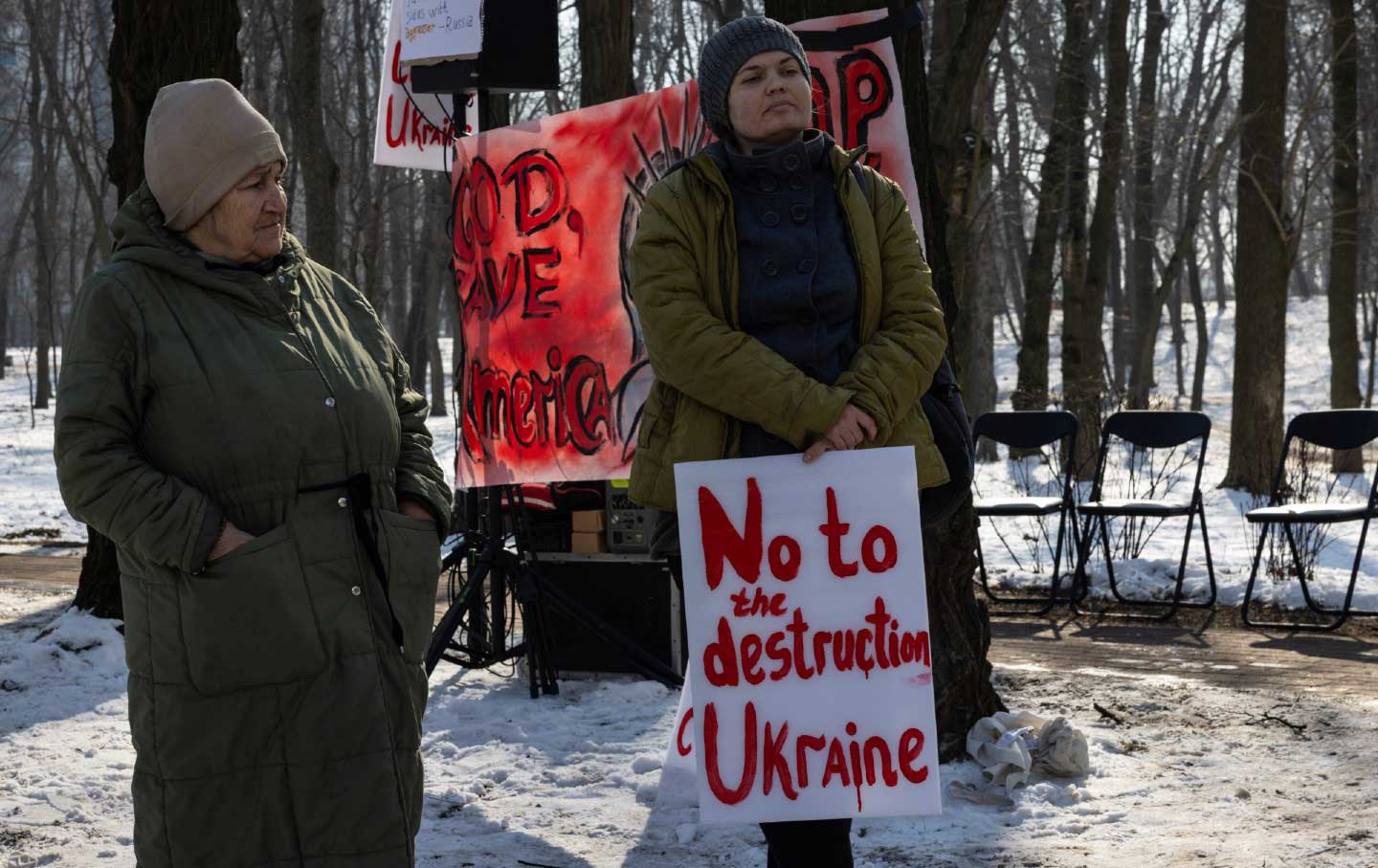
Besides calling its president a “dictator,” and claiming that it was Ukraine rather than Russia that caused the invasion, Trump is demanding that Ukraine pay for past aid with its precious minerals, as if the war-torn country were indebted to the US. Instead, the debt goes the other way, and it is time to reckon with how US foreign policies—hubristic policies, across both Democratic and Republican administrations—are directly culpable in the dire circumstances that Ukraine now finds itself in.
Make no mistake: Putin is a war criminal with blood on his hands, and Russia’s invasion of Ukraine, first in 2014 and then in 2022, was a “war of choice.” But US policy in crucial periods helped pave the road that led to this horrid war.
The first period was the 1990s, the halcyon days of American post–Cold War triumphalism and “the end of history,” when the Clinton administration sent US advisers to Russia to carry out a “transition to the market.” Instead, it amounted to a shock treatment on Russian society, leading to mass impoverishment, a sudden drop in life expectancies, rampant criminality, and the rise of a handful of “oligarchs” (we can thank the Russian 1990s for resurrecting that moniker). Wayne Merry, a US Embassy official in Moscow, argued in a “dissent cable” sent to his superiors in Washington that the painful reforms were leading to growing “frustration tinged with animosity” toward the West, and should the US policy continue, it would “encourage a renewal of Russia’s adversarial stance toward the outside world.” Yet continue the policy did.
It was out of this mire that Putin emerged. He was propelled to power by oligarchs like Boris Berezovsky, and his first act in power was to grant immunity to Yeltsin and his family from prosecution for charges of investigations. But while he waged a brutal war on the breakaway region of Chechnya, Putin did not initially view “the West” as his enemy; that developed incrementally over time. First, there was anger over the NATO bombing of Belgrade in 1999 without UN Security Council approval; in 2002, the George W. Bush administration renounced the ABM treaty, which Russia considered the cornerstone of strategic stability. Russia vehemently opposed the US invasion of Iraq as a blatant violation of international law, as well as support for “regime change” in Libya, Syria, and elsewhere during the Arab Spring.
Most troubling for the Kremlin was the expansion of NATO, the world’s most powerful military alliance, to Russia’s borders. Back in 1998, even before Putin was on the scene, none other than George Kennan—the father of Cold War containment—predicted that expanding NATO would be “beginning of a new cold war,” presciently adding, “Of course there is going to be a bad reaction from Russia, and then [the supporters of NATO expansion] will say that we always told you that is how the Russians are—but this is just wrong.”
Far from heeding that warning, in 2008, in the wake of “color revolutions” leading to pro-Western governments in Georgia and Ukraine, the Bush administration successfully pushed, over the objections of France and Germany, for a declaration that both countries would eventually become members of NATO. This came despite the cable to Washington earlier that year from Bill Burns, then the US ambassador to Russia, warning that “Ukrainian entry into NATO is the brightest of all redlines for the Russian elite (not just Putin).” That left Ukraine stranded in an untenable position—to someday join a military alliance that Russia clearly found threatening, but without the protection that the alliance would provide.
Let’s be clear: None of this exculpates Putin for his decision—and his alone—to invade Ukraine. Despite Trump’s delusion in blaming Ukraine for the war, the push for Ukraine to join NATO did not come from Ukrainians themselves—most Ukrainians overwhelmingly opposed NATO membership before 2014. Indeed, it was Putin himself, through his decision to seize Crimea and foment an armed uprising in Ukraine’s Donbas in 2014, and then with the full-scale invasion in February 2022, that swung Ukrainian opinion to solidly support membership in NATO.
That takes us to the third period. When the 2022 invasion happened, despite widespread predictions that Kyiv would fall in days, the Ukrainian people fought back heroically. The US understandably supported Ukraine. But with what strategy, and to what end? The Biden’s administration’s repeated claim that it would support Ukraine “for as long as it takes” begged the question—as long as it takes for what? When negotiations in Istanbul appeared close to a settlement just months after the war began, several observers have since attested that the US and the UK “pulled the plug” on the negotiations, with some suggesting that the real goal was to weaken Russia, a point stated explicitly by US Defense Secretary Lloyd Austin shortly after.
Yet, as Marcus Stanley rightly points out, the war, now entering its fourth years, has been a bloody stalemate since 2022. After Ukraine’s offensive in September of that year ground to a halt, Gen. Mark Milley, then chairman of the Joint Chiefs of Staff, urged Ukraine to “try to cement their gains at the bargaining table.” Yet the Biden administration publicly rejected that advice, and the Ukrainian position has only worsened since.
In a rather laudatory account of Jake Sullivan’s reign as Biden’s national security adviser, Washington Post columnist David Ignatius explains that Sullivan’s war strategy was “to attrit an adversary at low cost to America, while Ukraine was paying the butcher’s bill.” It is worth pausing on that last phrase. According to an estimate from The Wall Street Journal from September 2024, by then the war had resulted in more than 1 million casualties, of which the Ukrainian share was no less than 80,000 dead and 400,000 wounded.
Popular
“swipe left below to view more authors”Swipe →Yet shortly after stepping down from his post, Sullivan boasted that “the core engines of American power are humming.” One must ask: Tell us, Mr. Sullivan, where exactly are those engines heading now?
Enter Donald Trump. The wily president senses correctly that Americans are tired of war and, feeling the strain of paying for groceries and basic healthcare, they would rather their tax dollars not be spent on dropping bombs on foreign lands. But while Ukraine may have been “paying the butcher’s bill” for US foreign policy aims, Trump is now demanding that Ukraine surrender a substantial portion of its mineral wealth as compensation for past US military aid. This is not simply realpolitik stripped of any veneer of liberal idealism; rather, as Paul Krugman rightly notes, this is King Leopold–style imperial extraction. But instead of the rubber needed in the 19th century, the mineral wealth from Ukraine is indispensable for the industries of Elon Musk and his fellow tech bros.
Meanwhile, despite Trump’s claim that Ukrainian president Zelensky was only good at “playing Joe Biden like a fiddle,” the Kremlin is dangling the promise of its own mineral wealth to bait Trump to drop sanctions in exchange for deal-making. This includes rare earth elements to be taken from land Russia seized from Ukraine. In the likely event that Trump can’t resist such a deal, he will be handing Putin a lifeline to save his faltering economy and prevent the unrest that could follow in its wake.
It is past time for this war to end. Yet, while promising to do so, Putin and Trump appear to be conspiring to cannibalize Ukraine—Putin through a land grab from the east, and Trump by extracting its mineral resources, the very means Ukraine will need to rebuild the shattered country. Ukraine deserves a much better future, one free from militarized foreign policies and 21st-century imperial conquest.
Become a Sustaining Donor This September
Between the reemergence of right-wing red-baiting and Donald Trump’s use of the chilling National Security Presidential Memorandum–7 to criminalize left political organizing, we’re seeing McCarthyism reborn before our eyes.
This assault on democracy cannot be ignored or wished away. Resisting it requires bravery in the face of threats and repression, a steadfast commitment to the truth, and the unwavering belief that we can—and will—overcome this darkness.
We must have an independent media that sets the record straight, unearths corruption and abuses of power, and advances a politics of justice and dignity for all if we’re to win this fight.
That’s why I’m writing to you today. This September, The Nation needs to add 100 monthly donors to sustain our progressive journalism. Your contribution makes the next investigative report, the next truth-speaking column, and the next pathbreaking essay all possible.
I hope you’ll support our work with a recurring donation today. If you donate $10 or more a month, we’ll send you a brand new “Hands Off the Free Press!” sticker to recognise your commitment to our cause. Please, donate today.
Onward,
Katrina vanden Heuvel
Editor and Publisher, The Nation
More from The Nation
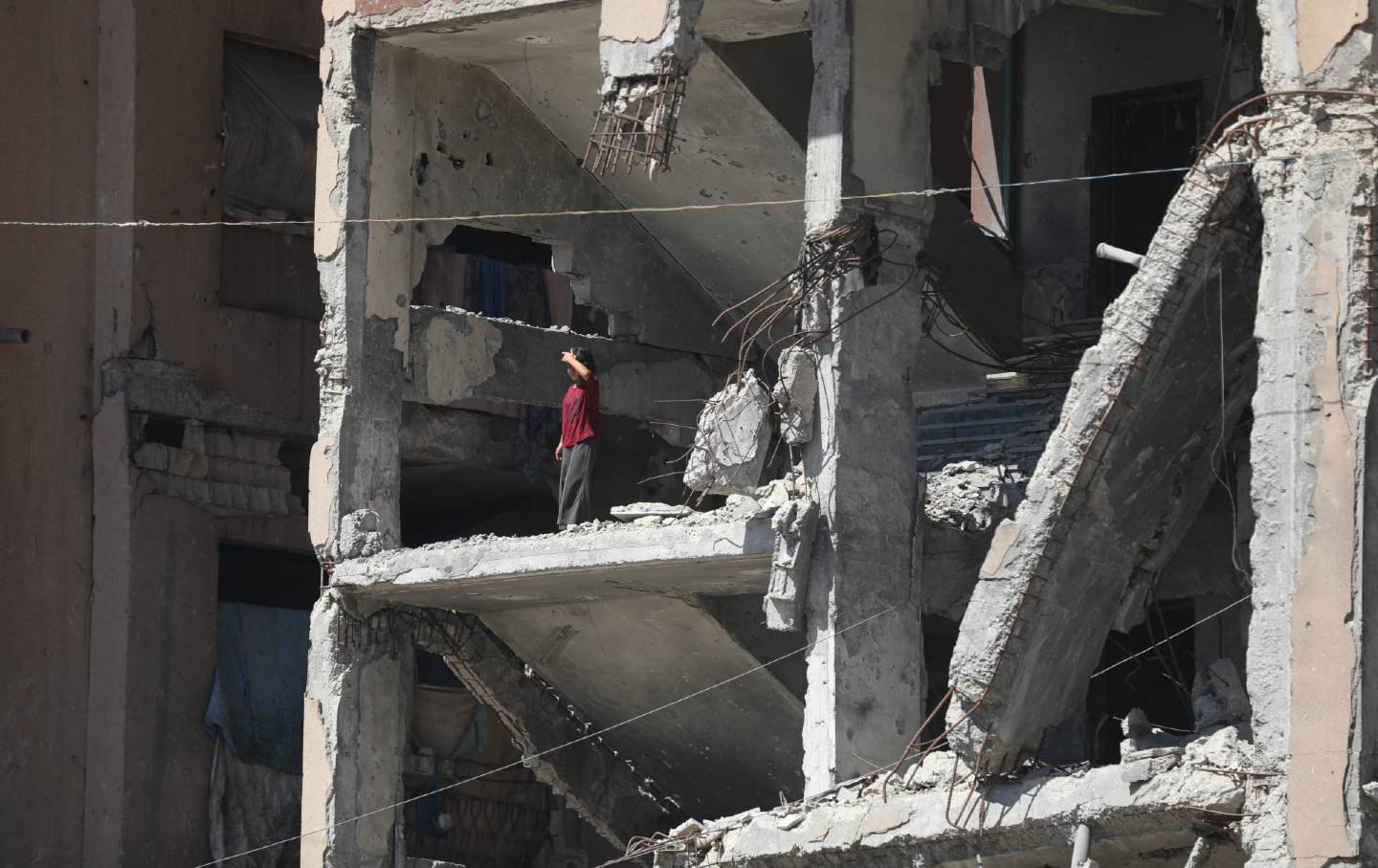
Israel’s Election Can’t Fix What Netanyahu Broke Israel’s Election Can’t Fix What Netanyahu Broke
The fundamental problem is not the name of the prime minister, but rather the actions of the Israeli government and the urgent issues that need to be addressed.
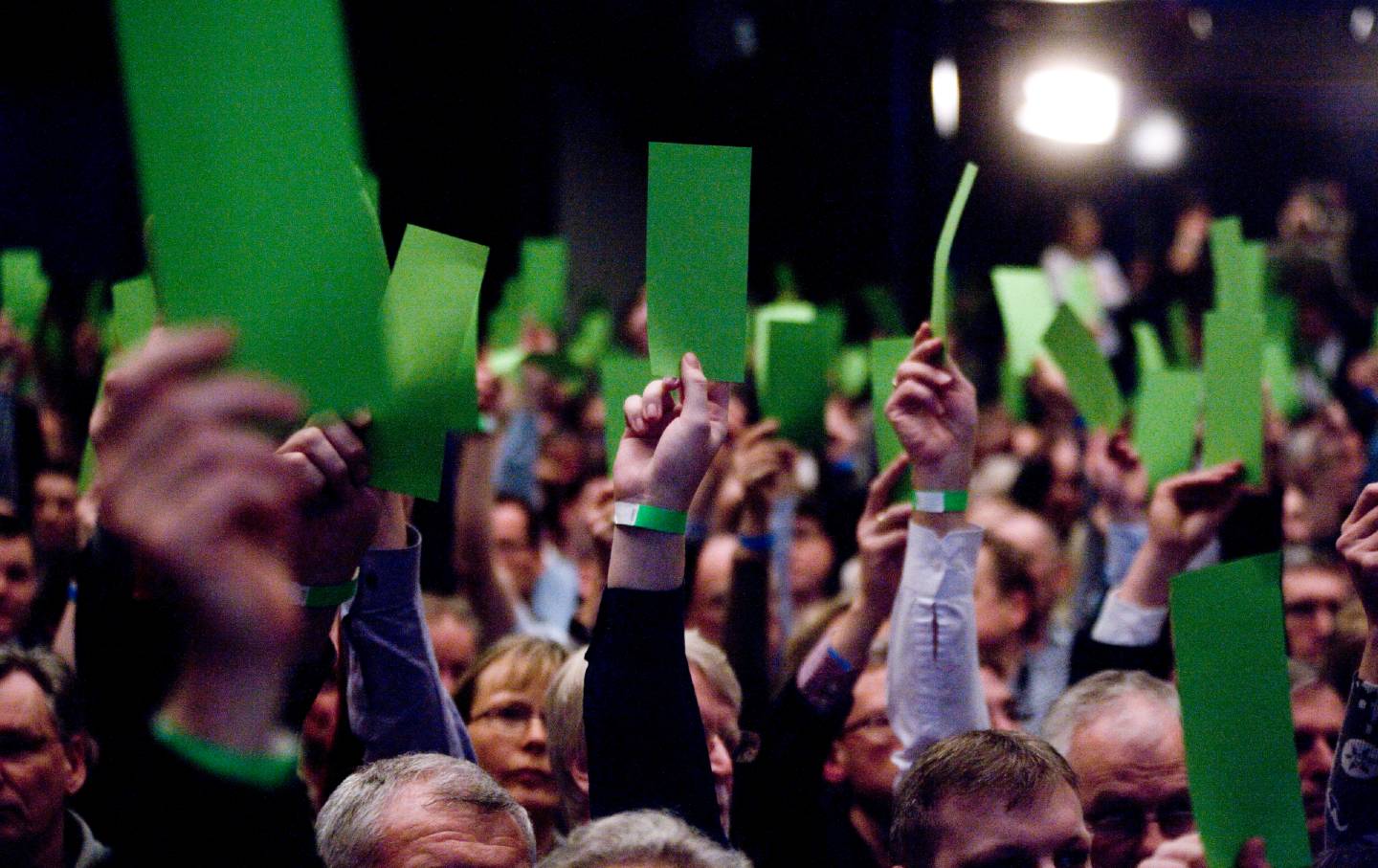
The AfD’s Rise Isn’t Just About East Germany The AfD’s Rise Isn’t Just About East Germany
The Alternative für Deutschland has a stable national poll lead, including in the former West Germany. Its rise owes to much more than Eastern grievances.
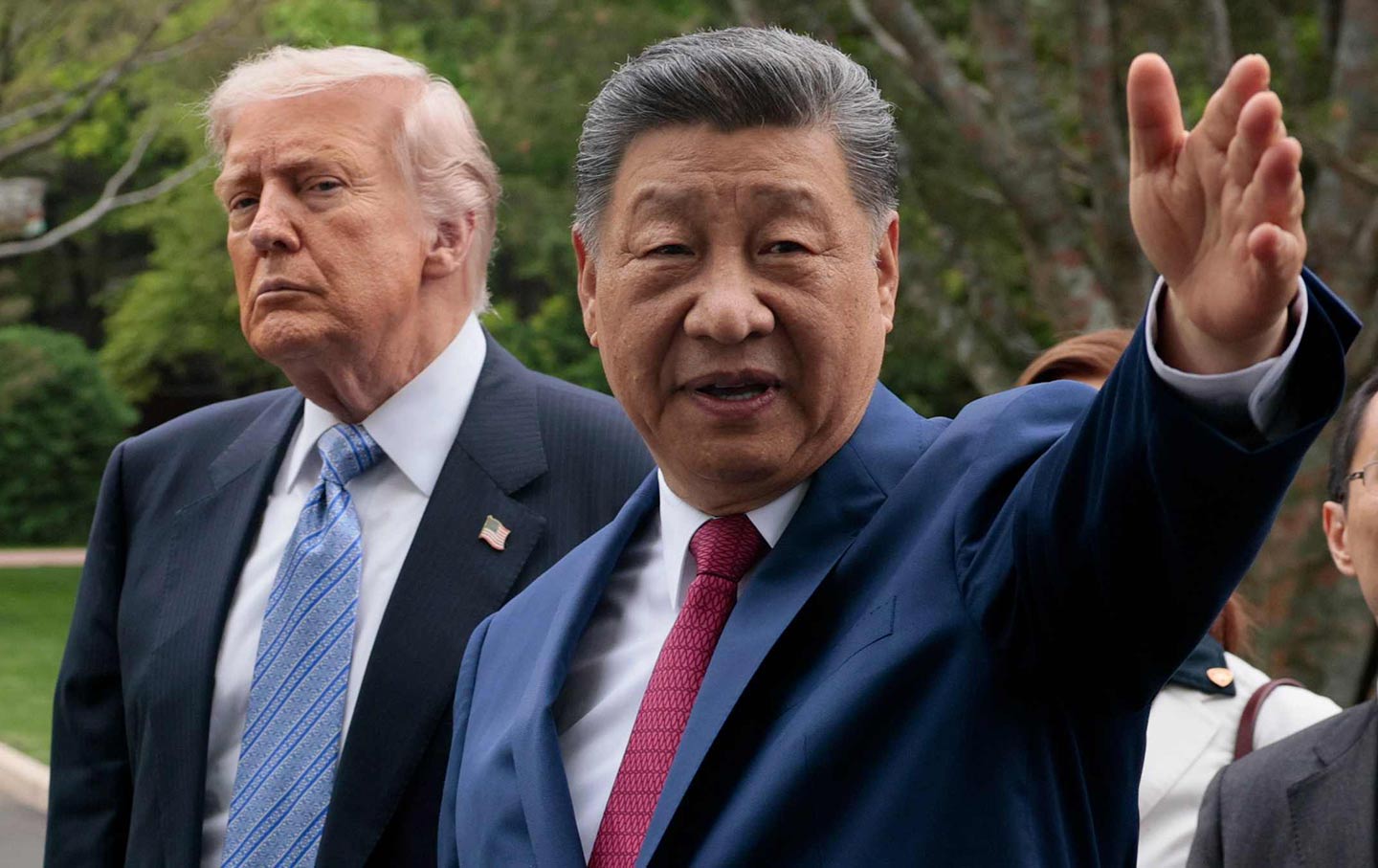
Chinese Development Is the Betrayal Washington Cannot Forgive Chinese Development Is the Betrayal Washington Cannot Forgive
The prospects for Xi Jinping’s visit are dim because American leaders are blaming China for the failures of globalization.

Pinochet: The Verdict of History in the Letelier-Moffitt Case Pinochet: The Verdict of History in the Letelier-Moffitt Case
An act of international terrorism on the streets of Washington, DC, still reverberates 50 years later.
How to Arrest Benjamin Netanyahu How to Arrest Benjamin Netanyahu
Make no mistake: The United States can seize Netanyahu for crimes under US law and prosecute him in US courts when he is in New York City this week.
In the Age of AI, Nuclear Weapons Abolition Is a Renewed Imperative In the Age of AI, Nuclear Weapons Abolition Is a Renewed Imperative
As long as we have nuclear weapons, the job of ending humanity will continue to be as easy as the push of a button—or an AI agent hacking into a nuclear command-and-control system...

