
Dispatch From Post-Election Israel
The real story in this election is the extraordinary and uplifting strength of the vote of Arab citizens in Israel.
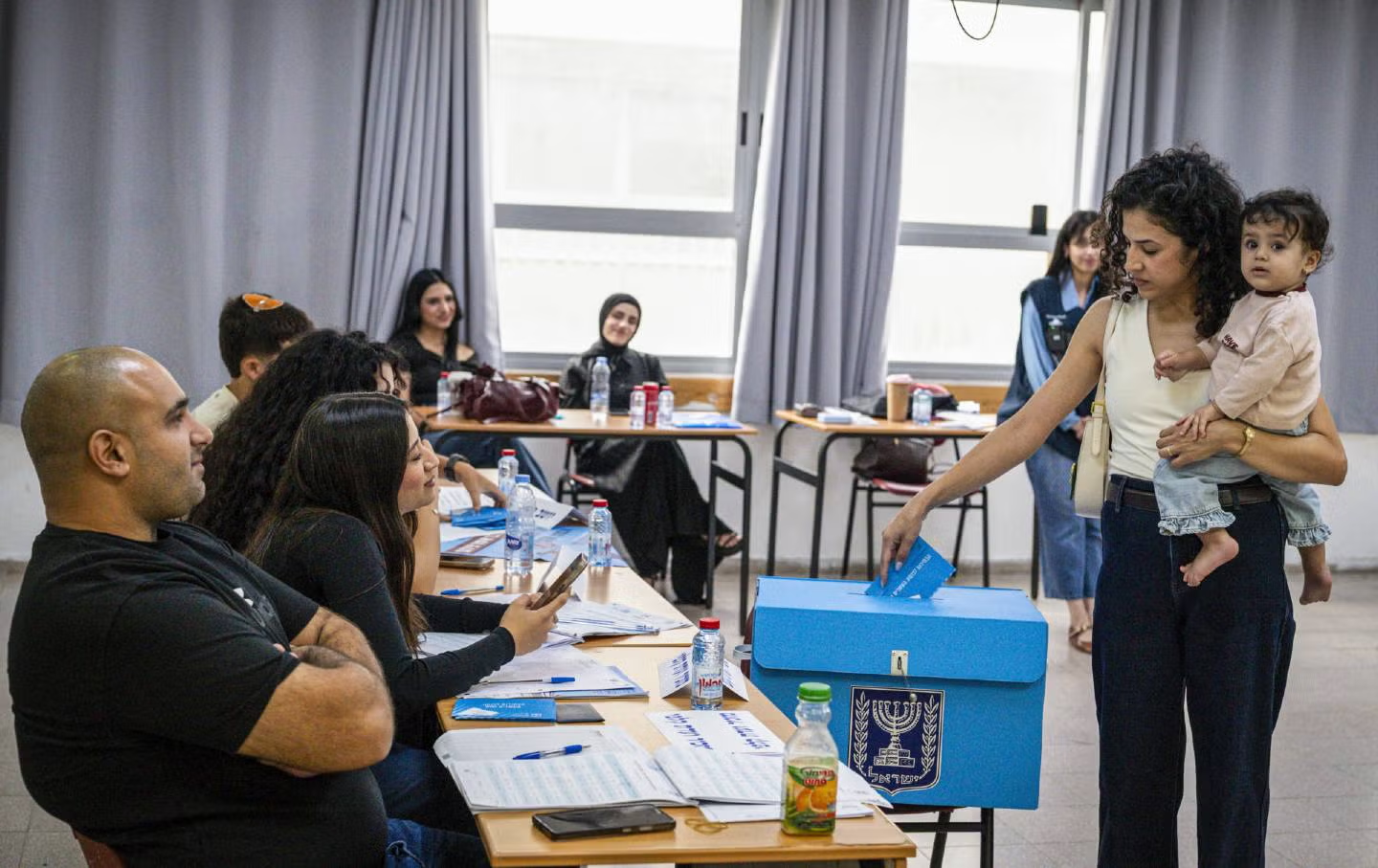
The votes in Israel are still being counted. By the end of Wednesday, only half of the actual votes (not exit polls) had been counted. Nearly 80 percent of Israelis voted. While sitting Prime Minister Benjamin Netanyahu has the most votes, it will be impossible for him to garner enough allied votes to achieve the necessary majority of 61 in the 120-member Knesset. Essentially, by panicking, Netanyahu spread the word to the right wing to vote for him rather than any of the smaller right-wing parties allied with him, and he has left himself without the wings to fly. There’s a silver lining in this strategy—it means that regardless of what happens, far-right racists Itamar Ben-Gvir and Bezalel Smotrich, currently powerful ministers in the sitting government, will not return to rule.
But the early election-night euphoria of the opposition, or change bloc, led by former IDF chief Gadi Eisenkot has dissipated. Eisenkot’s second-place finish to Netanyahu deflates the center-left, to say the least, though he holds the ability to form a government by picking one of two options.
The first option would be politics as usual, choosing to form a “unity government” between parties in his bloc and Likud. Eisenkot has previously said he won’t do that. He may decide he has no choice. But he does have a choice—the second option. That would be to take the leap to drastically change the Israeli political map and include at least one of the two parties dominated by Arab citizens of Israel in a government.
The real story in this election is the extraordinary and uplifting strength of the vote of Arab citizens in Israel. They came out in massive numbers—so far doubling their previous records—with a belief in a democratic process that hasn’t worked for them previously, to vote against the extreme hatred directed at their communities under Netanyahu, as well as the devastation in Gaza and the ongoing cannibalization of the occupied Palestinian territories by the Netanyahu government. Indeed, their numbers account partially for the significant voter turnout overall.
Every Israeli who holds citizenship within the internationally recognized 1967 borders has a right to vote. This population is composed mostly of Palestinians who are descended from the pre-1948 population, many of whom live in the Galilee and northern Israel and vote for the Joint List, a secular left-wing alliance of three parties (whose leaders have said they will support a non-Netanyahu government from the sidelines), and Bedouins who mostly reside in southern Israel and vote for Ra’am, a moderate Islamic party whose leader engages with non-Islamic Israelis (and which was briefly in government when there was a non-Netanyahu government led by Bennett and Lapid). Ra’am’s number two in this election even included an Israeli Jewish Knesset member who is a former police official, intentionally running on this list to break the paradigm of Jewish-Arab division.
One Bedouin town in southern Israel reported that people waited in line for four hours to vote. They were all determined to demand their rightful place in Israel’s politics and to vote out the far-right, racist policies of the Netanyahu government. The Joint List doubled its representation.
Historically, Arab citizens—represented in this election by two different party lists—don’t usually hold the same right to government. They have been shunned by both the left- and right-wing Zionist parties because they are not part of the Zionist project. This election result could change all that. Or not. Ameer Fakhoury, a political sociologist and the academic director of the Center for the Study of Binationalism at the Van Leer Jerusalem Institute, put it this way to me: This vote could be the “beginning of political and moral repair…creating either equal belonging in a shared homeland, or the gradual ruin of both peoples.”
Gadi Eisenkot has always left an opening for himself to support a shared alliance. He crafted his preelection language carefully to take a historic leap. But whether he can hold his own bloc together is in question. His right flank, led by Avigdor Lieberman (whose votes also fell below expectations), has emphatically refused an alliance, while the left-wing party in the Eisenkot alliance, the Democrats, wholeheartedly supports the inclusion of the Arab-based parties.
Yair Golan, the Democrats’ leader, posted on social media the morning after the election:
Anyone who tries to erase the votes of Arab citizens is surrendering to Netanyahu and giving up on Israel.… We have a majority. We have a responsibility. And we have an opportunity to form a change government in partnership with Israel’s Arab citizens. Now we need courage. We need leadership. We need to stop being afraid and start acting.
Eisenkot’s voters want this. An election-night survey conducted by Hebrew University’s aChord Center found that 61 percent of voters for the change-bloc parties (Yashar, Beyachad, the Democrats, and Yisrael Beytenu) want Gadi Eisenkot to form a government with Ra’am. Another 20 percent prefer new elections, 12 percent favor a rotation government with Netanyahu, and 7 percent prefer a government with the ultra-Orthodox parties.
The reality of numbers has been facing the center-left in Israel for a long time. This moment was inevitable. Netanyahu is a well-honed demagogue. He knows how to count. He knows that if he keeps demonizing the Arab citizens of Israel, he will make it more difficult for his opponents to form an alliance with them. Indeed, he demonizes to the point of inciting violence. Few may realize that the reason former Israeli Prime Minister Yitzhak Rabin was murdered by a Jewish right-wing fanatic was not because he signed peace accords with the Palestinians but, according to his assailant, because he did so with the parliamentary support of Arab Knesset members. The opposition leader who provoked the crowds against Rabin at the time was none other than Netanyahu.
Meanwhile, the Israeli Jewish left itself has become more of a shared left, Jewish and Arab together. There is still a long way to go with this alliance, but the threads are there. One of the key civil society leaders in Israel, Rami Hod, who heads the Berl Katznelson Center and Foundation, a cornerstone think tank of the democratic left, put it this way: “An absolute majority of Israeli citizens voted today against the government of the massacre and the abandonment…. Today, Netanyahu took his ‘Arabs are flocking to the polls’ rhetoric and put it on steroids, with a repulsive, racist campaign. The parties of the change bloc face a simple choice: racism or leadership. They can either surrender to Netanyahu and the racism of Smotrich and Ben-Gvir—or they can swear in a government of their own, which includes the Arab voters.”
Popular
“swipe left below to view more authors”Swipe →A third option—new elections, also something Netanyahu would enjoy exploiting—is simply a terrible idea. It reminds me of the poem by Bertolt Brecht: Instead of changing the government, simply elect another people. The reality is that, especially for the center-left in Israel (and the growing numbers of Haredi fundamentalist voters), the numbers are not there without an alliance between Jewish and Arab citizens.
Israeli democracy, as broken as it has become under Netanyahu’s too-long rule, can’t be fixed without accepting that instead of a future fueled by the Jewish supremacy and racism of the Netanyahu years, there is another way—but only by recognizing the legitimate rights of both Jews and Arabs—Israelis and Palestinians—living in one part of the world.
More from The Nation
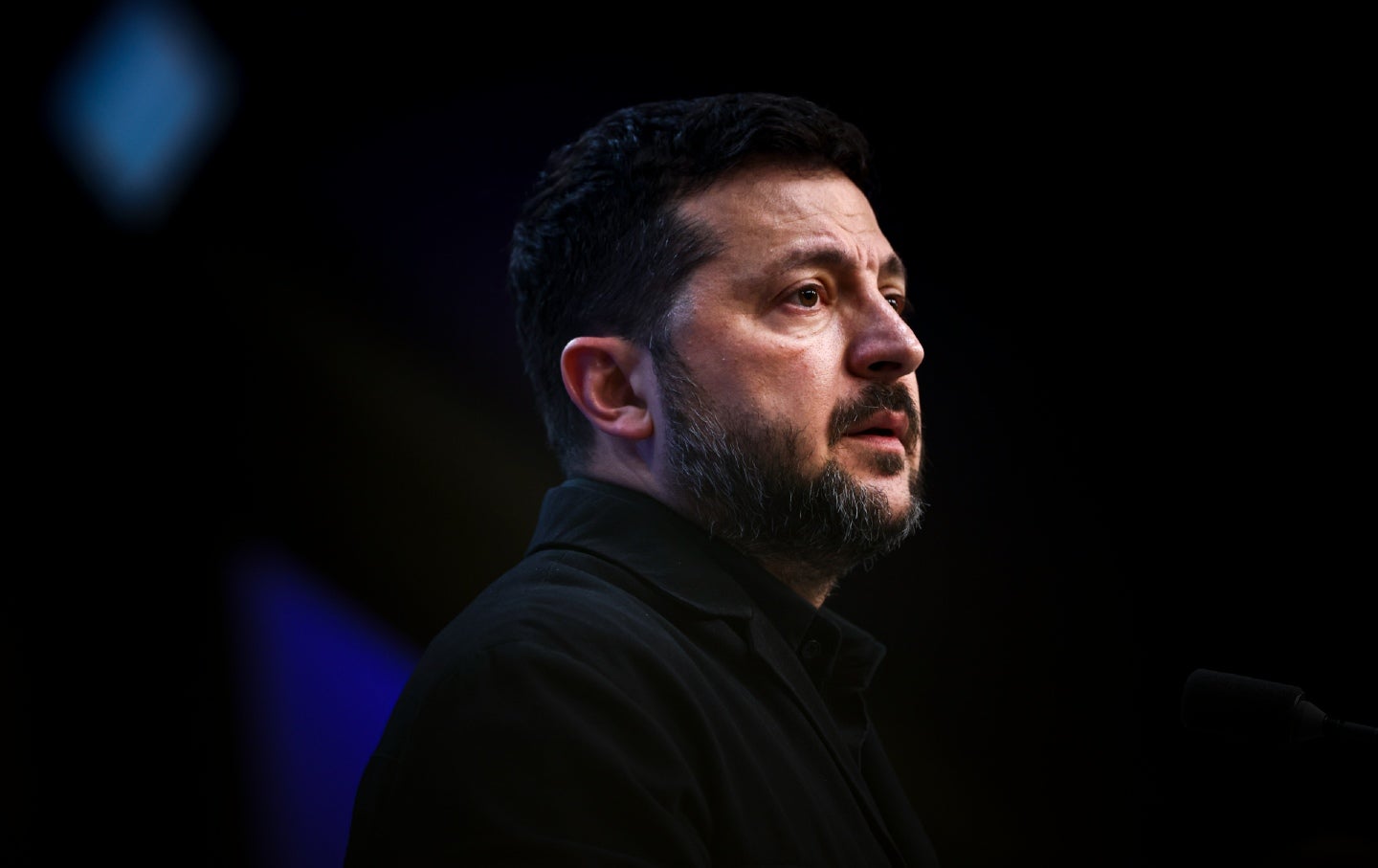
Ukraine: Time to End the War Ukraine: Time to End the War
For both Russia and Ukraine, the war has taken a staggering toll and poses an ever-greater danger of spreading.
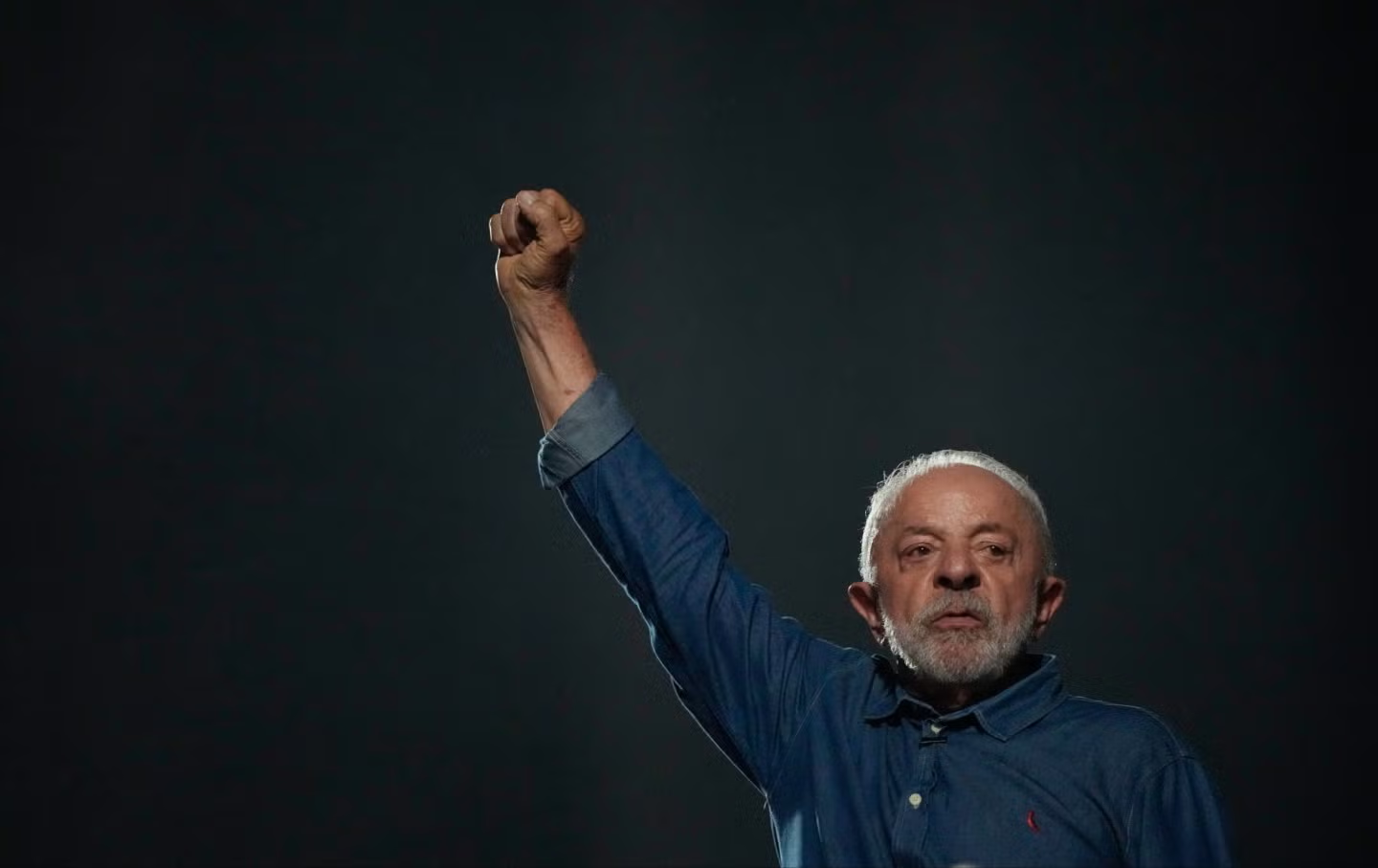
“This Election Was a Defeat for Lies”: Read Lula’s Inspiring Victory Speech “This Election Was a Defeat for Lies”: Read Lula’s Inspiring Victory Speech
“I doubt that Russia, China, or the United States has an army as victorious as the army of democracy of this country,” the president told his supporters.

Lessons From Lula’s Historic Victory Lessons From Lula’s Historic Victory
The Brazilian left has stopped the right-wing wave in Latin America. Now it has four years to work out a succession plan.
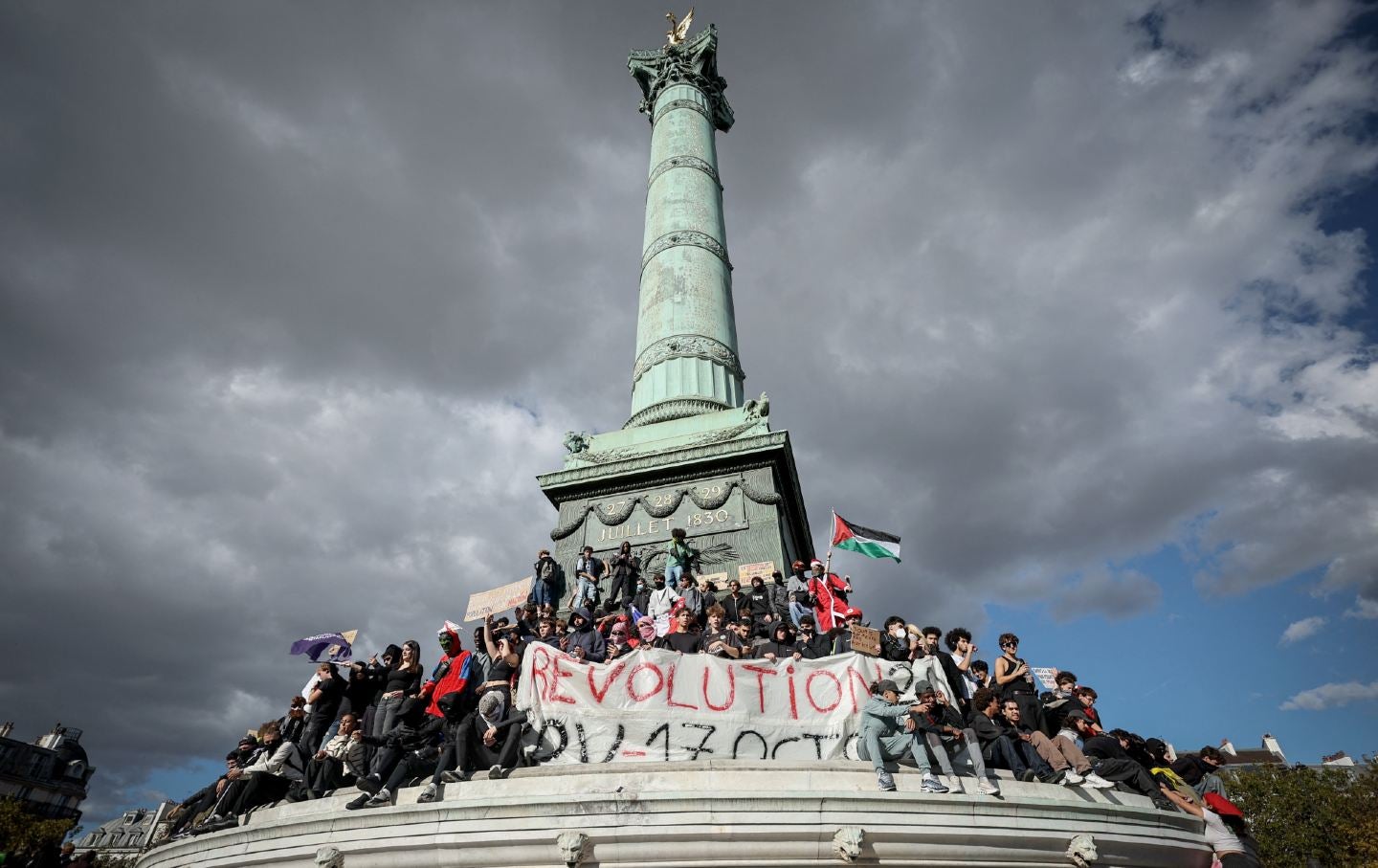
France’s Permanent State of Emergency France’s Permanent State of Emergency
The bad habits Emmanuel Macron will pass on to his successor.

Democrats Can Contain the Donroe Doctrine Democrats Can Contain the Donroe Doctrine
Democrats have the tools to challenge Trump’s military interventions and electoral interference in Latin America—if they’re willing to use them.

Israeli Elections: Fanatics, Generals, and the Question of Palestine Israeli Elections: Fanatics, Generals, and the Question of Palestine
The central question is whether defeating Netanyahu would change Israel’s policies or simply change the people managing them.

