
The One Issue to Rule Them All
To win in 2028, Democrats must commit to breaking the power of the Supreme Court.

The 2028 Democratic presidential primary season has officially begun. The last time there was an open primary for the Democratic nomination, in 2020, 29 candidates tried to convince voters they could defeat Donald Trump by defeating inequality, student debt, and climate change (though I think one guy was just trying to sell us coffee). Then Covid arrived, followed by the mass marches for Black lives, and the focus shifted to the once-in-a-generation deadly virus and the daily reality of deadly racism.
It is impossible to predict which combination of policy proposals, violent assaults, and global crises will prove dispositive to voters this time around. Will it be data centers, gas prices, and ICE? Healthcare, democracy, and the Iran War? Smoky eyeliner, American-flag cuff links, and GLP-1s? It’s hard to say. But no matter which combination dominates, there is one issue that must be championed by any Democrat serious about rescuing the country from the depths of Trumpism: Supreme Court reform.
Reforming the court is, in many ways, the skeleton key that unlocks the entire Democratic agenda. It’s the issue upon which all other issues depend. That’s because without reforming the Supreme Court, no other Democratic policy matters. Without reform, a Democratic president will hold power in name only. Without reform, the Democratic legislative agenda will never be implemented. The current Supreme Court has been designed by Republicans to make winning elections irrelevant, to give them ultimate control over federal law and policy regardless of who happens to win the White House. A Democrat who is unwilling to break the power of the Supreme Court is a Democrat who is wasting all of our time.
I know that for many politicians, and the political consultants they trust with our lives, “the Supreme Court” and “issues that matter to regular people” can sound like two vastly different things. But in practice, they’re the same. You cannot, for instance, have Medicare for All if the Supreme Court is going to strike it down. You cannot have a Green New Deal if the court will immediately declare it unconstitutional. You cannot implement meaningful restrictions on AI if the court is unwilling to enforce those restrictions the moment the tech-bro mafia unleashes a barrage of lawsuits to try to stop them. And this is true of nearly every issue Americans talk about at their kitchen tables. There is simply nothing the current Supreme Court will allow Democrats to do—unless the court itself is reformed first.
Think about it this way: Trump will be gone in 2029, unless the Supreme Court rules that he, or his chosen successor, can stay. That is its real power—not to be a king, but to make one out of thin air. If Democrats do not address the court, they will address none of the damage Trump has done to this country.
Unfortunately, the current assumed front-runners for the Democratic nomination have yet to get the memo. They’re still treating Supreme Court reform as a niche issue to be sidestepped, instead of the key to the return of liberal self-government. California Governor Gavin Newsom is perhaps the saddest example of this failure. Newsom likes to talk tough—at least to defenseless trans kids. He’s got all kinds of smoke for trans girls who want to play sports, but when it comes time to deal with John Roberts and the cabal of Republicans who took away the rights of women and girls to control their own bodies, Newsom becomes cautious. In September, he told Don Lemon that he was “evolving” on court reform, but he was still unwilling to commit to the biggest reform of all: Supreme Court expansion. “I normally have very clear conviction on things. I’ve been open to argument and interested in the evidence on this,” Newsom said. But while he considered two potential reforms—term limits and ethics reform—to be “a no-brainer,” he still felt “caution” (but also “an openness”) about expanding the court.
Right, so Newsom has very clear convictions about things like who should be allowed to play girls’ field hockey, but he still needs more evidence as to whether the right-wing Supreme Court can play with our lives? Good to know.
Newsom isn’t the only one, of course. J.B. Pritzker, the tough-talking Illinois governor and billionaire, also needs the Supreme Court to bash us over the head for a few more years before he finds enough “evidence” to act. “I think I want to see, you know, a little more out of this Supreme Court before I would make a judgment [about expanding the court],” he told Politico in May. “But I will say that if that is what is necessary in order to restore our Republic to what it was, you know, which is standing up for individual rights the way it was before Donald Trump, then that may be what we need to do.”
Since 2020, the Supreme Court has overturned abortion rights, affirmative action, and most of the Voting Rights Act. It has adopted a pro-gun-rights view so extreme that it’s even struck down Republican-backed gun restrictions. It’s allowed the GOP to gerrymander at will and given wealthy Republican donors the nearly unfettered ability to buy victories for their preferred politicians. Pritzker’s insistence that he needs to see more from this Supreme Court before advocating for reform is like Abraham Lincoln saying, “We should let this Confederacy thing play out a little longer before I make a judgment on restoring the Union.”
The progressive wing of the Democratic Party has been a little bolder about court reform. Potential presidential contenders like Ro Khanna and Alexandria Ocasio-Cortez have come out in favor of both court expansion and ethics reform. Pete Buttigieg had the most aggressive Supreme Court–reform plan during the 2020 cycle, so we know he takes the issue seriously. The entire party seems to be behind 18-year term limits, which is a reform that polls well but fundamentally fixes nothing in the short term. But even when Democrats support court reform, they frame it as a secondary issue, something to be addressed separate and apart from the affordability crisis or healthcare or whatever else.
This is the critical mistake. Democrats treat the Supreme Court as an issue for nerds, policy wonks, and elites. Republicans, by contrast, use the Supreme Court to mobilize voters and win elections. The Supreme Court is the reason that so-called “Christians” had no problem supporting a godless, thrice-married sexual predator. They knew that, despite his many “sins,” Trump would provide them with the justices they needed to achieve victory over the secular state and allow them to practice public bigotry under the guise of private religion. And he has.
Democrats are losing on issue after issue because they have not focused on the Supreme Court, and because they have not told their voters to focus on the Supreme Court. The rise of the white wing over the past 20 years tracks neatly with 20 years of Democratic malpractice when it comes to the courts. This generation of Democratic failure was captured most famously by Rahm Emanuel, Barack Obama’s first chief of staff, who, when asked if Obama would prioritize nominating and confirming judges, responded: “I don’t give a fuck about judicial appointments.” Since then, presidents and presidential contenders—from Obama to Hillary Clinton to Joe Biden to Kamala Harris—have consistently failed to pay more attention to the court than the Republicans pay to Greenland.
This decades-long political and moral malfeasance must end. Now. The 2028 primary cycle should not be a question of whether a Democratic candidate has a plan for the Supreme Court. It should be a knock-down, drag-out fight over whose plan is best.
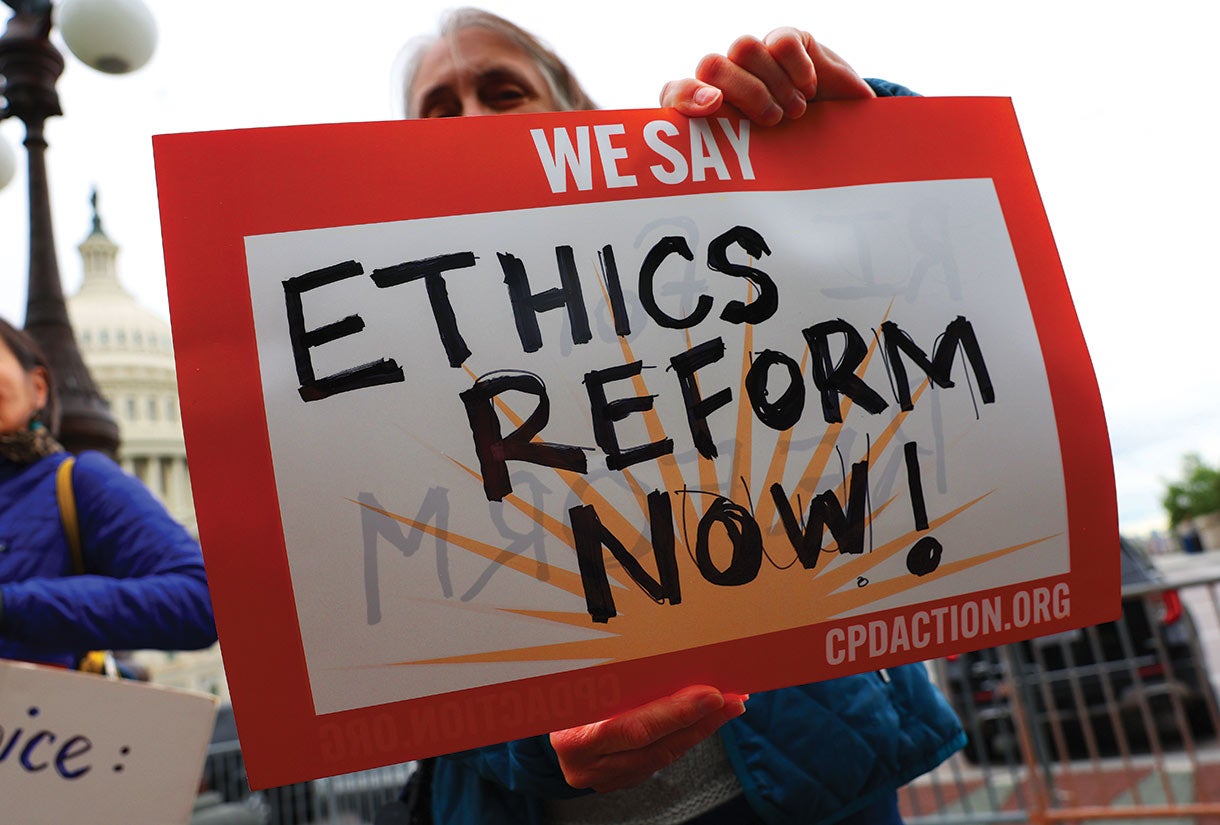
The first step for Democratic presidential hopefuls who want to be taken seriously on Supreme Court reform is simply to talk about the court at every opportunity. You can’t lead on an issue if you’re afraid to mention it. Talking about the court should happen organically whenever these candidates talk about literally anything else on their legislative agenda, because there is no legislation that can or will survive a Republican Supreme Court.
Take abortion rights. Every single Democrat on the presidential-debate stage will say they want to “restore Roe.” But Trump didn’t overturn Roe, nor did the Republican Congress. The Supreme Court did that. When you are talking about restoring Roe, you are literally talking about overruling a Supreme Court decision.
So how do candidates intend to do that, exactly? Democrats should be expected to answer that question, which means not only laying out their plan but telling voters how they intend to get it past the six robed theocrats who think the fallopian tubes are stairways to heaven.
There are four potential ways to do that, four elements of any Supreme Court–reform plan, and 2028 candidates should have proposals for all of them. These elements target the court’s corruption, its excessive power, its immutability, and its conservatism, and they do that through a combination of methods: creating a code of ethics, stripping the court of its right to rule on certain cases, imposing term limits on justices, and, most important of all, adding justices to the court.
Let’s start with the code of ethics, because that’s the lowest-hanging fruit. The Supreme Court is corrupt. Everybody has seen it. Everybody feels it. Even if wealthy Republican interests aren’t directly buying votes, they’re most certainly buying access and the influence that access provides. And yet the Supreme Court is the only court in the land that operates without an ethics code that is enforced by a separate body.
Politicians and policymakers have discussed at length the idea of passing a Supreme Court ethics code through Congress. Those efforts have failed in part because the court claims that only it can police itself. Letting any other branch do so violates the separation of powers, according to the court.
I happen to think the court’s constitutional interpretation is wrong, but I’m not on the Supreme Court, so I can’t make the justices listen to me, or to Congress. But Congress could potentially get the court to abide by a legislative ethics bill by pulling on the lever that is unquestionably within its constitutional powers: the budget. The Supreme Court’s budget, like every other budget in the federal government, is controlled by Congress. Democrats running for office should promise to cut that budget—“defund the court,” if you will—unless the court agrees to be bound by an ethics code administered by some other body. The Constitution says there will be a Supreme Court; it doesn’t dictate how Congress must fund it. It doesn’t say that Congress has to give the justices a fancy courthouse to hold their hearings in. It doesn’t say that Congress has to give the justices clerks and assistants to do all of their research. It doesn’t say that Congress has to provide the justices with security. The Supreme Court can do its work from Clarence Thomas’s RV parked outside a Walmart, for all the Constitution cares.
If you cut the court’s funding to change its decisions, it looks like a form of bribery. But if you cut its funding until the justices agree to stop taking bribes, it just looks like a win.
The next reform Democratic candidates should promise to pursue is “jurisdiction stripping,” although Democrats shouldn’t call it that on the campaign trail unless they want to put their audiences to sleep. I’d call it “reclaiming the Constitution from the Supreme Court.” The basic idea here is that Congress has the power to limit the Supreme Court’s ability to overturn laws, to deem them unconstitutional, and this reform would allow Congress to do just that.
To understand how, it helps to remember that the word unconstitutional appears nowhere in the Constitution, which means the power to declare laws unconstitutional was given to no specific branch of government. Instead, the Supreme Court took that power for itself and dubbed it “judicial review” in the landmark 1803 case Marbury v. Madison. But Congress can take that power back, because Article III of the Constitution gives it the authority to restrict which kinds of cases the courts can review and thus limit the Supreme Court’s jurisdiction.
Congress can’t tell the courts how to rule, but it sure as hell can tell the courts what they’re allowed to rule on. Democrats could say, for instance, that the Supreme Court is not allowed to rule on political-redistricting cases and then pass a national anti-gerrymandering law. They could say the court is not allowed to rule on campaign-finance laws, and then pass a law negating Citizens United and restoring meaningful restrictions on campaign contributions. Taking power away from unelected elites and giving it back to the people is always a winning electoral issue.


Getting rid of Citizens United, courtesy of jurisdiction stripping, would be popular. So would forcing Clarence Thomas to pay for his own vacations by imposing a code of ethics. Still, the most popular Supreme Court reform is term limits. Nearly all Democrats already support imposing 18-year term limits on Supreme Court justices.
The question I have for Democrats promising term limits is: How? I have explained the political and constitutional levers Democrats can pull to get other Supreme Court reforms over the line, but on term limits, the Constitution is pretty clear that federal judges serve “during good behavior,” which has consistently been interpreted to mean “for life, unless impeached.” Many legal scholars have made arguments for how term limits can be imposed without a constitutional amendment, and I think those arguments are brilliant. But the people who get to decide whether those arguments are correct are the very justices whom we are trying to kick off the court.
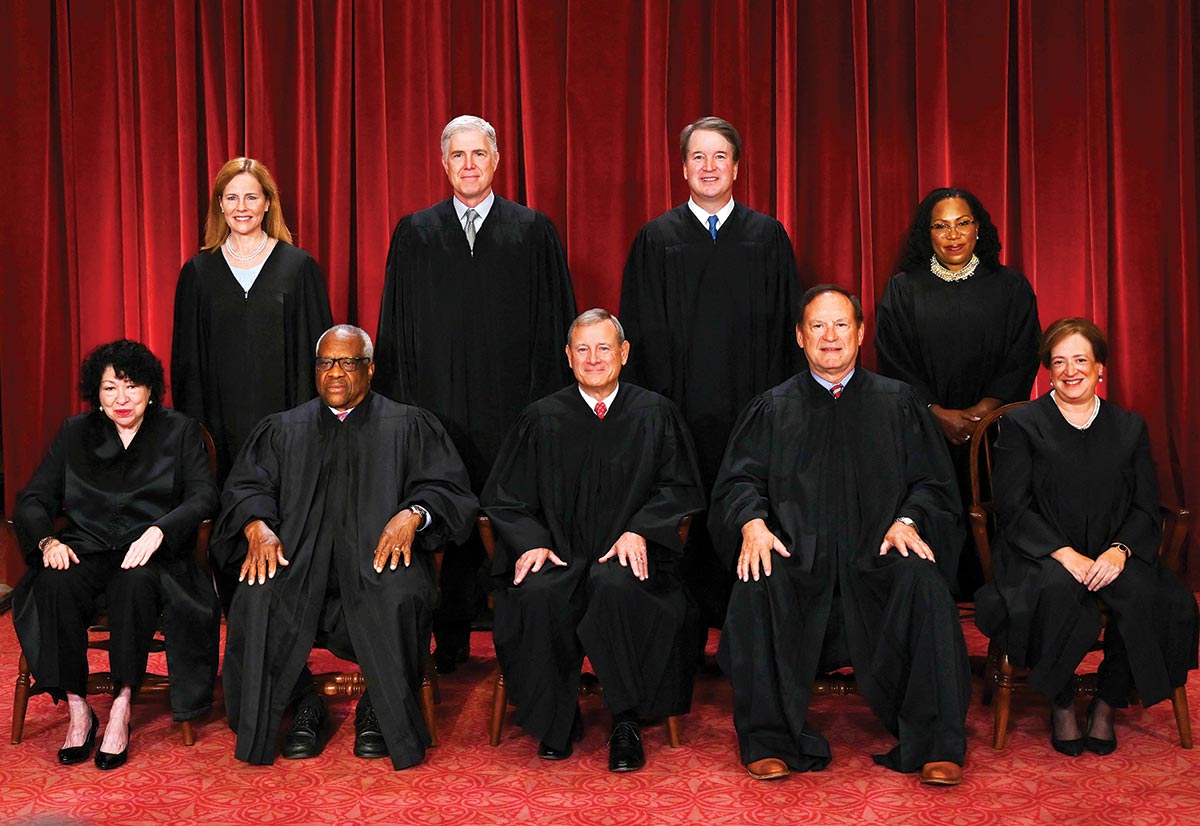
As of this writing, the justices who have served for more than 18 years are Thomas, John Roberts, and Samuel Alito. How, Democrats, are you going to convince them that it’s time to leave? My response to Democrats promising term limits is to cite my forever president Josiah Bartlett’s “next ten words” speech, in which he effectively argues that a sound bite of support for a policy is useless without an explanation of how that policy can be accomplished. Or as he says: “How are we going to do it?” If Democrats have a compelling case for how term limits can be implemented over the objection of the justices who would be required to leave, I’d love to hear it.
This brings us to the reform that is the most essential—and also, somehow, the most controversial. All three of the reforms mentioned so far do a lot of important work. But at the end of the day, none of them—not term limits, jurisdiction stripping, or ethics rules—will change how the Supreme Court’s conservative supermajority rules. These reforms put up important guardrails, limiting the justices’ power and the time they have to abuse that power, but they don’t prevent the court from scuttling the liberal agenda. If you want different decisions to come out of the Supreme Court—decisions that allow the Democrats to enact their programs and policies—then you’re going to have to increase the number of justices who believe that liberal priorities are constitutional.
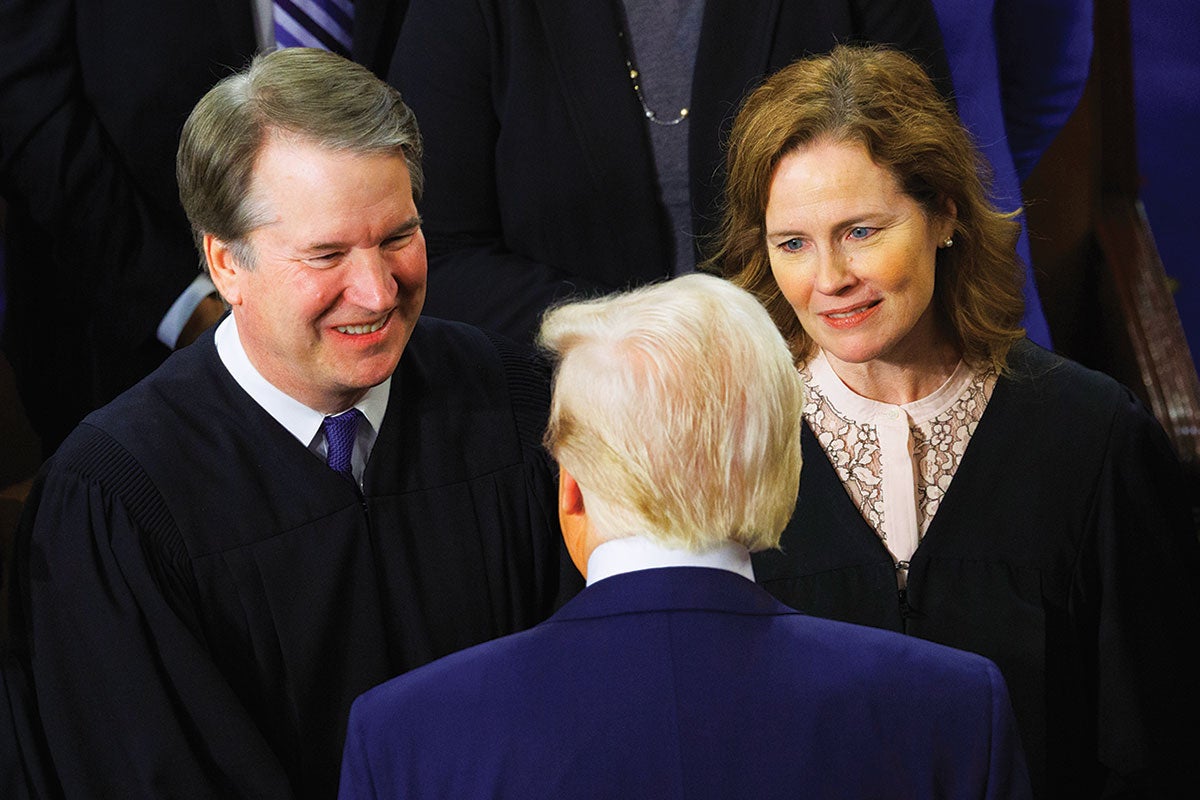
That means we’re going to have to add members to the Supreme Court. There’s no other way. We need a majority of justices who believe in liberal, multiethnic, multi-faith democracy. We need a majority of justices who believe that women are people who deserve equal-people rights. We need a majority of justices who believe guns are not people and do not have an inalienable right to kill us all. We don’t just need more justices, we need liberal justices committed to undoing, overturning, and reversing the precedents laid down over the past 50-plus years. The last time a majority of the Supreme Court’s justices had been appointed by Democratic presidents was… 1969. That stat alone should tell you why we’re now at the point where court expansion is the only reasonable solution.
And expanding the court is reasonable. It is also easy, constitutionally speaking. Court expansion can be accomplished through simple legislation passed in the House, passed in the Senate with 51 votes (or 60, if Democrats lack the courage to abolish the filibuster), and signed by the president. That is literally all it takes to add justices—no complicated constitutional hocus-pocus required. If you want national single-payer healthcare or abortion rights or gun-safety laws, then you simply have to have a majority of justices who are willing to uphold those laws as constitutional.
If I were running for president, I would tie Supreme Court expansion directly to gun reform. That’s because the Republicans currently on the court are even bigger gun extremists than mainline Republican voters. There is no way to keep our children and our society safe from gun violence without expanding the Supreme Court to include more members who want the rest of us to live. There is no way to get real background checks, to close the gun-show loophole, to ban bump stocks and ammunition drums, and to enhance licensing and safety requirements without expanding the Supreme Court.
That has to be the message from all Democratic Party candidates. Moderates who are squeamish about court expansion should be asked if they are perhaps more squeamish about wiping the blood off the blackboard after the next school shooting. Show the people that the court is getting us killed and must be stopped.
A line I have often heard from people who think of themselves as “pragmatists” is that Democrats should focus on winning the election first, and worry about fixing the Supreme Court only after they’ve secured power. The theory, as I understand it, is that Democrats should campaign on broadly popular kitchen-table issues, like affordability, instead of focusing their campaigns on something as esoteric as the Supreme Court.
I agree with half of that. Obviously, winning is paramount. There can be no Supreme Court reform unless Democrats actually win. If Democrats can win by promising to lower the price of eggs, they should do that. If Democrats can win by promising to fight data centers with water guns, they should do that. If Democrats can win by promising every single voter in the country a universal basic income and a new puppy, they should do that. If Democrats can win by doing all of the above while walking backwards and chewing gum, in heels, they should do that.
My argument is that Supreme Court reform must be put front and center while the Democratic candidates are promising all the other things. Because if they don’t do that, everything from regulations on price gouging to free puppies will be overruled by the Supreme Court. Democrats must build the conditions under which Supreme Court reform doesn’t just become preferred but inevitable. The Democrats running and winning on the presidential nominee’s coattails must similarly know that court reform is inevitable. Again, that’s because court reform is the first step, not the last, in unlocking the rest of their agenda. Democrats can do nothing unless they win, but that victory will be meaningless without court reform.
If you will forgive the classical reference, I would handle the balance between so-called kitchen-table issues and the overwhelming need to reform the court the way Cato the Elder pressed for his signature obsession in ancient Rome. Famously, Cato ended every single speech he made in the Senate, regardless of the topic, with the line Ceterum censeo Carthago delenda est: “Furthermore, I think Carthage must be destroyed.” That is the bare minimum we should demand of Democratic candidates in the 2028 cycle. “We’re going to have Medicare for All. We’re going to keep AI data centers out of your communities. We’re going to get guns off our streets and out of our schools. Furthermore, the Supreme Court must be destroyed.”
Cato, it must be said, got his way, and I’m confident that Democrats could mimic his success. Today’s voters, and particularly Democratic-primary voters, are hungry for candidates who will take back our power from the Supreme Court. The court is extremely unpopular—just 34 percent of adults (and only 23 percent of Democrats!) approve of what the institution is doing. But voters like the idea of Supreme Court reform. According to a September poll by Marquette Law School, 89 percent of adults approve of enforcing an ethics code for justices; 79 percent favor term limits; and 53 percent like the idea of increasing the number of justices. Or as Josh Orton, the CEO of Demand Justice (disclosure: I’m a board member), told me, “In 2028, a Democratic presidential candidate won’t be taken seriously unless they have a clear plan to break up the Roberts majority within two years of taking office.”
This isn’t hard. In my lifetime, I’ve seen Democrats go from “marriage is between one man and one woman” to Gene Hackman in The Birdcage in one election cycle. Democrats must be leaders here, whether they get there through rational self-interest or idealistic good government. The people are ready for candidates who take the fight for our rights and democracy all the way to the Supreme Court.
I want Democrats to win. I want to win the campaign season and the governing season. I want to win the battle and the war.
Supreme Court reform is how Democrats win. It’s an unpopular institution, staffed and protected by elites, that has made itself the enemy of the popular will. If Democrats want to fight for individual rights, market regulations, environmental justice, healthcare, and fair taxes on the impossibly wealthy, then they have to fight the Supreme Court.
If they don’t, we’re looking at another cycle of failure, regardless of who happens to win.
More from The Nation

The Political Power of Seniors The Political Power of Seniors
In places like Wisconsin, campaigns can’t win without seniors. They are the second-largest, fastest-growing, and most reliable group of voters.

The Voters Who Saved Democracy Are Being Written Out of the Story The Voters Who Saved Democracy Are Being Written Out of the Story
The media downplayed the importance of Black voters for Democratic victories.

Notes From the Blue Star State Notes From the Blue Star State
Texas is predominantly and pragmatically populist. If the national Democratic Party wishes to conquer the Electoral College for a generation, it will follow the lead of the voters...

Stephen Miller Is the Real President Now Stephen Miller Is the Real President Now
Trump just promoted his worst, most dangerous adviser. Get ready for a constitutional crisis.
Chuck Schumer and Hakeem Jeffries Are Not Meeting the Moment Chuck Schumer and Hakeem Jeffries Are Not Meeting the Moment
The Democrats' congressional leaders have been handed an enormous mandate they have no interest in carrying out.

Trump, Toast or Toasted… Trump, Toast or Toasted…
America has been burned by his corruption.

