
The US Military’s Long History of Killing Innocents
The Department of Defense’s annual civilian casualty report is two years behind—but even when it finally arrives, will it say anything of substance?
This article originally appeared at TomDispatch.com. To stay on top of important articles like these, sign up to receive the latest updates from TomDispatch.com.
There are constants in this world—occurrences you can count on. Sunrises and sunsets. The tides. That, day by day, people will be born and others will die.
Some of them will die in peace, but others, of course, in violence and agony.
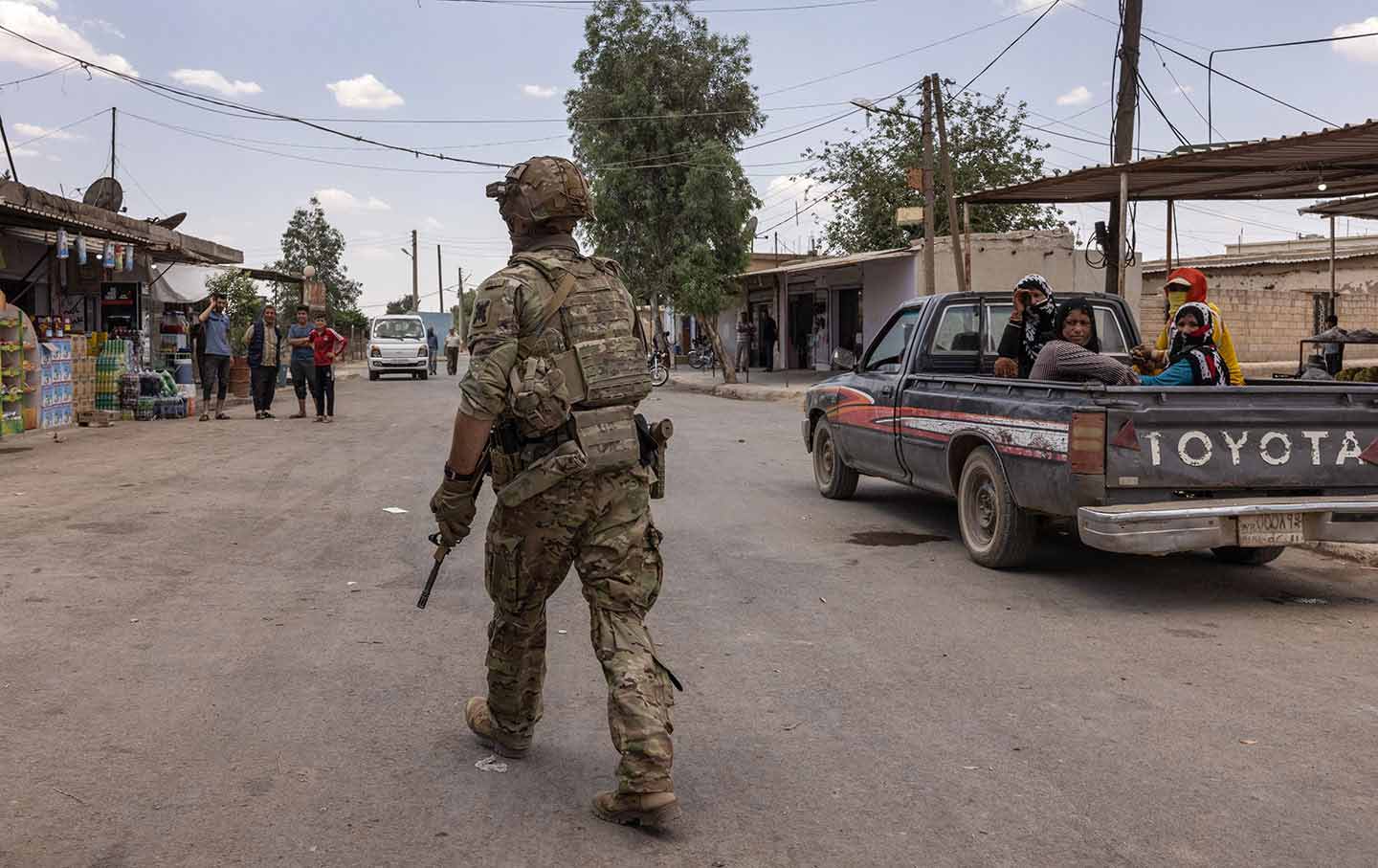
For hundreds of years, the US military has been killing people. It’s been a constant of our history. Another constant has been American military personnel killing civilians, whether Native Americans, Filipinos, Nicaraguans, Haitians, Japanese, Koreans, Vietnamese, Cambodians, Laotians, Afghans, Iraqis, Syrians, Yemenis, and on and on. And there’s something else that’s gone along with those killings: a lack of accountability for them.
Late last month, the Department of Defense (DoD) released its congressionally mandated annual accounting of civilian casualties caused by US military operations globally. The report is due every May 1 and, in the latest case, the Pentagon even beat that deadline by a week. There was only one small problem: It was the 2022 report. You know, the one that was supposed to be made public on May 1, 2023. And not only was that report a year late, but the 2023 edition, due May 1, 2024, has yet to be seen.
Whether that 2023 report, when it finally arrives, will say much of substance is also doubtful. In the 2022 edition, the Pentagon exonerated itself of harming noncombatants. “DoD has assessed that U.S. military operations in 2022 resulted in no civilian casualties,” reads the 12-page document. It follows hundreds of years of silence about, denials of, and willful disregard toward civilians slain purposely or accidentally by the US military and a long history of failures to make amends in the rare cases where the Pentagon has admitted to killing innocents.
Moral Imperatives
“The Department recognizes that our efforts to mitigate and respond to civilian harm respond to both strategic and moral imperatives,” reads the Pentagon’s new 2022 civilian casualty report.
And its latest response to those “moral imperatives” was typical. The Defense Department reported that it had made no ex gratia payments—amends offered to civilians harmed in its operations—during 2022. That follows exactly one payment made in 2021 and zero in 2020.
Whether any payments were made in 2023 is still, of course, a mystery. I asked Lisa Lawrence, the Pentagon spokesperson who handles civilian harm issues, why the 2023 report was late and when to expect it. A return receipt shows that she read my e-mail, but she failed to offer an answer.
Her reaction is typical of the Pentagon on the subject.
A 2020 study of post-9/11 civilian casualty incidents by the Center for Civilians in Conflict and Columbia Law School’s Human Rights Institute found that most went uninvestigated. When they did come under official scrutiny, American military witnesses were interviewed while civilians—victims, survivors, family members—were almost totally ignored, “severely compromising the effectiveness of investigations,” according to that report.
In the wake of such persistent failings, investigative reporters and human rights groups have increasingly documented America’s killing of civilians, its underreporting of noncombatant casualties, and its failures of accountability in Afghanistan, Libya, Somalia, Syria, Yemen, and elsewhere.
During the first 20 years of the war on terror, the United States conducted more than 91,000 airstrikes across seven major conflict zones and killed up to 48,308 civilians, according to a 2021 analysis by Airwars, a United Kingdom–based air-strike monitoring group.
Between 2013 and 2020, for example, the United States carried out seven separate attacks in Yemen—six drone strikes and one raid—that killed 36 members of the intermarried Al Ameri and Al Taisy families. A quarter of them were children between the ages of three months and 14 years old. The survivors have been waiting for years for an explanation as to why they were repeatedly targeted.
In 2018, Adel Al Manthari, a civil servant in the Yemeni government, and four of his cousins—all civilians—were traveling by truck when an American missile slammed into their vehicle. Three of the men were killed instantly. Another died days later in a local hospital. Al Manthari was critically injured. Complications resulting from his injuries nearly killed him in 2022. He beseeched the US government to dip into the millions of dollars appropriated by Congress to compensate victims of American attacks, but they ignored his pleas. His limbs and life were eventually saved by the kindness of strangers via a crowdsourced GoFundMe campaign.
The same year that Al Manthari was maimed in Yemen, a US drone strike in Somalia killed at least three, and possibly five, civilians, including 22-year-old Luul Dahir Mohamed and her 4-year-old daughter Mariam Shilow Muse. The next year, a US military investigation acknowledged that a woman and child were killed in that attack, but concluded that their identities might never be known. Last year, I traveled to Somalia and spoke with their relatives. For six years, the family has tried to contact the American government, including through US Africa Command’s online civilian casualty reporting portal without ever receiving a reply.
In December 2023, following an investigation by The Intercept, two dozen human rights organizations—14 Somali and 10 international groups—called on Defense Secretary Lloyd Austin to compensate Luul and Mariam’s family for their deaths. This year, Senator Elizabeth Warren (D-MA) and Representatives Sara Jacobs (D-CA), Ilhan Omar (D-MN), Barbara Lee (D-CA), and Jim McGovern (D-MA) have also called on the Defense Department to make amends.
Popular
“swipe left below to view more authors”Swipe →A 2021 investigation by New York Times reporter Azmat Khan revealed that the American air war in Iraq and Syria was marked by flawed intelligence and inaccurate targeting, resulting in the deaths of many innocents. Out of 1,311 military reports analyzed by Khan, only one cited a “possible violation” of the rules of engagement. None included a finding of wrongdoing or suggested a need for disciplinary action, while fewer than a dozen condolence payments were made. The US-led coalition eventually admitted to killing 1,410 civilians during the war in Iraq and Syria. Airwars, however, puts the number at 2,024.
Several of the attacks detailed by Khan were brought to the Defense Department’s attention in 2022 but, according to their new report, the Pentagon failed to take action. Joanna Naples-Mitchell, director of the nonprofit Zomia Center’s Redress Program, which helps survivors of American air strikes submit requests for compensation, and Annie Shiel, US advocacy director with the Center for Civilians in Conflict, highlighted several of these cases in a recent Just Security article.
In June 2022, for instance, the Redress Program submitted requests for amends from the Pentagon on behalf of two families in Mosul, Iraq, harmed in an April 29, 2016, air strike reportedly targeting an Islamic State militant who was unharmed in the attack. Khan reported that, instead, Ziad Kallaf Awad, a college professor, was killed and Hassan Aleiwi Muhammad Sultan, then 10 years old, was left wheelchair-bound. The Pentagon had indeed admitted that civilian casualties resulted from the strike in a 2016 press release.
In September 2022, the Redress Program also submitted ex gratia requests on behalf of six families in Mosul, all of them harmed by a June 15, 2016, air strike also investigated by Khan. Naples-Mitchel and Shiel note that Iliyas Ali Abd Ali, then running a fruit stand near the site of the attack, lost his right leg and hearing in one ear. Two brothers working in an ice cream shop were also injured, while a man standing near that shop was killed. That same year, the Pentagon did confirm that the strike had resulted in civilian casualties.
However, almost eight years after acknowledging civilian harm in those Mosul cases and almost two years after the Redress Program submitted the claims to the Defense Department, the Pentagon has yet to offer amends.
Getting to “Yes”
While the US military has long been killing civilians—in massacres by ground troops, air strikes and even, in August 1945, nuclear attacks—compensating those harmed has never been a serious priority.
Gen. John “Black Jack” Pershing did push to adopt a system to pay claims by French civilians during World War I and the military in World War II found that paying compensation for harm to civilians “had a pronounced stabilizing effect.” The modern military reparations system, however, dates only to the 1960s.
During the Vietnam War, providing “solatia” was a way for the military to offer reparations for civilian injuries or deaths caused by US operations without having to admit any guilt. In 1968, the going rate for an adult life was $33. Children merited just half that.
In 1973, a B-52 Stratofortress dropped 30 tons of bombs on the Cambodian town of Neak Luong, killing hundreds of civilians and wounding hundreds more. The next of kin of those killed, according to press reports, were promised about $400 each. Considering that, in many cases, a family’s primary breadwinner had been lost, the sum was low. It was only the equivalent of about four years of earnings for a rural Cambodian. By comparison, a one-plane sortie, like the one that devastated Neak Luong, cost about $48,000. And that B-52 bomber itself then cost about $8 million. Worse yet, a recent investigation found that the survivors did not actually receive the promised $400. In the end, the value American forces placed on the dead of Neak Luong came to just $218 each.
Back then, the United States kept its low-ball payouts in Cambodia a secret. Decades later, the US continues to thwart transparency and accountability when it comes to civilian lives.
In June 2023, I asked Africa Command to answer detailed questions about its law-of-war and civilian-casualty policies and requested interviews with officials versed in such matters. Despite multiple follow-ups, Courtney Dock, the command’s deputy director of public affairs, has yet to respond. This year-long silence stands in stark contrast to the Defense Department’s trumpeting of new policies and initiatives for responding to civilian harm and making amends.
In 2022, the Pentagon issued a 36-page Civilian Harm Mitigation and Response Action Plan, written at the direction of Secretary of Defense Lloyd Austin. The plan provides a blueprint for improving how the Pentagon addresses the subject. The plan requires military personnel to consider potential harm to civilians in any air strike, ground raid, or other type of combat.
Late last year, the Defense Department also issued its long-awaited “Instruction on Civilian Harm Mitigation and Response,” which established the Pentagon’s “policies, responsibilities, and procedures for mitigating and responding to civilian harm.” The document, mandated under the 2019 National Defense Authorization Act, and approved by Austin, directs the military to “acknowledge civilian harm resulting from U.S. military operations and respond to individuals and communities affected by U.S. military operations,” including “expressing condolences” and providing ex gratia payments to next of kin.
But despite $15 million allocated by Congress since 2020 to provide just such payments and despite members of Congress repeatedly calling on the Pentagon to make amends for civilian harm, it has announced just one such payment in the years since.
Naples-Mitchel and Shiel point out that the Defense Department has a projected budget of $849.8 billion for fiscal year 2025 and the $3 million set aside annually to pay for civilian casualty claims is just 0.00035 percent of that sum. “Yet for the civilians who have waited years for acknowledgment of the most painful day of their lives, it’s anything but small,” they write. “The military has what it needs to begin making payments and reckoning with past harms, from the policy commitment, to the funding, to the painstaking requests and documentation from civilian victims. All they have to do now is say yes.”
On May 10, I asked Lisa Lawrence, the Pentagon spokesperson, if the US would say “yes” and if not, why not.
“Thank you for reaching out,” she replied. “You can expect to hear from me as soon as I have more to offer.”
Lawrence has yet to “offer” anything.
More from The Nation
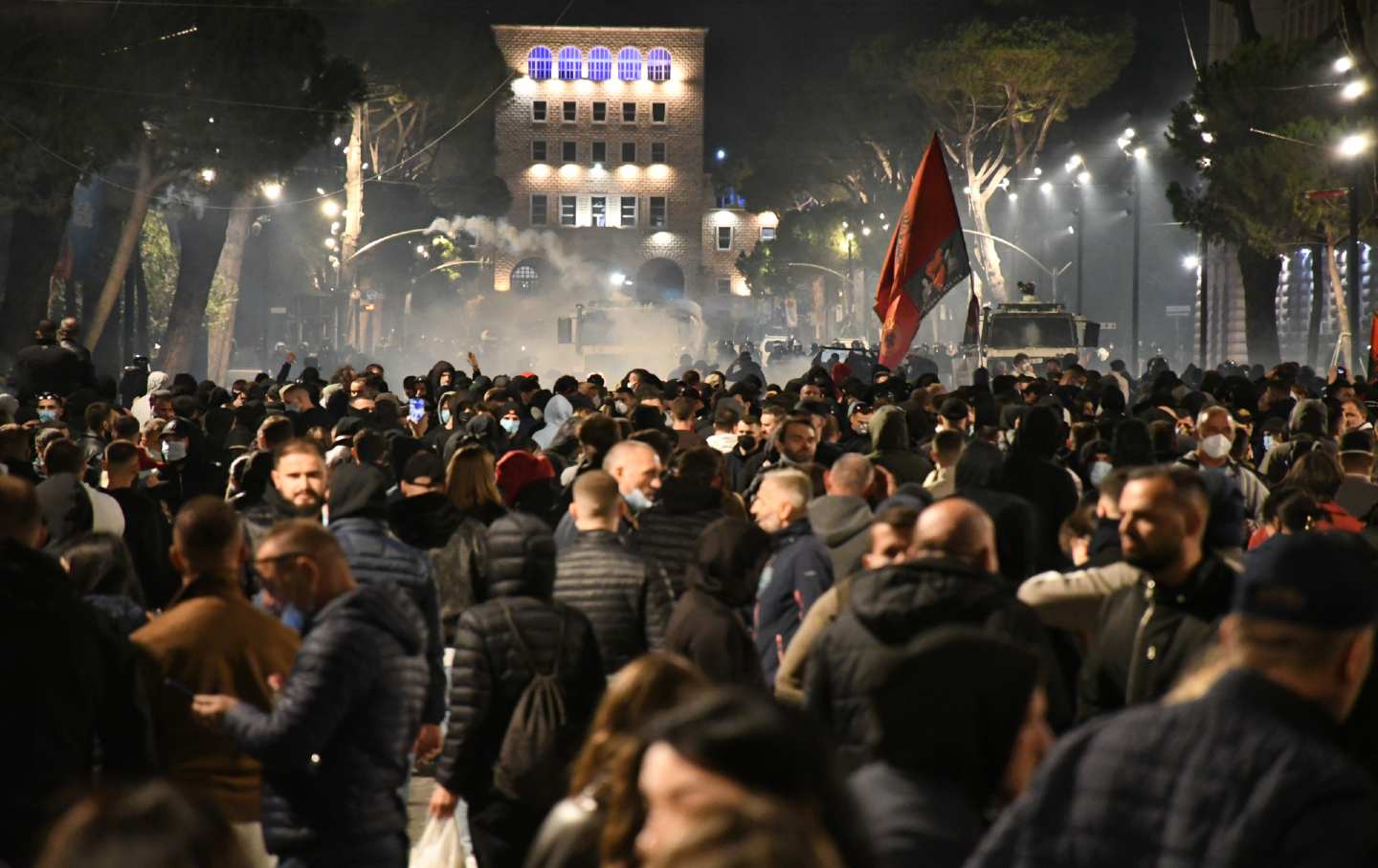
Albanian Student Strikes Spur a Political Crisis Albanian Student Strikes Spur a Political Crisis
A new round of protests against the ruling party’s corruption has Prime Minister Edi Rama giving cops bonuses to crack down on dissent.
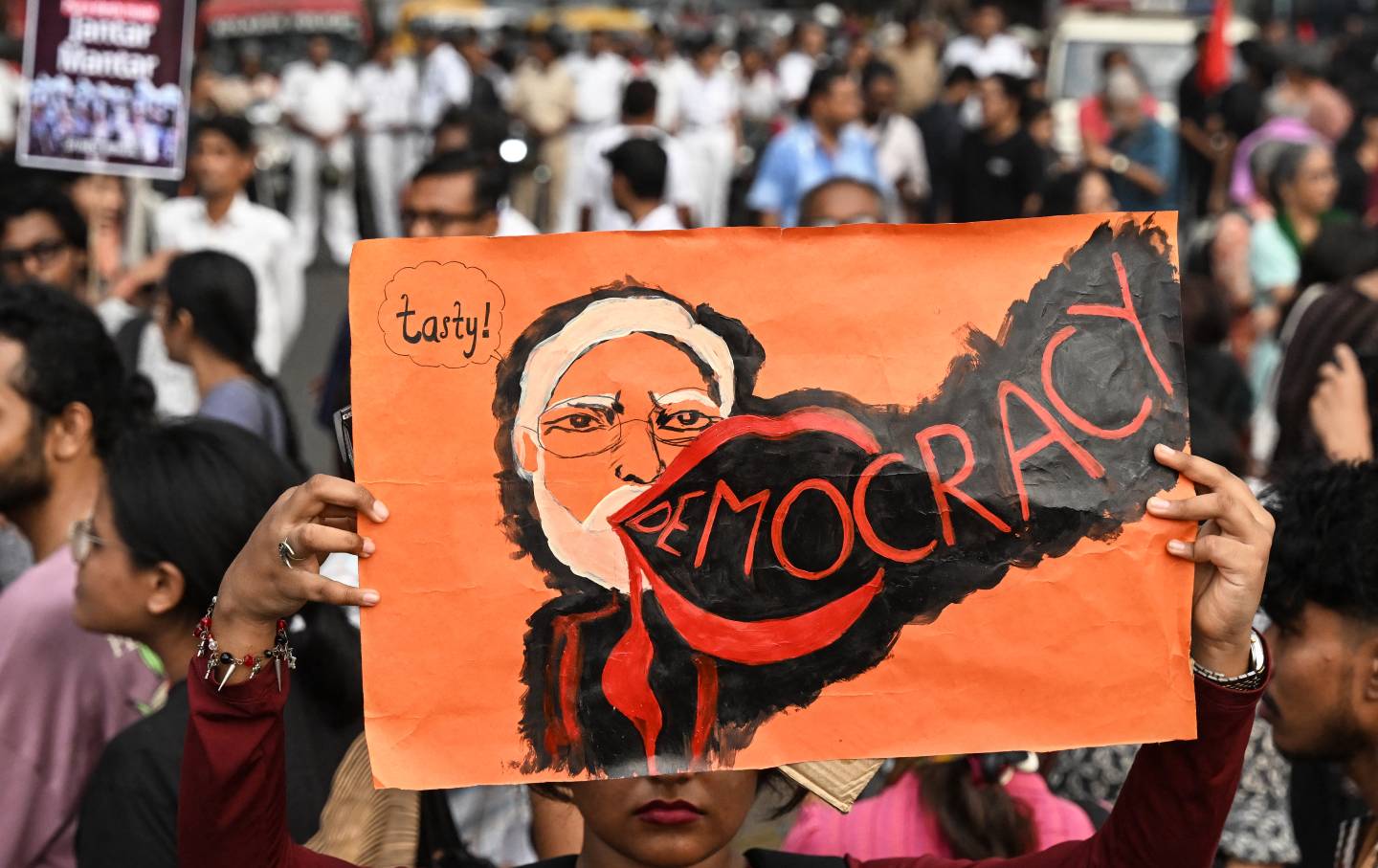
Inside India’s Gen Z Cockroach Janta Movement Inside India’s Gen Z Cockroach Janta Movement
Young Indians are challenging the purge of voter rolls by Modi’s right-wing government. Shrishti Khanna, who was detained by Delhi police while covering the protests, explains.

The Clarion Call of “NAZA” The Clarion Call of “NAZA”
Yuval Abraham and Rachel Szor’s new film not only documents the horrors of the present but give us a glimpse of a possible future too.
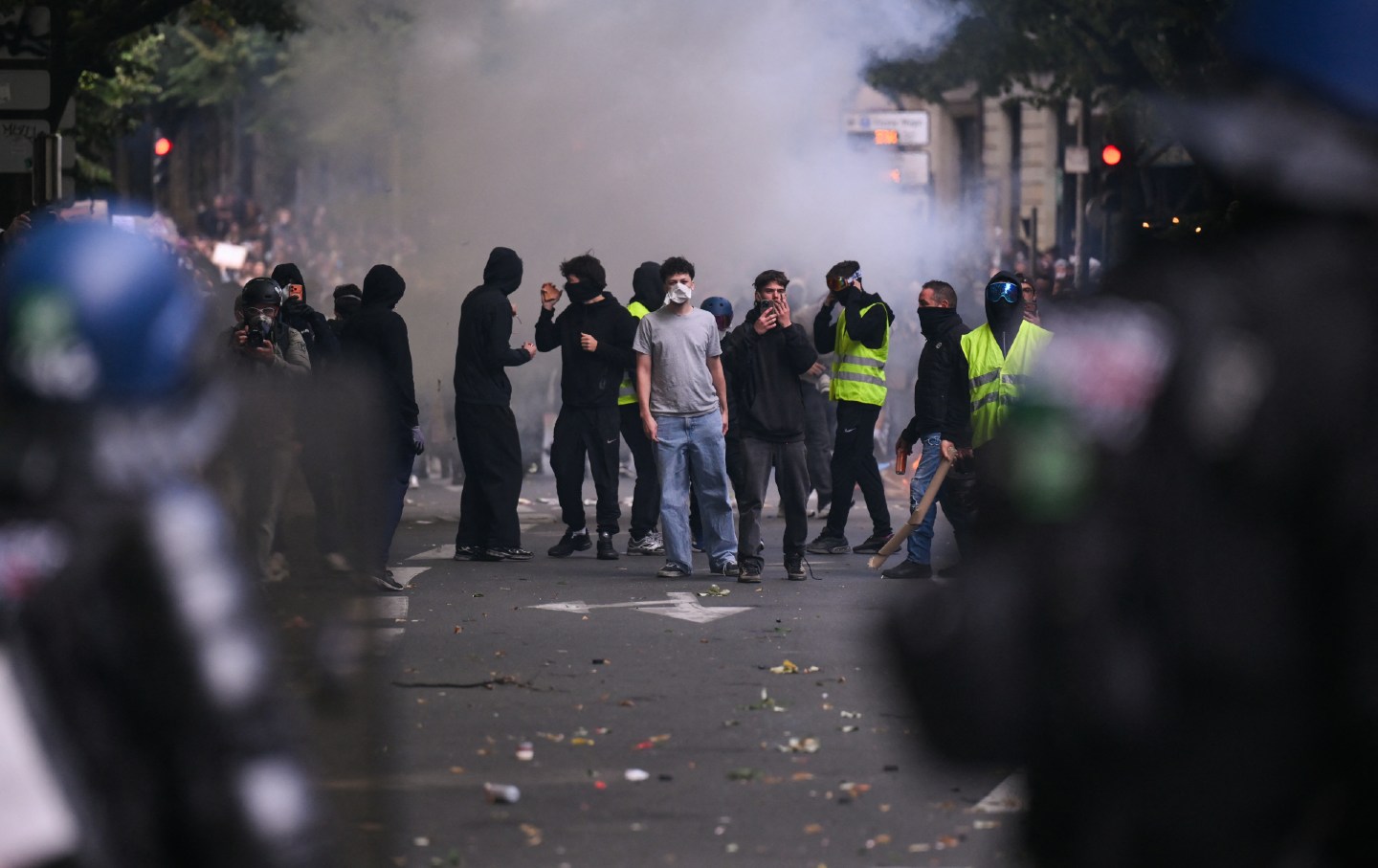
The Specter of Lepenism Looms Over France’s Social Crisis The Specter of Lepenism Looms Over France’s Social Crisis
Joining forces with the “yellow vests,” youth demonstrators are raising the alarm in a country falling to the far right.
Progressives Are Backing Puerto Rican Independence. It’s About Time. Progressives Are Backing Puerto Rican Independence. It’s About Time.
More and more leftists are concluding that statehood for the island is not enough.
The Saudi Phase of the Iran War Signals More Chaos to Come The Saudi Phase of the Iran War Signals More Chaos to Come
The conflict that Donald Trump has repeatedly proclaimed an unequivocal American victory keeps spiraling out of control.

