Challenging the Silence Over Palestine in the American Historical Association
Institutional complicity in injustice.
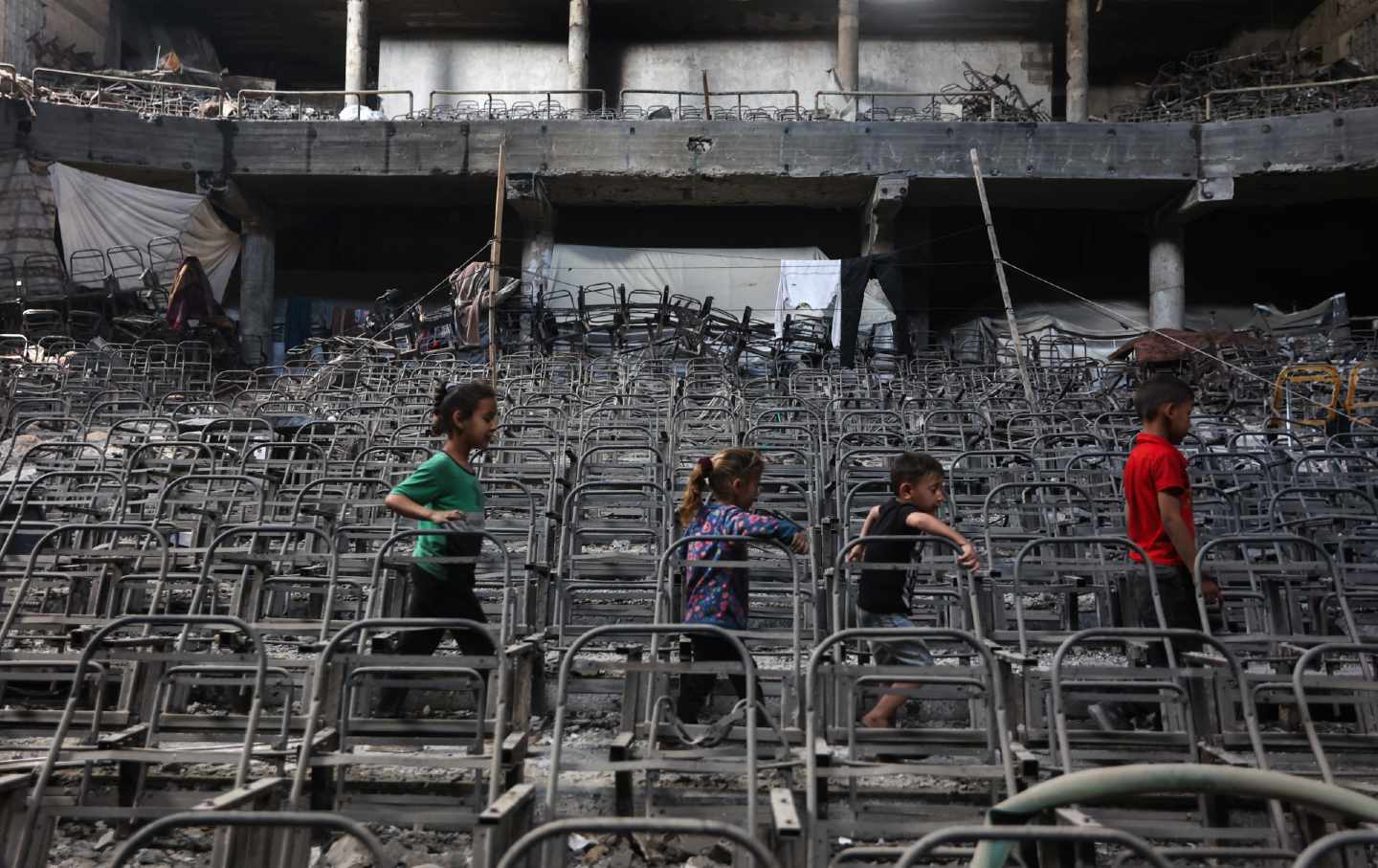
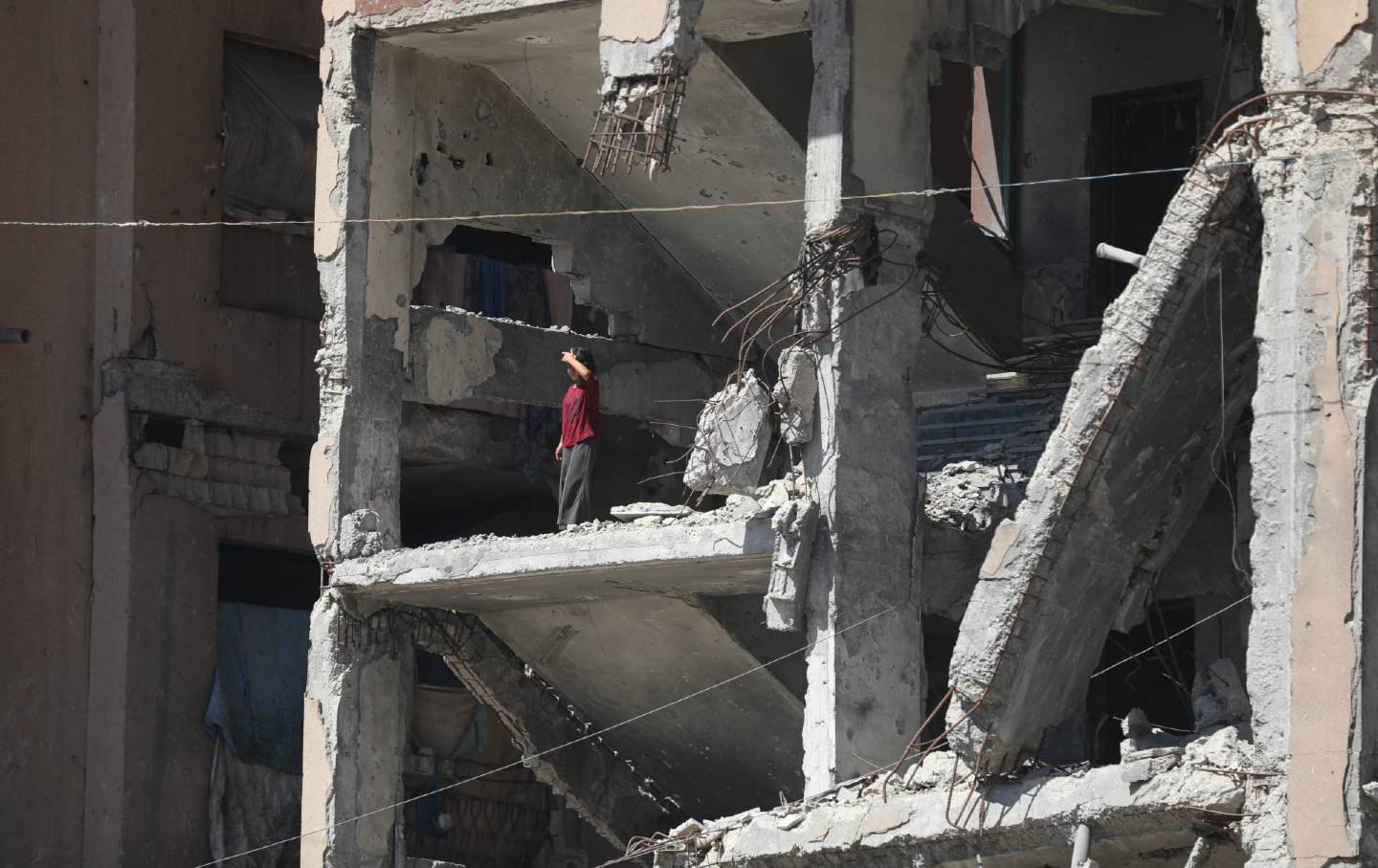
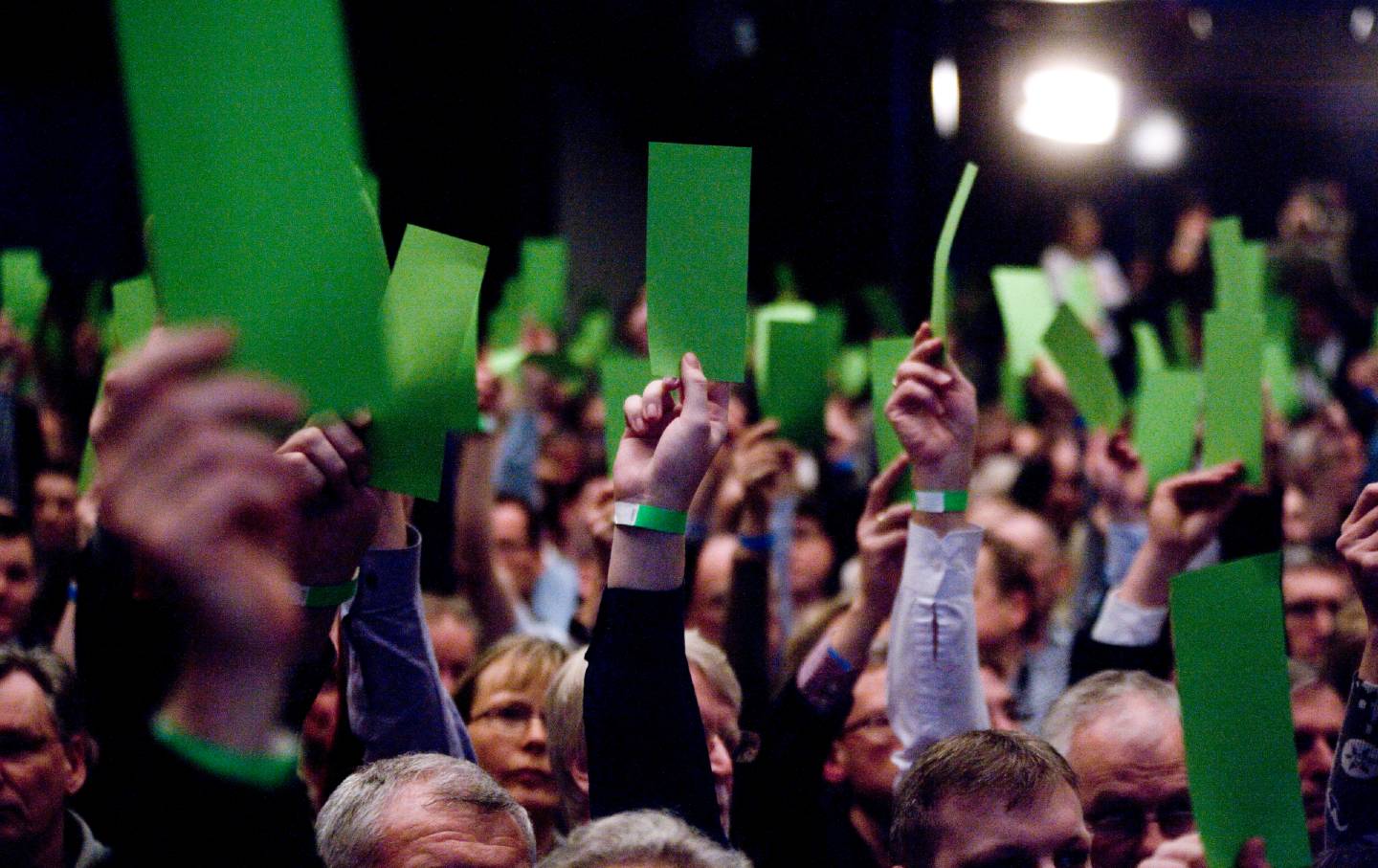
Earlier this year, in “Will Scholars Take a Stand Against the Scholasticide in Gaza?,” I reported on the fight inside the historical discipline’s most eminent society, the American Historical Association (AHA). At the AHA’s Annual Meeting on January 5, members crowded the business meeting to approve, by a vote of 428–88, a “Resolution to Oppose Scholasticide in Gaza,” brought by the organization I cochair with Margaret Power, Historians for Peace and Democracy (HPAD). (The United Nations defines “scholasticide” as the deliberate destruction of a people’s educational and cultural institutions.) On January 17, however, the AHA’s council vetoed the resolution on grounds that it lay outside the mission of an academic organization to censure the murder of fellow scholars and turning universities into rubble.
In March, working with our allies, the Palestinian Historians Group and Historians for Palestine, we sent a petition signed by 1,887 historians to the AHA Council, asking them to reconsider; they ignored it. Meanwhile, to put the AHA Council’s veto in sharp relief, at the April 5 Annual Meeting of our profession’s other major society, the Organization of American Historians (OAH), our resolution was handily adopted and then approved by their executive council. The OAH is now setting up a committee to support the reconstruction of Gaza’s universities.
In response to the lack of democracy, our three groups decided to support candidates for several AHA offices, in some cases via nomination by petition, as permitted in the Association’s bylaws. All committed to democratizing the organization, including Dartmouth professor Annelise Orleck, arrested by police during last spring’s Gaza solidarity encampment, a candidate for president, and Sherene Seikaly, associate professor at the University of California–Santa Barbara and editor of the Journal of Palestine Studies, for vice president of the Professional Division.
These candidacies stirred up considerable opposition. A letter signed by 13 former presidents urged members to vote for the officially nominated candidates without explaining who our (legally nominated) candidates were and why they were on the ballot, while using the Trump administration’s attacks on scholarly societies to gin up the vote. The eminent historian of gender Joan W. Scott called out this maneuver in “On the Electoral Tactics of the American Historical Association” on the American Association of University Professors’ blog ACADEME. Private missives from former officials suggested that if elected to the council, we would ignore our “fiduciary responsibilities” in favor of personal ideological agendas. A letter circulated on the Labor and Working-Class History Association’s listserve urged members “to support candidates on the official AHA slate, not the insurgent slate. As much as we condemn Israel’s human rights violations in Gaza and the West Bank, we cannot endorse any insurgent slate (no matter if they call themselves `democratic’ and `progressive’) that does not equally support the rights of Jews (in Israel or the diaspora) as well as Palestinians to live in peace and security,” a deeply unpleasant implication. All because we object to preserving the silence over Palestine and Israel’s ongoing genocide! And if you are perturbed by calling it that, please read Omer Bartov’s essay in the July 15 New York Times, “I’m a Genocide Scholar. I Know It When I See It.”
In the end, many AHA members voted for greater democracy. Although professors Orleck and Seikaly were not elected, four of us were, including myself as councilor for the Research Division, Karen Miller as councilor for the Teaching Division, and current and former members of HPAD’s Steering Committee Prasannan Parthasarathi and Alexander Aviña to the Nominations Committee. These victories mark a significant change from 1969, when a Radical Historians’ Caucus sought to put the association on record against the Vietnam War and ran Staughton Lynd (a founder of HPAD’s predecessor organization, Historians Against the War, in 2003) for president; they were defeated, although now the AHA commemorates that contentious meeting as leading to lasting reforms.
For some historical perspective on the moment we are living through, let me evoke a parallel with another silence, another time of long-enduring institutional complicity with injustice. What would have happened circa 1938, if a group of historians had challenged the association’s acceptance of Jim Crow? From 1903 to 1935, eight of the AHA’s Annual Meetings were held in Southern cities where Black scholars would not have been allowed to enter the hotels, let alone rent rooms. For sure, those “radicals” would have been labeled troublemakers trying to use the association for their own purposes, provoking division with serious financial consequences, and worse. It is a fine thing that in this instance we will be inside the tent, working productively to advance the AHA’s mission of defending honest history, while advocating for greater democratic functioning. We will not be silent about Palestine.
Become a Sustaining Donor This September
Between the reemergence of right-wing red-baiting and Donald Trump’s use of the chilling National Security Presidential Memorandum–7 to criminalize left political organizing, we’re seeing McCarthyism reborn before our eyes.
This assault on democracy cannot be ignored or wished away. Resisting it requires bravery in the face of threats and repression, a steadfast commitment to the truth, and the unwavering belief that we can—and will—overcome this darkness.
We must have an independent media that sets the record straight, unearths corruption and abuses of power, and advances a politics of justice and dignity for all if we’re to win this fight.
That’s why I’m writing to you today. This September, The Nation needs to add 100 monthly donors to sustain our progressive journalism. Your contribution makes the next investigative report, the next truth-speaking column, and the next pathbreaking essay all possible.
I hope you’ll support our work with a recurring donation today. If you donate $10 or more a month, we’ll send you a brand new “Hands Off the Free Press!” sticker to recognise your commitment to our cause. Please, donate today.
Onward,
Katrina vanden Heuvel
Editor and Publisher, The Nation