
A New Report on Alexey Navalny’s Death
Boris Kagarlitsky and hundreds of unknown political prisoners remain in Russia’s prisons.
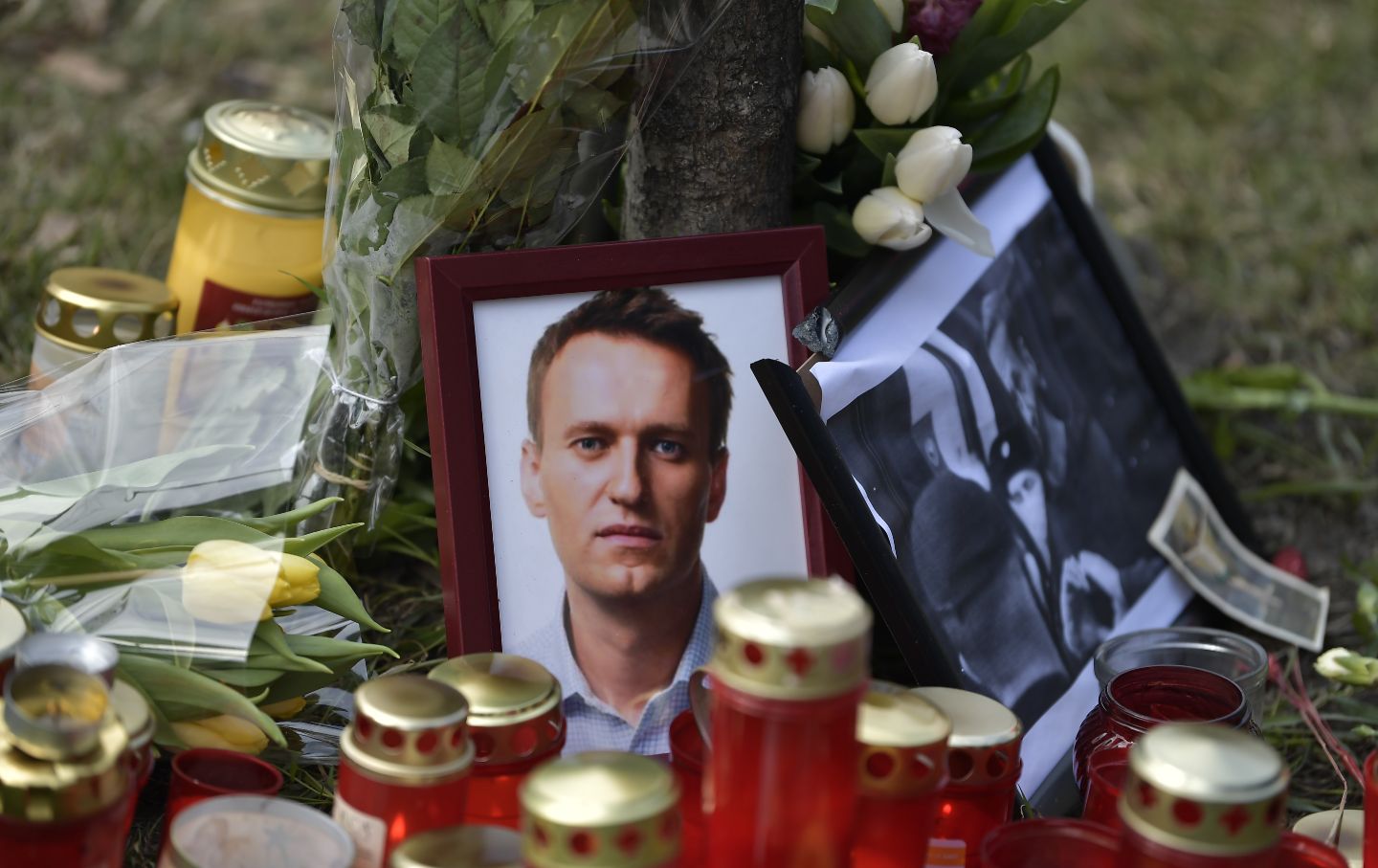
It came of little surprise to learn last week that Alexey Navalny’s death in a Russian prison came from a deadly poison. According to a report by Britain, France, Germany, Sweden and the Netherlands, analysis of samples from the human rights activist’s body had “conclusively” found a toxin common in poison dart frogs in South America, and not naturally found in Russia.
Navalny died in the “Polar Wolf” penal colony north of the Arctic Circle in February 2024. He was 47 years old.
As the fourth anniversary of Russia’s invasion of Ukraine approaches, news of Navalny’s poisoning serves as a stark reminder of the human rights abuses committed by Russia. Those abuses haven’t stopped at the front line in Ukraine, with Russia taking political prisoners and holding them in conditions that have raised concerns among human rights groups.
In the aftermath of Navalny’s death, the US State Department announced new sanctions on three Russians, including the warden. One prison official, Valeriy Gennadevich Boyarinev, reportedly instructed prison staff to exert harsher treatment on Navalny while he was incarcerated. Following Navalny’s death, the official received a promotion.
Russia denied that it had poisoned Navalny. “Naturally, we do not accept such accusations,” a Kremlin spokesman said, according to Reuters. “We disagree with them. We consider them biased and not based on anything. And we strongly reject them.”
Navalny isn’t the only political prisoner Russia has put away in recent years. According to Memorial, a human rights group that keeps track of political prisoners in Russia, at least 4,877 people in Russia and occupied Ukrainian territory have been politically persecuted and incarcerated. Memorial notes that the actual count of political prisoners could be double that.
Sergei Davidis, the head of Memorial, told The Nation that there’s been a recent increase in violence against defendants in political cases, and in the use of treason and terrorism charges for repression. The severity of sentences being handed out by Russian courts is also increasing. He also noted that Navalny’s execution by a toxin found in exotic frog poison is notable.
“Even without reference to specific international treaties, it can be said that the extrajudicial killing of a citizen by the state clearly violates the norms of international law,” Davidis said. “Even more so when the person killed is deprived of liberty and under the complete control of the authorities. In Navalny’s case, we are also talking about the killing of a person deprived of his liberty for political reasons in violation of the right to a fair trial. The creation and use of chemical weapons, which is what the poison used to kill Navalny actually is, also violates international norms.”
Last month, at least 10 criminal cases were brought before one Russian court against Ukrainians who were prosecuted under allegations of “terrorism.” Over a two-week span, the court handed out verdicts in 27 more cases involving Ukrainians, with maximum sentences ranging from seven to 20 years in prison. In another case, a 69-year-old woman from Zaporizhzhia was sentenced to 15 years for allegedly donating money to the Ukrainian military.
In a statement last year on the anniversary of Navalny’s death, the United Nations special rapporteur on Russia said there were at least 2,000 political prisoners in Russia, often enduring life-threatening conditions. Eight political prisoners died in prison in 2024, including Pavel Kushnir, a pianist who was critical of the war in Ukraine. The report noted 12 children who were incarcerated on charges of “terrorism” and “extremism.” In a September 2025 report, the rapporteur said the human rights situation in Russia “continued to deteriorate.”
Navalny was a prominent activist and sharply critical of Putin, who has consistently cracked down on his critics. Take, for example, Boris Kagarlitsky, a prominent intellectual who has been critical of Putin’s authoritarian regime, designated a “foreign agent” and a “terrorist” by the Russian state. He has remained an outspoken critic of the Russian invasion of Ukraine from prison, following his arrest in July 2023.
Kagariltsky, 66, has written extensively for The Nation about Putin’s authoritarianism, protests, and the Russian opposition, at great risk. As of November, he had served time in isolation and was in declining health.
Still, he has said he doesn’t want to leave Russia as part of any deal for his exchange. “I have stated several times and I repeat again,” Kagarlitsky told The Nation in November last year, “that I do not wish to participate in such exchanges.… I see no point or benefit for myself in emigrating. If I had wanted to leave the country, I would have done so myself.”
Kagarlitsky represents the spirit of domestic Russian opposition to Putin and the war in Ukraine. As peace negotiations continue to flail and the war drags on—leading to massive losses for Russia (and Ukraine)—the situation’s potential for instability grows, leaving political prisoners in limbo.
“It is important not to forget to support Russian civil society, which opposes war and dictatorship, and, first and foremost, Russian political prisoners, to seek their release,” Davidis said. “This is not only a question of humanity, justice, and law, but also of increasing the likelihood and proximity of change in Russia, its turn towards democracy and peaceful cooperation with its neighbors, which is important for Europe and the world.”
Then there’s the American Stephen Hubbard, a retired teacher who was arrested when the Ukrainian town of Izyum, where he was living at the time, was occupied by Russia in 2022. He remains in Russian custody in reportedly poor conditions.
Popular
“swipe left below to view more authors”Swipe →Hubbard’s sister, Trisha Fox-Hubbard, told The Nation she’s worried that her brother, who is 74 years old, will die in a Russian prison. He was sentenced to seven-and-a-half years for allegedly working as a “mercenary.” In his Russian prison, he eats mostly cabbage and faces beatings. “His mental health is dire,” Fox-Hubbard said. “Being so isolated for over four years, he probably doesn’t know what year or month it is. The guards have screamed at him to die.”
Davidis said the recent involvement by the Trump administration in the release of political prisoners in Venezuela and Belarus gives him hope that the United States might be able to establish a peace agreement between Ukraine and Russia that could facilitate the release of additional prisoners.
But the international community seems fractured in its response to the human rights violations committed by Russia. Secretary of State Marco Rubio faced criticism from his recent appearance at the Munich Security Conference, contrasted to the increasing alarm sounded by his European counterparts. In a later press conference, Rubio told reporters that Navalny’s poisoning was “troubling.”
Rubio spoke just hours before a group of America’s allies released their report on Navalny’s death. Notably, the United States was absent from the report. Also absent from Rubio’s appearance in Munich was any threat or caution to Putin amid the looming threat of an escalation of his war in Ukraine, as peace negotiations continue to falter. While America’s allies strap up, the US has threatened its relationships with key strategic partners.
The Trump administration’s relative nonresponse to the news of Navalny’s poisoning could spell disaster for those imprisoned by this long war.
More from The Nation
Democrats Can Contain the Donroe Doctrine Democrats Can Contain the Donroe Doctrine
Democrats have the tools to challenge Trump’s military interventions and electoral interference in Latin America—if they’re willing to use them.
Israeli Elections: Fanatics, Generals, and the Question of Palestine Israeli Elections: Fanatics, Generals, and the Question of Palestine
The central question is whether defeating Netanyahu would change Israel’s policies or simply change the people managing them.
“LULA!” Progressives Hail Brazil’s Stunning Election Result “LULA!” Progressives Hail Brazil’s Stunning Election Result
“The people united will never be defeated!” declares Zohran Mamdani.
Israel’s Extremist Election Israel’s Extremist Election
The run-up to the vote on Tuesday is exposing the façade of Israeli democracy—and the fealty of the country's so-called opposition when it comes to matters of Jewish supremacy.
“NAZA” and Israel’s History of Automated Warfare “NAZA” and Israel’s History of Automated Warfare
As violent technologies like spyware, predictive targeting algorithms, and 2,000-pound warheads become ordinary instruments of military rule, once-abhorred practices become routin...
Brazil’s Workers’ Party Is Not Stopping Brazil’s Workers’ Party Is Not Stopping
With just a few days remaining before the runoff election, supporters of Lula’s party are doing everything possible to rally support behind the president.

