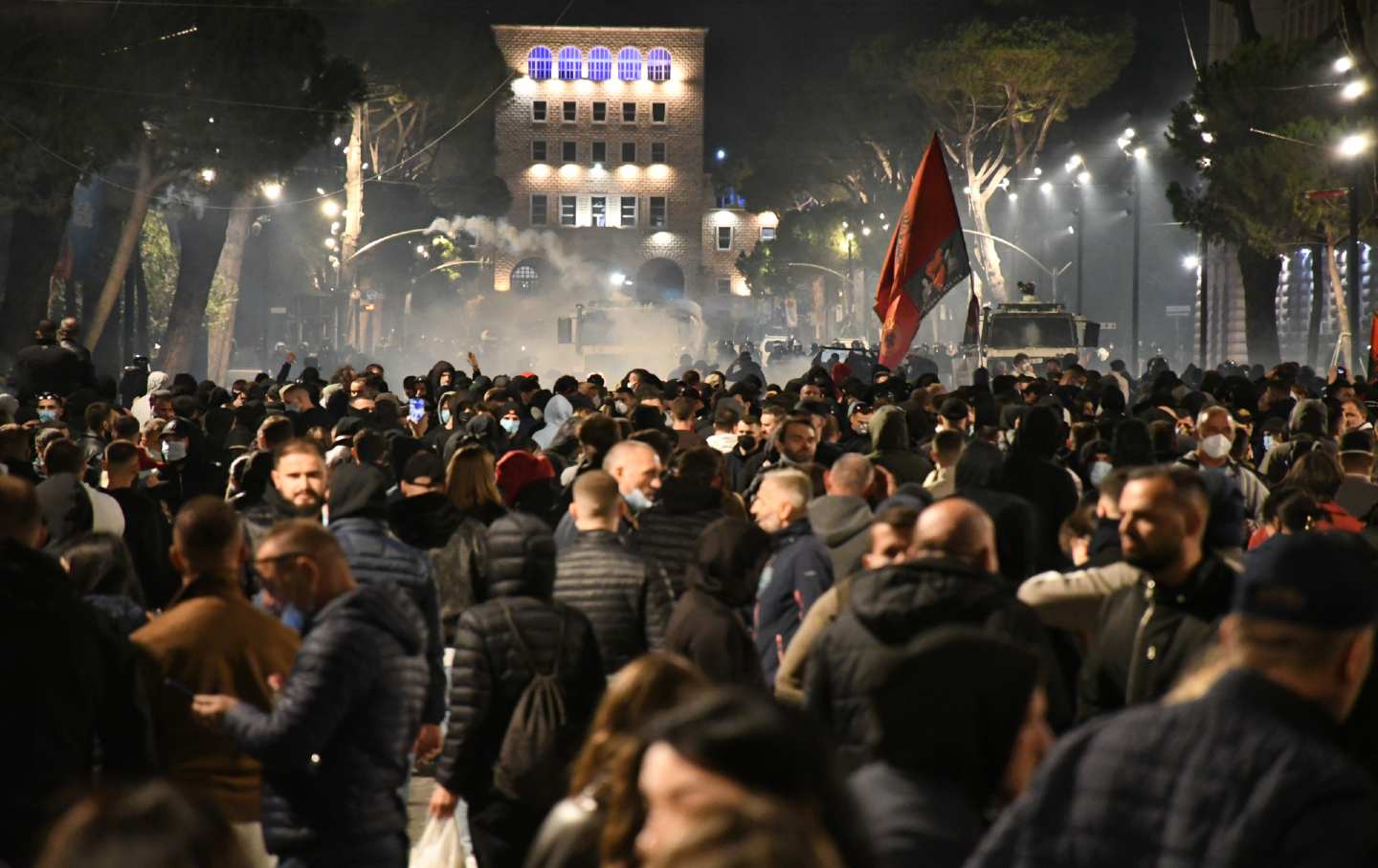
Bolivia’s Streets Have Erupted. Here’s Why.
Ordinary people are rising up against neoliberal orthodoxy.
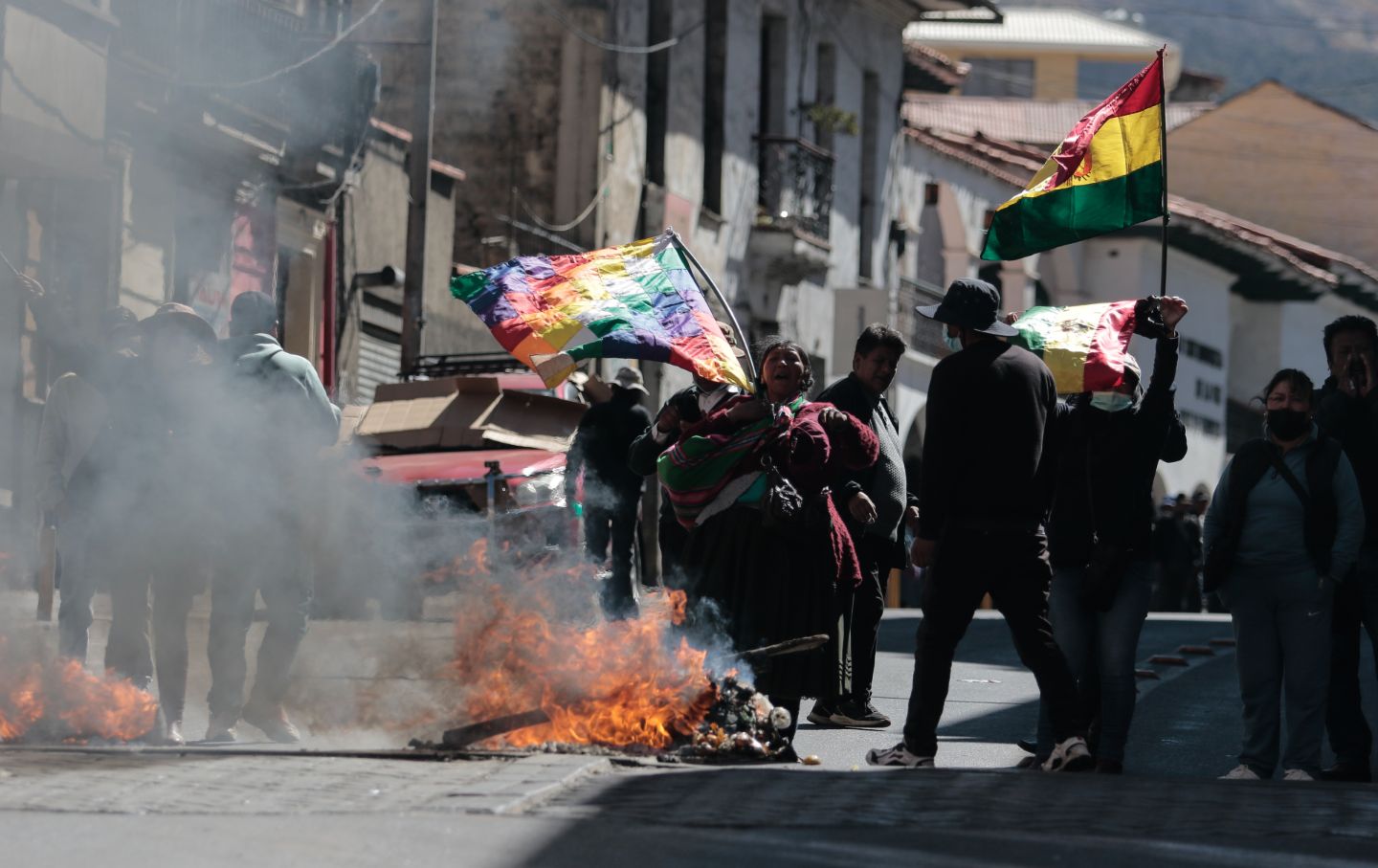
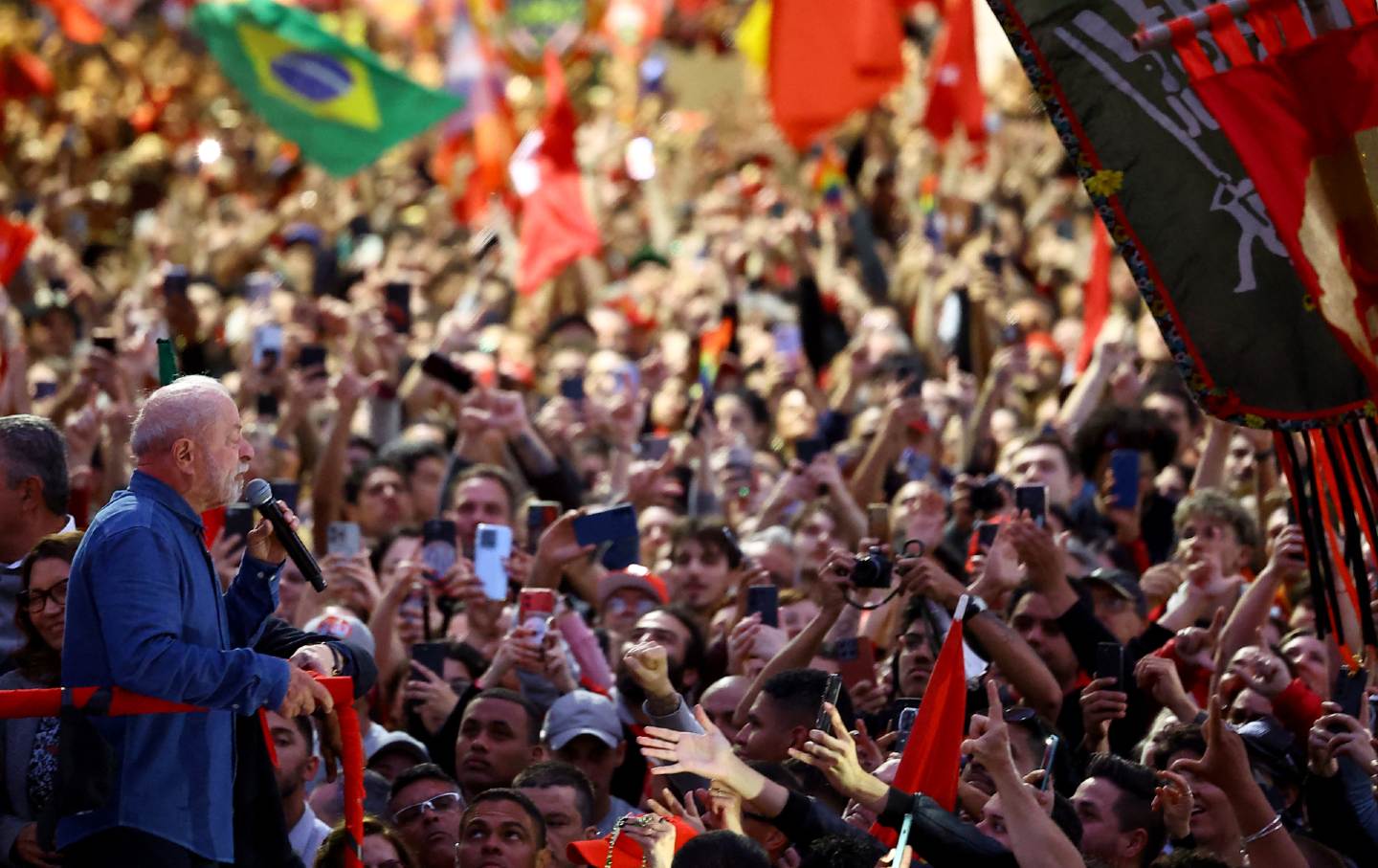
Scenes from the streets of La Paz, Bolivia, on June 10, 2026.
(Jorge Mateo Romay Salinas / Anadolu via Getty Images)The road into La Paz has become a tableau of economic rupture. Vehicles idle in fuel lines stretching for blocks. Miners carrying dynamite march beside transport workers demanding diesel. Indigenous federations maintain road blockades while food prices rise daily in the markets.
The government of President Rodrigo Paz Pereira, who took office late last year, describes the unrest as part of a campaign of sabotage and public disorder. But for many Bolivians, the protests are something else: a referendum on economic shock therapy. Bolivia’s international reserves have collapsed from roughly $15 billion a decade ago to barely $4.5 billion today—of which $3.6 billion are in gold. Meanwhile, the country now imports fuel for nearly $3 billion annually, compared with just $1 billion in natural gas exports, a dramatic reversal for a country that for decades was characterized by hydrocarbon surpluses. Amid this backdrop, reports have circulated of a potential $3.3 billion loan from the International Monetary Fund (IMF)—4 percent of Bolivia’s roughly $81 billion GDP—and the brutal measures expected to accompany it.
To understand the fury in Bolivia’s streets, it is necessary to focus on a technical but nevertheless deeply political concept: IMF “prior actions.” These are measures shrouded in secrecy that governments must implement before IMF funds are disbursed—and before the public even knows the contents of an agreement, as they are only published after they have been implemented. Prior actions typically include subsidy reductions, exchange-rate reforms, fiscal tightening, privatization, and deregulation. Their purpose is supposedly to reassure foreign creditors that a government is serious about economic reform. But they front-load the social costs of stabilization onto workers and consumers. The impact of Bolivia’s neoliberal shock therapy in the 1980s and ’90s caused long-lasting damage that has permanently discredited these policies and institutions—and now, Bolivians fear a return to the past. Paz’s early “Supreme Decree,” removing fuel subsidies and immediately doubling the cost of living for many Bolivians, was widely interpreted as an undemocratic de facto prior action.
Bolivia’s history with shock therapy helps explain the explosive reaction to Paz’s emergency economic package, which violated a key campaign pledge not to implement such policies.
The result of the decree was immediate. Gasoline prices surged by 86 percent while diesel prices jumped by more than 160 percent, triggering cascading increases in transportation and food costs. Under mounting pressure, the government partially retreated, moderating some subsidy cuts and putting off draconian measures criminalizing social protest and dismantling protections for small landholders. But by then the damage was done. The protests were driven by concrete material grievances: diesel shortages crippling miners, truckers and farmers; food inflation running above 15 percent annually; fear of currency devaluation and the widespread perception that big agricultural exporters and economic elites were insulated while ordinary Bolivians absorbed the staggering costs of adjustment.
In the absence of dialogue with social movements, what began as opposition to specific policies quickly evolved into demands for the president’s resignation. Grassroots activists argued that Paz had forfeited his legitimacy by imposing sweeping economic changes through an undemocratic and unconstitutional decree while responding to protests with militarization, arrests, and human rights violations. Indigenous organizations, miners, transport unions, and labor federations formed the backbone of the mobilizations, reflecting not merely partisan opposition but a broad coalition convinced that democratic consent had been bypassed. Many voters felt betrayed by a government that campaigned on stability but embraced IMF-style austerity just six weeks after taking office. Internal political fractures only deepened the crisis. Vice President Edmand Lara publicly distanced himself from aspects of the proposed IMF loan and signaled sympathy for the anger in the streets, reinforcing perceptions of a government losing coherence.
The crisis is not only economic. It is institutional. The illegal cancellation of the second-round gubernatorial election in La Paz intensified suspicions that electoral authorities selectively intervene against left-wing candidates. Courts, prosecutors, and electoral tribunals are increasingly manipulating the rules—the phenomenon known as lawfare. Across the region, redistributive movements are often recast as criminal threats. In Bolivia, rhetoric linking protest movements and coca-growing sectors to “narcoterrorism” follows a hemispheric script used repeatedly to delegitimize the left and justify securitized responses, with support from geopolitical allies such as the “Shield of the Americas.” Argentina’s Milei government, for instance, recently shipped military equipment to Bolivia, which Paz can use to help crush the protests. But criminalization cannot replace democratic mediation. When governments combine austerity with institutional exclusion, an economic crisis quickly becomes a crisis of democracy. Paz pushed through legislation to repeal limits on states of exception; it is expected he will soon decree the suspension of constitutional rights.
In a report published in 2014, the IMF expressly congratulated Bolivia for its macroeconomic management and results. Today, Bolivia undeniably faces severe macroeconomic constraints. But IMF orthodoxy is not the only available path. Bolivia’s immediate priority should not be austerity but rather addressing its balance of payments difficulties: rebuilding reserves by targeting offshore wealth accumulated through decades of commodity exports. Offshore holdings by Bolivian elites are estimated at $10 billion—three times larger than the IMF package itself and far larger than the central bank’s non-gold official reserves. Much of that wealth originated in ever-growing soy and mining export sectors whose profits remain parked abroad rather than reinvested domestically. Repatriating part of those assets through emergency taxation, capital measures and enforced amnesties could provide breathing room for stabilization without placing the burden entirely on workers and low-income households.
Bolivia also needs a credible but socially negotiated exchange-rate regime, paired with industrial policy focused on lithium processing, refining, manufacturing, agro-industrial diversification, and support for small-scale farmers. With lithium stocks estimated at roughly 23 million metric tons—about one-fifth of global identified resources—Bolivia possesses enormous long-term strategic leverage if it actually pursues industrialization beyond raw extraction. Development-oriented and regional financing alternatives could complement that transition. The central question is distributive: Who pays for stabilization? Under IMF-style adjustment, the costs are socialized downward. Bolivia’s protests reflect a demand for the opposite.
The unrest in Bolivia is not due to an irrational resistance to reform. People are resisting failed economic policies imposed without democratic consent. When governments dress up austerity as a technical necessity rather than a political choice, the streets become the last remaining arena of democracy.