
Drones Manufactured in Brooklyn Are Being Used to Bomb Gazans
Newly uncovered documents have provided the first definitive proof that Israel’s largest weapons supplier is purchasing drones built in the Brooklyn Navy Yard.

Workers, tenants, and neighbors with Demilitarize Brooklyn Navy Yard picket outside of the Brooklyn Navy Yard during its February 11, 2026, board meeting.
(Graham Macindoe)Documents released during a criminal trial against pro-Palestine activists in June revealed that Israel’s largest weapons manufacturer, Elbit Systems, is purchasing drones produced by Easy Aerial, a company headquartered on New York City–owned land.
The documents provide the most tangible evidence linking Elbit Systems to Easy Aerial—a revelation that organizers say illustrates the reach of the international weapons supply chain into our back yards.
Easy Aerial, cofounded by an ex-Israeli soldier, has been the subject of ongoing protests at the Brooklyn Navy Yard—city-owned property marketed as an industrial hub for small, justice-oriented businesses. In 2024, a segment of the local pro-Palestine movement called Demilitarize Brooklyn Navy Yard (DBNY) uncovered the fact that Easy Aerial, which the Navy Yard lists as a “fine arts/photography” business, was actually a military-grade drone manufacturer. That September—one month after Palestine Action targeted the Elbit Systems factory—DBNY launched a grassroots campaign pressuring the Navy Yard to evict Easy Aerial.
One month earlier, in August, 2024, six activists with Palestine Action had breached an Elbit Systems facility in Filton, United Kingdom, smashing over 40 drones worth an estimated $2.6 million. Zoe Rogers, one of six Palestine Action activists who broke into the Filton facility, said they used a repurposed prison van to get through the gates. During their 20 minutes inside, Palestine Action wielded sledgehammers to smash military equipment. Private security responded with swift violence: Jordan Devlin, another activist, said that guards hit him with a sledgehammer and held him in a choke hold.
On June 12 of this year, four of these activists were charged with “criminal damage” for the action at the weapons factory. During the trial’s sentencing, Elbit Systems released a damage report revealing that Palestine Action had smashed six drones, causing over $500,000 worth of damage to what police-report photographs of the damage show were Easy Aerial’s “drone-in-a-box” models. (Elbit Systems and Easy Aerial did not respond to The Nation’s requests for comments.)
Prior to evidence uncovered during the June Palestine Action trial, there were signs that Elbit Systems might be incorporating Easy Aerial drones into its weapons systems. But evidence of the companies’ continued collaboration during Israel’s genocide in Gaza remained obscure, and the Brooklyn Navy Yard Development Corporation, the nonprofit landlord that manages business leases at the Navy Yard, denied that it housed weapons manufacturors.
Despite these inklings of the two companies’ relationship, the presence of Easy Aerial drones at the Elbit Systems Filton factory “confirms what we knew all along,” said Nadia Yassin, an organizer with DBNY who goes by a pseudonym to protect her identity. Easy Aerial had made vague statements in the past that had hinted at an ongoing connection, but “this is a certainty for us now,” Yassin said. “We know for a fact they’re developing and manufacturing weapons together.”
Elbit Systems—a longtime target of the international Boycott, Divestment, and Sanctions movement—is the Israel Defense Forces’s largest supplier of drones, and has benefited from a deluge of weapons orders as it wages genocide on Gaza.
Described as a “research, development and manufacturing hub” that produces weapons for “the British Armed Forces and other NATO customers,” the Filton factory is Elbit Systems’ newest facility in the UK. Its July 2023 grand opening featured a demonstration of Elbit’s newest technological advances in AI-powered warfare for an audience that included then–Israeli Ambassador to the UK Tzipi Hotovely.
The facility ostensibly develops weapons for Britain and its NATO allies, but Israel is also implicated. In a phenomenon known as the “Palestine laboratory,” Elbit Systems markets its products as “battle tested”—which, in effect, means by the IDF on Palestinians in the occupied territories—before selling them to foreign militaries. Palestine Action chose the Filton facility for this precise reason: to delay the development of weapons systems that may eventually be tested on Palestinians.
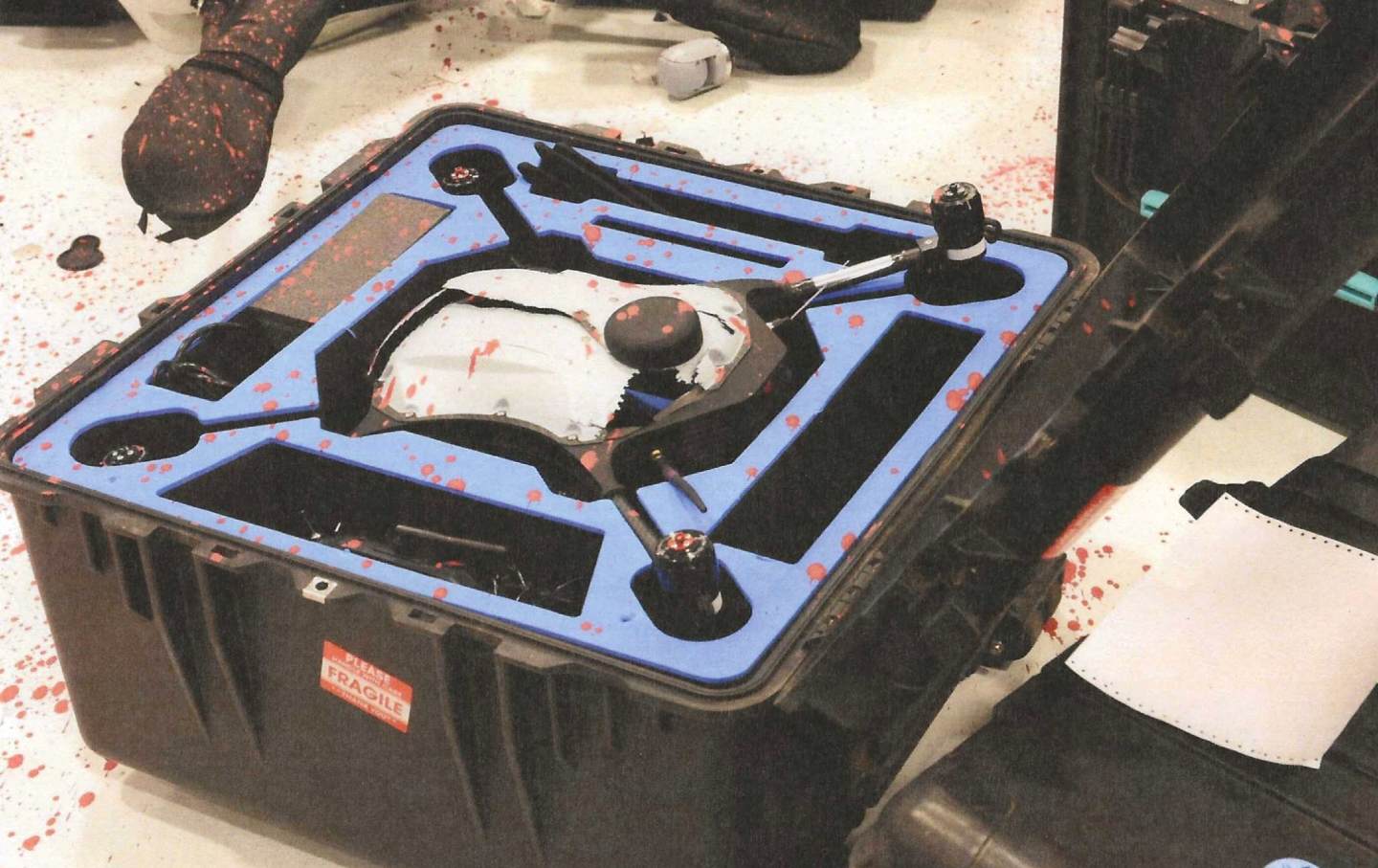
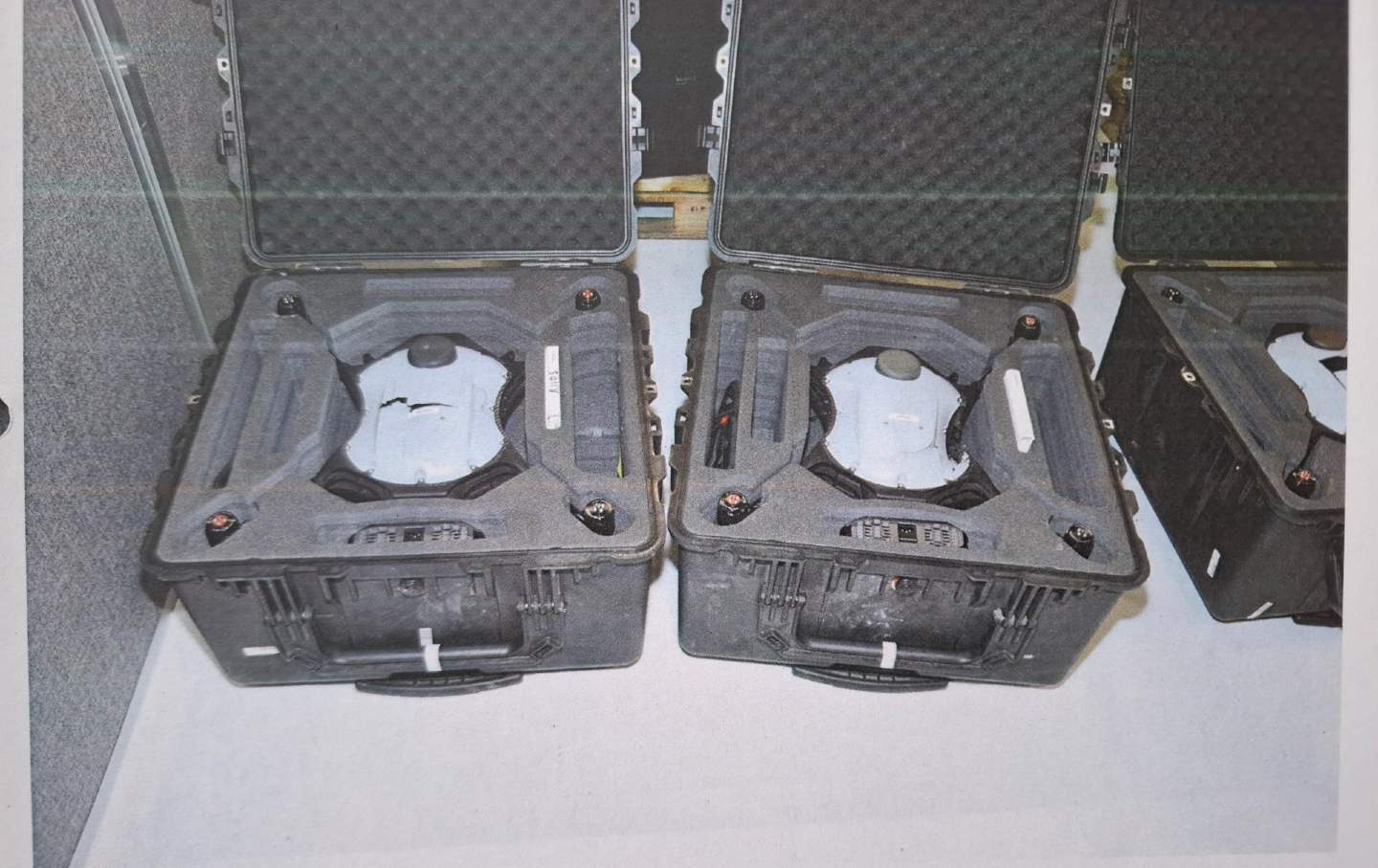
After 18 months in jail, both Rogers and Devlin were acquitted of all charges related to the Filton protest earlier this year, while their four co-activists were found guilty in June and sentenced to between five and eight years in prison. Rogers described the action as “the best thing I ever did.”
“We did the right thing,” Devlin said.
Meanwhile, organizers in New York were focusing on a different link in the supply chain. After two years of using myriad tactics such as noise demonstrations, direct actions, and community outreach sessions, DBNY’s organizing paid off: In February 2026, the Navy Yard announced that it would not to renew Easy Aerial’s lease; after its current lease runs out, the company will no longer benefit from financial incentives offered to tenants, including below-market rents and real estate tax exemptions. A spokesperson for the Brooklyn Navy Yard said that the drone manufacturer is expected to vacate by the end of June.
The existence of a global supply chain linking weapons manufacturers to Israel is well known, but Israeli arms contracts are not public, and tangible information about the relationships between these firms can be elusive.
More than anything, organizers say the identification—and destruction—of New York City–made drones at a UK facility illustrates a strategic imperative for the Palestine movement: international coordination. “If each of us in a local context do our homework and do the research to find out who is in our backyards and the relationships between these companies, and we go after them locally, our struggle can influence their struggle and vice-versa,” said Yassin.
Because the global weapons trade as a whole is an indomitable force, organizers say that the most effective long-term strategy is to focus on local manifestations of this system and identify how they are connected. “Targeting the supply chain in one place can affect it across the world. We need to learn to support each other, and share information because that’s the only way that we are going to shut down these factories for good,” said Rogers.
Transnational coordination in anti-imperialist movements has historic precedent, including the anti–South African apartheid movement. In the 1970s and ’80s, local campaigns in the UK, the United States, and the Netherlands coordinated international days of action targeting apartheid-profiteers such as Shell and Barclays. Today, the international People’s Embargo for Palestine (PEP), helmed by the Palestinian Youth Movement, is animated by the same principle. Launched in November 2025, PEP published a series of reports identifying chokepoints in the weapons supply chain to Israel, proliferating research across eight campaigns in the UK, Italy, and the US. The Institute for Palestine Studies wrote, “This coordination is becoming increasingly visible as activists identify and organize around local sites that play a role in sustaining transnational logistical networks.”
According to Yassin, the simultaneous targeting of Easy Aerial in Brooklyn and Elbit Systems in the UK is a demonstration of this principle. “A disruption in one part of the chain causes disruptions all throughout the supply chain,” they said. DBNY recently identified a contract between Easy Aerial and the Netherlands-based drone company Height Technologies; it now plans to exchange research about Easy Aerial with organizers in the Netherlands.
After the eviction of Easy Aerial, DBNY continues to fight for the removal of other companies in the Brooklyn Navy Yard with military contracts, including Crye Precision, which supplies the IDF and ICE with camouflage and tactical uniforms.
The campaign will also keep the pressure on Easy Aerial as it sets up shop elsewhere. “We hope this is a reason for Easy Aerial to get shut down fully,” said Yassin. “People can put their energy into this fight in New York City.”
Popular
“swipe left below to view more authors”Swipe →Palestine Action activists agree, saying that the link between the Brooklyn-based company and Israel’s largest weapons manufacturer should compel New Yorkers to build a mass movement against local Elbit suppliers in the US. “I think residents of Brooklyn are going to be disappointed to see such a heinous thing [they as] taxpayers are subsidizing,” said Devlin. “This was your money—your money was subsidizing this.”
Become a Sustaining Donor This September
Between the reemergence of right-wing red-baiting and Donald Trump’s use of the chilling National Security Presidential Memorandum–7 to criminalize left political organizing, we’re seeing McCarthyism reborn before our eyes.
This assault on democracy cannot be ignored or wished away. Resisting it requires bravery in the face of threats and repression, a steadfast commitment to the truth, and the unwavering belief that we can—and will—overcome this darkness.
We must have an independent media that sets the record straight, unearths corruption and abuses of power, and advances a politics of justice and dignity for all if we’re to win this fight.
That’s why I’m writing to you today. This September, The Nation needs to add 100 monthly donors to sustain our progressive journalism. Your contribution makes the next investigative report, the next truth-speaking column, and the next pathbreaking essay all possible.
I hope you’ll support our work with a recurring donation today. If you donate $10 or more a month, we’ll send you a brand new “Hands Off the Free Press!” sticker to recognise your commitment to our cause. Please, donate today.
Onward,
Katrina vanden Heuvel
Editor and Publisher, The Nation
More from The Nation

This AI Panic Is Nothing New This AI Panic Is Nothing New
In the 1940s, The Nation asked questions about the atomic bomb we’re asking of artificial intelligence today.

The Decades-Old Roots of Trump’s War on Iran The Decades-Old Roots of Trump’s War on Iran
An interview with historian Behrooz Ghamari-Tabrizi about the generations of US presidents who have tried to destroy the Iranian regime.

Emmanuel Macron’s Turbulent Exit Emmanuel Macron’s Turbulent Exit
Between a budget crisis and a cost-of-living squeeze, Macron is leaving a country feeling more insecure than ever—and ready to take to the streets.
Israel’s Election Can’t Fix What Netanyahu Broke Israel’s Election Can’t Fix What Netanyahu Broke
The fundamental problem is not the name of the prime minister, but rather the actions of the Israeli government and the urgent issues that need to be addressed.

The AfD’s Rise Isn’t Just About East Germany The AfD’s Rise Isn’t Just About East Germany
The Alternative für Deutschland has a stable national poll lead, including in the former West Germany. Its rise owes to much more than Eastern grievances.

Chinese Development Is the Betrayal Washington Cannot Forgive Chinese Development Is the Betrayal Washington Cannot Forgive
The prospects for Xi Jinping’s visit are dim because American leaders are blaming China for the failures of globalization.

