
Cuba: The “Pandora’s Box” of US Humanitarian Assistance
As the US strangles Cuba economically, Marco Rubio is running a $100 million “hearts and minds” program on the island.
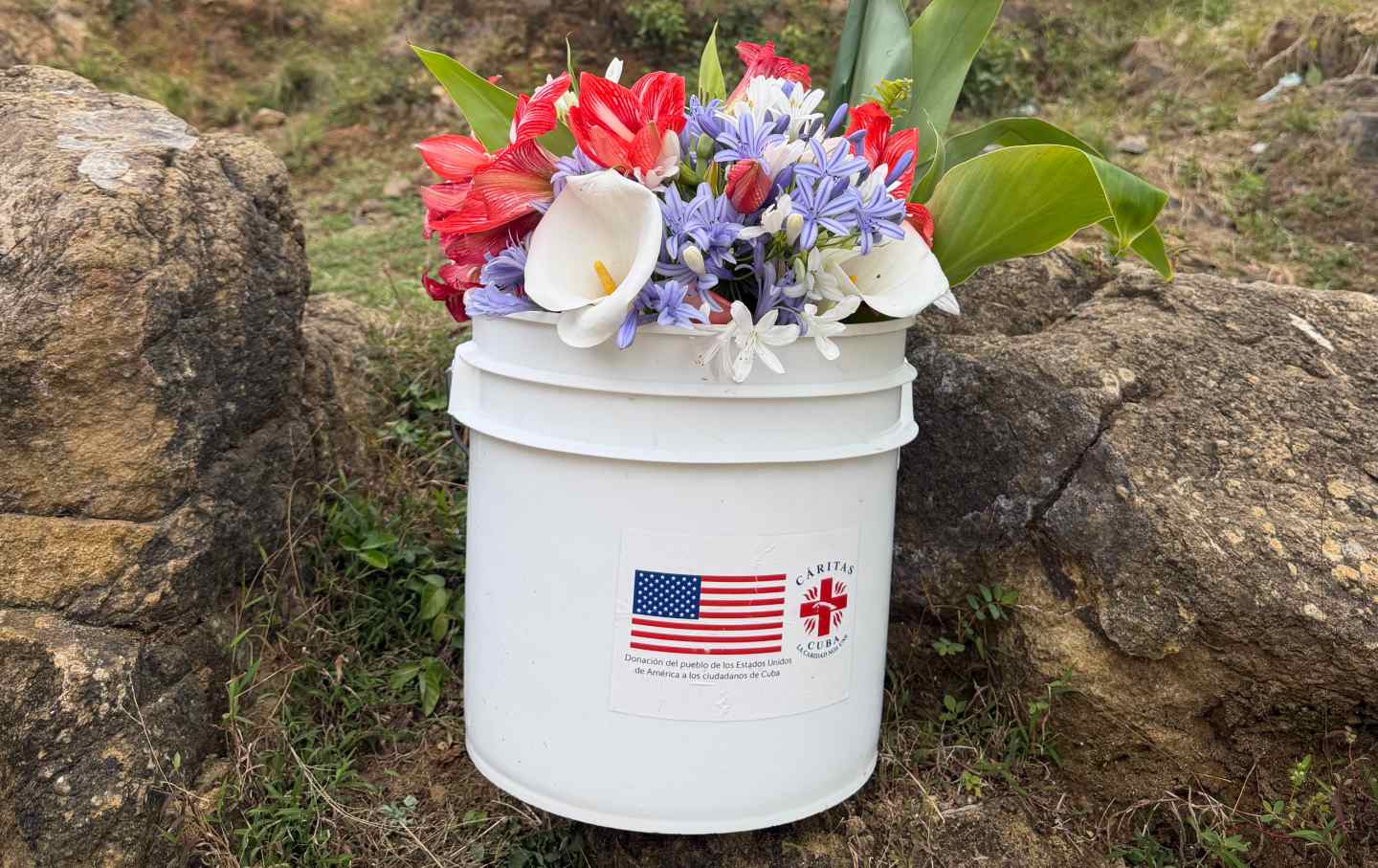
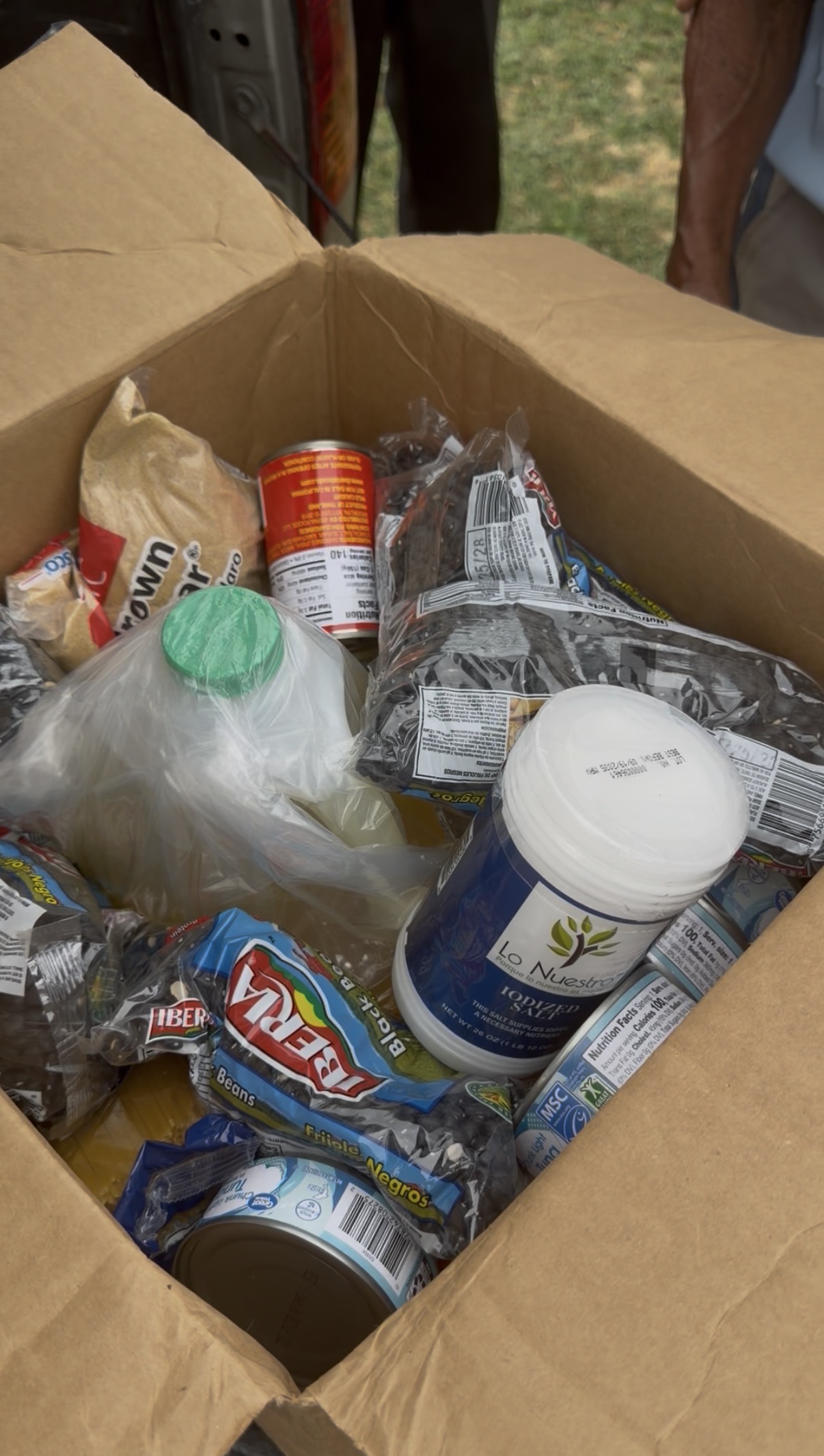
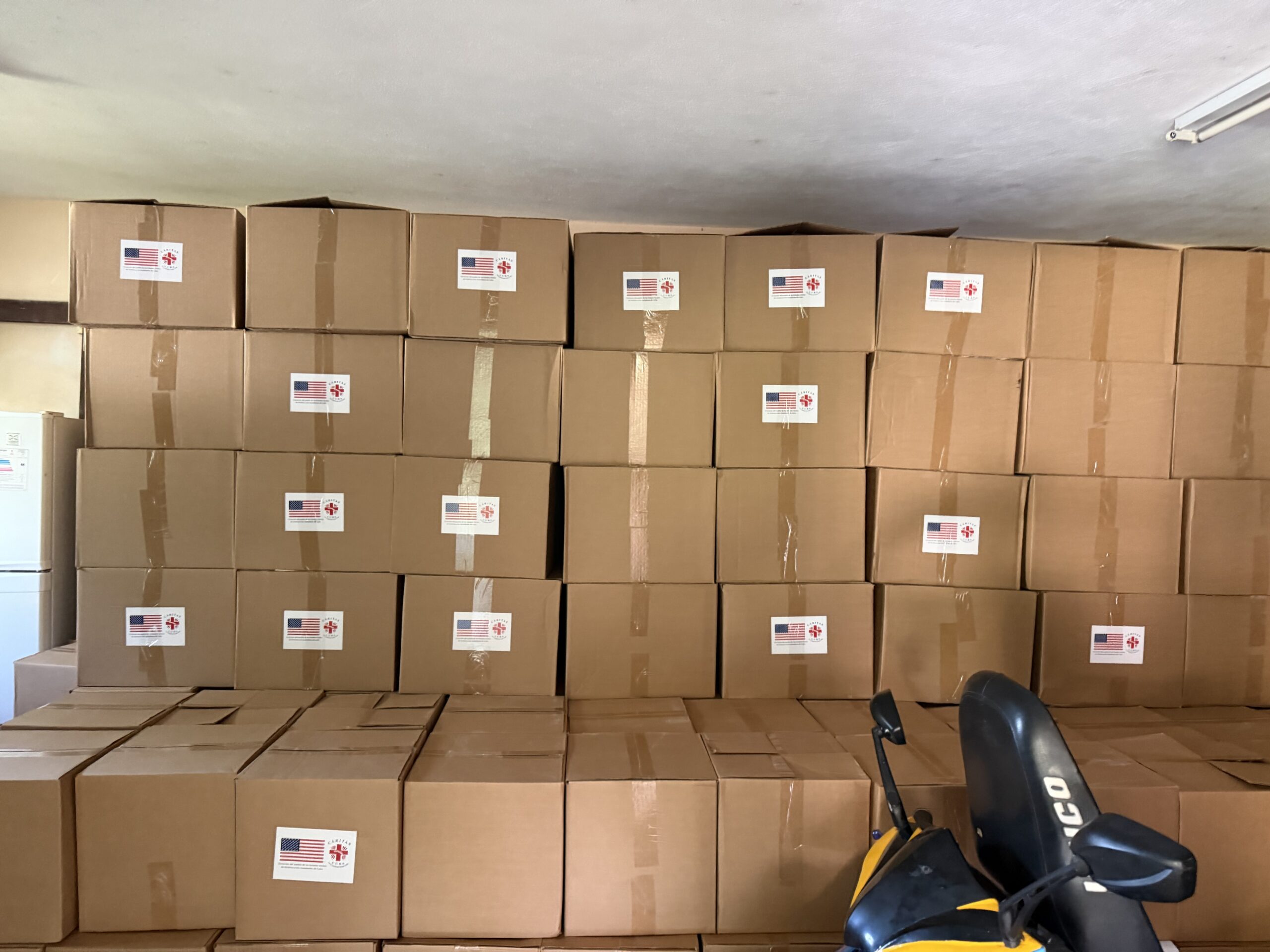
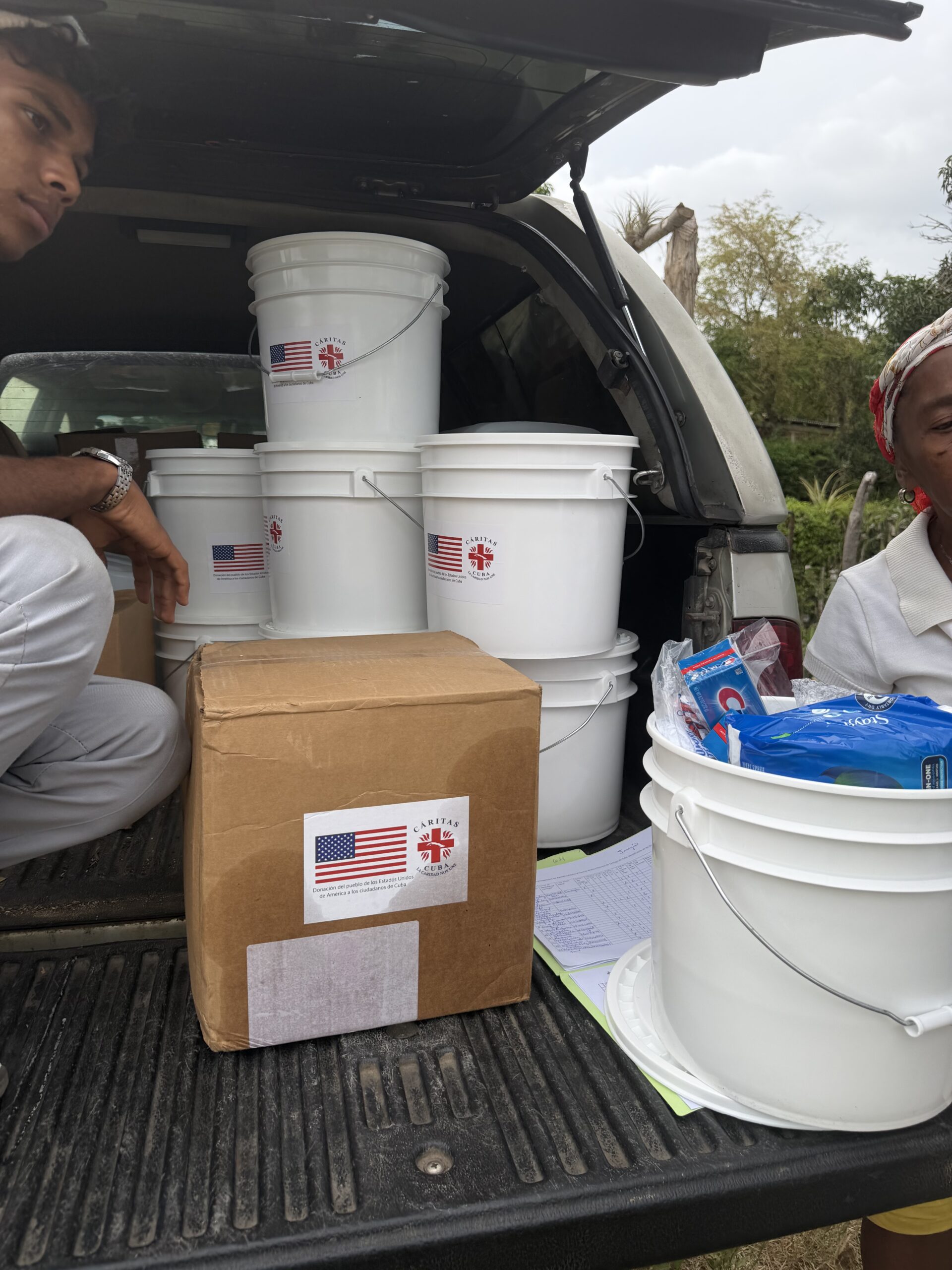
On July 21, a cargo plane touched down in Havana carrying the first installment of a promised $100 million in US humanitarian aid to Cuba. The shipment included cardboard boxes of food and plastic buckets of hygiene products for 700 families. Following a media photo op of the aid before takeoff in Miami, stage management of the delivery continued outside Havana where Mike Hammer, the chief of mission of the US Embassy in Cuba, visited some of the first families to receive the aid; he then posted his interactions on social media. The aid kits were branded with American flag stickers and the words, in Spanish, “Donation from the people of the United States of America to the citizens of Cuba.”
Everything about this modest gesture of US goodwill seems designed to win the hearts and minds of the Cuban people—and deflect attention from American policies contributing to the hunger and misery that the food boxes are meant to alleviate. The aid shipment happened to arrive the day after the State Department issued a 100-page report accusing Cuba of leading “a revolution against Western civilization itself,” to justify America’s escalating war of economic aggression and attrition.
For the fraction of the Cuban population lucky enough to receive an aid kit, the rice, beans, cooking oil, sugar, toothpaste, soap, and other items will barely last 10 days. Many will lack running water to use the soap because electrical blackouts affect the water system, and they will cook the rice and beans with wood or charcoal in the dark, as intensifying sanctions imposed by the Trump administration impede access to fuel, electricity, food, and cash on the island.
The Cuban government has accepted the assistance, but officials there have pointed out the hypocrisy of the US economic blockade that has created the need for humanitarian aid. In a message on X, President Miguel Díaz-Canel declared that the US “will encounter neither obstacles nor ingratitude from Cuba, however inconsistent and paradoxical the offer may seem to a people whom the United States government itself punishes collectively in a systematic and ruthless manner.” “One hundred million dollars would certainly help,” Cuban Foreign Minister Bruno Rodríguez noted in June, “although we must acknowledge that it only amounts to five days of the [annual cost of the American] blockade” against Cuba.
A Humanitarian Pandora’s Box
The $100 million in aid has been a source of tension since Secretary of State Marco Rubio announced it in May, when back-channel talks to satisfy US demands were sputtering. In a subsequent video address in Spanish directed at Cubans, Rubio elaborated on the objectives of the $100 million: “I want to tell you what we, in the US, are offering to help you not only alleviate the current crisis, but also to build a better future…. The real reason you don’t have electricity, fuel, or food is because those who control your country have plundered billions of dollars, but nothing has been used to help the people,” Rubio claimed. “President Trump is offering a new relationship between the US and Cuba. But it must be directly with you, the Cuban people,” not with government-controlled entities.
To circumvent the Cuban authorities, the State Department assigned $60 million of the aid to Catholic Relief Services to distribute through its church-led Cuban counterpart, Cáritas Cuba. The money will provide kits for nearly 200,000 families, or more than 500,000 people, according to the group. Cuba’s population is more than 9 million. In addition, the Rev. Franklin Graham, an ally of President Trump, confirmed that Samaritan’s Purse, the evangelical disaster-relief organization he leads, is planning to help deliver some of the aid.
The church groups confront a tremendous logistical burden that may slow efforts to get the aid to the people who need it most. The groups must secure delivery trucks and gasoline in a country where vehicles lack repair parts and gasoline has become more scarce and expensive since the US imposed a fuel blockade in January. Indeed, parish priests are still trying to deliver similar food kits that Rubio promised in February as part of a $9 million response to damage from Hurricane Melissa last October. Cuban officials say only a fraction of that Rubio-directed hurricane aid had been distributed by July.
By July, when the first shipment of the new $100 million in aid reached Havana, more than two months after Rubio announced it, people were more desperate than ever for any respite from the daily struggle for food, water, and electricity. They began descending on churches or stopping priests in the street, begging for a food box.
“The aid is for everyone, but there’s not enough,” says the Rev. Leandro NaunHung, pastor of the San José Obrero parish on the outskirts of Santiago, Cuba’s second-largest city. The gap between the level of need and the amount of aid “is enormous,” he notes. And the aid is sowing discord and jealousy. Some people claim they have more mouths to feed than they do, in hopes of getting a box. Everywhere he goes, the reverend reports, he hears people pleading, “Padre, Padre, my box, my box, my box!”
Bedeviled by the passions and contradictions unleashed by the aid packages, NaunHung recently gave a sermon comparing the American food cartons to Pandora’s box. According to the Greek myth, by opening the box, Pandora released assorted miseries upon the land. In the reverend’s retelling, the last of the miseries at the bottom of the box was hope—not usually thought of as malign. He warns his parishioners not to cling to false hopes such as a humanitarian food box to solve their problems. “The hunger is greater than the humanitarian aid that’s arriving,” he tells them.
And yet, as fraught and limited as the aid may be, NaunHung believes his deliveries aren’t in vain. “There are those who say if the aid isn’t for everyone, then it should be for no one,” he says. But “if even 10 people can benefit, we would do the work.” He adds, “People say they’ve never seen so much food at one time.”
Popular
“swipe left below to view more authors”Swipe →On the Ground in Santiago de Cuba
On a Friday afternoon in late July, in a rural village east of Santiago, a couple-dozen people gather in an open-air shelter made of log posts and a sheet-metal roof. Since none of the $100 million had yet reached that part of the country, they are eager for NaunHung’s arrival with some of those flag-stickered food boxes of delayed hurricane relief. The shelter serves as a community dining hall, where neighbors feed the neediest. They depend on plantains, mangos, malanga, corn, and other crops they grow in personal gardens. They complain that the banking system periodically runs out of funds to turn their meager electronic pensions into cash, which they need to buy necessities from private vendors, since the shelves of government stores and pharmacies are often bare.
In the dining shelter, someone has hung a scrap of cardboard featuring an American-flag sticker. It was cut from an aid box delivered by NaunHung months ago. On the opposite side of the cardboard, someone has pasted a poster of Jesus.
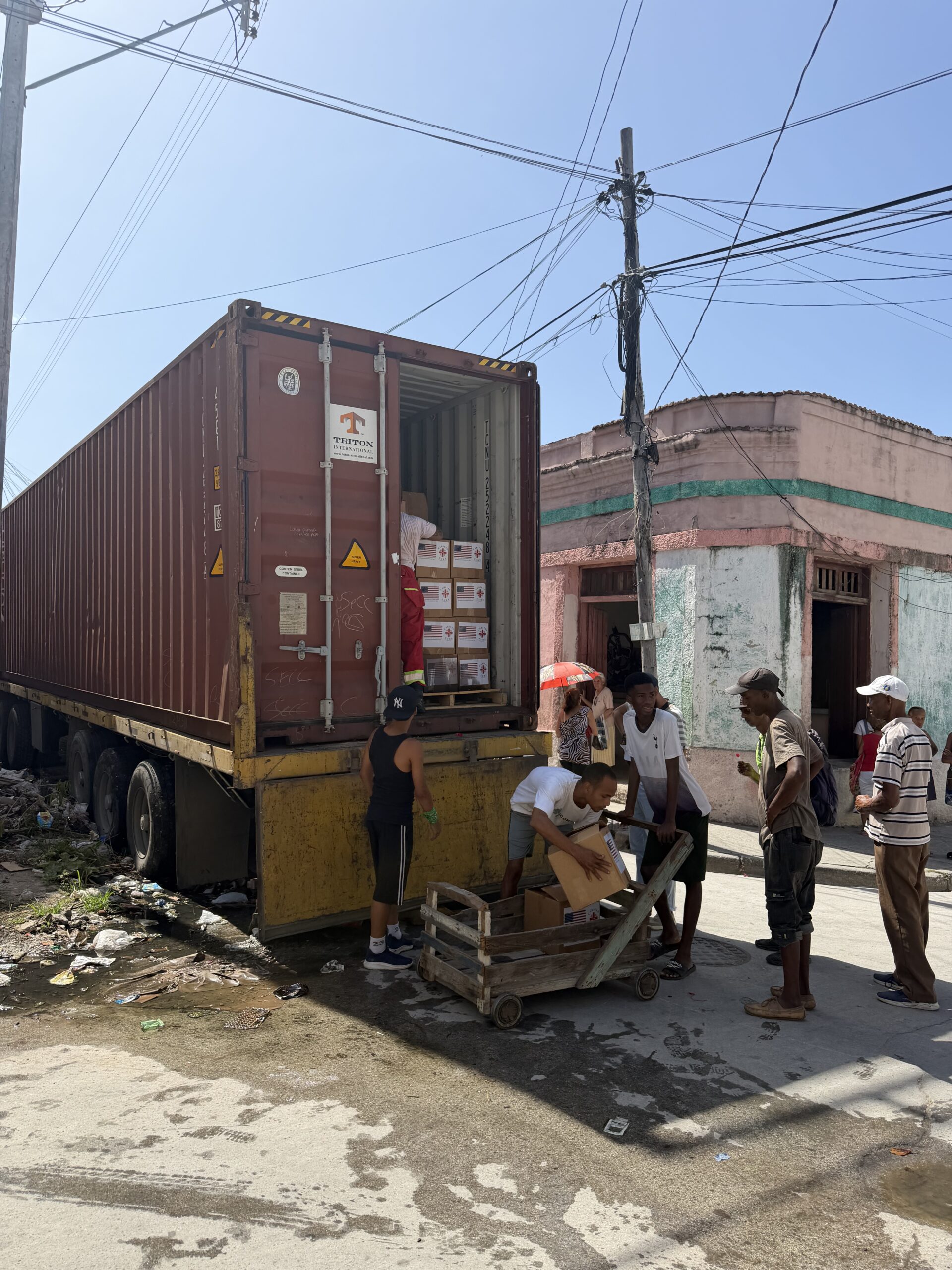
NaunHung rolls up in the parish’s 13-year-old Toyota Hilux truck with 376,647 miles on it. His parish extends more than 30 miles into the fields and mountains and has thousands of families. Today the priest is bringing about a dozen food boxes and a dozen hygiene kits. They’re for the most vulnerable people of any faith, or no faith at all, he says. He relies on trusted contacts to guide him to the neediest families, and he makes spot visits to households to verify their plights.
“You don’t have to learn the ‘Our Father’ or the ‘Ave Maria’ to receive humanitarian aid,” he tells the group seated on wooden benches and rusty chairs in the dining shelter. But he reminds them there’s not enough for everyone, and, “in any case, this box is not going to solve all your problems, because soon it will be gone.”
He sees Milagros, the woman who takes care of the dining hall, sitting near the front.
“Milagros, you got a box on the first round” of deliveries months ago, he says. “What’s left of your box?”
“Only memories,” says Milagros, laughing.
“And did it end your hunger?” he says.
“No, it continues the same,” she replies, as everyone chuckles.
A man in the back quips, “We need to wait for another big hurricane to cause more damage!”
“That’s what always happens,” NaunHung says, turning serious. “We’re waiting for the next storm so we can get another box.”
The Politics of Humanitarian Aid
The paradox of the American-flag-festooned food boxes is they come from a government that gives aid with one hand and takes it away with the other. In his first term, Trump tightened the 66-year-old trade embargo against Cuba and piled on more sanctions, which President Joe Biden left largely in place. In his second term, Trump and Rubio have ratcheted up the pain and devised new sanctions, choking off revenue needed to buy food and medicine and restricting oil imports, which has pushed the already creaky Cuban electrical system to near collapse.
In response to the deepening humanitarian crisis, nations and civil society groups are trying to meet some of Cuba’s critical needs. In June, Volker Türk, the United Nations high commissioner for human rights, blamed the Trump administration for creating “a perfect storm” of “suffering for the Cuban people,” and the UN’s Office for the Coordination of Humanitarian Affairs announced a $94 million effort to provide emergency aid to 2 million Cubans. Yet the UN office reported that, once supplies reach the island, fuel shortages tied to Trump’s oil blockade are hamstringing efforts to deliver the assistance to families.
Mexico, Brazil, Belize, Colombia, and Spain, among other nations, have reportedly been shipping aid. Only Russia, though, has sent an oil tanker, and that was five months ago. The United States has also permitted a relatively small amount of fuel to be shipped to private interests on the island, but it’s too expensive for ordinary Cubans.
“Any little bit of aid is a total drop in the bucket for the damages that these sanctions and the oil blockade are causing,” says Medea Benjamin, cofounder of the human rights group Code Pink, which has been arranging humanitarian aid deliveries to Cuba for years.
Meanwhile, American sanctions chip away at other sources of aid. In June and August, the State Department added the Cuban Institute of Friendship with the Peoples (ICAP) and its leaders to the growing list of groups and individuals being sanctioned for having ties to the government. The institute has served as a liaison with international groups bringing humanitarian aid to the island, including the recent Nuestra América humanitarian convoy that organizers said delivered 35 tons of food, medicine, and other supplies. Americans are now forbidden from giving money or goods to ICAP, and foreigners who deal with ICAP are also “at risk of sanctions.” “They’re making it very, very hard for organizations that have some kind of political stance against this cruel policy to be sending aid,” Benjamin says.
By using sanctions and new rules to promote US-approved channels of aid and commerce, the Trump administration appears to be attempting to increase Cuba’s dependence on the US government as a way of undermining the Cuban government, says Lee Schlenker, a research associate with the Quincy Institute for Responsible Statecraft. “It’s this engineered process of making the [Cuban] state sort of irrelevant in dealing with the few resources that are coming in from the US, at the same time as we’re cutting off Cuba’s independent trade and foreign relations with other countries,” he says. The food boxes “are a Band-Aid,” Schlenker adds, but they’re “an important PR and communications tool that can be wielded against the government to show how ‘incompetent’ it is and that it’s the one standing in the way, when we know it has its hands tied” by the US.
A Little Beam of Light
Given the wretched conditions across Cuba, that “hearts and minds” message carries some resonance. Indeed, in Santiago, no one denies the glorious, fleeting feeling of scoring a USA food box. Milagros pulls NaunHung aside to say how much it will mean to the village’s oldest resident, a spry farmer of 101 years, who has put on a dress shirt and slacks to receive his box. “He was hospitalized for more than 15 days, and possibly in his house they have nothing to eat,” she says. “Now with this box, they’re millionaires.”
The man steps up to the tailgate of the Hilux, and parish missionary Humberto David Téllez Zamora explains the contents of the food box: 10 pounds each of rice and black beans, a bottle of vegetable oil, three pounds of spaghetti, three tins of sardines in tomato sauce, five cans of tuna, two pounds of brown sugar, one pound of salt. And the hygiene bucket: a small, rechargeable solar-powered lamp, six bars of soap, one box of laundry detergent, four toothbrushes, two tubes of toothpaste, one pack of sanitary pads, a jug for water, and water-purifying tablets. The man looks ready to dance as he lugs his containers from the truck.
Next NaunHung makes a house call to a woman who sits in a darkened living room with her 32-year-old daughter, who was suddenly paralyzed a few years ago with a condition that doctors have not fully explained, according to the mother. The older woman accepts the contents of the care packages with grateful stoicism, but one item shakes her: the solar lamp, which leads her to burst into tears. A lamp is what she has dreamed of, prayed for, says her friend. With round-the-clock blackouts and despair, there has been so much darkness in this house. Now there will be a little beam of light.
Many people NaunHung encounters say life was hard even before Trump tightened the embargo. There were blackouts, and gas was expensive. “It’s not all Trump’s fault,” one man notes. They say the government should have invested more in energy infrastructure and less in luxury tourist hotels. Those hotels now stand empty as Trump has made it illegal for Americans, and inconvenient for Europeans, to stay in most of them, and tourism has cratered on the island.
Trump’s impact is evident in other ways. The blackouts are longer and more frequent now. Humberto, who ran a tourist shuttle between Santiago and regional cities and beaches, says he had to shut down his operation when foreign visitors all but vanished in February after Trump’s oil blockade took effect.
In another home, a woman confides that for four months her husband has been unable to cash his pension. “Around here, if you don’t have cash, you can’t buy anything. Nothing,” she says. “Just today, I had to sell a bunch of plantains [from her garden] just to get a few things for a little lunch. And life is hard…. For that, the humanitarian aid is much appreciated.”
NaunHung reminds her that the delights of Pandora’s box are short-lived. Instead, building a more self-reliant Cuban community is a theme he returns to often as he carries the curiously mixed blessing of US aid across the countryside. “For the long term, you can only count on yourselves as a community that supports itself, that helps itself,” he says. “We have to hold ourselves together as a community.”
More from The Nation
Israel’s Extremist Election Israel’s Extremist Election
The run-up to the vote on Tuesday is exposing the façade of Israeli democracy—and the fealty of the country's so-called opposition when it comes to matters of Jewish supremacy.
“NAZA” and Israel’s History of Automated Warfare “NAZA” and Israel’s History of Automated Warfare
As violent technologies like spyware, predictive targeting algorithms, and 2,000-pound warheads become ordinary instruments of military rule, once-abhorred practices become routin...
Brazil’s Workers’ Party Is Not Stopping Brazil’s Workers’ Party Is Not Stopping
With just a few days remaining before the runoff election, supporters of Lula’s party are doing everything possible to rally support behind the president.
Brazil’s Decision Brazil’s Decision
The moral compass and basic humanity of political leaders really does matter.
Albanian Student Strikes Spur a Political Crisis Albanian Student Strikes Spur a Political Crisis
A new round of protests against the ruling party’s corruption has Prime Minister Edi Rama giving cops bonuses to crack down on dissent.

