Brazil’s Decision
The moral compass and basic humanity of political leaders really does matter.
It has been common in many countries, including Brazil and the United States, for voters to choose a president on the basis of their perceived character. In some elections, it has been the determining factor; if not, it has still been an important one.
But Jair Bolsonaro was elected president of Brazil in 2018 despite having said in public, “I’m in favor of torture—you know that. And the people are in favor of it too.” It wasn’t a slip of the tongue or a hideous joke. In 2016, as a congressman voting to impeach then-President Dilma Rousseff, he dedicated his vote for impeachment to the military officer who was responsible for her torture in prison, under Brazil’s military dictatorship. Bolsonaro has also praised Brazil’s (1964–85) dictatorship itself, saying that its mistake was that it didn’t kill enough people.
Now comes Jair’s son, Flávio Bolsonaro, headed for the second and final round of Brazil’s presidential election on Sunday, October 25. He defended his father’s salute to Dilma’s torturer and has also repeatedly praised the dictatorship.
The relevance of these common traits, as well as moral values—or lack thereof—is not guilt by association. The Bolsonaros are a team: It was Jair’s political capital from his presidency that brought Flávio to where he is today. Flávio has publicly owned this political convergence, branding himself as “Bolsonaro 2.0.”
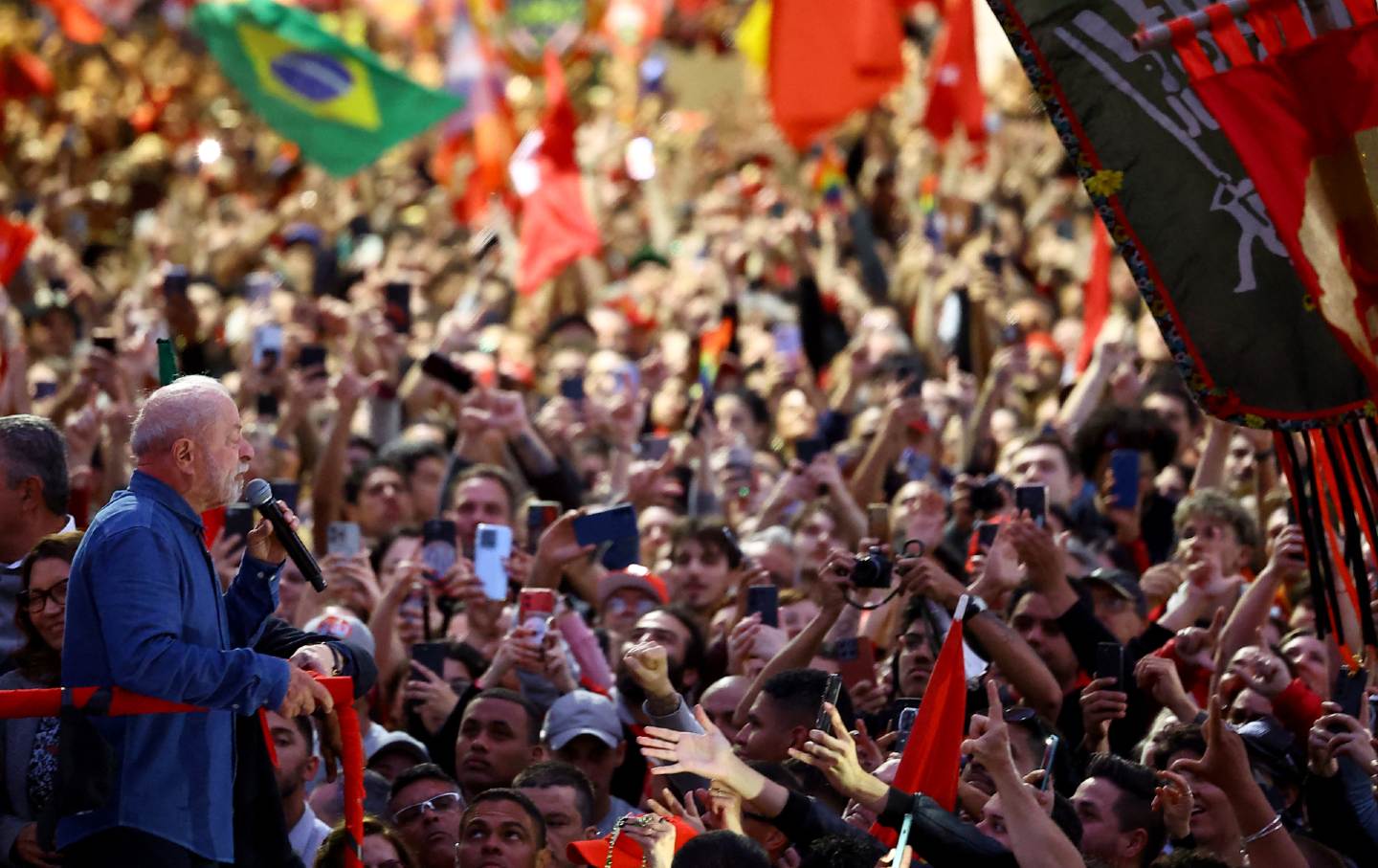
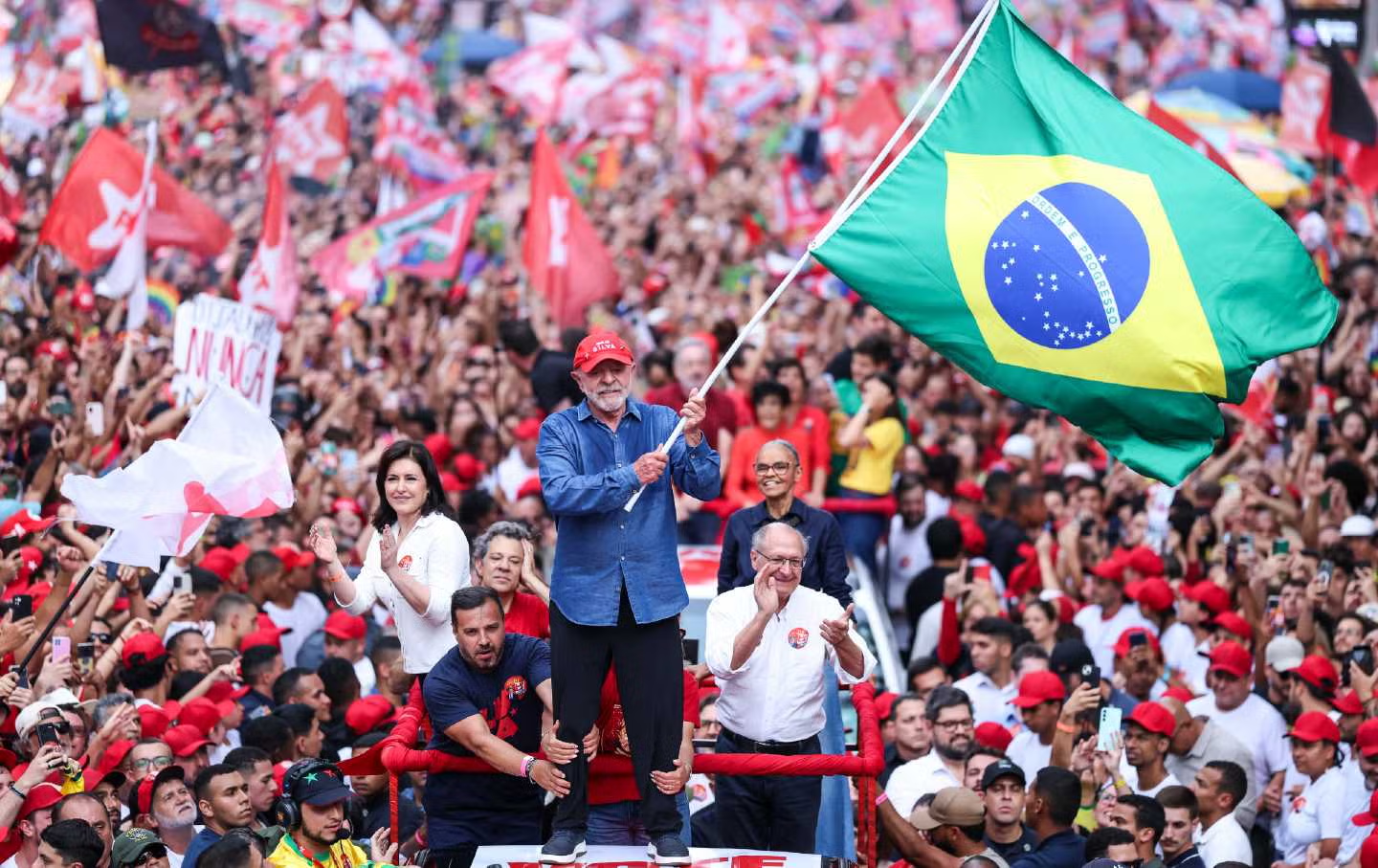
Flávio is running against incumbent President Lula da Silva. Lula got his political start as a union leader working in a factory and was president of Brazil from 2003 through 2010. Of course, Lula is pro-democracy and would never praise the dictatorship, which he fought against, or political killing. He has different values than the Bolsonaro team.
This difference in values also shows up in major disagreements over policies that shape people’s lives, opportunities, and living standards. Most recently, on October 16, the Brazilian Congress adopted a constitutional amendment that provides for a major improvement in the lives of millions of workers. It reduces the workweek from six days to five, also establishing a 40-hour workweek within 14 months; the reduced workweek comes without any loss of pay.
For months, Flávio and his allies vigorously opposed and blocked this reform, while Lula was fighting for it. This continued right up to the week before the vote; at the last minute, Flávio voted for it as a senator. But according to press reports, it appears that Flávio and his allies would try to roll it back if he wins, so that workers would have to take pay cuts for reduced hours.
Lula’s current presidency has succeeded in reducing poverty by 27 percent and extreme poverty by more than 40 percent; unemployment fell from 9.3 percent to a record low of 5.4 percent; and the real minimum wage increased by 12.7 percent. His first two terms produced even more dramatic gains. It is clear that these and other advances cannot be expected from a Bolsonaro government, based on its track record, stated and pursued goals, and values.
These goals and values have made the Bolsonaros soulmates of the Trump/Rubio team, for obvious reasons. With regard to violence, Trump himself has twice, in the last few months, threatened to annihilate the population of Iran. Flávio has aligned himself with Trump’s foreign policy, including in the Iran War. In this hemisphere, he has supported the US military strikes that have killed hundreds of people in small boats off the coasts of South America since September 2, 2025, claiming (without evidence) that they are bringing drugs to the United States.
Rubio and Trump have intervened heavily to help Flávio in this election; this has been well documented. For his part, Flávio has promised that Brazil will join the “Shield of the Americas” if he wins. This is a US-founded, Trump-led political and military bloc created to reassert and consolidate US domination over Latin America and the Caribbean.
Flávio is under investigation for over $12 million, allegedly for a film that he arranged from a banker who is jailed in the largest bank fraud in Brazilian history. It resulted in nearly $8 billion in depositor reimbursements. None of this seems to have affected Flávio’s sense of divine self-importance: “God has chosen me to save Brazil,” he declared. On October 10, he described his campaign as a “spiritual war.”
The Bolsonaros’ most important ally in the world, Donald J. Trump, directed some harsh criticism at Pope Leo in April because the pope is against his war with Iran. During this controversy, the pope had some choice words that were clearly directed at Trump, although they could apply equally to Trump’s partners in Brazil.
“Blessed are the peacemakers!” said Pope Leo. “But woe to those who manipulate religion and the very name of God for their own military, economic and political gain, dragging that which is sacred into darkness and filth.”
More from The Nation
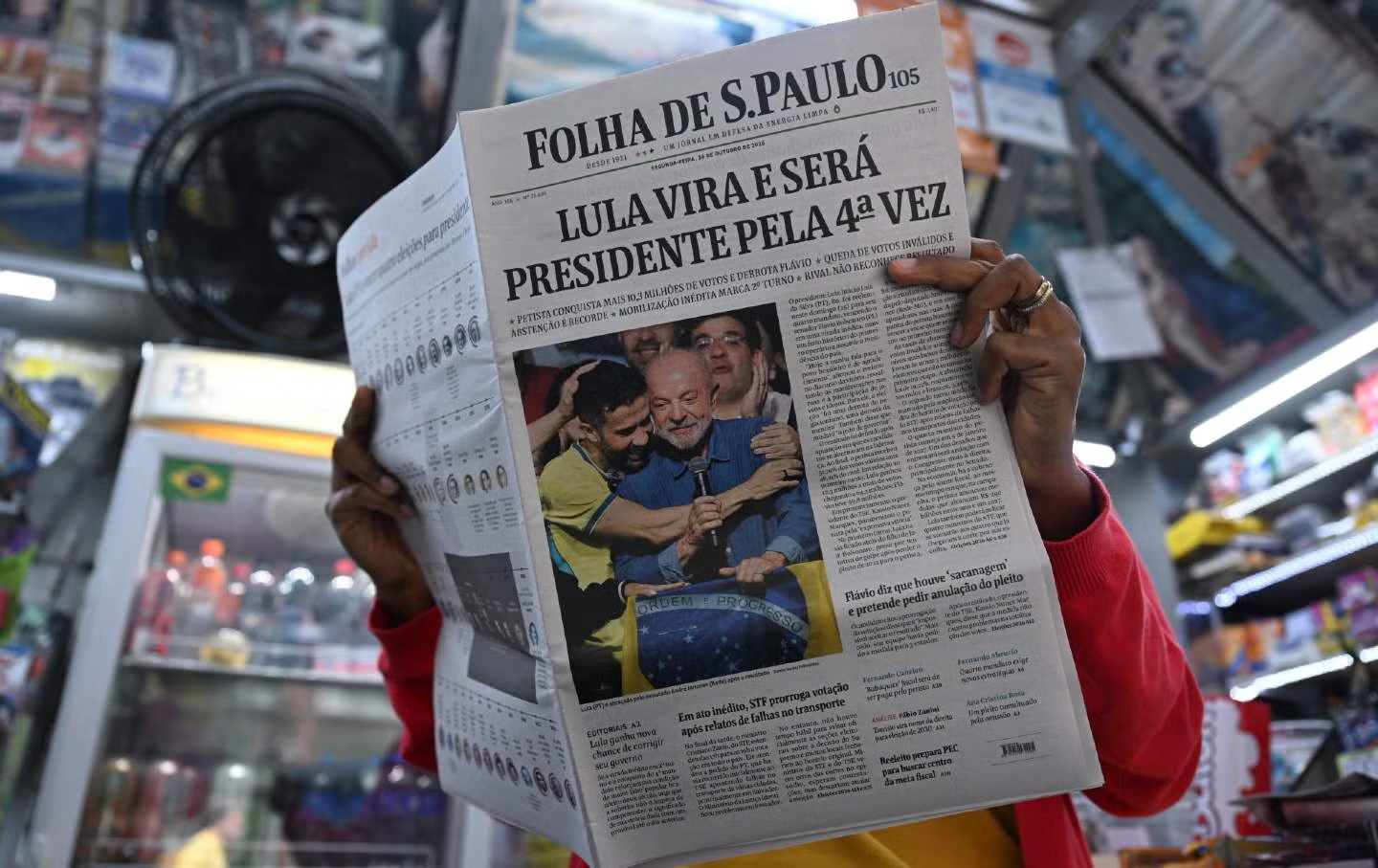
What We Can Learn From Lula’s Seismic Win What We Can Learn From Lula’s Seismic Win
The Brazilian president looked headed for defeat. The Brazilian people had other ideas.
Pope Leo Goes to War—Against the Department of War Pope Leo Goes to War—Against the Department of War
The growing divide between Rome and Washington.
France’s Left, Divided at the Worst Possible Time France’s Left, Divided at the Worst Possible Time
Years of progressive infighting weigh on Jean-Luc Mélenchon’s presidential ambitions.
The Fugitive From Brazil The Fugitive From Brazil
The implications of Trump’s red-carpet rollout for Flávio Bolsonaro.
Inside France’s Biggest Uprising Since 1968 Inside France’s Biggest Uprising Since 1968
Despite harsh reprisal from the government, students show no sign of stopping.
Lula’s Victory! Bolsonaro’s Defeat! What’s Next for Brazil? Lula’s Victory! Bolsonaro’s Defeat! What’s Next for Brazil?
A leading Brazil scholar predicts that Trump will continue to meddle in Brazilian politics.