
Antony Blinken’s Legacy Is Buried Under the Rubble of Gaza
Despite valedictory speeches, the secretary of state will be remembered not for his successes—or his guitar playing—but for the humanitarian catastrophe he aided and abetted.

When Secretary of State Antony Blinken took the stage on a recent Wednesday afternoon at a packed hall at the Council on Foreign Relations, it was all about legacy-making. Biden is no longer an effective communicator, but that hasn’t stopped his team from working overtime to tell the story of his supposed mastery of foreign policy—a story that is at times at odds with reality. Gaza as it stands today is noticeably absent from their reflections.
Indeed, facts on the ground—where the figure of some 45,000 Palestinians killed is almost certainly an undercount—have consistently been avoided. Samantha Power, Biden’s top humanitarian official and the head of the US Agency for International Development tasked with getting aid to Palestinians, delivered a marquee speech recently that didn’t even mention Gaza. Ditto Avril Haines, the outgoing director of national intelligence. “There will be time, maybe a lot of time, after the end of this administration for people to judge what we did,” Blinken told Reuters. “I don’t have time to do that now.”
But he had time for one more public engagement in New York. Michael Douglas was chatting with Gay Talese, as retired ambassadors—Democrats and Republicans—sat huddled together knee to knee. There was wine and cheese. Blinken’s mother and half-sister sat in the front row.
Blinken reminded the crowd how tough it had been in 2021 when he came into office amid the Covid pandemic and economic crisis. And it is true that the Biden administration has since notched some foreign-policy successes. Through intensive diplomacy, they avoided a hot conflict with China, despite a high-stakes Chinese balloon incident over American skies. They are justifiably proud of their rebuilding of global alliances, especially in support of Ukraine. And Biden deserves credit for withdrawing troops from Afghanistan (though the resulting quagmire and rapid fall of the government there makes it politically hard to discuss, and not something that Blinken raised). But it’s the destruction of Gaza that looms largest.
Beyond the shocking loss of life, Israel’s decimation of Palestine will have a much larger and longer impact for America: It will undermine the implementation of international humanitarian law worldwide. It will embolden militaries to undertake indiscriminate operations against marginalized peoples. And with no credible claim to human rights, despite whatever gains Biden has made, America will be morally weaker than ever on the world stage.
Blinken did mention—very briefly—the need for reconstruction of Gaza and for “a resolution to the Palestinian question.” He noted the “great human cost to the children, the women, the men in Gaza who’ve been caught in this crossfire of Hamas’s making,” but he mostly focused on the great blows Israel has dealt to Hamas and Hezbollah.
No one in that friendly audience was expecting him to say that Biden’s bear hug of Israeli Prime Minister Benjamin Netanyahu had little effect in tamping down the mass killing, or that not enough humanitarian aid has reached Palestinians. But he could at least have gestured toward how, in hindsight, the administration might have done things differently—or offered new insights into why he did things the way he did. “It would be refreshing to hear them acknowledge firsthand that there were some missteps on Gaza,” a former senior administration official told me. “It’s fair to celebrate the foreign policy successes and receive accolades while also showing some humility and humanity in admitting that not everything was a win.”
I had hoped to ask the outgoing secretary of state how he contends with a growing chorus of experts saying that Israel’s conduct amounts to genocide, as exemplified by South Africa’s case against Israel in the International Court of Justice. Blinken’s stepfather, Samuel Pisar, survived the Holocaust, and Blinken has often said that Pisar’s rescue by American GIs from Nazi death camps has shaped his worldview about the power of America. But in Gaza, it has become impossible to argue that the United States is still a force for good. Within the US government, the secretary of state is typically the one who makes the determination that a military campaign is a genocide. Palestinians have long described the Israeli campaign in those terms, and recent reporting by Amnesty International, Doctors Without Borders, and Human Rights Watch bolsters the genocide claim with new documentary evidence.
Sitting next to me was the human rights lawyer Sarah Leah Whitson. The organization she leads, Democracy for the Arab World Now, had just organized a federal lawsuit against Blinken and the State Department on behalf of Palestinian families who point to the Biden administration’s arbitrary and capricious failure to enforce US law, causing them harm. In the lawsuit, they say Blinken has signed off on weapons transfers to Israel despite ample documentation of gross human rights violations. Whitson wanted to ask how the secretary of state could be confident that not a single unit of the Israeli military had committed human rights abuses. As she scrolled through her social media feed, shocking photos of maimed Palestinian children kept appearing.
Neither of us got our question in.
Biden’s team has been incredibly careful about manicuring their legacy. Even a Proustian-style questionnaire from Esquire was carefully vetted for Blinken by four senior communications officials, according to internal e-mails I obtained through the Freedom of Information Act. Elizabeth Allen, at the time the assistant secretary of global public affairs, wrote in an e-mail that “this was my pet project.” Another senior aide shared the published Q&A with “validators” to promote it, including TV commentators close to the administration like Richard Stengel and Jeremy Bash. It’s a revealing snapshot of how much high-level staff work goes into the secretary of state’s every move.
Yet just as often that legacy projection falls flat. Blinken and national security adviser Jake Sullivan have both tried to fix their legacies through major stories for Foreign Affairs that were soon overtaken by events. Sullivan took credit for the Middle East being “quieter than it has been for decades” in an essay that awkwardly went to press just before the October 7, 2023, attacks. (He updated the text online.) A year later, Blinken wrote proclaiming the renewal of American leadership on October 1, 2024—the very day the Israeli military sent ground forces into Lebanon, making it somewhat harder to believe Blinken’s claim that “the Biden administration’s strategy has put the United States in a much stronger geopolitical position today than it was four years ago.”
Popular
“swipe left below to view more authors”Swipe →In recent days, Sullivan hasn’t managed to avoid the topic of Gaza entirely. But he stands squarely behind the president’s staunch support of Israel and remains averse to any self-reflection on what has gone wrong. Last month, he assured the 92nd Street Y that he had gone to great lengths through private conversations with the Israelis to get aid in. He told the Reagan National Defense Forum on December 8, “We believe that we have alighted on a course that has stood up for our ally, has stood against our common enemies, and at the same time has done our best to alleviate the humanitarian suffering in Gaza.” Experts say Palestinians there need a minimum of 500 trucks daily, but on that day, according to the UN, a mere 23 trucks of assistance were able to enter the territory. Fittingly, Sullivan also headlined a symposium at the Henry A. Kissinger Center for Global Affairs—but that was closed to the press and the White House declined to share any information about it.
Earlier in the month, Sullivan delivered a keynote at the Center for Strategic and International Studies on how the administration has rebuilt America’s defense industrial base—meaning weapons factories, weapons transfers, and weapons sales. He touted the increase of production of 155-millimeter shells, which human rights experts have warned are “inherently indiscriminate.” Yet Blinken has greenlighted transferring millions of dollars’ worth of them to Israel. Overall, America has provided $17.9 billion of military aid to the country since October 2023, and Biden just notified Congress of an additional $8 billion weapons sale—even as researchers have documented many instances where American arms and munitions were likely used to commit war crimes.
For Blinken, a rare moment of candor—or at least self-deprecation—came in response to an audience question at the Council on Foreign Relations about the Democratic foreign policy establishment being “aloof and out of touch.” Might that have been part of the reason they had lost key swing states like Pennsylvania in the presidential election? “Look,” Blinken began, rising from his white armchair. “As someone who initially grew up on the Upper East Side not far from here, who went to private schools, then spent a lot of time in Europe, wound up in the Ivy League, and I’m now in this job—well, only in America.” The room filled with laughter for his seemingly self-aware poke at his and the room’s elitism without engaging in much more reflection.
And then he walked out of the townhouse, stepped into his SUV, and his motorcade turned down Park Avenue. But as Blinken returns to private life, the legacy of Gaza will follow him—and the president he served.
More from The Nation
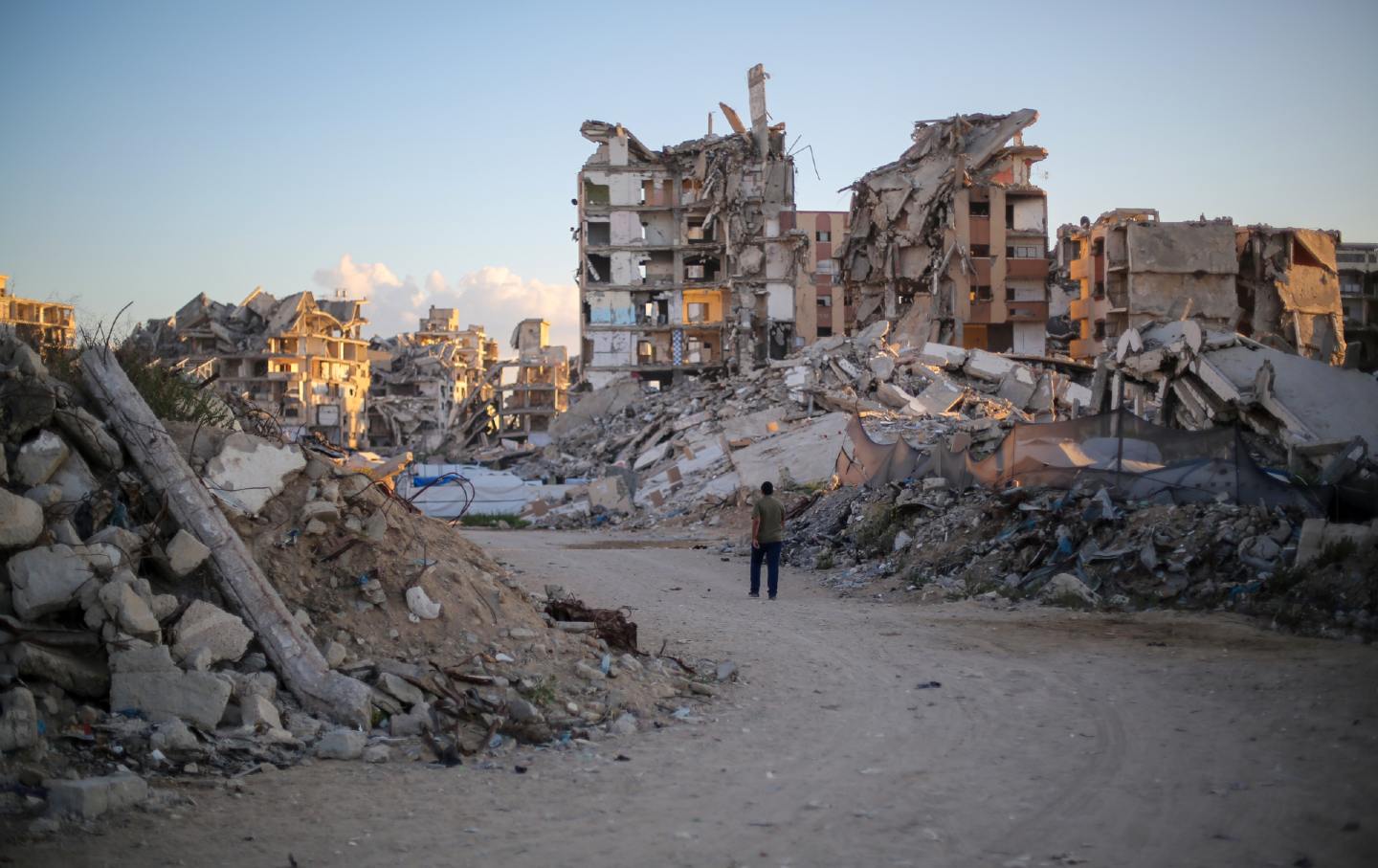
Writing About War as Bombs Fall Writing About War as Bombs Fall
While the Israeli government launched a well-orchestrated offensive of disinformation and hyperbole that would make the illegal permissible in the war on Gaza.
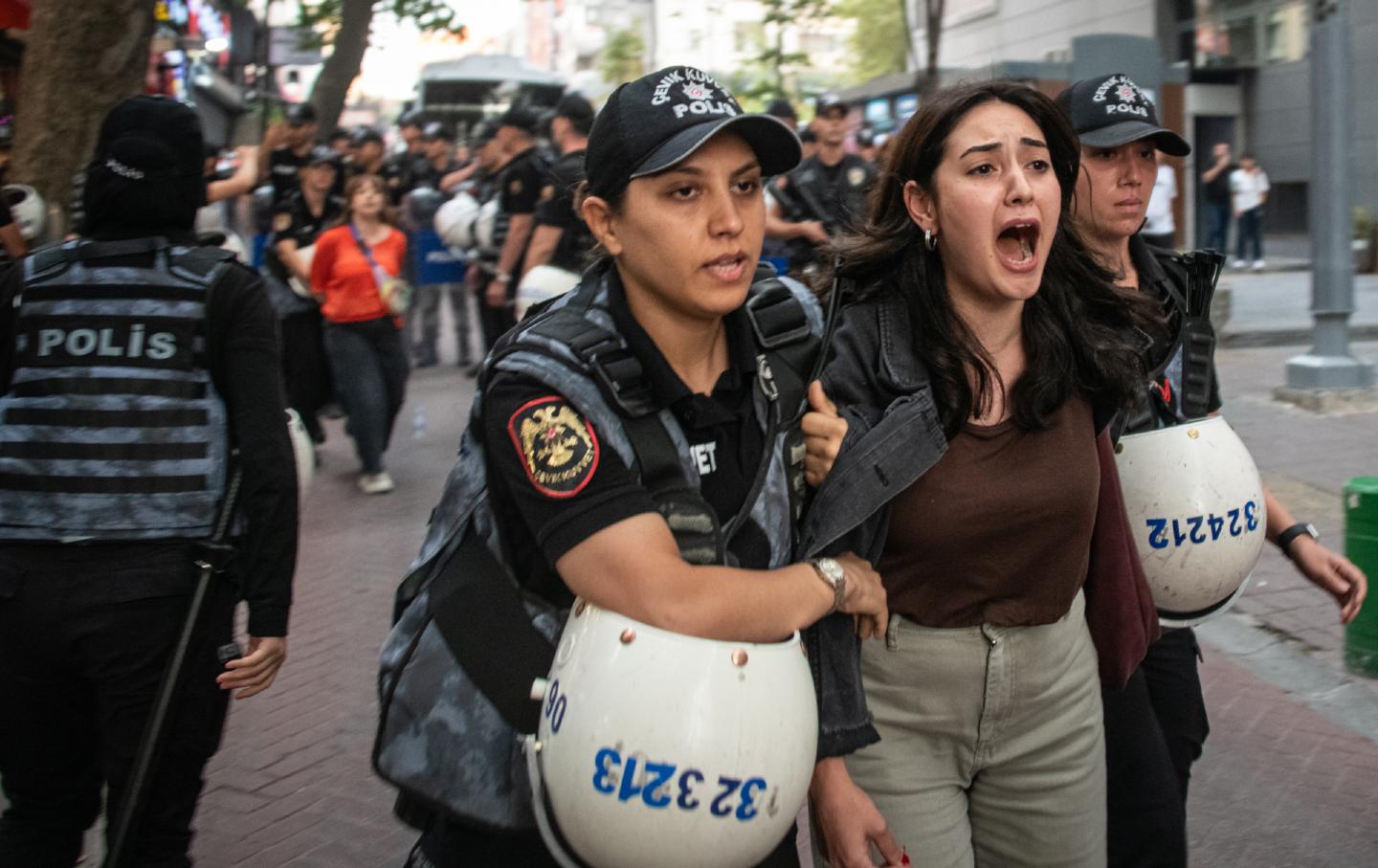
Turkey Is Brutally Oppressing Queer People. Here’s What You Need to Know. Turkey Is Brutally Oppressing Queer People. Here’s What You Need to Know.
The government’s sweeping crackdown on the LGBTQ community is an escalation of a decades-long pattern.
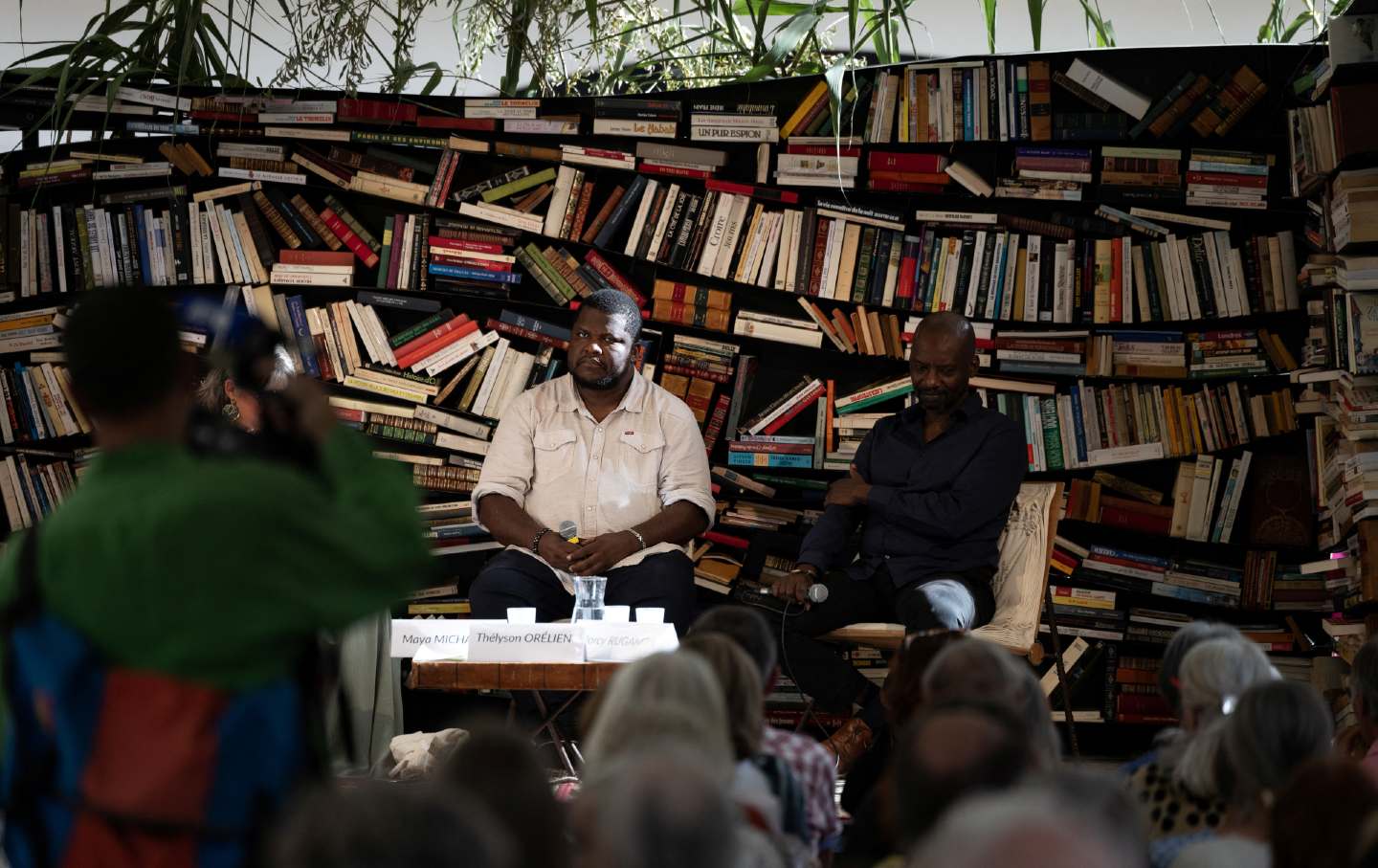
The Anatomy of a Literary Scandal The Anatomy of a Literary Scandal
The pillorying of Canadian-Haitian novelist Thélyson Orélien, accused of using AI to write his new novel, is the latest in a chaotic year for French publishing.
Has France’s Government Overplayed Its Hand? Has France’s Government Overplayed Its Hand?
The speed and scale of the police response mark a dangerous new normal.
This Is Not an Anniversary This Is Not an Anniversary
Does remembering the date of October 7 make it easier to name?

