
Is Europe the Last Champion of Liberal Democracy?
At the moment, unfortunately, it seems more likely that Europe will be the last powerful holdout in a world entering a new political Dark Age.
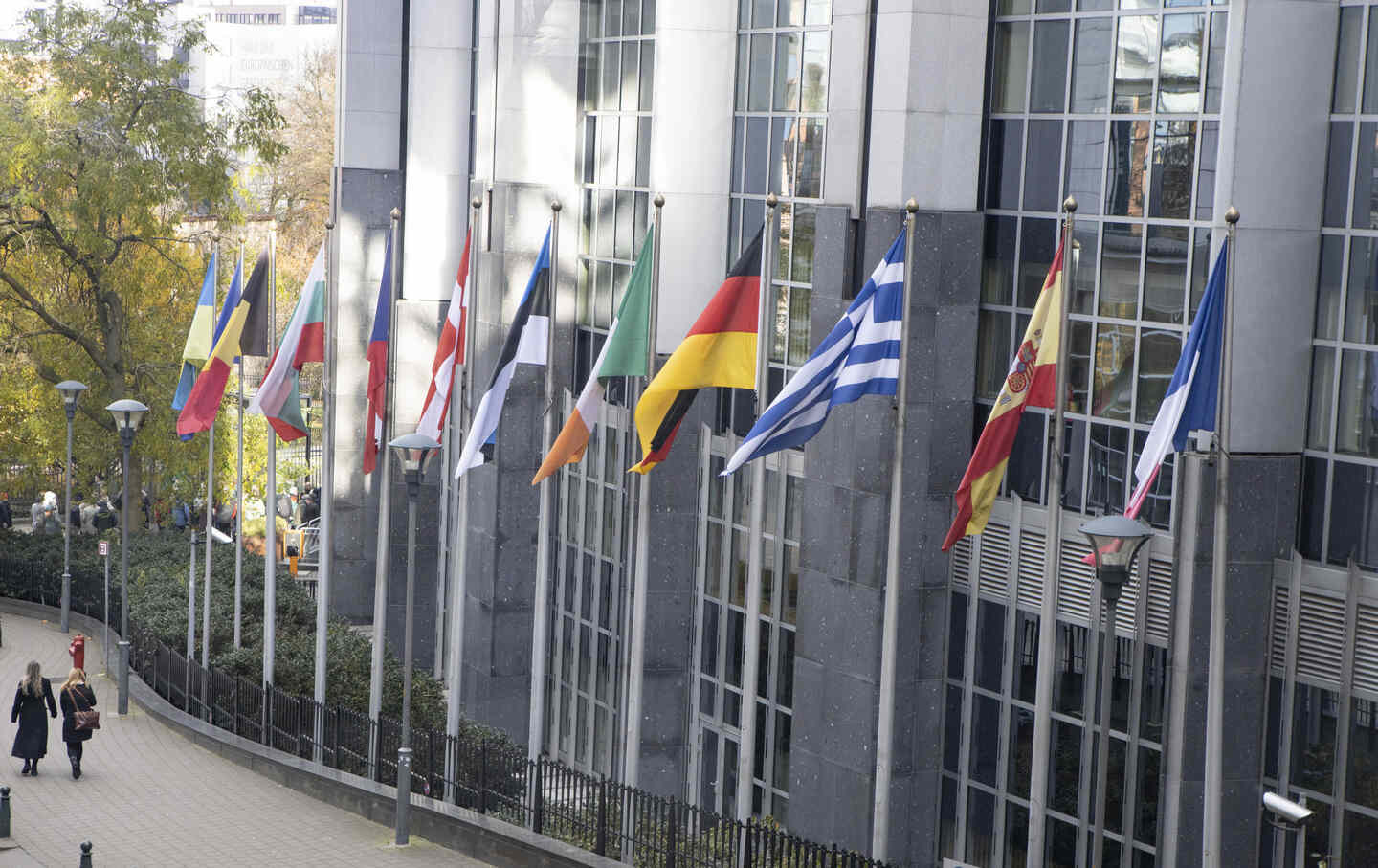
The flags of all EU member states fly outside the European Parliament building in Brussels, Belgium, on November 20, 2024.
(Siavosh Hosseini / NurPhoto via Getty Images)
This article originally appeared at TomDispatch.com. To stay on top of important articles like these, sign up to receive the latest updates from TomDispatch.com.
The news of Rodrigo Duterte’s arrest surprised me.
It’s not that I doubted that the former leader of the Philippines was guilty of the horrific crimes detailed in his International Criminal Court (ICC) arrest warrant. Duterte himself boasted quite openly of the mass killings he’s been accused of. But I always thought that the prospects of bringing that brutal, outspoken politician to justice were remote indeed.
After all, Duterte’s daughter Sara is currently the vice president of the Philippines and that country is no longer a member of the ICC. On top of that, Duterte himself was so sure of his immunity that he was running for mayor of the city of Davao. In mid-March, after returning from campaigning in the Filipino community in Hong Kong, he suffered the indignity of being arrested in his own country.
Forgive me for saying this, but I just hadn’t thought the ICC was still truly functioning, given that the leaders of the most powerful countries on this planet—the United States, China, and Russia—don’t give a fig about human rights or international law. Sure, the ICC did issue high-profile arrest warrants for Russian leader Vladimir Putin and Israeli Prime Minister Benjamin Netanyahu on war crimes charges, but no one expects those rogues to be taken into custody anytime soon. And the impunity for the powerful has only become more entrenched now that a convicted felon squats in the White House.
The specialty of the ICC has, of course, been arresting human-rights abusers in truly weak or failed states like Laurent Gbagbo, former president of Côte d’Ivoire, and Hashim Thaçi, former president of Kosovo. With the world’s 31st largest economy, however, the Philippines is no failed state. Still, without nuclear weapons or a huge army, it’s no powerhouse either. Indeed, it was only when the Philippines became ever weaker—because of a feud between President Ferdinand Marcos Jr. and Vice President Sara Duterte (accused of threatening to assassinate him)—that the ICC had a chance to grab its target and spirit him away to The Hague to stand trial.
The arrest of Rodrigo Duterte might, in fact, seem like the exception that proves the (new) rule. After all, the international community and its institutions are currently facing a crisis of global proportions with violations of international law becoming ever more commonplace in this era of ascendant right-wing rogue states.
In 2014, Russia first grabbed Ukrainian territory, launching an all-out invasion in 2022. Israel has committed genocide in Gaza, sent troops into southern Lebanon, and expanded its footprint in Syria. President Trump has spoken repeatedly of seizing Greenland, absorbing Canada as the 51st state, and retaking the Panama Canal, among other things. Small countries like Taiwan can’t sleep for fear of a late-night visit from jackbooted thugs.
But then there’s Europe.
Transatlantic Divergence
In the wake of Donald Trump’s dramatic return to the stage as a bull in the global china shop, European leaders have hastened to replace the United States as the voice of liberal internationalist institutions like the ICC. Of course, the US was never actually a member of the ICC, which suggests that Europe has always been more connected to the rule of law than most American politicians. After all, if Duterte had been sent to Washington today—not to mention Beijing, Buenos Aires, Cairo, Moscow, or New Delhi—he would undoubtedly have been feted as an exemplary law-and-order politico rather than, as in The Hague, placed behind bars and put on trial.
This transatlantic divergence was only sharpened in mid-February when Vice President JD Vance berated an audience of Europeans at the Munich Security Conference, singling out for criticism Europe’s support of feminism and pro-choice policies, its rejection of Russian election interference (by overturning a Kremlin-manipulated presidential election in Romania), and its refusal to tolerate fascist and neofascist parties (shunning, among others, Germany’s Alternative für Deutschland, or AfD). By urging them to worry more about internal challenges to “democracy” in Europe than the challenges presented by either Russia or China, Vance was effectively siding with illiberal adversaries against liberal allies.
In a certain sense, however, he was also eerily on target: Europe does indeed face all-too-many internal challenges to democracy. But they come from his ideological compatriots there like Hungary’s Viktor Orbán and Slovakia’s Robert Fico, and far-right political parties like Germany’s AfD, as well as ultraconservative cultural movements that target immigrants, the LGBTQ community, and secular multiculturalists.
Vance opposes mainstream European opinion, which has directly or indirectly challenged Donald Trump’s MAGA proposals and policies, as well as his rejection of the reality of climate change. Europe has, of course, been stepping up its defense of Ukraine, remains committed to promoting human rights, and adheres to democratic principles in the form of regular electoral checks and balances, as well as safeguards for civil society. Above all, unlike the Trump administration, it continues to move forward on the European Green Deal and a program to leave behind fossil fuels.
These were, of course, fairly uncontroversial positions until Trump reentered the White House.
Can Europe sustain that fragile plant of liberalism during this harsh winter of right-wing populism? Much depends on some risky bets. Will US foreign policy swing back in favor of democracy, human rights, and transatlantic relations in four years? Will the weight of a never-ending war, in the end, dislodge Vladimir Putin from the Kremlin? Will Ukraine overcome its own internal divisions to become part of a newly enlarged European Union (EU)? Will Bibi Netanyahu someday become Duterte’s cellmate?
At the moment, unfortunately, it seems more likely that Europe will be the last powerful holdout in a world entering a new political Dark Age. A dismal scenario lurks on the horizon in which democracy and human rights cling to existence somewhere within the walls of the European Union, much as monasteries managed to preserve classical learning a millennium ago.
Europe Steps Forward
After Trump and Vance humiliated Volodymyr Zelensky during his White House visit in February, an ideologically diverse range of European leaders raced to support the Ukrainian leader and his country. But defending democracy means all too little if that defense remains largely verbal.
So, no longer being able to count on US power or NATO security guarantees in the age of Trump, European Union leaders have decided to visit the gym and muscle up. Shortly after Zelensky’s meeting, the EU readied a large military spending bill meant to contribute to the “security of Europe as a whole, in particular as regards the EU’s eastern border, considering the threats posed by Russia and Belarus.” About $150 billion more would be invested in the military budgets of member states. The EU will also relax debt limits to allow nearly $700 billion in such additional spending over the next four years.
Of course, in the past, Europe’s vaunted social democracy was largely built on low defense spending and a reliance on Washington’s security umbrella. That “peace dividend” saved EU member states a huge chunk of money—nearly $400 billion every year since the end of the Cold War—that could be applied to social welfare and infrastructure expenses. Forcing NATO members to spend a higher percentage of their gross domestic product on their militaries is a dagger that both Trump and Putin are holding to the throat of Europe’s social democracy. Germany can still afford to engage in deficit spending for both guns and butter, but it presents a distinct problem for countries like Belgium, France, Greece, Italy, and Spain with high levels of government debt.
And when it comes to Europe’s future, it’s not just a military affair. While some European leaders have used intelligence assessments to focus on Putin’s territorial ambitions, others are more anxious about Russia’s assault on their values. Fearful of the way the illiberal values of Putin and Trump seem to overlap, Europeans have cast the fate of Ukraine in the loftiest of terms: the defense of democracy against fascism. However, given the connections between the European far right and the Kremlin—thanks to Germany’s AfD, the two French far-right parties (National Rally and Reconquest), and Bulgaria’s Revival among others—the fight against fascism is now taking place on the home front as well.
Europe is also defending democratic values in other ways. It has long promoted DEI-like programs, beginning with France’s diversity charter in 2004, while the European Commission is committed to equality for the LGBTQ community. In 2021, to promote universal values, the EU even launched a program called Global Europe Human Rights and Democracy, which was meant to support human rights defenders, the rule of law, and election monitors across the planet. Typically, on the controversial topic of Israel-Palestine, European countries have condemned the Israeli government’s actions in Gaza and several have even recognized the (still-to-be-created) state of Palestine.
Semi-socialist, DEI-loving, human-rights-supporting, Israel-skeptical, Europe is everything Donald Trump hates. Think of the EU, in fact, as the global equivalent of his worst nightmare, a giant liberal arts campus.
No wonder the MAGA crowd has the urge to cut the transatlantic cable as a way of targeting its opponents both at home and abroad.
Europe Divided
But wait: The MAGA crowd doesn’t hate Europe quite as thoroughly as it does Columbia University. After all, not all European leaders are on board with social democracy, DEI, human rights, and Palestine. In fact, in some parts of the continent, Trump and Vance are heroes, not zeros.
Hungary’s Orbán, for instance, has long been a friend and inspiration to Trump. After all, he’s managed to translate the illiberalism of Putin—antidemocratic, anti-LGBT, über-nationalist—into a semi-democratic vernacular of great appeal to an American far right that must negotiate a significantly more complex political landscape than the one that surrounds the Kremlin.
Popular
“swipe left below to view more authors”Swipe →As Putin’s greatest acolyte, Orbán has worked overtime to undermine a common European approach to Ukraine. He initially opposed aid to Ukraine, a stance ultimately overcome by the pressure tactics of other European leaders. He pushed for a watered-down version of the most recent EU statement in support of that country, only to watch the other 26 EU members pass it without him. And he’s rejected Ukrainian membership in the EU. Still, with elections scheduled for 2026 and the opposition now outpolling Orbán’s Fidesz party, the days of one man holding the EU hostage may soon be over.
While Orbán does have allies, most of them—like AUR in Romania and the National Alliance in Latvia—are sniping from the sidelines as part of the opposition. Several other far-right parties like the ruling Fratelli d’Italia in Italy don’t share Orbán’s odd affection for Putin. But if the AfD in Germany or the National Rally in France were to win enough votes to take over their respective governments, Europe’s political center of gravity could indeed shift.
Such divisions extend to the question of EU expansion. Serbia’s pro-Russian slant makes such a move unlikely in the near term and Turkey is too autocratic to qualify, while both Bosnia and Georgia, like Ukraine, are divided. It’s hard to imagine Ukraine itself overcoming its internal divisions—or its war-ravaged economy—to meet Europe’s membership requirements, no matter the general enthusiasm inside that country and elsewhere in Europe for bringing it in from the cold.
Nonetheless, EU expansion is what Putin fears the most: a democratic, prosperous union that expands its border with his country and inspires Russian activists with its proclamations of universal values. No small surprise, then, that he’s tried to undermine the EU by supporting far-right and Euroskeptical movements. Yet the combination of the war in Ukraine and the reelection of Donald Trump may be undoing all his efforts.
The experience of feeling trapped between two illiberal superpowers has only solidified popular support for the EU and its institutions. In a December 2024 poll, trust in the EU was at its highest level in 17 years, particularly in countries that are on the waiting list like Albania and Montenegro. Moreover, around 60 percent of Europeans support providing military aid to Kyiv and future membership for Ukraine.
For increasing numbers of those outside its borders, Europe seems like a beacon of hope: Prosperous democracies pushing back against the onslaught of Trump and Putin. And yet, even if Europe manages to stave off the challenges of its homegrown far right, it may not, in the end, prove to be quite such a beacon. After all, it has its own anti-migrant policies and uses trade agreements to secure access to critical raw materials and punish countries like Indonesia that have the temerity to employ their own mineral wealth to rise higher in the global value chain. Although, unlike Putin’s Russia and Trump’s America, it’s doing its best to shift to a clean-energy economy, it’s done so all too often by dirtying the nests of other countries to get the materials it needs for that shift.
Whatever its resemblance to a liberal arts college, Europe is anything but a nonprofit institution and can sometimes seem more like a fortress than a beacon. As was true of those medieval monasteries that preserved the classical learning of the ages but also owned land and serfs, supplied markets with addictive products like chartreuse, and subjected their members to torture and imprisonment, saving civilization can have a darker side.
Exiting the Dark Age
The International Criminal Court’s arrest of Rodrigo Duterte should be a powerful reminder that justice is possible even in the most unjust of times. Brutal leaders almost always sow the seeds of their own demise. Putin’s risky moves have mobilized virtually all of Europe against him. In antagonizing country after country, Trump is similarly reinforcing liberal sentiment in Canada, in Mexico, and throughout Europe.
If the world had the luxury of time, holing up in the modern equivalent of monasteries and waiting out the barbarians would be a viable strategy. But climate change cares little for extended timelines. And don’t forget the nuclear doomsday clock or the likelihood of another pandemic sweeping across the globe. Meanwhile, Trump and his allies are destroying things at such a pace that the bill for “reconstruction” grows more astronomical by the day.
The gap between the fall of the Roman Empire and the first glimmers of the Renaissance was about 1,000 years. No one has that kind of time anymore. So, while long-term strategies to fight the right are good, those standing up to the bullies also need to act fast and forcefully. The world can’t afford a European retreat into a fortress and the equivalent of monastic solitude. The EU must unite with all like-minded countries against the illiberal nationalists who are challenging universal values and international law.
The ICC set a good example with its successful seizure of Duterte. Let’s all hope, for the good of the world, that The Hague will have more global scofflaws in its jail cells—and soon.
Become a Sustaining Donor This September
Between the reemergence of right-wing red-baiting and Donald Trump’s use of the chilling National Security Presidential Memorandum–7 to criminalize left political organizing, we’re seeing McCarthyism reborn before our eyes.
This assault on democracy cannot be ignored or wished away. Resisting it requires bravery in the face of threats and repression, a steadfast commitment to the truth, and the unwavering belief that we can—and will—overcome this darkness.
We must have an independent media that sets the record straight, unearths corruption and abuses of power, and advances a politics of justice and dignity for all if we’re to win this fight.
That’s why I’m writing to you today. This September, The Nation needs to add 100 monthly donors to sustain our progressive journalism. Your contribution makes the next investigative report, the next truth-speaking column, and the next pathbreaking essay all possible.
I hope you’ll support our work with a recurring donation today. If you donate $10 or more a month, we’ll send you a brand new “Hands Off the Free Press!” sticker to recognise your commitment to our cause. Please, donate today.
Onward,
Katrina vanden Heuvel
Editor and Publisher, The Nation
More from The Nation
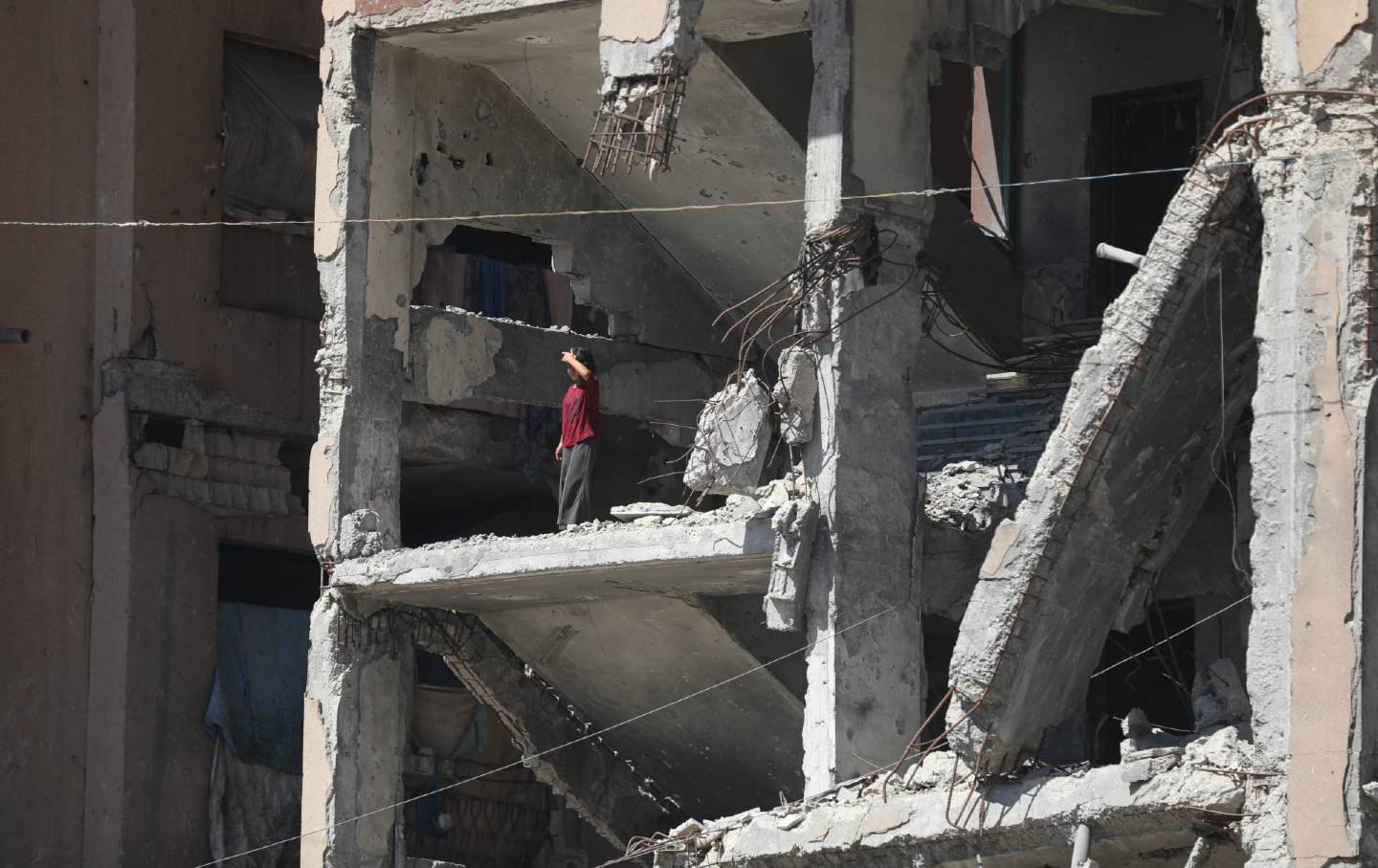
Israel’s Election Can’t Fix What Netanyahu Broke Israel’s Election Can’t Fix What Netanyahu Broke
The fundamental problem is not the name of the prime minister, but rather the actions of the Israeli government and the urgent issues that need to be addressed.
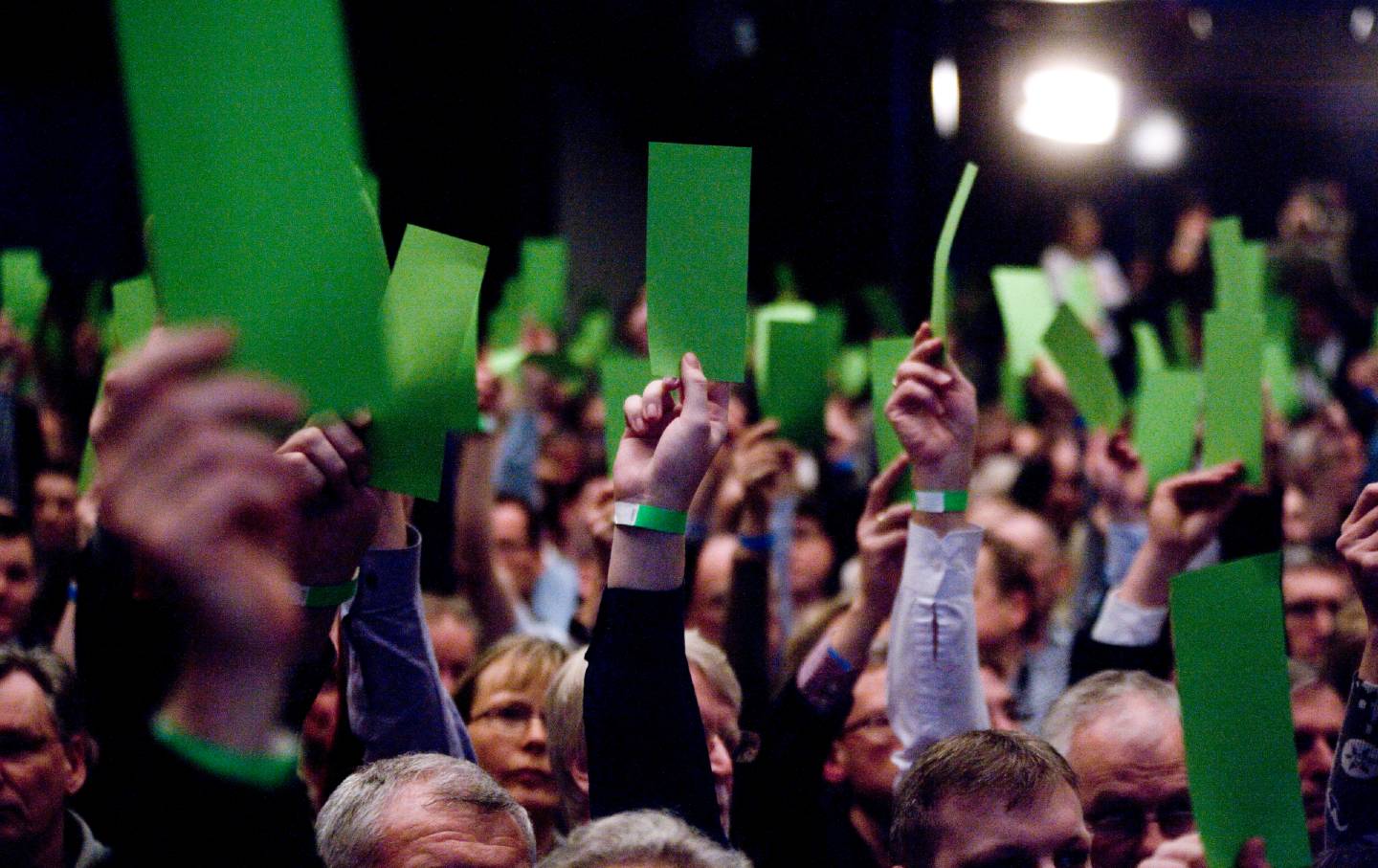
The AfD’s Rise Isn’t Just About East Germany The AfD’s Rise Isn’t Just About East Germany
The Alternative für Deutschland has a stable national poll lead, including in the former West Germany. Its rise owes to much more than Eastern grievances.
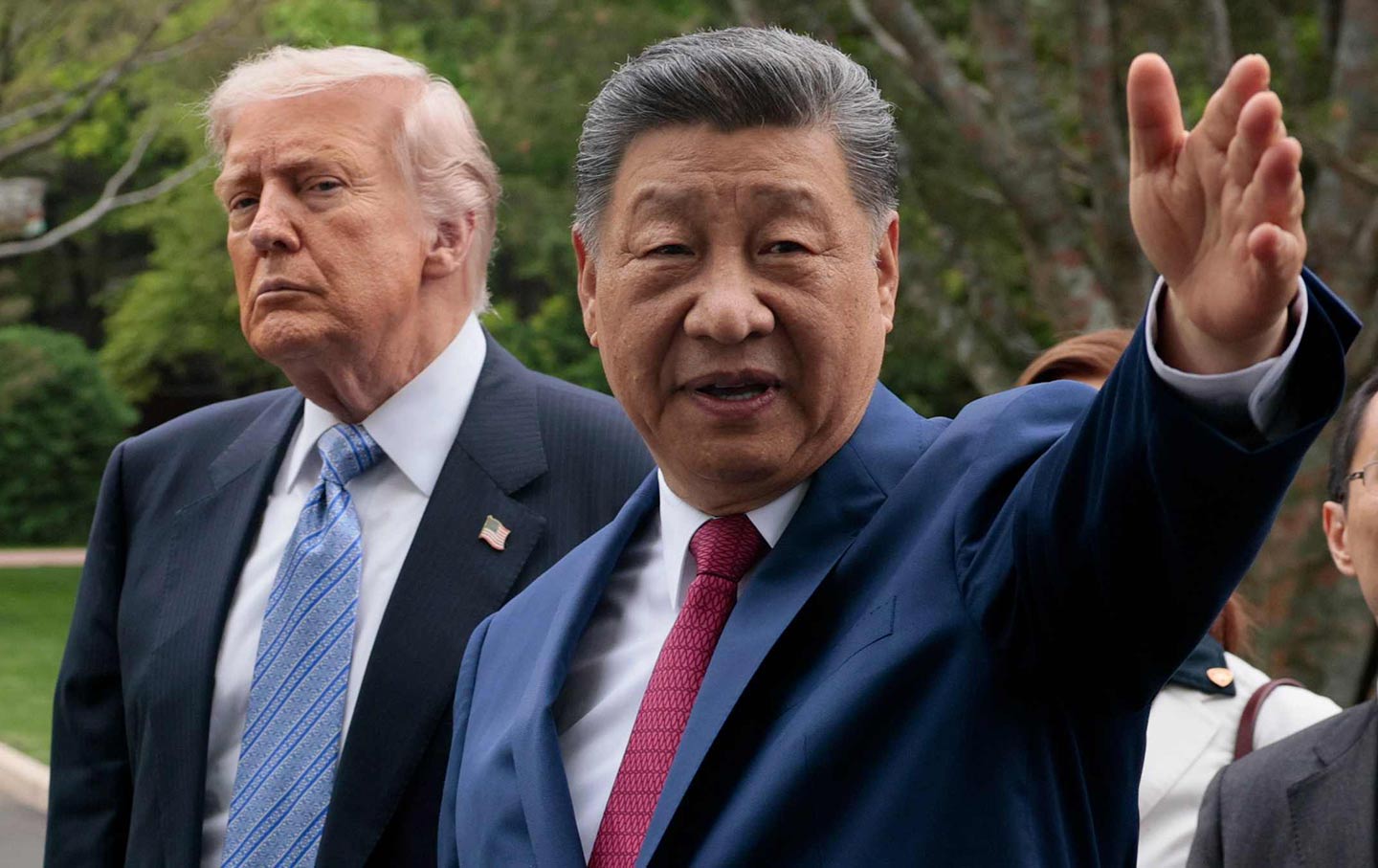
Chinese Development Is the Betrayal Washington Cannot Forgive Chinese Development Is the Betrayal Washington Cannot Forgive
The prospects for Xi Jinping’s visit are dim because American leaders are blaming China for the failures of globalization.
Pinochet: The Verdict of History in the Letelier-Moffitt Case Pinochet: The Verdict of History in the Letelier-Moffitt Case
An act of international terrorism on the streets of Washington, DC, still reverberates 50 years later.
How to Arrest Benjamin Netanyahu How to Arrest Benjamin Netanyahu
Make no mistake: The United States can seize Netanyahu for crimes under US law and prosecute him in US courts when he is in New York City this week.
In the Age of AI, Nuclear Weapons Abolition Is a Renewed Imperative In the Age of AI, Nuclear Weapons Abolition Is a Renewed Imperative
As long as we have nuclear weapons, the job of ending humanity will continue to be as easy as the push of a button—or an AI agent hacking into a nuclear command-and-control system...

