
A Cowardly Congress Is Letting Trump Crash the Economy
The president’s tariff war is also a constitutional crisis.
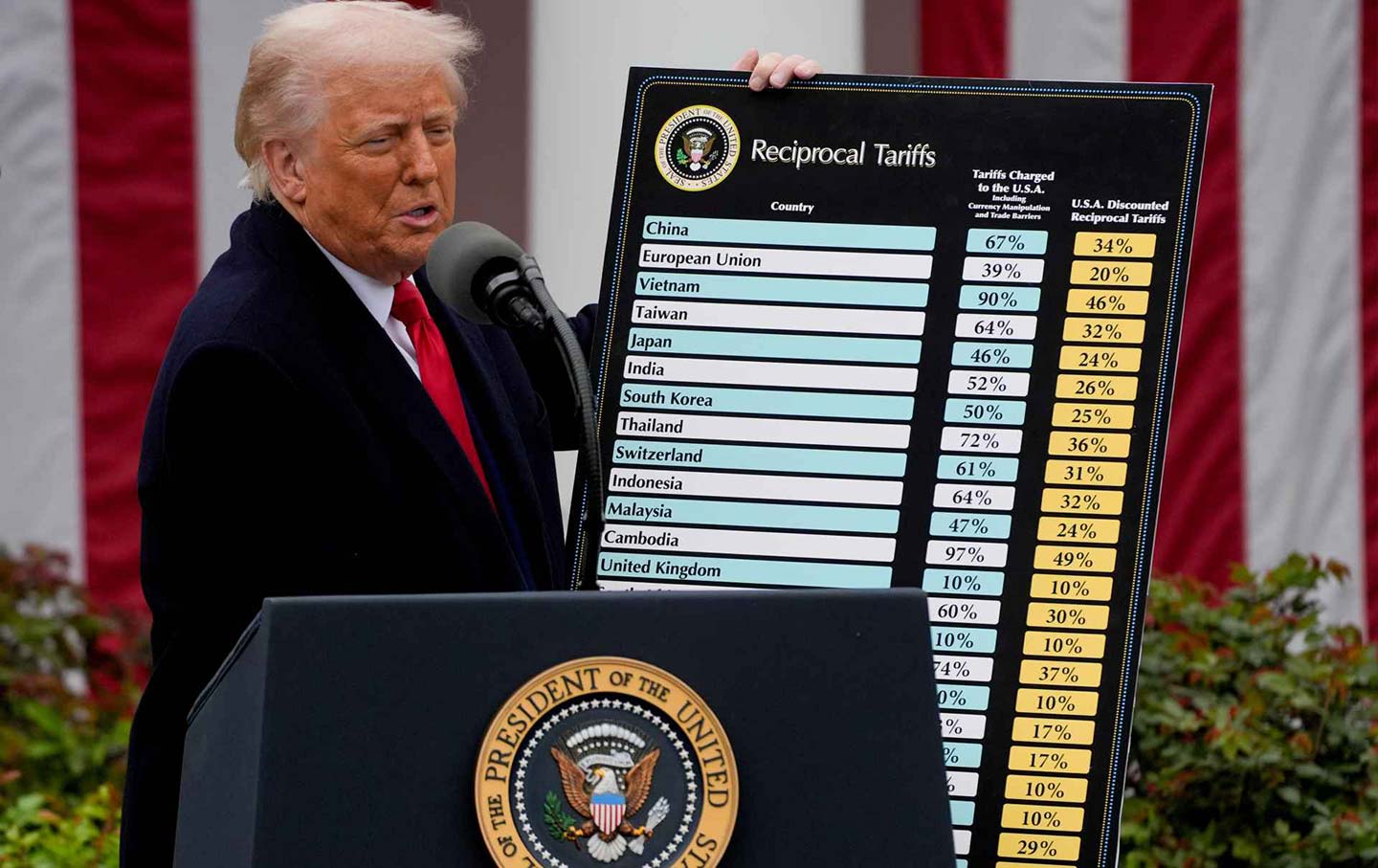
Donald Trump’s startling new tariffs amount to a declaration of war against the entire planet. In defending the president, Republicans are leaning into variations of the adage “short-term pain, long-term gain.” Republican Senator Tim Sheehy spelled out the argument on CNN, “There’s absolutely going to be short-term pain.… If you’re going to remodel your house to make it better in the end, it’s going to be really annoying in the short term when your house is getting remodeled and there’s drywall dust everywhere and there’s workers in your living room.”
The problem with Sheehy’s metaphor is that there is every reason to think that Trump’s tariff will bring both short-term pain—and even more long-term pain. In other words, far from remodeling the house, Trump is firebombing the entire neighborhood. The short-term pain is easy to see: The stock market dropped by 6 percent, losing $3.1 trillion in value. This is the steepest decline since March 2020, when the global economy was spooked by the rapid spread of Covid. But the stock market is only one measure of the damage.
More troubling is the prospect that Trump could be triggering a global trade war, one that could lead to a crash comparable to 1929 or 2008. In making the case for his policy on Wednesday, Trump offered up some typically nonsensical history, saying, “In 1929, [an era of prosperity] came to a very abrupt end with the Great Depression, and it would have never happened if they had stayed with the tariff policy, would have been a much different story.” In point of fact, after the stock market crash in 1929, Congress enacted the infamous Smoot-Hawley tariffs, which historians often cite as a major factor in making the Depression much more global and longer-lasting than typical economic downturns. Trump’s new tariffs are comparable in severity—indeed, arguably worse than—Smoot-Hawley.
Any criticism of Trump shouldn’t be mistaken as a defense of the old neoliberal consensus (one shared by presidents from Ronald Reagan to Barack Obama) in favor of globalized free trade, which was often rightly denounced by left-wing stalwarts such as Bernie Sanders for outsourcing manufacturing jobs, hurting the environment, and incentivizing predatory exploitation of workers in poorer countries. But fixing the old neoliberal order required the targeted use of tariffs as part of a careful industrial policy and the creation of new agreements to safeguard the rights of labour and the environment. What Trump has adopted instead is a sledgehammer approach, applying a one-size-fits-all formula to virtually any country the United States has a trade deficit with.
Further, Trump’s trade war is creating additional uncertainty stemming from the president’s deliberately chaotic management style. Trump’s advisers are offering two mutually conflicting accounts of why tariffs are needed. Treasury Secretary Scott Bessent talks about tariffs as a bargaining chip for rebalancing trade relations. His argument is that the United States is escalating to de-escalate—not a reassuring theory, since that approach also undergirded the foreign policy of both the Biden and Trump administrations that has allowed conflict to spread throughout the Middle East. Moreover, business can’t be certain how long the tariffs will last or how severe they will be. The bargaining chip rationale also undermines the goal of bringing manufacturing back to the United States, since investment requires certainty.
But leaving aside the merits of the theory, Bessent’s view conflicts with that of longtime Trump adviser Stephen Miller, an ultra-nationalist who clearly wants the United States to be an autarky. Miller’s goal is to escalate in order to keep escalating.
Trump’s economic madness is made worse by a pervasive feature of his second term in office: the complete surrender of the economic and political elite. Wall Street has been blindsided by the trade war. It clearly expected a reprise of Trump’s first term, when Trump’s very loud protectionist rhetoric was coupled with much more restrained policies that merely reworked existing trade agreements. But even though many in the business elite are unhappy with the fact that Trump is now conducting a ferocious trade war, they are clearly too frightened to speak out. Trump and his political allies such as Elon Musk are not afraid to unleash a propaganda war against any corporate leader that publicly speaks out against Trump. Wall Street is making its displeasure felt through the anonymous mechanism of declining stock prices.
But the most abject institutional surrender to Trump is in Congress. Here again, especially among Republicans, the fear factor is paramount. But aside from political cowardice, there has been a constitutional dereliction of duty. Under the Constitution, Congress has the power to raise and lower tariffs. In recent decades, Congress has delegated that power to the president. But, like the similar delegation of war-making power, this empowerment of the presidency is deeply undemocratic. The principle underlying this delegation of power is that the president should be allowed to set tariffs in an emergency, a rule loose enough that it amounts to unlimited tariff-making power. The president has imperial power to change policy at will, without the democratic responsibility of building a coalition. Further, if the president is as doddery and fickle as Trump, it undermines the stability that international commerce requires.
The dereliction of duty by Congress is bipartisan. Last month, Senate minority leader Chuck Schumer and nine other Democrats voted for a continuing resolution that not only passed a Republican budget but also undercut the ability of Congress to curtail Trump’s power to arbitrarily set tariffs.
A congressional report prepared in February noted, “The U.S. Constitution grants the tariff power to Congress. Although the Supreme Court has held that Congress has wide latitude to delegate tariff authority to the President, Congress is ultimately responsible for determining what tariff authorities the President should have and what limitations they place on presidential discretion.”
The one ray of light amid the otherwise dismal political news is that Democrats are starting to get their fighting spirit back on this issue. On Wednesday, Virginia Senator Tim Kaine got the Senate to pass a resolution calling for Trump’s tariffs on Canada to be undone. Four Republican Senators voted for Kaine’s resolution, creating a small but potentially significant crack in the GOP’s normally solid wall of support for Trump. The four Republican senators were: Mitch McConnell (Kentucky), Susan Collins (Maine), Lisa Murkowski (Alaska), and Rand Paul (Kentucky).
Although purely symbolic, the resolution marks the beginning of a coalition in Congress to reclaim the tariff power. On Thursday Semafor reported:
Democrats are going all-in against President Donald Trump’s new global tariffs, seeing a chance to keep driving a wedge in the Republican Party after four GOP senators defied Trump on his Canada tariffs.
Senator Tim Kaine, D-Va., told Semafor on Thursday that he’s drafting a plan to force a vote on nixing the national emergency Trump declared Wednesday, which would effectively scrap the across-the-board tariffs set to kick in Saturday.
Popular
“swipe left below to view more authors”Swipe →But if tariffs are divisive among Republicans, the same is true among Democrats. Significant parts of the Democratic coalition welcome the idea of using tariffs as a tool of industrial policy. Notably, Shawn Fain, president of the United Auto Workers Union, welcomed Trump’s tariffs as a “tool” to revive the American auto industry and create more domestic jobs for autoworkers.
In navigating the tricky politics of trade, Democrats would do well to elevate the voice of Bernie Sanders, who has the credibility to argue that while tariffs are a useful tool, Trump is deploying them in a self-destructive manner.
Unless Sanders, or someone of his stripe, is the main Democratic Party voice on tariffs, American voters will face two grim alternatives: Trump’s economic carnage or a return to a discredited neoliberalism.
Become a Sustaining Donor This September
Between the reemergence of right-wing red-baiting and Donald Trump’s use of the chilling National Security Presidential Memorandum–7 to criminalize left political organizing, we’re seeing McCarthyism reborn before our eyes.
This assault on democracy cannot be ignored or wished away. Resisting it requires bravery in the face of threats and repression, a steadfast commitment to the truth, and the unwavering belief that we can—and will—overcome this darkness.
We must have an independent media that sets the record straight, unearths corruption and abuses of power, and advances a politics of justice and dignity for all if we’re to win this fight.
That’s why I’m writing to you today. This September, The Nation needs to add 100 monthly donors to sustain our progressive journalism. Your contribution makes the next investigative report, the next truth-speaking column, and the next pathbreaking essay all possible.
I hope you’ll support our work with a recurring donation today. If you donate $10 or more a month, we’ll send you a brand new “Hands Off the Free Press!” sticker to recognise your commitment to our cause. Please, donate today.
Onward,
Katrina vanden Heuvel
Editor and Publisher, The Nation
More from
Jeet Heer 
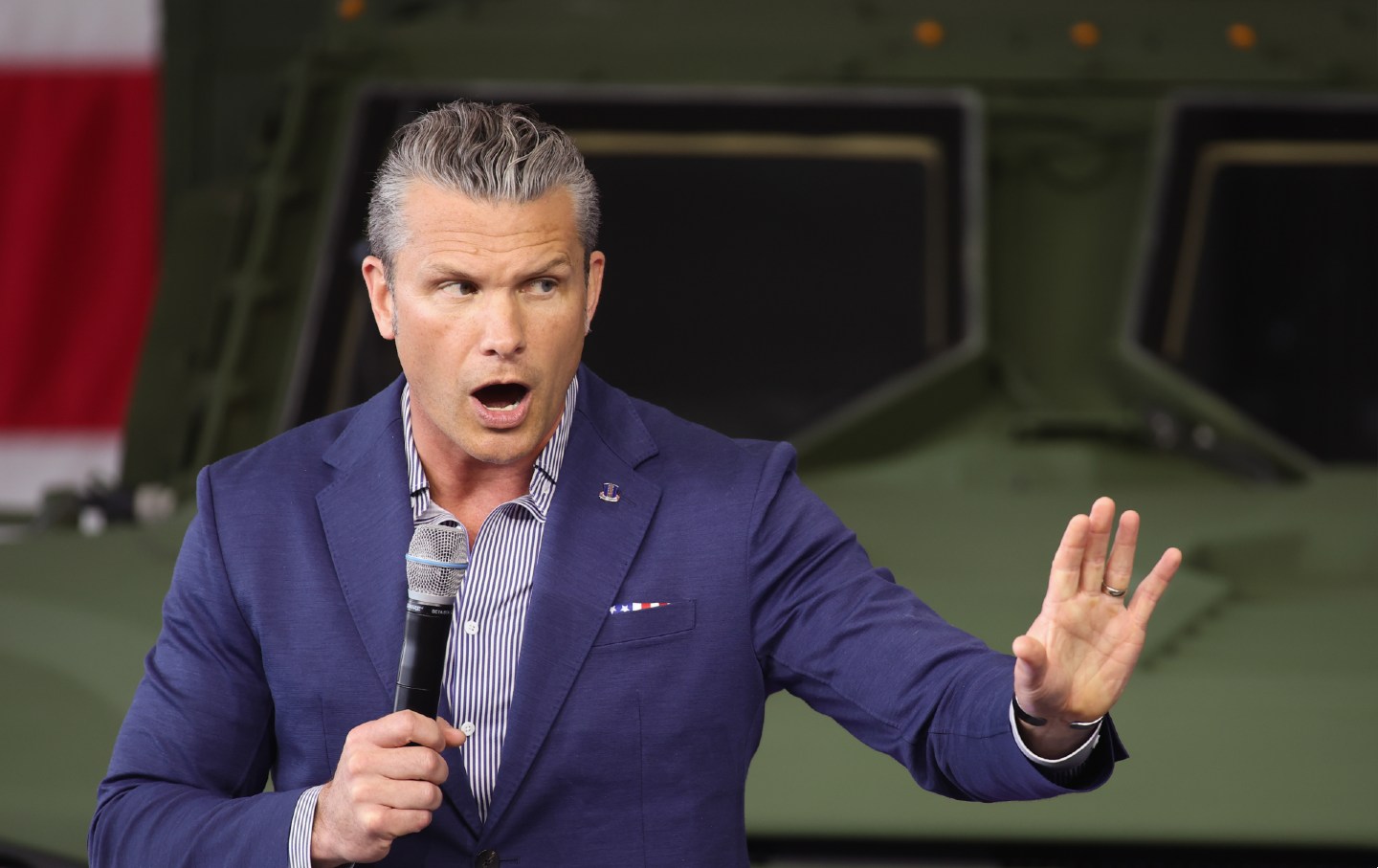
Even Republicans Are Figuring Out That Pete Hegseth Is a Disaster Even Republicans Are Figuring Out That Pete Hegseth Is a Disaster
Hegseth was always a horrible choice for defense secretary. At long last, some in the GOP are admitting it.
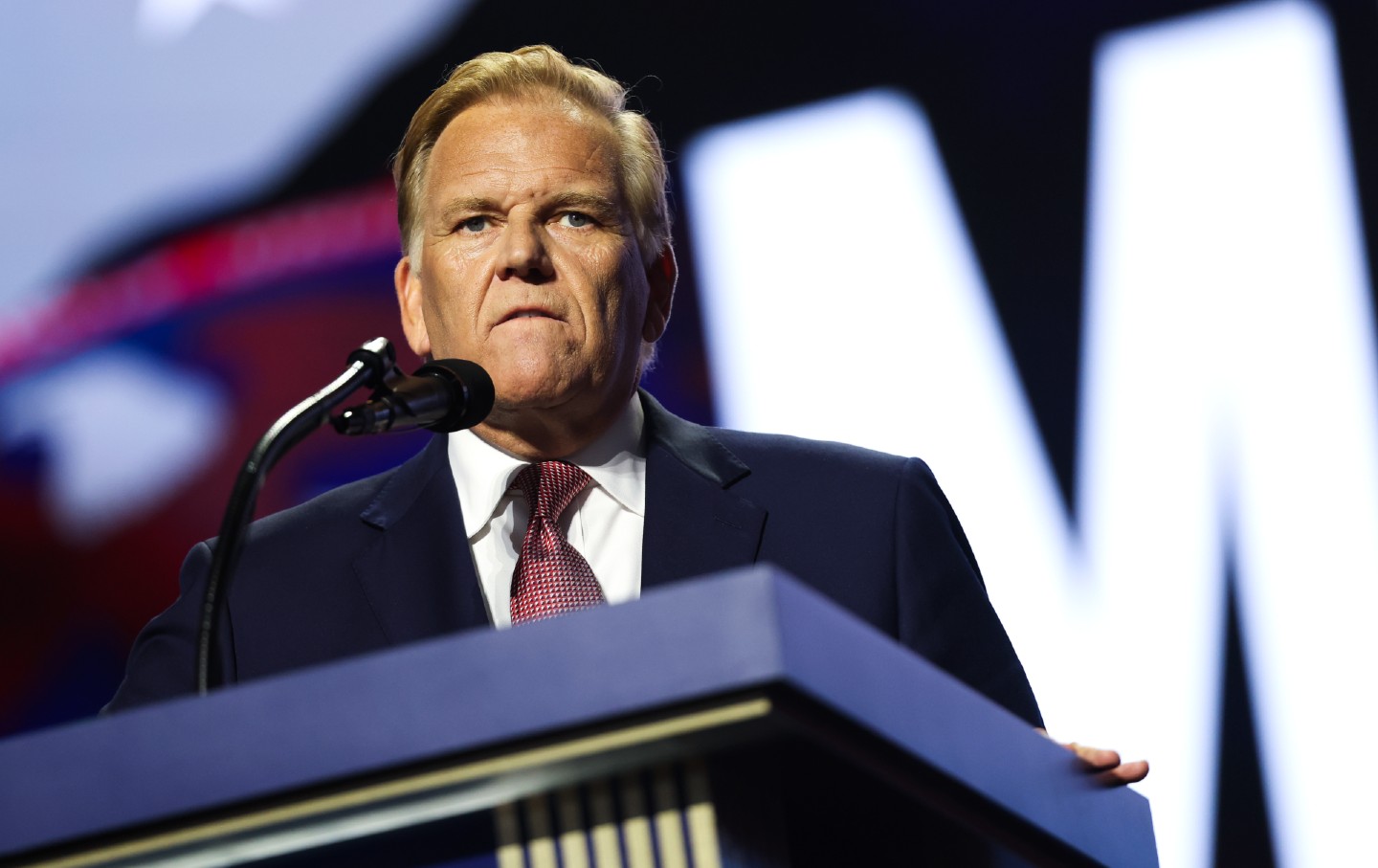
Why Aren’t We Talking About the Warmongering Lies of Mike Rogers? Why Aren’t We Talking About the Warmongering Lies of Mike Rogers?
The media’s relentless focus on Hasan Piker allows the dishonest GOP hawk (and actual Michigan Senate candidate) to evade scrutiny.

MAGA Is Exploiting the Lindsay Clancy Case to Try to End Voting for Women MAGA Is Exploiting the Lindsay Clancy Case to Try to End Voting for Women
As Trump subverts elections, his most ardent fans want to overturn the 19th Amendment.

Accountability for the Gaza Genocide Can’t Focus on Netanyahu Alone Accountability for the Gaza Genocide Can’t Focus on Netanyahu Alone
Getting rid of one bad leader won’t bring justice.
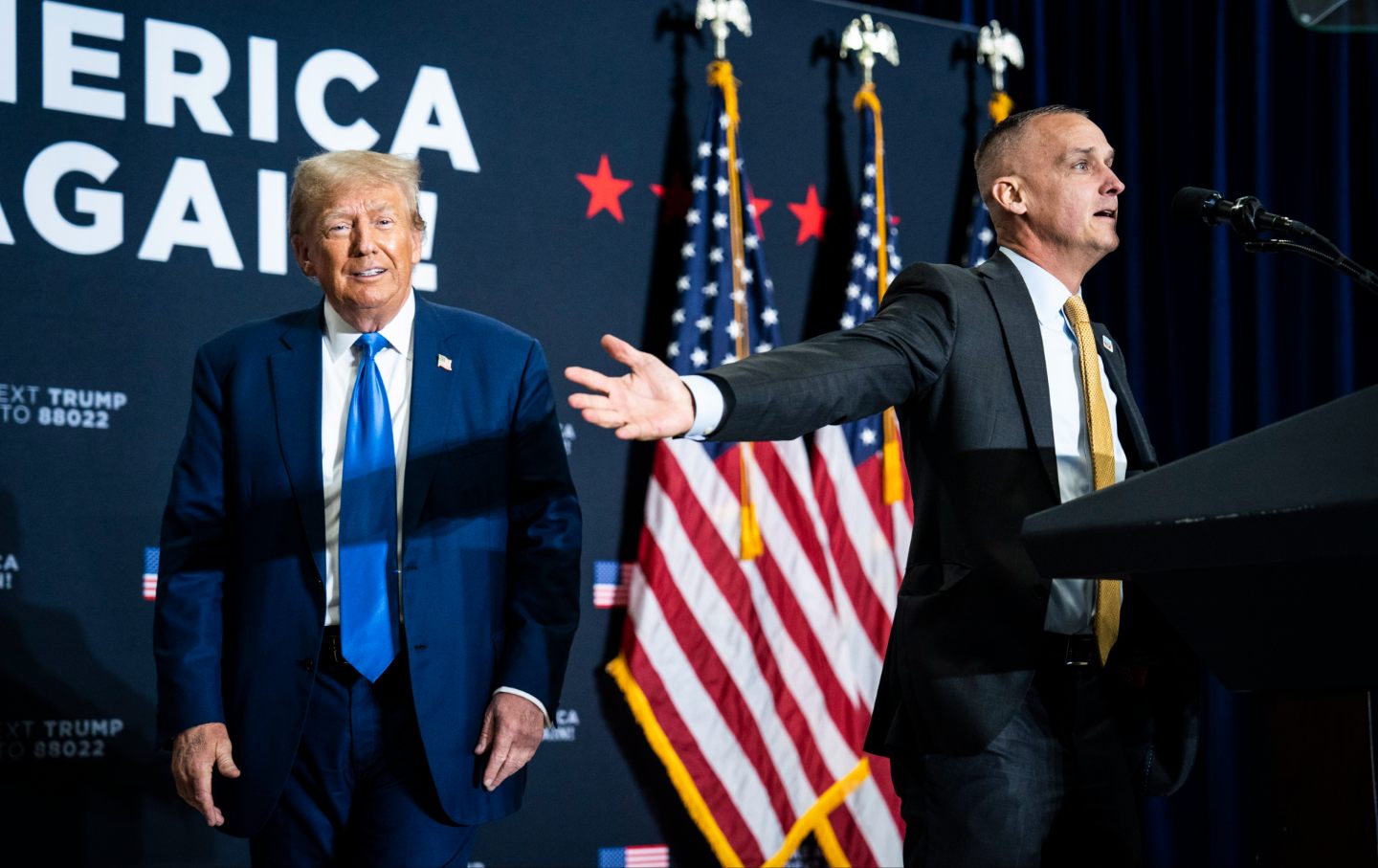
In Trump’s Mafia, Even Goons Can Do Billion-Dollar Shakedowns In Trump’s Mafia, Even Goons Can Do Billion-Dollar Shakedowns
Corey Lewandowski is a disposable underling, but he’s protected enough to scorn the law.
Maria Bartiromo Was Fired for the Wrong Reason Maria Bartiromo Was Fired for the Wrong Reason
For Fox News, blind servility to Trump is fine until it hits the bottom line.

