
2027 Could Be a Breakthrough Year for Criminal Justice Reform
Will Democrats seize the moment?
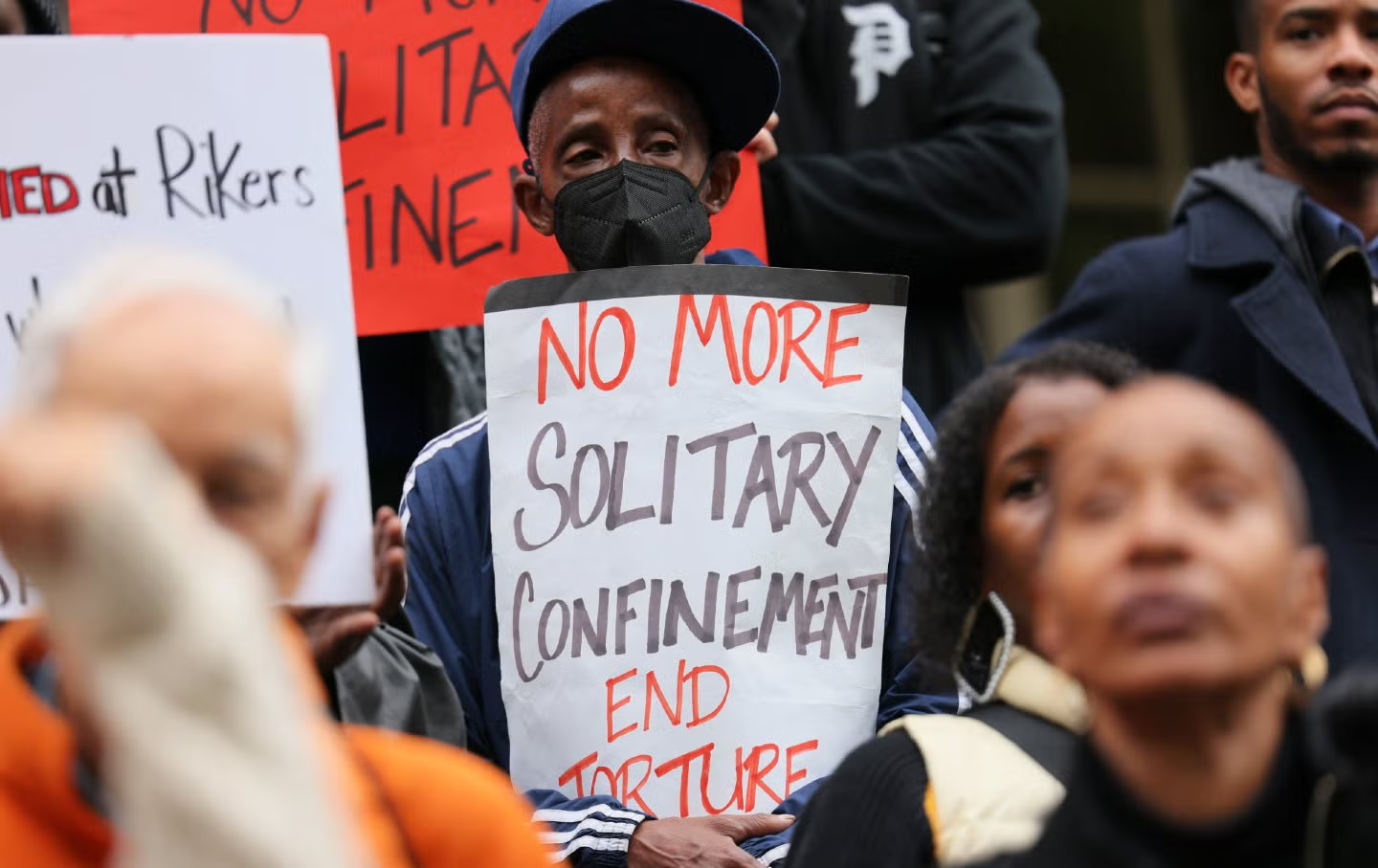
Eight years after passing the historic First Step Act with overwhelming bipartisan support, Congress has a chance to reclaim its role in improving the federal prison system—the largest in America.
The new Democratic Congress has an obligation to address the deplorable conditions in the federal Bureau of Prisons, as well as the racial inequities that continue to characterize the American prison system. The last time Congress passed major reforms was with 2018’s First Step Act, during Donald Trump’s first term and at the height of the criminal justice reform movement. In the years immediately following the global pandemic, a crime uptick that now appears correlated with Covid disruptions threw cold water on all but the most modest reforms. Today, however, crime rates have reached historic lows all across the country. We have come a long way in learning how to prevent violence through community-based programs and lower recidivism rates for people coming home through better reentry support.
Politically, criminal justice hasn’t suffered setbacks the way healthcare, foreign aid, climate, and other policy areas have. The First Step Act is still standing, helping thousands come home from federal prison sooner every year. The reason for this may be hard for some liberals to believe, but it’s because important conservative voices pushed against the Stephen Miller–allied forces in the White House who wanted to weaponize crime as a political issue.
As a progressive nonprofit leader, I’ve been part of many coalitions, and none have been more effective than the bipartisan criminal justice alliance that I work with federally. We’ve defeated numerous bad bills, gotten bipartisan prison oversight legislation passed two years ago, and come tantalizingly close to passing the EQUAL Act. This would have ended the crack/powder cocaine disparity, which embarrassingly is still federal law.
Eleven Republicans in the US Senate supported us then, and more than 100 House Republicans. Think about what those numbers could mean on top of Democrats after the blue tsunami, nearly all of whom support criminal justice reform in name.
That kind of political cover should ease Democratic concerns about blowback. Not that they should be overly worked up anyway. Plenty of Republicans trotted out tired “tough on crime” messaging this cycle, and guess what? That dog don’t hunt anymore. Even in places like New York, where “bail reform” was once considered an electoral epithet, Democrats have reached historic levels of political power compared to where they were when they overhauled that state’s pretrial laws.
I’m not going to pretend that President Trump is a criminal justice champion, even though he did more on the issue in signing the First Step Act than President Biden did. But I’d rather roll the dice on how he’ll respond to, for example, legislation that expands the First Step Act than I would on how he’d react to myriad other issues.
The midterms also swept Democrats into governors’ mansions and state legislative control across the country, including a number of states that have been working toward bipartisan criminal justice reform for many years. Arizona, Pennsylvania, and Wisconsin have all passed reforms in recent years under fully or partially Republican-controlled legislatures, and we now have a chance to build on this progress with longtime allies of the justice movement ascending to prominent positions within trifecta governments.
Kentucky Governor Andy Beshear, who is entering his final year in office, has quietly made the case as the nation’s most effective executive on this issue. Other governors are entering 2027 looking to burnish their credentials for Democratic presidential primary voters before announcing. In states where advocates have worked for years to acclimate Republicans to criminal justice reform, Democrats have a chance to lead on an issue that won’t be a bare-knuckle culture-war fight like so many others.
Finally, next year, officials from both parties will have a chance to tackle AI policy in the context of criminal justice reform. The Flock debacle this fall showed that Americans of all ideological backgrounds were properly freaked out about having a private company surveilling their every move. In a country that has historically struggled with the tension between freedom and “law and order,” politicians must now reckon with AI’s ability to supercharge surveillance to degrees we previously thought unimaginable.
We can start by eliminating the “data broker loophole,” which allows the federal government—otherwise not allowed to spy on innocent Americans—to acquire data that private companies hoover up about us when we’re using their apps.
This work, federally and in the states, will be taking place in the shadow of the 2028 Democratic presidential primary, which will informally begin in the months ahead. Many of the floated names have strong track records on criminal justice reform, including Alexandria Ocasio-Cortez, Andy Beshear, Pete Buttigieg, Cory Booker, Wes Moore, Gavin Newsom, Jon Ossoff, and JB Pritzker. That means this issue will not be fading into the background but instead should get the attention it deserves until the United States can finally build a criminal justice system that’s smaller, safer, and fairer than the one we have today.
More from The Nation
Why Jensen Huang’s Downfall Is No Victory for Progressives Why Jensen Huang’s Downfall Is No Victory for Progressives
The big winners are anti-China hawks in the national security establishment and OpenAI and Anthropic.

Little Voices, Big Messages Little Voices, Big Messages
Children and families turned creativity into a call for housing justice, educational equity, immigrant rights, and community solidarity at the Children’s Rally for Justice.
Who Decides What Matters? The Jensen Huangs of the World or the American People? Who Decides What Matters? The Jensen Huangs of the World or the American People?
Why we need greater democratic control over how society’s vast wealth is invested.

Democrats Finally Ran as Economic Populists—Thanks to Newcomers Democrats Finally Ran as Economic Populists—Thanks to Newcomers
We analyzed 16 years of Democratic campaigns. The 2026 surge in attacks on billionaires and corruption came from newcomers, not party leaders, and they’re about to remake the cauc...

Sean Duffy and the Perils of Trump’s Made-for-TV Cabinet Sean Duffy and the Perils of Trump’s Made-for-TV Cabinet
The secretary of transportation was a reality-TV “star” and a Fox Business cable host. But when the American aviation system was grounded, he lost it.

