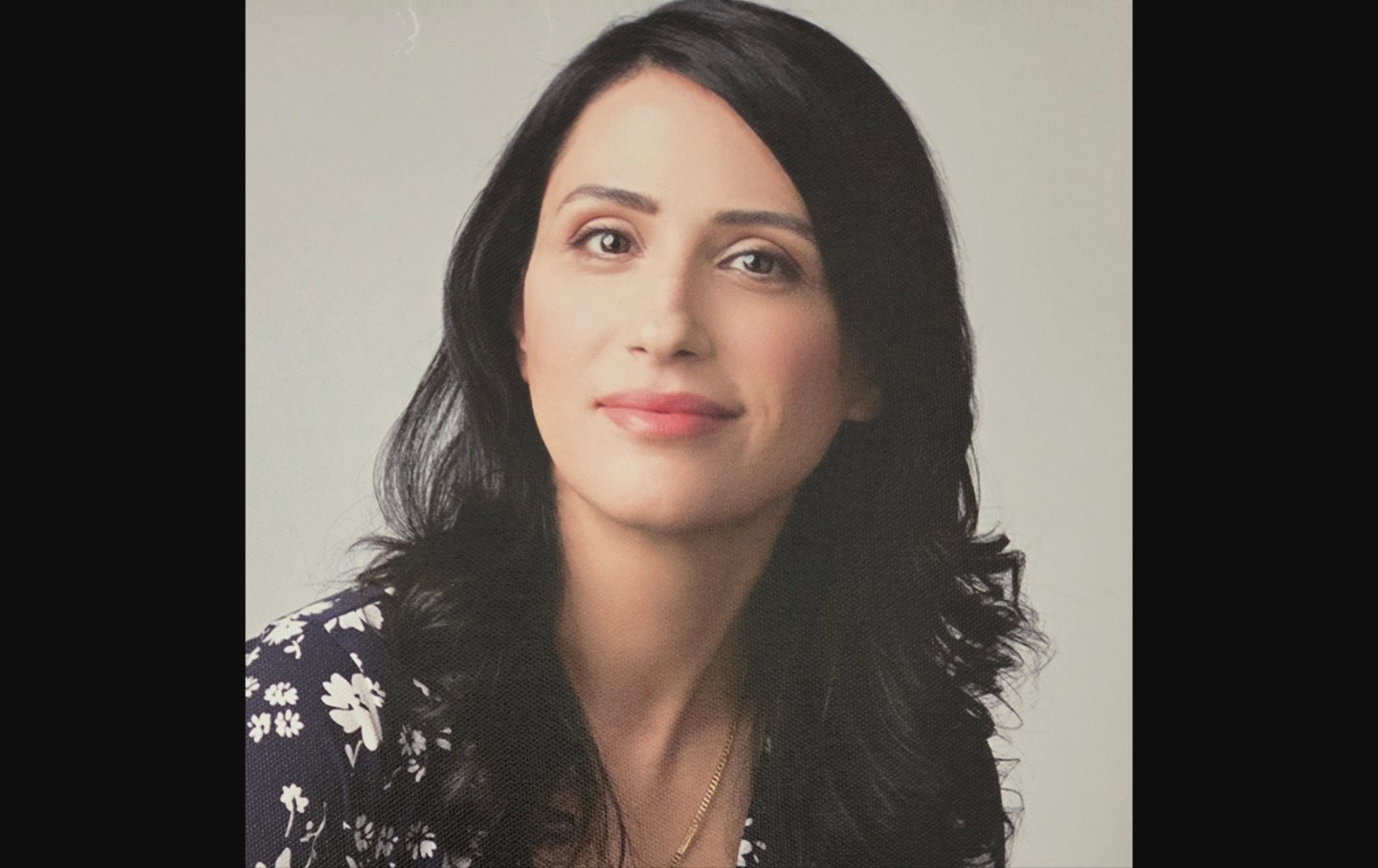
Maryam Tahmasebi
(Photo courtesy of Maryam Tahmasebi)My name is Maryam Tahmasebi, and I am a professor of psychology and statistics at Los Angeles Pierce College—or, I was, until April 9, when my life, and my family’s lives, changed forever.
On that day, I was teaching a class when my son texted me, saying that my husband hadn’t picked him up from school and wasn’t answering his phone, which is very unlike him. I picked my son up from school, came frantically back home, and called the police, thinking that something horrible must have happened to him. Even so, it never occurred to me that he could have been detained by ICE. We are legal permanent residents with valid green cards. My husband, Eissa Hashemi, is also a professor, and has dedicated his life to mentoring PhD students in the Business Psychology department of The Chicago School. We have both mentored many PhD candidates, among whom are veterans who have served this country for decades. We don’t have any criminal record—not even a traffic ticket. I believed in the “rule of law,” and trusted that if there was anything wrong with our immigration status, the government would notify us through legal channels.
I was beyond shocked to realize that an online smear campaign without any merit or legal standing had convinced the US government to try to revoke our green cards overnight without due process or even telling us. The government had decided to punish my husband for being the son of a woman who was a translator for the Iranian hostage takers in 1979, before Eissa was even born.
I came here because I wanted to build a life for myself and my family that was defined by my own actions, not anyone else’s. But now our lives are being upended for something someone else did nearly 50 years ago.
Imagine that you are an independent woman wading through the waters of sexism and patriarchy every day, and then you are told that not only do your own ideas and academic achievements not matter, but you are somehow now responsible for decisions you never made, and for things that happened before you were ever born. That you don’t have an identity of your own, and that your existence can be negated based on relations. This is bloodline punishment. I was hoping that the United States of America, the country that I loved, would be different.
Eventually, my husband’s phone location showed he was at an ICE center in downtown LA. I talked to him there for a minute. He said he had been told that, while he was under arrest, our son and I were safe. That turned out to have been a lie. The next day, when I took my son to school, my car was surrounded by DHS cars, and my son and I were detained. I had to watch my son, who is in high school and has been a legal resident of California for 12 years, be handcuffed. We were shipped to Texas overnight from Los Angeles in horrible conditions that I won’t elaborate on in this letter. We have remained in Texas ever since.
My son and I have spent over 120 days in the Dilley Immigration Processing Center, away from my husband, who was taken to the South Texas Detention Center in Pearsall, Texas. There, he faces even more horrible conditions, and he faces them alone. When I requested that my husband be reunited with us in Dilley, a so-called “family detention center” (the very existence of such a term is deeply troubling), I was told that in our specific case, family separation is the policy and the rule.
I have struggled to understand how this can happen to people who have never broken the law, in a system I believed to be based on the rule of law.
We have been put through hell for the past four months, and our physical and mental health have deteriorated in ways that might not be reversible for years. We are only allowed to speak with my husband for 10 minutes every two weeks, under supervision. My son, who only speaks English and has been in California’s school system since pre-K, is struggling to understand why the only country he considers home is treating him this way.
What has happened to us was designed specifically to break our body and spirit. I am a mother, not a martyr, so I would always choose my son’s health and well-being over any dreams or aspirations I have. But even when we decided to make the difficult decision to ask to be allowed to voluntarily leave the United States—the place we consider our country and our home—the government not only opposed it but suggested that it would appeal any judicial decisions that grant us departure.
In other words, they want to continue our indefinite detention without any end in sight. But for what purpose? I have been asking myself that question over and over. I can’t think of any reason why we are being put through this punitive ordeal. We don’t have money or power to help us, shield us, or buy us favor. We are two working-class educators who had been living a working-class life in a rented apartment, and had never imagined anything like this happening to us.
This is why we need your help. We are in tremendous pain and have been trapped in an unendurable, unending nightmare. I want my son to have a normal life, not spend his days in this awful detention center in Dilley. No child deserves this. No human deserves this. We are asking anyone with a conscience to help us end this nightmare. There are more things I want to say, but this is the shackled version of what I feel safe saying right now. I will end on this: If this could happen to us, a law-abiding family of two professors and a young boy, it can happen to anyone.