
A Rogue DA in No-Man’s Land
A strange case of prosecutorial misconduct during a murder investigation in the Oklahoma panhandle.
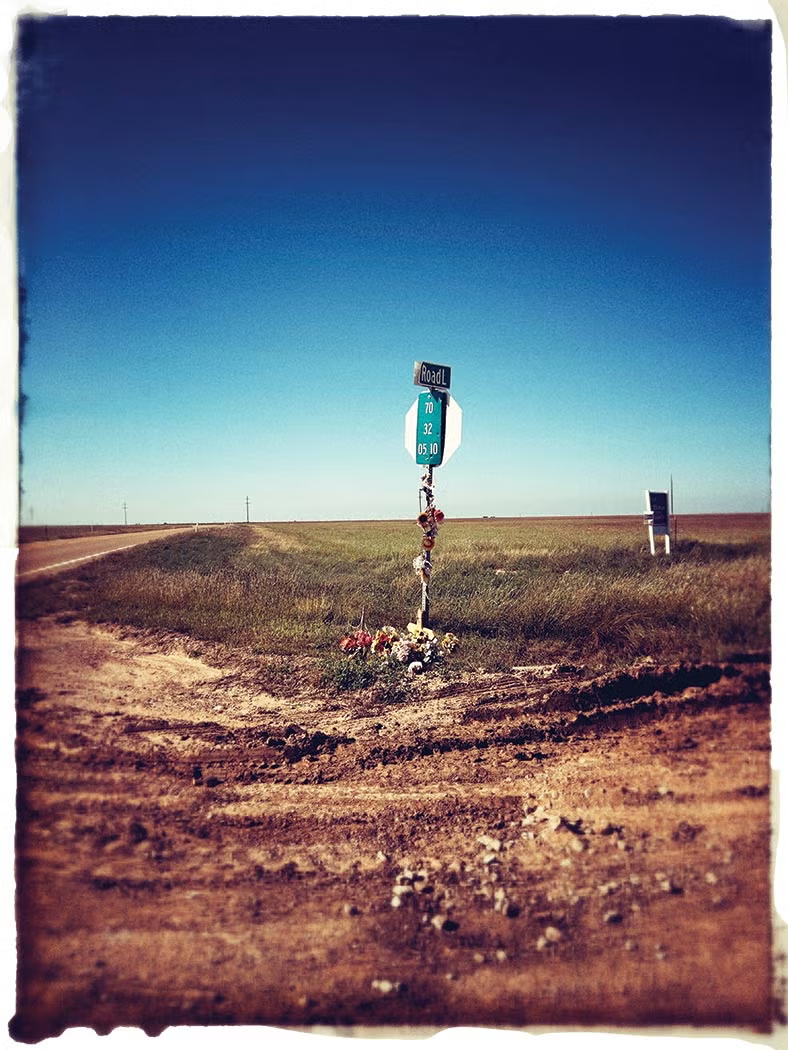
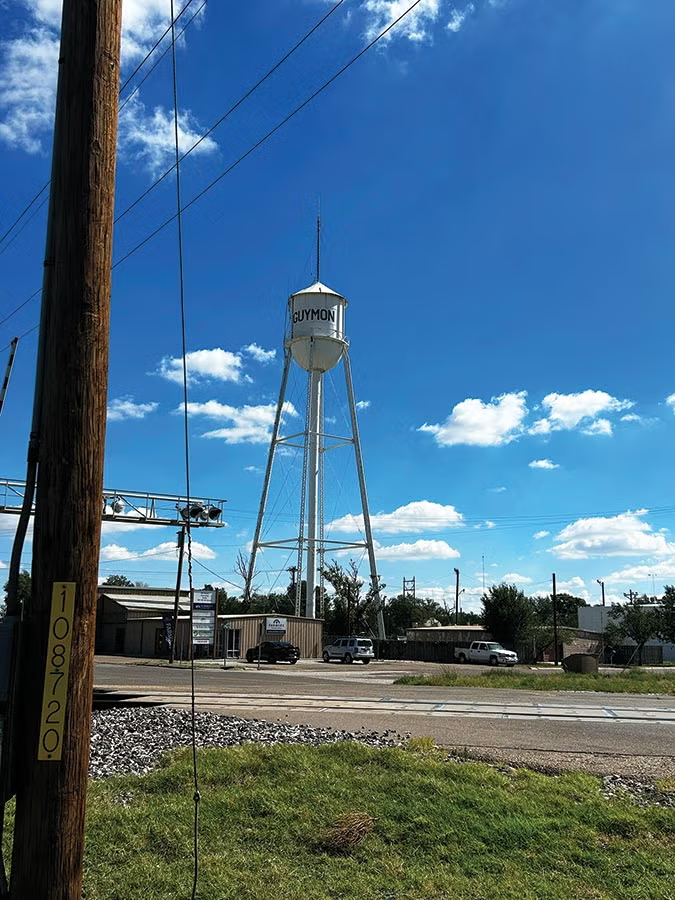
In January 2025, I accepted an odd freelance assignment. A Florida-based trucker had received an unusual speeding citation while traveling through the panhandle of Oklahoma, which she had offered as a tip to numerous local media outlets. My mission was to investigate the trucker’s claim that the ticket represented nefarious goings-on in the part of the state known as No Man’s Land, owing to its 40-year-stint as stateless territory in the 19th century.
The trucker turned out to be right. Years before, the local district attorney’s office had assigned its drug task force the ancillary duty of writing deferred-prosecution-agreement (DPA) tickets to truckers. The task force was a kind of 20th-century posse, run by the DA and fueled by civil-asset-forfeiture laws, which amounted to the legal robbery of drugs and money by law enforcement. A DPA is a reverse bribe: If truckers caught in speed traps agree to pay a hefty fine directly to the DA, the charges go away. In theory, drug task forces seize sums of money that implicate criminal organizations. Speeding tickets seemed like peanuts. But the trucker I spoke with was asked to pay $360 for a violation that carried a $160 fine—going 11 to 15 miles per hour over the speed limit of 45. Because of the load she was carrying, she told me, she was driving well below even that.
There was a bigger problem with this arrangement than the fuzzy math: DPAs for holders of commercial driver’s licenses are prohibited under federal law. In short, the tickets weren’t shady-but-legal asset forfeitures but actually illegal shakedowns, and who knew how many of them had been written? I traveled to the panhandle to interview the head of the local drug task force, a man who had once been indicted on an embezzlement charge after being accused of staging a fake robbery to explain the mysterious disappearance of $2,600 from a separate drug-task-force office in Ardmore, in southern Oklahoma. Eventually, I learned that over a period of six years, the panhandle drug task force had written approximately 6,000 DPAs, sending more than $2 million straight into the coffers of the DA’s office.
I had my story. But something strange happened as I began to write it: The head of the task force called me to say that the DA of Texas County, George “Buddy” Leach, had canceled the ticketing program outright. The executive director of the local journalism outlet that had assigned the piece to me said it might have been the first time in his 35 years that something had changed before he published an article.
The reversal was curious, and there was only one hint as to why it had happened: The head of the task force told me they had canceled the ticketing scheme because they were concerned that negative publicity would affect Leach’s ability to prosecute a high-profile murder case.
The sudden collapse of a lucrative ticketing scheme operated by a sketchy law-enforcement outfit that had more in common with the Wild West than the modern world led my investigation to unexpected places: to cattle ranches far from Oklahoma, to the highest offices of state criminal justice, and to the remnants of a violent anti-government cult born in a nether region of the country that not long ago wasn’t part of the country at all.
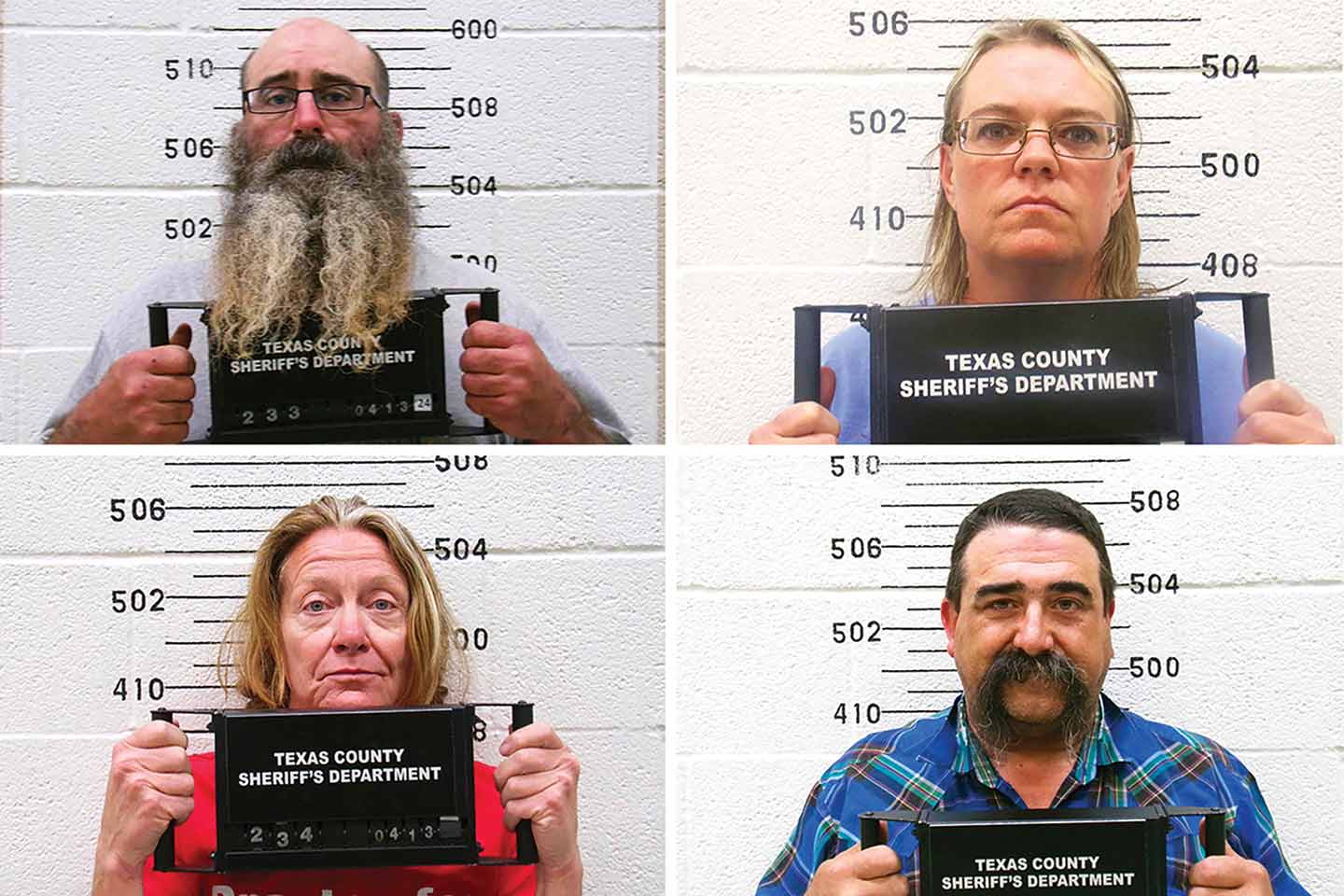
In April 2024, five members of a small, cultish anti-government prayer group known as God’s Misfits were arrested over the deaths of two Kansas women. Little is known about the origin or beliefs of God’s Misfits, apart from their adherence to a vague Christian ideology and that the group, consisting of a handful of members, met weekly at a private home. In 2023, one of the members who would be accused of the murders filed a manifesto-like document in a court proceeding that lashed out at the United Nations, vaccines, government regulation, and genetically modified foods.
The killings followed a fierce custody dispute and wild accusations of child sexual abuse against one of the women who were murdered. As subsequently reported by outlets ranging from The Washington Post to the BBC, the crimes came to light when the 16-year-old daughter of Cora Twombly, one of the alleged killers, contacted the police. Grisly details emerged: Twombly had forced her daughter, CW, to clean blood from a vehicle used in the crime and had once put CW, then 15, in a bulletproof vest in anticipation of a shootout that never happened.
The publication of my article about the ticketing scheme triggered a flood of tips about corruption in the Texas County DA’s office. I received too many e-mails to keep track of, and there didn’t seem to be any reason to pay special attention to the story known as the God’s Misfits Murders—or, more simply, the Kansas Moms Killings. Then I was contacted by national media outlets that were planning to cover the murders. I agreed to an interview because many of the people I had written about—Leach and the head of the drug task force—also appeared in the God’s Misfits story. But for almost a year, I remained oblivious to the details of the murders. There were plenty of other stories of corruption to keep me occupied, most prominently a car crash that involved one of the agents of the drug task force and resulted in the death of a young Guatemalan girl and her grandfather.
In the summer of 2025, I was introduced to Lisa and Coby White, CW’s stepmother and biological father. The Whites, who were themselves witnesses in the God’s Misfits case, had been awarded full custody of CW after arrests were made in April and May 2024.
The Whites told me something troubling. They had evidence, they said, that Leach, in violation of a standing protective order, had been facilitating contact between CW, whom he described as the case’s key witness, and her mother, Cora, whom he had accused of murder.
This was puzzling. I described the evidence that the Whites had told me about to an attorney I called, who was incredulous.
“Why would he want to tank his own case?” the lawyer said.
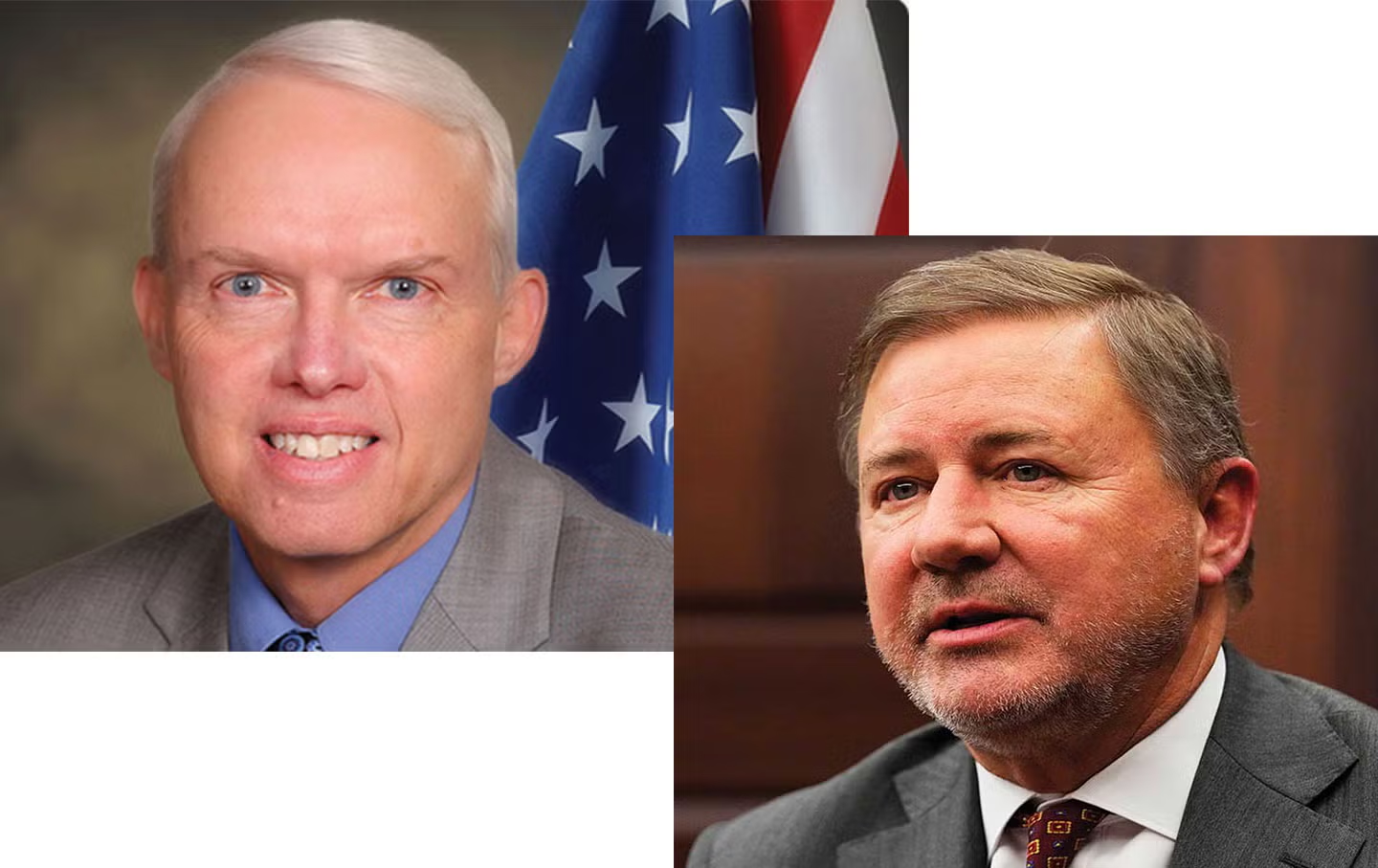
It wasn’t the first time I had stumbled across prosecutorial misconduct in Oklahoma. In 2024, I pitched an article dissecting the oral arguments in the Supreme Court case Glossip v. Oklahoma, which hinged on exculpatory evidence that state prosecutors had withheld. Glossip was an infamous death-penalty case that had attracted the attention of the likes of Dr. Phil, Sister Helen Prejean, and Kim Kardashian.
The prosecutors were caught dead to rights. Oklahoma Attorney General Gentner Drummond publicly admitted that the state had erred, and he refused to defend a decision by the Oklahoma Court of Criminal Appeals to uphold Richard Glossip’s conviction. The Supreme Court was forced to recruit a ringer to defend an indefensible position. Predictably, the court ruled that Glossip deserved a new trial and that the OCCA should have no further say in the matter. “Because ample evidence supports the attorney general’s confession of error in this Court, there also is no need to remand for further evidentiary proceedings at the OCCA,” the 5–3 decision read. (A new trial is scheduled to begin on December 7.)
I admired the stance that Drummond took on the Glossip case; it was a far cry from the prosecutorial misconduct that appeared to be characteristic of the Oklahoma legal system. This was particularly true in No Man’s Land, where the stories of corruption I investigated through 2025 peeled back the curtain on a culture of legal impunity that Oklahoma media had tended to ignore. As I’d heard it said around the newsroom, “No one cares what happens in the panhandle.”
I communicated with Lisa and Coby White for months, hoping to gain access to the evidence they said they had, but they were hesitant. On the one hand, they knew that Leach was doing something wrong and that he was complicating their efforts to protect CW. On the other hand, they worried that their evidence might provide ammunition to defense attorneys.
Months later, they decided to trust the system rather than share evidence with a journalist. A live meeting wasn’t possible: The Whites were ranchers and lived at a significant distance from Oklahoma. It was calving season; births and the needs of newly born calves precluded a more than 10-hour drive to Oklahoma City. So they authorized me to approach Drummond’s office on their behalf and inform the authorities that they had evidence. In March 2026, a Zoom meeting was set up with the head of the AG’s criminal division, Jimmy Harmon, with a specific purpose: The Whites would describe, but not share, their evidence. If that information was found to be compelling, a subsequent in-person visit would be arranged.
During their meeting, the Whites counted off a string of uncomfortable revelations. Leach had admitted that he had deep personal ties to Cora Twombly’s family. He had initiated contact between Twombly and CW, in violation of the standing court order. He had shown little concern when Twombly, roughly eight months after she was arrested and while in jail, had established and funded a bank account for her daughter. The Whites reported alarming statements that Leach had made in their presence about the family of one of the victims, and they recalled discovering a handwritten note in which Twombly had informally addressed him as “Buddy.”
The Whites told Harmon that they and their attorneys had been left scratching their heads at Leach’s behavior. Consistent with the Oklahoma habit of ignoring corruption in the panhandle, Harmon shrugged off most of what they said, but he agreed to talk to Leach.
A month later, Leach attacked me and the whites in a panicky blog post on the DA office’s official website that would soon elicit a public rebuke from a panhandle judge. The April 14 post was an attempt to control two separate stories: both the fatal car crash that I had been investigating, and what the Whites had told Harmon about Leach’s communication with CW. The post severely mischaracterized the Zoom call and distorted basic facts of the God’s Misfits case.
“The stepmother, Lisa White, told [a] reporter that a no-contact order exists between Twombly and her daughter,” Leach wrote. “I am not aware of any such order.”
“He was in the courtroom when it was ordered,” Lisa told me, scoffing. “He knows.”
Court documents back her up, verifying that a protective order exists. Issued five days after the murders, the emergency order stated, “Petitioner/Mother, Cora White [Twombly] shall have no contact, electronic, physical or through third parties with the minor child until further Order of this Court”; just over three weeks later, the prohibition was extended.
There was no reasonable explanation for Leach’s claim that he was unaware of the order. In fact, the Whites’ first interaction with Leach, they said, came on the day the order was put in place. Leach had organized an entourage of eight officers to carry out one of the order’s few provisions: that CW be able to retrieve personal belongings from her home.
But whatever confidence the Whites might have had in Leach crumbled as Cora Twombly’s mother, Evalyn Moore, attempted to relay messages between her daughter and granddaughter.
Public-records requests unearthed letters from Moore to CW and text conversations in which Moore conveyed messages from Twombly to her daughter, disparaging Coby and Lisa White. But the problems had begun well before then, Coby said. The Whites did not initially object to the contact between CW and her grandmother, but as it became clear that Moore was discussing the case and sharing messages from CW’s mother, the Whites turned to Leach to find out whether these contacts were in violation of the protective order—the one he would claim to know nothing about.
When the Whites returned to the panhandle in December 2024, a bombshell dropped in the form of added detail about the extent of Leach’s connection to Cora Twombly: His own parents had been close friends with Twombly’s grandparents—Evalyn Moore’s parents—in Boise City.
Leach himself had described the two families as “close,” Lisa said.
During the Whites’ visit, Leach conducted a private interview with CW, who is still a minor. The Whites recounted to me what CW had told them of the more than two-hour exchange: A small portion of the conversation was dedicated to CW’s potential testimony, but most of it was about Cora Twombly and Evalyn Moore. Leach praised Twombly, telling the Whites that she was a good mom who had gotten mixed up with the wrong people.
The Whites told Leach that in the months since the murders, they had become acquainted with the family of one of the victims, Veronica Butler. Leach could not forbid contact with Butler’s family, but he expressed his preference for the family of the other victim, Jilian Kelley, because they were “good people.” He went on to malign Butler’s family. “He told us to stay very far away from them,” Lisa told me, “because they were trailer-park trash basking in their 15 minutes of fame.”
Studies on prosecutors gaming the system to secure convictions, as in the Glossip case, are far more common than studies on prosecutors going light on defendants because of personal conflicts of interest. A 2024 report on prosecutorial misconduct in Oklahoma from the Oklahoma Appleseed Center for Law & Justice in Tulsa focused on Brady violations, in which prosecutors fail to turn over evidence favorable to defendants. The report’s authors lamented a lack of prosecutorial oversight in Oklahoma, writing, “The citizens of Oklahoma have largely been asked to ignore and bypass the gross misconduct and indefensible administration of our criminal justice system for decades.”
In a 2017 Boston College Law Review article that did look at prosecutors compromised by conflicts of interest, the authors argued that prosecutors may make poor legal decisions because of political or pecuniary interests—that is, running for office or seeking fame through book sales—but they struggled to articulate a concrete solution. Even in states where an attorney general or governor is empowered to remove a district attorney—in Oklahoma, DAs do not serve at the pleasure of the AG or governor—the authors did not see removal as a viable solution. “Other executive officials are not better situated than the prosecutor who has declined to recuse himself,” they wrote. “The other officials are probably less knowledgeable about the relevant facts.”
In the God’s Misfits case, the evidence of improper contact was voluminous. Four months after the killings, Evalyn Moore had begun telling her granddaughter that the problem was not CW’s mother, arrested for murder, but her father and stepmother. “But your DAD has custody and it’s his word,” Moore wrote. “Him and Lisa are the only people in the World who wants to keep us apart!”
On Facebook Messenger, Moore relayed messages to CW that Twombly had sent to Moore from prison, claiming to speak on Leach’s authority.
November 28, 2024: “Mom says she loves you and is thinking of you.”
December 3, 2024: “Your mom talked to Judge [sic] Leach about your situation…. He is going to visit with you when you are in Guymon.”
December 8, 2024: “When Judge Leach talks to you, you have to tell him how bad things are…. The DA has no problem with you talking to me. That is what he told your mom.”
The Whites recalled a remark from one of the DA’s office staff during the December 2024 visit, claiming that Evalyn Moore was in the DA’s office frequently and appeared to have direct access to Leach. When I reached her by telephone, Moore admitted that Leach’s mother had worked as her accountant. Confronted with evidence of her text exchanges with CW, she quickly ended the call. “I don’t want anything,” Moore said. “I don’t want to talk to you.”
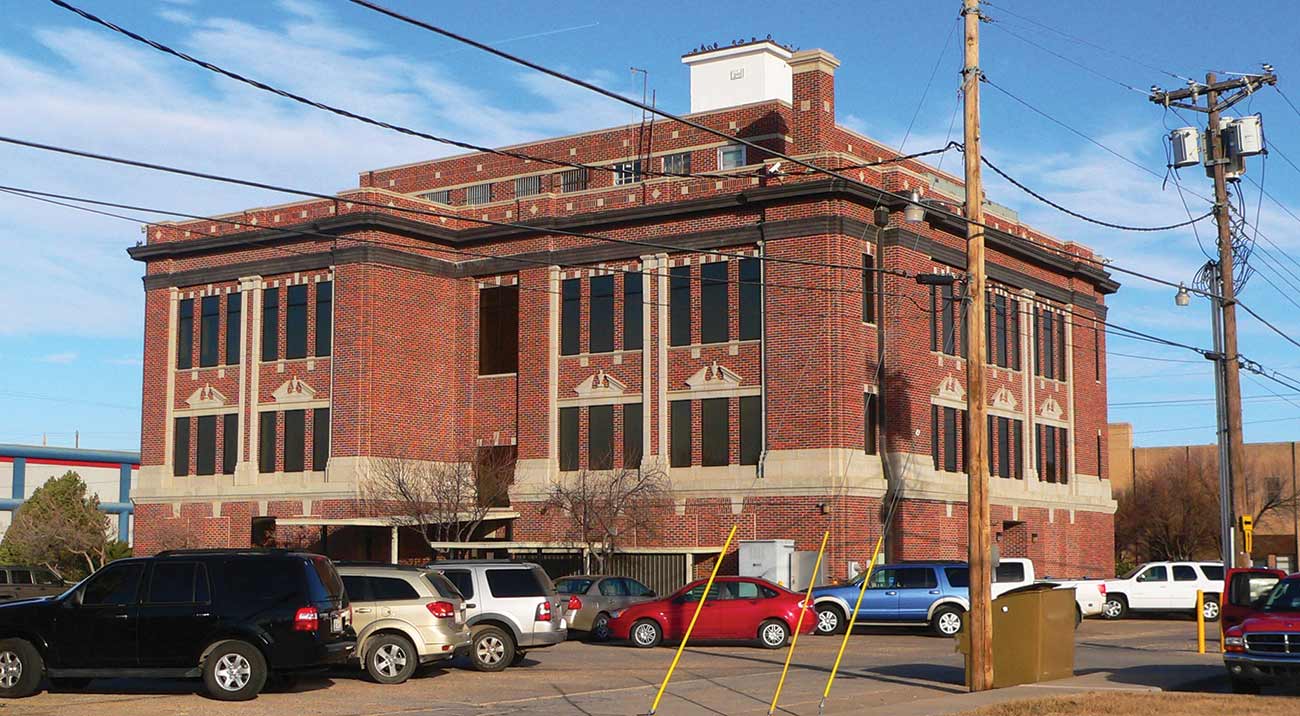
Leach’s April 14 blog post had taken particular note of a birthday card that Twombly had sent to CW in early 2026.
“Actually, that was the second birthday card,” Lisa said.
The blog post claimed that Leach and the Whites had reached an agreement: His office would review correspondence from Twombly and forward it to the Whites, if appropriate. “Absolutely not,” Coby said. “There is no communication that we had with Leach that could have been interpreted in this way.”
I drove 10 hours to visit the Whites and examine a one-line missive on Leach’s letterhead instructing them to deliver a birthday card to CW. “Under no circumstances would that be appropriate,” Lisa said. A year later, another card arrived. This time, tucked inside, there was a notably casual message from Twombly to Leach: “Buddy, per your request, I am sending this card for [CW] to you for your approval.”
In the weeks leading up to the announcement of her plea deal—only one of the five God’s Misfits defendants has been sentenced; two, including Twombly, have entered into plea agreements; trials for the other two are scheduled for 2027—Twombly and her mother established a bank account for CW, ostensibly to give her access to funds associated with cows owned under CW’s name. It was an unusual amount of money for a teenager, Lisa said, but Leach had dismissed any concerns: “He said, ‘Oh, isn’t that kind of her to think of her daughter?’”
The Whites’ attorneys—the couple had spent more than $30,000 on lawyers’ fees, even though they were just witnesses—saw the bank account differently. “They were like, ‘This cannot happen! It’s witness tampering. She’s buying a witness,’” Lisa said.
But there was an even more shocking statement in Leach’s imperious blog post: He claimed that Lisa had told a reporter—me—that his office intended to force CW to testify in the upcoming trials in violation of Twombly’s plea agreement. “Never said that to anybody,” Coby said.
“Why would he put us on the witness list and then throw us under the bus?” Lisa said.
Conflicts of interest aside, Leach was strongly rebuked on July 30 by Texas County District Court Judge Jon Parsley over his April 14 blog post. The post was cited in a June 19 motion from Tad Cullum, one of the God’s Misfits defendants, whose capital-murder case is set to go to trial early next year. Cullum argued that Leach had violated a 2024 gag order.
“The Court finds that the statements to media and blog post by the state did violate the express terms of the order,” Parsley said in his ruling. “The Court reprimanded the State and Ordered that they re-read the [gag order].”
Leach’s blog post remains publicly available. Leach did not respond to an interview request, and the offices of the Oklahoma attorney general and the State Bureau of Investigation refused my requests for comment.
But Leach’s actions are neither an isolated nor an atypical case. Nationwide studies reveal that prosecutorial misconduct is as difficult to define as it is to investigate and punish. A 2023 survey of judges found broad agreement on the most egregious forms of illegal or unethical prosecutorial behavior, but a frustrating lack of consensus on what other behaviors should result in investigation and possible sanction.
“Why is it that prosecutors are seldom disciplined, often in the face of ample evidence?” the survey’s authors wrote. “One reason may be that judges and others within the system do not agree on what acts of prosecutorial discretion constitute willful or intentional forms of misconduct.”
Furthermore, a number of the judges who responded to the survey suggested that whatever flaws the system may have should be addressed by the system itself. “In my opinion,” one judge said, “often the response to bad prosecutors needs to come from voters, the defense team, and the bench.”
Cora Twombly’s plea agreement was for a life sentence with a possibility of parole after 30 years for each of the two murders, with one of the sentences suspended depending on her good behavior.
“It’s a sweet deal,” Lisa White said. She believed that Leach had put his thumb on the scale to secure Twombly a better sentence than the others—such as Cullum, who’s facing the death penalty for the same crime. Under Oklahoma’s 85 percent rule, which requires the perpetrators of serious crimes to serve at least 85 percent of their sentence, Twombly could be released after serving 25.5 years.
“There’s consequences that need to be paid,” Coby White said. “She’ll be 70-some years old when she gets out.”
But Lisa questioned whether the punishment matched the crime. “I don’t know,” she said. “Does only one of the murders matter?”
More from The Nation

Letters From the December 2026 Issue Letters From the December 2026 Issue
True progress… A willful blilndness… Correction…
How Did New York Become So Unequal? How Did New York Become So Unequal?
A new history of New York examines how it went from a center of social-democratic experiment to one of neoliberal devastation.
Rethinking the Early History of North America Rethinking the Early History of North America
Peter Mancall’s new book reframes the history of the American continent as a zone of encounters between Native peoples, European empires, and African societies.
Do Socialists Even Believe in Socialism Anymore? Do Socialists Even Believe in Socialism Anymore?
The American left has a growing list of victories—and an unfinished argument about the society it wants to build.
Feature / Mike Beggs, Ben Burgis, and Bhaskar Sunkara

Chad Harbach’s Novel of Millennial Intellectuals Chad Harbach’s Novel of Millennial Intellectuals
In “The Brightness,” Harbach examines life before 2016.

