Black People Have Every Reason to Doubt Official Narratives About a Recent Spate of Hangings
Prematurely ascribing deaths to suicide does away with questions that deserve real answers.
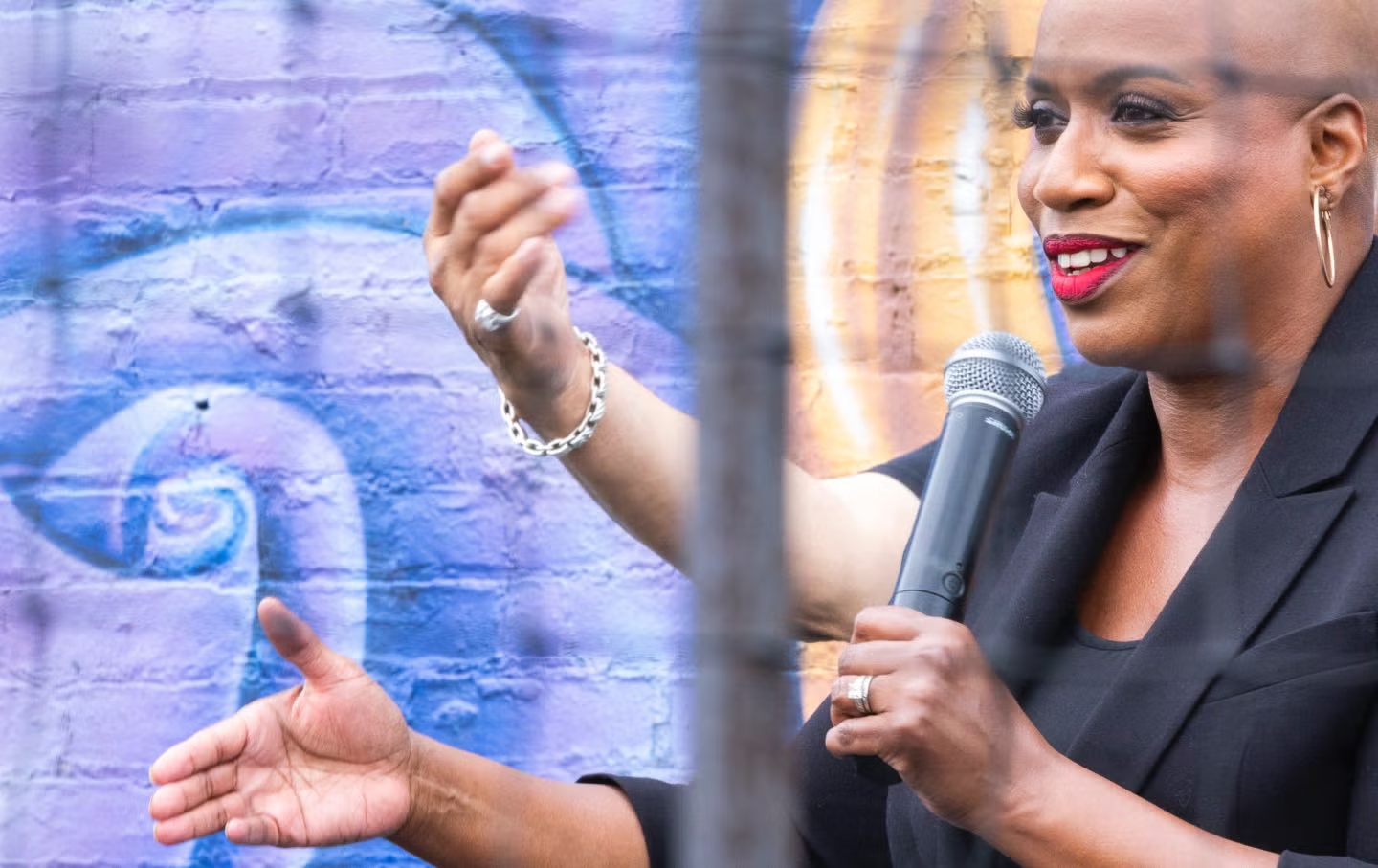
Since September 2025, at least 10 Black people have been found hanged in public outdoor spaces across the country. Among the first institutions to sound the alarm was the Legal Defense Fund, an outgrowth of the NAACP, an organization founded nearly 120 years ago to resist anti-Black violence, particularly lynchings. Citing “the well-documented legacy of racial terror against Black people in the United States,” the group sent letters to Congress and the United Nations in August calling for “a rigorous inquiry to ensure that our past history of widespread targeted Black killings is not recurring.” The following month, Representative Ayanna Pressley of Massachusetts and 59 other House Democrats wrote to the Justice Department and the FBI demanding a “comprehensive federal investigation into every hanging death of a Black individual.” Also in September, the Congressional Black Caucus Foundation’s 55th annual conference convened a panel discussion titled “Stop the Lynchings.”
I do not pretend to know that every Black person found hanged over roughly the last year was the victim of a lynching. As the civil rights lawyers, forensics experts, and mental-health scholars on the CBCF panel emphasized, Black American suicide rates have increased 53 percent over just the last decade; for Black adolescents, the rates skyrocketed 144 percent between 2007 and 2020. In some of these cases, authorities have offered evidence that rules out foul play or suggests that the death wasn’t motivated by racial hatred. A publicly unidentified Black man found hanged this September in Maryland was reportedly shown on security footage carrying a rope. After Tasia Fortune was found hanging in Mississippi, three Black men were charged with murder, and police concluded that the scene was “staged” postmortem to look like a lynching. But clearance statistics prove that police put in less work to solve homicides, or any violent crime, when the victims are Black. Prematurely ascribing deaths to suicide—as too many families contend the police have in these cases—does away with the pesky questions that deserve real answers.
As in the case of Juliana Nzita, a 16-year-old found hanged from a tree in May at a North Carolina church she did not attend, whose death was ruled a suicide within three days. A Charlotte Observer investigation found that police hadn’t ordered an autopsy, recovered her cell phone, or interviewed the man who found her body. The aunt of Justice “Kai” James, found hanging in Albany, Georgia, told the local outlet WALB that police claimed surveillance footage existed but then refused to let her see it. When the Atlanta Black Star asked a Michigan State Police officer why Jerard “Jay” Jackson’s death in Roxbury, Michigan, was ruled a suicide, he stated, “It looked like that, so that’s why I said it appeared to be a suicide.”
Yet as these cases have gained attention, a familiar strain of disparaging commentary has followed. Syndicated columnist Rich Lowry called questions about whether the hangings might be lynchings symptomatic of a “profound and disturbing racial paranoia.” More than one outlet mocked Pressley’s description of the deaths as a “national crisis.” In the National Review, Black conservative writer Wilfred Reilly pronounced fears of resurgent racial terror a “fake lynching scandal.” In seeking to understand the causes of these deaths, it is certainly fair to think critically. But the notion that Black folks’ distrust of law enforcement and other government officials is a kind of hysteria—instead of a logical response to US history—is a familiar way of waving off Black pain to avoid reckoning with its underlying causes.
There were nearly 6,500 extrajudicial lynchings between the end of the Civil War and 1950, according to the Equal Justice Initiative. The law didn’t simply fail Black Americans; the institutions supposedly tasked with enforcing it regularly abetted, covered up, or sanctioned bloody violence against them. Sheriffs and deputies facilitated or even participated directly in the violence, and coroners, prosecutors, juries, and politicians helped the perpetrators avoid punishment. Though the heyday of white racial terror arguably ended with the demise of Jim Crow, the federal government only passed the Emmett Till Anti-Lynching Act in 2022—after 200 similar bills had failed.
In its 1951 petition to the UN, the Civil Rights Congress wrote that lynchings were intended as “a powerful source of constant terror…to the whole Negro people.” That terror created trauma that was passed down through generations. Reilly snarks at the idea that “simply seeing a picture of a rope tied in a hangman’s knot can allegedly invoke this pain,” as if Black folks don’t deserve to still be hurt by the imagery of racial terror. Such dismissiveness is galling in a country where Black life has been so indelibly shaped by lynching. Many members of Black communities in the North and West can trace their family’s Southern origins back along the railroad lines that carried 6 million Black refugees away from Jim Crow racial terror. Places that once had the most lynchings now have the lowest Black voter registration and Black economic mobility, as well as the highest numbers of Black folks imprisoned or shot dead by police. Montgomery, Alabama, is home to an entire museum devoted to lynching and the scars it has left on this country.
After police declared the 2018 hanging death of Willie Andrew Jones Jr. a suicide, the civil rights lawyer Jill Collen Jefferson conducted her own investigation, turning up evidence the police had missed. Those findings helped Jones’s family win an $11 million wrongful-death settlement. In February, Jefferson’s human-rights nonprofit, Julian, released a study cataloging more than 70 deaths of Black people between 2000 and 2025 that she describes as “modern-day lynchings” by hanging or other violent means.
The history of racial terror does not answer what happened in any of the cases now under scrutiny. But it does explain why Black people’s fears are rational, their questions justified, and why “Just trust the authorities” is an absurd demand to make of them.