
Lessons From the People’s Historian, Howard Zinn
His take on history arms youth with the courage to “transform the world.” It’s no wonder the right aims to erase it.
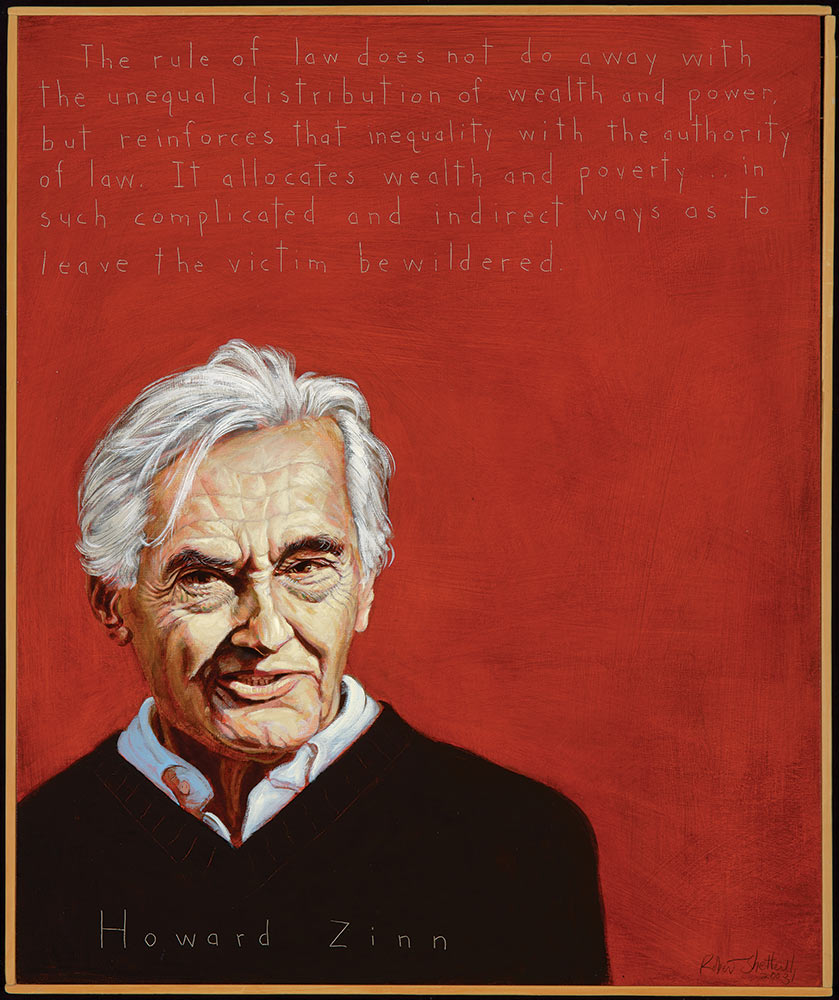
Nothing says more about the fear of history on the part of right-wing elites than the fact that Donald Trump used a presidential address—delivered in the summer that saw tens of millions of Americans take to the streets to protest the police murder of George Floyd—to attack Howard Zinn.
Despite the fact that the protests against structural violence and racism had been largely peaceful, with masses of demonstrators asserting their right to assemble and petition for the redress of grievances, Trump used his September 2020 address at the National Archives Museum to go after the radical historian who told the real story of America.
“[The] left-wing rioting and mayhem are the direct result of decades of left-wing indoctrination in our schools. It’s gone on far too long,” our endlessly divisive and mendacious president griped. “Our children are instructed from propaganda tracts, like those of Howard Zinn, that try to make students ashamed of their own history.”
Trump’s attack on Zinn, however, revealed something that the president and his minions share with the historian they so decried: a fundamental belief that history written from the point of view of social movements holds the potential to empower the powerless. That’s why Zinn worked his entire life to popularize a fresh take on American history. And that’s why his critics aim to erase it. They have always feared, and they fear especially in this 250th year of “the American experiment,” something Zinn wrote about decades ago: “Our country is full of heroic people who are not Presidents or military leaders or Wall Street wizards, but who are doing something to keep alive the spirit of resistance to injustice and war. To ward off alienation and gloom, it is only necessary to remember the unremembered heroes of the past, and to look around us for the unnoticed heroes of the present.”
Trump and his trembling allies oppose an honest telling of the American story because their algorithms and their propagandists aim to foster alienation and gloom—conditions that are essential to making a populace feel defeated. And that strategy won’t work if the vast majority of Americans recognize that they have a shared history of racial, social, and economic oppression by oligarchs, both old and new.
250 Years of Searching for a More Perfect Union
This explains why Trump’s regime is trying to ban books like Zinn’s best-selling classic A People’s History of the United States—even though it’s unlikely that Trump ever read the book, or bothered to learn anything about Zinn’s own life story before the historian’s death in 2010. One would be forgiven for wondering, especially given Trump’s stated belief that Frederick Douglass is “an example of somebody who’s done an amazing job and is being recognized more and more” and not an abolitionist who died in 1895.
But while Trump may not know US history or understand basic civics, his instincts for demonization and division are unparalleled. This explains why, in the summer of 2020, as the Covid pandemic was killing thousands of people a day, the president had Zinn on the brain. His starting point was the mass demonstrations against police violence and in memory of George Floyd, the 46-year-old Black man who was murdered by a white Minneapolis police officer, Derek Chauvin. Trump wasn’t trying to end this type of brutality, calm racial tensions, or explain why such extreme discontent had spread across the country. Instead, he dismissed the protests as the illegitimate actions of young people who, he imagined, had been brainwashed by Zinn—employing the kind of conspiratorial, which-lie-do-you-correct-first speech that his base eats up with a spoon.
His outlandish claim that Zinn’s highly regarded and widely taught history books are mere “propaganda tracts” gave a stamp of approval and open encouragement to the broader, well-funded astroturfed moves by school boards and city councils to ban books that have inspired kids to ask questions and avoid blind obedience.
The irony here is that Trump’s cabal has decried the Zinns of the world for refusing to acknowledge the “progress America has made.” Yet it is Trump and his team who are currently unraveling everything progressive that has been accomplished since the 1890s, a time of communicable disease, child labor, economic crisis, racial terrorism, and profiteering oligarchs. Factor in that women were banned from the ballot box, and this bizarre longing for an awful past also seems like a vision board for an even worse future.
The right must keep burying Zinn, but not because A People’s History of the United States is an evil tome written with the devil’s pen. It’s because generations of students have found Zinn’s approach to history inviting and even exhilarating. In learning that their ancestors weren’t passive spectators to the American project, they become an active part of the story themselves. Instead of history being a narrative of the triumph of the wealthy and powerful, it becomes something written by underdogs armed with courage. Instead of being objects, young people become subjects and potential changemakers.
Zinn believed that where one stood in society determined how one understood history. The Civil War looked quite different to a slaver than it did to an enslaved person; a grunt in the trenches thousands of miles from home probably has a different understanding of a war than the four-star general sitting behind a desk. As for teachers, even if they don’t share Zinn’s politics, seeing students alert and awake in history class makes his books worth assigning.
Zinn expressed the source of his motivations. “I’m worried that students will take their obedient place in society and look to become successful cogs in the wheel—let the wheel spin them around as it wants without taking a look at what they’re doing,” he said. “I’m concerned that students not become passive acceptors of the official doctrine that’s handed down to them from the White House, the media, textbooks, teachers and preachers.”
It’s not Zinn the person or his remarkably outsized life that provokes the ire of the president and his MAGA book-banners on school boards, but rather the history that he was popularizing. This is instructive, because their focus should be our focus: less on the man than on the central lesson of the history he brought to life—the idea that ordinary people can wrest control of their own lives and do extraordinary things. “We don’t have to engage in grand, heroic actions to participate in the process of change,” Zinn said. “Small acts, when multiplied by millions of people, can transform the world.”
But this is why Zinn’s own history matters: because his life is rich with examples that back his belief in the value of small acts. In my biography of Zinn, we follow his time as a teenage shipyard worker and union organizer during the Great Depression; his years as a bombardier during World War II; his risks as a dedicated fighter for civil rights and Black freedom; his travels to Hanoi as part of the movement against the war in Vietnam; and his sadly prescient understanding in the 1970s about how the growth of the corporate university could come to throttle academic freedom. These “small acts” of struggle were inextricable from his life as a husband, a father, and a teacher.
While Zinn would certainly resist any impression of himself as an affable optimist seeing the bright side in every defeat, it is also true that one reason he is remembered is that Howard Zinn was always the happy warrior. His lectures and public talks were funny—historical insight mixed with great humor. “I wanted to change the world,” he’d say, “and I thought history might be helpful.”
Popular
“swipe left below to view more authors”Swipe →Zinn’s decidedly nonacademic public-speaking style set him apart from his peers. As a result, his fan base grew as he became older. I was of a particular generation who came of age reading Zinn but had no knowledge or memory of him before his 70s. It seemed as if he had arrived fully formed from another planet—a thick head of gray hair, a broad, mischievous smile, and a call to struggle in his remarks. He taught us how to tough it out during the worst of times and why we can never let the bastards steal our hope—which is, of course, why the bastards still fear Zinn.
More from The Nation
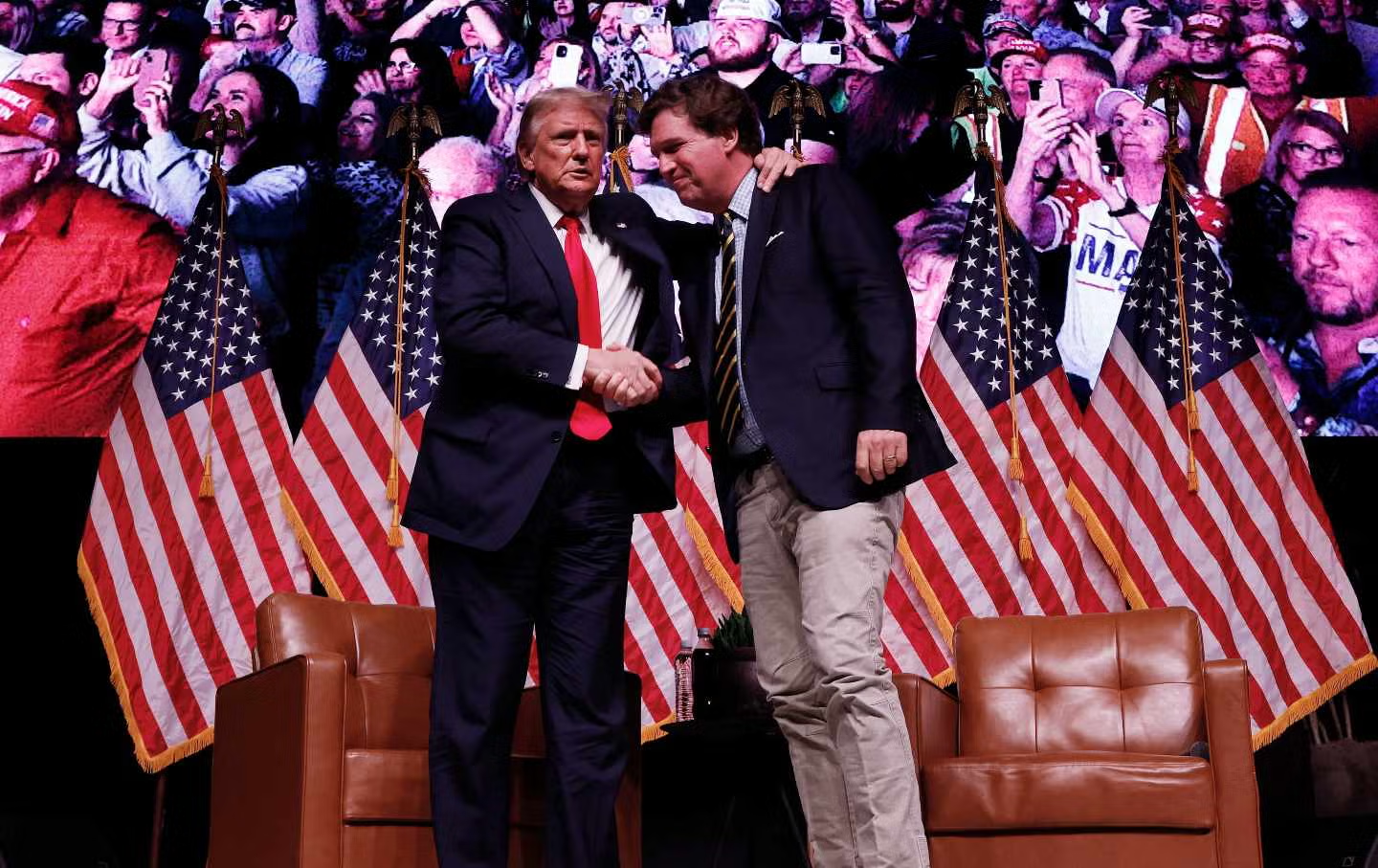
What Trump and Tucker Carlson Have in Common What Trump and Tucker Carlson Have in Common
Carlson has broken with Trump largely over the war in Iran. But on Ukraine and immigration, the two speak very much the same language.

The Jewish Case Against AI The Jewish Case Against AI
Haredi rabbis and the secular left agree: This technology is a threat to the entire social fabric.
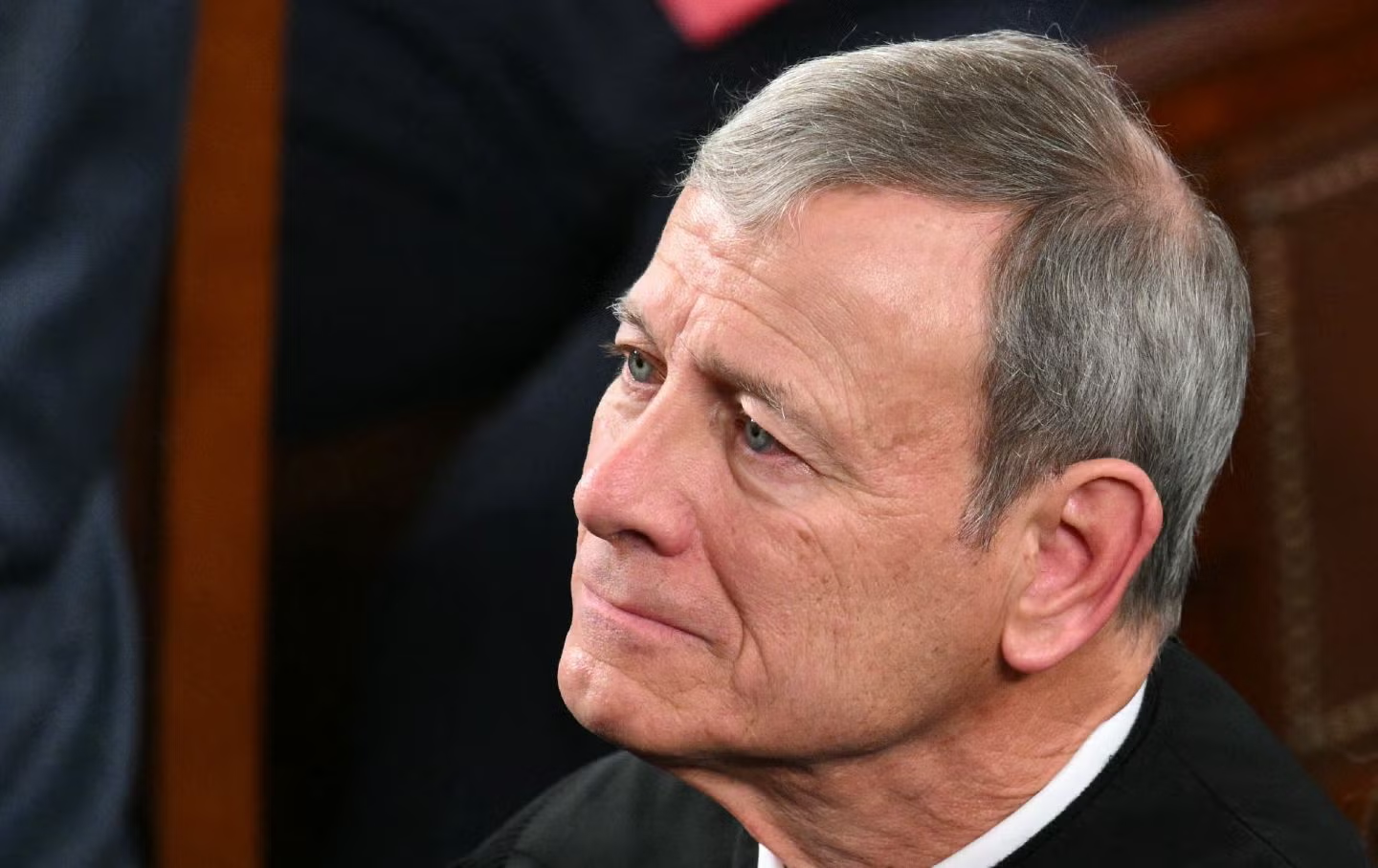
The Fight for Educational Equality Is Also a Fight for a Just Supreme Court The Fight for Educational Equality Is Also a Fight for a Just Supreme Court
The court has severely weakened our ability to make an education system that fulfills the promise of Brown.
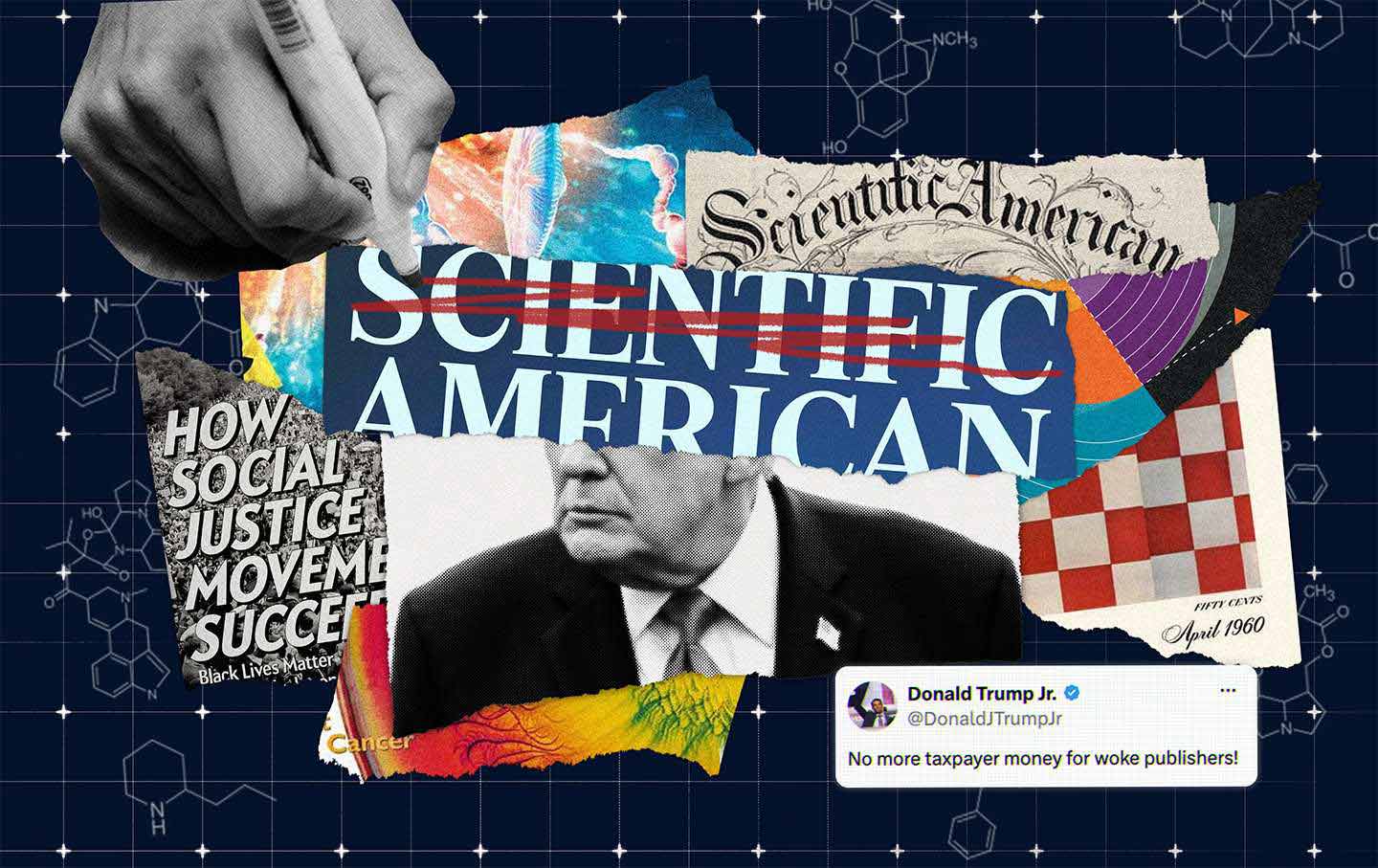
The Fall of “Scientific American” The Fall of “Scientific American”
When the beloved science publication got too political, its corporate owners stepped in. Now its future is uncertain.

The Bookstore Revolution in Taiwan’s Conservative Heartlands The Bookstore Revolution in Taiwan’s Conservative Heartlands
After Taiwan legalized same-sex marriage, gender-themed bookstores are working to build the social acceptance that the law alone couldn’t deliver.

Jalen Hurts Deserved Better. We All Do. Jalen Hurts Deserved Better. We All Do.
In a country that treats workers as expendable parts, Hurts’s playing through a blood clot is just the highest-profile example of the price workers pay in an oligarchy.

