
Choosing Love Is How We Win
Now is the time to ask your community what they need—to connect and build power wherever you can.
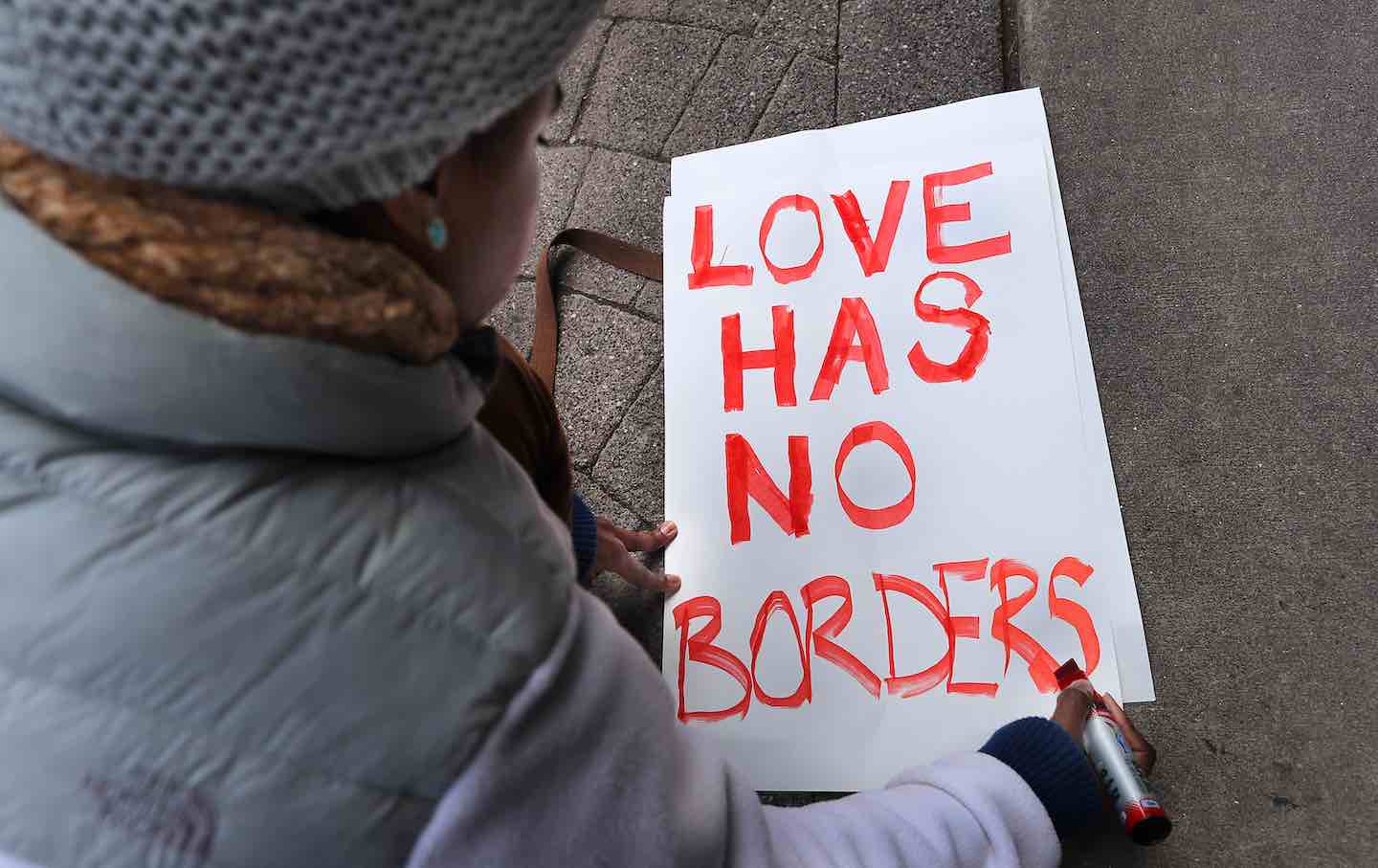
Tori Furtado, from Boston, kneels down to write a sign that reads, “Love has no borders,” in front of the Chinatown Gate, where hundreds gathered for a rally before marching to the State House in a demonstration against President Trump’s new immigration order the day after it was issued, January 28, 2017.
(John Tlumacki / The Boston Globe via Getty Images)
It was one of the coldest and darkest mornings Brooklyn has had all winter. As erratic as our weather patterns have been, no one expected the icy temperatures to arrive so suddenly. There are some of us who sneakily love the inconvenience of it all—me included. But on this particular morning, I was not snuggled up on the couch, withdrawing from the world and relishing the irresistible disruption to mundane life. I was at the post office.
The mood at the post office felt much different from my last time there just a week before. After a week of extremist and unconstitutional executive orders that touched nearly every aspect of people’s everyday lives, everyone, myself included, seemed to be holding on to so much more than their boxes, bills, and birthday cards.
I gripped my parcels tighter as I thought about the state of the world, starting in this bare-bones post office. Those around me represented a cross section of people from all different walks of life experiencing the same structural failures. We went to bed dreading the same threats to our trans friends and family and to our undocumented neighbors. We woke up uncertain about the future, as we watched grocery prices climb and devastating wildfires ravage places we love.
I studied their faces and watched them stand uncomfortably in line, probably sweating under heaping layers of winter attire, like me. Their eyes glazed over, resisting any quiver of muscle that wanted permission to let go. That grinding mix of exhaustion, lost will, or lost hope.
What are we going to do about all of this grief? I wondered. How do we move over the edge knowing that what we face is bigger than what any individual can handle alone?
I let out a sigh of relief when I finally reached the counter.
As I walked toward the exit, I noticed a young woman standing by the exit. Her long black hair was combed back in a ponytail, and her face was fresh without makeup. She held a piece of paper in her hand and eagerly looked at each person who walked by her, hoping to catch their eye. Next to her was a large stroller, overly stuffed with her family’s belongings, and a young child, who was perhaps no more than a year old. With remarkable persistence, he tried to stand on his stroller, his arms reaching out to her as she lovingly rubbed his back and continued to focus on what she needed to do. In some ways, he reminded me of my own daughter when she was that age.
“¿Habla español?” she asked me.
“No, sorry,” I said, waving my hand as if it were necessary to further signal my dismissal.
As I took a few more steps toward the door, I paused, stunned by the way I had spoken to the woman.
I turned around and walked over to her, pulling out my phone and typing away on Google Translate. I showed her my phone.
“Quiero ayudarte,” it read. I want to help you.
Popular
“swipe left below to view more authors”Swipe →Carolina (a pseudonym) needed to change her mailing address. As part of New York City Mayor Eric Adams’s decision to close more emergency migrant shelters, Carolina’s family—her, her husband, and son—had recently moved from the now-closed Floyd Bennett Field encampment, which housed hundreds of migrant families in Brooklyn, to a hotel in Queens.
For the next two hours, I helped Carolina navigate the long process, all the more so as she didn’t have a valid ID. We stood in that corner of the post office, using Google Translate as a go-between as we exchanged messages and inquisitive looks, struggling to understand and be understood.
Meanwhile, her child was starting to stir, getting increasingly frustrated sitting in his stroller. In an attempt to get his mother’s attention, he dropped his bag of animal crackers on the floor. She picked it up, and he dropped it again.
“Uh oh!” someone said.
The voice belonged to an older woman. She picked up the bag of crackers and handed it to the toddler. She looked at both me and Carolina, and winked at us as if to say, “Keep going, I can keep him entertained.”
As Carolina and I continued to sort out the complicated and mundane process of an address change, the woman played “peek-a-boo” with the child, who responded each time with full belly laughter that could melt a mother’s heart and even a stranger’s. Several people in the post office were watching us now.
Once Carolina and I got all of her information together, we returned to the line. A man at the front waved at us, offering his place. We gladly took his spot.
When we got to the counter, the postal worker and I exchanged glances—it was clear that she, too, had been watching me help Carolina, along with the older woman who played with her son, and the man in line who let us breeze by him.
“You may get some pushback because she doesn’t have an ID,” the clerk said. “But here…” We watched her scribble a phone number and name on a piece of paper. “Have her call this office, and ask for this supervisor, and be sure to let him know that she was living in a shelter. He will help,” she said.
I typed the instructions into Google Translate, and showed it to Carolina, who nodded her head both at me and the clerk.
Carolina and I said a short goodbye. I squeezed her shoulder and wished her well. I held my finger out to her son, who grabbed it with his chubby hand and shook it as he smiled brightly at me.
As I walked out the door, I couldn’t help but think about what had just occurred. All of us in the post office seemed to be so focused on our own world, trying to find ways to cope with any number of concerns but forgetting how over time our efforts to push down our feelings actually stifle them, moving us to a place of reactivity, and disconnection from the world, ourselves, and our power. We are led to believe that not only are we alone in this world, but also that nothing can or will change, which allows the darkness to cloud our ability to see each other.
But what also struck me was not just the lack of connection but what happens when we do connect. There had been a chain reaction that morning. A few of us found purpose and belonging in small moments of tenderness and connection. It was proof that the society we dream of is already here, but it requires us to choose it.
In such trying times, love in itself can feel like it’s not enough. We find ourselves surrendering to the idea that the chaos in front of us is much too big for any feeling like love to take it on. But we must not forget its power.
For generations, love has strengthened families and friendships, pointed us toward solutions within our schools and workplaces, and given us the courage to take risks that can help the greater good. In history, it has been at the core of every victory and transformation, both big and small. It can serve as a reminder that sometimes, we do win—and we have to keep going.
We know how to get through this dark period because we’ve done this many times before. We have the blueprints of those who came before us. Civil rights giants like Fannie Lou Hamer and John Lewis, but also everyday people who gathered—in our communities and in our families—to put their skills, experience, and hope on the table, envision new possibilities, and take action. Through their work, we have learned that the quality of connection inside each pair, group, or community is what makes transformation possible. This wisdom is the torch we must use to light our way through the darkness. This is how we have always navigated toward the future.
We are here in this present moment, with headlines making us feel as if we are all flailing in the unknown—petrified, overwhelmed, and unsure. While the last decade has transformed how we engage with the work of justice and share visions of what our world can be, it has been rough. Liberation is no small task.
For the past 10 years, I’ve been drawn to organizing, searching for belonging and meaning and a way out of the feeling of futility. In this time, I have planned nationwide protests, local vigils and talking circles in living rooms across the country. And through it all, being with people helped me realize that I wasn’t alone. It helped me see the raw power that can emerge when we come together. The kind of power that makes change possible.
This moment calls on us to adapt, gather our wisdom, and go even deeper. Because the kind of change we are after is not only institutional but also cellular. It is personal, deep, and intimate. It is how we listen to our own heartbeats, ask our neighbors what they need, and connect with ourselves and each other.
We must be careful not to mislabel or downplay our acts of love and the way they will impact our communities. In fact, love-driven work is a willful act, a choice to hold dear what we value, and a much more powerful place from which to organize.
With ICE raids happening across the country, I have thought so much about Carolina and her family. I have wondered where she is, and if her family is safe. And as I hold my own daughters at night, I hope and I pray that she’s holding her child, too.
It is our turn to carry the world with purpose, to build not from left to right but from the bottom up. In a time that seeks to ostracize so many of us, our diverse, vibrant communities are still here—and we aren’t going anywhere. Let’s continue to listen to our hearts, hold each other tight, connect, and build power. This is our moment to fight against the darkness and emerge into the light—whether in the frustrating long lines at the post office, in our homes, with our communities, or wherever we can find the strength to illuminate others. The light, after all, has always been ours to give.
Become a Sustaining Donor This September
Between the reemergence of right-wing red-baiting and Donald Trump’s use of the chilling National Security Presidential Memorandum–7 to criminalize left political organizing, we’re seeing McCarthyism reborn before our eyes.
This assault on democracy cannot be ignored or wished away. Resisting it requires bravery in the face of threats and repression, a steadfast commitment to the truth, and the unwavering belief that we can—and will—overcome this darkness.
We must have an independent media that sets the record straight, unearths corruption and abuses of power, and advances a politics of justice and dignity for all if we’re to win this fight.
That’s why I’m writing to you today. This September, The Nation needs to add 100 monthly donors to sustain our progressive journalism. Your contribution makes the next investigative report, the next truth-speaking column, and the next pathbreaking essay all possible.
I hope you’ll support our work with a recurring donation today. If you donate $10 or more a month, we’ll send you a brand new “Hands Off the Free Press!” sticker to recognise your commitment to our cause. Please, donate today.
Onward,
Katrina vanden Heuvel
Editor and Publisher, The Nation
More from The Nation
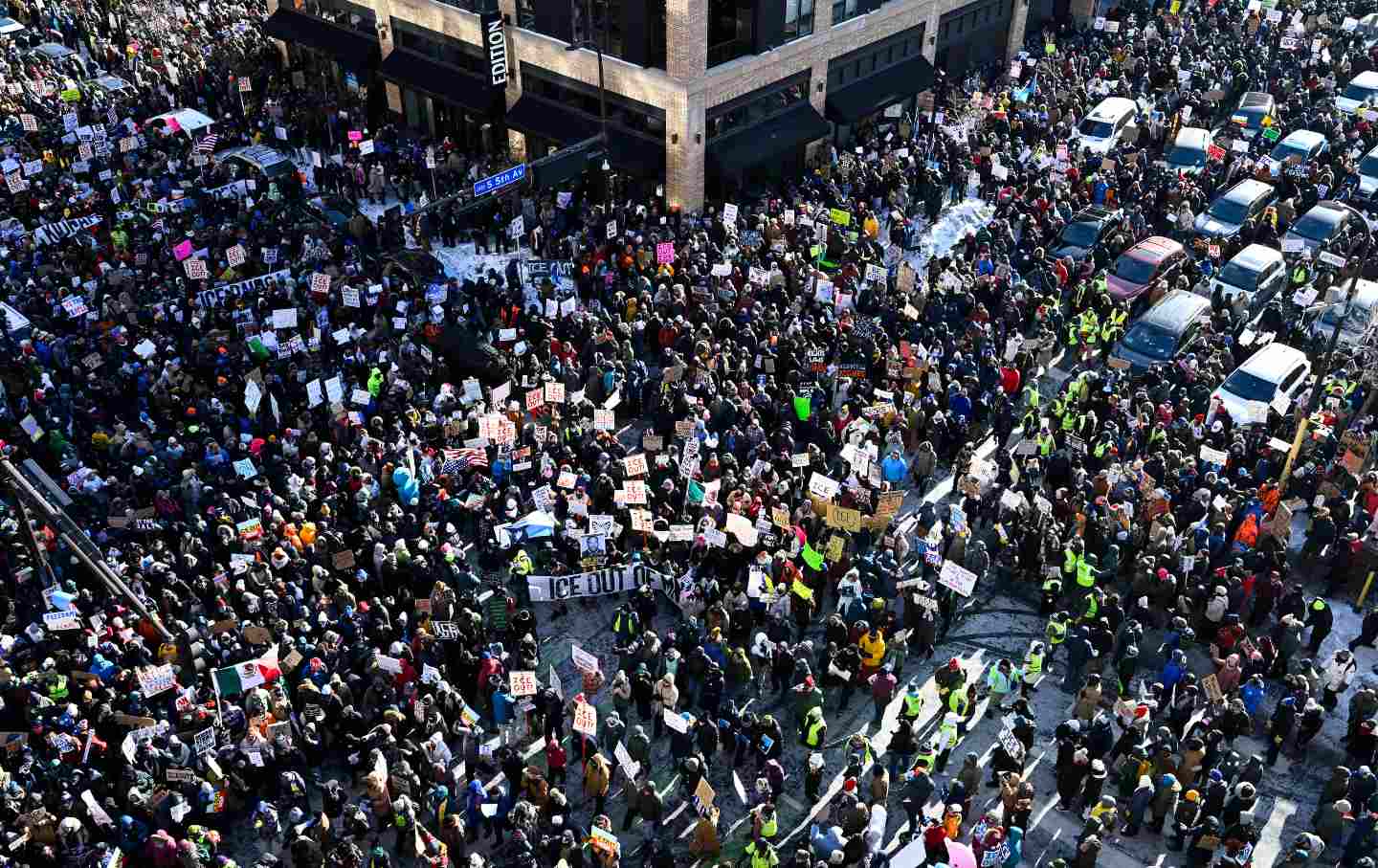
The Impossible Will Take a Little While: The Power of Persistence The Impossible Will Take a Little While: The Power of Persistence
In troubled times, history offers a lesson: Seemingly impossible change can begin with ordinary people who refuse to give up.
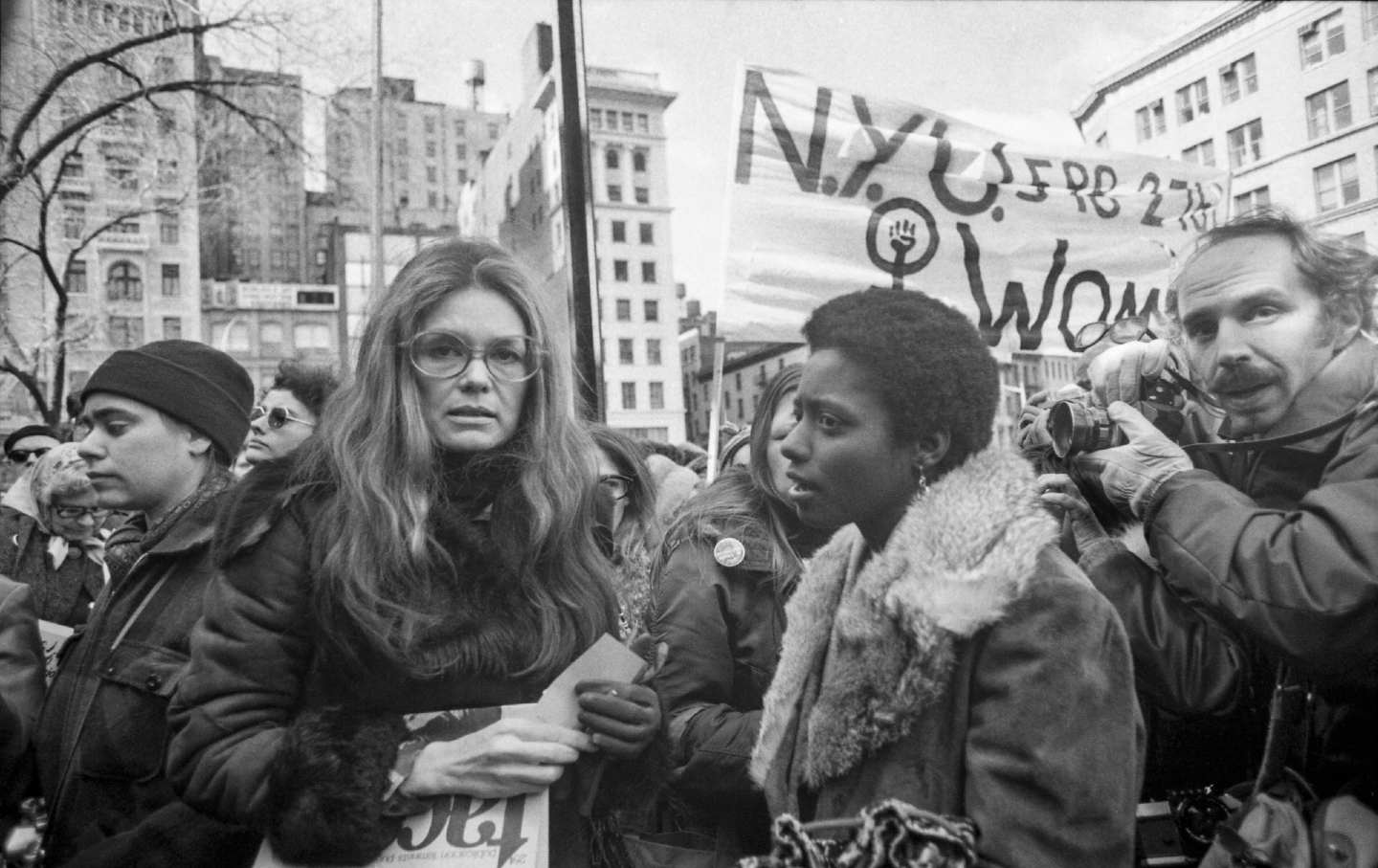
Gloria Steinem’s Many-Splendored Feminist Life Gloria Steinem’s Many-Splendored Feminist Life
The feminist icon lived the struggle for gender equality and always found time to lend support and solidarity to other women leaders, even in her final days.
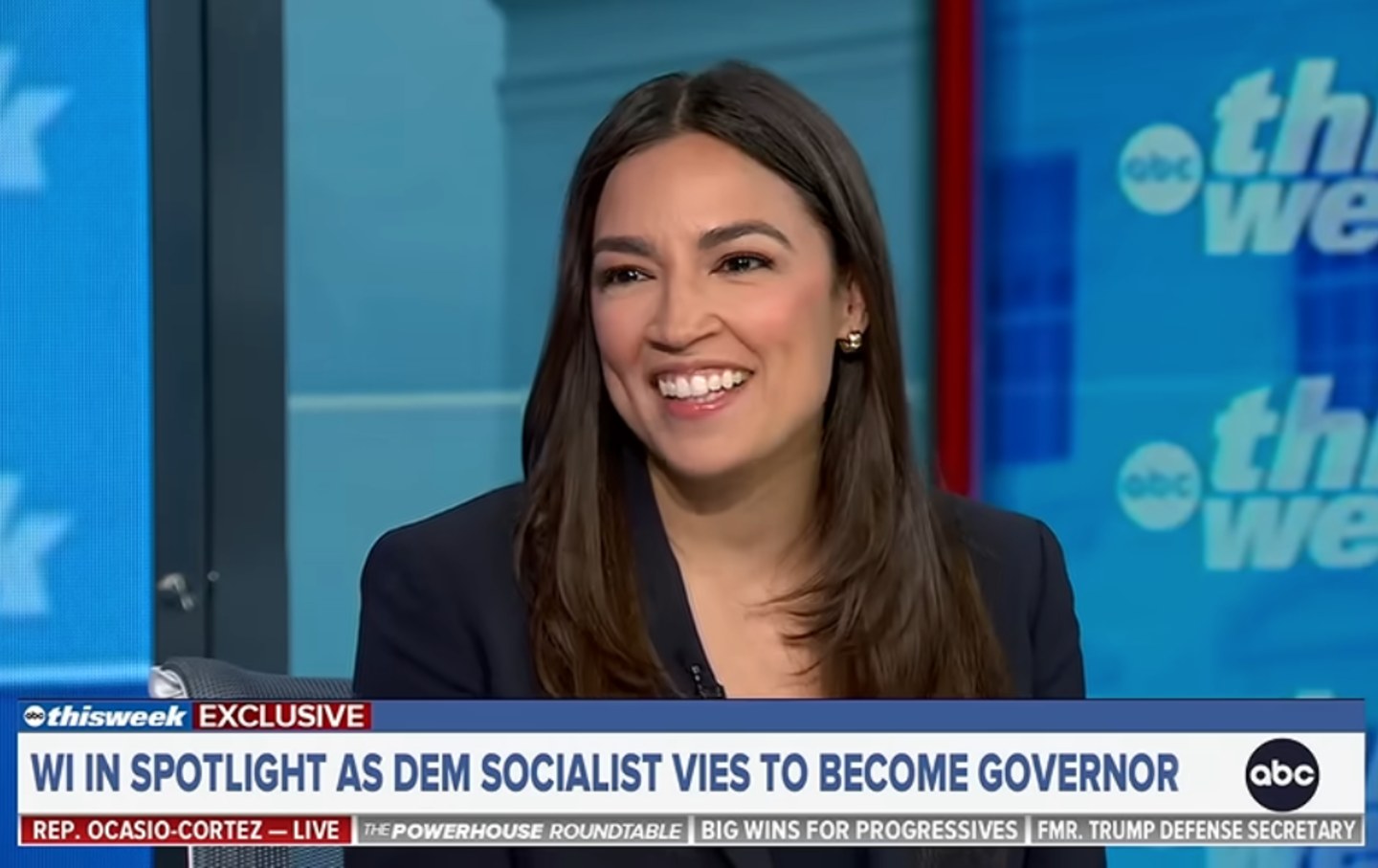
No, Woke 1 Was Not Crazy No, Woke 1 Was Not Crazy
AOC and others are laughing off 2020 as a wild, isolated moment. None of that is true.
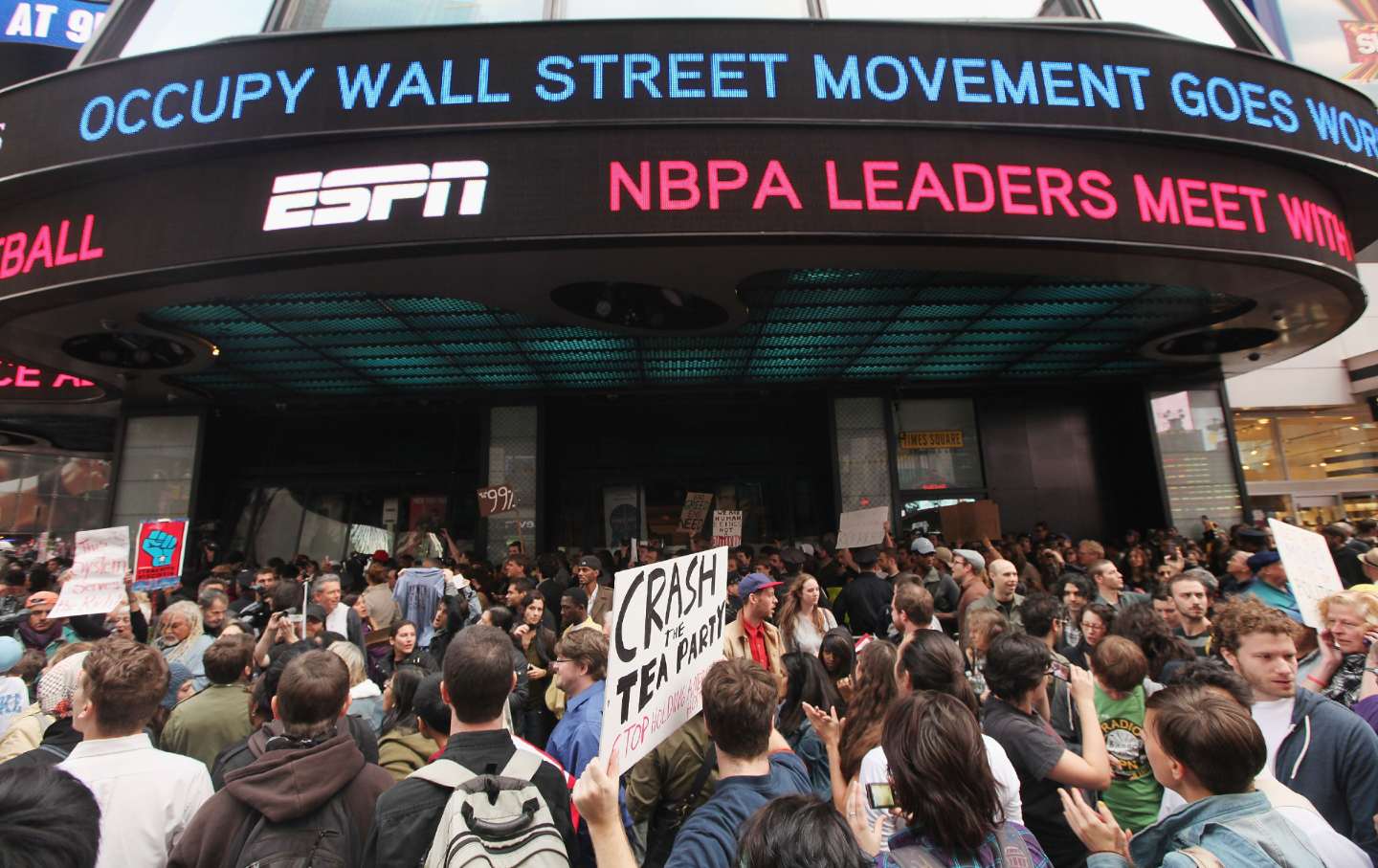
How Occupy Wall Street Still Explains Politics Today How Occupy Wall Street Still Explains Politics Today
It sowed the seeds for a new era of social movements—but its politics of powerlessness should act as a cautionary tale.
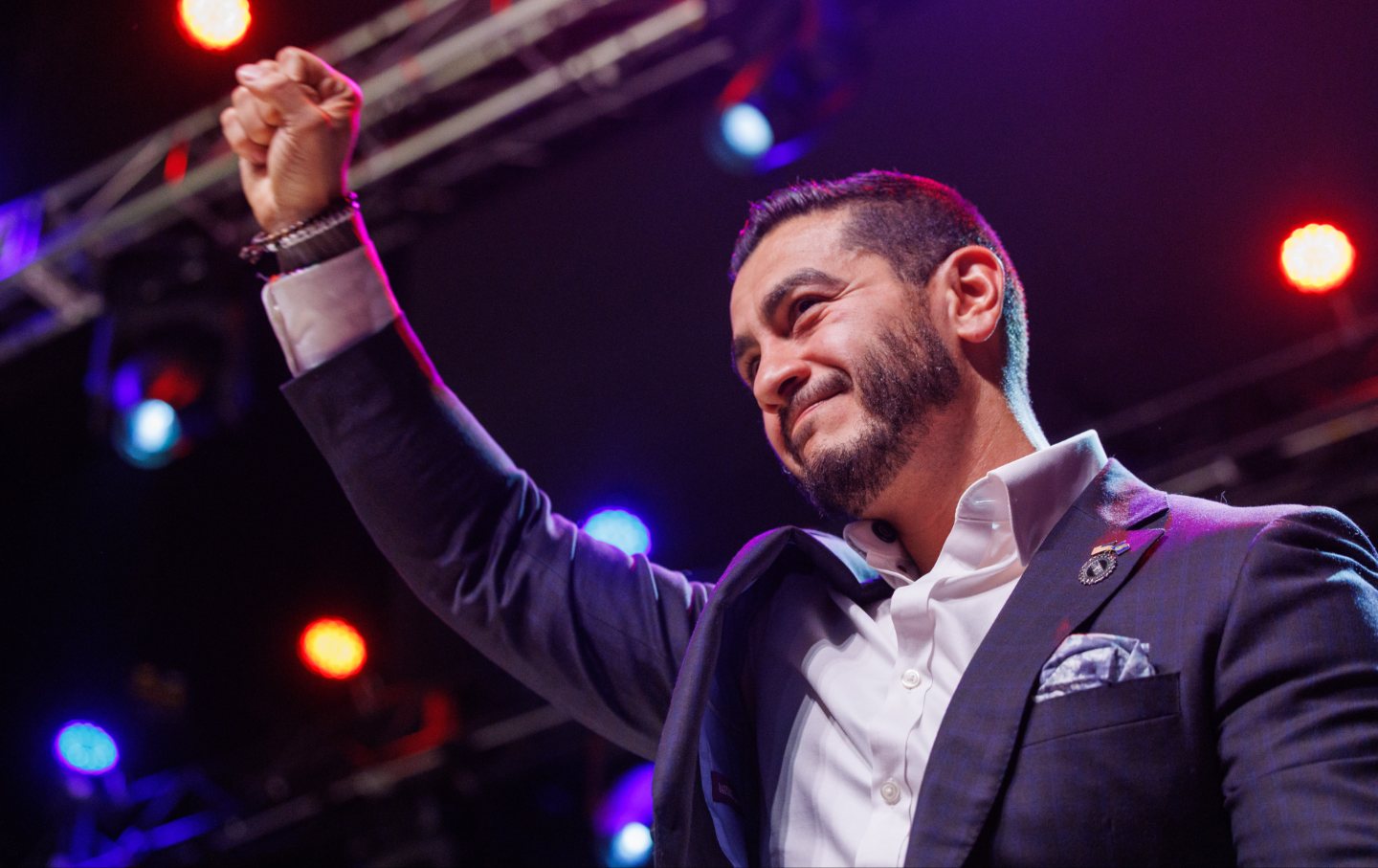
Abdul El-Sayed’s Win Is a Landmark. But the Fight Is Far From Over. Abdul El-Sayed’s Win Is a Landmark. But the Fight Is Far From Over.
Even though the Palestine movement is on the march, we can’t afford any complacency.
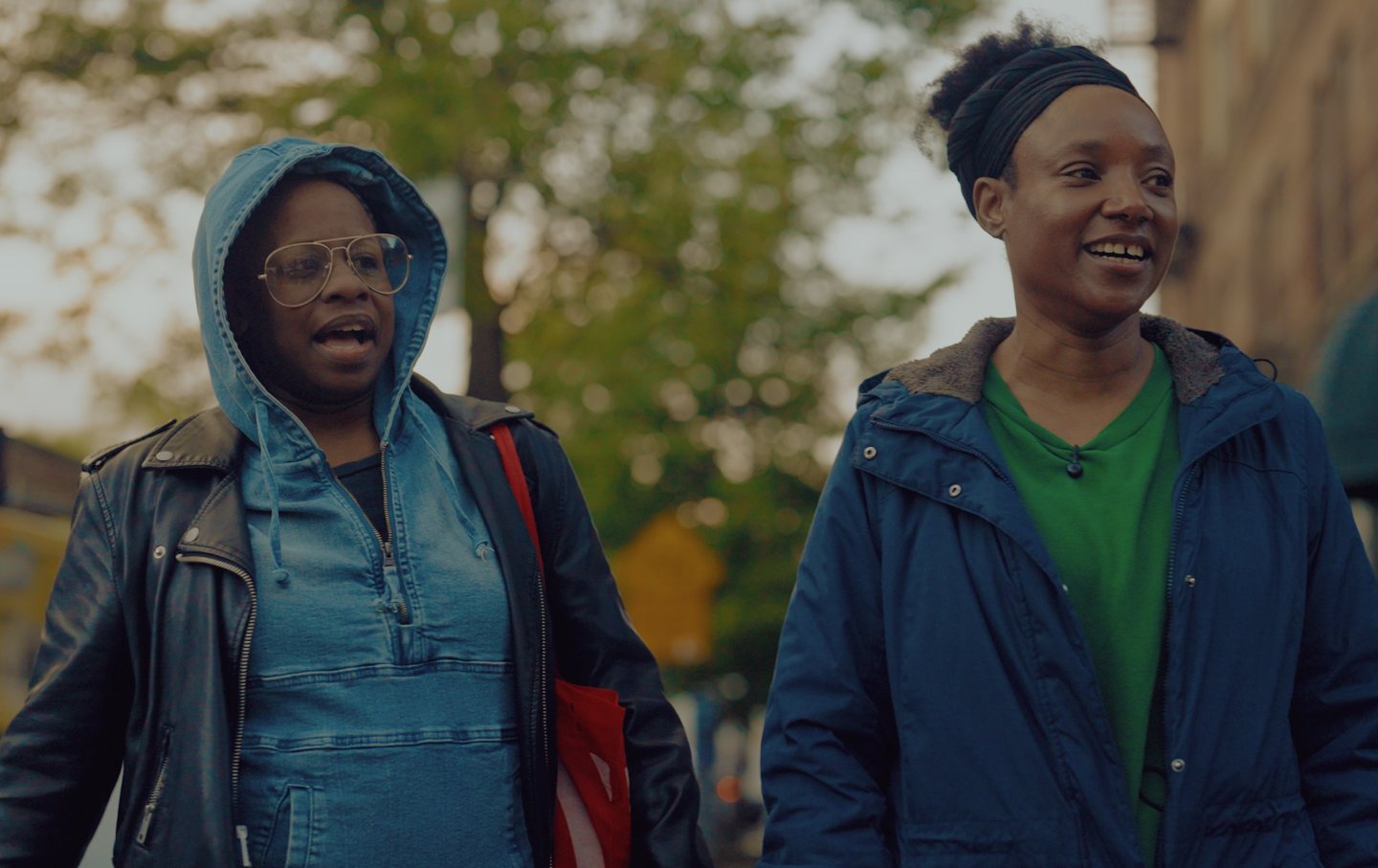
Mamdani’s Team Redefined Political Video. Now They’re Betting on Short Films. Mamdani’s Team Redefined Political Video. Now They’re Betting on Short Films.
Premiering exclusively in The Nation, a new short film produced by City Hall and narrated by Morgan Spector highlights the efforts of the biggest tenant-led union in New York City...

