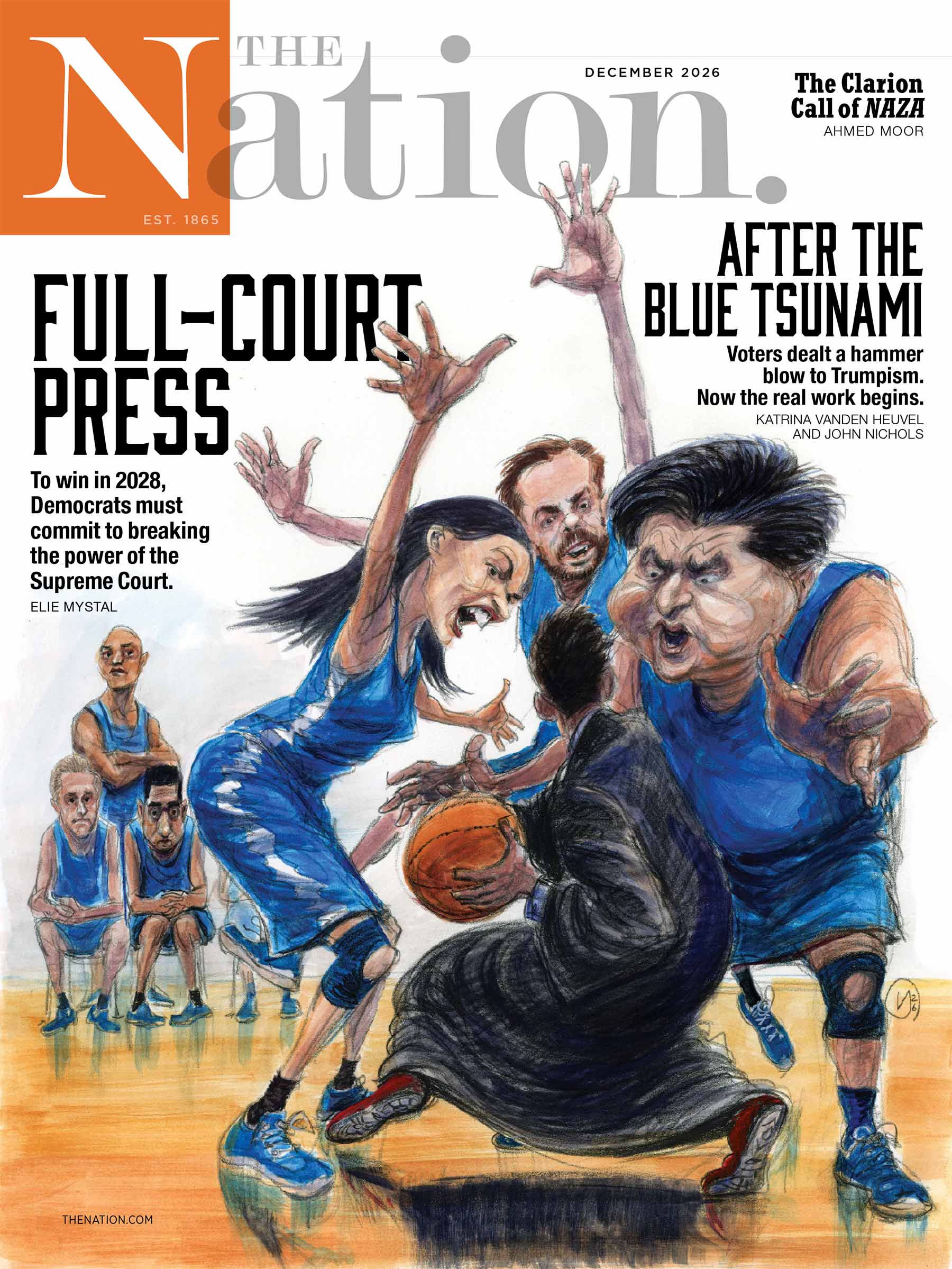
Pope Leo Goes to War—Against the Department of War
The growing divide between Rome and Washington.
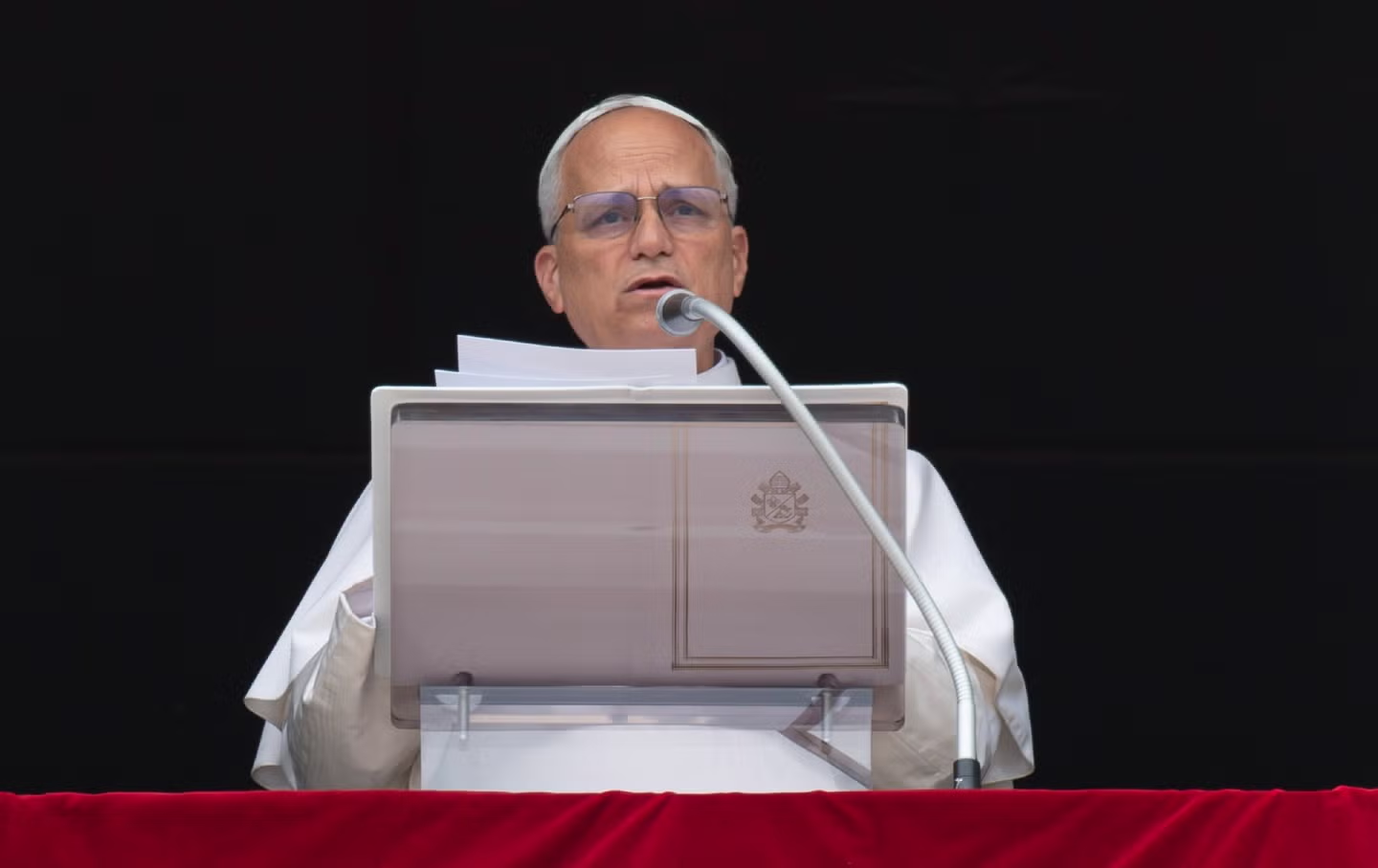
Over the last year, a divide has widened between Rome and Washington. It is one based on radically different views of diplomacy and war. It has compelled leading American bishops, encouraged by the Chicago-born Pope Leo, to take public positions at odds with the administration’s bellicose worldview.
Pope Leo XIV’s recent declaration, for example, that military spending enriches a few while diverting billions from peoples’ authentic needs, is in sync with the message of so many candidates who were swept to office in the blue tsunami, especially in Texas, where the arrest by ICE of a nun on her way to Mass galvanized the faithful.
What deserves more attention though, is Vatican suspicion of the US Department of War’s casual normalization of “tactical” nuclear weapons, when there are few codified international restraints.
Secretary of War Pete Hegseth recently announced a new decision-making structure linking robotic, drone, and AI capabilities known as Autonomous Warfare Command or AutoWarCom. Leo’s major focus on artificial intelligence includes the conviction that AI-enabled weapons of war, deployed with devastating effect in Gaza and Iran, pose an unacceptable global risk.
Longtime Critic
Since 1945, the Vatican has been a consistent critic of nuclear arms, especially considering that the atomic bomb dropped on Nagasaki obliterated much of Japan’s Catholic community.
Pope Francis ratcheted up Vatican engagement in the anti-nuke movement, first by negating the ethics of deterrence, then by outright condemning these arms. To an audience in Hiroshima, he declared, “Possessing nuclear weapons is immoral,” a statement crystallizing Vatican support for the Treaty on the Prohibition of Nuclear States (TPNW), which bans developing, testing, producing, acquiring, possessing, or using nuclear weapons.
The TPNW went into force in 2021, once 50 countries had ratified it. To date, 75 countries have affirmed the treaty, excluding all nine nuclear powers, namely, China, France, India, Israel, North Korea, Pakistan, Russia, the United Kingdom, and the United States. But without their support, the treaty can’t have any meaningful effect, which is why the Trump administration’s entertainment of new forms of nuclear weaponry is so dangerous, in the Vatican’s view.
Unilateralism
According to the Vatican’s former nuncio (ambassador) to the United States, Cardinal Christophe Pierre, the pope’s advisers saw “disturbing things” in the Trump administration’s 2025 National Security Strategy, especially an emphasis on military solutions and a dismissal of multilateral consultation.
Then, while the Vatican was negotiating for their removal to a third country, President Nicolás Maduro and his wife were abducted by US forces from their Caracas residence and thrown into a Brooklyn jail. Regardless of offenses committed by the Venezuelan strongman—and local Catholic bishops largely opposed him for violating human rights—the US military had no right to trample Venezuela’s sovereignty, as Pope Leo swiftly pointed out.
American bishops were also increasingly agitated at evidence of illegality by US officials: ICE agents attacking people born abroad, many of them faithful Catholics, and speedboats being bombed in the Caribbean, supposedly for transporting drugs. The first practice violates domestic due process and the second international law.
When Pope Leo spoke to diplomats accredited to the Holy See, an annual New Year tradition, he lamented, “War is back in vogue and a zeal for war is spreading.’”
The Department of War took offense and summoned Pierre before Elbridge Colby, undersecretary of defense for policy—an unusual scenario. If Colby, a Catholic, thought he could silence the Vatican by delivering a “might makes right” lecture to a priest-diplomat of 50 years, he was wrong. The encounter seemed to trigger a more combative Catholic clergy.
On Easter Day, Archbishop Timothy Broglio, who serves a global diocese of Catholics in the US military (comprising 1.8 million service members and their families), told Face the Nation that the war against Iran can’t be called “just,” a theological category requiring wars to be defensive. The following Sunday, three American cardinals appeared on 60 Minutes reiterating criticism of the Trump administration’s “war of choice” and protesting “indiscriminate mass deportation.”
The Iran War inspired a public feud between Leo and Trump, who called the pope “terrible for foreign policy.” The next day, Leo pledged to “continue speaking out loudly against war,” including the use of AI targeting, blamed for obliterating an elementary school in southern Iran on the first day of bombing. Around 175 people were killed, most of them girls ages 7 to 12. Parents asked Pope Leo be a voice for the tragedy; he emphasized that international law requires belligerents to protect innocent lives.
Pierre told me, “The real history of America is that it built institutions for dialogue. But now you say no to dialogue? You destroy people then offer to engage in dialogue after that? It will never happen. Trump wants to isolate America and make America great against the others. Before, America became great with the others.”
Pope Leo’s geopolitical critique was formalized with the May 25 release of Magnificat Humanitas: On Safeguarding the Human Person in the Time of Artificial Intelligence. It describes a “culture of power” ignoring dialogue and diplomacy, promoting war as an instrument of international politics, and advancing a false realism that conflict is inevitable. Though he never mentions a specific country, the narrative reads like an indictment of American foreign policy.
The document became the basis for an assembly of Nobel laureates in July at the pope’s summer residence, Castel Gandolfo, then at City Hall in Rome where laureates signed the Rome Declaration on AI and Nuclear Weapons. The Bulletin of the Atomic Scientists called it the first gathering of experts and activists tackling dangers of the “AI-nuke nexus.”
Former president of Colombia Juan Manuel Santos, a Nobel Prize winner, helped organize the event. Echoing the pope, he declared, “We are seeing the erosion of ethical restraints in favor of the pursuit of raw power. The development of increasingly advanced artificial intelligence adds additional unpredictability.”
At Castel Gandolfo, Dr. Ira Helfand, a cofounder and past president of Physicians for Social Responsibility who helped win two Nobel Peace Prizes related to nuclear arms, confirmed the Vatican as a longtime ally, adding, “Unfortunately, many people, including many practicing Catholics, are unaware of the Vatican’s clear and uncompromising position that nuclear weapons must be abolished. It has been clearly stated in diplomatic settings, but not in most parish churches.”
Popular
“swipe left below to view more authors”Swipe →Vatican Deployment
A major reason for Pope Leo’s visit to the city of Metz, France in late September was to highlight a historic picture of goodwill reversing hatred: The European Coal and Steel Community, which evolved into the European Union, was founded there. Flying back to Rome, he again challenged Trump, this time insisting that safety concerns about AI are not “fake news.”
While Leo was in France, his secretary of state, Cardinal Pietro Parolin, used a UN speech to reiterate: “The control of these powerful tools must not remain in the hands of a select few; they must serve humanity, not the other way around. In particular, the development of lethal autonomous weapons systems (LAWS) raises profound moral questions.” Last month, the Vatican’s new representative to the UN, Lebanese-born Archbishop Christophe-Zakhia El-Kassis, spoke of “additional risks” caused by the integration of AI into nuclear systems.
A major motivation for Rome’s thematic repetition is the evidence that the Trump administration intends to expand its arsenal, including “tactical” nuclear options. Colby revealed this in a speech to military brass, as reported by the Bulletin of the Atomic Scientists. The Vatican sees an upcoming opportunity to flag US irresponsibility at the first UN review of the TPNW, to be held in New York, November 30–December 4.
Meanwhile, advisers close to the American pope say he is encouraging a new movement against the AI-fueled, nihilistic nuclear arms race.
More from The Nation
What We Can Learn From Lula’s Seismic Win What We Can Learn From Lula’s Seismic Win
The Brazilian president looked headed for defeat. The Brazilian people had other ideas.
France’s Left, Divided at the Worst Possible Time France’s Left, Divided at the Worst Possible Time
Years of progressive infighting weigh on Jean-Luc Mélenchon’s presidential ambitions.
The Fugitive From Brazil The Fugitive From Brazil
The implications of Trump’s red-carpet rollout for Flávio Bolsonaro.
Inside France’s Biggest Uprising Since 1968 Inside France’s Biggest Uprising Since 1968
Despite harsh reprisal from the government, students show no sign of stopping.
Lula’s Victory! Bolsonaro’s Defeat! What’s Next for Brazil? Lula’s Victory! Bolsonaro’s Defeat! What’s Next for Brazil?
A leading Brazil scholar predicts that Trump will continue to meddle in Brazilian politics.
How the Serbian Student Movement Is a Victory for Organizing Power How the Serbian Student Movement Is a Victory for Organizing Power
In Serbia, the students may have discovered a formula for rescuing democracy through nonviolence and commitment to collectivism. Students everywhere should take note.

