
Refusing Despair in a Despairing Time
A Martin Luther King Jr. Day sermon by the Rev. Canon Dr. Kelly Brown Douglas.
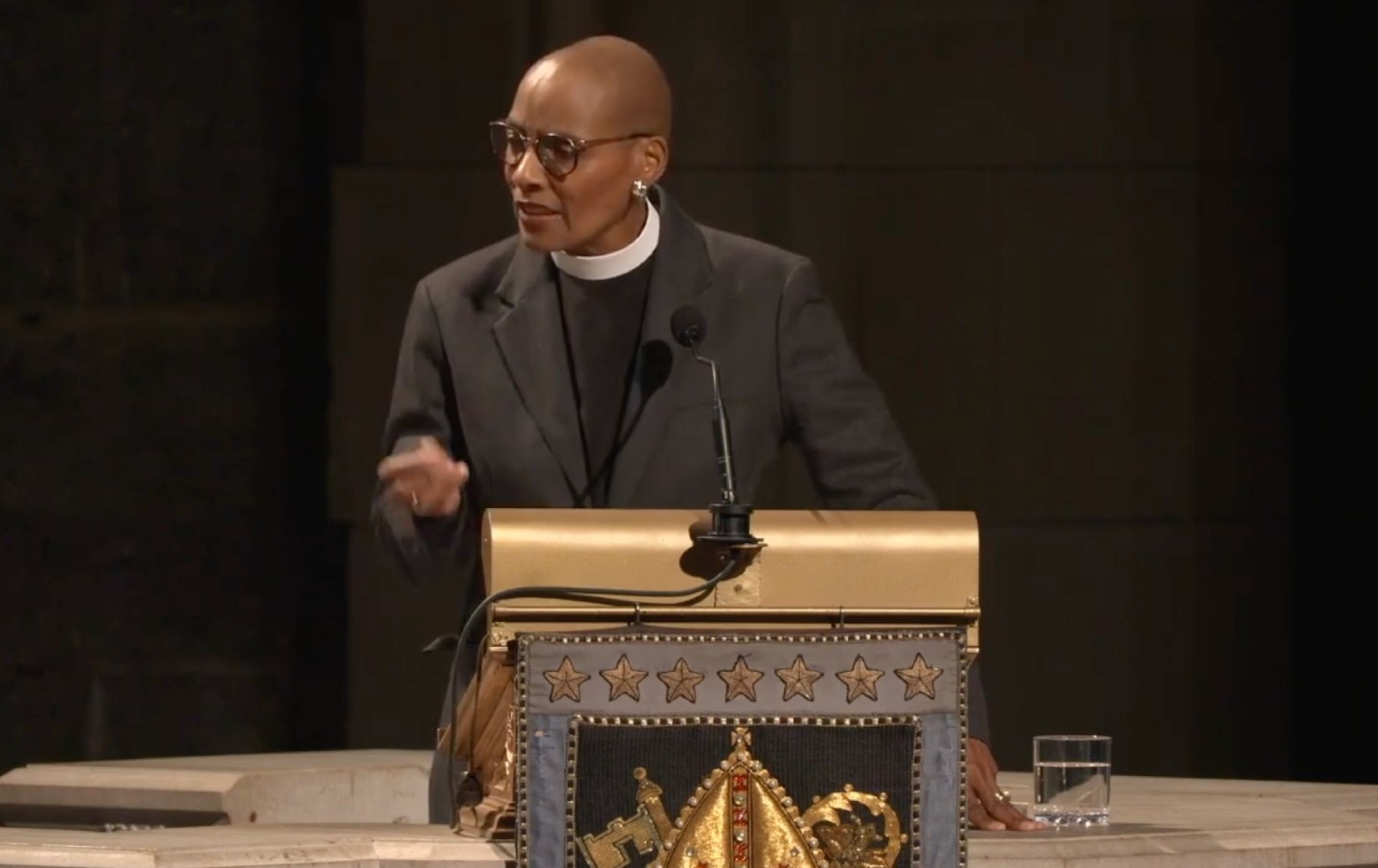
Good afternoon, Cathedral community. As we gather today and ask the question, “Where do we go from here?,” we are guided by the wisdom of Martin Luther King Jr. Nearly 60 years ago, as he posed the same question, he reminded us of an essential truth: “In order to answer the question, ‘Where do we go from here,’ we must first honestly recognize where we are now.”
And so, the same is true of us. Before we can chart a course forward, we must confront our present reality—our now.
There is no denying it: We are living in despairing times.
When I watched footage of the Immigration and Customs Enforcement raid on an apartment complex in Chicago several months ago—an operation chillingly named “Operation Midway Blitz”—where families, many with young children, were dragged from their homes at dawn, their faces pressed to the ground, I was horrified. I wondered: how have we come to treat human beings like this? How have we normalized cruelty?
My horror only deepened as I watched the video of an ICE agent fatally shooting Renee Nicole Good as if her life were collateral damage in a wider political struggle. She was a mother, she was a wife, she was a daughter, she was a sacred child of God. How does it become acceptable to violate that? I wondered how it is that a sacred human life has become so expendable. How does this staggering lack of reverence for human beings become acceptable on any level for any reason?
And so it is that in this despairing time—when the fatal and the dehumanizing become normalized, when false and divisive narratives take root, and as public discourse grows increasingly crude and dishonorable, even from the highest office of the land—we must ask: what are we to learn from Martin Luther King Jr. as we remember him in these our despairing times?
Make no mistake about it: These are despairing times. And yet, we cannot afford to despair.
For despair—perhaps even more than fear—is the soil in which oppressive and authoritarian regimes take root and thrive. Despair paralyzes. It convinces us that nothing will ever change. And before we know it, we begin to compromise, comply, and concede. We settle for silence. We go along to get along. Slowly, we lose sight of our values, our moral bearings, even of who—and whose—we are.
It is no accident that despair is being cultivated in our time. Through relentless untruths, ceaseless distractions, calculated chaos, and deliberate scapegoating, we are worn down and told that protest is foolish and futile, unpatriotic and even dangerous. We are told, implicitly and explicitly, that silence is safer. That compliance is wisdom. That nothing we do matters.
And yet, precisely because we are living in such despairing times, this moment demands something of us.
This moment requires of us—as individuals, as people of faith, as children of God, as those who would carry forth the legacy of Martin Luther King Jr.—that we ask, with urgency and honesty, what we are to learn from him in this our despairing time.
Interestingly enough, Martin Luther King Jr. spoke into a moment not unlike our own. Standing at the Lincoln Memorial on August 28, 1963, he declared: “We have come to this hallowed spot to remind America of the fierce urgency of now.… Now is the time to make real the promises of democracy.… Now is the time to lift our nation from the quicksand of racial injustice.… Now is the time to make justice a reality for all of God’s children.”
Four years later, from the pulpit of Riverside Church—one year to the day before his assassination—King returned to that same insistence. In denouncing the Vietnam War, he said: “We are confronted with the fierce urgency of now.”
And so here we are, sixty-three years later, confronted with our own fierce urgency of now. With that same urgency, we ask once more: where do we go from here? And again, we turn to King, seeking the lessons he offers us in this moment.
First: King Teaches Us That We Have a Duty to Be Free
King put it this way: “We have a duty to be free,” he said. “God doesn’t want anybody to feel inferior. Neither does [God] want anybody to feel superior. We have a duty to ourselves and before Almighty God to stand up for our freedom.”
What we learn from King is that freedom is a sacred trust. That trust is betrayed whenever laws, policies, or institutions elevate some by dehumanizing others. Today, it is betrayed whenever whiteness is privileged, whenever immigrant lives are treated as disposable, whenever human lives are arranged into a hierarchy of worth. Any system that teaches some they are less than—or others that they are more than—violates both human dignity and divine creation, and thus the sacred trust that is freedom.
In this regard, freedom is not just an abstract principle to be debated. It is not merely a political status, a legal arrangement, or a constitutional right. Rather, it cuts to the core of our humanity and our sacred being. It reflects the freedom of God and the inalienable freedom of God’s people—and that means everybody who has breath.
To be free, as King understood it, is to free ourselves from the webs of unfreedom even when we may benefit from them. Freedom means refusing the false “wages—that is, privileges”—of superiority that oppressive and unjust systems offer. It means living as though every human being is created for freedom—because they are—and fighting for that freedom whenever and wherever it is threatened.
Simply put, to remember King rightly is to refuse illusions of freedom and to stand, again and again, for the sacred humanity—and thus the freedom—of all.
Second: King Teaches Us to Confront the Triple Evils of Violence
King was unflinching in naming what he called the “triple evils” of racism, classism, and militarism. He warned: “We must come to see that the problem of racism, the problem of economic exploitation, and the problem of war are all tied together.”
His insight was prophetic—and painfully relevant today.
In a time such as now, when our government seeks permission to deny food assistance to millions, undermines access to health care, and simultaneously increases military budgets and expands a paramilitary force in the name of security, King’s words confront us as never before. The dehumanization of immigrants, the abandonment of the poor, and the normalization of state violence, domestically and abroad, are not separate issues. They are deeply intertwined.
This is why King called for nonviolence—not as passivity or momentary protest, but as sustained and radical resistance to all forms of violence. Violence, for King, was anything that devalues the life God has given. Bigotry is violence. Poverty is violence. Militarism is violence.
To go forward from here is to commit ourselves to dismantling these forms of violence—structurally, culturally, and spiritually. And to do so requires sustained resistance, determined courage, and a transformation of our collective will until every life is safe from the violence of injustice.
As King reminded us: “True peace is not the absence of tension; it is the presence of justice.”
God’s peace is not merely the end of war—it is the ordering of society so that people are able not just able to survive but to flourish.
Third: King Calls Us to Trust—and Labor Along—the Moral Arc of the Universe
King famously said—borrowing from Theodore Parker—that “the arc of the moral universe is long, but it bends toward justice.” That arc, however, does not bend on its own. Its promise does not matter to our earthly now if we refuse to place ourselves upon it.
We are living in nothing less than a morally fraught time—a dark moment marked by moral compromise, if not outright moral disregard. Harmful beliefs are normalized. False narratives gain traction. The foundations of moral democratic life feel increasingly fragile. Most troubling, this moral crisis erodes our moral imagination: the capacity to envision and pursue a just and equitable future—what King called the beloved community.
In such a landscape, morality is often reduced to moral narcissism—one that sustains white supremacy by grounding power in self-justifying claims of righteousness. When leadership proclaims that power is governed by “my own morality,” morality itself is weaponized and becomes an instrument of domination rather than a guide toward justice.
To recognize that the arc bends toward justice is to get on that arc—to enter into a moral reckoning not only with inherited injustices, but with the indifference and apathy that allow them to persist. We must cultivate a collective moral imagination: the capacity to see beyond what is and to aspire toward what could be. This belief is not naïve; it is the foundation for the urgent work of our now.
This moral work demands discipline. It requires truth-telling even when truth unsettles us, and a refusal of silence even when silence is convenient. As King insisted, “we’ve got to know the simple disciplines of being honest and loving and just with all humanity.” Without them, he warned, “we will destroy ourselves by the misuse of our own powers.”
James Baldwin put it this way: “We made the world we’re living in, and we have to make it over.”
Where Do We Go From Here?
We learn that going forward means an enduring commitment to freedom, to justice, and to moral responsibility. And yet, what strikes me most as I remember King is his humanness.
When King stepped into history, he was only 26 years old. When he was assassinated, he was only 39. We often forget how young he was. We place him beyond imitation. But he was also an ordinary human being who chose, again and again, to step into the urgency of his now.
Popular
“swipe left below to view more authors”Swipe →History is the story we write with our lives.
King warned us: “Tomorrow is today. We are confronted with the fierce urgency of now. There is such a thing as being too late.”
And so, we must decide how we will step into history.
This is the time for us to live free.
This is the time for us to break the silence.
This is the time for us to live our values out loud.
This is the time for us to refuse despair.
“When our days become dreary with low hovering clouds of despair,” King said, “…let us remember that there is a creative force in this universe working to pull down the gigantic mountains of evil…to make a way out of no way and transform dark yesterdays into bright tomorrows.”
And so, as we go forward from here—from this cathedral today—let us go with a fierce commitment to partner with that creative force, refusing to let despair or evil have the last word, and to live, with the urgency of now, as if a better world is possible—because it is.
May it be so, now.
Become a Sustaining Donor This September
Between the reemergence of right-wing red-baiting and Donald Trump’s use of the chilling National Security Presidential Memorandum–7 to criminalize left political organizing, we’re seeing McCarthyism reborn before our eyes.
This assault on democracy cannot be ignored or wished away. Resisting it requires bravery in the face of threats and repression, a steadfast commitment to the truth, and the unwavering belief that we can—and will—overcome this darkness.
We must have an independent media that sets the record straight, unearths corruption and abuses of power, and advances a politics of justice and dignity for all if we’re to win this fight.
That’s why I’m writing to you today. This September, The Nation needs to add 100 monthly donors to sustain our progressive journalism. Your contribution makes the next investigative report, the next truth-speaking column, and the next pathbreaking essay all possible.
I hope you’ll support our work with a recurring donation today. If you donate $10 or more a month, we’ll send you a brand new “Hands Off the Free Press!” sticker to recognise your commitment to our cause. Please, donate today.
Onward,
Katrina vanden Heuvel
Editor and Publisher, The Nation
More from The Nation

When Texas Sex Ed Falls Short, Gen Z Women Turn to Social Media When Texas Sex Ed Falls Short, Gen Z Women Turn to Social Media
A 2025 study found that 70 percent of adolescents sought reproductive health information through social media platforms.
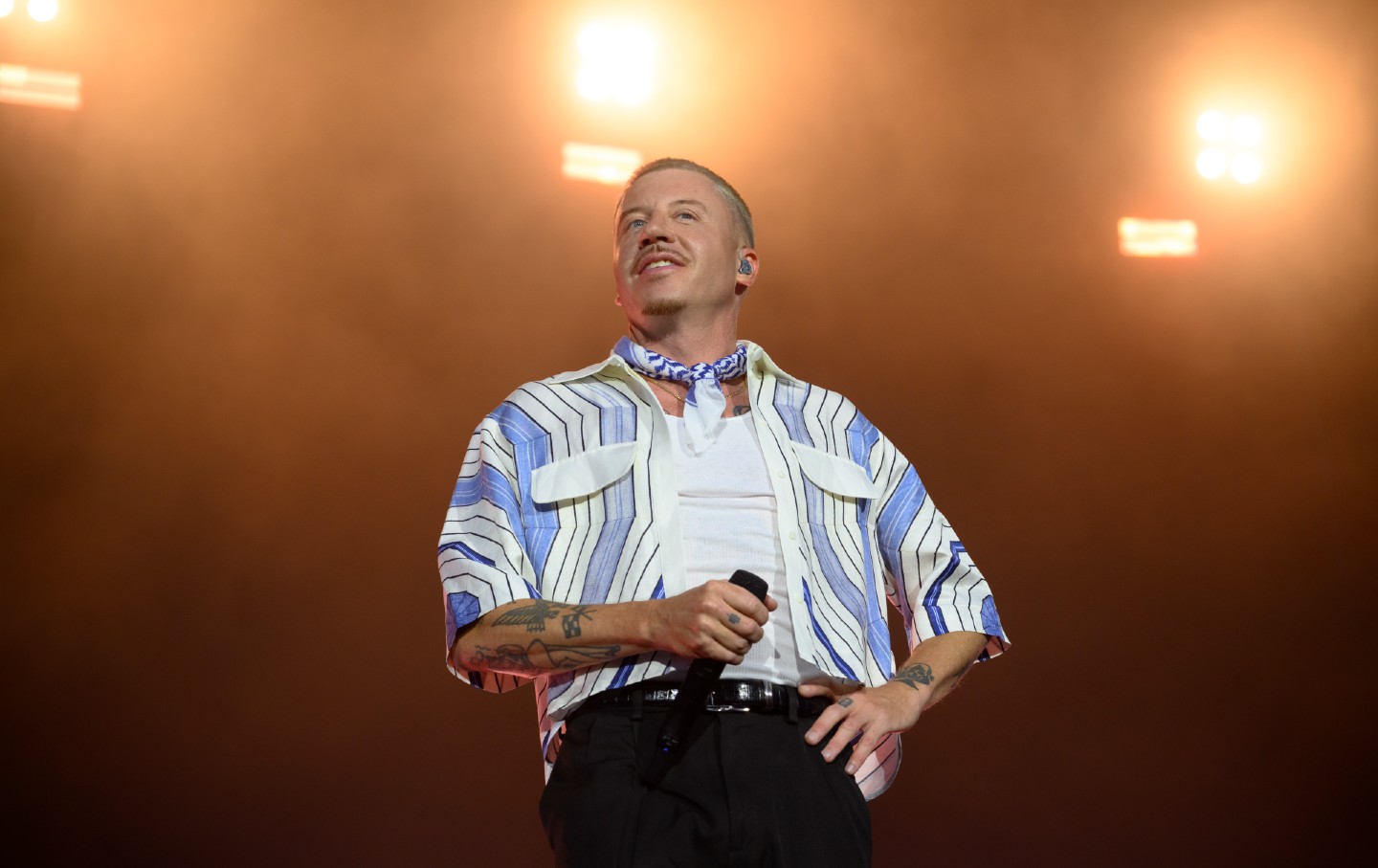
Justice for Macklemore Justice for Macklemore
The rapper has been dumped from Ed Sheeran’s tour for saying “free Palestine.” That’s a disgrace.

We Are Living Under Roy Cohnian Logic We Are Living Under Roy Cohnian Logic
The political fixer created a career for himself as a self-promoting, ubiquitous hustler. Like Trump, he got away with it by having the right friends.

Time Has Run Out for AI Risk Deniers Time Has Run Out for AI Risk Deniers
The recent spate of reports about the technology’s destructive power underline two prime directives: Be afraid, and regulate aggressively.
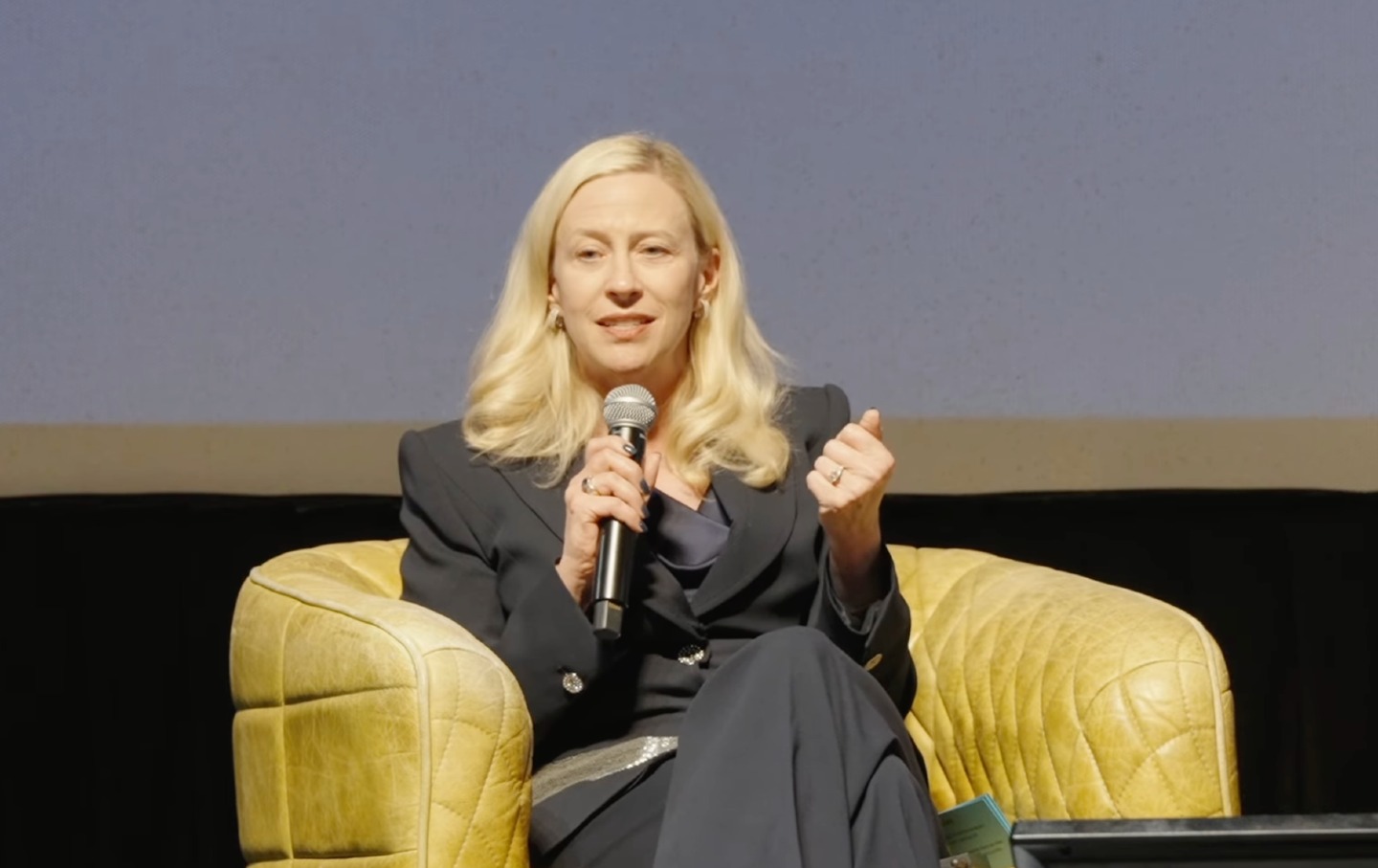
Yale’s President Has Become a Shameful Collaborator With Trump Yale’s President Has Become a Shameful Collaborator With Trump
Maurie McInnis has the power to stand up to the administration. Instead, she’s caving.

The Fissures and Fractures Behind the Right’s Pink Facade The Fissures and Fractures Behind the Right’s Pink Facade
After Roe was overturned, some young women are turning more hard-line on abortion—but others are fleeing conservatism altogether.

