Amy Goodman on the Job of Journalism
A conversation with the veteran broadcaster on threats to press freedom—and what the press is really for.
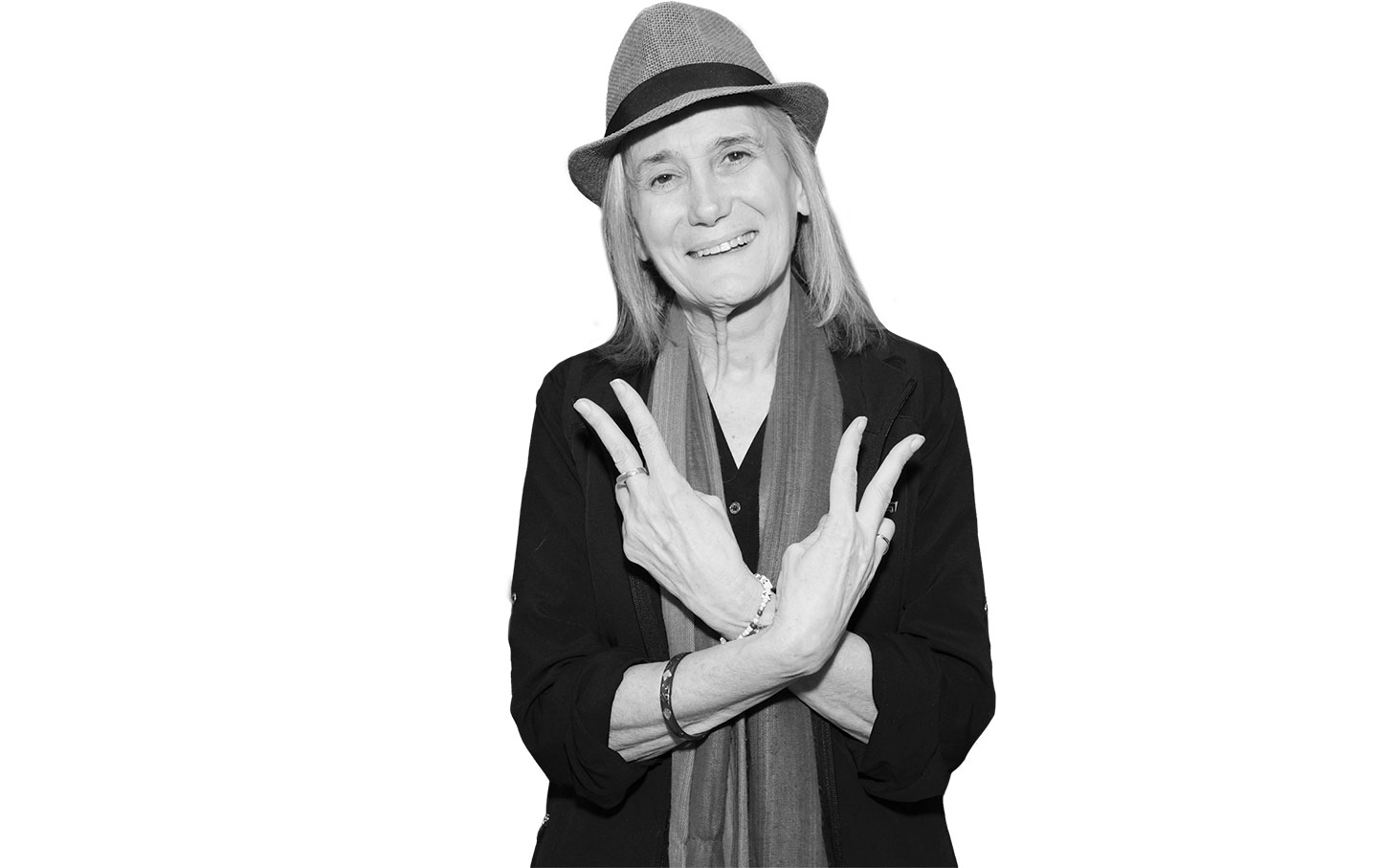
No American journalist has spoken more truth to power in recent decades than Amy Goodman, whose work as an independent journalist and the host of Democracy Now! is explored in the new documentary Steal This Story, Please! To get a read on press freedom as the US marks its 250th anniversary, John Nichols spoke with Goodman. Their conversation has been lightly edited for length and clarity.
JN: How vital is press freedom to the promise of American democracy?
AG: Journalism is essential to the functioning of a democratic society. It’s holding those in power to account, and it’s also our job to go to where the silence is, right?
Actually, it’s often not silent there—it’s raucous, it’s rowdy, people are organizing. But it doesn’t hit the corporate-media radar screen.
It’s our job to bring out the voices of the people closest to the story—people who are deeply involved in their communities. That’s what makes a functioning democracy.
JN: Yet journalism is now threatened.
AG: We are in an extremely dangerous moment. We have a president who calls the press the “enemy of the people.” Nothing could be further from the truth—and, of course, so much of what he says couldn’t be further from the truth. The free press is absolutely not the enemy of the people. There’s a reason why freedom of the press is enshrined in the US Constitution, in the First Amendment. And included in freedom of the press is the public’s right to know. Without this, people can’t make informed decisions. You can’t have a meaningful democracy without people being fully informed, and then they can make their decisions about war and peace, life and death.
The president’s rhetoric is extremely dangerous. He has even encouraged physical violence against journalists and media workers. He’s also appointed people to key roles in the government who are totally hostile to a free press. Take Brendan Carr, the chair of the Federal Communications Commission. He’s the one who threatened ABC television stations that carry Jimmy Kimmel Live!, after Kimmel said something President Trump didn’t like. What did Carr say? I remember when we played it on Democracy Now!: “We can do this the easy way or the hard way,” implying that stations could lose their broadcast licenses if they didn’t take Kimmel off the air. That’s just one example. Of course, with CBS, you have another example, and now Stephen Colbert’s gone. These are examples of Trump wielding the power of the federal government to threaten and attack a free press. And you have, more importantly and more insidiously, the Trump administration exerting pressure on corporate conglomerates to rein in their media properties in order to advance the interests of the corporations’ bottom lines (including moves that, critics argue, are designed to secure federal approval for mergers and acquisitions).
JN: How can Americans address this threat and create media systems that serve democracy?
AG: Support independent media, where you have a different model of media that is not funded by corporations. Look at Pacifica Radio, for example, founded in 1949 by a war resister, Lewis Hill. He came out of the detention camps and said there’s got to be a media outlet not run by corporations that profit from war, but run by journalists and artists. Independent media allows people to speak for themselves. And when you hear a Palestinian child or an Israeli grandmother or an uncle in Afghanistan or an aunt in Iran, it challenges the stereotypes and the caricatures that fuel the hate groups. You may hear an uncle in Afghanistan who reminds you of your uncle and makes it much less likely that you’ll want to destroy him. I think the media can be the greatest force for peace on earth. Instead, all too often, it is wielded as a weapon of war, which is why we have to take the media back. And we have to support it.
When we cover war and peace, we shouldn’t be brought to you by the weapons manufacturers. When we cover the climate catastrophe—the fate of the planet—we shouldn’t be brought to you by the oil, gas, and coal companies. When we cover inequality, we shouldn’t be brought to you by the banks. Independent media is brought to you by the listeners, the viewers, the readers who want to know the truth, who want to hear authentic voices. And that’s a media serving a democratic society.
Become a Sustaining Donor This September
Between the reemergence of right-wing red-baiting and Donald Trump’s use of the chilling National Security Presidential Memorandum–7 to criminalize left political organizing, we’re seeing McCarthyism reborn before our eyes.
This assault on democracy cannot be ignored or wished away. Resisting it requires bravery in the face of threats and repression, a steadfast commitment to the truth, and the unwavering belief that we can—and will—overcome this darkness.
We must have an independent media that sets the record straight, unearths corruption and abuses of power, and advances a politics of justice and dignity for all if we’re to win this fight.
That’s why I’m writing to you today. This September, The Nation needs to add 100 monthly donors to sustain our progressive journalism. Your contribution makes the next investigative report, the next truth-speaking column, and the next pathbreaking essay all possible.
I hope you’ll support our work with a recurring donation today. If you donate $10 or more a month, we’ll send you a brand new “Hands Off the Free Press!” sticker to recognise your commitment to our cause. Please, donate today.
Onward,
Katrina vanden Heuvel
Editor and Publisher, The Nation