
The People’s Document
The centuries-long struggle to make the Constitution equal for all.
The Centuries-Long Struggle to Make the Constitution Equal for All
The effort to transform the United States’ founding document into a vehicle for egalitarian politics.
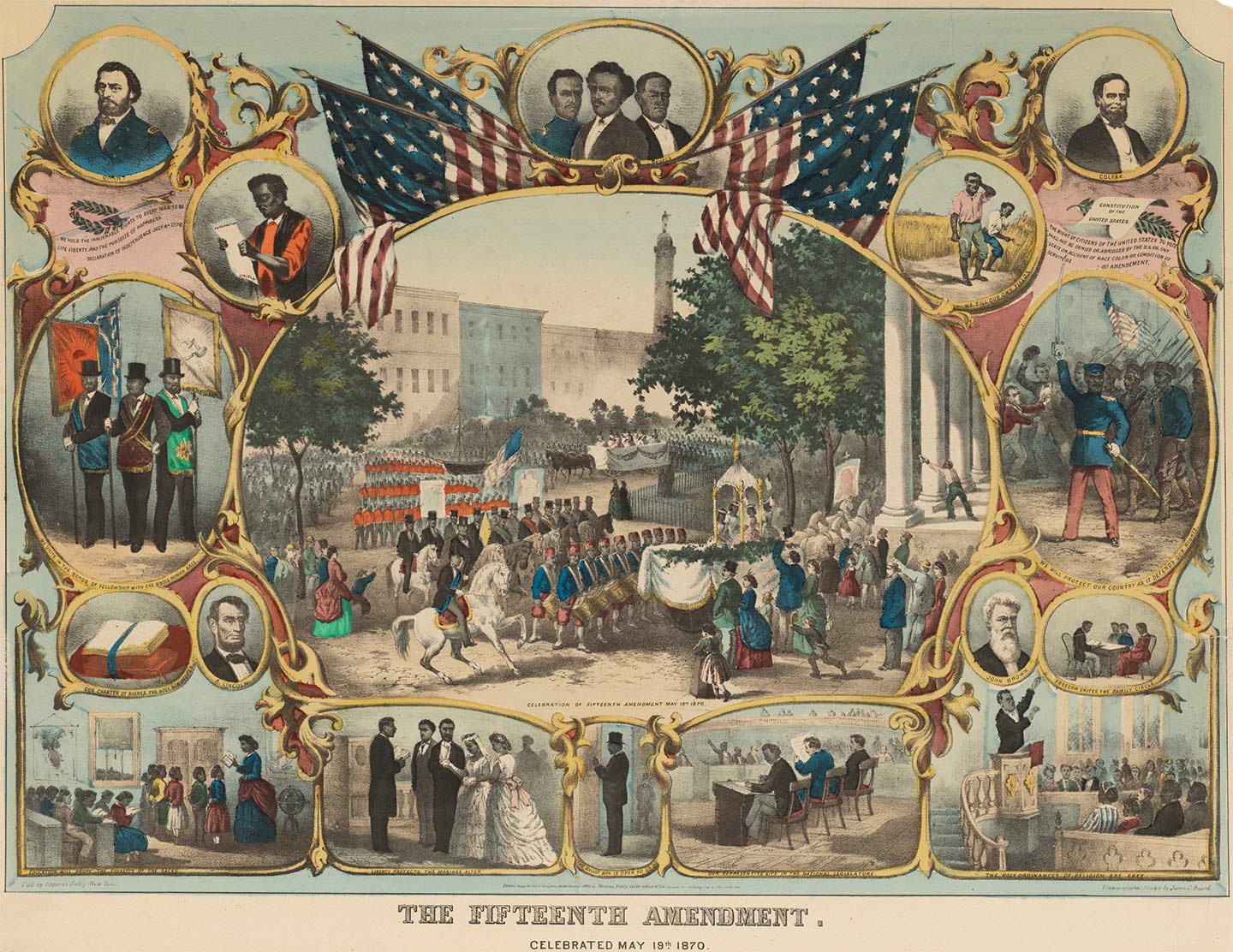
It’s safe to say that there hasn’t been a time since the Civil War era when the US Constitution—its meanings, rights, and protections, its checks and balances and violations—was more consequential or contested in our political life. Thanks to the Trump administration, hardly a day goes by when a presidential order, a Justice Department prosecution, or a Homeland Security detention and expulsion doesn’t overstep the bounds or outright ignore constitutional norms and practices. And as we all know, even before Trump was sworn in a second time, there were serious questions about his eligibility for the presidency, given his participation in the January 6, 2021, uprising. Who would have thought that Section 3 of the 14th Amendment, determining who might be barred from office for engaging in “insurrection or rebellion” against the United States, would be at the center of a judicial reckoning? Or that birthright citizenship, Section 1 of the 14th Amendment, so foundational to securing and expanding our civil and political rights, would be under concerted attack and now awaiting a Supreme Court ruling demanded by Trump? How the Constitution will be interpreted by a right-wing Supreme Court, and whether its long-accepted rules for the wielding of power remain intact, are questions that now stare us in the face.
Books in review
Born Equal: The Remaking of America’s Constitution, 1840–1920
Buy this bookSad to say, given the moment, relatively few Americans know much at all about the Constitution: the framework of governance it sets out, the interpretive conflicts it has spawned, or its lengthy historical arc, amendments and all. At best, they see the Constitution as an important part of the country’s origin story, tethered almost umbilically to the earlier Declaration of Independence, which few Americans know much about either. This may be why the Democrats’ efforts in 2024 to present themselves as the defenders of democracy and the Constitution didn’t work very well, and why, even in 2026, they are still struggling to do either.
One of Akhil Amar’s ambitions in his new book, Born Equal, is to help remedy these deficiencies. A distinguished constitutional scholar and professor at Yale Law School, Amar has been among the most prolific and influential interpreters of the Constitution and its history, writing multiple books as well as law-review articles, many crafted with a broad audience in mind. Even more impressive, he has now embarked on a three-volume “epic saga” of the Constitution that begins with the founding of the United States and will end with the present. Born Equal, which charts the Constitution’s history from 1840 to 1920, is the second of the series.
As one might expect given the subject, Born Equal is a long book, and it offers both more and less than its title suggests. More, because Amar often takes us back to the Constitution’s making and early history and provides a larger political history as well, organized chiefly around the fight over slavery and the coming of the Civil War. Less, because we don’t get to the crucial Reconstruction amendments—the 13th, 14th, and 15th—until we’re 500 pages in, and because he spends remarkably little time on the important period between 1870 and 1920, especially with the making of the 19th Amendment, which established women’s suffrage.
Readers will find a lengthy and somewhat loopy narrative presented in a conversational style, apparently designed to keep the interest of nonspecialists, and a pretty familiar cast of characters whose surnames are quickly dropped: Elizabeth (for Elizabeth Cady Stanton), Frederick (for Frederick Douglass), Harriet (for Harriet Beecher Stowe), and so on, all the way to Abe (for Abraham Lincoln—a nickname that Lincoln hated for the same reason that the other figures would likely find this cringeworthy, as a sign of public disrespect). But through the book’s more than 700 pages—Amar says it would have been even longer if not for the opposition of his editor—there is an important and compellingly developed idea, one that has been at the heart, in shorter and longer versions, of his work: the idea of a “liberal originalism.” Unlike the more commonly invoked notion of originalism that many conservatives embrace, which focuses on the original text of the Constitution and the apparent intent of the founders, Amar sees an originalism based on “equality,” one connected to the Declaration of Independence and expressing the deepest aspirations of the founding generation. In Amar’s view, this liberal originalism shaped constitutional rhetoric across the Northern states between 1776 and 1860, with Lincoln eventually emerging as its true embodiment, not just because of his powerful and enduring words at Gettysburg in the fall of 1863 but also because, throughout his political life, Lincoln found in the Constitution the basis for antislavery and an egalitarian republic.
The first three-quarters of Born Equal focuses chiefly on the struggles in the Northern states to advance a liberal originalism, especially in campaigns against slavery and in support of women’s rights. Amar therefore begins with the World Antislavery Convention of 1840 in London, when the eight women in the American delegation were excluded from the proceedings. It was a powerful moment on the road to the women’s-rights convention held at Seneca Falls, New York, in 1848, and to the expanding role of women in the abolitionist movement.
Amar’s narrative here is rich and detailed. The same can’t be said for his treatment of the Southern slave states: He devotes relatively little attention to their internal politics, defense of slavery, economic organization, or the development of secessionist thought. No member of the slaveholding leadership is mentioned often enough to merit first-name treatment (also, perhaps, a sign of Amar’s scorn), and even though many had their own versions of constitutional originalism and the right of revolution, he doesn’t take them very seriously. As a result, Amar pretty much regards the slaveholders’ behavior in the deepening crisis over slavery’s future as “foolish” and “stupid.” The handwriting, he insists, was on the wall: The political balances in the country were coming to favor the Northern states; slave-grown crops like cotton were unlikely to fare well in the contested trans-Mississippi West; and the world was turning against slavery on multiple grounds. “A truly farsighted South” (a stand-in term for a complex region and set of people, white and Black) that recognized the “evil” and “unsustainability” of slavery would have sensibly tried to cut some deals: accepting gradual emancipation, say, on the model of New York, in return for a variety of concessions, including cash and land grants in the West. These states might, that is, have heeded Lincoln’s constitutional views and moral imperatives, along with the economic benefits that such an arrangement may have brought.
In this, Amar offers a version (albeit a more transactional one) of the long-debunked “repressible conflict” interpretation of the coming of the Civil War, which argued that slavery had reached its natural limits and that a negotiated settlement was possible, only to be spurned by self-interested politicians who had forgotten the lessons of the founders. The truth is that the South’s cotton economy was thriving and had made the fortunes of what had become the richest and most powerful landed elite in the world. Slave labor was also exploited very profitably in the production of commodities other than cotton—sugar, rice, tobacco—as well as in mining, building infrastructure, and even some manufacturing. And by the 1850s, the winds of abolition and progressive reform were waning and a new conservatism and nativism was taking hold in the United States. Enslavers or those sympathetic to them still controlled the White House, the Supreme Court, much of Congress, and had strong supporters in both the Whig and Democratic parties. Why shouldn’t the slaveholding leadership have thought that secession and political independence were achievable?
Amar also seems to believe that the gradual emancipation of enslaved people as it unfolded in places like New York, as opposed to disunion or war, was a perfectly reasonable solution to the crisis. Perhaps he forgets that the legislation enacted in New York and in most other states of the Northeast and the Mid-Atlantic freed no slaves; instead, it freed the children of enslaved adults, and only when they reached adulthood themselves (21, 25, or 28, depending on the state, and also on the gender of the prospective freedpeople). Eventual “liberation,” moreover, brought with it no civil or political rights in the North; nor would it have done so under similar conditions in the South. Instead, the emancipation process often ended not in freedom but in some form of extended servitude. During the Civil War, Lincoln imagined a 35-year plan of emancipation with the promise of colonization (meaning exile) either in Liberia or some other foreign territory rather than freedom in the United States.
Amar is remarkably unconcerned about what this would have meant for Black people. Nor does he seem to recognize that any such deal between white leaders in the North and South would have rendered what became the 13th, 14th, and 15th amendments (not to mention his book itself) inconceivable.
These amendments were absolutely transformative, though it’s not entirely clear in Amar’s telling if they marked the realization of the Constitution’s egalitarian originalism or if, as Eric Foner’s recent book The Second Founding argues, they represented a revolutionary remaking of the original text itself. Even so, Amar’s discussion makes the case for how sweeping those amendments were: how they ruptured previous constitutional understandings, empowered the federal government in ways previously unimaginable, envisioned an entirely new civil and political landscape, and, I would suggest, turned a loosely constructed union and empire—a concept that is rarely in play here—into a nation-state.
While Amar’s arguments about liberal originalism can obscure the revolutionary nature of the Reconstruction amendments, his narrative reveals how much of a break from the past they represented. On the eve of the Civil War, nearly nine in 10 people of African descent in the United States were enslaved (many more than were enslaved in any other slave society remaining in the Western Hemisphere). Emancipations, when they took place, were organized by individual states, were very gradual, and were built on the idea that enslaved people needed to be tutored in freedom and that enslavers had to be compensated for the chattel property they’d lost. Black people, whether enslaved or free, could not be citizens of the United States and had “no rights which the white man was bound to respect,” even though it wasn’t clear at the time what an American citizen was. The rules of political participation, moreover, were determined wholly by the states, which meant that “universal suffrage” was really adult-white-male suffrage, with the term white explicitly embedded in state constitutions.
Yet by 1870, as Amar shows, an entirely new framework of power, social relations, and racial prospects appeared to be in place. Slavery (as well as involuntary servitude) had been abolished in dramatic fashion, with no compensation to the enslavers, thanks to the 13th Amendment. Birthright citizenship with guarantees of due process and equal protection under the law for “all persons”—a dramatic rejection of the Dred Scott decision—had been established thanks to the 14th Amendment. Black men in the South had not only won the elective franchise but enjoyed the backing of the US Army, which registered them in country and town alike (the first voter registration in American history, made possible by the Reconstruction Acts of 1867). And the “right to vote,” in this case neither abridged nor denied because of “race, color, or previous condition of servitude,” became a part of the Constitution thanks to the 15th Amendment—though by the time it was ratified, the amendment had effectively enfranchised Black men outside the South, whose struggles for the right both before and immediately after the Civil War had been defeated again and again in the Northern states.
Still, there were important limitations, raising questions about the reach and depth of the amendments’ egalitarianism. The 13th Amendment’s exception clause (“except as a punishment for crime”), which Amar sidesteps, validated the exploitation of penal labor that had been going on mostly in Northern penitentiaries since the early 19th century and enabled the lethal reign of the convict-lease system in the post-emancipation South. The 14th Amendment failed to specify in anything but a perfunctory way what the privileges and immunities of citizenship would be, and despite the efforts of the women’s-suffrage movement, it associated political rights with men (the word male was introduced into the Constitution for the first time in Section 2, a lure for Southern states to enfranchise Black men). Finally, the 15th Amendment narrowed the grounds on which the federal government could defend voting rights. It was silent about potential literacy, property, or poll-tax requirements; assigned no responsibility for supervising voter registration; and, again, rejected women’s suffrage.
The consequences of these constitutional limitations became evident in both the short and long run. In the Thermidorean aftermath of Reconstruction, the amendments were themselves interpreted to restrict the powers of the federal government over states and localities; to permit the civil and political subordination of Black people and all women; and to empower employers at the expense of workers of whatever race, ethnicity, or gender. As Amar laments, “much of what Abe’s amendments won in the text was later lost on the ground.” (Lincoln was of course dead before the 14th and 15th amendments were drafted and enacted.) Yet Amar seems reluctant to grapple with such a constitutional aftermath, and in particular whether the omissions, the less than egalitarian intentions, or the very nature of liberal egalitarianism were chiefly responsible for what followed.
Instead, we are offered 10 pages of bullet points that are meant to cover the Slaughter-House cases (1873); Bradwell v. Illinois (1873); US v. Cruikshank (1876); the Civil Rights Cases (1883); Plessy v. Ferguson (1896); and Lochner v. New York (1905). Amar somehow misses Santa Clara County v. Southern Pacific Railroad (1886), which gave corporations rights under the 14th Amendment; Williams v. Mississippi (1898), which allowed the disfranchisement of Black men by the states; and the InsularCases (1901), which hedged the rights that residents of foreign territories under US jurisdiction could claim. Enacted in a revolutionary moment, the Reconstruction amendments also reflected contending perspectives among the Republicans doing the drafting. That moment would soon pass, and when the radicals among them were defeated, so too were the most far-reaching possibilities that the amendments could have enabled.
There can be no doubt that the abolitionist and antislavery leadership touted by Amar, together with the many thousands of Northerners who turned the battle against slavery into a mass political movement, were of crucial importance not only to slavery’s destruction but also to the constitutional remaking that frames Born Equal. Their success depended in good part on an interpretation of the Constitution that regarded freedom as an American inheritance and slavery as a local institution, albeit one beyond the powers of the federal government—an interpretation that was long in the making and that Lincoln’s Republican Party embraced.
Yet it would be a mistake to think of slavery and freedom as a simple binary, as this might suggest, or the rhetoric of equality as more of a commitment than it usually was. Amar is chiefly interested in setting the liberal and conservative versions of originalism apart, but he doesn’t do enough to explore how the nature of liberal originalism itself, with its visions of freedom entangled in fears of social disorder, helped set the boundaries of Reconstruction’s remakings.
The views of Benjamin Rush offer a useful perspective. A Philadelphia physician, social reformer, and signatory of the Declaration of Independence, Rush penned frontal attacks on both slavery and the death penalty, steeped in the language of morality and Christian faith. But he also worried deeply about the disorder that emancipation was likely to bring and questioned the readiness of enslaved people for freedom. He therefore called, in 1773, for a gradual process of emancipation during which the enslaved would remain enslaved, while their children would have a specified period of servitude devoted to some basic education, after which they would be on their own, though with “the privileges of free-born British subjects.” It was a plan the Pennsylvania General Assembly would enact in 1780, though without the provisions for education or rights. Soon thereafter, Rush became an architect of the penitentiary, which included the use of solitary confinement, convict labor, and corporal punishment. He and many others active in the antislavery movement saw this as a humane alternative to traditional community-based punishments, which had long involved some combination of pain and humiliation if not death.
Rush’s fears not only shaped the abolition of slavery and the lives of formerly enslaved people in the Northern states but also dogged the antislavery movement, especially as it came to compete for, and then wield, federal power. The best that Lincoln and the Republican Party had to offer in the run-up to the Civil War was the “non-extension” of slavery into the Western territories—acknowledging that the federal government had no power over slavery in the states where it had been deemed legal—and the deportation of emancipated Black people keep Northern whites on board. Gradual or compensated emancipation was not on the table in the winter of 1860–61 and wouldn’t be until the spring of 1862, when Congress abolished slavery in the District of Columbia by offering monetary compensation to the enslavers residing there. In September, Lincoln’s Preliminary Emancipation Proclamation offered the olive branch of gradualism and colonization to encourage the enslavers to move toward emancipation and the rebels to lay down their arms. (There were no takers.) Needless to say, a gradual ending of slavery in the South—including in the “so-called Confederacy” (Lincoln’s phrase)—would hardly have provided the slowly liberated Black population with much in the way of equal rights, and colonization was as unmistakable a rejection of birthright citizenship as one could imagine. Lincoln had railed against the Dred Scott decision, but colonization—presented in large part as a solution to the threats of racial mixing and racial equality—essentially asserted that Black people had no claims that white people were bound to respect, let alone any secure and rightful place in the United States.
So how do we get from the emancipatory conundrum that hampered liberal originalism to a sweeping, ungradual, and uncompensated emancipation; to birthright citizenship and the equal protection of the laws; and to political rights advanced both by Congress and by the Constitution? For Amar, the answer is his version of originalism and his multiracial and multigendered cast of characters. Yet with the exception of Frederick Douglass, who came to see that the destruction of slavery could not be accomplished through formal constitutional means, none of the others ever conceived of such an outcome until the war made it both necessary and possible.
Popular
“swipe left below to view more authors”Swipe →A better answer comes from recognizing the vision and work of historical actors whom Amar gives little, if any, attention to: enslaved people in the South and free people of color in the North. That’s because such an explanation complicates his version of originalism, and also because he doesn’t seem familiar with much of the recent scholarship on this topic. Amar makes some mention of enslaved people fleeing to the federal army lines and eventually signing up to fight against their former owners and the Confederacy, in which he privileges Douglass’s recruitment efforts. But there is nothing in his story about the political views of enslaved people, their understandings of what the struggle against slavery and the waging of the war were about, their own roles in disrupting the Union by becoming fugitives from enslavement in the decades before the war, or how their own rebellions against their enslavers weakened the Confederacy, strengthened the Union, and changed the terms by which their futures were to be considered.
Had the war not ended with the unconditional defeat of the Confederacy, whatever there was of liberal originalism would have gone down the drain. Dred Scott would have remained the law of the land, slavery would have endured into the 20th century, and the Republicans would have been the ones making deals with the enslavers to keep some degree of power. Or the United States would have had a slaveholding republic on its immediate border, which in all probability would have gained the support of Britain and France, if not Mexico, and perhaps would have emboldened the remaining hemispheric slave regimes in Cuba and Brazil. That nearly 200,000 Black men, about 80 percent of whom had been enslaved, took up arms against the Confederacy prevented such an outcome; they helped make an unconditional Union victory, and their unencumbered freedom, possible.
For them, equality was not a matter of rhetoric, and they certainly knew that they had not been born into it. Equality was something that had to be enacted and experienced without regard to color or previous condition. Which is to say that, save for a handful of other Americans, it was people of African descent, as slaves and freedpeople, who truly believed that freedom and equality were universal ideals and demanded their fulfillment. They were what we might call “radical originalists” ready to stake their claims. From the birth of the republic, through petitions, protests, lawsuits, conventions, and flight, they insisted that rhetoric become reality, that white people live up to the ideals the founders had articulated, that the country could not continue half slave and half free. It was Dred Scott’s freedom suit in St. Louis, one of the few places in the South where antislavery activism could survive, that forced the issue: The Supreme Court eventually declared in 1857 that slavery could not be restricted in the Western territories or, possibly, anywhere else in the United States.
Once a war to save the Union or to establish Confederate independence began, enslaved people, imagining that Lincoln’s administration was their ally against the enslavers, took the first opportunity to head to federal lines and, in so doing, put slavery on the immediate political agenda. They would then join with free men of color in taking up arms against the rebellious Confederates and help break the bloody military deadlock that had held for several years. Along the way, they called for full civil and political rights and in some cases stacked their arms because they were being paid less than half of what white soldiers were. By the time of his death, Lincoln—who at one point told a Black delegation that “you and we are different races,” that this “affords a reason…why we should be separated,” and that the “colored race” was partly to blame for the war—had come to abandon colonization and support basic civil rights, including limited political rights, for Black people.
In an important sense, then, the Constitution that we want to look to and, at this moment, defend—the Constitution that prohibited slavery and involuntary servitude, that proclaimed birthright citizenship and equal protection for all people in the United States, and that recognized a national right to vote—was not merely amended during the Civil War era. Instead, it was given a new birth with the critical influence of those who were not even citizens under the original Constitution and who envisioned a far more capacious freedom and equality than either the founders or most of their legatees could accept.
As we now face the prospect of a Constitution dismantled and a future that rejects many of the principles that we’ve long liked to celebrate, it is time we acknowledge that those who have been the earliest and most consistent advocates of universal rights, an expansive democracy, and the empowerment of people irrespective of their social and cultural status are also those who, throughout our history, have been denied them the longest.
More from The Nation
What Trump and Tucker Carlson Have in Common What Trump and Tucker Carlson Have in Common
Carlson has broken with Trump largely over the war in Iran. But on Ukraine and immigration, the two speak very much the same language.
The Jewish Case Against AI The Jewish Case Against AI
Haredi rabbis and the secular left agree: This technology is a threat to the entire social fabric.
The Fight for Educational Equality Is Also a Fight for a Just Supreme Court The Fight for Educational Equality Is Also a Fight for a Just Supreme Court
The court has severely weakened our ability to make an education system that fulfills the promise of Brown.
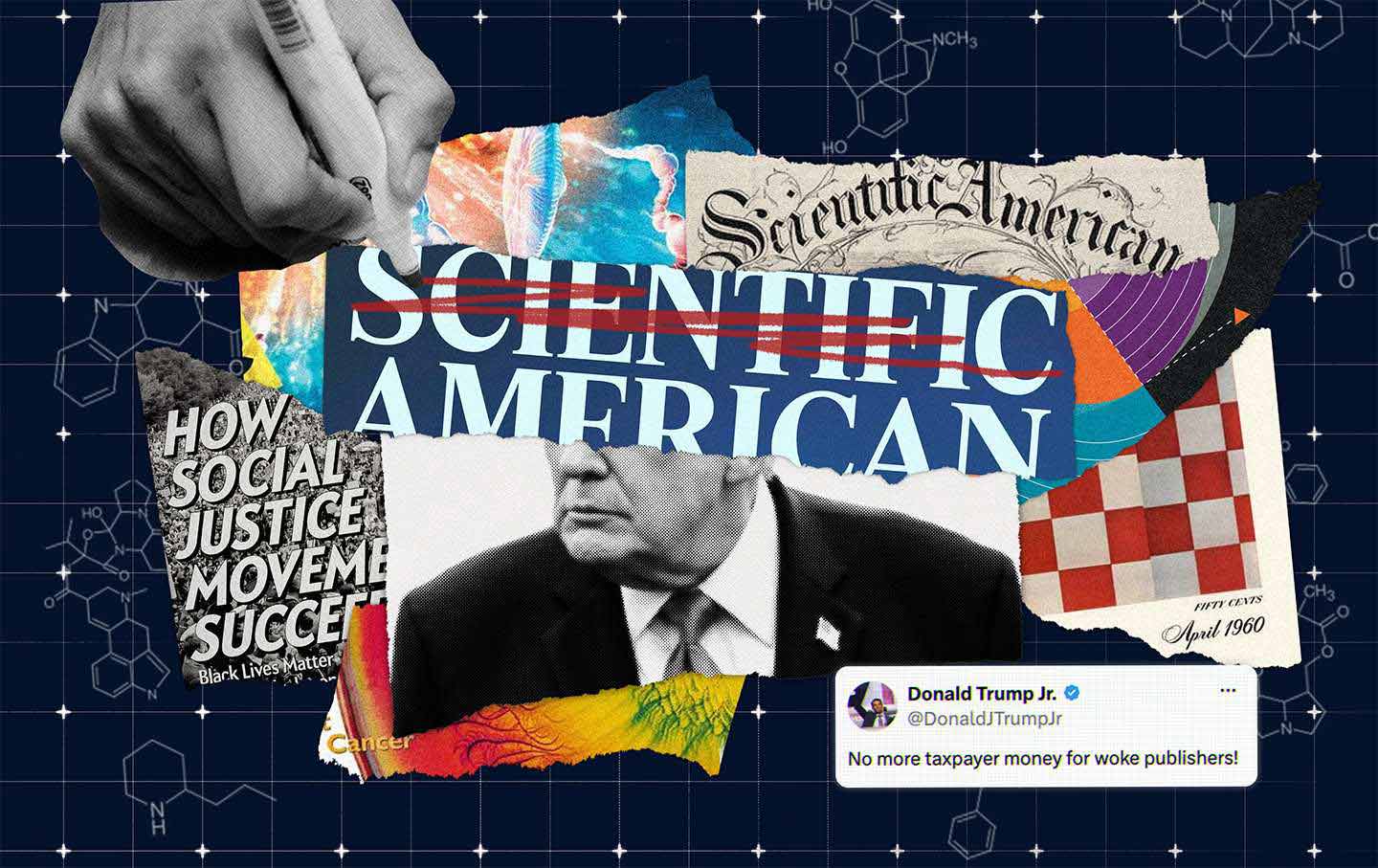
The Fall of “Scientific American” The Fall of “Scientific American”
When the beloved science publication got too political, its corporate owners stepped in. Now its future is uncertain.

The Bookstore Revolution in Taiwan’s Conservative Heartlands The Bookstore Revolution in Taiwan’s Conservative Heartlands
After Taiwan legalized same-sex marriage, gender-themed bookstores are working to build the social acceptance that the law alone couldn’t deliver.

Jalen Hurts Deserved Better. We All Do. Jalen Hurts Deserved Better. We All Do.
In a country that treats workers as expendable parts, Hurts’s playing through a blood clot is just the highest-profile example of the price workers pay in an oligarchy.

