
Ireland’s New President Boldly Opposes Austerity, Militarism, and the Genocide in Gaza
Catherine Connolly, an independent leftist, won a landslide victory with the promise to serve as “a moral compass in a world increasingly driven by profit and spectacle.”
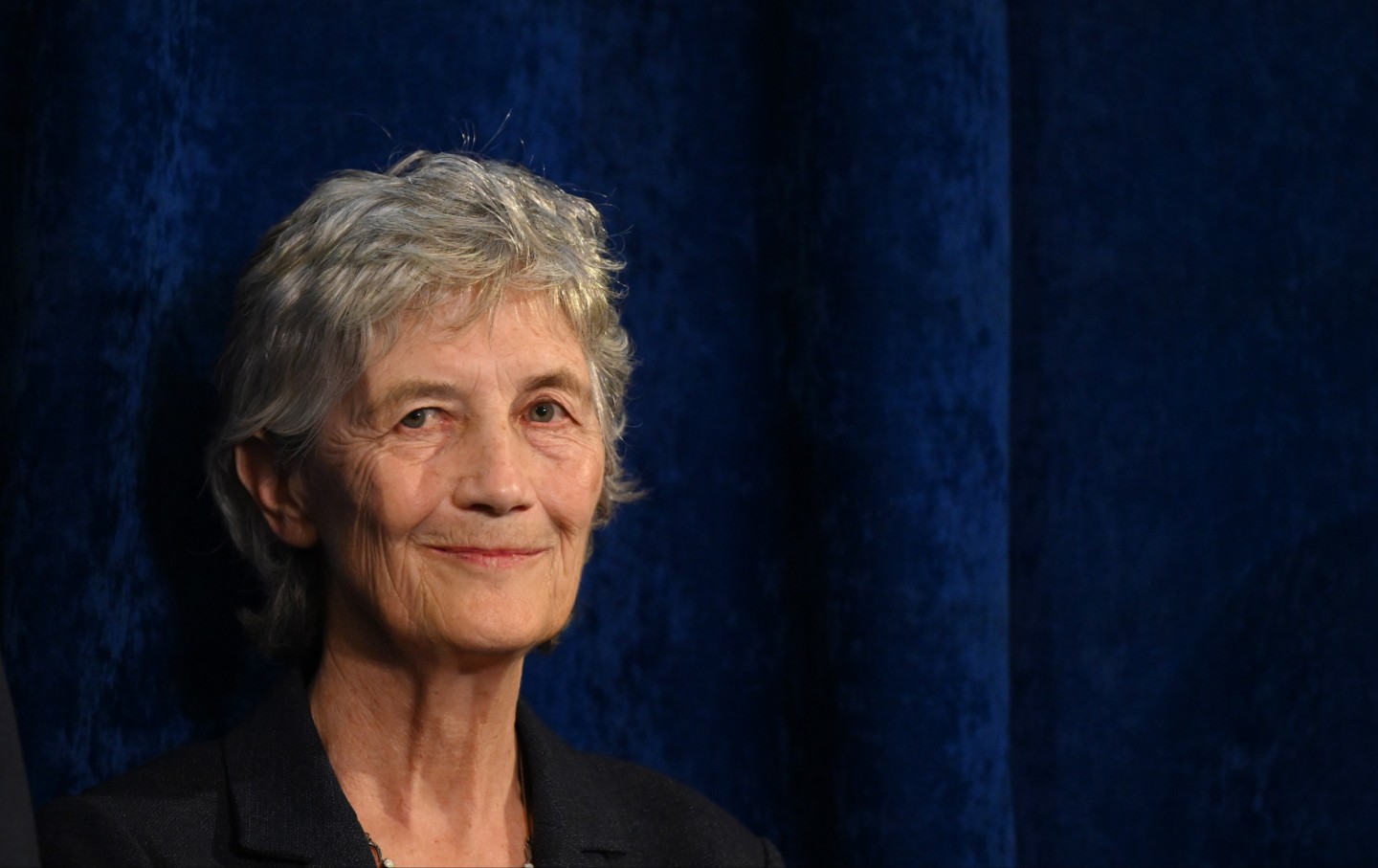
Catherine Connolly is pictured at Dublin Castle as she is declared the winner of the Irish presidential election, on October 25, 2025.
(Charles McQuillan / Getty Images)Ireland’s new president, Catherine Connolly, is a proud leftist who has served for almost a decade as an independent socialist member of the Irish parliament (Dáil Éireann), a blunt critic of the failures of neoliberalism and corporate globalization, and a visionary advocate for the sort of dramatic interventions that are needed to address the economic inequality that has made life increasingly unaffordable for working-class families.
Connolly, who was elected in a landslide on Saturday with 63.4 percent of the vote, also has an anti-colonial and anti-imperialist sensibility rooted in her own country’s long struggle against the British Empire. As such, she campaigned as a defender of Ireland’s long-standing policy of military neutrality—decrying the international arms trade and “the warmongering military-industrial complex”—and a fierce supporter of Palestinian rights. She said that, when it comes to Israel’s assault on Gaza, she would not hesitate to tell Donald Trump to his face: “Genocide was enabled and resourced by American money.”
Elected as an independent who challenged candidates backed by Ireland’s two major center-right parties, Connolly will hold the largely ceremonial—but often influential—presidential post as an outspoken official who observers from across the political spectrum predict will serve as the most left-wing president in Irish history.
The result drew note from beyond the borders of Ireland—with former British Labour Party leader Jeremy Corbyn hailing “a landslide victory for humanity and for hope”—and offered at least a few lessons for progressives in the United States.
Connolly won the presidency after a whirlwind election campaign that united Ireland’s disparate leftist parties, attracted thousands of volunteers, and overcame determined efforts to “smear the bejaysus out of her” by establishment politicians and media outlets. And it wasn’t even close. She swept to victory, beating her nearest rival by nearly 35 points.
“It is the first time that the left has won a majority of votes in a national election,” declared Irish parliamentarian Paul Murphy, an anti-austerity campaigner and leading figure in the People Before Profit party that backed Connolly. “This was not a narrow victory either; Catherine won the largest percentage and largest total vote of any presidential candidate in history.”
Murphy hailed the result as “a watershed moment” that saw unprecedented left unity and a dramatic decline in support for the major parties, Fianna Fáil and Fine Gael, that have historically dominated Irish politics. Sinn Féin leader Mary Lou McDonald, whose party backed Connolly, described the result from Saturday’s election as a “game changer” for her party, for the left, and for supporters of the vision of a united Ireland that Connolly and Sinn Féin have championed. “When we come together, when we work collaboratively, when we show up for each other, we can win,” said McDonald.
Now that she has won, Connolly, a 68-year-old lawyer and clinical psychologist, feminist, and bicycling parliamentarian from Galway, is still being dismissed by the political elites who opposed her candidacy. They point to the fact that the Irish president has few official powers as compared to Ireland’s prime minister.
But Connolly, who has a long record of shaping debates from her position as an independent parliamentarian, and whose candidacy generated Bernie Sanders–style enthusiasm among young voters, says, “The Presidency, we are told, is largely symbolic. But symbols matter. And actions taken under those symbols matter even more. I believe the President should be a unifying presence—a steady hand, yes, but also a spark. A reminder of what is possible. A moral compass in a world increasingly driven by profit and spectacle. A voice for those too often silenced. That is the role I seek to play.”
Connolly’s determination to clear space for a politics based on moral values—“Not Left versus Right, but right vs wrong”—allowed her to appeal to the sort of disenfranchised voters who have surrendered to right-wing populism in many European countries and the United States
That appeal was rooted in her sincerity and her willingness to speak truth to power—both in Ireland and on a global stage, where Irish presidents such as Mary Robinson and outgoing President Michael D. Higgins have proven to be uniquely engaged and often influential figures.
Like Sanders in the US, Connolly leveraged her history of serving as an independent leftist—rather than a major-party insider—to build a coalition that had previously seemed impossible. While past elections had seen candidates of smaller parties on the left competing with one another, she won initial support from Ireland’s Social Democrats and Greens, from the People Before Profit–Solidarity movement and the Labour Party. Eventually, Sinn Féin, the largest party on the left, which many had expected to run its own candidate, got on board—providing a powerful boost to the surging campaign.
Popular
“swipe left below to view more authors”Swipe →Ireland is a small country, but it often captures the international imagination. And when past presidents, such as Robinson and Higgins, have spoken, the world has listened. It is a good bet that Catherine Connolly will be heard too—as will her message that voters in Ireland, and around the world, are rightly fed up with politics as usual. “People are tired—tired of being unheard, unseen, uncertain. Tired of promises broken, of a social fabric fraying,” she says. People, argues Connolly, seek a politics not just focused on what is “but about what it could be,” a politics “not driven by fear, but by hope. Not shaped by division, but by shared dreams.”
Become a Sustaining Donor This September
Between the reemergence of right-wing red-baiting and Donald Trump’s use of the chilling National Security Presidential Memorandum–7 to criminalize left political organizing, we’re seeing McCarthyism reborn before our eyes.
This assault on democracy cannot be ignored or wished away. Resisting it requires bravery in the face of threats and repression, a steadfast commitment to the truth, and the unwavering belief that we can—and will—overcome this darkness.
We must have an independent media that sets the record straight, unearths corruption and abuses of power, and advances a politics of justice and dignity for all if we’re to win this fight.
That’s why I’m writing to you today. This September, The Nation needs to add 100 monthly donors to sustain our progressive journalism. Your contribution makes the next investigative report, the next truth-speaking column, and the next pathbreaking essay all possible.
I hope you’ll support our work with a recurring donation today. If you donate $10 or more a month, we’ll send you a brand new “Hands Off the Free Press!” sticker to recognise your commitment to our cause. Please, donate today.
Onward,
Katrina vanden Heuvel
Editor and Publisher, The Nation
More from The Nation
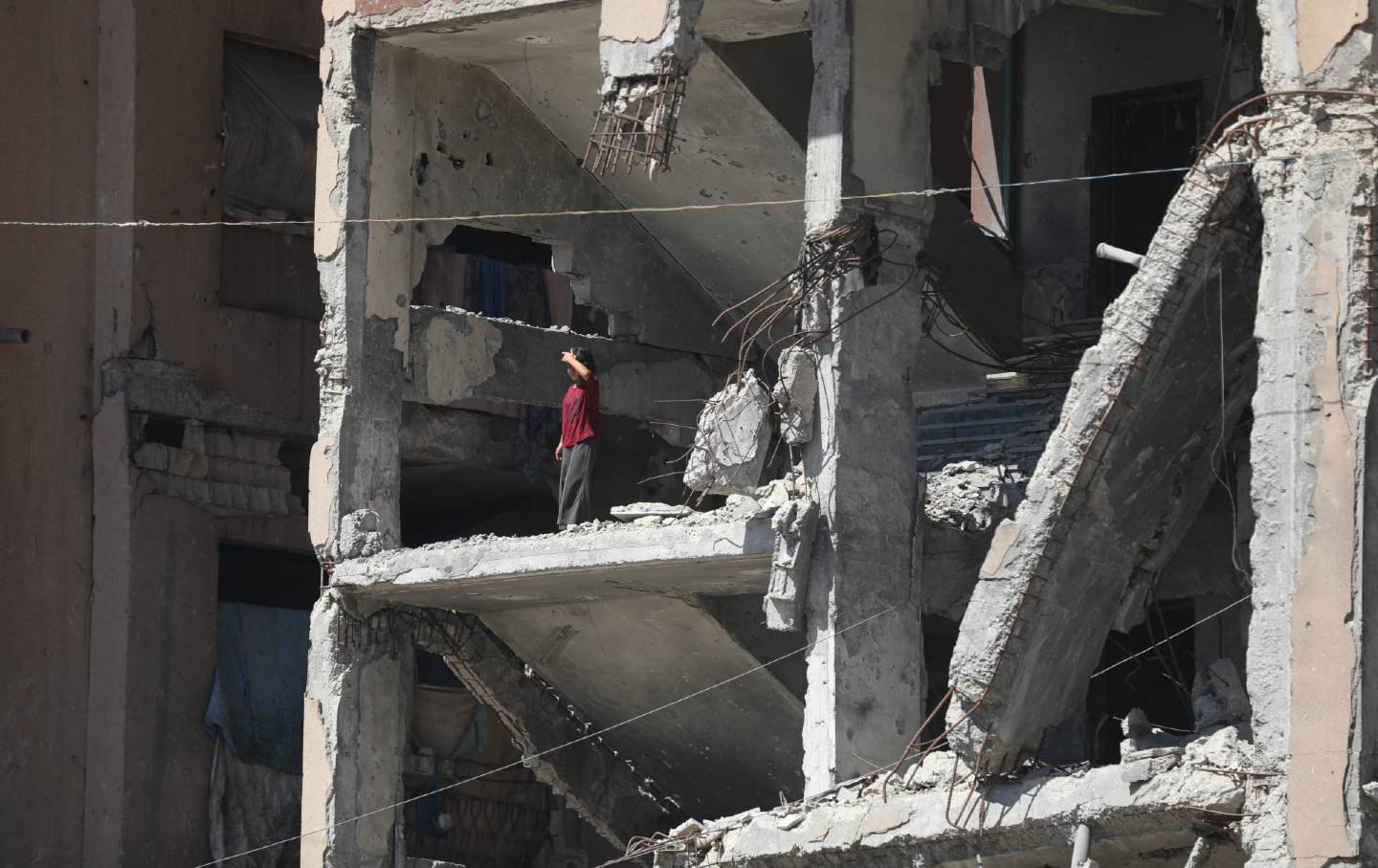
Israel’s Election Can’t Fix What Netanyahu Broke Israel’s Election Can’t Fix What Netanyahu Broke
The fundamental problem is not the name of the prime minister, but rather the actions of the Israeli government and the urgent issues that need to be addressed.
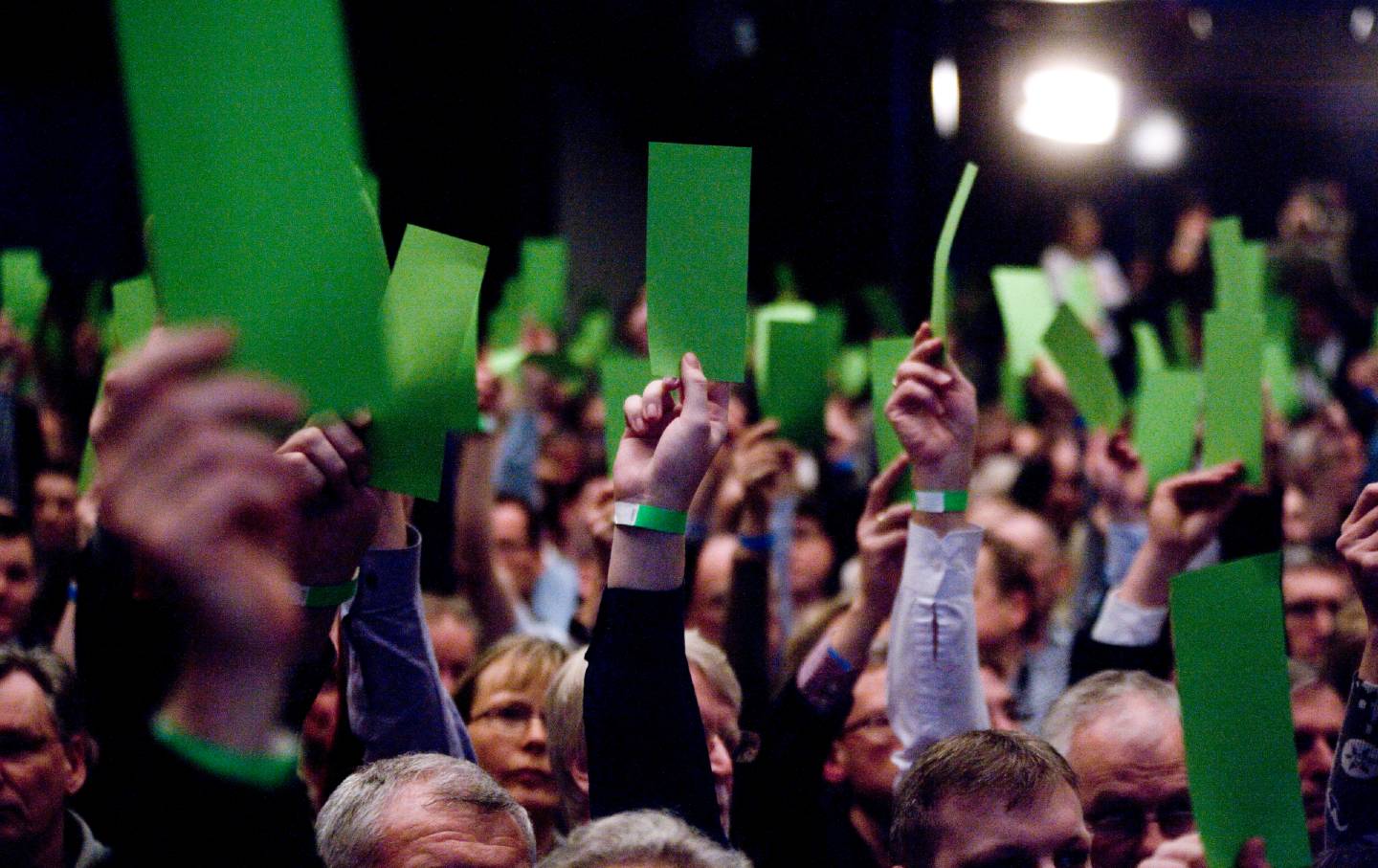
The AfD’s Rise Isn’t Just About East Germany The AfD’s Rise Isn’t Just About East Germany
The Alternative für Deutschland has a stable national poll lead, including in the former West Germany. Its rise owes to much more than Eastern grievances.
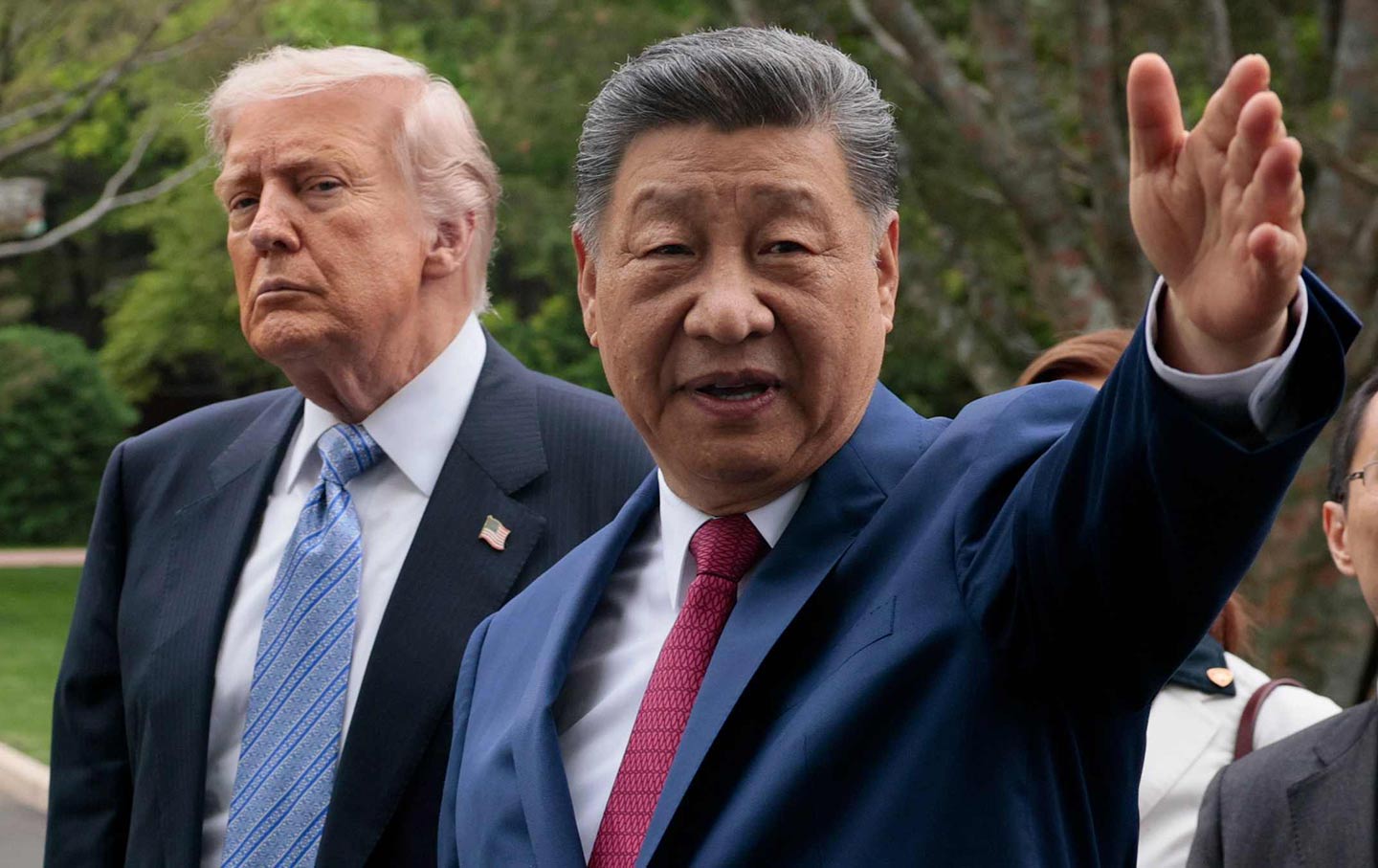
Chinese Development Is the Betrayal Washington Cannot Forgive Chinese Development Is the Betrayal Washington Cannot Forgive
The prospects for Xi Jinping’s visit are dim because American leaders are blaming China for the failures of globalization.
Pinochet: The Verdict of History in the Letelier-Moffitt Case Pinochet: The Verdict of History in the Letelier-Moffitt Case
An act of international terrorism on the streets of Washington, DC, still reverberates 50 years later.
How to Arrest Benjamin Netanyahu How to Arrest Benjamin Netanyahu
Make no mistake: The United States can seize Netanyahu for crimes under US law and prosecute him in US courts when he is in New York City this week.

In the Age of AI, Nuclear Weapons Abolition Is a Renewed Imperative In the Age of AI, Nuclear Weapons Abolition Is a Renewed Imperative
As long as we have nuclear weapons, the job of ending humanity will continue to be as easy as the push of a button—or an AI agent hacking into a nuclear command-and-control system...

