Critical Condition: What Are We Doing About Nuclear War?
Doctors are calling for verifiable, deadline-driven agreement to eliminate all nuclear weapons. The flourishing—and even the survival—of the human species is at stake.
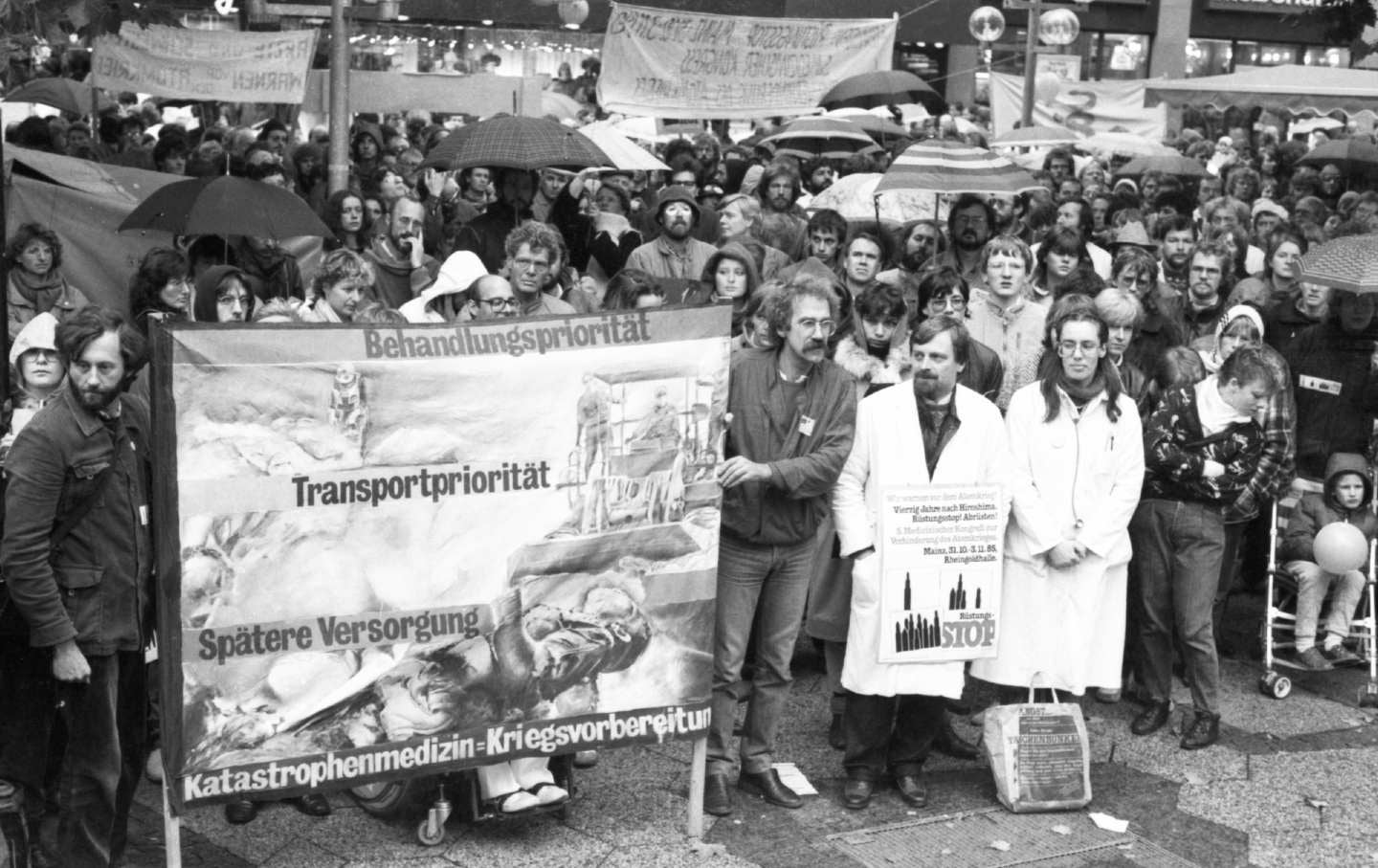
What will it take to get us all to think in a new way?
Someone (the artistic wife of a Manhattan Project scientist, actually) came up with the idea for a clock, its hands ticking ever closer to that sinister midnight. Dentists collected more than 320,000 baby teeth to show how radioactive strontium-90 accumulated in the mouths of our children after all of the hydrogen bomb tests.
Moviemakers offered dramatizations. Think of actor John Lithgow in the closing moments of The Day After, broadcasting via shortwave radio from postapocalyptic Kansas City: “Hello? Is anybody there? Anybody at all?” Or actor Slim Pickens straddling a missile like a mechanical bull, waving his cowboy hat and whooping as he rides a nuke down to blow us all up.
Our most famous thinkers tried logic and eloquence. Physicist Albert Einstein, mathematician Bertrand Russell, chemist Linus Pauling, and other great minds begged us in a famous and beautiful letter: “Remember your humanity, and forget the rest.” It’s been an exhortation cited ever since, blazoned across T-shirts and saluted by a Nobel Prize. The Rev. Martin Luther King Jr., another giant of American moral life, repeatedly pointed out that the civil rights movement couldn’t succeed if the world were annihilated by nuclear war. “It is a wonderful thing to work to integrate lunch counters, public accommodations, and schools,” King observed. “But it would be rather absurd to work to get schools and lunch counters integrated and not be concerned with the survival of a world in which to integrate.”
Others buttressed logic and eloquence by sharing tragic personal experience. The child survivors of the Hiroshima and Nagasaki bombings, now all quite elderly, travel the world to testify about a horrible tragedy from the quaint old days, back when the world knew of only two small (15-kiloton) nuclear weapons. It can be startling to remember this: These weapons have only been around for less than a single human lifespan. We have very little actual experience with them.
More than 1 million people gathered in New York’s Central Park in 1982 to insist something be done, in the largest political demonstration in American history. Catholic popes repeatedly called for nuclear disarmament. Nuns and priests went to jail, often for years, for the crime of sneaking onto military bases and hammering symbolically upon the ICBMs there, as per Isaiah 2:4: “They shall beat their swords into plowshares, and their spears into pruning hooks. Nation shall not lift up sword against nation, neither shall they learn war any more.”
In fact, every major religion has condemned nuclear weapons. Of course they have; these weapons are utterly immoral.
Monks in traditional Buddhist robes once walked 1,600 miles across America to make this point, carrying burning embers lit by a fire associated with the Hiroshima bombing.
Quakers in the 1950s sailed into closed military zones to disrupt nuclear tests, and the Golden Rule Peace Boat sails again today for nuclear disarmament, thanks to a salvage and restoration by Veterans for Peace.
Muslim leaders who have publicly opposed nuclear weapons on moral grounds include Iran’s Ayatollah Ali Khamenei, who was killed at age 86 by the Trump administration. Khamenei was killed—alongside his daughter, his toddler granddaughter, and other family members—at the opening of a war the White House says is about preventing Iran from obtaining nuclear weapons.
How many ways can a message be shared?
Dramatic clocks, heroic sailboats, radioactive baby teeth, nuns going to jail for hammering on a missile, Buddhist monks walking hundreds of miles across America with fire from Hiroshima, the wisdom of Einstein and King and the child survivors of Nagasaki, a million people crowded into Central Park… How many different ways can the great danger to human survival be risen up against, revealed, explained?
To the long list of those efforts we can now add an editorial published this week simultaneously in more than 100 medical journals around the world, ranging from The Lancet and the British Medical Journal of the United Kingdom to the Nigerian Journal of Paediatrics and the Medical Journal of Australia. (Disclosure: I am one of the coauthors.)
From Switzerland to Nepal and from Croatia to Colombia, across general journals and specialty journals, the world’s physicians (and medical students, dentists, nurses, and even veterinarians) will share the same message with one another.
It will be published by and for the geriatricians of Germany in Zeitschrift für Gerontologie und Geriatrie; by and for the doctors of North Africa in La Tunisie Médicale; and by and for the medical educators of Central America in Revista Médica Hondureña. It will be offered in the British Journal of Cancer, the African Journal of Reproductive Health, the International Nursing Review, the Philippine Journal of Otolaryngology Head and Neck Surgery, and many other niche publications. Along the way, it has been actively supported by national medical societies, including those of France, Norway, Denmark, and others.
And it will be read. We know this from the two prior times (in 2023 and 2025) that International Physicians for the Prevention of Nuclear War has pulled off this feat of a simultaneous worldwide medical journal publication.
“As a project, this is not merely a broad communications effort, it is a real game-changer,” says editorial coauthor Chris Zielinski, a past president of the World Association of Medical Editors. “Normally, medical journals go to great lengths to ensure that the material they publish has not appeared in any other medical journals. The fear of plagiarism is extreme.”
But species-level threats to humanity have motivated scientific journal editors around the world to set aside business as usual. (There have also been simultaneous worldwide editorials in 2021, 2022, and 2023 about the dangers of climate change.)
“The international network has been used to raise information literacy in a way which is both refreshingly new, and yet extremely traditional,” Zielinski says. “There has never been anything remotely like it in the health sector—or, for that matter, in any other sector.”
Will it matter? Will it help?
It’s certainly not more eloquent than Russell-Einstein or Martin Luther King. Or the author Jonathan Schell, a former peace correspondent for The Nation, who in The Fate of the Earth warned how easy it is to slip into denial about the nuclear bomb—that “while it relentlessly came to threaten the existence of everything, it physically touched nothing, and thus left people free not to think about it.”
It was not unless one lifted one’s gaze from all the allegedly normal events occurring before one’s eyes and looked at the executioner’s sword hanging over everyone’s head that the normality was revealed as a sort of mass insanity. This was an insanity that consisted not in screaming and making a commotion but precisely in not doing these things in the face of overwhelming danger, as though everyone had been sedated.
Passengers on a ship who are eating, sunning themselves, playing shuffleboard, and engaging in all the usual shipboard activities appear perfectly normal as long as their ship is sailing safely in quiet seas, but these same passengers doing these same things appear deranged if in full view of them all their ship is caught in a vortex that may shortly drag it and them to destruction. Then their placidity has the appearance of an unnatural loss of normal human responses—of a pathetic and sickening acquiescence in their own slaughter.
No editorial published simultaneously in Farm Animal Health and Nutrition, the European Journal of Nuclear Medicine and Molecular Imaging, and Supportive Care in Cancer is going to rival that kind of passionate prose.
All we can do is lay out the scientific facts.
§ Nine nations hold more than 12,000 nuclear weapons—most of them so massive that a Hiroshima A-bomb is tiny in comparison (and in fact, a Hiroshima-sized bomb often literally acts as the blasting cap to detonate the larger bomb).
Popular
“swipe left below to view more authors”Swipe →§ There are enough nuclear bombs to torch the cities, wreck the climate, and kill every human being many, many times over. (In fact, as recounted in The Nation not long ago, a “minor” nuclear war between far-off India and Pakistan would so disrupt world agriculture that, over the next two years, it could kill two out of three Americans. From hunger!)
§ Yet the plan is to keep these weapons on hair-trigger alert—ready for accidental or intentional launch in a matter of minutes—and to sink billions of dollars into building more.
§ All of the US-Russian arms control agreements have been rescinded or have expired. As the US, Russian, and Chinese presidents meet this week in China, Donald Trump says he wants to talk about a major new arms control agreement involving all three nations. But expectations for success are exceedingly low.
§ The majority—the majority!—of the world’s nations have voted emphatically to do away with these ridiculous and morally offensive explosive devices. The Treaty on the Prohibition of Nuclear Weapons was passed easily by the United Nations and has been gathering ratification by national parliaments around the planet. That said, the ban treaty has been ignored by many nations, including every nuclear-armed nation: America, Russia, China, Israel, North Korea, Britain, France, India, and Pakistan.
Hello? Is anybody there? Anybody at all?
More from The Nation
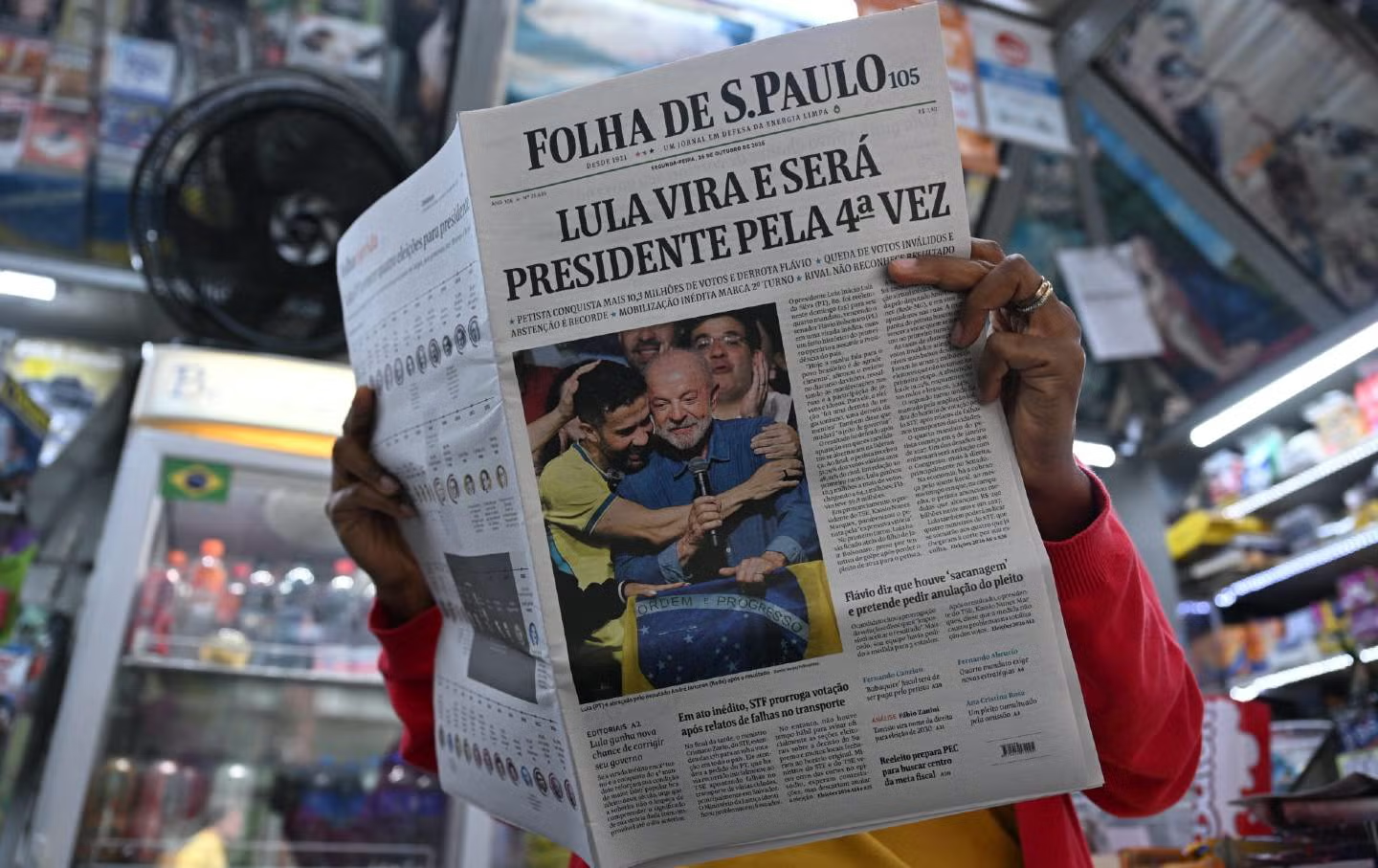
What We Can Learn From Lula’s Seismic Win What We Can Learn From Lula’s Seismic Win
The Brazilian president looked headed for defeat. The Brazilian people had other ideas.
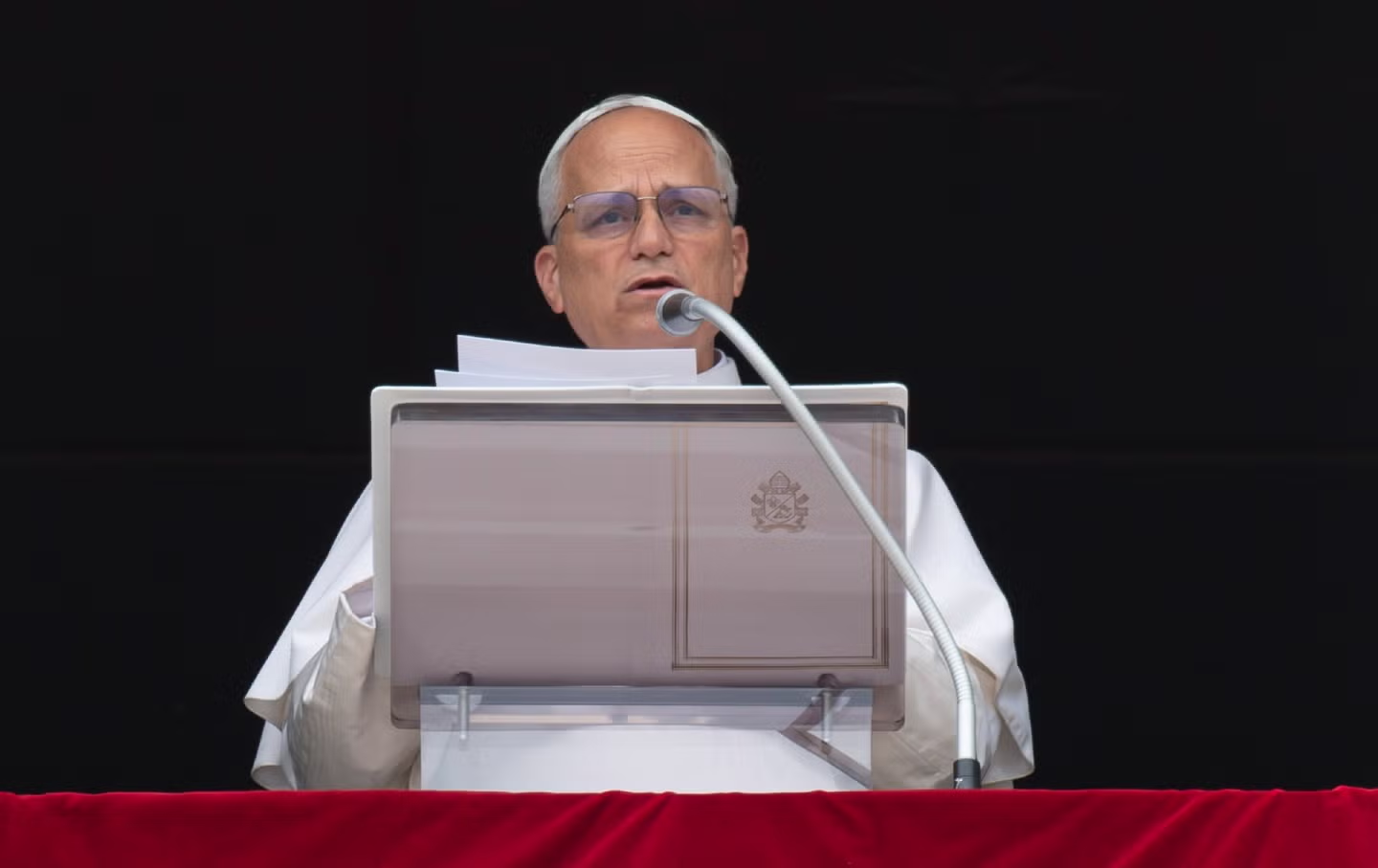
Pope Leo Goes to War—Against the Department of War Pope Leo Goes to War—Against the Department of War
The growing divide between Rome and Washington.

France’s Left, Divided at the Worst Possible Time France’s Left, Divided at the Worst Possible Time
Years of progressive infighting weigh on Jean-Luc Mélenchon’s presidential ambitions.

The Fugitive From Brazil The Fugitive From Brazil
The implications of Trump’s red-carpet rollout for Flávio Bolsonaro.
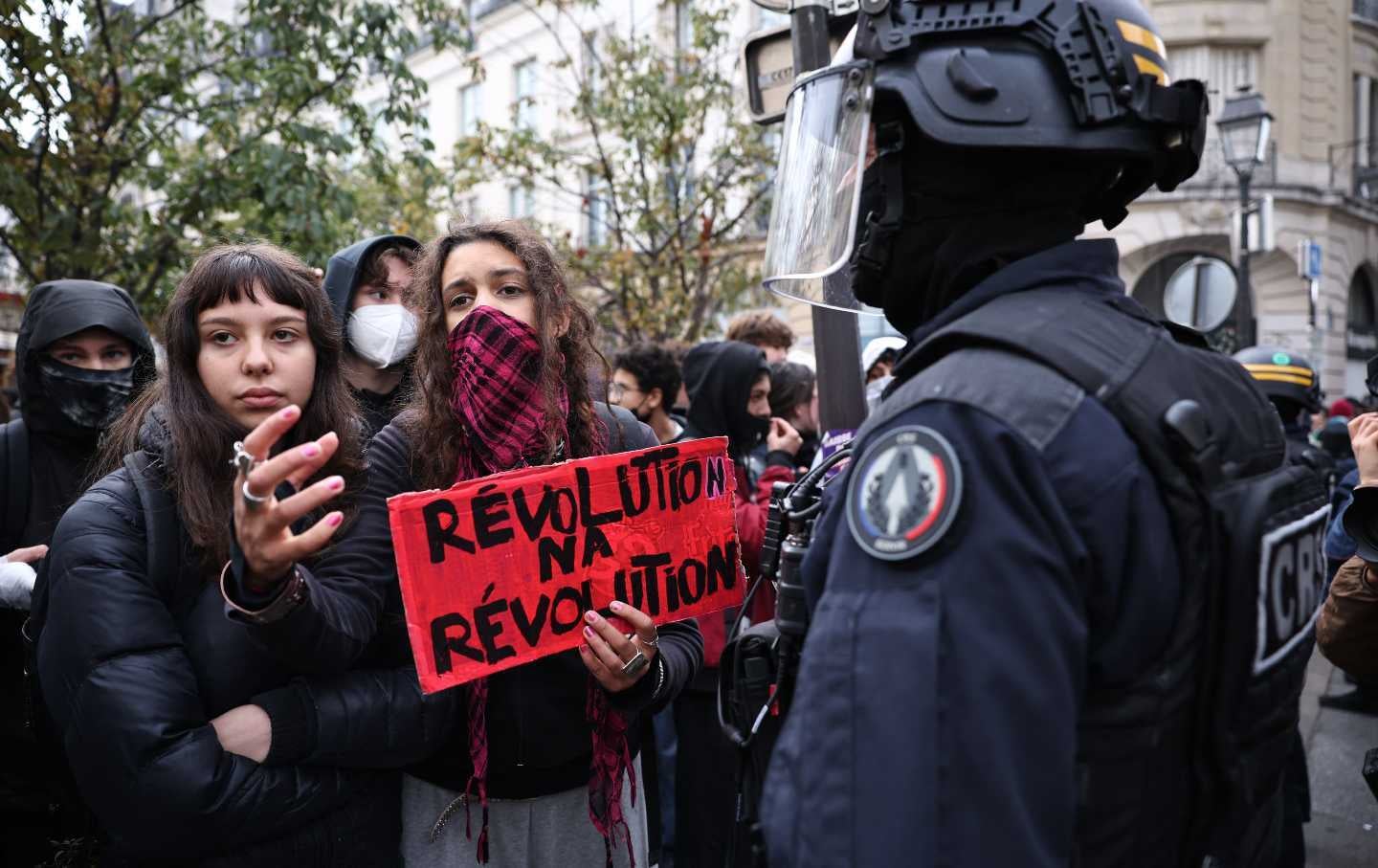
Inside France’s Biggest Uprising Since 1968 Inside France’s Biggest Uprising Since 1968
Despite harsh reprisal from the government, students show no sign of stopping.
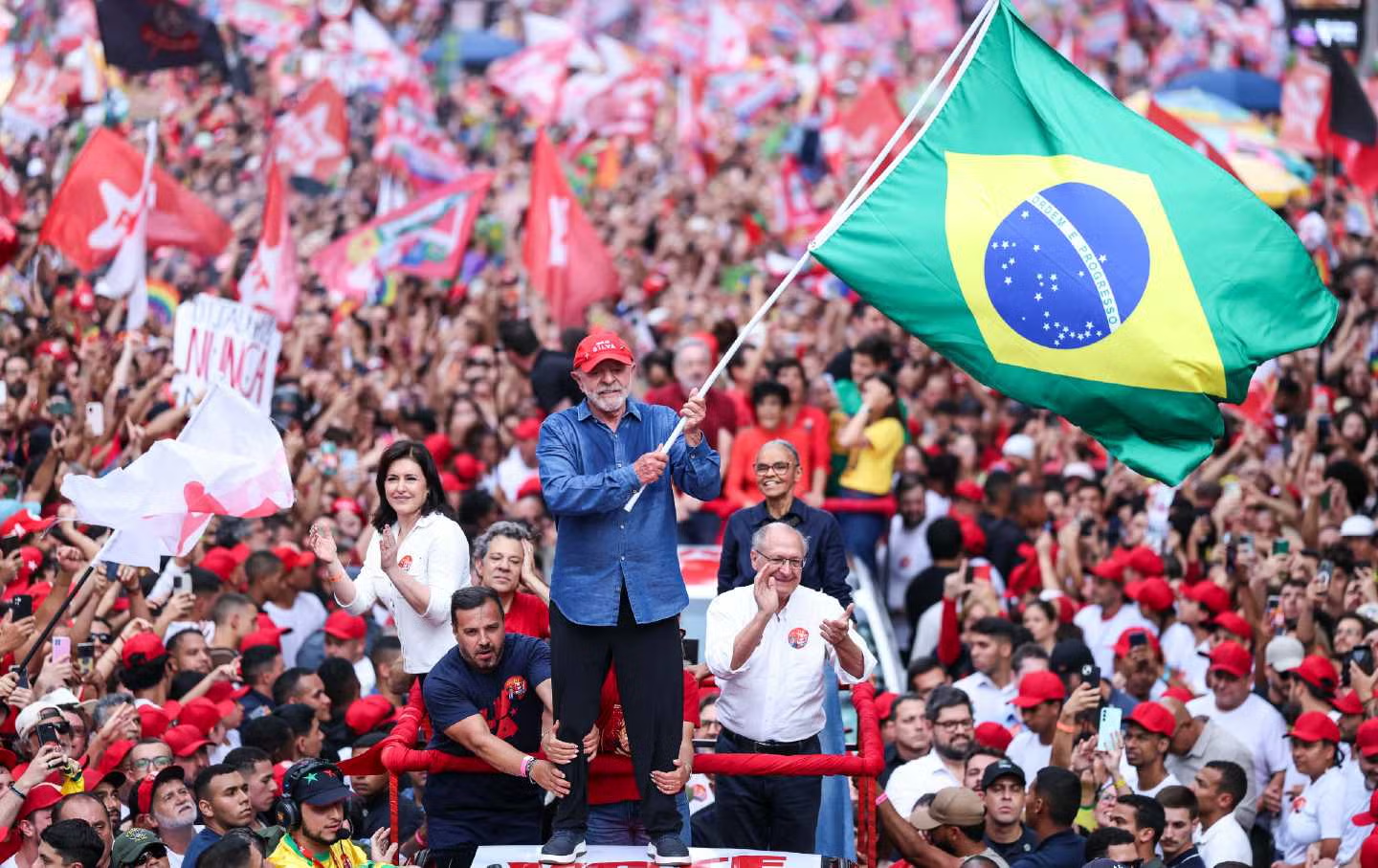
Lula’s Victory! Bolsonaro’s Defeat! What’s Next for Brazil? Lula’s Victory! Bolsonaro’s Defeat! What’s Next for Brazil?
A leading Brazil scholar predicts that Trump will continue to meddle in Brazilian politics.

