The Anatomy of a Literary Scandal
The pillorying of Canadian-Haitian novelist Thélyson Orélien, accused of using AI to write his new novel, is the latest in a chaotic year for French publishing.
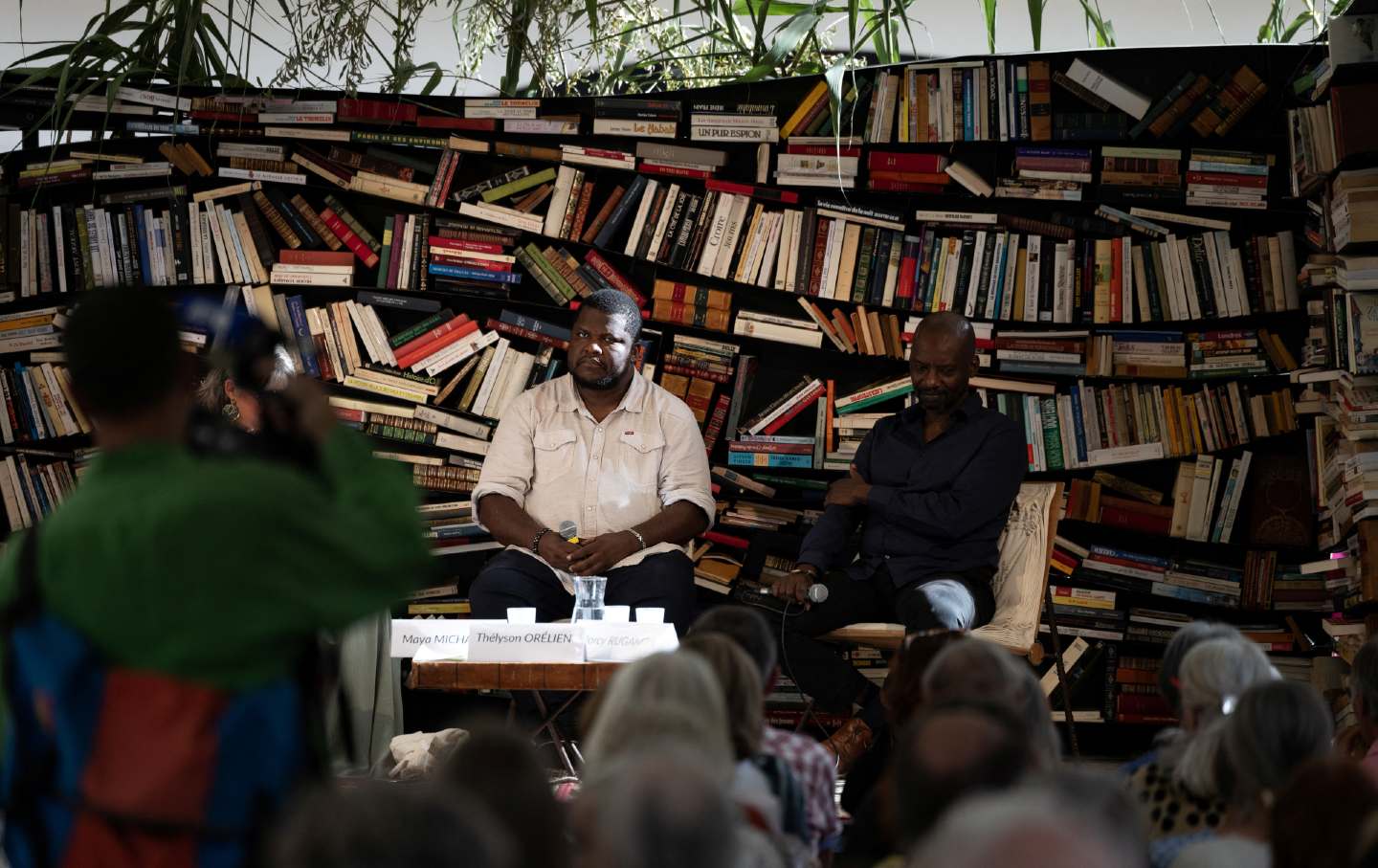
Less than two weeks ago, French literary critics were showering Thélyson Orélien with praise, celebrating his latest novel C’était ça ou mourir (“It was either that or die”), the story of a social studies teacher who flees gang violence in Haiti to seek refuge in Canada. Surging out of the gates with over 45,000 copies sold in the opening weeks after its August 19 release, Orélien’s novel positioned him as one of the stars of the fall books season—and a contender for the prestigious Prix Goncourt.
But the fairytale literary breakout started to come crashing down on September 21, when an obscure post from an anonymous X account claimed that Orélien’s novel was in fact written by artificial intelligence. With screenshots to boot from the AI-verification software Pangram, the X account “Balance ton Claude”—“Expose your Claude,” an AI-era riff on the social-media hashtag popularized by France’s #MeToo movement, Claude being Anthropic’s AI app—alleged that the Haitian-Canadian novelist had systematically used artificial intelligence for the composition of his novel. That kicked off a frenzy that first circulated among far-right-linked social-media accounts. Established media organizations soon started to pick up the story too, running their own tests using Pangram that corroborated the accusations.
Orélien has firmly denied all the allegations made against him. In a September 22 interview, the writer shot back against his accusers, with numerous figures in French literary life also rallying to his defense in the face of what appeared to many like a coordinated sting operation. “Since my recent arrival in France, I have been subjected to numerous racist attacks,” the author told Libération. “I am not sad but angry.”
The ideological lines hardened further when conservative Le Figaro columnist Samuel Fitoussi claimed participation in what he called a “collective project” behind the “Balance ton Claude” account. The accusation against Orélien comes as a double strike for conservative literary circles, with the far-right weekly Valeurs actuelles condemning the “blindness of the literary establishment” and castigating Orélien as a “professional counterfeiter.” Their collective feeding frenzy has as one immediate effect the delegitimizing of a novel that offered something still in relatively short supply in French letters: the perspective of a Black francophone novelist writing on the experience of immigration and identity across the Global South and North.
To some observers, there’s a rich irony to using AI software to identify the use of AI itself. And while most specialists agree that AI detectors cannot provide definitive proof of fraud, the creators of Pangram have stood by their technology amid the scandal, touting its low false-positive rate. Making matters worse for the writer, Canadian journalists from La Presse and Radio Canada are now reporting that several articles in addition to an earlier fiction work by Orélien contain plagiarized passages.
With the curtain falling, Orélien was dropped from the Prix Goncourt long list on September 25. He has also since left France, returning to Canada midway through the C’était ça ou mourir promotional tour. Commentators have already drawn the connection between Orélien’s downfall and this summer’s scandal surrounding Jason Arday—the Cambridge University academic pushed to suicide after a series of exposed frauds landed him in the center of a media storm.
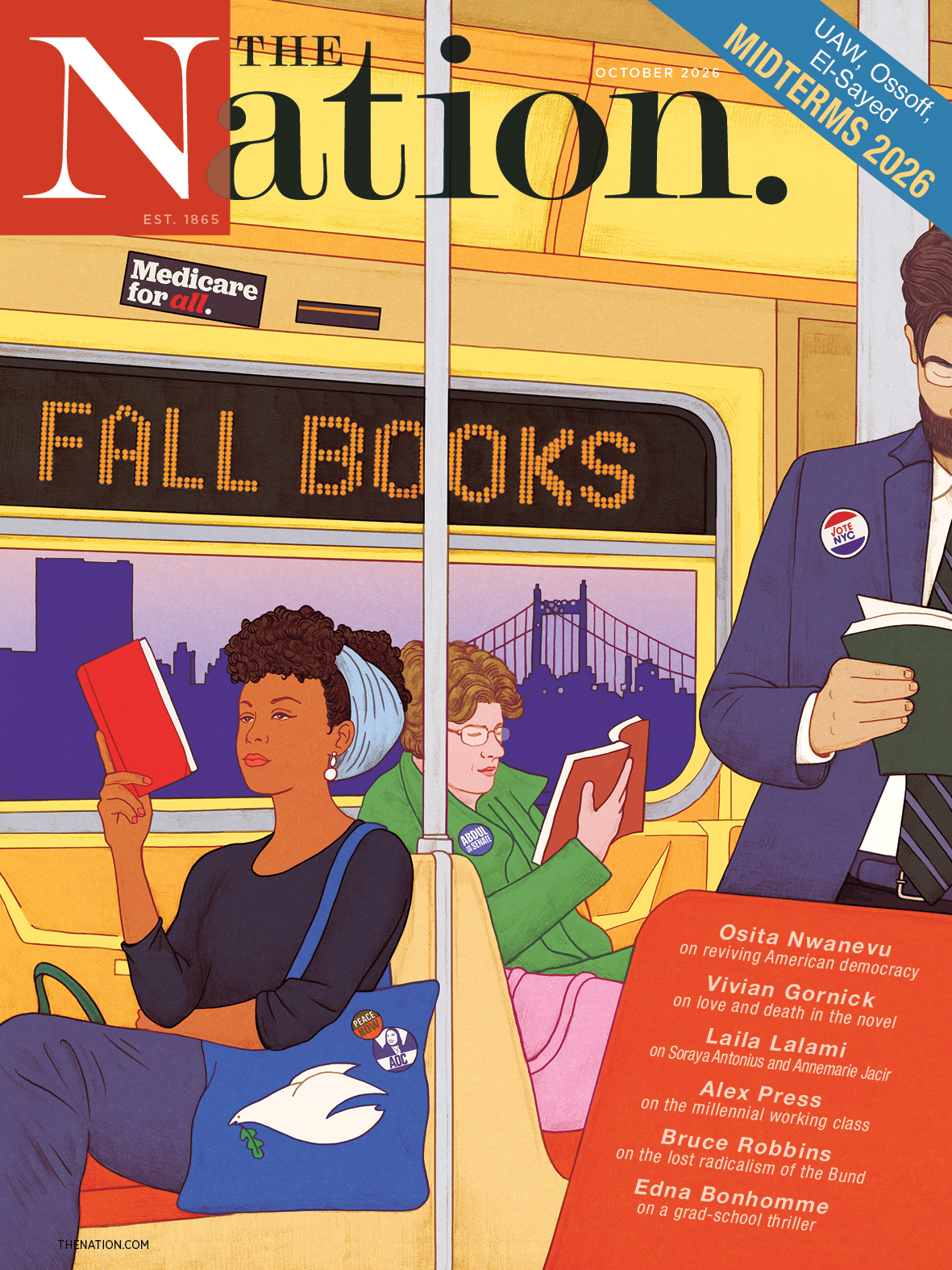
In France, doubt has a genealogy, especially when it falls on Black authors. In 1968, Yambo Ouologuem became the first Black African writer to win the Prix Renaudot, for Le devoir de violence (The Duty of Violence), before he too faced a smear campaign accusing him of plagiarism. The novel, as the Nouvel Obs journalist Doan Bui said on the show C ce soir, offered a textbook case of intertextuality—a popular style at the time involving the collaging of written sources. But that didn’t play in Ouologuem’s favor, even if the novel had already sold 80,000 copies and foreign rights to 10 countries. Ouologuem’s French publisher, Seuil, ceased reprinting the book. The Malian writer, then in his late 20s, never regained his place in francophone literature. In its nearly 125-year existence, the annual Prix Goncourt has been awarded to only four Black authors.
Suspicion is now spreading to other writers. Popular novelist Virginie Grimaldi has also been flagged by users running her work through Pangram. “It seems to me that we have dark days ahead of us, a climate of permanent suspicion. Today it was [Orélien], tomorrow it will be others,” Grimaldi wrote in a September 23 social-media post. “This morning, the next to fall is me.”
Whichever way you look at it, the Thélyson Orélien affair is a harbinger of things to come in the world of books, both inside and outside of France. A revolutionary new technology with undeniable and, many fear, devastating implications is overturning not a few of the sacred cows that seemed to embody literature’s cultural authority. It was probably only a matter of time before some AI-related scandal shattered once-robust assumptions surrounding authorship and the sanctity of literary creation.
But with opinion pages and talk-show panels giving open season to fears of an existential crisis in the literary world, it’s worth recalling that this is not the first such panic of 2026. Just a few months ago, however, the fears were of an entirely different nature. They centered around the rise of hard-right media mogul Vincent Bolloré, who since 2023 has gained control over Hachette, France’s largest publishing group and a multinational competitor to heavyweights like Penguin Random House and HarperCollins.
This past April, Bolloré put his power to use by firing the longtime publisher Olivier Nora, CEO since 2000 of Grasset, one of Hachette’s prestige imprints and a legacy brand in French literary life. For many at Grasset, Nora’s ouster was the final straw: Over a hundred authors affiliated with the publisher announced their departure, taking issue with the mogul’s intent to turn his publishing holdings into a pawn of his broader political project. As the owner of CNews, one of France’s leading television networks, Bolloré has been instrumental in the steady normalization of hard-right ideas, helping to catapult Marine Le Pen to the center of political life.
In fact, the two crises are not entirely unrelated. The publisher of Orélien’s C’était ça ou mourir was none other than Grasset—where the novel was reportedly one of the last works shepherded out the doors by Nora himself. Bolloré’s cultural project has many echoes in the opprobrium now being hurled at Orélien’s novel. For hard-right columnist Mathieu Bock-Côté, who moonlights as a pundit on CNews, Orélien’s novel was “the book the diversitarian regime had been waiting for and is in complete coherence with its aesthetic.” In defense of Orélien, Nora told Le Monde that the scandal is itself overshadowed by undue faith in AI software, fearing “a dystopian world” where the same algorithms that have “plundered the work of writers then serve them with formal eviction notices.”
Popular
“swipe left below to view more authors”Swipe →The possibility that AI helped compose C’était ça ou mourir provides an appealing alibi. But the Haitian author’s purging is hard to separate from the deeper tremors coursing through a French culture industry in the grips of a committed new monopolist. At many of Hachette’s imprints, Bolloré has appointed loyalists devoted to his ideological agenda. Another legacy Hachette brand known for mass-market essays and fiction, Fayard has become a home for hard-right writers and books, including two electoral pamphlets signed by Jordan Bardella, the official president of Le Pen’s Rassemblement National party.
Well before the AI steamroller, French publishing was showing numerous signs of strain. Many of the departing Grasset authors will find a new home at competitor groups that have themselves benefited from the trend toward industry-wide concentration in ownership. Meanwhile, book sales are in the throes of a long and apparently inexorable decline. Independent publishers and stores maintain a varied cultural counter-offer, leaving France no doubt better off than places like the United States in terms of publishing diversity. But even for the independent scene, there are darkening clouds on the horizon. Another crisis reared its head this summer with growing fears surrounding the financial solvency of Makassar, an independent distributor that serves as a lifeline for indie bookshops and bookmakers.
Moral panics over AI were to be expected from an industry reeling from numerous, interlocking crises. But they won’t solve the man-made specter hanging over it all: politicized ownership and conservative Kulturkampf.
As far as Orélien is concerned, he still might get the last laugh. On September 30, one report estimated that French sales of C’était ça ou mourir had cleared 60,000 copies.
More from The Nation
Writing About War as Bombs Fall Writing About War as Bombs Fall
While the Israeli government launched a well-orchestrated offensive of disinformation and hyperbole that would make the illegal permissible in the war on Gaza.

Turkey Is Brutally Oppressing Queer People. Here’s What You Need to Know. Turkey Is Brutally Oppressing Queer People. Here’s What You Need to Know.
The government’s sweeping crackdown on the LGBTQ community is an escalation of a decades-long pattern.

Has France’s Government Overplayed Its Hand? Has France’s Government Overplayed Its Hand?
The speed and scale of the police response mark a dangerous new normal.

This Is Not an Anniversary This Is Not an Anniversary
Does remembering the date of October 7 make it easier to name?

Are Europe and Russia Slow-Walking to World War III? Are Europe and Russia Slow-Walking to World War III?
Dangerous rhetoric has been escalating on both sides for some time now.
This Village Has Been Fighting Israel’s Demolition Orders for Years. It May Be on Its Last Stand. This Village Has Been Fighting Israel’s Demolition Orders for Years. It May Be on Its Last Stand.
A new order for Khan al-Ahmar’s destruction failed to attract the international attention that had protected it in the past, and residents fear they can no longer stop the bulldoz...

