
The Bookstore Revolution in Taiwan’s Conservative Heartlands
After Taiwan legalized same-sex marriage, gender-themed bookstores are working to build the social acceptance that the law alone couldn’t deliver.
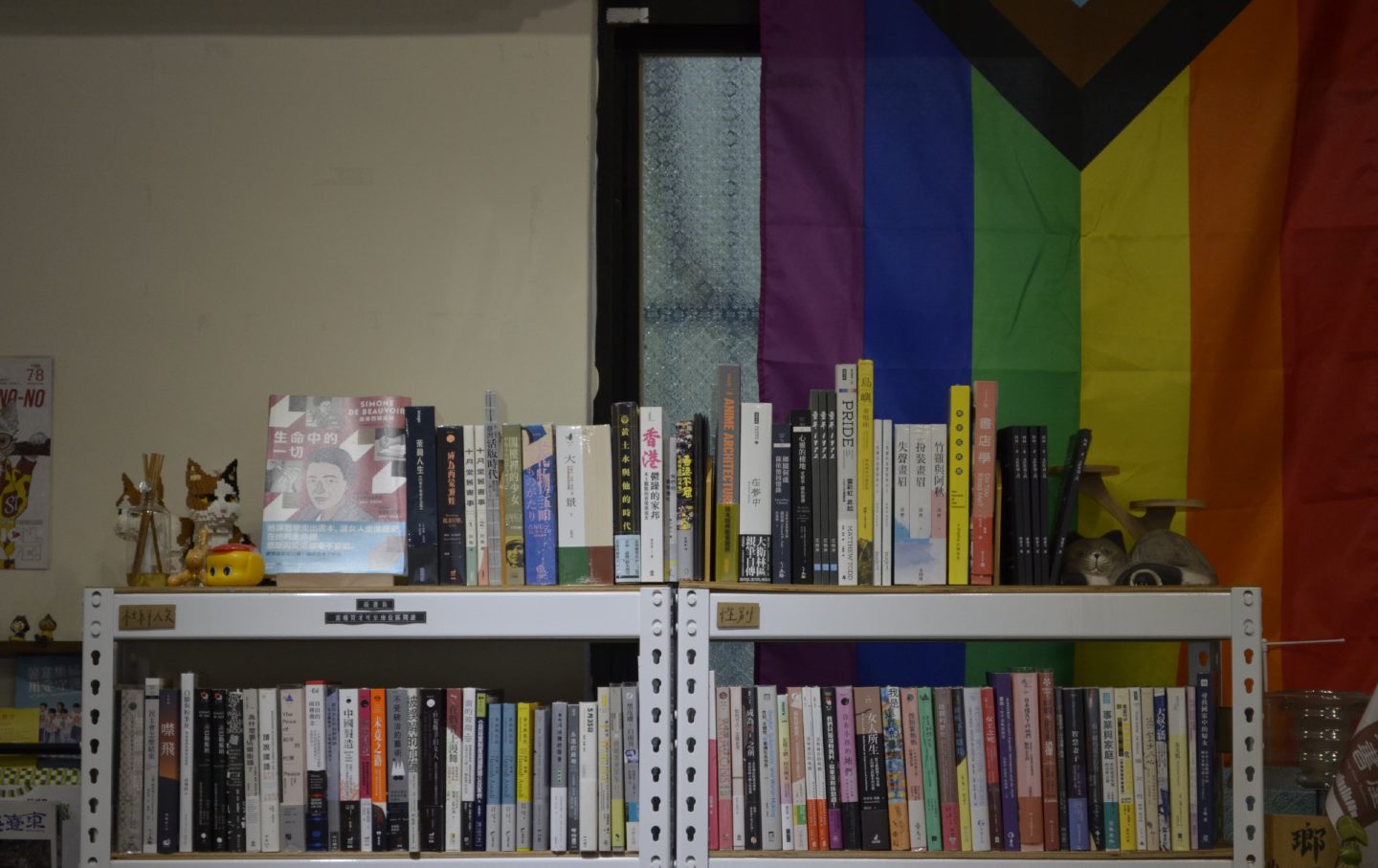
Tucked inside a labyrinthine wet market in Taichung, a city of 2.8 million in west-central Taiwan, A Room of One’s Own looks less like a landmark bookshop than the home of a reclusive aesthete. At its doorstep, an acrylic sign asks visitors to take off their shoes before entering the narrow, three-story townhouse. Owner Shan-Wen Tsai greets customers from behind a café counter. Behind her hangs a postcard collage with Virginia Woolf beside Frida Kahlo. Before her, a packed bookshelf displays Stefan Bollmann’s Women Who Read Are Dangerous.
“It’s a little cut off from the outside world,” Tsai said of the bookshop’s location. “I kept a bit of distance from the outside—and that was the distance I wanted to maintain at the time.”
Tsai initially avoided outside attention to protect the mission of the independent, gender-themed bookshop. She founded A Room of One’s Own in 2009, naming it after Woolf’s 1929 essay. At the time, LGBTQ groups in Taichung were largely underground and frequently ostracized by the cultural mainstream, she said. Witnessing the expanding queer and feminist scene in Taipei, Tsai, who is bisexual, wanted to usher in gender resources to the more conservative Central Taiwan. She also longed to bring its underground community “above ground.” Most of all, she wanted to do so with books.
“I treated books as a well-intentioned medium for advancing a cause,” she said. “I felt that if I wanted to push a new issue forward, a bookstore would be a pretty good way to go about it.”
Over the last 30 years, gender bookstores specializing in feminist, queer, and trans-inclusive texts have become a cultural fixture across the socially conservative island. In Taipei, Fembooks, founded in 1994 by women’s activists, stands as one of the oldest feminist hubs in the Chinese-speaking world. GinGin, an LGBTQ-themed bookstore that was open from 1999 until 2024, was the first of its kind in the Sinophone world. Beyond the capital, bookstores find themselves serving as gathering spaces, resource centers, and cradles of taboo knowledge, paving the way for a hard-won legislative milestone.
In May 2019, a decade after Tsai had founded A Room, Taiwan appeared in international headlines as the first nation in Asia to legalize same-sex marriage. Queer communities and allies celebrated what appeared to be a triumphant culmination of a two-and-a-half-year legislative struggle. Scholars scrutinized its success and the backlash that followed.
Yet, as gay rights moved towards institutionalization, new cultural flashpoints surfaced in Taiwanese society, much as they have in the United States: Should gender be included in school curricula? Can gay couples adopt? What bathrooms should transgender people use? Across the island, where progressive values regularly confront Confucian norms and conservative Christian movements, NGOs and activists strained to turn legal recognition into social acceptance. But the bookstores offer a different model of everyday engagement—public spaces that treat gender as a subject of civic discussion and education, rather than partisan debate.
For the three gender bookstore owners I spoke with outside Taipei, advancing LGBTQ rights in conservative communities is an exercise in quiet persistence. As each faces local resistance, they decide what it means to stay open among neighbors who oppose their stance. Customers wander in, some linger, and a few carry books and conversations out. The owners, however, struggle to quantify how much of a tangible difference they are making. With no ballots to win and no headlines to earn, many question how to advance a cause with no finish line—and what to offer the people who do walk through the door.
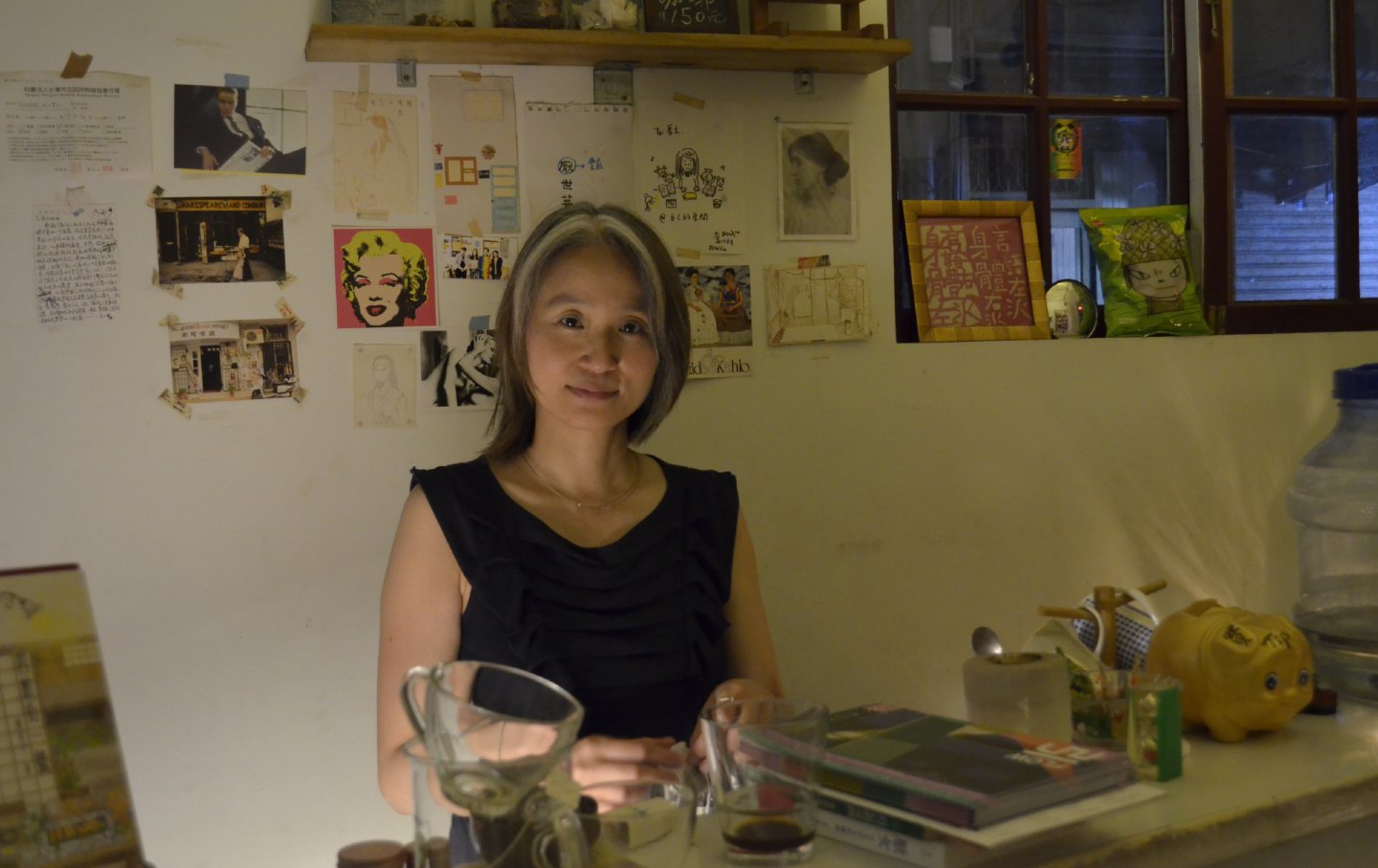
Between 2009 and the mid-2010s, A Room of One’s Own functioned much like its name: a gathering place for the LGBTQ community’s own. Tsai joined a bisexual group called Bi the Way and, through it, fell into a network of the city’s queer circles. After it opened, A Room quickly became their designated home base. “The connections were incredibly tight-knit,” Tsai reminisced, holding a glass mug of black tea in front of a wall of bookshelves organized by themes—gay, trans, society and culture, motherhood.
Many of Tsai’s peers were estranged from their biological families. Thus, the group found a chosen family in each other. “Our closeness surpassed every kind of relationship,” Tsai said. She called this era “utopia-like.”
For a community that largely existed underground in the early aughts, having a physical gathering place at A Room mattered more than Tsai initially expected. She distinctly remembers one longtime customer telling her the store’s existence transformed how she viewed her hometown. “There’s a real feeling that a bookstore can open up another world,” Tsai said. She wanted customers to flip through texts and experience the kind of epiphany she felt after reading Simone de Beauvoir’s The Second Sex. “That process of opening up a new perspective—I genuinely felt it was wondrous.”
For many, A Room also carried immense representational value. One young visitor, Tsai recalled, passed through the market one day and stopped in her tracks after seeing A Room’s rainbow decor. Stunned, she stood at the entrance and wept. “She couldn’t believe that there was a place devoted to these issues. So she got overwhelmed, and it took a long time before she worked up the nerve to walk in.” Tsai learned that the young woman came from a Taichung family that kept her under tight control. She wasn’t able to move out until her early 30s.
That woman’s situation was hardly anomalous. Tsai said she knew many young people who, years into adulthood, still had curfews and weren’t permitted to live on their own. She also knew many who had overcome “enormous” pressure to love and live freely. Working within a society that hewed firmly to traditional family values and gender roles, Tsai focused on what she could control: broadening the public’s acceptance of progressive values, and urging her community to be daring, but safe. The bookstore, she decided in its early years, should be a place that encourages women and LGBTQ people to challenge the status quo and take a leap toward the life they want.
“What our existence offers is this: Someone with few resources can still hold onto the idea that ‘someday, I can rely on myself,’” she said. “‘I don’t have to be bound by what other people think of me. I still have a choice.’”
As Taiwan’s marriage-equality movement crested in the mid-2010s, Tsai noticed the climate shifting. In May 2017, its constitutional court ruled that the civil code, which defines marriage as the union between a woman and a man, violated core constitutional tenets. The high court gave the Legislative Yuan, Taiwan’s supreme law-making body, two years to pass legislation that addresses the ruling. If they failed to act within two years, same-sex couples would automatically be able to marry.
Opposition arrived quickly. A conservative Christian family-values group, Coalition for the Happiness of our Next Generation, pushed for a popular referendum on marriage and gender education, which would go to voters in November 2018. Pro-gay-marriage groups soon began signature collection for their own referendum questions, while overseas donations poured in. For supporters of LGBT rights, Taiwan became a global battleground for marriage equality.
Stigma surrounding gender and sexuality quickly loosened. Tsai noticed that older relatives who once seemed adamant on the subject registered that “the world is changing.” Progress, however, created its own disorientation. Within the queer community, Tsai said, the old certainty of “us against the world” no longer held. She watched her circle disintegrate as peers sought support in other places—chief among them, the Internet. At the same time, she felt society more generally was lost; gender and marital norms had shifted, but no new order had yet emerged. “In the process of searching for new answers, people were very confused,” she remembered.
Tsai began adapting A Room’s mission and audience to fit the times. The LGBTQ question was no longer just a minority group’s personal turmoil. It was a civic issue. “The time has come for me to break through what you might call our own in-group bubble, and start having a dialogue with the general public,” she said. “There are a lot of issues now that I must talk about directly with them.”
Tsai hosted events and workshops meant for a wider demographic. She even entered electoral politics in 2023, running as a third-party candidate for a Taichung seat in the Legislative Yuan. “I treated this election as a good opportunity to reach outward, a strategy for letting more of the public see gender issues,” she said. Gender equity, children’s rights, and education were among her top campaign priorities. She lost to the Nationalist Party candidate.
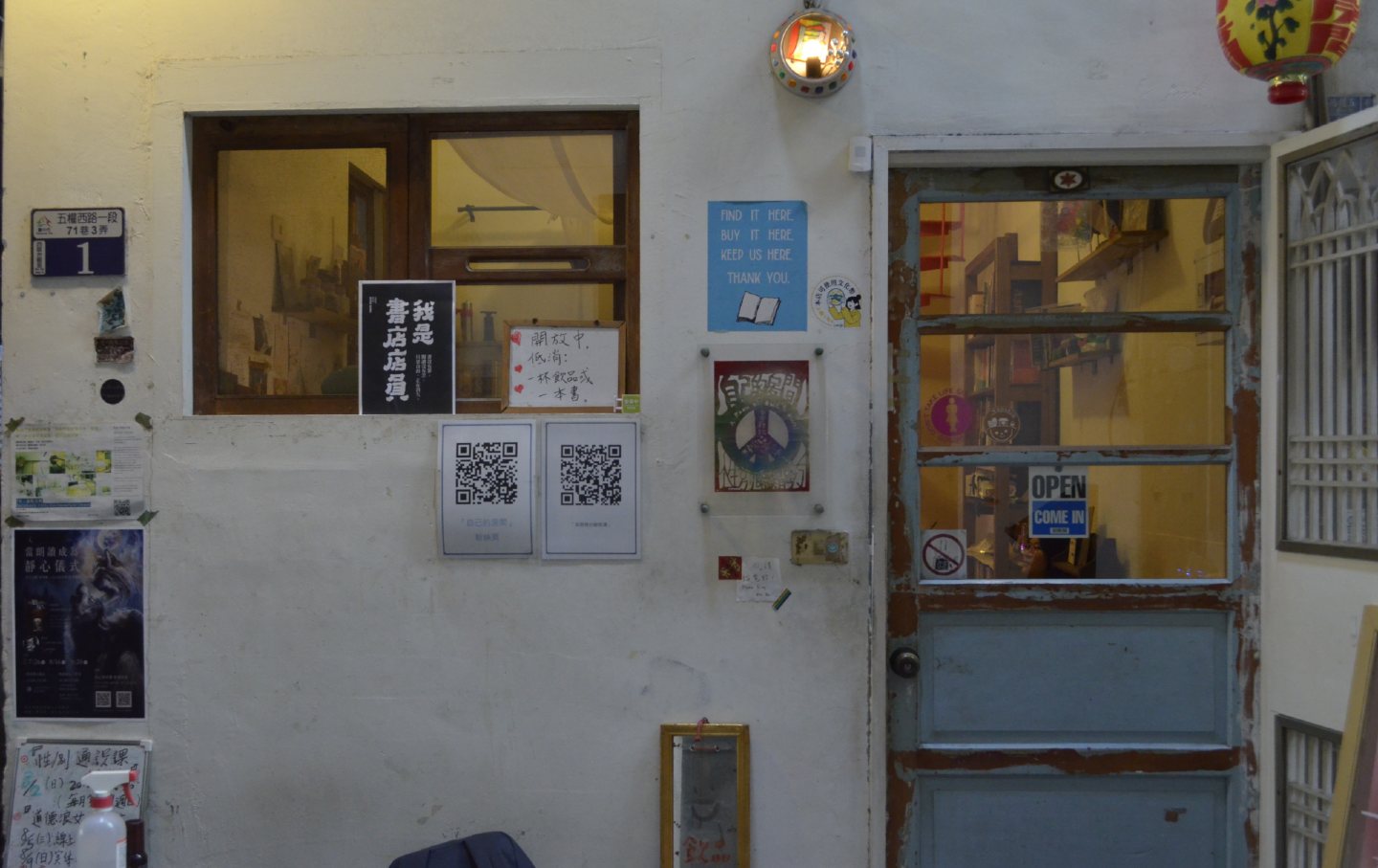
The limelight on same-sex marriage also invited clearer upsets. An hour north of Taichung by high-speed rail, Mia Chang runs Langhuan, a gender-themed bookstore in Taoyuan. After the 2017 constitutional court ruling, Chang, who identifies as lesbian, dove into public-facing activism and registered Langhuan as an official signature-collection site for pro-LGBTQ petitions ahead of the 2018 referendum. Taiwan required 280,000 signatures (1.5 percent of the electorate) to get a question on the ballot. “We did not hesitate,” Chang said.
The infamous referendum eventually included five questions addressing LGBTQ rights, education, and same-sex marriage, proposed by two rival camps. The conservative coalition put three on the ballot, including one asking whether marriage in the Civil Code should remain a union between a man and a woman and keep same-sex unions out (the Central Election Commission approved the questions, despite the May 2017 ruling). The pro-LGBTQ side put forward two, one of which asked for same-sex marriage to be included in the Civil Code. In the end, 72 percent of voters sided with the conservatives on the marriage question. The legislature opted not to amend the civil code, but instead passed a “special law” in May 2019. It legalized gay marriage but, in Chang’s opinion, fell short of full equality.
For Chang, the post-referendum setback, though demoralizing, was purpose-affirming. Similar to Tsai, Chang saw her home city, Taoyuan, as an LGBTQ resource desert. She wants to run Langhuan until women and LGBTQ groups are “equal to the point where it’s no longer needed.” The results showed that she must carry on. “There’s a lot of work left to do,” she said.
Public-facing political involvement also invited covert backlash against Langhuan. During the referendum period, conservative Christian and family-values advocacy groups had risen in vocal opposition to same-sex marriage legalization. Chang remembered members of the church coming into the store, pretending to browse, and slipping anti-gay-marriage pamphlets between book pages. “I accidentally found them later, while I was reorganizing the books,” she said. “It was actually pretty funny, really quite discreet.”
Less-reserved opposition also surfaced. Across the coast in Hualien, a picturesque, seismically restless seaside city, Peggy Chiang opened Haihao Bookshop (孩好書屋), or Good for Kids, as a birthday present in 2017 to her then-1-year-old son. Chiang, who is bisexual, knew she wanted to set up a dedicated gender section in the store, but never intended it to become a defining theme. That changed right before the referendum period, when an anti-gay-marriage coalition called for a boycott against her business.
Popular
“swipe left below to view more authors”Swipe →Just before its grand opening in 2017, Good for Kids agreed to cohost and sponsor a civic lecture series on gender organized by Hualien’s district office. After the promotional poster went out, a local “family values” organization altered and recirculated it—the new version condemned the event and cast the list of partner venues as businesses to boycott. Good for Kids was one of them. “We thought, ‘OK, we hadn’t originally intended to position ourselves around this issue [of gender] specifically,’” Chiang said. “But it turned out they basically did our marketing for us.”
Overt gender advocacy was especially fraught in Hualien, one of Taiwan’s most socially and politically conservative cities, Chiang said. Since the early 2010s, local politicians and family advocacy groups have held large-scale rallies protesting the “undermining” of traditional family ethics. Chiang remembered a 2013 march opposing an LGBTQ “diverse family formation” draft bill. At the rally, Hualien’s sitting county magistrate, Fu Kun-chi, vowed that if such a bill passed, Hualien’s household registration office would simply refuse to process the paperwork for gay couples.
“That’s just what the social atmosphere in Hualien is like,” Chiang said. “A county magistrate, in a public setting, voluntarily declaring he’d do something illegal.”
If Taoyuan is an LGBTQ resource desert, Hualien is a resource vacuum. Almost all active queer groups were based exclusively at local universities, Chiang said. Among residents, traditional values still reigned. An outspoken LGBTQ advocate, Chiang guides customers she hardly knows to critical resources. She once offered a first-time visitor step-by-step instructions for accessing gender-affirming surgery abroad, in Thailand. She pays close attention to gender issues at the national level—and bears in mind how much Hualien lags behind. Currently, she said, Taiwan is debating topics like transnational marriage and reproductive technology. “That’s the more advanced end of the gender conversation. In Hualien, we’re still stuck at basic gender equality between men and women.”
Still, the very appearance of Good for Kids, which hangs a large rainbow flag above a tatami-style kids’ reading area, repeatedly sparked controversy among local residents. Over the past decade, Chiang has become a veteran at responding to (or ignoring) online vitriol and backlash from relatives and strangers alike. Everyday opposition, though, comes in quieter moments. She recalled an instance when a mother and daughter browsed the store, flipped a sex-education comic book face-down, and left without comment. “There are still a lot of people in Hualien who are afraid of gender or of sex,” she said. “There really is still a very long way to go.”
As a result, Chiang chose not to let gender alone define her bookstore. Today, she curates Good for Kids’ shelves around several overlapping themes that emerged over the past decade: gender, marine conservation, picture books, special education, and civic participation. She hopes the breadth of themes will let customers have accidental encounters with gender. Perhaps, then, certain ideas, questions, or senses of acceptance will take hold. “One step at a time,” she said.
But how do you change minds? Tsai, Chang, and Chiang all responded the way one would expect bookstore owners to: the transformative power of reading. As for those who won’t pick up a book? In-person events that enable civic engagement, earnest interactions, and, crucially, chance encounters.
“Every talk we hold might gather just a little bit of strength,” Chang said. “It builds up slowly.”
All three owners host speaker series, reading groups, courses, and book talks that have grown crucial to their incremental style of activism. Most recently, Tsai led a workshop on The Ethical Slut, based on the book of the same name about open relationships. A few years back, she staged a workshop titled “A Dating Course for Straight Men,” which, to her chagrin, saw zero registrants. “Nobody dared to come. It’s actually hilarious,” she said.
Chang acknowledged that most people who come to Langhuan’s events are LGBTQ community members and allies. But she’s always on the lookout for conversations with people holding opposite beliefs. “What you really hope for, more than anything, is that the issue can spread beyond your camp. That people from outside the bubble actually show up—whatever their motivation, even if they’ve come to stir up trouble.”
One of Chiang’s most vivid memories came after a talk about the history of Taiwan’s gay rights movement. An older woman, a nearby resident who simply wandered in for the event, approached the speaker after the talk, visibly moved. She said she was a devout Christian, but had no idea the gay rights struggle had been so difficult and had lasted for so long. “She told the speaker, ‘You’ve all worked so hard. You really haven’t had it easy.’”
Moments like this make Chang realize what her work is all about. “[Those kinds of attendees] pass a message along to the people around them, to their close friends, their relatives.” Slowly, she hopes, enough voices will permeate the gender desert to create an oasis.
Beside A Room’s signature pink spiral staircase, Tsai explained that doubt and skepticism, more than anything, led to her bookstore’s founding. “I knew from a very young age that things weren’t the way adults told me they were,” Tsai said. “So I’ve always approached what adults told me about gender with a certain sense of doubt.”
The doubts she harbored in her youth led her to search for alternatives to gender and marital norms. “A lot of these gaps, these differences, kept pushing me to go looking for answers,” she said. Eventually, the questions led her to literature. “It was really through books that a different way of seeing opened up for me.” After 17 years, she said she still cannot predict which exact conversation will change someone’s mind or which book will give someone the courage to leave home. But she knows the questions must remain open—that the bookstore will welcome strangers and friends alike, sow the seed of doubt, and let the search take root.
More from The Nation

Jalen Hurts Deserved Better. We All Do. Jalen Hurts Deserved Better. We All Do.
In a country that treats workers as expendable parts, Hurts’s playing through a blood clot is just the highest-profile example of the price workers pay in an oligarchy.

The Terrifying Future of States’ Criminalizing Pregnant People Is Already Here The Terrifying Future of States’ Criminalizing Pregnant People Is Already Here
The idea of charging people who have abortions with murder is gaining traction on the right. But a report finds that people are already being prosecuted for their pregnancy outcom...

The Supreme Court Is Coming for Affirmative Action—Again The Supreme Court Is Coming for Affirmative Action—Again
The high court has just accepted a case that takes aim at efforts to increase diversity at high-performing public schools.
My Family’s Dark, Hidden History With Institutionalization My Family’s Dark, Hidden History With Institutionalization
My great-great-grandfather was the namesake of an infamous institution for the disabled. From long-neglected records of the property, the lives of forgotten people were uncovered....
Smoke and Mirrors: The Right's Latest Attacks Against Trans People Smoke and Mirrors: The Right's Latest Attacks Against Trans People
The MAGA movement is redoubling its attacks on trans healthcare in an attempt to win votes this November.

Is Blockbuster Video the Answer to Our Digital Privacy Woes? Is Blockbuster Video the Answer to Our Digital Privacy Woes?
The Supreme Court is weighing whether a 1988 video-store law can be used to protect our digital privacy.

