
The Tunnel Home: A Story of Housing First
In the 1990s, a group of New Yorkers helped prove the effectiveness of a bold but simple approach to homelessness. Now Trump wants to end it.
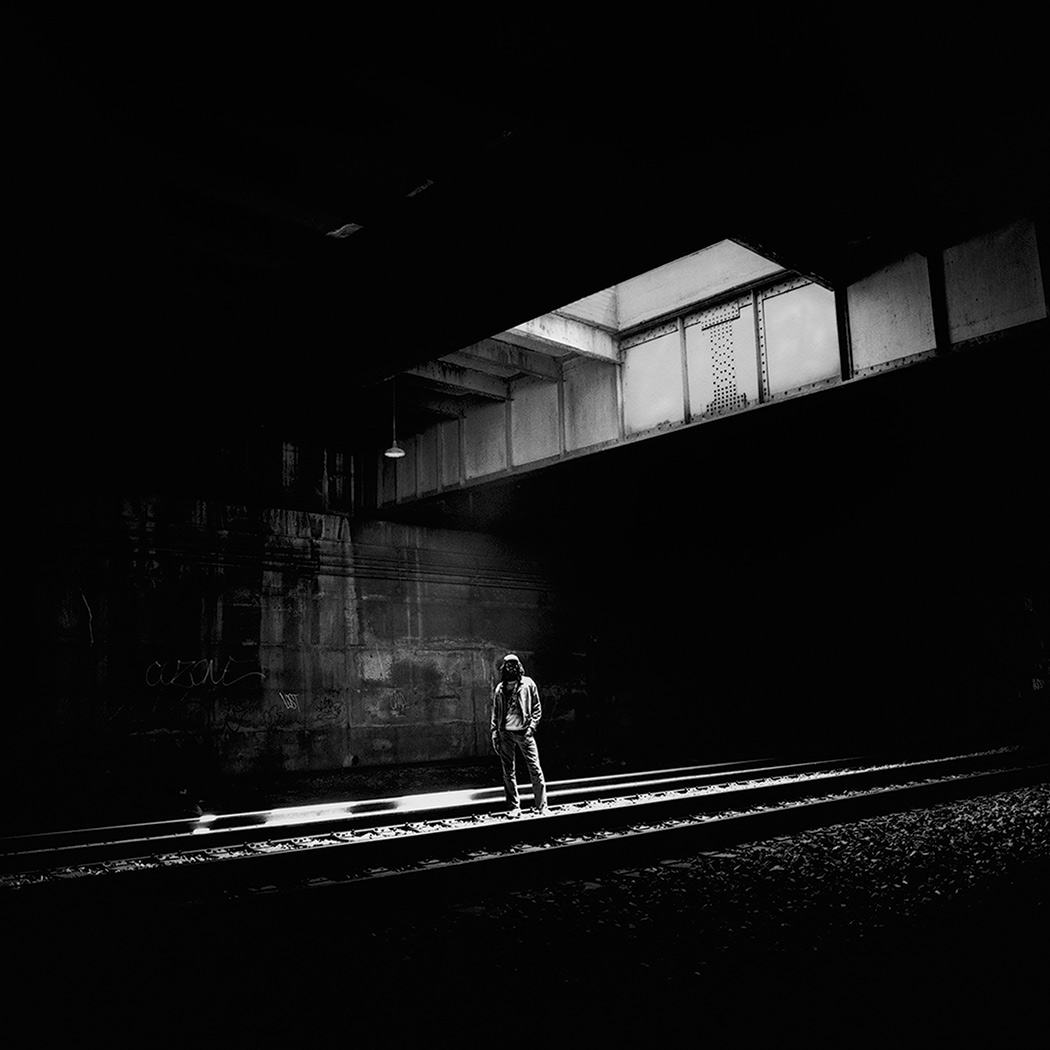
The train tunnel ran for 50 city blocks, nearly three miles, under Manhattan streets and parkland. It stretched along the island’s far west side, near the Hudson River, from West 72nd Street, underneath Riverside Park, all the way to West Harlem. It was one of those rare places that made you feel both inside and utterly outside the city—as if, for a few moments, you could convince yourself that you’d fled the chaos and noise of New York without ever leaving.
The first time I walked deep into the tunnel, I felt myself steadily, step by step, becoming wrapped in darkness. It was autumn, 1995, and as the sunlight from the southern entrance faded, I could feel my pupils dilating to capture the available light, allowing me to glimpse the grime-streaked walls, the graffiti, and the tracks with their battered wooden ties. I was suddenly aware of the descending silence, the background thrum and clatter of New York City fading away as if the volume knob on an old stereo were being turned down. But gradually, other sounds intruded: rats skittering on the gravel and rails, water dripping from the two-story-high ceiling or a ventilation grate—and then the echo of someone shouting from the tunnel mouth behind me. This dark, muted place, I was reminded, was also a living space, a home of last resort for dozens of desperate New Yorkers seeking refuge.
These men and women were about to be expelled from the tunnel. I was working with the Coalition for the Homeless, the nation’s oldest homeless advocacy organization, just starting what would become a 20-year career defending the rights of vulnerable New Yorkers. My role was to help with a multi-organization effort to find safe and affordable homes for these tunnel dwellers. But it was anything but simple.
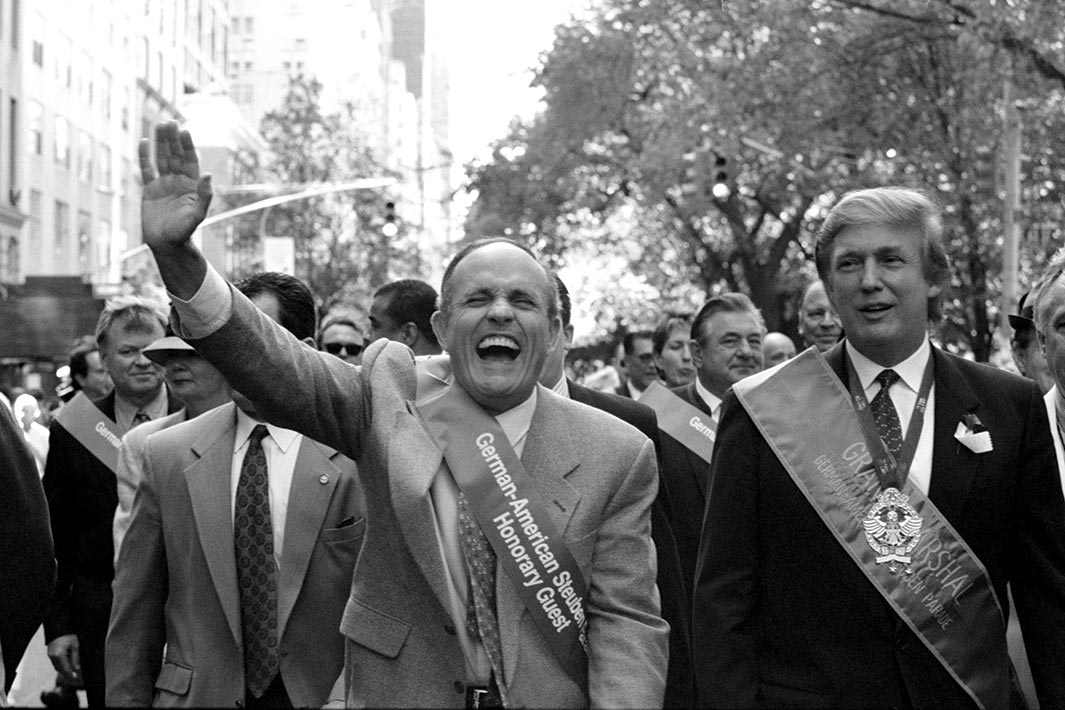
During the chilly months I spent visiting the tunnel, Rudy Giuliani was finishing his second year as mayor of New York. It was a grim moment. In the face of rising homelessness and immiseration, he had chosen to ramp up a set of harsh and overtly punitive policies, which some of the city’s elites were already hailing as “saving” New York. Far better to arrest homeless people, the theory went, or erect bureaucratic barriers to aid, or even kick them out of municipal shelters and back onto the streets, than to find them stable places to live.
But inside the tunnel, working alongside some remarkable people who’d managed to survive some unimaginably trying circumstances, I saw what was possible when both their needs and their hopes were met. Even more, I learned some crucial lessons about the enduring, and pernicious, myths surrounding homelessness, and the way those myths not only warped New York’s response to the crisis but shaped the approach adopted by scores of other cities.
Now, all these decades later, I have been horrified to watch as the most extreme versions of these policies make a comeback, this time at the hands of Donald Trump.
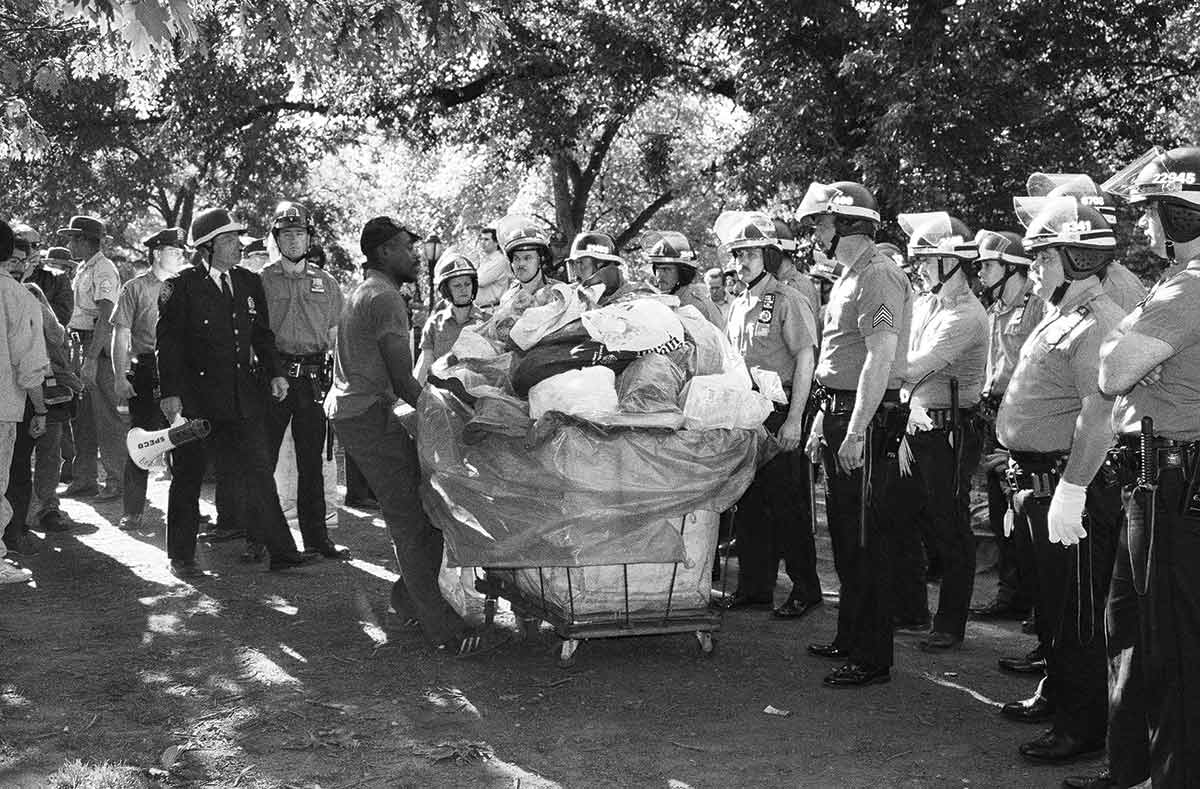
No one knows precisely when the first homeless people began sleeping in the Riverside Park tunnel. Once, during an earlier part of the 20th century, the tracks of the West Side Line had served the slaughterhouses of downtown Manhattan and, later, the manufacturing zones in Chelsea and the Garment District. But as competing rail yards popped up in New Jersey and the Bronx, and as manufacturing evaporated from the city, train traffic on the West Side Line slowed and then halted. By the late 1970s, both the tracks and the tunnel had essentially been abandoned—at the same moment that a new form of mass homelessness had emerged citywide.
New York was the original epicenter of the modern homelessness crisis, the place where it exploded into visibility. By 1989, some 25,000 people were sleeping each night in municipal shelters, and thousands more were sleeping rough on the streets. As homelessness worsened, some desperate people sought makeshift shelter in increasingly remote places, including the subway network, bridge abutments, and train tunnels. By the early 1990s, dozens of homeless people were sleeping each night in the Riverside Park tunnel, and many had built shanties and other ramshackle dwellings there, most of them crowded near the southern entrance.
Though many people felt safer in the tunnel than on the streets, it was still a treacherous place. Rats roamed free, garbage accumulated, there was no running water, and the winter cold and damp threatened death or severe injury by hypothermia or frostbite. But with train traffic virtually halted, many struggling people chose the hazards of the tunnel over those of the subways or of the vast, warehouse-like shelters that the city had hastily created in the first decade of the crisis.
Some folks ended up living in the tunnel for years. Joe, a Vietnam War veteran, called it home for more than two decades; during much of that time, he lived with his partner, Cathy, in a sturdy plywood shack with a mattress propped on plastic milk crates. José, who had lost the last of a series of low-wage jobs when a garment factory closed, stayed for 13 years. Bernard, dubbed the “mayor” of the tunnel, lived there for more than a decade in a ramshackle camp he’d fashioned deep underground.
For a brief period in the 1990s, the Riverside Park tunnel dwellers captured the imagination of New Yorkers and even those beyond the city. Tales of the homeless people in the train tunnel were recounted in numerous news articles and nonfiction books, as well as at least one film and one novel. Perhaps the best accounts came from the photographer Margaret Morton’s 1995 book The Tunnel, which included direct recollections of the tunnel dwellers she knew so well, alongside her austere and luminous photographs. Marc Singer’s documentary Dark Days, shot over several years on black-and-white 16-millimeter film and memorably set to the music of the hip-hop artist and turntablist DJ Shadow, was a moving and gritty chronicle of life in the tunnel.
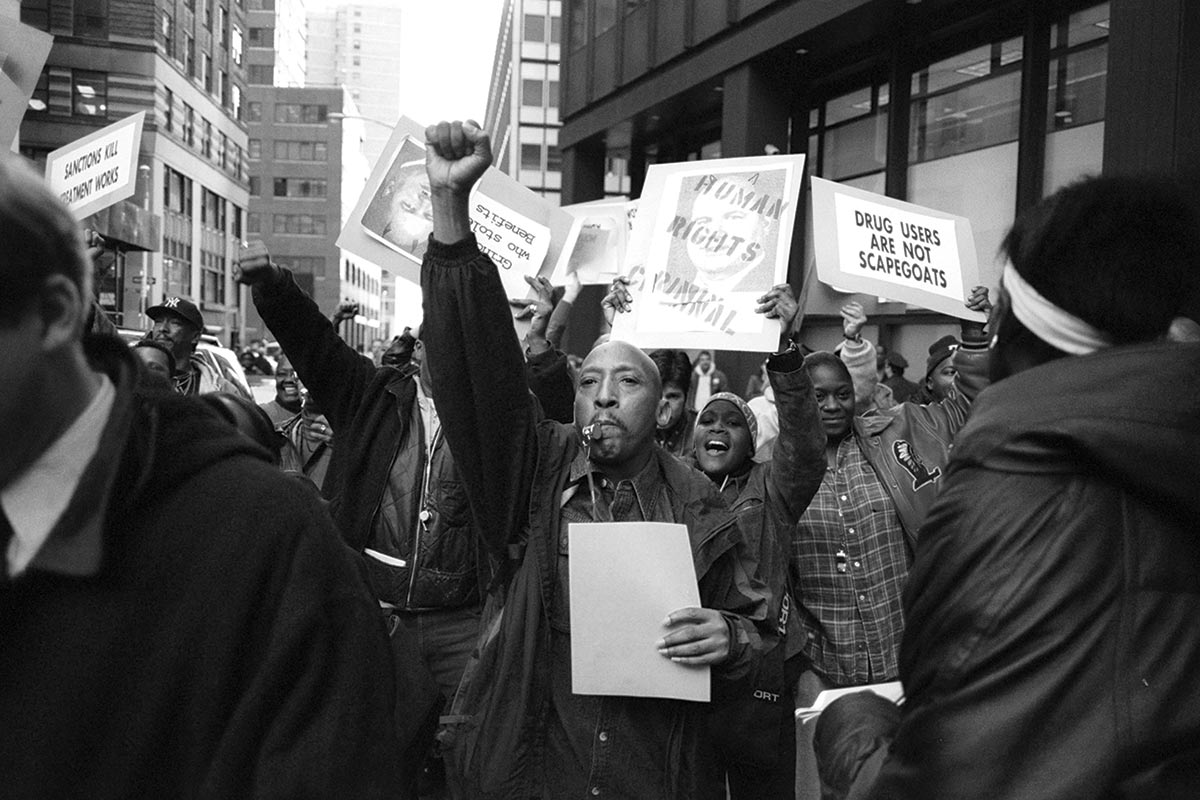
But alongside these sympathetic portraits—and far more common—was a harsh, distorted image of homeless New Yorkers, one born of a creeping “compassion fatigue” and the mean-spirited politics of what came to be known as the “backlash era.” Among the news media, the rise in homelessness was rarely discussed in terms of actual causes and real solutions. It was seldom recognized as the structural problem it has always been—the consequence of an acute and worsening housing affordability crisis, which was itself the result of broad economic shifts, neoliberal policies, an ascendant right-wing politics, and systemic racism.
Instead, the tabloids spilled thousands of gallons of ink about the “squeegee men” gathering near the entrance of the Lincoln Tunnel and other commuter corridors, or people like Larry Hogue, a homeless veteran dubbed “the Wild Man,” who’d suffered a traumatic brain injury during his military service and was prone to erratic, sometimes aggressive behavior. In the ranting world of the tabloids, these few individuals came to stand in for all homeless and poor New Yorkers, creating a cartoonish, menacing picture of homelessness that congealed into a cultivated narrative about New York City’s decline and crisis.
In similar fashion, some of the stories and accounts of the people living in the tunnel morphed into urban folklore, or even something worse. Jennifer Toth’s 1993 book The Mole People became perhaps the best-known account and remained in print for years, unlike similar ethnographic studies. But its stigmatizing title would outlive the book itself, and the term mole people—indeed, the idea of some alien species of homeless tunnel dwellers—came to permeate the popular culture of the era.
During my decades of work as an advocate, I fielded countless inquiries about “mole people”: news reporters looking to interview or film the “underground homeless”; policymakers convinced that vast numbers of homeless people dwelled under the city’s streets; students and others entranced by the absurd idea of tribal communities, with their own exotic rituals, living in near isolation amid a sprawling metropolis. The name conjured up the image of a separate race of beings, like H.G. Wells’s Morlocks or the villainous Mole Man’s blind minions from the Fantastic Four comic books—a race far removed from regular New Yorkers.
These ideas were buttressed by a cruel rhetorical scaffolding built up by Giuliani and his right-wing allies. Homeless New Yorkers were routinely depicted as pathological, crazy, drug-addicted, or violent, even though homeless people were far more likely to be the victims of violence than to commit it and were victimized at a far higher rate than non-homeless people. Likewise, Giuliani and his followers would effectively blame homeless people for their homelessness. They’d portray them as lazy, resistant to work, and lacking “personal responsibility,” and would then craft policies supposedly intended to help them address these alleged failings, but that were really designed to deny or cut off safety-net benefits for them. The fact that the vast majority of homeless New Yorkers were Black or Latino only made these stereotypes more pernicious, demonstrating how rooted they were in the wider American legacy of racism and the specific white-backlash politics that Giuliani and his ilk practiced.
It was amid this anti-homeless fervor that my colleagues and I began our work in the Riverside Park train tunnel. In 1991, a rail extension was built to allow non-diesel cars, like Amtrak’s passenger trains, to travel to Pennsylvania Station. Amtrak announced that it would begin passenger train service through the tunnel, and in 1995, after the trains had started to run again, the agency prepared to expel the homeless people from the tunnel for good.
Hearing from tunnel residents about the impending eviction, a group of neighbors and activists on Manhattan’s Upper West Side raised a ruckus and contacted the Coalition for the Homeless. Coalition staff investigated and, among other things, discovered that during the previous year, in November 1994, the secretary of the US Department of Housing and Urban Development (HUD), Henry Cisneros, had quietly set aside some 250 federal housing vouchers for homeless people living in train tunnels. He had taken this unprecedented action after witnessing firsthand, on a visit to New York, dozens of homeless people sleeping rough in the subway system. However, many months later, only two of those vouchers had actually been issued. The Coalition urged federal officials to halt the tunnel evictions while it worked with another local nonprofit organization to use the vouchers to help move the tunnel dwellers into their own homes.
This plan was considered audacious. At the time, a widespread myth existed that there was a group of “hardcore” homeless people who simply could not live in homes of their own—that these folks were somehow too sick, too unready, too broken—and the people of the tunnels were seen as prime examples of that mythical group. But to anyone who’d talked with the Riverside Park tunnel dwellers, it was clear that merely offering them a worse alternative—a cot in the shelter system or some other cold public space—would never succeed. What they needed and wanted was real housing.
When I first visited in late 1995, the work of relocating the tunnel dwellers to their own homes was underway. A young caseworker from our partner organization, Project Renewal, had done an incredible job navigating the byzantine bureaucracy involved in dispensing IDs and other necessary documents for people who’d long lost them or never had them at all, and then completing the paperwork for the federal housing vouchers. My Coalition colleagues had begun rounding up the last holdouts—a handful of tunnel residents who feared leaving the only home they’d known for years or didn’t believe Amtrak’s expulsion order was real.
At the same time, folks like José, Bernard, Joe, and Cathy, who were all in the process of moving to apartments, had been joined—and in some cases replaced—by a group of recent immigrants from Mexico, Central America, and the Caribbean, many of them day laborers who had fallen on hard times. My focus, as a speaker of passable Spanish, was to work with the Latino immigrants to obtain the required paperwork and ease their fears about moving from the familiar tunnel to an unfamiliar home. But I was also lucky enough to get to know, even if only briefly, Bernard and the other longtime tunnel residents and learn some vital lessons.
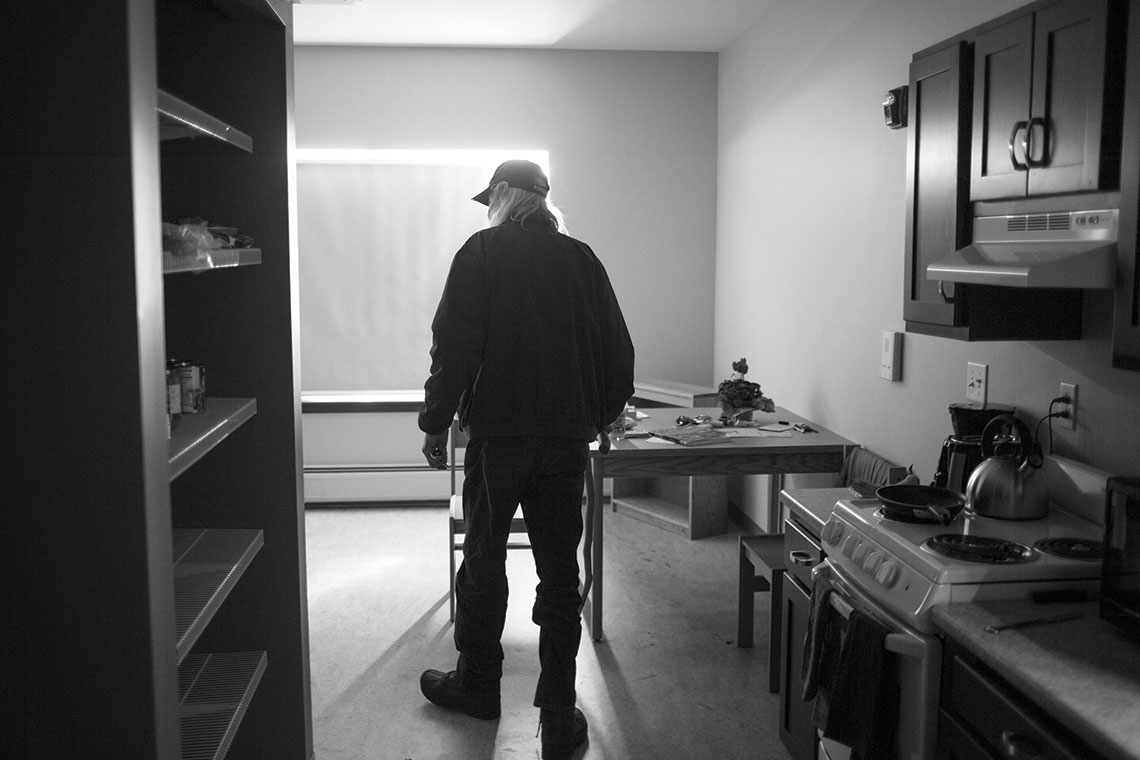
The most crucial lesson involved the meaning of genuine, enduring solutions to the problem of homelessness. Since the early days of the modern crisis, advocates and homeless people themselves had argued that subsidized housing combined with support services could create stable homes, even for people with long-term or repeated episodes of homelessness, including those struggling with severe mental illness and addiction disorders. This combination had become known as “supportive housing.”
In the 1990s, this supposedly utopian approach to homelessness came to be buttressed by a growing body of empirical evidence. Academic researchers found that the “success rate” of supportive housing—the share of formerly homeless people living with disabilities who remained in their homes—was extraordinarily high. And by the early part of the following decade, the first of many studies on the costs to taxpayers of supportive housing had also found that supportive housing was in fact cheaper for taxpayers than leaving homeless people with health problems to cycle between costly shelters, hospitals, and jails.
The other breakthrough in the 1990s came from the pioneering work of a community psychologist named Sam Tsemberis. In talking to homeless men on New York City’s streets, he found that although many refused to go to the large municipal shelters, they would be willing to move into an apartment immediately, contrary to the prevalent myth of the “housing-resistant” homeless person. So he tried exactly that, and through his nonprofit organization, Pathways to Housing, he marshaled support services—visits from social workers, access to medication and treatment, and more—to help the men keep their homes. The logic behind this approach was blindingly obvious, confirming what homeless people themselves had long experienced: that it was far more difficult to engage in mental health treatment or recover from addiction while homeless (whether sleeping in a shelter or on the streets) than to do so while living in a real home. Tsemberis called this approach “Housing First,” and over time, it was replicated by other groups in New York and across the country.
But in its earliest years, Housing First was met with skepticism. A growing number of politicians—including many, like future governor Andrew Cuomo, from the right flank of the Democratic Party—pushed the notion that “hardcore” homeless people were simply not “housing-ready” and needed to undergo therapeutic programs of one type or another before they could be provided with housing aid. This idea came to be formalized as the “continuum-of-care approach,” and it would first take hold at the local and then the national level. It was designed to force desperate people to jump through bureaucratic hoops and wait long periods in order—maybe—to secure housing aid. It reflected, at its root, the poisonous notion that homeless people were somehow different, incomplete as individuals, and not yet ready for a home.
But during my months visiting the Riverside Park tunnel, it became ever more clear that this “treatment-first” philosophy was absurd; all I could see were people who could make a home literally anywhere.
Even as the continuum-of-care approach was becoming local gospel, our work with the Riverside Park tunnel dwellers was proving to be one of the early Housing First–style success stories. By the time Amtrak fully fenced off the tunnel in 1996, we had helped some 40 homeless people who’d lived underground move into permanent housing. Almost none of them ever returned to homelessness.
Many tunnel dwellers were helped by the federal rental vouchers that advocates had managed to pry loose from HUD. Others ended up in supportive housing, where they were assisted by social workers and received mental health treatment, sometimes for a brief, transitional period and sometimes for years afterward. These residents included Bob, a longtime denizen of the tunnel who stopped using drugs after moving into a former single-room-occupancy hotel in Manhattan’s Hell’s Kitchen neighborhood that had been converted into supportive housing with on-site social services. Others, like Joe and Cathy, who lived in an East Harlem walk-up apartment, and Bernard, who moved in with his father in Harlem, were finally able to afford their own homes and avoid returning to the streets.
I saw some of the former tunnel folks in 1999 at the funeral for one of the original tunnel dwellers. José had lived for four years in an apartment in the Morrisania neighborhood of the Bronx with the help of a federal housing voucher, staying there until his death. Seeing the old faces from the tunnel at the memorial—and over the years, from time to time, at the Coalition’s offices—I remembered thinking they looked different: calmer, healthier, less gaunt and desperate. But still, and I may have been imagining this, they also looked haunted, as if the years in the tunnel would never leave them.

In the 21st century, the Housing First approach finally began to break through the wall of myth and bias that had blocked its adoption. Several US cities embraced it, with resounding success. Houston managed to reduce its homeless population by more than half using Housing First programs. Utah cut its population of long-term homeless people by more than 90 percent with Housing First assistance. And since 2010, Housing First programs have helped to reduce homelessness among military veterans nationwide by 55 percent. In New York City, where homelessness has spiked under the Eric Adams administration, Zohran Mamdani has pledged to address street homelessness with supportive housing and community mental health programs.
Research bears out the wisdom of this approach. A systematic review of 26 such studies found that participants in Housing First programs spent 88 percent fewer days homeless than participants in “treatment-first” programs.
But despite the manifest success of Housing First and supportive housing more broadly, Donald Trump and the Republican Party have set their sights on dismantling these programs and demonizing homeless people. Echoing the invective wielded by Giuliani and his sidekicks in the “backlash era,” Fox News and other right-wing outlets now regularly depict homeless people as criminals and addicts. The popular Fox News host Jesse Watters has called homeless people “zombies” and “an invasive species.” In September, the Fox and Friends host Brian Kilmeade called for the execution by “involuntary lethal injection” of homeless people living with mental illness. Trump himself has embraced this language: In a 2023 campaign video, unsubtly titled “Ending the Nightmare of the Homeless, Drug Addicted, and Dangerously Deranged,” Trump promised to arrest all homeless people and remove them to “tent cities” on the outskirts of urban centers.
Now Republicans are making this pledge a reality. Despite Salt Lake City’s record of success with Housing First, Utah officials are building a facility on vacant tracts of land outside the city to create a complex where more than 1,000 homeless people will be forcibly locked away. An advocate from the National Homelessness Law Center compared the planned facility to the Japanese internment camps during World War II.
Back in Washington, the administration has stuck closely to the Project 2025 instruction manual that candidate Trump so vociferously claimed to disavow. In July, Trump issued an executive order, crudely titled “Ending Crime and Disorder on America’s Streets,” that called for eliminating federal “support for ‘housing first’ policies that deprioritize accountability and fail to promote treatment, recovery, and self-sufficiency.” In their stead, the order pushed the punitive and far less effective approach of hinging housing on treatment or counseling, all the while making it easier to arrest and even institutionalize people. In November, the administration went further, pulling federal funding for Housing First programs and redirecting it toward the “treatment-first” model. Advocates say that the new policy risks sending 170,000 formerly homeless people back to the streets.
Even more dangerous, Trump has proposed drastic cuts to federal housing programs—which are already so underfunded that they assist only one in four eligible low-income households nationwide—along with two-year time limits on rental assistance. Such policies will not only harm people who are currently homeless but will inevitably uproot and displace countless low-income families. Indeed, policy experts who reviewed the administration’s plans estimate that some 4 million people could lose federal housing aid—at a moment when estimates of the US homeless population (more than 770,000 people per night) are the highest ever recorded.
All of this is dangerous, but none of it is wholly new. Undergirding these political and policy attacks is the same pernicious and racist philosophy that reigned during the “backlash era.” It’s a worldview that sees homeless people as “broken,” dysfunctional, and even pathological—just as the Riverside Park tunnel dwellers were often portrayed decades ago.
It has always been difficult to describe the tunnel without making it seem either too grim or, strange to say, too beautiful—and it could, indeed, be very beautiful. Often it was both at once.
At the southern end, where most of the shanties were gathered, the scene was chaotic, and the smell—of food, of refuse, of urine, and what I came to think of as a mixture of masculine sweat and despair—was overwhelming. Garbage and rubble, railroad ties and rusted metal, and the usual urban detritus—plastic bags, fast-food wrappers, and soda bottles—were strewn amid the shacks. But heading north, into the darkness, all that changed. There, the most unforgettable part of the tunnel was the unexpected light—diffuse, hazy, and breathtaking.
One early-winter day, around the time he left the tunnel for good, “Mayor” Bernard took me on a walk northward into its depths. We continued past the sprawling settlement, complete with a campfire and makeshift benches, that Bernard had built for himself on the west side of the tracks at a spot where the tunnel’s edge widened away from the rails. We talked as we walked, with me asking a dozen undoubtedly naïve questions about daily survival underground, and Bernard answering in his laconic, patient fashion, until we gradually lapsed into silence.
But most remarkable of all were the enormous, slanting shafts of light, descending slowly (if one can say that about beams of light) from the checkerboard grates in the tunnel ceiling. Perhaps sensing my wonder, Bernard paused alongside me and said something like, “I really will miss this place. Sometimes, it’s just so beautiful.”
Thinking back on that moment, as I have many times in the years since, it struck me that one of the truths about the people in the tunnel was not that they were broken or lost, but rather that they had lost. They’d lost jobs and money; they’d lost family; they’d lost countless belongings; they’d certainly lost homes. And then, being expelled from the tunnel, albeit to safer and more secure dwellings, they lost something again.
More from The Nation

In the Trump Era, Celebrating Black History Month Feels Radical Again In the Trump Era, Celebrating Black History Month Feels Radical Again
After putting on their very best performances of solidarity every Black History Month, this year corporate marketers have seemed at a loss for words.
ICE’s Detention of Pregnant People Continues a Disgraceful American Tradition ICE’s Detention of Pregnant People Continues a Disgraceful American Tradition
We are seeing yet another example of state-sanctioned violence against the reproductive futures of those deemed outside the national body.

The Price of Being Black and Proud in European Soccer The Price of Being Black and Proud in European Soccer
The Brazilian star Vinicius Jr. has repeatedly been a victim of racist abuse from soccer fans. Now, it seems such vitriol can even come from players without much consequence.
Why the Supreme Court’s Tariff Decision May Be Short-Lived Why the Supreme Court’s Tariff Decision May Be Short-Lived
Within hours of losing the case, President Trump declared a new global tariff under a different statute.

The Ugly Underbelly of the US Men’s Hockey Victory The Ugly Underbelly of the US Men’s Hockey Victory
The real Olympic heroes were the athletes who stood up for each other—and against Trump.
We Must Raise Our Voices Against the Attacks on Trans Care We Must Raise Our Voices Against the Attacks on Trans Care
The Gender Liberation Movement’s Raquel Willis says trans youth “are our future” and that new HHS rules amount to a national ban on gender-affirming care for young people.

