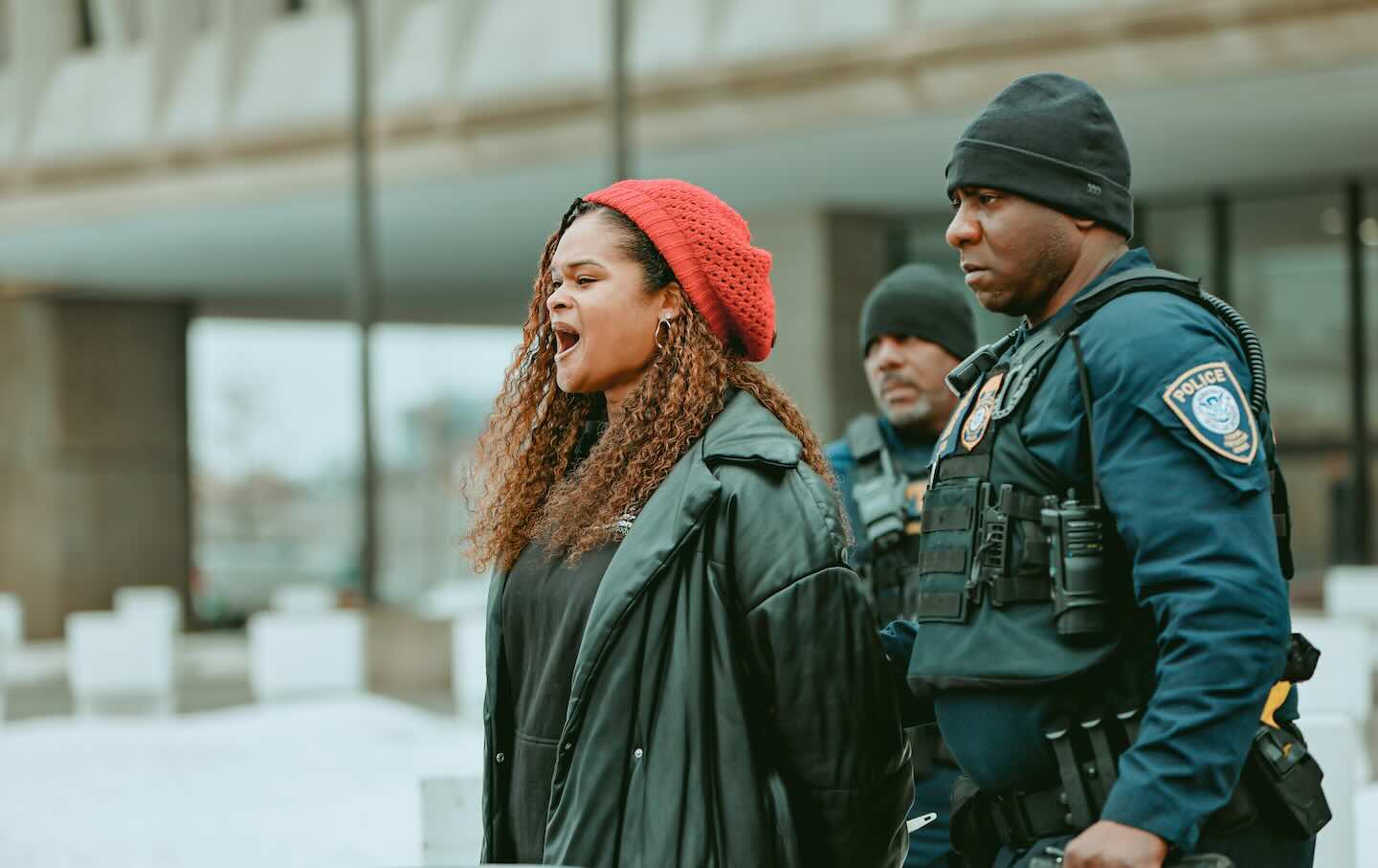
Raquel Willis, cofounder of the Gender Liberation Movement, is arrested along with two dozen other activists and parents outside of the Department of Health and Human Services headquarters on Tuesday.
(Alexa B Wilkinson)Rather than do something, anything, about the abysmal state of healthcare in the United States, the Trump administration’s Department of Health and Human Services has doubled down on its attacks against trans youth, their families, and the web of providers who work to ensure young people can live comfortably and fully in their truths. Of course it’s not just HHS. Last summer, the conservative supermajority on the Supreme Court ruled that it isn’t discriminatory to discriminate against trans youth. But HHS has the ability to take that bigoted opinion even further by barring institutions from providing gender-affirming care as a condition of their participation in Medicare and Medicaid. The same condition would apply to Children’s Health Insurance Program funding. In other words, these proposed rules would affect nearly all, if not all, hospitals.
Yet there hasn’t been much coverage about them. In this dizzying era of “flood the zone” tactics, our basic freedoms are pitted against one another. We deserve more, and young people certainly deserve better.
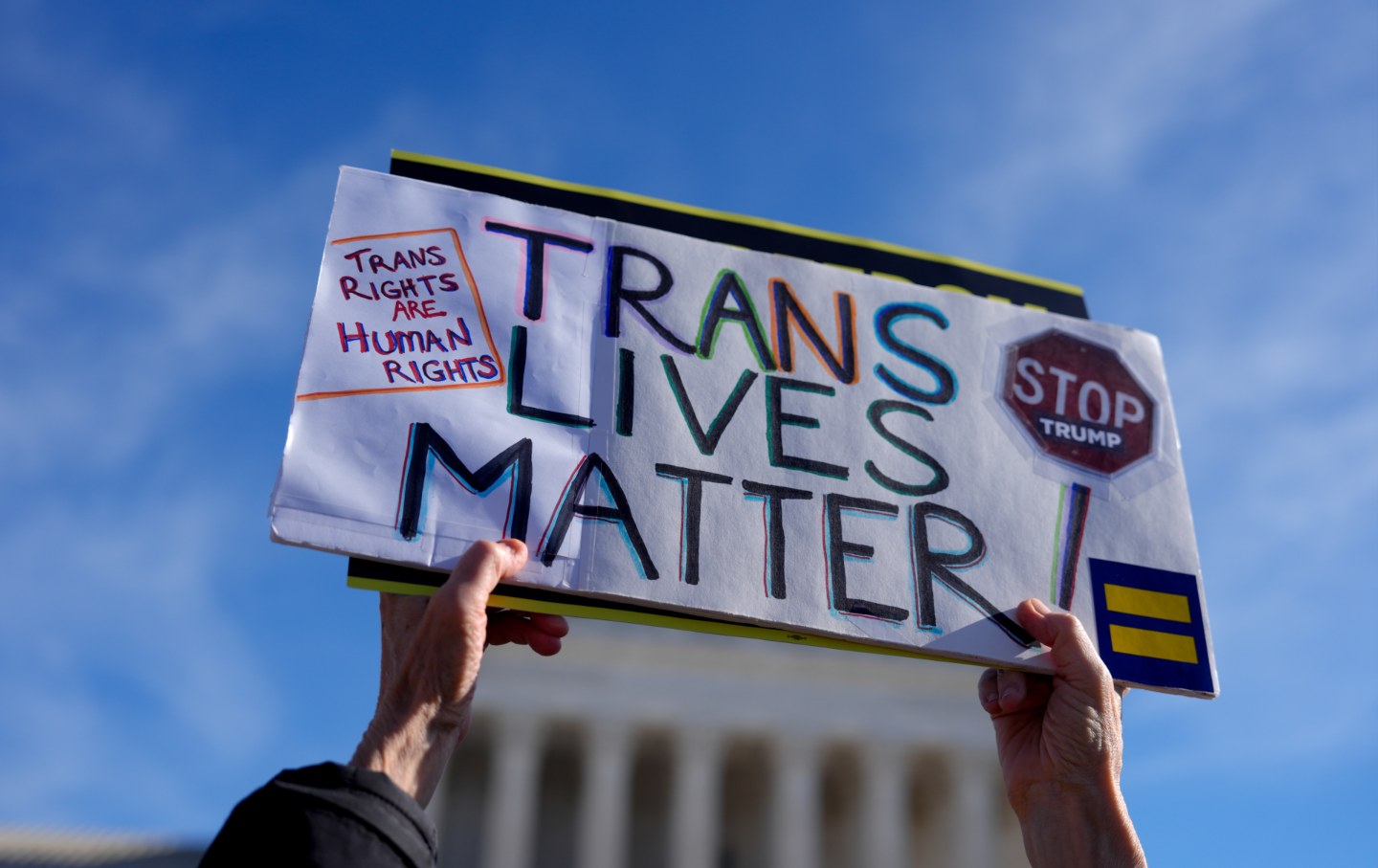
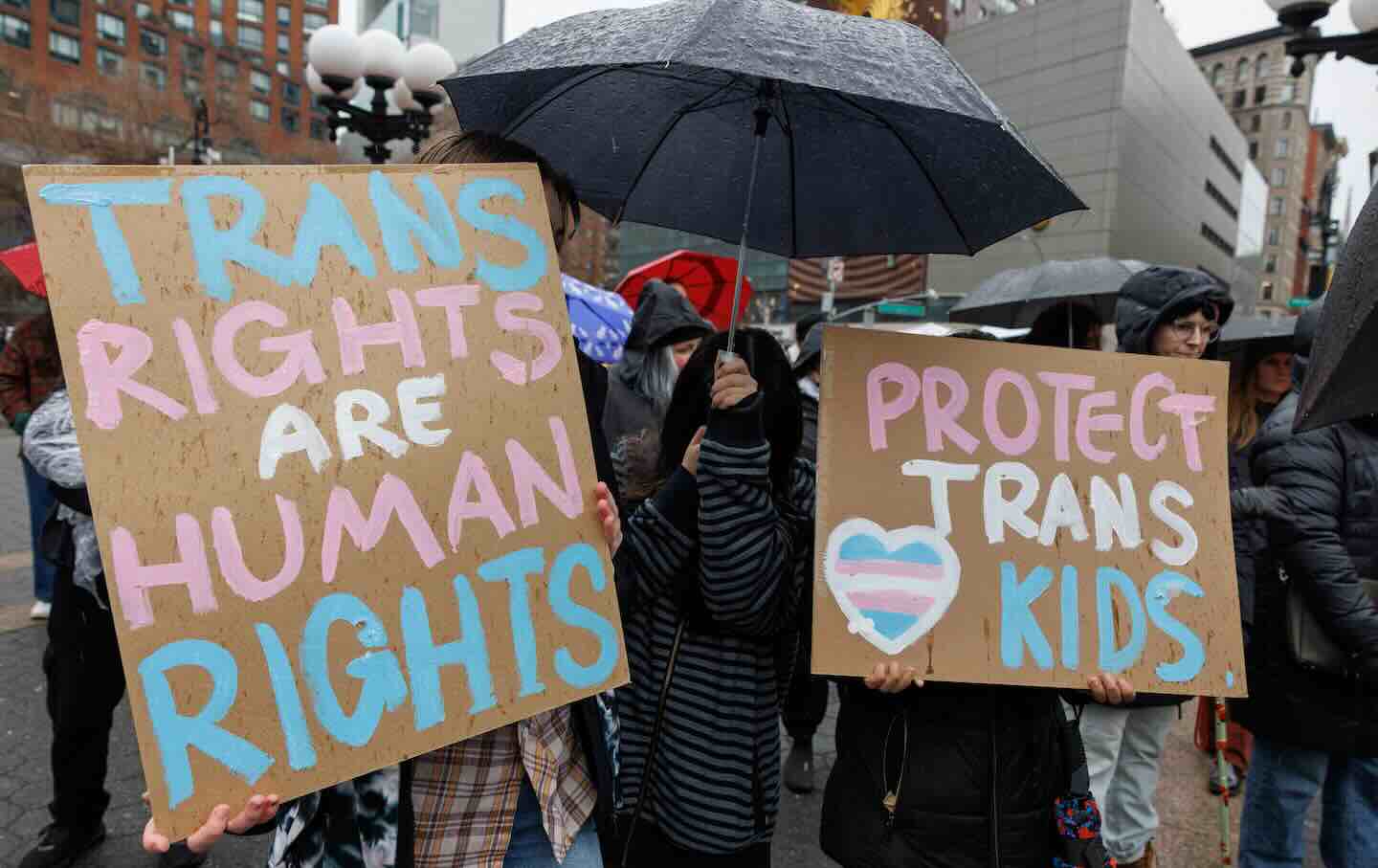
Led by the Gender Liberation Movement, 50 parents and activists, including members of ACT UP NY and ACT UP Pittsburgh, protested outside of Health and Human Services headquarters on Tuesday, on the final day of the public comment period of the rules, to make it known that “trans youth are no debate.” Organizers held a sign that read, “HANDS OFF OUR ’MONES,” while blockading the entrance of HHS, before 25 people were taken into custody, first by Department of Homeland Security agents before being handed over to the Metropolitan Police Department. The parents and activists were held for 12 hours, and some were denied food and phone calls or experienced mistreatment because of their race or gender identity, Raquel Willis, cofounder of the Gender Liberation Movement, told The Nation. The group, which organized the inaugural Gender Liberation March in 2024, works “to build power for gender liberation in culture, organizing, and policy.”
In an email interview, Willis, who was one of the organizers at the protest who was arrested, discussed why this fight over gender-affirming care is a fight for the future and what people can do to champion trans youth.
—Regina Mahone
Regina Mahone: Why was it important to Gender Liberation Movement to block the entrance to the HHS building?
Raquel Willis: This is a critical time in the fight against tyranny and fascism, and it was necessary for us to express our public comment to Trump, RFK Jr, and their HHS that we won’t allow these cuts to care to go unopposed. With so many fights happening at once, the attacks on trans youth, their families, and affirming, qualified service providers are largely being ignored. We saw this last summer when the Supreme Court effectively greenlit state bans on gender-affirming care with its ruling in US v. Skrmetti—and there was minimal media and movement response.
We hope that, sooner rather than later, our movement will wake up and bring back some of that energy it had during marriage equality to fight for the next generation of trans, nonbinary, queer, and intersex youth. We owe it to them.
RM: Can you talk about the experiences of the protesters, yourself included, who were then held in custody for some 12 hours?
RW: Over those 12 hours, the arrested protesters were held in custody of the Department of Homeland Security and the Metropolitan Police Department. We spent hours having our paperwork and processing delayed by inept officers from the former agency without clarity on when we would be released or with what we would be officially charged.
Some protesters were denied food and calls to their emergency contacts and legal advisers. A few of us experienced discriminatory practices like what seemed like racial profiling due to darker skin. Additionally, some transgender and nonbinary protesters were misgendered, denied housing based on their actual gender even when their ID documents aligned, and forced into solitary confinement.
RM: People don’t often consider the right to protest as an issue of bodily autonomy, but the fact of these arrests and the experiences you described while in custody make that undeniable. This administration has proven it will use force not only over how we are living in our bodies but also how we defend our rights to agency and autonomy. Why was it important to you to put your body on the line, once again, particularly in this era of ramped up state violence?
RW: Just as our ancestors and elders in liberation movements before us fought for dignity and full lives, the Gender Liberation Movement believes we must do the same now. Since the start of this current Trump era, we have leaned into radical defiance, understanding that we can’t simply comply, otherwise there will be no stopping at the rights that are pried out of our hands. As well, young people are so thoroughly spoken over in our society and we wanted to send a message that we see them and we are committed to protecting and defending them. So much of this care that is being stolen from trans youth is still accessible to cisgender youth, and that is utterly immoral.
RM: You’ve spoken and written about how “our liberation is bound together.” Can you talk more about how this issue of trans care isn’t solely an issue for trans youth and their families but an issue that affects all of us?
RW: For too long the narrative has been that trans people are isolated and alone, but the truth is we have always had vibrant, loving communities and families around us. Trans youth give us the clearest example of this. When their care is cut off, whole entire families are disturbed, as well as the network of adults from providers to educators who affirm them.
We know that the current administration’s actions to cut off care for trans youth won’t stop there. The ages on the bans keep creeping up and it won’t be long until we see more cuts for access to care for trans adults as well. This administration wants to take more and more away from people on the margins, whether you’re trying to afford insulin or mental health medications or simply rely on Medicaid and Medicare to live the full, healthy life you deserve.
RM: How can people help to minimize the harm being done right now and be a shield for trans youth in their communities who would be harmed by these rules seeking to eliminate most trans youth care in the country?
RW: We must continue to raise our voices against these attacks and all anti-trans legislation. We must urge progressive and empathetic lawmakers to champion trans youth, the adults who love and support them, and all of our rights. We must educate our neighbors on why voting for these measures would be against their own interest. We must pour resources into and donate to organizations who are supporting groups on the frontlines from Gender Liberation Movement to our friends with the Trans Youth Emergency Project and Elevated Access. We must, above all, continue to build a culture that affirms and supports trans youth and their truths. They are our future and we better start acting like it.