Environment / Covering Climate Now / February 26, 2026

Japan’s New Climate Bomb—in the US

Bloomberg Green reveals the climate costs of the US-Japan trade deal.
Mark Hertsgaard
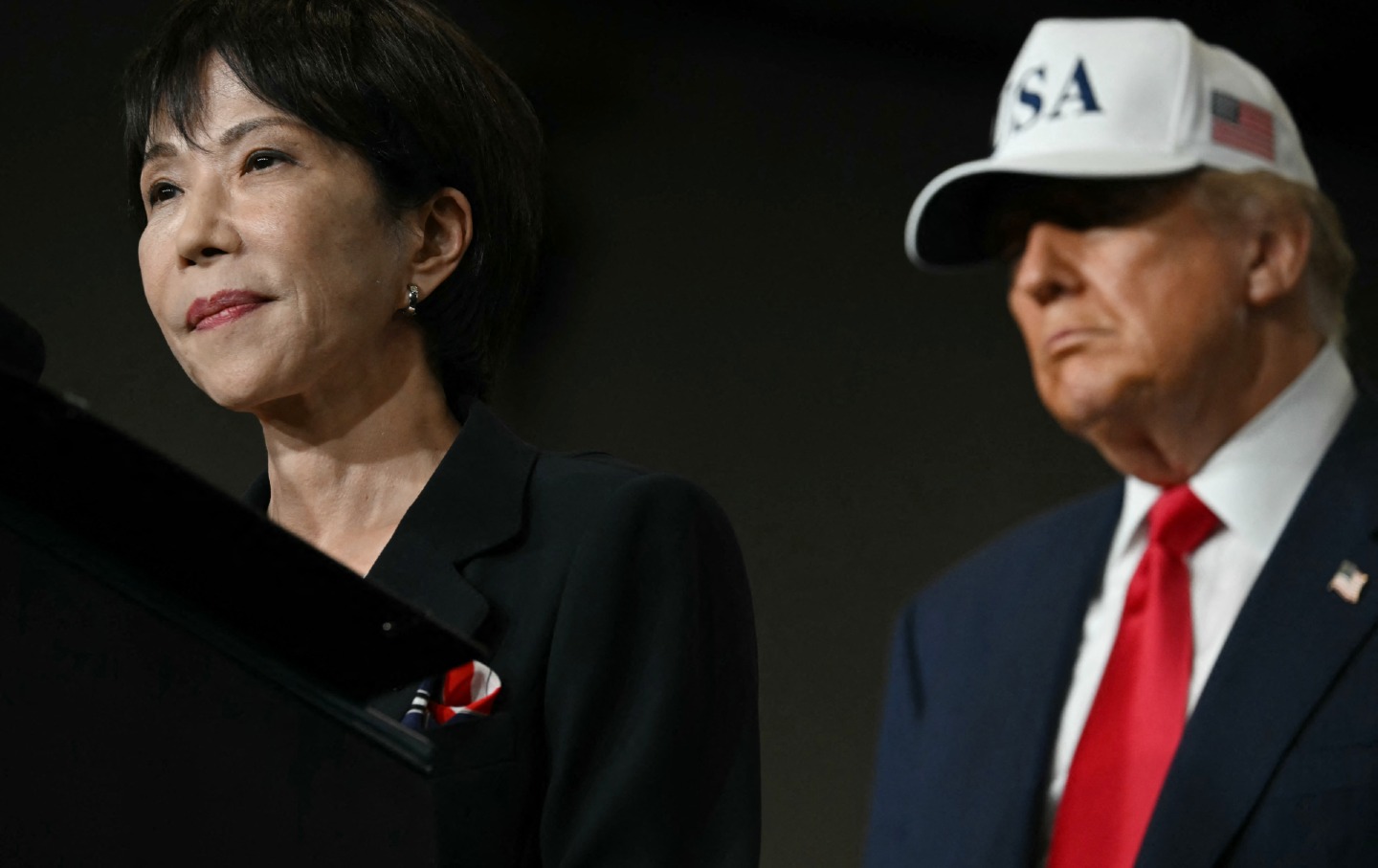
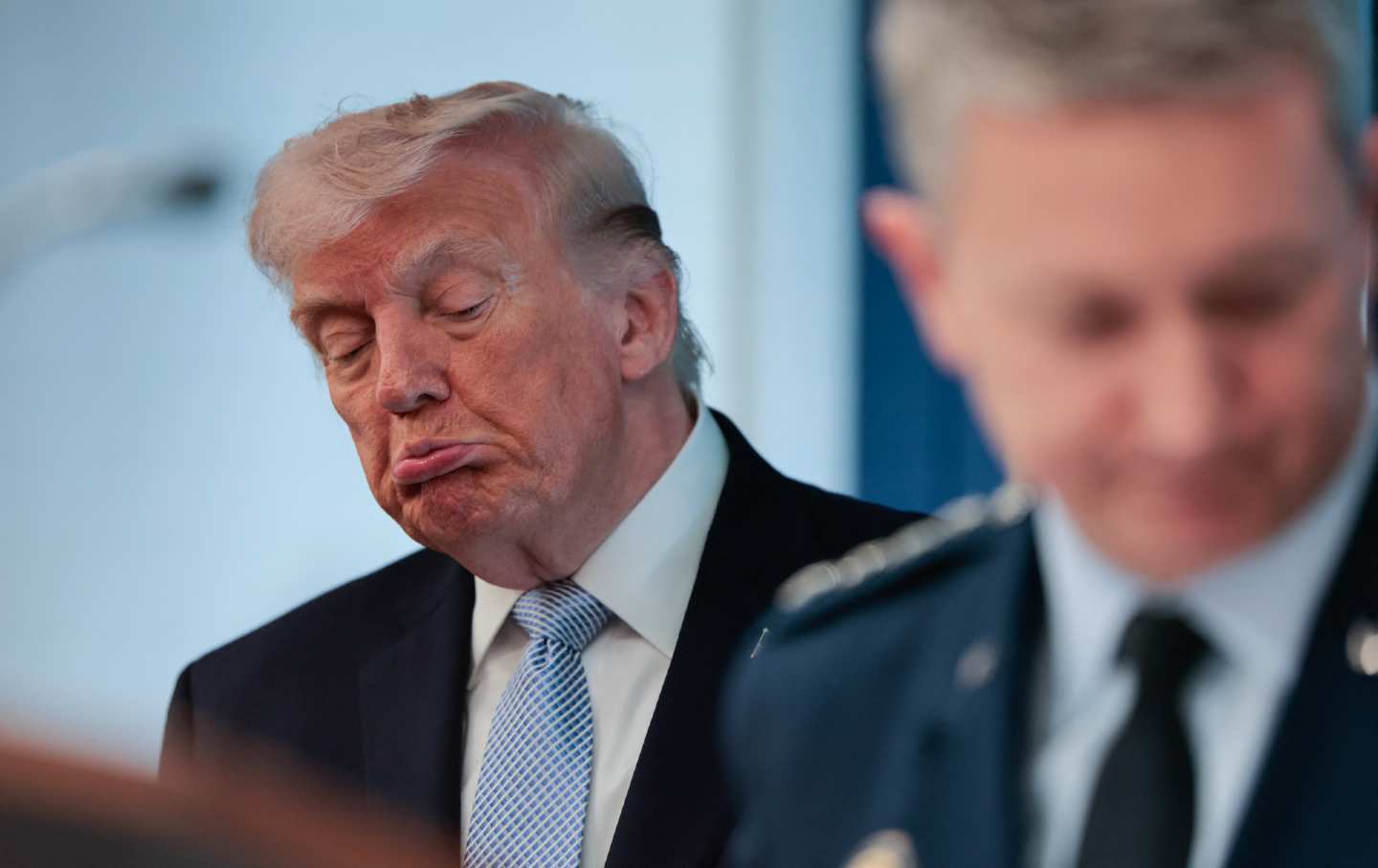
Donald Trump looks over Japanese Prime Minister Sanae Takaichi as she speaks to US Navy personnel aboard the USS George Washington aircraft carrier at Yokosuka naval base on October 28, 2025.
Donald Trump looks over Japanese Prime Minister Sanae Takaichi as she speaks to US Navy personnel aboard the USS George Washington aircraft carrier at Yokosuka naval base on October 28, 2025.(Andrew Caballero-Reynolds / AFP via Getty)

Four years ago, The Guardian published a landmark expose in climate journalism that detailed a coming “carbon bomb” of oil and gas projects. Damian Carrington and Matthew Taylor reported that the projects included plans to explore for, drill, frack, refine, and transport enough additional oil and gas to equal 10 years of China’s planet-warming emissions. Quoting the Sixth Assessment Report by the UN Intergovernmental Panel on Climate Change’s hundreds of scientists, Carrington and Taylor added that if all 195 of the “carbon bombs” they identified became operational, there would be no chance of securing “a livable and sustainable future for all” by limiting temperature rise to the 1.5º C target of the 2015 Paris Agreement.

Now, fresh reporting from Bloomberg Green has revealed a new proposed climate bomb—this one financed by Japan but built in the US.

On February 20, Prime Minister Sanae Takaichi and US President Donald Trump announced a new aspect of the trade agreement they reached last October. Their announcement was major news in Japan but got little coverage in the United States, crowded out by revelations from the Epstein files and the Supreme Court ruling that Trump’s tariffs are unconstitutional. The few stories that did run mostly summarized the two governments’ official statements, leading with the news that, in response to Trump’s tariff threats, Japan will invest $36 billion in three US infrastructure projects: a gas-fired power plant in Ohio, an oil export facility off the Texas coast, and a manufacturing facility in Georgia.

Bloomberg Green’s Aaron Clark and Eric Roston went beyond those official statements to make the climate connection to Japan’s promised investments. Focusing on the $33 billion power plant in Ohio, Clark and Roston noted that its 9.2 gigawatts of generating capacity would make it the biggest power plant in the US, “capable of supplying millions of homes with electricity.” The reporters then cited two estimates—one from Bloomberg New Energy Finance, one from the Rhodium consultant company—of how much carbon dioxide the plant would emit: between 16.2 million and 19.3 million tons annually. The Ohio plant therefore would rank as “one of the nation’s largest sources of carbon dioxide emissions from electricity generation,” Clark and Roston wrote, roughly equivalent to “3.8 million gas cars over a year of driving.”

Even this might understate the proposed plant’s climate impact. As recently as the 2010s, fossil gas was widely regarded as less damaging to the climate than coal, because this gas contains much less CO2. But a growing body of peer-reviewed science, notably a 2024 paper by Robert Howarth of Cornell University, has found that natural gas is in fact not much better than coal, and liquified gas is far worse. Gas is composed mainly of methane, which leaks throughout the supply chain and is 80 times more potent as a climate pollutant than CO2 over a 20-year period. That 20-year period matters, because it is during those years that the battle to limit temperature rise to an amount our civilization can survive will be won or lost.

“The future must be zero fossil fuels,” Howarth said in an e-mail interview. Given that solar and wind are increasingly the cheapest sources of electricity, “why spend billions investing in gas?”

Like the 195 oil and gas projects identified by The Guardian, the Ohio power plant analyzed by Bloomberg Green is not a done deal. Whether the projects actually come online remains an open question for government officials, regulatory bodies, courts, financiers, and citizens. Which makes these projects ongoing news stories for journalists to cover and illuminate. The US-Japan trade deal is a reminder that there are climate stories everywhere you look. The trick is to tell them.
Support independent journalism that does not fall in line

Even before February 28, the reasons for Donald Trump’s imploding approval rating were abundantly clear: untrammeled corruption and personal enrichment to the tune of billions of dollars during an affordability crisis, a foreign policy guided only by his own derelict sense of morality, and the deployment of a murderous campaign of occupation, detention, and deportation on American streets. 

Now an undeclared, unauthorized, unpopular, and unconstitutional war of aggression against Iran has spread like wildfire through the region and into Europe. A new “forever war”—with an ever-increasing likelihood of American troops on the ground—may very well be upon us.  

As we’ve seen over and over, this administration uses lies, misdirection, and attempts to flood the zone to justify its abuses of power at home and abroad. Just as Trump, Marco Rubio, and Pete Hegseth offer erratic and contradictory rationales for the attacks on Iran, the administration is also spreading the lie that the upcoming midterm elections are under threat from noncitizens on voter rolls. When these lies go unchecked, they become the basis for further authoritarian encroachment and war. 

In these dark times, independent journalism is uniquely able to uncover the falsehoods that threaten our republic—and civilians around the world—and shine a bright light on the truth. 

The Nation’s experienced team of writers, editors, and fact-checkers understands the scale of what we’re up against and the urgency with which we have to act. That’s why we’re publishing critical reporting and analysis of the war on Iran, ICE violence at home, new forms of voter suppression emerging in the courts, and much more. 

But this journalism is possible only with your support.

This March, The Nation needs to raise $50,000 to ensure that we have the resources for reporting and analysis that sets the record straight and empowers people of conscience to organize. Will you donate today?

Mark Hertsgaard

Mark Hertsgaard is the environment correspondent of The Nation and the executive director of the global media collaboration Covering Climate Now. His new book is Big Red’s Mercy:  The Shooting of Deborah Cotton and A Story of Race in America.

More from The Nation

Trump and his Environmental Protection Agency have made it easier for polluters to profit off our families, our public health, and our planet, writes Representative Lee.

Rep. Summer Lee: The Fight for Environmental Justice Is Far From Over Rep. Summer Lee: The Fight for Environmental Justice Is Far From Over

The Trump administration’s destructive environmental policies will cost us all. But we must not give up.

Summer Lee

Fire breaks out at the Shahran oil depot after US and Israeli attacks in Tehran, Iran, on March 8, 2026.

A World on Fire Needs More Climate Reporting—Not Less A World on Fire Needs More Climate Reporting—Not Less

War is a climate story, but billionaire media owners don’t want to tell it.

Kyle Pope

Natural Man

Natural Man Natural Man

Russ Feingold is on a new mission: preserving nature to save the planet.

Feature / John Nichols

Men watch from a hillside as a plume of smoke rises after an explosion on March 2, 2026, in Tehran, Iran.

The Iran War Is Also a Climate War The Iran War Is Also a Climate War

Climate change is not a peripheral part of what we’re seeing in Iran—it’s structurally embedded in modern warfare.

Mark Hertsgaard and Giles Trendle

US President Donald Trump speaks during a State of the Union address in the House Chamber of the US Capitol in Washington, DC.

The Planet-Sized Hole in Trump’s State of the Union Address The Planet-Sized Hole in Trump’s State of the Union Address

Although climate change received no attention during the president’s speech, Americans must continue to find new ways of making progress against the ongoing environmental crisis.

StudentNation / Ilana Cohen

NewsGuild members are joined by other protesters during a rally outside the Washington Post office building on February 5, 2026, in Washington, DC.

Where Climate Coverage Goes to Die Where Climate Coverage Goes to Die

The very notion of public service journalism is under assault at precisely the moment that it’s most needed.

Kyle Pope