
Why We Must Remember Brandon Teena
Decades after his death, Brandon’s name was invoked in the Nebraska legislature as a reminder of what led to his murder. This Transgender Day of Remembrance, we must not forget.
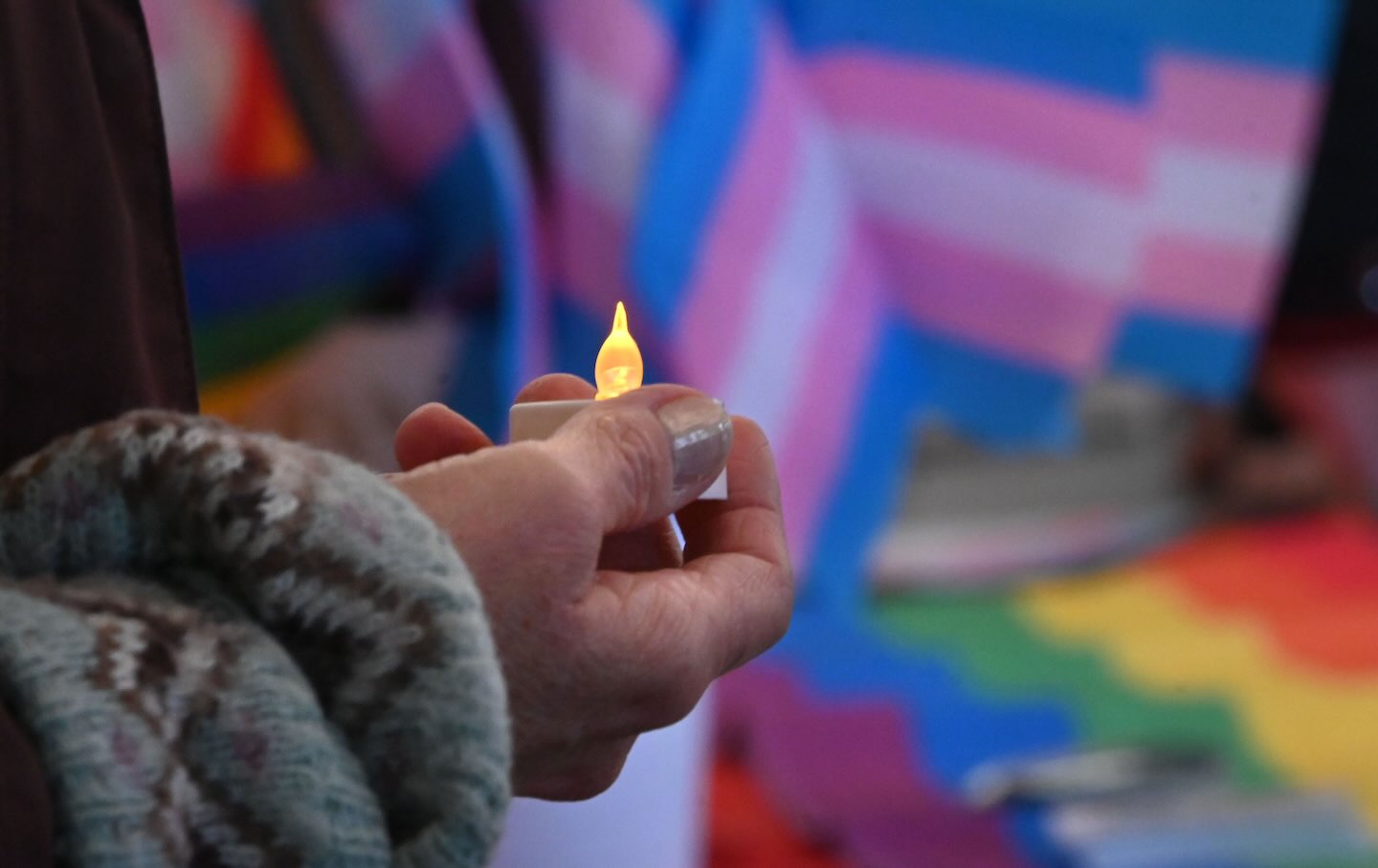
In Lincoln, Nebraska, where I live, there’s a cemetery that I pass while driving to the frequent destinations of my daily life: the YMCA where I exercise, the house of my child’s best friend, the Costco where I regularly buy groceries in bulk. Until this year, I had never paid it much attention.
It is the cemetery where Brandon Teena, a 21-year-old transgender man, was buried on January 4, 1994. His brutal murder, along with that of two other victims, Lisa Marie Lambert and Phillip Elliot Devine, is one of America’s most well-known hate crimes. One of the men responsible for the murders, Thomas Nissen, is incarcerated on the same street as the cemetery where Brandon is buried, just a couple of miles north at the Nebraska State Penitentiary. A small world.
On a mild day in late August, I decided to visit Brandon’s grave. His death had been on my mind since it was invoked earlier in the year in the Nebraska state legislature by testifiers who opposed Legislative Bill 89, dubbed the “Stand with Women Act,” that codified strict definitions of “man” and “woman” for state facilities and policies, along with the bathrooms and sports teams of K-12 schools and universities in the state.
For the past two years, I have been conducting research for a book about the origins and evolutions of anti-trans activism in the United States. I’ve traveled to various events across the country, interviewed activists, and visited historical archives. And I’ve spent time at the state capitol, listening to lawmakers and members of the public debate laws that restrict how transgender people participate in public life.
A trans woman who grew up in western Nebraska put it simply in her testimony on February 7: “Policies like those mandated by LB 89 are what led to Brandon’s death.”
Another opponent of the bill looked directly at the legislators as they spoke: “If you want your names to be remembered alongside those of his [Brandon’s] murderers, then go ahead and advance this bill.”
To outsiders, this may sound like hyperbole, to equate a bill regulating bathroom access and sports teams with the worst of hate crimes. But violence has many manifestations and, far too often, begets more violence.
Political violence has saturated the news lately, from stories of the US military destroying boats allegedly carrying Venezuelan criminals, to a political candidate in Maine who called for an armed uprising against fascism, to the assassination of Charlie Kirk.
It appears that Kirk was killed, at least in part, because of his virulent anti-transgender views. Coincidently, the last audience member to address Kirk before he was shot began with the question, “Do you know how many transgender Americans have been mass shooters over the last 10 years?” Kirk replied, “Too many,” shortly before a bullet tore through his neck. Less than 24 hours after Kirk was pronounced dead, the governor of Utah told the press that “leftist ideology” motivated the killer.
Writing about Kirk’s killing, the anthropologist and psychiatrist Eric Reinhart observed that political violence “matters less for its immediate effects than for the imaginative horizons it opens or closes.” Indeed, the Heritage Center, the political organization largely responsible for Project 2025, has since recommended that the FBI start dedicating resources to crack down on “Transgender Ideology-Inspired Violent Extremism,” to increase surveillance and scrutiny of a population that, in reality, is responsible for less than 1 percent of mass shootings and whose members are far more likely to be victims of violent crime than perpetrators.
When death is both personal and political, the person who was killed becomes both bigger and smaller than who they were in life, reduced to whatever features match the political story. I thought about this as I searched for Brandon Teena’s grave. There was more to him than his transness. He was an aspiring artist whose acceptance letter to an art institute in Colorado arrived at his mother’s house shortly after his death.
The longer I looked, the more doubtful I became that I would find his gravesite, given the vague directions I had found online. But after circling back to a gravestone I had initially written off, one marked with the surname “Brandon,” I noticed the plot next to it—a headstone covered in seashells. I couldn’t make out the engraving, so I knelt to get a closer look. Alongside the seashells were coins, small crystals, and trinkets: a My Little Pony figure, a He/Him button, and a rock with a hand-painted phrase: “We have not forgotten.” This was where Brandon Teena was buried.
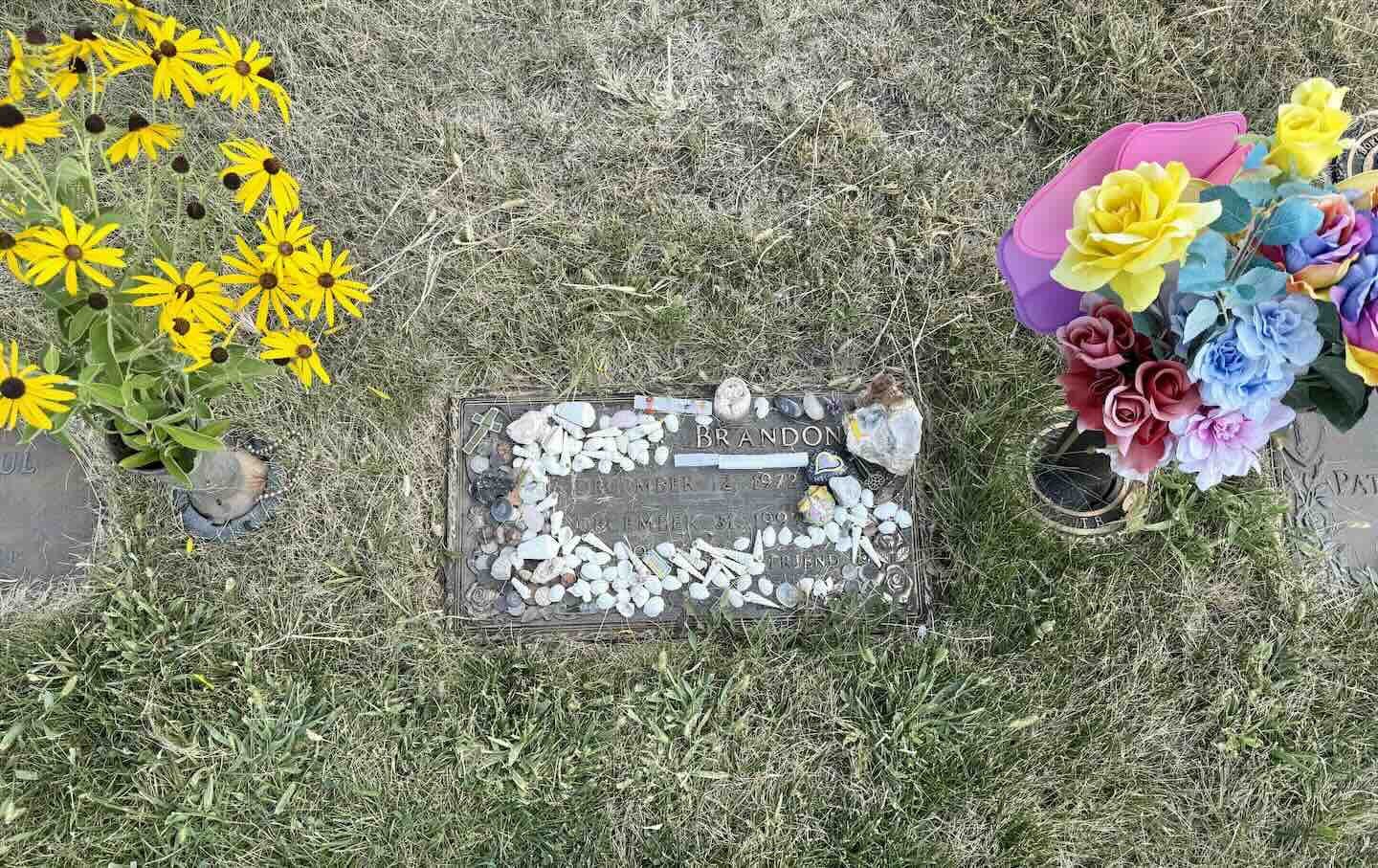
Past visitors appeared to have placed objects to cover “Teena Brandon,” what we now call a “deadname,” as well as the references to “daughter” and “sister.” Time and wind had covered the rest of it. I sat cross-legged before his headstone, picked out pieces of dead grass, and moved around the shells and coins so his name, Brandon, was visible. I underlined it with two pieces of rectangular crystal and cleared shells away from his dates of birth (December 12, 1972) and death (December 31, 1993), and the word “friend.”
Brandon Teena’s killers, Nissen and another man named John Lotter, took for granted widespread and deeply held beliefs that normalized and naturalized the gender binary. In their minds, trans people should not exist. They found out that Brandon was trans when a local paper published his birth name after he was arrested on misdemeanor charges of check fraud. Shortly after, Nissen and Lotten brutally assaulted and raped Brandon, according to court documents, to prove Brandon “was a female.”
Brandon reported the assault to local police. He told officers that he feared for his life. The officers, in turn, questioned Brandon for hours, asking questions that made apparent both their doubt of Brandon’s story (despite physical evidence) and their disregard and disgust when it came to Brandon’s gender identity. Though they knew Nissen and Lotter had previously been convicted of violent crimes, the officers offered no protection for Brandon, nor did they move to arrest Nissen and Lotter. Seven days later Brandon, Lambert, and Divine were all dead.
When Nissen and Lotter were brought to trial in 1994, John Gregory Dunne, Joan Didion’s husband and a reporter for The New Yorker, traveled to Nebraska for the first time. In his article, Dunne wrote poetically of the prairie and Willa Cather, seemingly to orient his East Coast literary sensibilities within the state, which he depicted as foreign to him as Brandon Teena himself. Dunne said Brandon intentionally tricked others with his “gender masquerade”: “a woman whose entire survival strategy was based on not wanting to face certain facts.” He speculated that Willa Cather would have perceived Brandon’s “gender confusion as an excuse to abdicate personal responsibility.”
This was more or less the tenor of national media coverage of the triple murder in the years that would follow: Reporters consistently used Brandon’s birth name and, while misgendering him, argued that he had engaged in some sort of gender deception. This was the reason for his killers’ rage. The other two victims, Lisa Lambert and Philip Devine, were collateral damage. The media also implicated the conditions of rural Nebraska—poor and uneducated—as a kind of collaborator in the crimes, the source of the killers’ “backwards” viewpoints that fueled their rage.
In hindsight, it is easy to critique the media coverage of Brandon Teena’s death for bolstering the very ideas that emboldened his killers. Lost are Brandon’s words and stories. We are now only left with the stories, told long ago, of his friends, family, and journalists like Dunne who made their own speculations. Not to mention what little we have left of Lambert and Devine. Because their deaths were overshadowed by the killers’ intended target, their lives were largely forgotten. Only much later did writers point out that Thomas Nissen had been involved in white supremacist groups and that the deaths of Devine, a Black man, and Lambert, his white girlfriend, may have been more intentional than previously described.
According to the National Crime Victimization Survey, LGBT people are five times more likely than their straight peers to be victims of violent crime, and nine times more likely to experience violent hate crimes. A disproportionate number of victims are transgender, poor, and Black. Transgender Day of Remembrance was organized in 1999 to commemorate Rita Hester, a Black trans sex worker who was murdered in 1998. It was the same year the feature film Boys Don’t Cry dramatized the final weeks of Brandon’s life.
Death and transgender politics have long been linked. Brandon has become memorialized as a queer martyr, in the words of religious studies scholar Brett Krutzsch, “meant to stand in for the masses who have suffered similar horrors.”
Popular
“swipe left below to view more authors”Swipe →Recently, death by suicide has become a contested statistic in political debates over gender-affirming healthcare for transgender minors. Trans people and their allies (along with several research studies) say that this healthcare is lifesaving; not having access to it is associated with higher levels of a host of mental health problems, including suicidality. Those who oppose trans rights insist it is the opposite. For instance, in June 2024, the Supreme Court upheld Tennessee’s ban on gender-affirming healthcare for transgender minors, citing inconclusive evidence that this type of healthcare reduces the risk of suicide. In his concurring opinion, Justice Thomas accuses the transgender movement of using suicide as a threat against parents who refuse to allow their trans kids to socially or medically transition.
These are not simply fights over who has the right data and numbers. When Brandon Teena’s name was invoked in the Nebraska legislature some 30 years after his death, these speakers were urging us to recognize how American institutions themselves have the power to destroy the lives of transgender people: regulating their bodies, restricting their language, and provoking, if not implicitly condoning, the overt violence directed against them. Indeed, since President Trump returned to the White House, he has made transgender people a major target of his administration, declaring that the federal government will only recognize “two sexes of male and female,” holding back funding for hospitals that provide gender-affirming healthcare to minors, prohibiting public schools from recognizing and accommodating transgender students, and supporting a ban of transgender people in the military.
My family and friends here in Nebraska, queer and trans as we are, sometimes talk about whether and under what conditions we might flee the state, the country, our lives as we know them. We are the lucky ones, in many ways. Unlike Brandon Teena, we are not working-class and struggling to make ends meet. In 2025, unlike 1993, we see openly queer and trans people on our televisions and in our pride parades, even in red states like mine.
And yet the specter of violence remains an ordinary feature of American life, both as a memory and as an inevitability of our future. When I left the cemetery after visiting Brandon Teena’s grave, I felt a strange mix of grief and gratitude. If he were alive today, Brandon would be about to celebrate his 53rd birthday. He would be just two years older than my spouse, a transgender man, who now calls Nebraska his home. It is a wonder and a tragedy that we are here but Brandon Teena is not.
More from The Nation
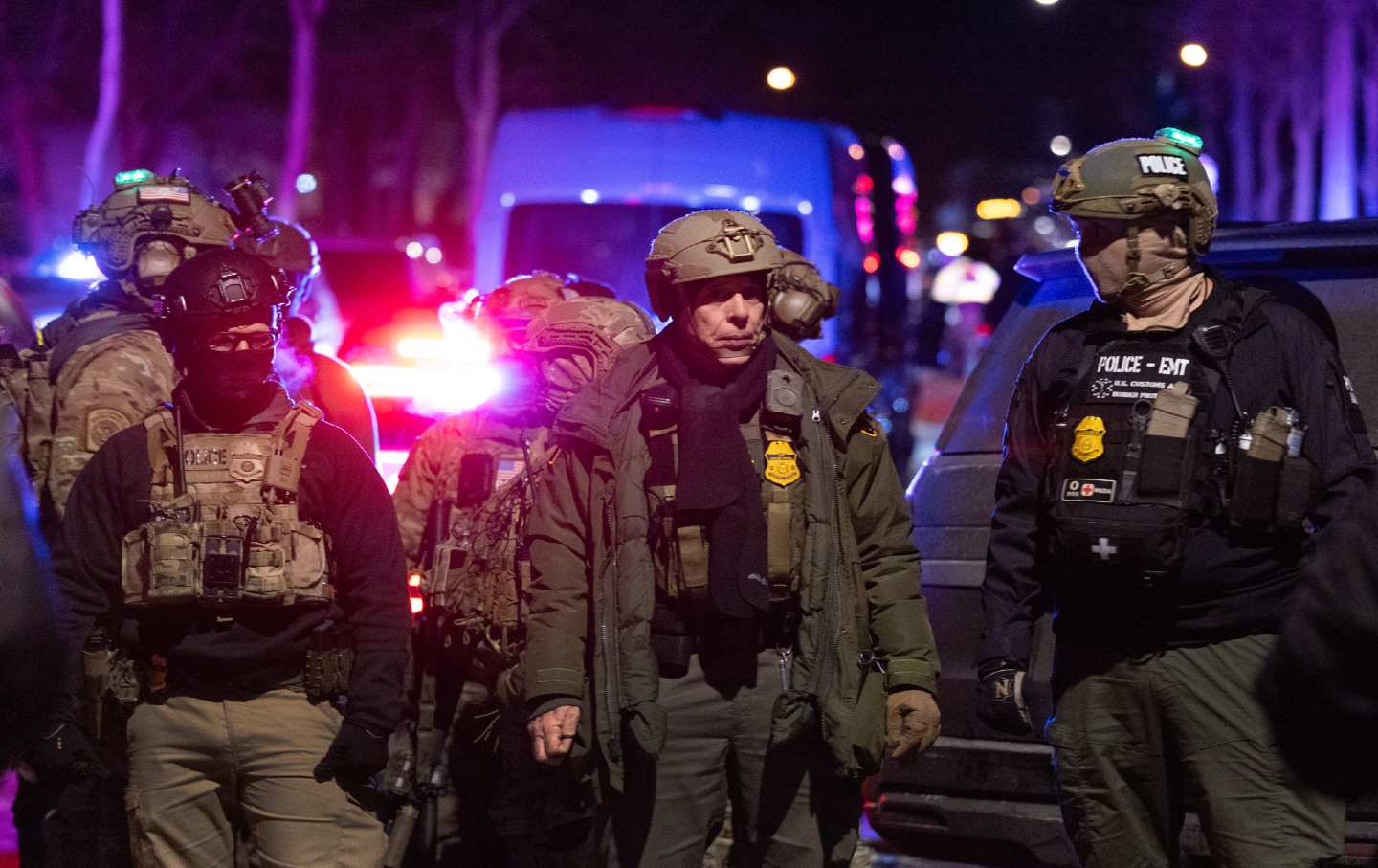
The Disturbing History of ICE’s “Death Cards” The Disturbing History of ICE’s “Death Cards”
The Vietnam-era practice is yet another example of ICE agents thrilling to the brutality they have been encouraged to cultivate.

The Red State–Blue State Healthcare Divide Is Dangerous for Everyone The Red State–Blue State Healthcare Divide Is Dangerous for Everyone
Whether or not you have access to independent, scientifically sound public health guidance may depend on how your state voted for governor.
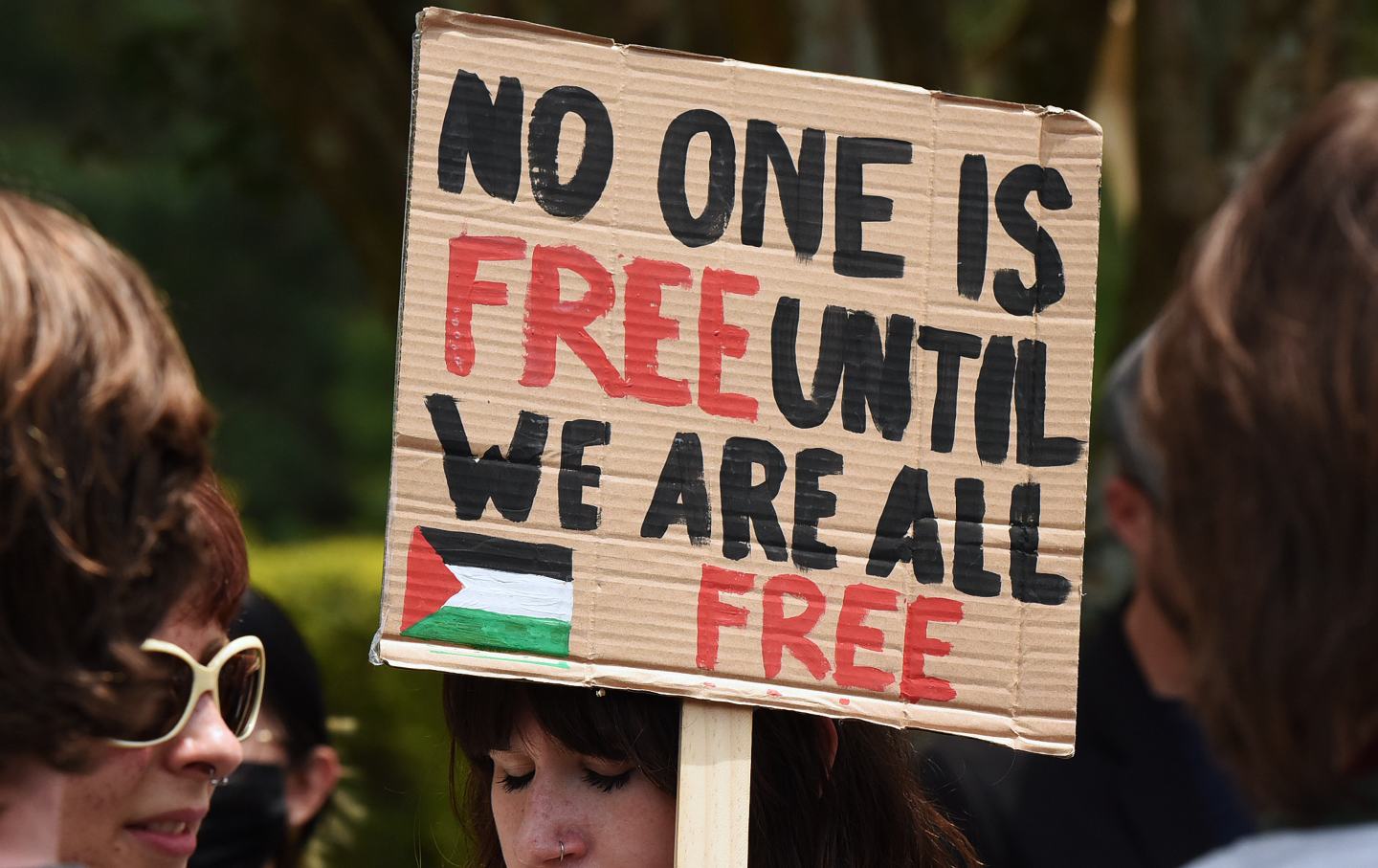
The American Universities Programming Israel’s Killer Drones The American Universities Programming Israel’s Killer Drones
Industry partnerships in higher education are pushing STEM graduates into the business of weapons manufacturing and genocide profiteering.
In the Trump Era, Celebrating Black History Month Feels Radical Again In the Trump Era, Celebrating Black History Month Feels Radical Again
After putting on their very best performances of solidarity every Black History Month, this year corporate marketers have seemed at a loss for words.
ICE’s Detention of Pregnant People Continues a Disgraceful American Tradition ICE’s Detention of Pregnant People Continues a Disgraceful American Tradition
We are seeing yet another example of state-sanctioned violence against the reproductive futures of those deemed outside the national body.
The Price of Being Black and Proud in European Soccer The Price of Being Black and Proud in European Soccer
The Brazilian star Vinicius Jr. has repeatedly been a victim of racist abuse from soccer fans. Now, it seems such vitriol can even come from players without much consequence.

