
Free Ismail Lghazaoui!
Morocco sentenced the Palestine solidarity activist to prison just for protesting. But the trail of his persecution runs from Israel across the Atlantic to New Jersey and Texas.
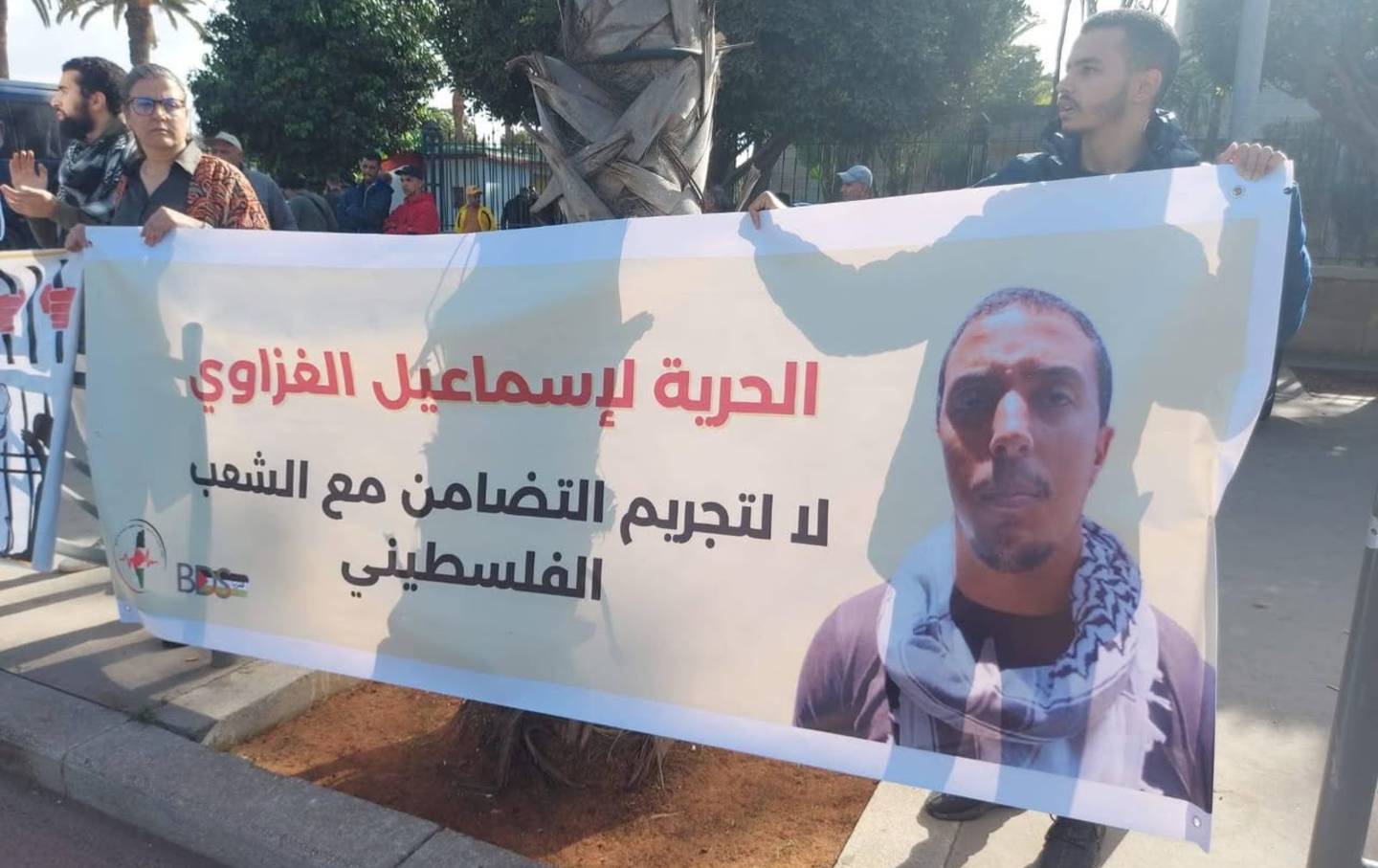
On November 16, 2024, a 34-year-old Moroccan agricultural engineer appeared at a police station in Casablanca, in response to a summons order issued by local authorities. They proceeded to remand him to detention, and two days later charged him with “incitement to commit miscellaneous crime.” In the preceding months, Ismail Lghazaoui had been working with his local Boycott, Divestment, and Sanctions (BDS) group to protest corporate and state complicity with Israel’s war of annihilation against Palestinians in Gaza. For his efforts, Moroccan police had earlier in October stopped him on the street as he was en route to the United States Consulate to protest against American support for Israel—though he was later released without charge.
Following the November arrest, however, prosecutors cited Lghazaoui’s speeches calling for popular mobilizations around the American consulate, which circulated on Arabic-language social media, as the basis for his charges. They further appended to his case file statements he made calling for port workers and protesters to block Israel-bound ships from docking, after local and international investigations revealed that Morocco’s Tanger Med Port was being used to transfer military cargo to Israel.
A month later, sitting in jail after his lawyers’ request for provisional release was denied, Lghazaoui received the maximum penalty for his charge: a one-year prison sentence and a $500 fine. Throughout the duration of his trial, and during his present incarceration, Lghazaoui has been held in a solitary cell, with limited access to hygiene supplies, sunlight, and family visits.
At first, Lghazaoui’s case appears to be a straightforward story of repression against advocates for Palestine, perpetrated by an Arab government that has long normalized relations with Israel. Yet the complex sequence of events leading up to his arrest run backward from Haifa and Ashdod, through the Strait of Gibraltar, and across the Atlantic Ocean to commercial ports in New Jersey and Texas. Each site represents a crucial node in the unseen engine of the Gaza genocide: the global supply chain that funnels US-made weapons and military cargo to Israel.
In early November of last year, the Palestinian Youth Movement (PYM), in collaboration with Progressive International, published a research report analyzing 2,000 shipments of military cargo sent to the Israeli Ministry of Defense since the start of the genocide, on vessels operated by the Danish logistics giant Maersk. The report found that the shipments—which included millions of pounds worth of armored personnel carriers, military tactical vehicles, armored plates, aircraft parts, bomb assays, and bullet cores—typically departed the United States from ports in New Jersey and Texas before transiting through the Port of Algeciras, Spain on the way to Israel.
Most crucially, the report revealed that Maersk had knowingly flouted Spanish law, in effect since May 2024, prohibiting military materiel destined for Israel from transiting through Spanish ports. As a result of the pressure from PYM’s campaign, Maersk was forced to admit publicly for the first time that it was carrying weapons to Israel on behalf of US Foreign Military Sales. In response to these revelations, the Spanish government began denying entry to Maersk vessels suspected of carrying shipments to the Israeli Ministry of Defense. After access to one of its key transshipment hubs was disrupted, Maersk was forced to begin diverting its vessels to a terminal across the Strait of Gibraltar: the Tanger Med Port on the Moroccan coast.
While Morocco has long maintained commercial trade relations with Israel, the revelation that the kingdom was directly facilitating the transfer of military cargo to Israeli forces in Gaza sparked widespread outrage across Moroccan civil society. The city of Tangier, in particular, where the Tanger Med Port is located, has witnessed large-scale protests since November over the government’s explicit support for the ongoing genocide. Lghazaoui participated in these popular mobilizations and called for the disruption of military shipments at the port, alongside groups such as BDS Morocco and the Moroccan Front for Palestine and Against Normalization.
The severity of Lghazaoui’s prosecution was likely tied to the authorities’ desire to make an example out of a prominent face of the protest movement, after seeing port workers answer civil society’s calls to action. Several workers at Tanger Med Port refused to handle military cargo and were later disciplined or fired, while others resigned from their jobs in protest. After photos leaked showing tactical military vehicles sitting on open container beds in the Maersk terminal, port authorities began limiting access to CCTV and docking ships at night. The port workers’ mobilizations reached a fever pitch with a unionization drive that called on the International Trade Federation for support, but Maersk quashed the fledgling attempt in a letter sent out to port workers.
The ongoing crises surrounding Morocco’s role in Israel’s genocide has exacerbated long-simmering tensions between state policies and public sentiment. In Muslim-majority states such as Morocco, where popular support for the Palestinian cause runs high (since the start of the genocide, support for diplomatic relations with Israel has plummeted from 31 to 13 percent), government officials oscillate anxiously between paying lip service to Gaza and glad-handing their American, Israeli, and European patrons.
The Moroccan government’s willingness to allow weapons shipments to Israel to pass through its ports, despite the Spanish government’s own refusal to do so, is a logical consequence of the normalization agreement between Israel and Morocco brokered by the previous Trump administration. Morocco’s participation in the 2020 Abraham Accords, which formalized a history of previously discreet diplomatic relations with Israel, bore fruit in the form of intelligence collaborations, joint military exercises, weapons purchases, and US recognition of Moroccan sovereignty over Western Sahara. In July 2024, the Moroccan military entered into a $1 billion contract with the Israel Aerospace Industries to procure Ofek 13 spy satellites, which Israel has used to surveil Iran, Iraq, Libya, Syria, and Lebanon.
While street protests offer a kind of pressure-release valve to governments that have normalized relations with Israel, lest civil society mobilizations spiral into larger crises of legitimacy, public expressions of solidarity must be confined to generalized support for Palestinians facing Israel’s apocalyptic military campaign. More confrontational political organizing that takes aim at Morocco’s own complicity in sustaining the genocide is a different matter entirely.
In the past year alone, two Moroccan nationals, Said Boukioud and Abderrahmane Azenkad, were given five-year sentences for denouncing Moroccan normalization with Israel on social media. Their cases, like Lghazaoui’s, sought to suppress nationwide opposition by making an example out of public advocates. Across the region, in countries like Jordan, Egypt, and the Gulf states, authorities have adopted elastic legal definitions of “incitement,” “cybercrime,” and “terrorism” in order to persecute organizers, journalists, and students for speaking out against their governments’ roles in facilitating Israel’s charnel house.
Popular
“swipe left below to view more authors”Swipe →Lghazaoui’s imprisonment imparts an obligation to people of conscience the world over, a duty that transcends sympathy or sloganeering. His status as a political prisoner is tied to an intricate, global web of collusion with Israel’s genocidal ambitions, knit together by multinational corporations and collaborationist governments. The movement to enact a people’s arms embargo, contra the sclerotic complicity of Western powers and their compradors, must recognize this interconnected reality and work to develop and strengthen institutions of bottom-up, working-class power that can demand and extract true accountability from corporate and state actors, wherever they may be.
In a letter from prison written on December 30, 2024, Lghazaoui salutes the “free people who supported me without even truly knowing me,” and to whom he is connected through a “common bond and ultimate goal: to amplify the voice of the Moroccan people rejecting injustice and standing in solidarity with the steadfast Palestinian people.” We must dare to count ourselves among those who are bonded in this struggle for justice—for Lghazaoui, and for Gaza.
Editor’s Note: An earlier version of this article misspelled Ismail Lghazaoui’s name. We regret the error.
More from The Nation
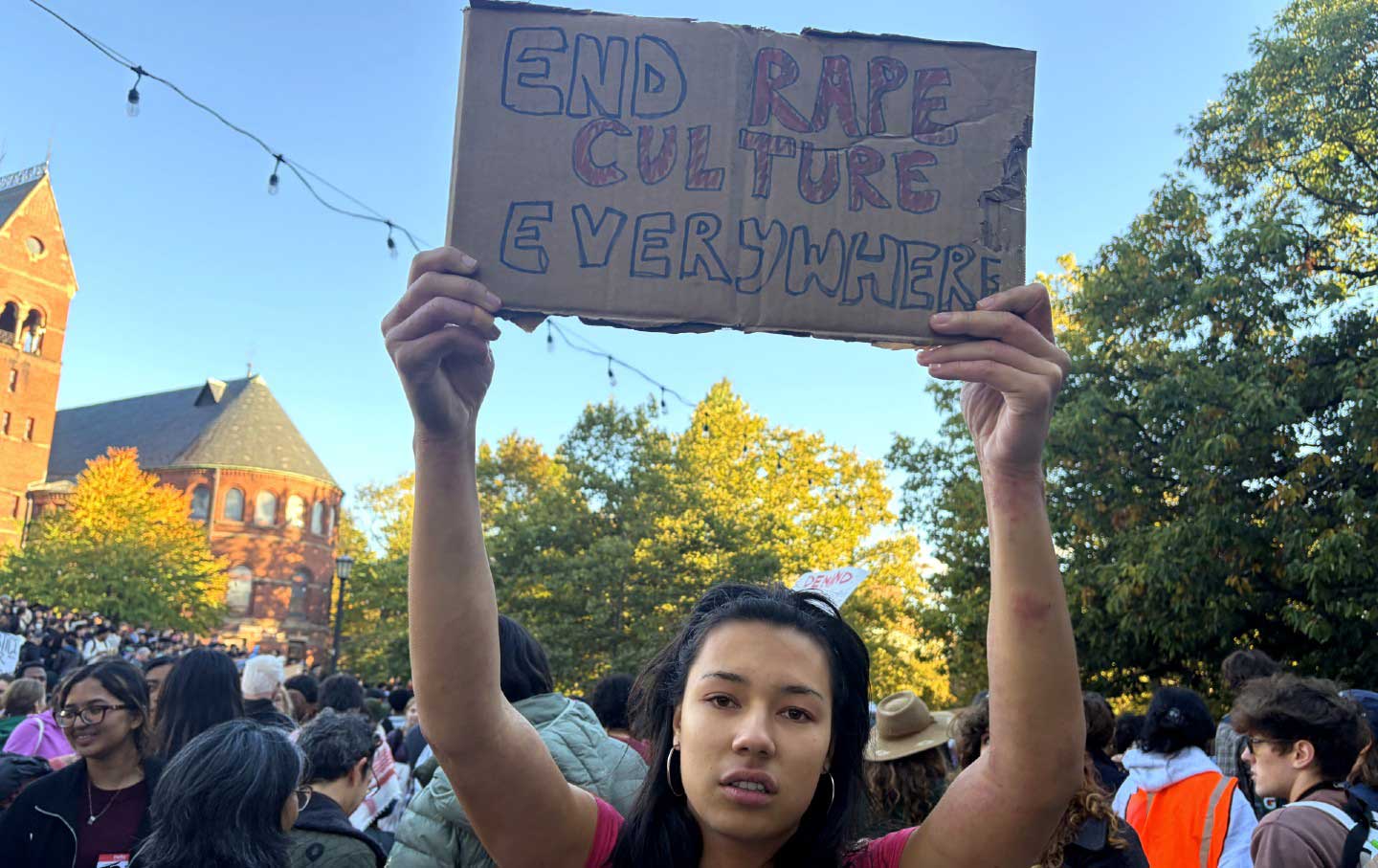
Inside Cornell’s Week of Protest Inside Cornell’s Week of Protest
“We won’t be silenced anymore. Our university needs to start protecting us, like they should’ve with Jane Doe and all other survivors on campus.”
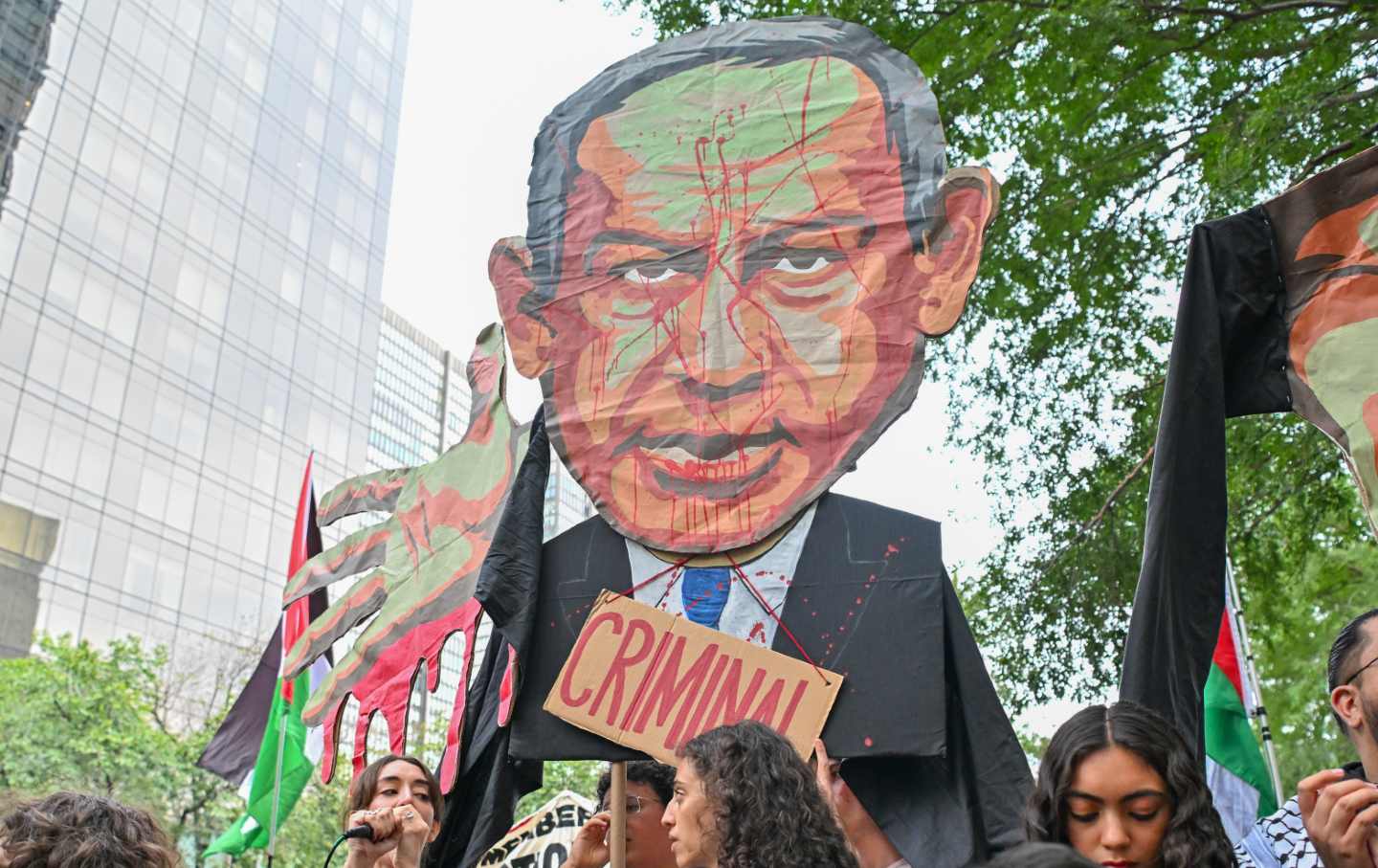
Netanyahu Came to New York. New Yorkers Were Ready for Him. Netanyahu Came to New York. New Yorkers Were Ready for Him.
Scenes from the defiant protest against the genocidal leader’s UN speech.
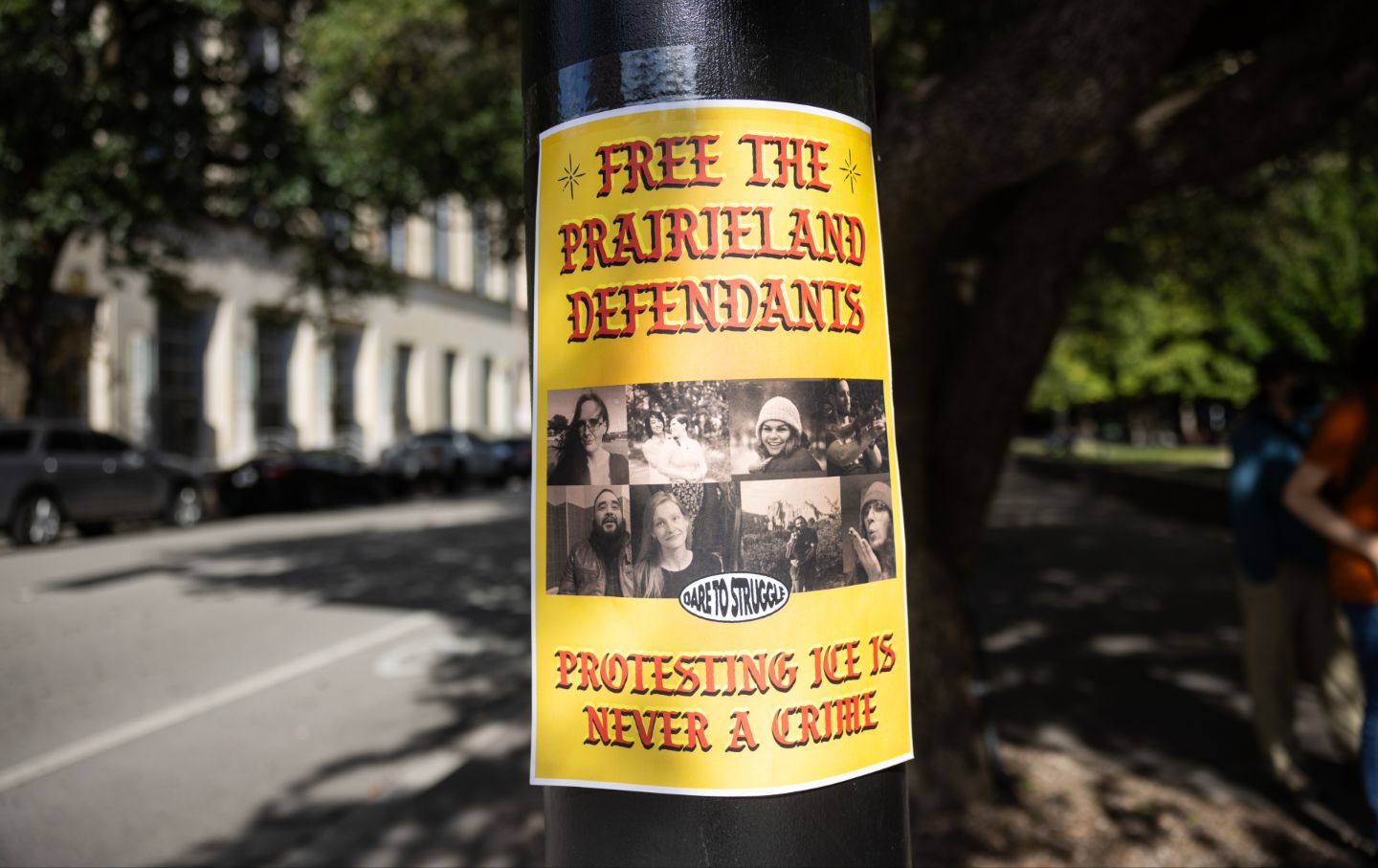
A Message From Prairieland Prisoner Autumn Hill: “Don’t Be Afraid” A Message From Prairieland Prisoner Autumn Hill: “Don’t Be Afraid”
I talked to the political prisoner about the politics of love, her case, surviving as a trans woman in a men’s prison, and how she makes it through the day.
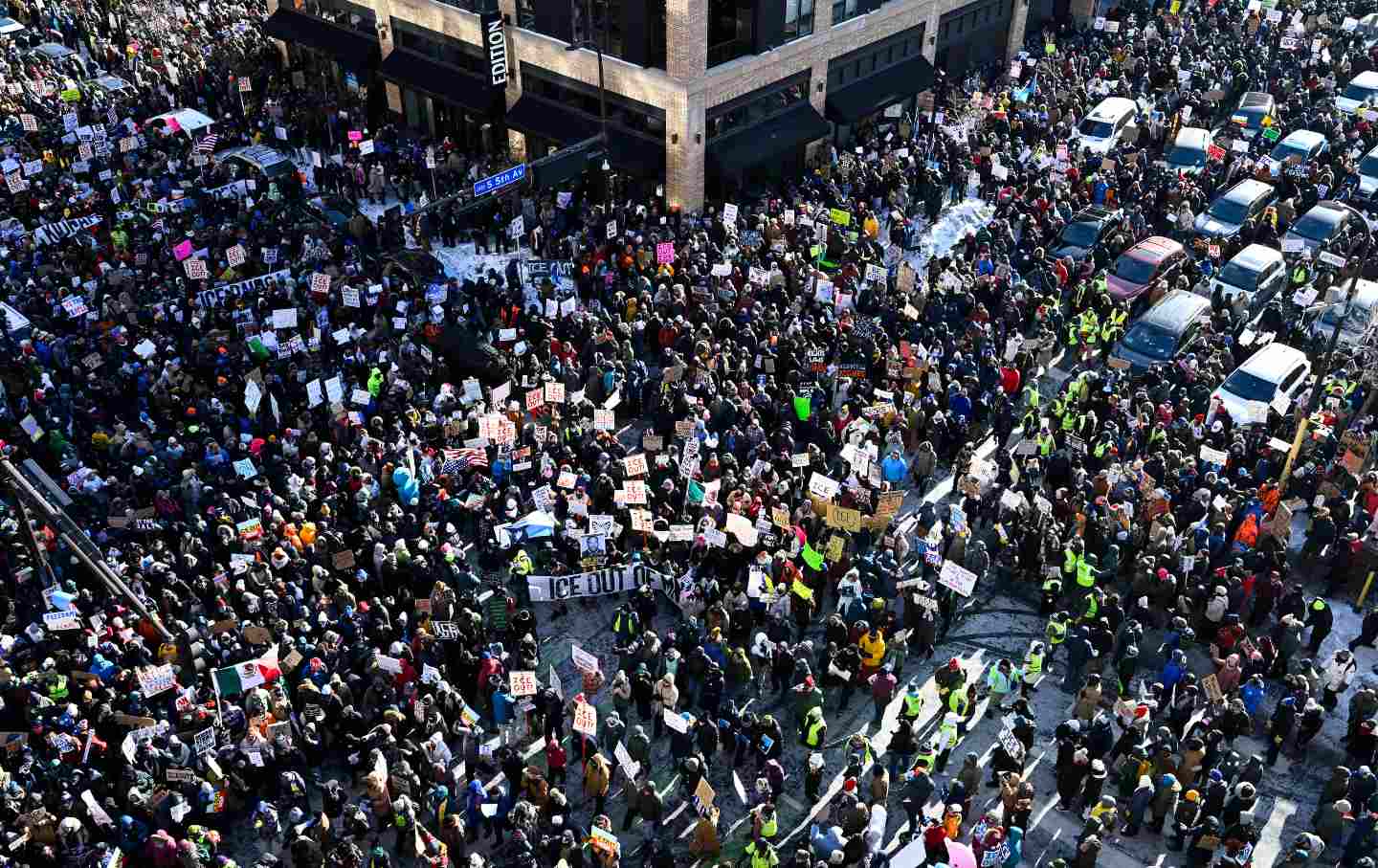
The Impossible Will Take a Little While: The Power of Persistence The Impossible Will Take a Little While: The Power of Persistence
In troubled times, history offers a lesson: Seemingly impossible change can begin with ordinary people who refuse to give up.
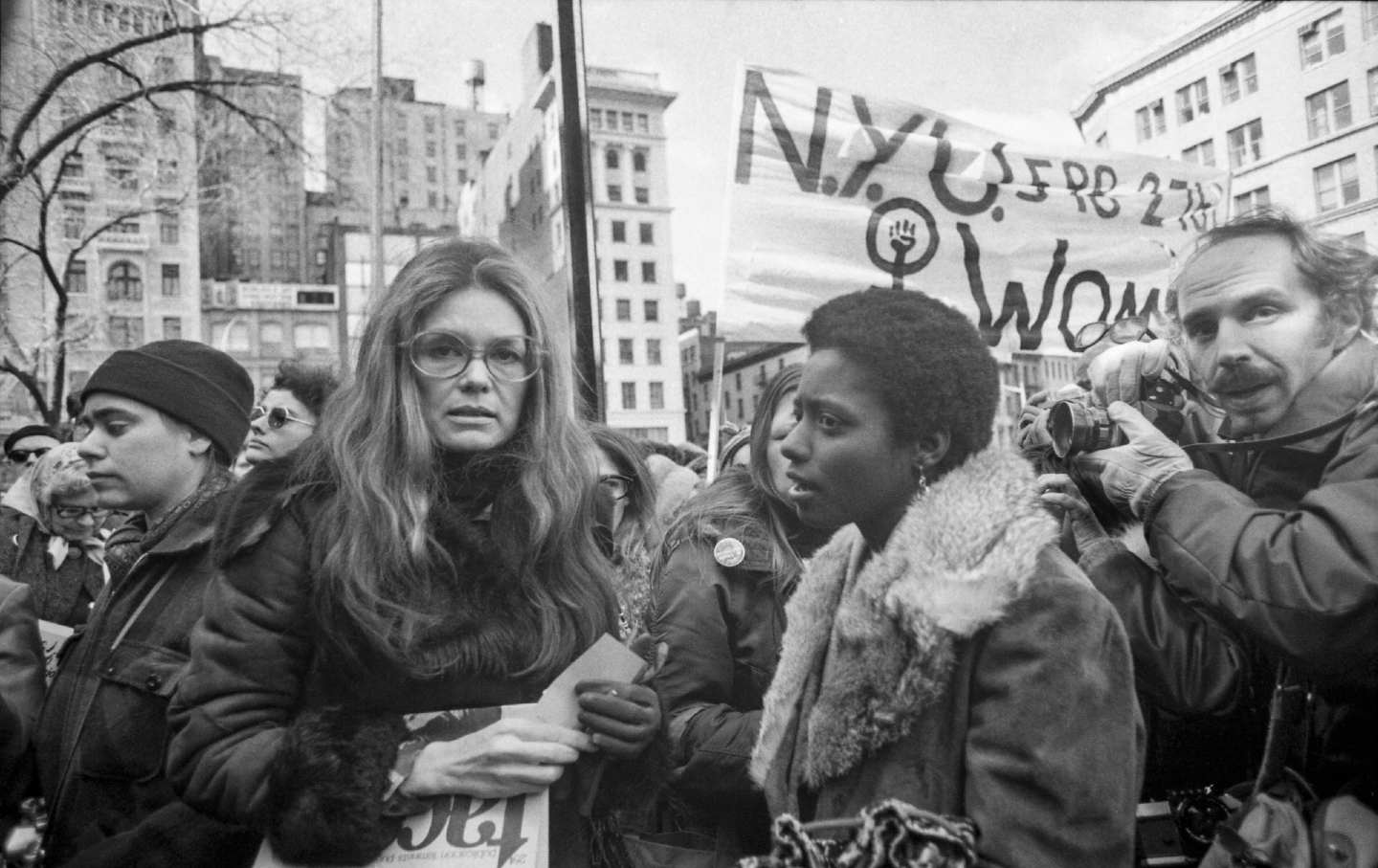
Gloria Steinem’s Many-Splendored Feminist Life Gloria Steinem’s Many-Splendored Feminist Life
The feminist icon lived the struggle for gender equality and always found time to lend support and solidarity to other women leaders, even in her final days.
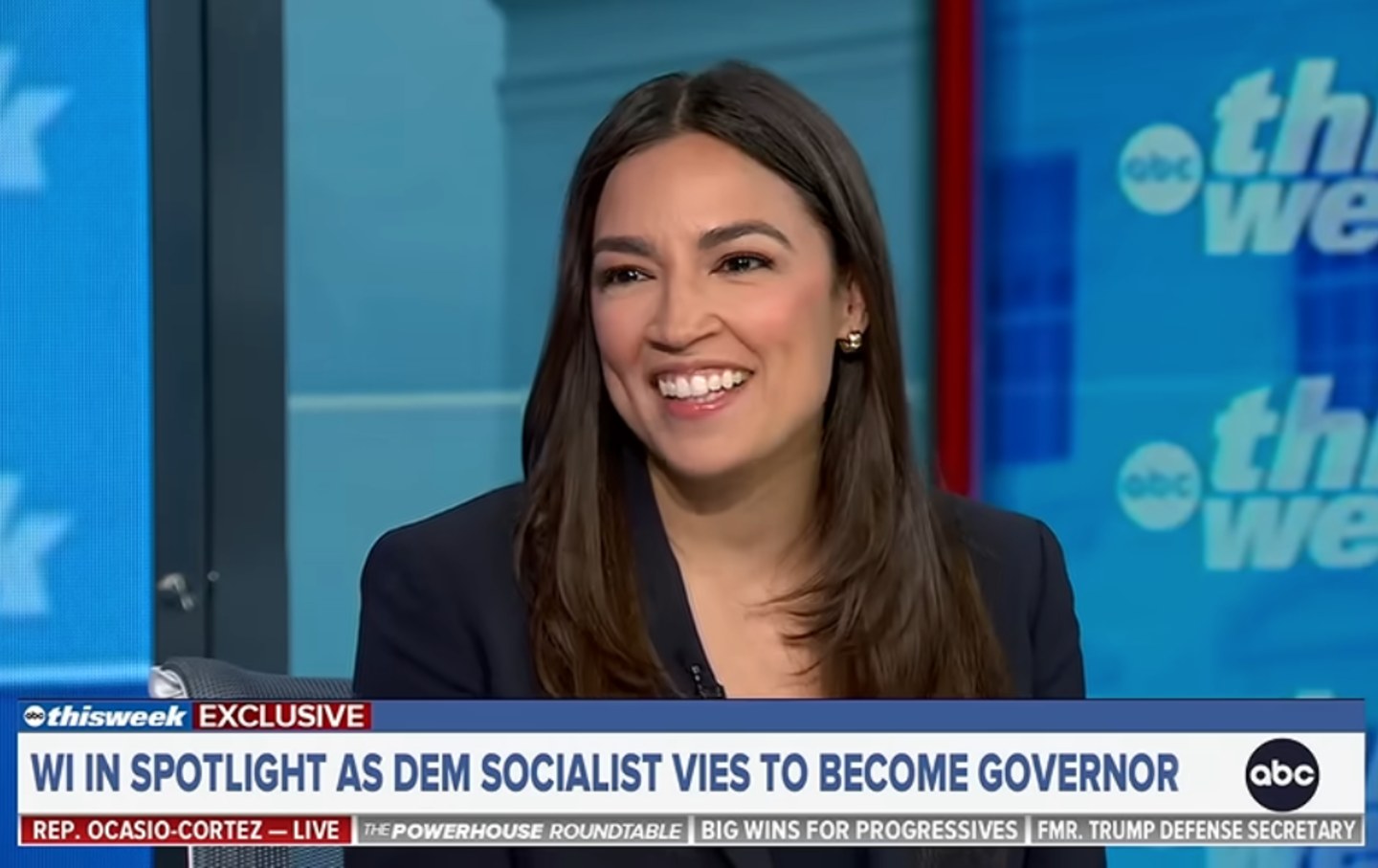
No, Woke 1 Was Not Crazy No, Woke 1 Was Not Crazy
AOC and others are laughing off 2020 as a wild, isolated moment. None of that is true.

