
The Hollywood Gerrymander
The proposed Paramount/Warner Bros. merger does not just represent media monopoly—it is another form of gerrymandering, of rigging the rules to limit who has power.
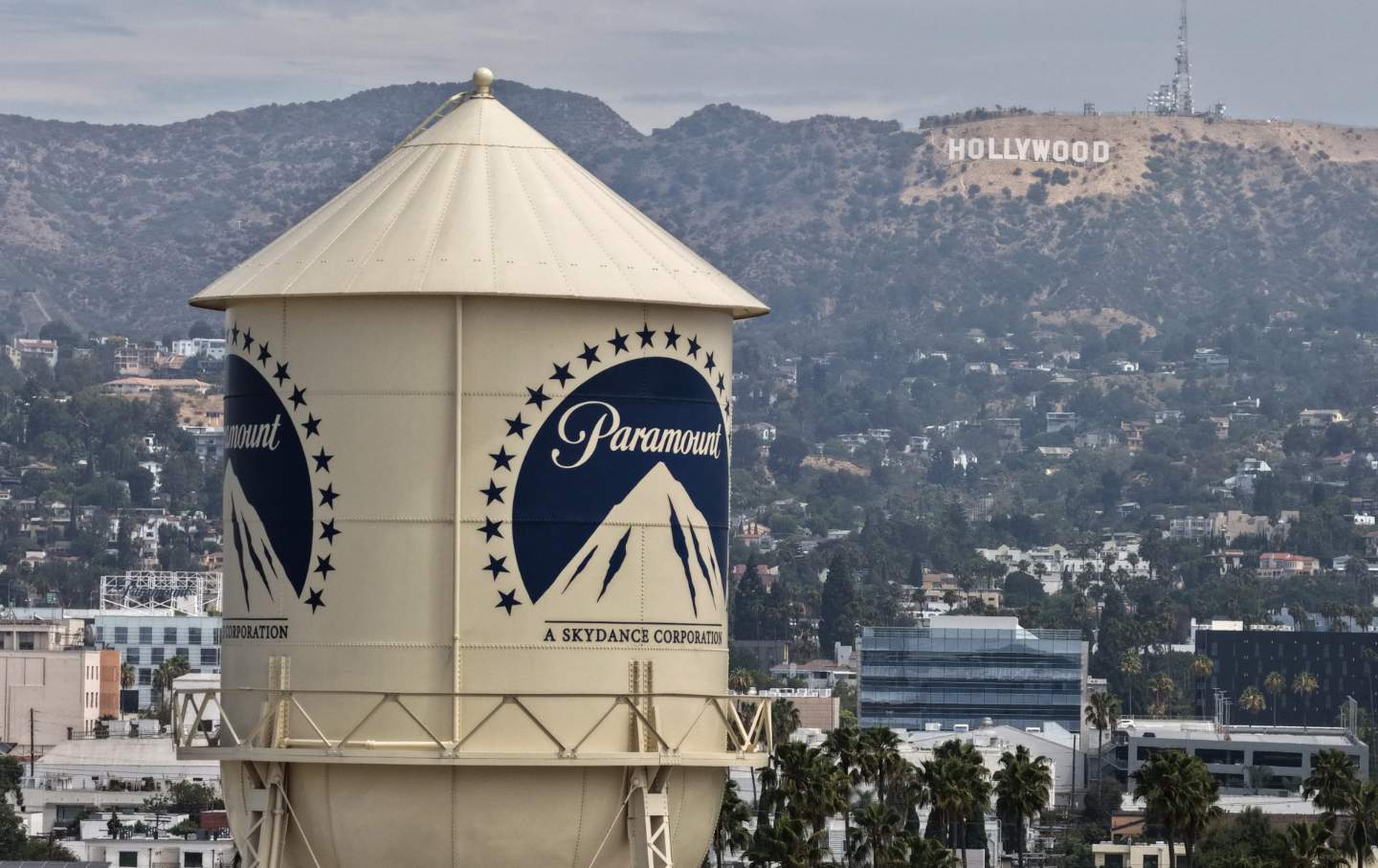
The Paramount logo is displayed on a water tower at the Paramount Studios lot in Los Angeles.
(Justin Sullivan / Getty Images)This spring, in Louisiana v. Callais, the Supreme Court gutted what remained of Section 2 of the Voting Rights Act, the provision that for six decades stopped states from drawing Black voters out of power. It was the culmination of a long project—some may say obsession—on the right. In 2019, in Rucho v. Common Cause, the court had already held that partisan gerrymandering, no matter how brazen, was simply none of the federal judiciary’s business. Together, those two rulings have allowed states to create rigged election maps that are close to untouchable. The court won’t stop you from rigging a district for your party, and it has now stripped away the law that stopped you from rigging one against Black or brown communities. The court has removed the referees and let the players draw the lines however they like.
This is all in service of one particular goal: to enshrine conservative power at the ballot box, which sacrifices democracy in the name of political power. It is a new form of the gerrymandering that generations of civil rights activists fought against. The goal is the same. The point is to rig the rules, to bake in the result before a ballot is cast.
Right now that fight is happening in the courthouse. But elections are only one arena where the rules get rigged. It also happens in the boardroom.
The term “gerrymander” is a portmanteau created to describe an electoral rigging. But I would argue that the term could apply to other ways our society is rigged. What gerrymandering does is set the terms of the argument itself—whose vote counts and how. In so doing, it determines what a country treats as common sense and who gets cast as a threat. It shapes history and whose account of events gets believed. That happens in not just electoral spaces but cultural ones, as well.
Take the Paramount merger, shorthand for Paramount Skydance’s attempted takeover of Warner Bros. Discovery. This consolidation, unprecedented in Hollywood, would irreparably reshape the media industry by combining multiple massive studios underneath one roof, placing the power to shape culture and Hollywood in the hands of an unprecedented few. This is not just monopoly or consolidation—it is another form of gerrymandering. It redraws the boundaries so the contest is settled before it starts.
This way, Paramount doesn’t have to win the argument about whose stories matter. It just can quietly redraw the map of who is even in the room to make these decisions, so that certain voices are pushed to the margins and others are locked out entirely, no vote required. Of course, the result looks “natural” once the lines are set: Audiences “just don’t want” those shows; those creators “just aren’t out there,” the same way a map makes a durable minority look like the authentic will of the voters. Gerrymandering works by controlling the terms of the fight rather than the fight itself. Both in elections and in media consolidation, gerrymandering buries a deliberate choice inside what looks like a neutral process, and is designed to be self-perpetuating. The fewer people left with the power to draw the lines, the harder it becomes for anyone else to ever redraw them.
Until recently, the roughly $80 billion deal was basically a sure thing — shareholders signed off in the spring, and Trump’s Justice Department pronounced it no threat to competition in June. But earlier this summer, a dozen state attorneys general, led by California’s Rob Bonta, sued to block the merger. A federal judge froze the deal, warning that it would gut competition and hand too much of what Americans watch and read to just one owner. In response to the attorneys general’s suit, Paramount agreed to an antitrust trial over the merger that will delay it until the middle of 2027, if it goes through at all. But the fight isn’t over.
If the merger is approved, it will represent a threat to democracy in its own right. The combined company would answer to David Ellison, whose father, Larry, is among the richest men alive and close with Trump administration officials. The younger Ellison would own an enormous share of American film and television, plus CNN. This will narrow the set of major cultural decision makers in Hollywood, handing the job to executives who have every reason to keep whoever runs Washington happy. And it will push stories outside of the decision makers’ comfort zone further to the edges.
Hollywood has never been perfect, but often, representation on screen has always run slightly ahead of the law—the culture moves first, and the rules follow. People saw same-sex couples on television years before they could legally marry; they saw Black leads carry a blockbuster before they saw a Black family move into their neighborhood. Will & Grace ran in prime time through years in which marriage equality was still losing at the ballot box in state after state. Sidney Poitier was the biggest box-office draw in 1968, in a country that hadn’t even passed the Fair Housing Act. Cultural change engenders political change.
This merger puts the decisions about whose and which stories to tell in the hands of even fewer than before. When one company swallows another until a handful of conglomerates control the pipes that culture runs through, that is gerrymandering by another name. It fixes the outer edges of what most people will ever see. It determines which stories get made and which quietly die in development, which voices travel and which get cut in the name of “brand safety.” It draws the lines. Strip Black voters of their leverage over the district, wave through the consolidation that narrows whose stories get told, and the losses compound: You lose your grip on the map, then on the story people tell about why the map looks that way. The damage lands where it usually lands—on the communities already straining to get a fair hearing, now boxed in whether they push or hold.
I wrote my new book, From Presence to Power, in large part to make this kind of corporate power legible—because it is at once the least examined and among the most decisive forces in our lives. Corporations set the boundaries of what and who gets to be culturally relevant. They decide which stories reach us and which are never told. For a century, Hollywood has been the most significant storyteller in America. More consolidation means fewer people in the rooms where those choices get made, and fewer people means more of us are left out of the story.
This is especially true for Black people. Hollywood has long profited from black culture without always opening doors for black people. Our absence has been treated as normal. And while Hollywood has been ahead of the country, it has been ahead on screen and behind it everywhere else. The same studios that put Black stories in front of millions kept Black writers, directors, and executives out of the rooms where those stories get greenlighted. This is not a side effect, either. I’d argue this is actually a good part of what consolidation is for—to have the power to determine who is excluded, who is centered, and who is ignored.
This is what happens when you rig the rules at the ballot box and in Hollywood or news media. The Supreme Court approves the gerrymandered district map to shape our politics. Media behemoths gerrymander the media map to shape the culture. The gutted Voting Rights Act and the blessing of this megamerger are not two different stories but one. They are the same story about power.
Popular
“swipe left below to view more authors”Swipe →None of this arrives labeled honestly. It comes disguised as neutral process, of the court staying out of politics, the merger a result of the market’s doing its thing. But there is nothing neutral about settling the outcome before the contest starts. That’s the whole point of a gerrymander. Once you can see the lines being drawn around you and your vote and your story, the only question left is whether we make them draw them back.
The good news is that we can. Corporations that look untouchable are more dependent on us than they want us to believe. They rely on the audiences and the subscribers; they need the workers and the communities they can’t do without. That dependence is leverage. The moment enough of us decide to use it together, we really can win. This is not a pipe dream, nor impossible. I have seen it work. In 2022, Penguin Random House’s purchase of Simon & Schuster was blocked after authors and agents made the case that fewer publishers would mean fewer books and smaller advances for the writers who most needed them. A year later, writers and actors shut the industry down for months and came back with the first real guardrails on AI and streaming pay.
But challenging power requires understanding the threat and seeing the strategic levers for change that push people in power to change their approach. We must set new expectations for attorneys general and, when Democrats take power again, the FCC—not just challenge tech companies. We must set expectations for state legislatures. That is how presence becomes power. We can’t wait for the people who drew the lines to redraw them. We have to build a base big enough and determined enough that they can no longer afford to leave us out of the story.
More from The Nation
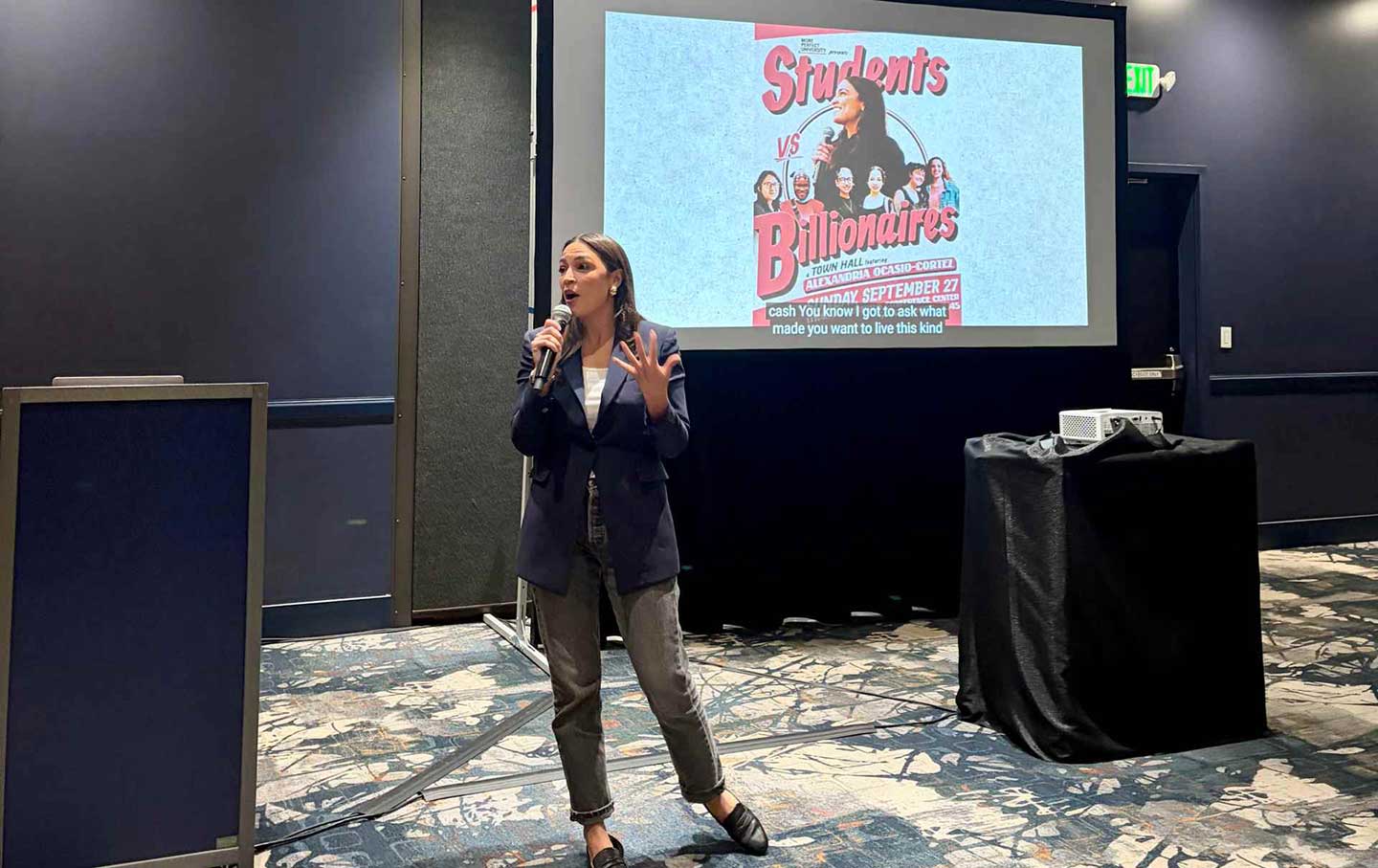
Cornell Students Challenge University Power at a “Students vs. Billionaires” Town Hall Cornell Students Challenge University Power at a “Students vs. Billionaires” Town Hall
Representative Alexandria Ocasio-Cortez spoke to Ithaca students about tuition hikes, sexual violence, free speech, and university governance.

Trump Has Made it Legal to Destroy Endangered Species’ Habitats Trump Has Made it Legal to Destroy Endangered Species’ Habitats
By redefining the meaning of “harm” in the Endangered Species Act, the administration is giving big corporations a gift they have long demanded.
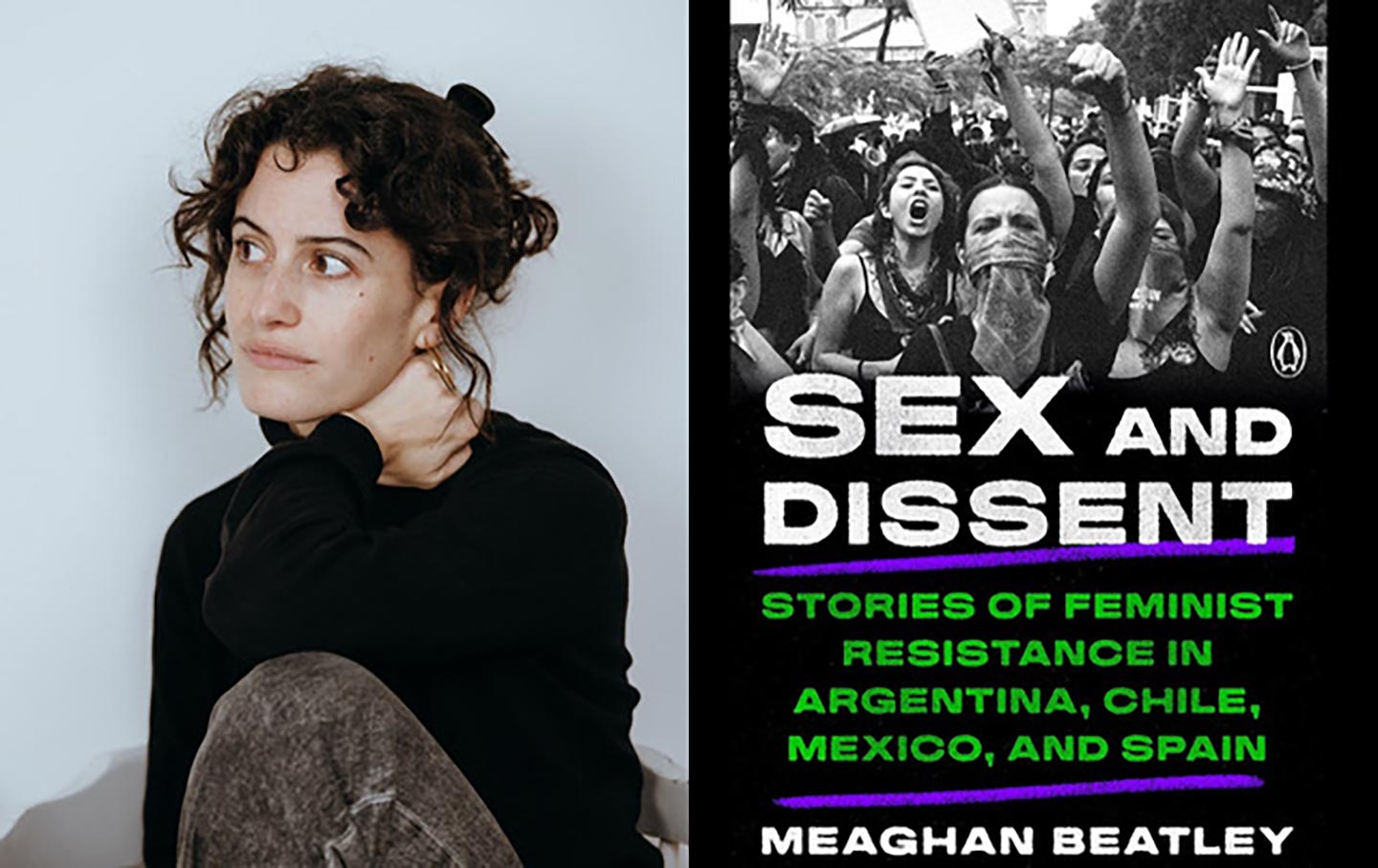
Journalist Meaghan Beatley on Latin America’s Feminist Resistance Journalist Meaghan Beatley on Latin America’s Feminist Resistance
A conversation with the author of Sex and Dissent about what American feminists can learn from the Green Wave movement.

As Cornell’s Rape Case Draws National Attention, Students Want Accountability As Cornell’s Rape Case Draws National Attention, Students Want Accountability
A new lawsuit alleging that a former student was drugged and gang-raped by Chi Phi fraternity members is sparking outrage in the Cornell community.

Irish Goalkeeper Gavin Bazunu’s Refusal to Play Against Israel Puts Him on the Right Side of History Irish Goalkeeper Gavin Bazunu’s Refusal to Play Against Israel Puts Him on the Right Side of History
Bazunu’s decision raises the perennial question: Why is a country that is currently committing a genocide allowed to compete in the first place?

