Jamaal Bowman’s Memoir Is Revealing About the Cost of Conviction
Why we still need to rebuild the infrastructure of care.
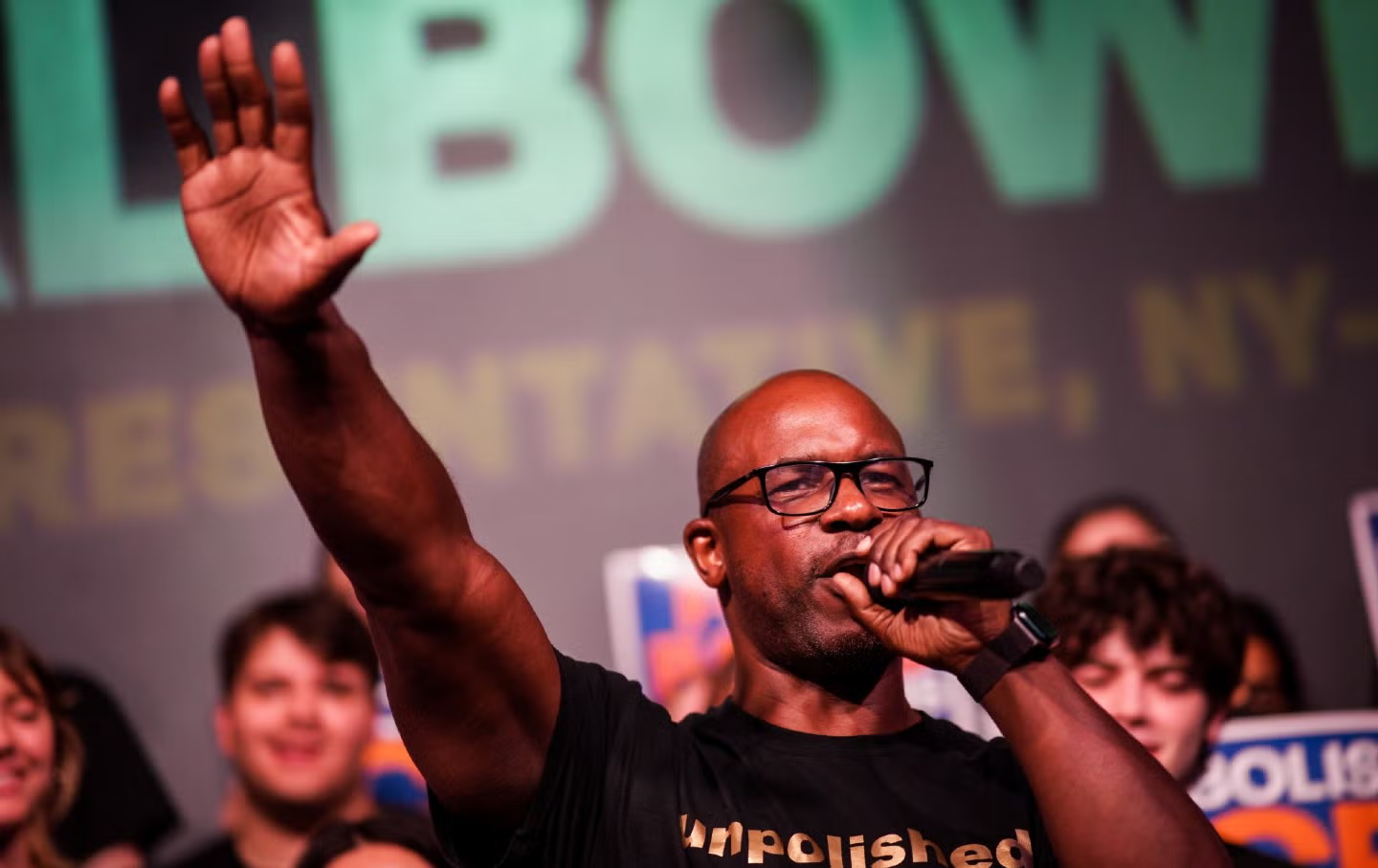
Several lessons emerge from former representative Jamaal Bowman’s memoir, Unpolished. Chief among them is that there is a price to be paid for being Black and to the left of the Democratic Party. By early 2020s Democratic political standards, Bowman was the apotheosis of Black representation. A Black man raised by a single mother in a low-income Manhattan neighborhood, Bowman earned a doctorate in education and founded a public middle school. After his time as a school leader, Bowman entered politics. He described his 2020 political platform as “anti-poverty and anti-racist,” and supported Medicare for All and the Green New Deal, a platform that garnered endorsements from Senators Bernie Sanders and Elizabeth Warren and the New York Times editorial board.
Bowman’s 2020 election followed the murder of George Floyd and the Democratic Party’s full tilt toward theatrical vows of racial solidarity. Yet when his political convictions extended beyond the borders of domestic racial justice, leading him to co-sponsor legislation prohibiting American aid from supporting the murder of Palestinian children, the limits of Black representation became apparent. In 2024, as AIPAC marshaled a record-breaking, multimillion-dollar effort to unseat Bowman after his second term, Democratic leaders offered endorsement but little meaningful resistance to AIPAC’s financial onslaught, a deluge of spending and racist advertising Bowman could not overcome.
Unpolished arrives two years after Bowman’s lost bid for a third term, but Bowman does not cast AIPAC as his chief adversary. Instead, AIPAC, unlimited campaign spending, poverty, white supremacy, and unfettered free-market capitalism are manifestations of an American leviathan Bowman calls “The Hunger.” “The Hunger is a disease of the mind that inflicts all of us,” Bowman told me during an interview. “Even if you’re a white man with means at the top of that caste system, that wrote the Constitution of America, if you accept the belief that you are superior to everybody else, you’re afflicted with that disease too, and it stops you from reaching your full potential.”
Put differently, The Hunger does not consume adherents along party lines, nor does it need Republicans or white supremacy as a primer. Bowman’s memoir makes clear that one need not be a white supremacist to further an economic and political system that harms Americans in general while disproportionately harming Black Americans—one can just be a conservative Democrat.
No scene in Unpolished captures the intersection of Bowman’s life and The Hunger’s indiscriminate corruption more than a meeting between Biden and the Congressional Progressive Caucus (CPC) on Friday, November 5, 2021, when the House was set to vote on Build Back Better and the bipartisan infrastructure bill. “Build Back Better was a reparative piece of legislation that Americans needed,” Bowman told me. “I’ve always supported truth and reconciliation for all, and reparative policy because through repairing those harms, we can unlock the full potential of the country, socially, politically, and economically.”
The bipartisan infrastructure bill would fund roads, bridges, transit, and broadband. Build Back Better would expand childcare subsidies, universal preschool, establish paid family leave, and invest in affordable housing and clean energy. House progressives had been withholding their votes for the infrastructure bill to keep pressure on Senate Democrats to pass Build Back Better.
Reading episodes of Bowman’s childhood in Unpolished, it is easy to understand why he was a stalwart supporter of Build Back Better. Bowman was around seven years old when his grandmother, one of his primary caretakers, died of a stroke at 54. Bowman is 50. “It just hits different when you get older yourself, and you realize 54 is young as hell,” Bowman told me. Bowman’s grandmother suffered headaches for weeks and was unable to obtain and take medicine to treat high blood pressure.
“My grandmother’s story is not unlike millions of stories across America,” Bowman said. “A political system that ensures dignity and well-being of the people who pay into that system would provide universal healthcare. They’ll make sure you have your meds. They make sure those meds are delivered to your home.”
After his grandmother died, Bowman moved from the East River Houses to live with his mother in Yorkville. She had a union job as a postal worker, and the Mitchell-Lama housing program helped her obtain a rent-stabilized apartment in Knickerbaker Plaza. “Moving from East River to Yorkville felt like moving to a different universe even though the neighborhoods were only thirteen blocks apart,” Bowman writes. The projects were confinement. Yorkville was freedom.”
Although Bowman moved, the trauma of confinement in Manhattan’s redlined East Harlem neighborhood followed. At around 19 years old, Bowman lost a childhood friend, Paul Black, to suicide. “When schools are underfunded,” Bowman told me, “they are less likely to have a mental health professional on staff.” Bowman wondered what help might have been available to Paul if his school had had the resources to offer it. Other losses followed. Another friend, Poochie, was stabbed to death. Years later, Poochie’s younger brother, Bubbles, was shot and killed. “Everything I’ve done since, I’ve tried to carry the friends I’ve lost with me,” Bowman writes.
By the time Bowman faced the infrastructure vote, he had already spent the first two decades of his professional life as a teacher and school leader, “scouring the earth for answers” to policy violence. Pain was not absent from Bowman’s learning, and as a dean of students during former New York City Mayor Michael Bloomberg’s era of punitive disciplinary policies, Bowman was tasked with enforcing measures that perpetuated harm. “My biggest frustration is that we often punish, scold, and suspend,” Bowman writes. “We never hold the system accountable. It’s the system and people within the system that create the conditions that lead to stress, hopelessness, and violence. This remains the norm in America.”
Frustrated with being a part of an academic structure that perpetuates trauma, Bowman founded CASA Middle School in the Bronx. As the founding principal, Bowman led the school to record-breaking outcomes and adopted restorative practices instead of zero-tolerance policies.
Having seen the possibilities of structural change, Bowman decided to run for Congress to hold the system accountable and advocate for the policy answers he had long sought. “Universal childcare is a major answer. Paid leave is a major answer. Affordable housing and rent stabilization—that’s a major answer,” Bowman told me. “That was all Build Back Better.”
The Senate had already passed the infrastructure bill. If the House passed it that Friday, it could go straight to President Biden’s desk. Build Back Better would still need Senator Joe Manchin’s vote in the Senate. Bowman expected to vote on both bills that day, but suddenly a group of moderate House Democrats said they wanted a Congressional Budget Office estimate before voting on the legislation. Bowman recalled feeling “hoodwinked.”
Bowman sought a coalition to vote on both bills together, only to find the consensus had largely ruptured. First, he met with the Congressional Black Caucus (CBC), but the CBC recommended decoupling the bills, passing infrastructure that day. By the time Bowman met with the Progressive Caucus (CPC), he heard colleagues in the CPC make the case for passing the infrastructure bill and coming back to Build Back Better later. That Friday was eye-opening for Bowman. “You think that if you do the right thing and you win the policy arguments and you’re coming from a human rights perspective and you’re on the right side of history, that that’s enough. But it’s not enough.”
President Biden called into the meeting to urge progressives to back the bipartisan infrastructure bill. Representative Cori Bush, Bowman recalls, challenged the president on whether he could get Manchin to support Build Back Better. “The only pushback when Biden was talking was Cori Bush,” Bowman said, recounting that Bush told Biden, “We don’t trust Joe Manchin. We don’t think you can get him on board.”
“Biden was pissed,” Bowman told me. “I could tell by his tone of voice; he sounded pissed that Cori would even question that. I want to emphasize Cori’s bravery and courage in that moment—questioning the president of the United States was palpable. I felt that in my bones because when he called, even I froze.”
After the phone call with Biden, Representative Pramila Jayapal moved toward a show of hands on taking up infrastructure separately. Representative Ilhan Omar asked for more time with her team. Bowman informed his staff he would vote no. Vice President Kamala Harris called, Bowman said, after he made up his mind. “The goal was to get me to a ‘yes’ on the infrastructure bill without Build Back Better,” Bowman told me. Still, Bowman held firm, telling Harris, “I’m gonna be a no.”
Popular
“swipe left below to view more authors”Swipe →“It didn’t make sense to me,” Bowman told me. “This bill had cutting childhood poverty in half permanently. What are we talking about?”
“Why can’t we just vote on both bills? It doesn’t hurt anybody. It hurts no one except the corporate elite, and the big money elite,” Bowman continued. “My first term in Congress was learning that big money controls the House of Representatives; the corporate lobby controls the House of Representatives. When all of this was happening, I realized we’re doing this because of the money people because it made no sense that we would even decouple them.”
After the call, Bowman joined the other five members of the Squad in Representative Ayanna Pressley’s office. When they returned, Bowman recalls, Democratic colleagues in the Congressional Progressive Caucus still urged them to vote “yes,” but all six voted no. The bipartisan infrastructure bill passed. Two weeks later, the House passed Build Back Better with its childcare and paid leave provisions intact. Manchin announced his opposition in December, and the Senate never held a final vote. Several months later, a considerably watered-down set of social-welfare provisions cleared the Senate, with Manchin’s support, in the Inflation Reduction Act—and many of those outlays were promptly reversed by executive orders in the first days of the second trump administration. Meanwhile, both Bowman and Bush were defeated in primary challenges—with AIPAC handpicking and delivering enormous funding advantages to their opponents. Pennsylvania Representative Summer Lee, another Black member of the CBC and CPC, met the same fate in her 2024 general-election defeat—though Lee regained her seat in the 2026 blue tsunami.
The bruising intraparty conflicts that claimed the political careers of Black progressives in the last democratic house majority now stand out in especially high relief after a landmark midterm vote that saw AIPAC ostracized in many high-profile House races, alongside major Democratic surges in the Black vote. While Bowman and Bush are now on the outside looking in, the new Democratic majority is under greater pressure than ever to distance itself from Israel’s genocide in Gaza, while also delivering meaningful remedies for the country’s deeply racialized system of sociopolitical inequality. It’s hard not to think that Democrats would be in a far better position to address the challenges now if the Biden White House had stood its ground on Build Back Better.
It’s likewise difficult to read Unpolished without thinking of the pending transfer of power on Capitol Hill—returning the modern Democratic Party to its seemingly perennial dilemma of weighing ambitious legislative agendas against the prerogatives of senior leadership often resistant to far-reaching change. Bowman’s experience suggests that part of The Hunger, perhaps its most insidious mechanism, is that it keeps people closest to the experiences of American rot from positions of power—thereby forestalling many prospects for meaningful reform in advance. If Black progressives continue to be treated as marginal-at-best players in the party’s governing coalition, why should they go on deferring to the inert mandates of big-tent leadership—especially when voters themselves are demanding that the circusmasters start pulling up stakes?
More from The Nation
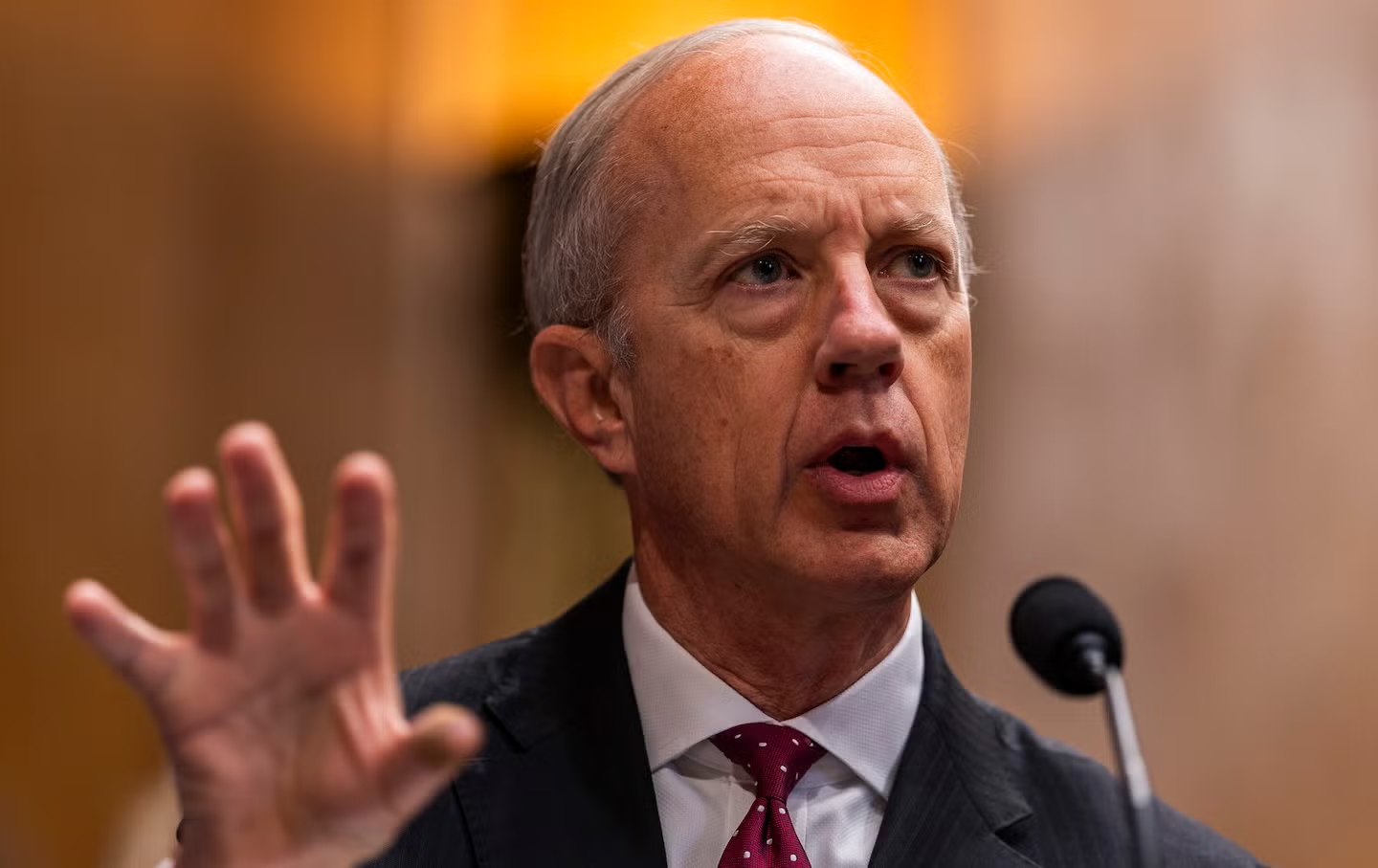
Trump’s Man on the Inside Trump’s Man on the Inside
Before the balance of power shifts in Congress, the president hopes to ram through the appointment of a MAGA crony to federal office.

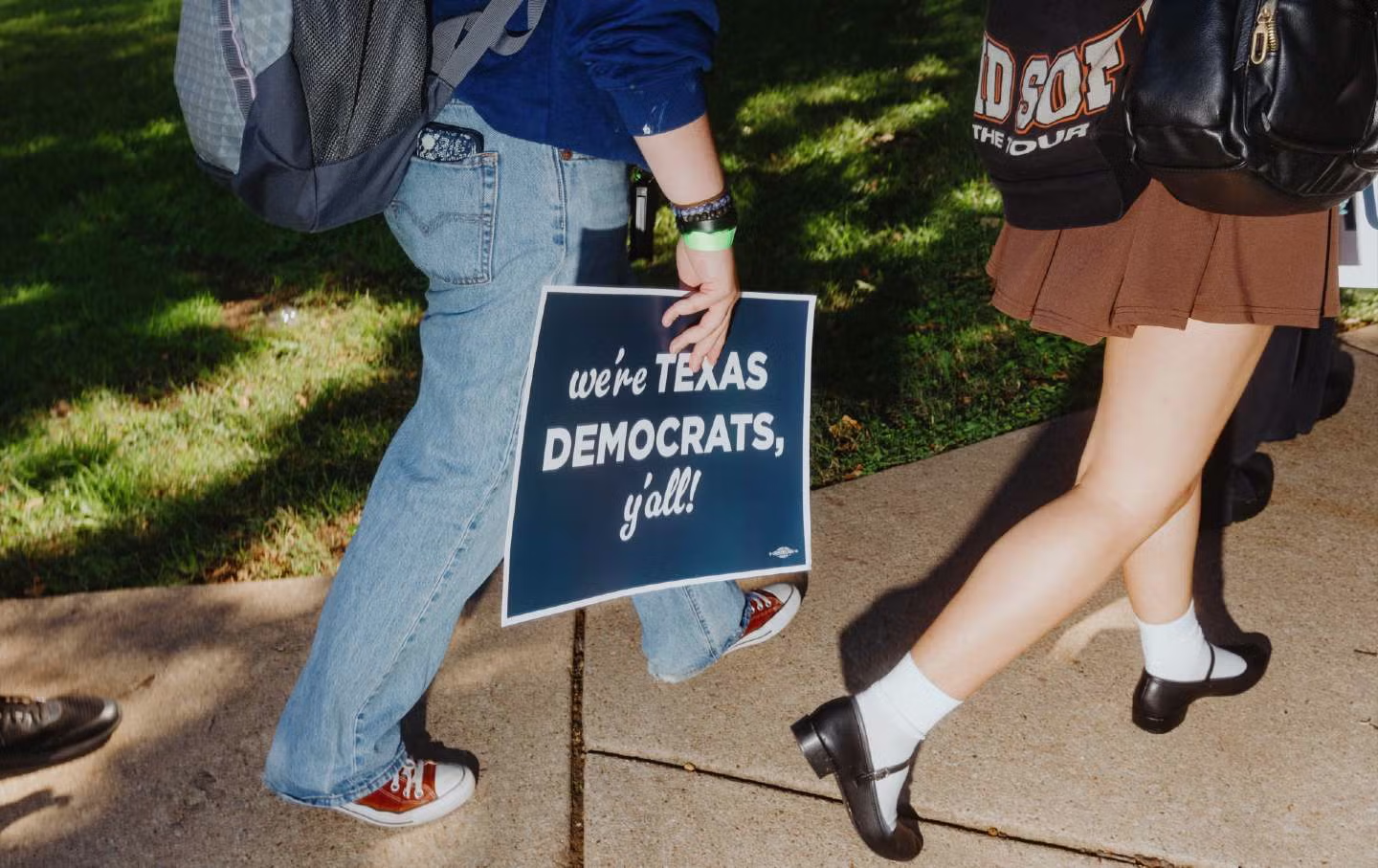
How College Students Helped Turn Texas Blue How College Students Helped Turn Texas Blue
After years of Republican dominance, Texas Democrats won statewide with overwhelming support from young voters.
How Conservatives Lost Their Minds Over the “Indian Question” How Conservatives Lost Their Minds Over the “Indian Question”
Indian Americans seemed to be trending towards the GOP. Then came a ton of racism.
Make America Function Again! Make America Function Again!
Who is going to fix all the things the Republicans, corporations, and tech titans broke?