
We’re All Individuals!
The invention of the modern self.
The Invention of the Modern Self
How did the idea of the individual come into being?
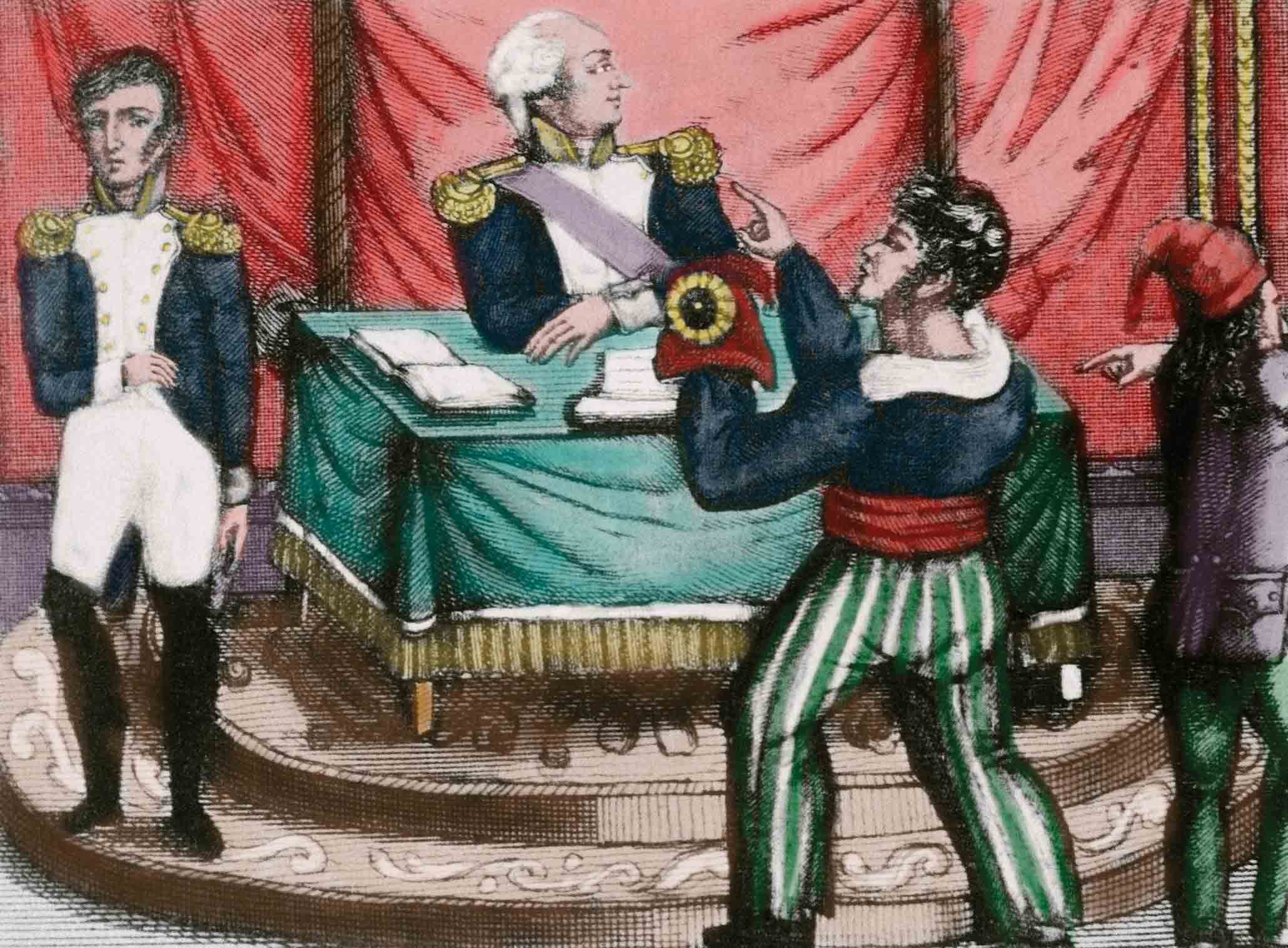
In that classic of Western cinema, Monty Python’s Life of Brian, the title character addresses a crowd in Jerusalem that has mistaken him for Jesus Christ. “You’ve got it all wrong,” he pleads. “You don’t need to follow me. You don’t need to follow anybody. You’ve got to think for yourselves. You’re all individuals!” The crowd chants back, in unison, “Yes, we’re all individuals!” “You’re all different!” Brian protests. “Yes, we’re all different!” the crowd responds (though one lone voice insists, “I’m not”).
Books in review
The Revolutionary Self: Social Change and the Emergence of the Modern Individual, 1770–1800
Buy this bookThe scene illustrates as well as anything the problem of trying to write a history of that endlessly fascinating but endlessly slippery subject—the “self.” The self can be defined as the way people experience and understand their own individuality. The difficulty stems from the fact that the very language people use to describe and express their individuality is, like all language, something they take from and share with others. Many great historians have taken as a theme the birth of modern Western individualism, associating it with many different eras—notably, the Renaissance, the Enlightenment, and the eras of Romanticism and high Modernism. Yet in each case, the terms in which individuals expressed their supposedly ineffable, unique identities have tended to sound remarkably conventional and similar, thereby undermining the historians’ case.
Even the great 19th-century historian Jacob Burckhardt, author of The Civilization of the Renaissance in Italy, could not wholly avoid this trap. “In the Middle Ages,” he wrote, human consciousness “lay dreaming or half awake beneath a common veil…woven of faith, illusion, and childish prepossession…. Man was conscious of himself only as member of a race, people, party, family, or corporation—only through some general category. In Italy this veil first melted into air….” But the chapters that followed mostly traced the languages of fame and satire that Renaissance Italians used to describe one another. What Burckhardt ended up recounting was less the “perfecting of the individual,” as he put it, than the invention of new general categories to supplement the older ones—the great writer or artist, the cunning statesman, or the buffoon—which were no less sweeping than the ones they supplanted. In Burckhardt’s treatment of what he called “the new race of poet-scholars,” Boccaccio looked surprisingly similar to Dante and Petrarch: Each received the same “incense which once was offered only to saints and heroes.” Yes, these men actively chose their calling rather than having it imposed on them from birth. But once they did so, they still had to learn how to play a role they shared with others.
More recently, historians of selfhood have largely moved away from trying to pinpoint the moment when a modern, radical individualism supposedly replaced older, more collective forms of identity. Instead, they’ve explored the inherent ambiguities and tensions of selfhood as we in the modern West have come to understand it. Dror Wahrman, in his 2004 The Making of the Modern Self, neatly turned Burckhardt on his head. Modernity, he argued, did not spell the end of subsuming individuals into general categories, but rather heralded the rise of even more powerful general categories: “rigid, essentialized, racialized, congenital understandings of human difference” such as biological sex, race, and even social class.
The history of modern selfhood, Wahrman argued, centers on the inescapable and ultimately unresolvable tension between a desire for uniqueness, accompanied by a belief in the power of self-transformation, and the recognition of how deeply we are shaped by our biology and social origins. The book was a virtuoso performance, but it too ultimately amounted to a history of the changing language in which selfhood was defined more than a study of the thing itself—of how people actually understood and experienced their “selves.”
Few historians today are as well equipped to offer a creative new take on the subject as Lynn Hunt, who has had a long and distinguished career as a cultural historian of 18th-century Europe. This career took off in 1984 with her pathbreaking Politics, Culture, and Class in the French Revolution, a book that showed how the French invented a new political culture during the tumultuous years after 1789. Hunt followed this with brilliant ventures in what she dubbed “the new cultural history” and in the history of gender and sexuality, as well as a reading of the French Revolution through the lens of Freud’s theory of the “family romance,” a pioneering study of the invention of human rights, and much else.
In many of these works, even when dealing with the history of ideas, Hunt eschewed a lengthy engagement with canonical authors. Her Inventing Human Rights, for instance, despite its focus on the 18th century, was less interested in examining Locke, Montesquieu, or Rousseau than it was in exploring novel-reading in the period. As the practice spread, she contended, readers learned to identify emotionally with fictional characters who sometimes differed from them in class, sex, and national origin, and in the process underwent an education in empathy: “Novels made the point that all people are fundamentally similar because of their inner feelings.” It was only a step from there to the idea that all people deserved certain basic rights.
An argument of this kind cannot be more than suggestive; no one in the 18th century credited Pamela with inspiring their beliefs on human rights. Nor could an argument of this kind do much to address the question of how a generalized sense of empathy eventually took on the specific conceptual form found in documents like “The Declaration of the Rights of Man and Citizen.” Yet despite such caveats, Inventing Human Rights shed an invaluable light upon its subject.
Now, with The Revolutionary Self, we get a similar form of illumination. The book starts by describing the modern self, at least in its European and North American varieties, as a kind of paradox. On the one hand, in the 18th century, as the mental grip of religion weakened, “the idea spread that ordinary people had the potential for autonomy and were capable of exerting their liberty, whether in the choice of spouse, occupation, religious beliefs, or governing bodies.” But at the very same time, “individuals came to be viewed as creatures shaped by social conditioning…. Original sin lost its hold, but seeping into its place [came] the idea that our identities are formed by class, race, ethnicity, sexuality, age, profession, and marital status.” Modern Western people, in short, are a bit like the Jerusalemites in Life of Brian, loudly protesting their individuality even as they are swept along by the passion of the crowd.
The insight itself is not entirely original. The similarity to Wahrman’s work (which Hunt oddly fails to mention) is clear. For that matter, Hannah Arendt had already written, in The Human Condition, that the “modern individual” was born in the 18th-century conflict between “radical subjectivism” on the one hand and social “conformism” on the other. What Hunt brings to the table is her innovative cultural approach, which promises to move beyond the languages of selfhood to get closer to the thing itself. Rather than scouring canonical works of the Enlightenment (or uncanonical ones, for that matter) for discussions of selfhood, she has chosen to illustrate the emerging tension between individualism and “social determinism” by providing five short sketches in which she strives to capture the self, so to speak, in flux.
Hunt’s choices are deliberately eclectic. One chapter centers on how tea consumption can be linked to the development of individualism, another on the engraved portraits of French revolutionaries. A third examines the life and work of the French portrait painter Marie-Gabrielle Capet (1761–1818), and a fourth the development of military strategy in the French Revolution. The last chapter looks at the French Swiss financier and revolutionary Étienne Clavière (1735–1793). As with novel-reading and human rights, the connections between these subjects and selfhood are not immediately obvious and went unremarked at the time. But in each chapter, Hunt deftly makes them visible.
When it comes to the military strategists of the French Revolution, Hunt argues that unlike their monarchical predecessors, they hoped that by treating their soldiers as individual citizens worthy of respect rather than as automatons mechanically responding to orders, they would inspire superior performance on the battlefield. Her argument is convincing, even if, at the same time, as she also recognizes, military success depended on prodding large numbers of men to move as a single body, subsuming the individual into the mass. The attempt to create self-motivated “citizen soldiers” in France actually began well before the revolution, as the historian Hervé Drévillon has demonstrated in a book that seems to have escaped Hunt’s attention (called, pointedly, L’individu et la guerre). But her essential point still stands.
Popular
“swipe left below to view more authors”Swipe →Tea parties turn out to be a somewhat more complicated subject. The principal activity for the participants, other than imbibing the freshly brewed hot liquid, was polite conversation. Everyone at the table had the right to speak, including women (who in fact served as impresarios, since they served the tea). So tea parties inspired a sense of equality and individual agency among those present. But this sort of peaceful, polite social gathering also illustrated, for Enlightenment intellectuals, a very large historical phenomenon. Focusing particularly on the Scottish writer John Millar, Hunt recounts how these intellectuals developed a model of history that presented all peoples as moving along a similar evolutionary scale from hunter-gatherer “savagery” through the stages of agricultural and commercial development to the very highest stage, supposedly exemplified by 18th-century Western Europe. Similar arguments appear in Millar’s Observations Concerning the Distinction of Ranks in Society, Voltaire’s Essay on the Customs and the Spirit of Nations, and many other prominent works. Millar in particular insisted that “civilization” (a word coined only in the 1760s, in France) would never reach its full potential until women could participate in “public life”—although not in government. The humble tea party, in other words, was civilization incarnate.
These intellectual developments had surprisingly broad consequences. For one thing, by holding Europe up as the most advanced civilization, the intellectuals in question provided a handy justification for European imperialism—what later generations would call the “civilizing mission.” In addition, by helping to propagate the idea that there exist discernible laws of social behavior that apply throughout history and around the world, they contributed to the birth of modern social science. And, as Hunt emphasizes, by doing so they explored the ways in which social norms condition individual behavior. Tea parties, in short, simultaneously empowered men and women (at least those of sufficient social standing) while inspiring work that would eventually make them more aware than ever before of how deeply society constrained their autonomy.
Like Inventing Human Rights, The Revolutionary Self is powerfully suggestive. Still, at times Hunt might have done more to explore how the tensions she detects in her five examples took on specific conceptual form. Concepts do not reflect lived experience in any simple way; they have their own independent genealogies, grounded in long traditions of intellectual discussion and debate. Even as they evolve to make sense of changing experiences, they also shape those experiences, because it is through available concepts that people find meaning in the history they are living through and imagine ways of altering its course. In the end, a full history of selfhood needs to take account of this complex interplay.
Take the example of a concept central to Hunt’s analysis: that of society itself. Until the end of the 17th century, the word (and cognates like the French société) referred principally to specific groups of people (as with modern professional or scholarly societies). But by the early 18th century, writers had started to use it in a more abstract sense, to refer to a space of human existence separate from political institutions and the religious sphere. And as they sought to understand this realm of human exchange and intercourse, they posited the existence of social laws, akin to the laws that governed the motion of the planets, the circulation of the blood, and other natural phenomena. Hunt herself sums up the development on the first page of her book: “Society began to emerge as a distinct entity assumed to have its own rules, and individuals came to be viewed as creatures shaped by social conditioning.” “Society” appeared in the title of Millar’s 1771 book and almost 200 times in the text. The concept deeply shaped the way people understood the world they lived in and the actions they took to alter it—notably the political actions we might now describe as social engineering.
Many scholars have offered explanations for why this so-called discovery of society took place when it did, including Hannah Arendt, Michel Foucault, Sheldon Wolin, and the historians Reinhart Koselleck and Keith Michael Baker. They have pointed to everything from a rising secularism whose advocates rejected supernatural explanations of human behavior to the desire of ever more ambitious governments to understand, manage, and manipulate the populations under their control.
But the concept did not simply reflect these social, cultural, and political contexts; it was also deeply contested. Influential writers interpreted and evaluated it in radically different ways, and these differences in turn shaped the politics of the age. It is this aspect of the conceptual history that Hunt could have developed further.
In the Anglophone world, among writers like Millar, David Hume, Adam Smith, and Benjamin Franklin, “society” in its modern form was something largely to be applauded. Its development was what would allow people to live peaceful, fulfilling lives, the strife and warfare of old replaced by profitable commerce and polite social interaction. Individuals, in this view, should gladly agree to live by the rules of society and fashion themselves into “sociable” men and women, even if it cost them a degree of personal autonomy.
But the single most influential intellectual of the entire 18th century, Jean-Jacques Rousseau, took a radically different stance. This famously eccentric man rarely lost an opportunity to insist on his own individuality. As he put it in his autobiographical Confessions: “I am made like no one else that I have ever seen; I dare believe that I have not been made like anyone else who has ever existed.” And at the same time, no one has ever denounced the corrupting, destructive effects of society on individuals with greater eloquence. Rousseau’s “Discourse on the Origins of Inequality” amounted, in a sense, to one long, ferocious indictment of society. “The human soul, transformed in society by a thousand constantly recurring causes,” he wrote, resembles the statue of a god “which time, the sea and storms have so disfigured that it now more closely resembles a wild beast.” The Social Contract went even farther: It represented his attempt to imagine how a genuinely just society might come into being, but it also emphasized that none has yet existed or is ever likely to do so. The great theme of Rousseau’s autobiographical works, meanwhile, is his desperate attempt to preserve his individual independence in the midst of a society that ceaselessly seeks to enchain him, both materially (by making him economically dependent on patrons) and psychologically (by enslaving him to the opinions of others). So great was Rousseau’s influence, especially in France, that he certainly helped to shape the way Hunt’s subjects, from the military strategists to the artists to the financiers, understood their own individuality and their own “social” position. If the tension Hunt points to between the quest for personal autonomy and the awareness of social conditioning was especially acute in France, Rousseau deserves a good deal of the credit.
Hunt, of course, knows this history: “Rousseau,” she writes, “put society on the intellectual agenda.” But having made this statement and devoted a cogent but very brief discussion to the man, she moves on. Yes, Hunt wants to pursue her own less well-trodden path, as she has done so often in the past. And her five sketches do indeed provide tantalizing glimpses of how the tension between individual autonomy and the pressures of social conditioning were actually experienced in this age that saw, as her subtitle puts it, “the emergence of the modern individual.” But without fully considering how the ideas and practices of selfhood mutually shaped one another, The Revolutionary Self does not offer its readers as full a history of the subject as it might have done. The self, that most slippery of subjects, can occasionally slip away even from the most illuminating of living historians. Nonetheless, Hunt’s book provides remarkable insight into how our modern “selves” came to be.
Become a Sustaining Donor This September
Between the reemergence of right-wing red-baiting and Donald Trump’s use of the chilling National Security Presidential Memorandum–7 to criminalize left political organizing, we’re seeing McCarthyism reborn before our eyes.
This assault on democracy cannot be ignored or wished away. Resisting it requires bravery in the face of threats and repression, a steadfast commitment to the truth, and the unwavering belief that we can—and will—overcome this darkness.
We must have an independent media that sets the record straight, unearths corruption and abuses of power, and advances a politics of justice and dignity for all if we’re to win this fight.
That’s why I’m writing to you today. This September, The Nation needs to add 100 monthly donors to sustain our progressive journalism. Your contribution makes the next investigative report, the next truth-speaking column, and the next pathbreaking essay all possible.
I hope you’ll support our work with a recurring donation today. If you donate $10 or more a month, we’ll send you a brand new “Hands Off the Free Press!” sticker to recognise your commitment to our cause. Please, donate today.
Onward,
Katrina vanden Heuvel
Editor and Publisher, The Nation
More from The Nation
As Morale Sags, More Military Service Members Are Having a Crisis of Conscience As Morale Sags, More Military Service Members Are Having a Crisis of Conscience
According to multiple GI rights organizations, service members are inquiring in unprecedented numbers about seeking conscientious objector status.
What Remains of Riis? What Remains of Riis?
A new members’ club has revived Riis Park’s long-vacant bathhouse, reopening old questions about whom the People’s Beach is really for.

When Texas Sex Ed Falls Short, Gen Z Women Turn to Social Media When Texas Sex Ed Falls Short, Gen Z Women Turn to Social Media
A 2025 study found that 70 percent of adolescents sought reproductive health information through social media platforms.

Justice for Macklemore Justice for Macklemore
The rapper has been dumped from Ed Sheeran’s tour for saying “free Palestine.” That’s a disgrace.

We Are Living Under Roy Cohnian Logic We Are Living Under Roy Cohnian Logic
The political fixer created a career for himself as a self-promoting, ubiquitous hustler. Like Trump, he got away with it by having the right friends.

Time Has Run Out for AI Risk Deniers Time Has Run Out for AI Risk Deniers
The recent spate of reports about the technology’s destructive power underline two prime directives: Be afraid, and regulate aggressively.

