
For Israel, the Cruelty Is the Point
Israel’s goal is to ensure that Gaza will be an unlivable place once they end their merciless military campaign.
This article originally appeared at TomDispatch.com. To stay on top of important articles like these, sign up to receive the latest updates from TomDispatch.com.
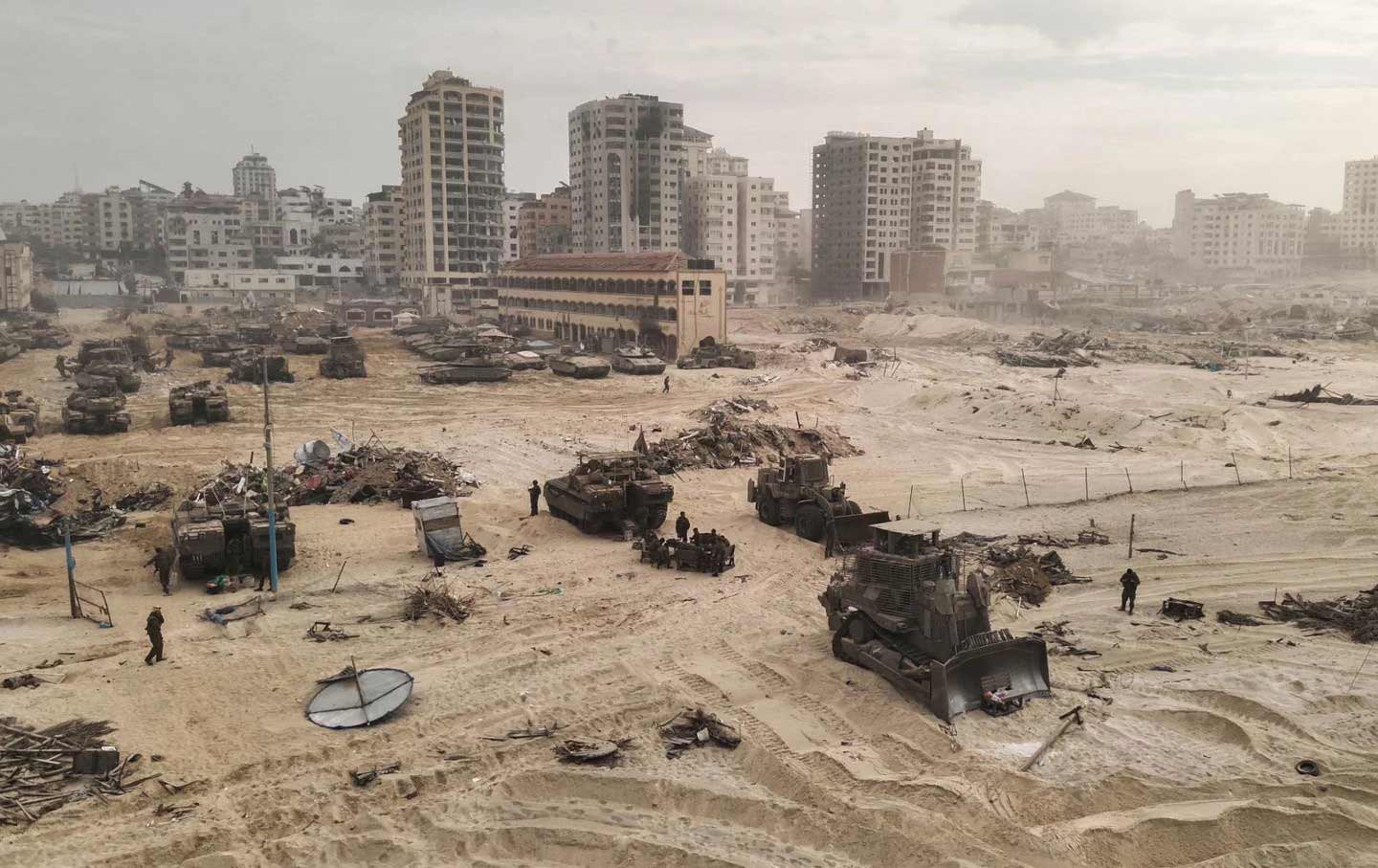
On a picturesque beach in central Gaza, a mile north of the now-flattened Al-Shati refugee camp, long black pipes snake through hills of white sand before disappearing underground. An image released by the Israel Defense Forces (IDF) shows dozens of soldiers laying pipelines and what appear to be mobile pumping stations that are to take water from the Mediterranean Sea and hose it into underground tunnels. The plan, according to various reports, is to flood the vast network of underground shafts and tunnels Hamas has reportedly built and used to carry out its operations.
“I won’t talk about specifics, but they include explosives to destroy and other means to prevent Hamas operatives from using the tunnels to harm our soldiers,” said IDF Chief of Staff Lieutenant General Herzi Halevi. “[Any] means which give us an advantage over the enemy that [uses the tunnels], deprives it of this asset, is a means that we are evaluating using. This is a good idea…”
While Israel is already test-running its flood strategy, it’s not the first time Hamas’s tunnels have been subjected to sabotage by seawater. In 2013, neighboring Egypt began flooding Hamas-controlled tunnels that were allegedly being used to smuggle goods between the country’s Sinai Peninsula and the Gaza Strip. For more than two years, water from the Mediterranean was flushed into the tunnel system, wreaking havoc on Gaza’s environment. Groundwater supplies were quickly polluted with salt brine and, as a result, the dirt became saturated and unstable, causing the ground to collapse and killing numerous people. Once fertile agricultural fields were transformed into salinated pits of mud, and clean drinking water, already in short supply in Gaza, was further degraded.
Israel’s current strategy to drown Hamas’s tunnels will no doubt cause similar, irreparable damage. “It is important to keep in mind,” warns Juliane Schillinger, a researcher at the University of Twente in the Netherlands, “that we are not just talking about water with a high salt content here—seawater along the Mediterranean coast is also polluted with untreated wastewater, which is continuously discharged into the Mediterranean from Gaza’s dysfunctional sewage system.”
This, of course, appears to be part of a broader Israeli objective—not just to dismantle Hamas’s military capabilities but to further degrade and destroy Gaza’s imperiled aquifers (already polluted with sewage that’s leaked from dilapidated pipes). Israeli officials have openly admitted their goal is to ensure that Gaza will be an unlivable place once they end their merciless military campaign.
“We are fighting human animals, and we are acting accordingly,” Defense Minister Yoav Gallant said shortly after the Hamas attack of October 7. “We will eliminate everything—they will regret it.”
And Israel is now keeping its promise.
As if its indiscriminate bombing, which has already damaged or destroyed up to 70 percent of all homes in Gaza, weren’t enough, filling those tunnels with polluted water will ensure that some of the remaining residential buildings will suffer structural problems, too. And if the ground is weak and insecure, Palestinians will have trouble rebuilding.
Flooding tunnels with polluted groundwater “will cause an accumulation of salt and the collapse of the soil, leading to the demolition of thousands of Palestinian homes in the densely populated strip,” says Abdel-Rahman al-Tamimi, director of the Palestinian Hydrologists Group, the largest NGO monitoring pollution in the Palestinian territories. His conclusion couldn’t be more stunning: “The Gaza Strip will become a depopulated area, and it will take about 100 years to get rid of the environmental effects of this war.”
In other words, as al-Tamimi points out, Israel is now “killing the environment.” And in many ways, it all started with the destruction of Palestine’s lush olive groves.
Olives No More
During an average year, Gaza once produced more than 5,000 tons of olive oil from more than 40,000 trees. The fall harvest in October and November was long a celebratory season for thousands of Palestinians. Families and friends sang, shared meals, and gathered in the groves to celebrate under ancient trees, which symbolized “peace, hope, and sustenance.” It was an important tradition, a deep connection both to the land and to a vital economic resource. Last year, olive crops accounted for more than 10 percent of the Gazan economy, a total of $30 million.
Popular
“swipe left below to view more authors”Swipe →Of course, since October 7, harvesting has ceased. Israel’s scorched earth tactics have instead ensured the destruction of countless olive groves. Satellite images released in early December affirm that 22 percent of Gaza’s agricultural land, including countless olive orchards, has been completely destroyed.
“We are heartbroken over our crops, which we cannot reach,” explains Ahmed Qudeih, a farmer from Khuza, a town in the Southern Gaza Strip. “We can’t irrigate or observe our land or take care of it. After every devastating war, we pay thousands of shekels to ensure the quality of our crops and to make our soil suitable again for agriculture.”
Israel’s relentless military thrashing of Gaza has taken an unfathomable toll on human life (more than 22,000 dead, including significant numbers of women and children, and thousands more bodies believed to be buried under the rubble and so uncountable). And consider this latest round of horror just a particularly grim continuation of a 75-year campaign to eviscerate the Palestinian cultural heritage. Since 1967, Israel has uprooted more than 800,000 native Palestinian olive trees, sometimes to make way for new illegal Jewish settlements in the West Bank; in other instances, out of alleged security concerns, or from pure, visceral Zionist rage.
Wild groves of olive trees have been harvested by inhabitants of the region for thousands of years, dating back to the Chalcolithic period in the Levant (4,300-3,300 BCE), and the razing of such groves has had calamitous environmental consequences. “[The] removal of trees is directly linked to irreversible climate change, soil erosion, and a reduction in crops,” according to a 2023 Yale Review of International Studies report. “The perennial, woody bark acts as a carbon sink … [an] olive tree absorbs 11 kg of CO2 per liter of olive oil produced.”
Besides providing a harvestable crop and cultural value, olive groves are vital to Palestine’s ecosystem. Numerous bird species, including the Eurasian Jay, Green Finch, Hooded Crow, Masked Shrike, Palestine Sunbird, and Sardinian Warbler rely on the biodiversity provided by Palestine’s wild trees, six species of which are often found in native olive groves: the Aleppo pine, almond, olive, Palestine buckhorn, piny hawthorne, and fig.
As Simon Awad and Omar Attum wrote in a 2017 issue of the Jordan Journal of Natural History:
“[Olive] groves in Palestine could be considered cultural landscapes or be designated as globally important agricultural systems because of the combination of their biodiversity, cultural, and economic values. The biodiversity value of historic olive groves has been recognized in other parts of the Mediterranean, with some proposing these areas should receive protection because they are habitat used by some rare and threatened species and are important in maintaining regional biodiversity.”
An ancient, native olive tree should be considered a testament to the very existence of Palestinians and their struggle for freedom. With its thick spiraling trunk, the olive tree stands as a cautionary tale to Israel, not because of the fruit it bears, but because of the stories its roots hold of a scarred landscape and a battered people that have been callously and relentlessly besieged for more than 75 years.
White Phosphorus and Bombs, Bombs, and More Bombs
While contaminating aquifers and uprooting olive groves, Israel is now also poisoning Gaza from above. Numerous videos analyzed by Amnesty International and confirmed by The Washington Post display footage of flares and plumes of white phosphorus raining down on densely populated urban areas. First used on World War I battlefields to provide cover for troop movements, white phosphorus is known to be toxic and dangerous to human health. Dropping it on urban environments is now considered illegal under international law, and Gaza is one of the most densely populated places on earth. “Any time that white phosphorus is used in crowded civilian areas, it poses a high risk of excruciating burns and lifelong suffering,” says Lama Fakih, director for the Middle East and North Africa at Human Rights Watch (HRW).
While white phosphorus is highly toxic to humans, significant concentrations of it also have deleterious effects on plants and animals. It can disrupt soil composition, making it too acidic to grow crops. And that’s just one part of the mountain of munitions Israel has fired at Gaza over the past three months. The war (if you can call such an asymmetrical assault a “war”) has been the deadliest and most destructive in recent memory, by some estimates at least as bad as the Allied bombing of Germany during World War II, which annihilated 60 German cities and killed an estimated half-million people.
Like the Allied forces of World War II, Israel is killing indiscriminately. Of the 29,000 air-to-surface munitions fired, 40 percent have been unguided bombs dropped on crowded residential areas. The UN estimates that, as of late December, 70 percent of all schools in Gaza, many of which served as shelters for Palestinians fleeing Israel’s onslaught, had been severely damaged. Hundreds of mosques and churches have also been struck and 70 percent of Gaza’s 36 hospitals have been hit and are no longer functioning.
A War That Exceeds All Predictions
“Gaza is one of the most intense civilian punishment campaigns in history,” claims Robert Pape, a historian at the University of Chicago. “It now sits comfortably in the top quartile of the most devastating bombing campaigns ever.”
It’s still difficult to grasp the toll being inflicted, day by day, week by week, not just on Gaza’s infrastructure and civilian life but on its environment as well. Each building that explodes leaves a lingering cloud of toxic dust and climate-warming vapors. “In conflict-affected areas, the detonation of explosives can release significant amounts of greenhouse gases, including carbon dioxide, carbon monoxide, nitrogen oxides, and particulate matter,” says Dr. Erum Zahir, a chemistry professor at the University of Karachi.
Dust from the collapsed World Trade Center towers on 9/11 ravaged first responders. A 2020 study found that rescuers were “41 percent more likely to develop leukemia than other individuals.” Some 10,000 New Yorkers suffered short-term health ailments following the attack, and it took a year for air quality in Lower Manhattan to return to pre-9/11 levels.
While it’s impossible to analyze all of the impacts of Israel’s nonstop bombing, it’s safe to assume that the ongoing leveling of Gaza will have far worse effects than 9/11 had on New York City. Nasreen Tamimi, head of the Palestinian Environmental Quality Authority, believes that an environmental assessment of Gaza now would “exceed all predictions.”
Central to the dilemma that faced Palestinians in Gaza, even before October 7th, was access to clean drinking water and it’s only been horrifically exacerbated by Israel’s nonstop bombardment. A 2019 report by UNICEF noted that “96 percent of water from Gaza’s sole aquifer is unfit for human consumption.”
Intermittent electricity, a direct result of Israel’s blockade, has also damaged Gaza’s sanitation facilities, leading to increased groundwater contamination, which has, in turn, led to various infections and massive outbreaks of preventable waterborne diseases. According to HRW, Israel is using a lack of food and drinking water as a tool of warfare, which many international observers argue is a form of collective punishment—a war crime of the first order. Israeli forces have intentionally destroyed farmland and bombed water and sanitation facilities in what certainly seems like an effort to make Gaza all too literally unlivable.
“I have to walk three kilometers to get one gallon [of water],” 30-year-old Marwan told HRW. Along with hundreds of thousands of other Gazans, Marwan fled to the south with his pregnant wife and two children in early November. “And there is no food. If we are able to find food, it is canned food. Not all of us are eating well.”
In the south of Gaza, near the overcrowded city of Khan Younis, raw sewage flows through the streets as sanitation services have ceased operation. In the southern town of Rafah, where so many Gazans have fled, conditions are beyond dire. Makeshift UN hospitals are overwhelmed, food and water are in short supply, and starvation is significantly on the rise. In late December, the World Health Organization documented more than 100,000 cases of diarrhea and 150,000 respiratory infections in a Gazan population of about 2.3 million. And those numbers are likely massive undercounts and will undoubtedly increase as Israel’s offensive drags on, having already displaced 1.9 million people, or more than 85 percent of the population, half of whom are now facing starvation, according to the UN.
“For over two months, Israel has been depriving Gaza’s population of food and water, a policy spurred on or endorsed by high-ranking Israeli officials and reflecting an intent to starve civilians as a method of warfare,” reports Omar Shakir of Human Rights Watch.
Rarely, if ever, have the perpetrators of mass murder (reportedly now afraid of South Africa’s filing at the International Court of Justice in the Hague, accusing Israel of genocide) so plainly laid out their cruel intentions. As Israeli President Isaac Herzog put it in a callous attempt to justify the atrocities now being faced by Palestinian civilians, “It’s an entire nation out there that is responsible [for October 7]. This rhetoric about civilians not aware, not involved, it’s absolutely not true. They could’ve risen up, they could have fought against that evil regime.”
The violence inflicted on Palestinians by an Israel backed so strikingly by President Biden and his foreign policy team is unlike anything we had previously witnessed in more or less real-time in the media and on social media. Gaza, its people, and the lands that have sustained them for centuries are being desecrated and transformed into an all too unlivable hellscape, the impact of which will be felt—it’s a guarantee—for generations to come.
More from The Nation
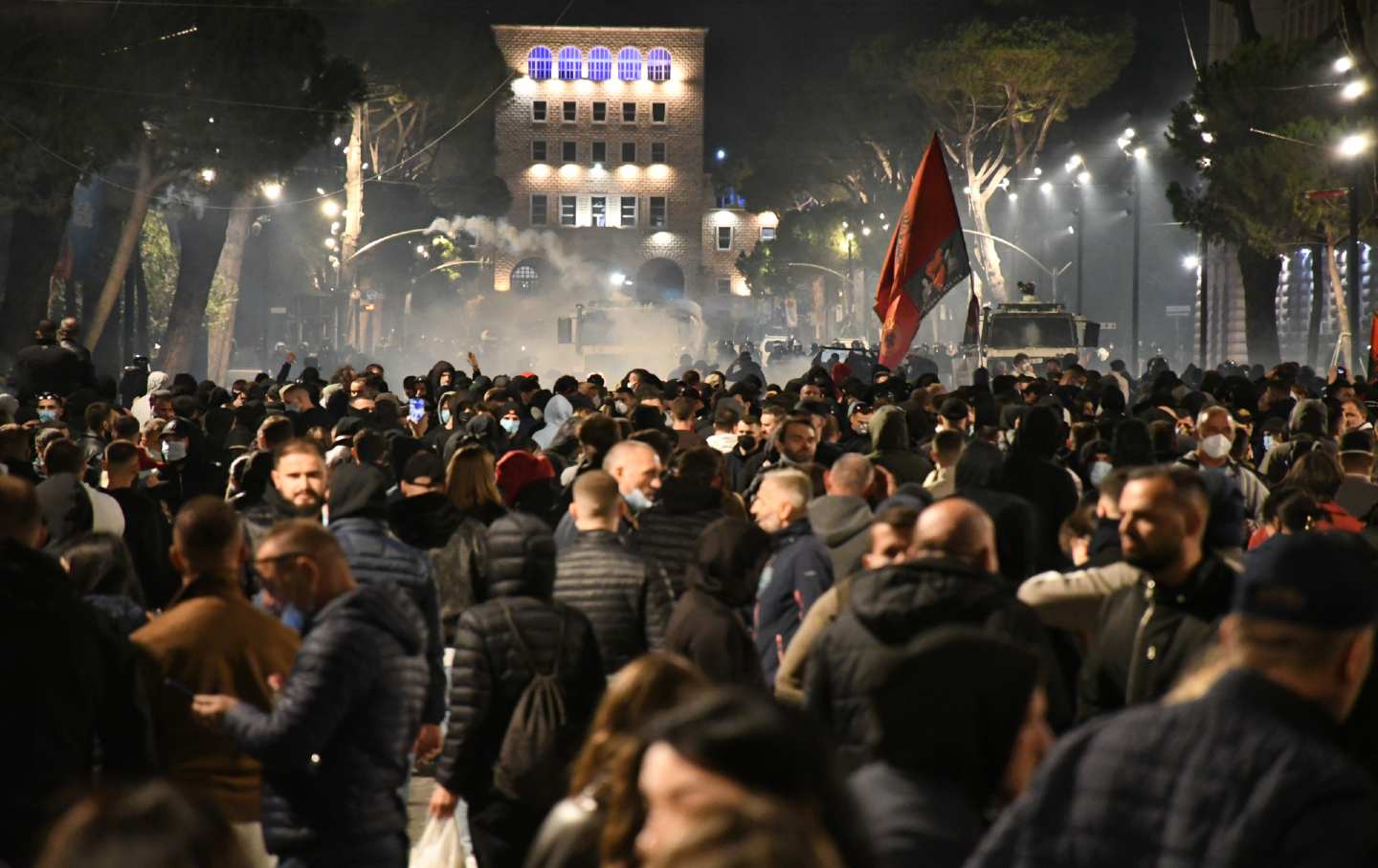
Albanian Student Strikes Spur a Political Crisis Albanian Student Strikes Spur a Political Crisis
A new round of protests against the ruling party’s corruption has Prime Minister Edi Rama giving cops bonuses to crack down on dissent.
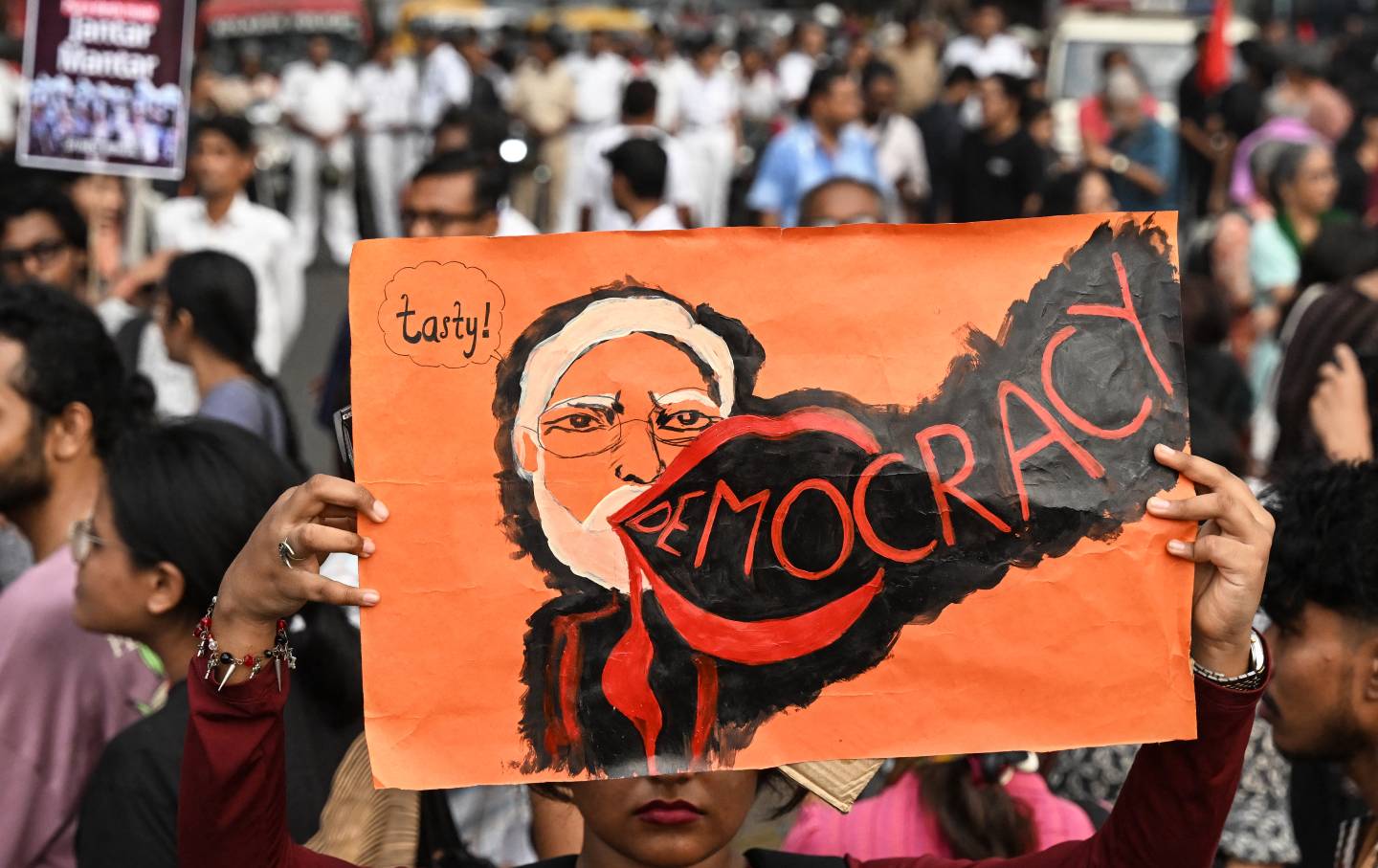
Inside India’s Gen Z Cockroach Janta Movement Inside India’s Gen Z Cockroach Janta Movement
Young Indians are challenging the purge of voter rolls by Modi’s right-wing government. Shrishti Khanna, who was detained by Delhi police while covering the protests, explains.

The Clarion Call of “NAZA” The Clarion Call of “NAZA”
Yuval Abraham and Rachel Szor’s new film not only documents the horrors of the present but give us a glimpse of a possible future too.

The Specter of Lepenism Looms Over France’s Social Crisis The Specter of Lepenism Looms Over France’s Social Crisis
Joining forces with the “yellow vests,” youth demonstrators are raising the alarm in a country falling to the far right.

Progressives Are Backing Puerto Rican Independence. It’s About Time. Progressives Are Backing Puerto Rican Independence. It’s About Time.
More and more leftists are concluding that statehood for the island is not enough.
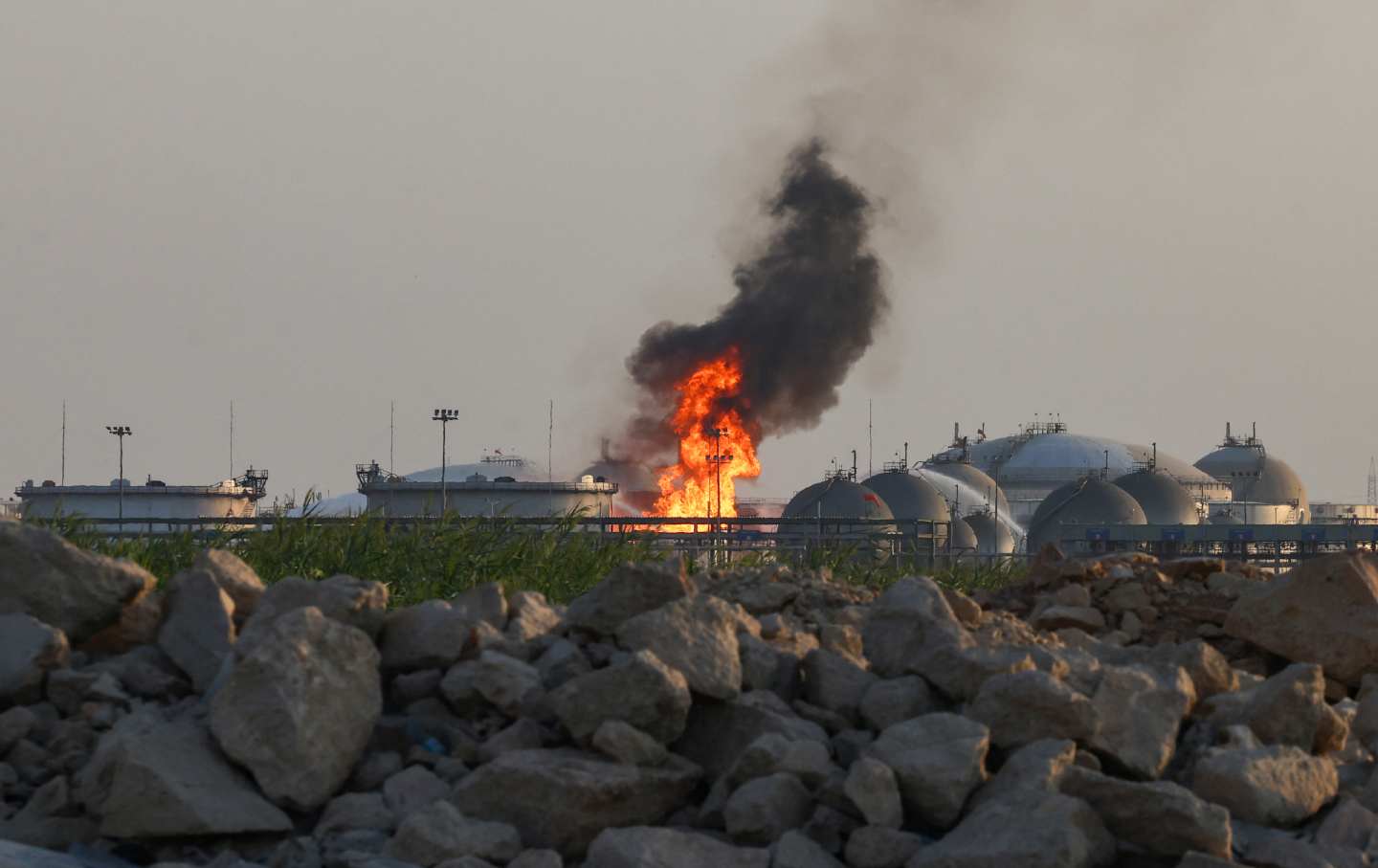
The Saudi Phase of the Iran War Signals More Chaos to Come The Saudi Phase of the Iran War Signals More Chaos to Come
The conflict that Donald Trump has repeatedly proclaimed an unequivocal American victory keeps spiraling out of control.

