
What North Korea Can Tell Us About America’s Future
Trump and Kim have something in common: their desire for total control.
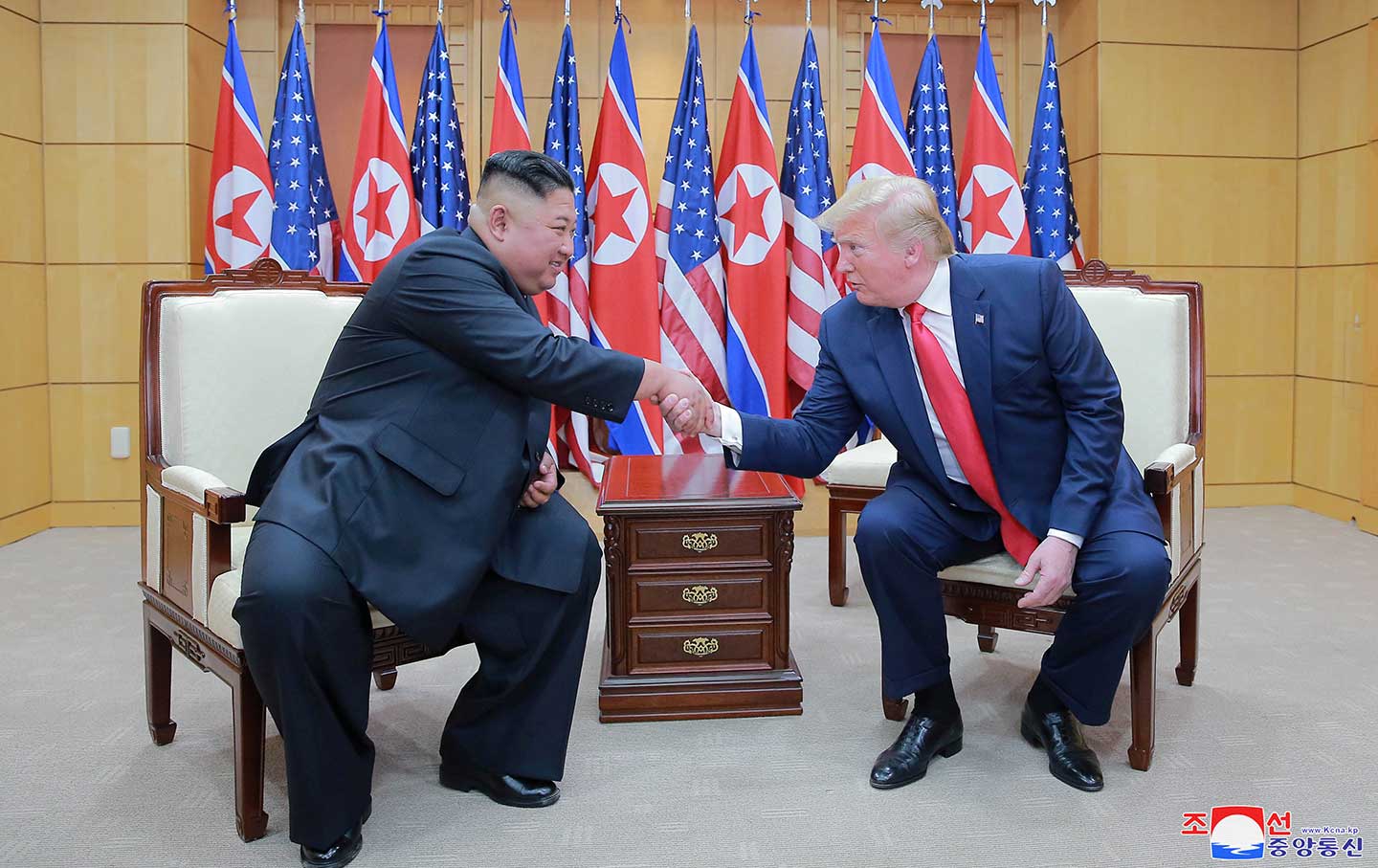
US President Donald Trump and North Korean leader Kim Jong Un shake hands during a meeting at the demilitarized zone in Panmunjom, South Korea, June 30, 2019.
(KCNA via Reuters)This article originally appeared at TomDispatch.com. To stay on top of important articles like these, sign up to receive the latest updates from TomDispatch.com.
Ever since North Korea suffered through the death of its first leader in 1994, a loss magnified by an economic collapse and a devastating famine, outside observers have likened the country to an airplane experiencing a serious malfunction. The major question they posed: In the end, would North Korea experience a soft landing or a catastrophic crash?
Perhaps a reformer would come along—say, a North Korean version of Soviet leader Mikhail Gorbachev—who could right the airship of state and guide it toward the runway of reunification with South Korea.
More direly, the North Korean regime could collapse all of a sudden, like the Communist governments in Eastern Europe in 1989. Those were relatively peaceful affairs, but North Korea’s worst-case scenarios might involve violent power struggles, the return of famine, and a free-for-all scramble for the country’s loose nukes. US analysts have gamed out the consequences of just such a hard landing—and so has the Pentagon with its OPLAN 5029—and they all add up to a tragedy not only for North Koreans and the region, but also potentially for the United States and the rest of the world.
The North Korean government has, however, defied such scenarios by somehow surviving, while rejecting reunification with the south and turning up its nose at conventional versions of reform. Despite additional challenges—a sustained Covid quarantine, several distinctly hostile governments in South Korea, and a flatlining economy—the regime has so far avoided collapse and, if anything, tightened its control over its population. For the time being at least, the North Korean plane evidently has no intention of landing, much less crashing.
Today, in an improbable plot twist, however, Donald Trump’s United States is starting to seem ever more like an aircraft in distress.
After all, the present pilot of Air America, exhibiting signs of psychosis or perhaps dementia, has begun to dismantle the cockpit under the delusion that it’s his to transform into a ballroom. The crew—and indeed much of the supporting infrastructure on the ground below—has been decimated by budget cuts. The airline itself is fast taking on debt. Many of the passengers are praying for a soft landing and hoping that, if the plane does touch down for a risky layover, they will get a new pilot.
But another fear lurks in the background. Given the state of the airplane—a malfunctioning altimeter, compromised landing gear—it might not matter who the pilot is anymore. Air America may well be heading for a crash landing regardless of who’s in charge.
Those of us on board, gripping our armrests in terror, are asking ourselves one question above all else: Is it too late to avert catastrophe?
Trump’s Totalitarian Tendencies
North Korea has come closer than any country in the modern era to building a totalitarian state. Beginning with the country’s founder, Kim Il Sung, its leadership has eliminated all oppositional politics, suppressed virtually all signs of civil society, and tolerated no freedom of the press, speech, or assembly. Nor is there any freedom of religion, unless you count the personality cult attached to the Kim family leadership, which is now in its third generation.
But all totalitarianism is aspirational. The Soviet Union had its dissidents and underground samizdat literature. The Confessing Church movement attempted faith-based resistance to the Nazis. Likewise, the North Korean government’s control over the population is not total, as can be measured by rising levels of private enterprise and covert enthusiasm for South Korean culture.
So, too, are Donald Trump’s totalitarian tendencies aspirational. He would like to achieve total control, but he’s hemmed in by institutional limits. Still, he prefers to bypass Congress with rule by executive decree. He has attempted to control the media, rein in the power of universities, and tilt the electoral playing field to benefit his party. He has aligned himself internationally not with democrats but with autocrats. He has had a particular fondness for authoritarian leaders like Benjamin Netanyahu of Israel and Javier Milei of Argentina who consolidated their power within democracies. But he has also gotten cozy with the likes of Saudi Arabia’s Mohammed bin Salman, who doesn’t bother at all with elections.
The most inexplicable friendship Trump developed while in office is certainly with North Korea’s Kim Jong Un, the founder’s grandson. Having traded escalating threats during part of Trump’s first term in office, the two leaders grew closer after several in-person meetings and a raft of exchanged letters. “I was really being tough,” Trump explained in 2018. “And so was he. And we’d go back and forth. And then we fell in love. OK? No, really.”
Really, the only way to explain such an attraction of opposites—an elected US leader and the North Korean dictator—is to point out that the two distinctly have something in common: their desire for total control. Whether intentionally or not, Trump has applied some of the features of the Kim family playbook to his own governing style. In doing so, he has also damaged, perhaps irreparably, the very idea of America.
Different Beds, Same Dreams
One of the key elements of North Korean politics is the personality cult of the Kim family, which casts a long shadow over the country’s culture. Drawn in part from northern Korea’s earlier Christian heritage—through the development of a trinity of founding figures, the 10 commandments of Kimilsungism, and pervasive themes of sacrifice and redemption—that personality cult has generated so much fervor among many North Koreans that even defectors have spoken of their pride in founder Kim Il Sung and his ideology.
Trump, too, has tried to construct such a personality cult—by placing his name on public buildings (the Kennedy Center), putting his face on US coins (the semiquincentennial dollar), inserting his image in future passports, and planning a golden statue of himself at his presidential library that resembles one of Kim Il Sung in Pyongyang. So far, however, outside of the MAGA faithful, his cult seems to have generated little more than ridicule.
Another aspect of Pyongyang’s governance that probably attracts Trump is its overemphasis on the military. North Korea devotes 34 percent of its gross domestic product to military spending (compared to Russia at 6 percent and the United States at under 4 percent). Although it hasn’t launched any wars of its own for more than 75 years, Pyongyang has dispatched thousands of troops to help fight Russia’s war in Ukraine. Since the 1990s, the government has spoken of a songun—military first—doctrine to justify the sacrifices made to maintain a huge standing army, a range of missiles, and a small but significant nuclear arsenal.
Similarly, the prevailing theme of Trump’s second term has been war and military spending. Despite his once-upon-a-time promises not to become involved in “forever wars,” particularly in the Middle East, Trump joined Israel this year in an attack on Iran, a conflict that cost over $11 billion in its first week alone. He has proposed an astonishing $1.5 trillion military budget, an increase of 50 percent over last year’s already bloated total, and that sum doesn’t even include the costs of the Iran War.
Then there’s Trump’s economic thinking, if you can call it that. He has repudiated the free-market orthodoxy of his fellow Republicans to embrace a form of economic nationalism: high tariff walls to reduce trade imbalances, a focus on rebuilding American manufacturing, and the repudiation of international rules of the road (like the UN Convention on the Law of the Sea) in order to drive a dagger into economic globalization. In such respects, Trump’s approach resembles North Korea’s path of import substitution and defiance of the international rule of law.
In North Korea’s case, such an economic strategy has been partly born of necessity, given the economic embargo imposed on it after the Korean War of the early 1950s. Trump, however, is steering the US economy into a tailspin without provocation. If you add together the costs associated with his kamikaze tariffs, the follow-on effects of the Iran War and boosts in military spending, the gutting of government programs investing in the economy, the watering down of environmental regulations, and reductions in government revenue because of tax cuts, Trump is guiding the United States toward the kind of triple whammy that hit North Korea in the 1990s, when environmental disasters and political criminality combined with rising energy prices to bring its manufacturing and agricultural sectors to a virtual halt, while killing an estimated 1 million people.
But, you might point out, Wall Street is still on an upward ascent. The US economy is still growing, however modestly, and, while US food insecurity is rising, famine isn’t on the horizon. To return to the airplane analogy, the in-flight experience has become more uncomfortable for those who can’t afford business class, but that doesn’t mean a crash is imminent.
Or does it?
A Soft vs. Hard Landing
Whether he is consciously modeling his efforts on North Korea or not, Donald Trump wants to make an indelible imprint on the United States. He aspires to fundamentally change the demographics of the country, the structure of the economy, and the nature of its politics. To do that, he aims to ensure that his MAGA personality cult, his anti-government crusade, and his self-defeating economic policies outlive his own tenure in office. That will certainly require a substantial dismantling of democratic safeguards given that such policies don’t attract majority support.
In other words, much as Kim Il Sung destroyed anything that could have challenged his authority—the church, the intelligentsia, landowners, rival political factions—Trump has now launched a scorched-earth policy to ensure that his successors can’t undo his damage. If the Democrats regain Congress in November and even the White House in 2028, they will inherit an enormous bill for Trump-era damages (and count on a chorus of Republican voices improbably blaming them for the disaster).
Any incoming reformers will face an uphill battle to convince the public to restore funding for infrastructure, whether green or otherwise. And they will have to deal with a terrifying erosion of faith in government, resulting from the incompetence, lies, and malpractice of the Trump administration. At the international level, US allies will think twice about concluding any deals with this country, given the possibility of another political swing in subsequent elections.
Trump’s tactics, in other words, are designed to make a soft landing ever more difficult. An inveterate gambler, he is betting that his extreme approach will enable Air America to climb into the very stratosphere, even if he is far more likely to force an emergency landing.
Nightmare scenarios have long haunted American consciousness. The sheer size of the US debt— at nearly $40 trillion, it’s the highest absolute amount in the world—could put the country into receivership if the dollar slips from its status as the global currency. Default could tear apart an already polarized society. Such a hard landing could look like what analysts of North Korea have often predicted for that country.
But North Korea hasn’t collapsed. With its considerable resources, surely the United States, too, can avoid such a scenario.
True, no one is going to make any money at Polymarket predicting the imminent fall of the Kim regime. But North Korea is not exactly following a recipe for long-term success either. Even if it limps along for another decade or two, with leadership passing to Kim Jong Un’s teenage daughter, any country that follows its policies of personality cult, autarkic economic policies, massive corruption, military-first approaches, and ruthless suppression of dissent is not likely to prosper over the long term. Just look at how Vladimir Putin has steered Russia into a terrifying nosedive.
Popular
“swipe left below to view more authors”Swipe →Substantial reform could head off such a scenario for the United States. If Trumpism can be likened to a devastating depression (which it could still precipitate), the obvious recourse for any successor would be to embark on an immediate course correction comparable to President Franklin D. Roosevelt’s New Deal. Whatever it’s called—not a Green New Deal, given the irrational resistance of a large section of the US electorate to anything “green” except greenbacks—such an American renewal plan would need to restructure the US economy to favor the bulk of American workers rather than the current generation of robber barons. Implemented with a much better promotional campaign—led perhaps by future Chief of Reconstruction (and now New York Mayor) Zohran Mamdani—it would link concrete benefits to identifiable government programs and services. It would offer a striking real-life illustration of your tax dollars at work.
Such a reform plan would have to restore trust in government by punishing corruption, enlisting the public as watchdogs, and taxing the super-wealthy into semi-submission. By shifting away from war and aggressive military spending, such a project of renewal would also have to work with partners overseas to promote policies of cooperative prosperity and sustainability in order to restore a measure of trust in US actions globally. Soft landings require soft power, leaving hard power to those determined to crash and burn.
The North Korean case is a reminder that awful policies may not themselves precipitate collapse. Trumpism will not go away simply because it is on the verge of winning multiple Darwin Awards for its counter-evolutionary policies. Having hijacked American democracy, Trump and his cronies are under the impression that they are flying ever upwards, but they have not been blessed with a good sense of direction. Sheer inertia could keep Air America in the air—though with steadily deteriorating conditions on board (as in North Korea). Such a “MAGA ‘til we drop” option would not be much of an improvement over a hard landing.
In 2016, archconservative Michael Anton published a piece in the Claremont Review of Books arguing that it was Hillary Clinton and the Democrats who had hijacked America. In “The Flight 93 Election,” Anton imagined that Trump, aided by an energized electorate, could rush the cockpit—just like the passengers on Flight 93, hijacked on September 11, 2001—and save the country. (It was certainly an infelicitous analogy, given that Flight 93 crashed into a field in Pennsylvania.) Trump’s 2016 victory, however, turned Anton into a dark prophet and vaulted him into the subsequent administration, despite (or because of) the absurdities of his arguments.
In yet another stomach-churning reversal, Anton’s analogy has now finally become all too applicable. Trump has gained the cockpit not once but twice. Having failed to crash Air America the first time around, he seems determined to put his Flight 93 doctrine of heroic self-destruction into practice today. There is no guarantee that a hard landing can be avoided either now or after his departure from office. But this country, its egalitarian ideals, and its democratic traditions (if not much of its dismal history) are certainly worth fighting for.
We’re losing altitude fast. Elections approach.
Let’s roll.
Become a Sustaining Donor This September
Between the reemergence of right-wing red-baiting and Donald Trump’s use of the chilling National Security Presidential Memorandum–7 to criminalize left political organizing, we’re seeing McCarthyism reborn before our eyes.
This assault on democracy cannot be ignored or wished away. Resisting it requires bravery in the face of threats and repression, a steadfast commitment to the truth, and the unwavering belief that we can—and will—overcome this darkness.
We must have an independent media that sets the record straight, unearths corruption and abuses of power, and advances a politics of justice and dignity for all if we’re to win this fight.
That’s why I’m writing to you today. This September, The Nation needs to add 100 monthly donors to sustain our progressive journalism. Your contribution makes the next investigative report, the next truth-speaking column, and the next pathbreaking essay all possible.
I hope you’ll support our work with a recurring donation today. If you donate $10 or more a month, we’ll send you a brand new “Hands Off the Free Press!” sticker to recognise your commitment to our cause. Please, donate today.
Onward,
Katrina vanden Heuvel
Editor and Publisher, The Nation
More from The Nation
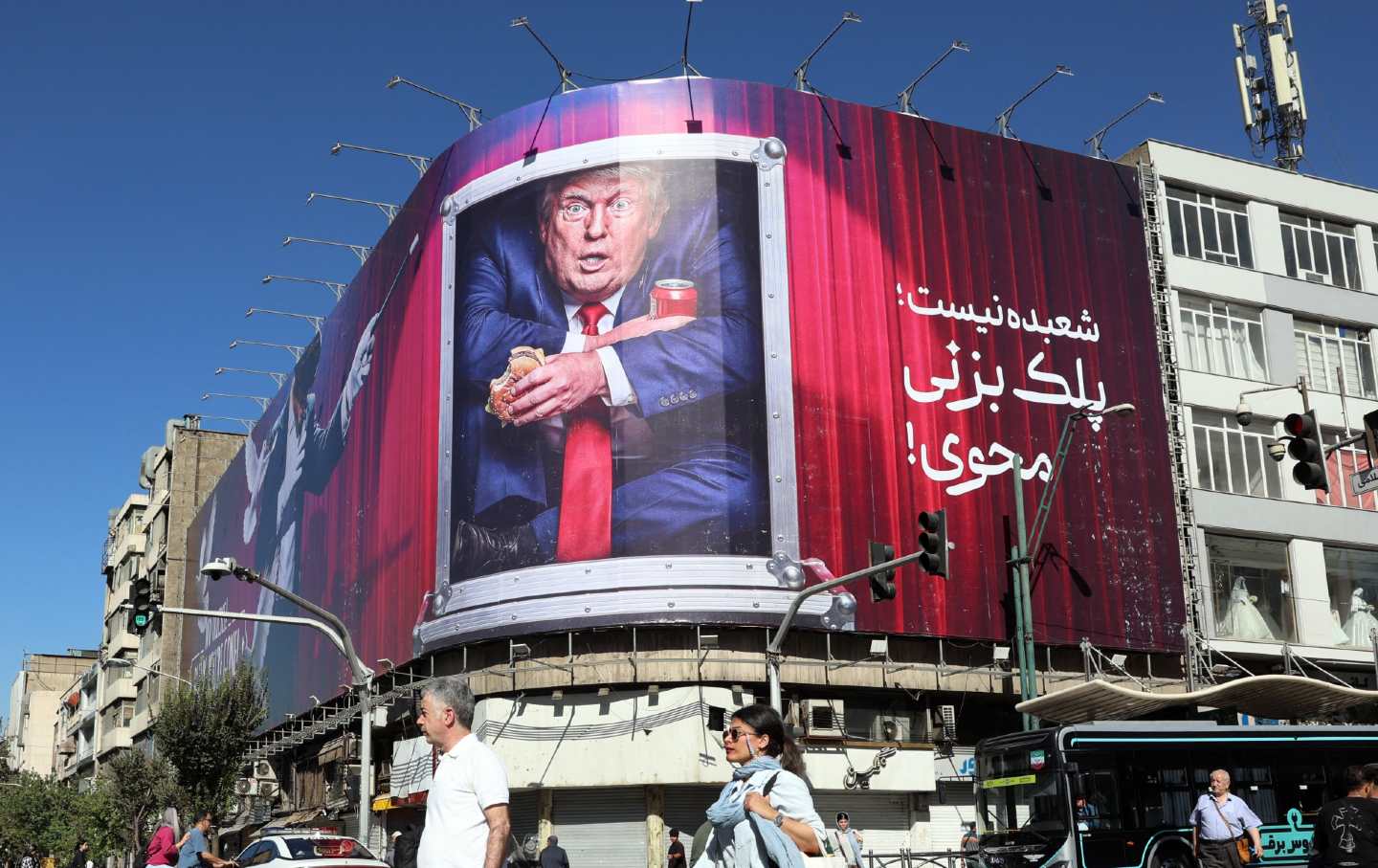
The Decades-Old Roots of Trump’s War on Iran The Decades-Old Roots of Trump’s War on Iran
An interview with historian Behrooz Ghamari-Tabrizi about the generations of US presidents who have tried to destroy the Iranian regime.
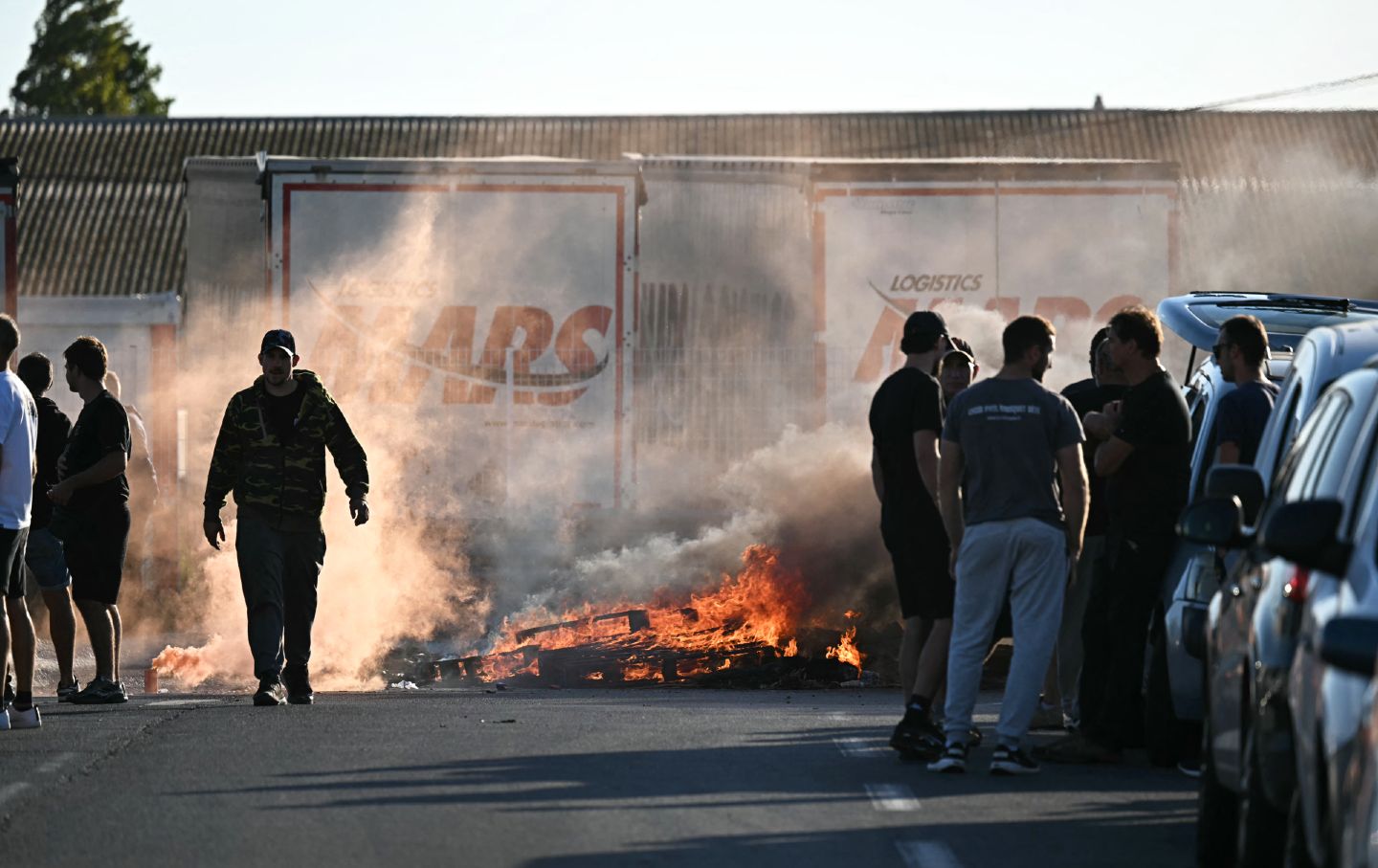
Emmanuel Macron’s Turbulent Exit Emmanuel Macron’s Turbulent Exit
Between a budget crisis and a cost-of-living squeeze, Macron is leaving a country feeling more insecure than ever—and ready to take to the streets.
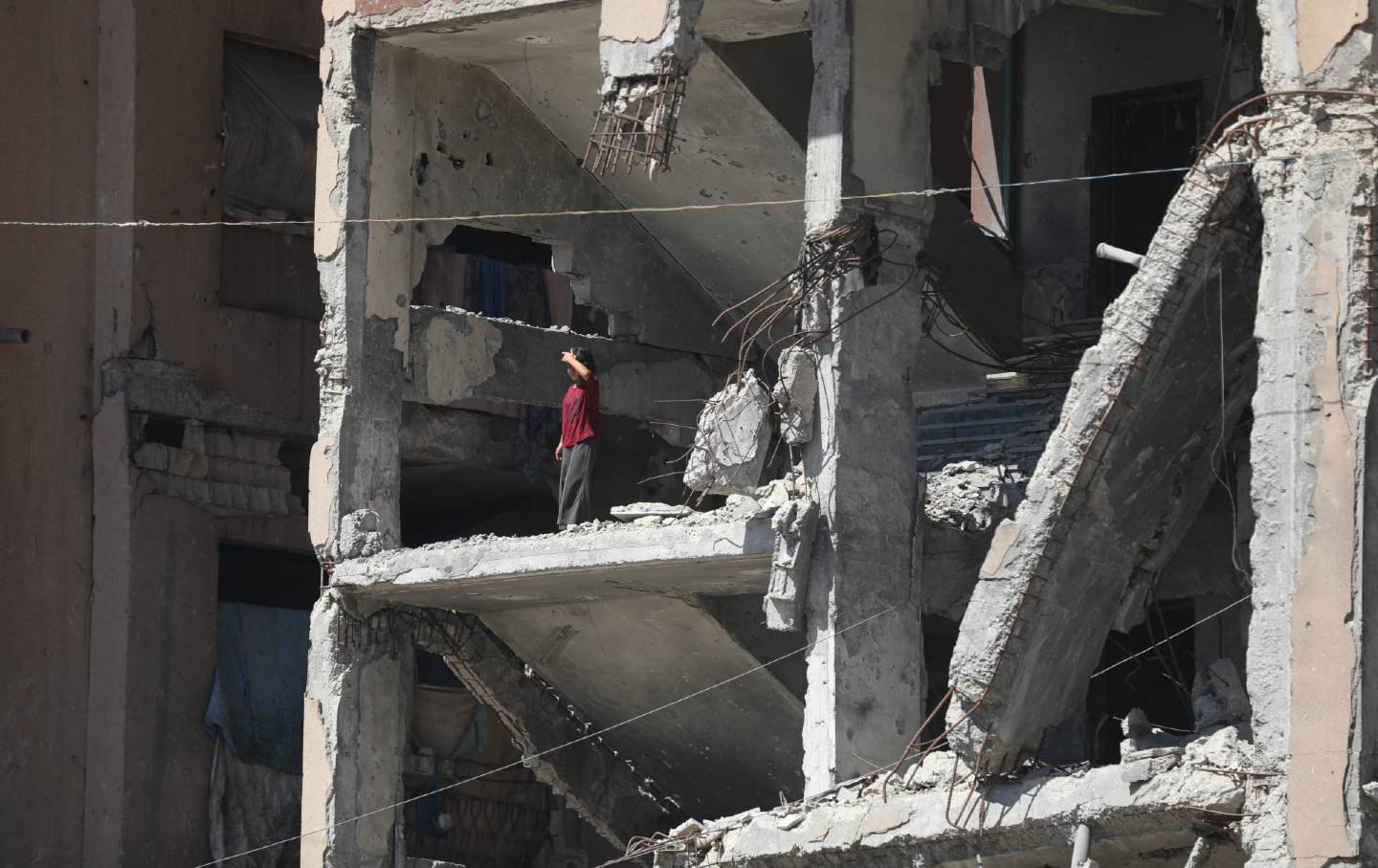
Israel’s Election Can’t Fix What Netanyahu Broke Israel’s Election Can’t Fix What Netanyahu Broke
The fundamental problem is not the name of the prime minister, but rather the actions of the Israeli government and the urgent issues that need to be addressed.
The AfD’s Rise Isn’t Just About East Germany The AfD’s Rise Isn’t Just About East Germany
The Alternative für Deutschland has a stable national poll lead, including in the former West Germany. Its rise owes to much more than Eastern grievances.
Chinese Development Is the Betrayal Washington Cannot Forgive Chinese Development Is the Betrayal Washington Cannot Forgive
The prospects for Xi Jinping’s visit are dim because American leaders are blaming China for the failures of globalization.

Pinochet: The Verdict of History in the Letelier-Moffitt Case Pinochet: The Verdict of History in the Letelier-Moffitt Case
An act of international terrorism on the streets of Washington, DC, still reverberates 50 years later.

