
Germany’s Suddenly Turbulent Election
In the wake of Trump’s victory—and his administration’s transformation from staunch ally to sneering adversary—Germany’s firewall against the far right is beginning to crack.
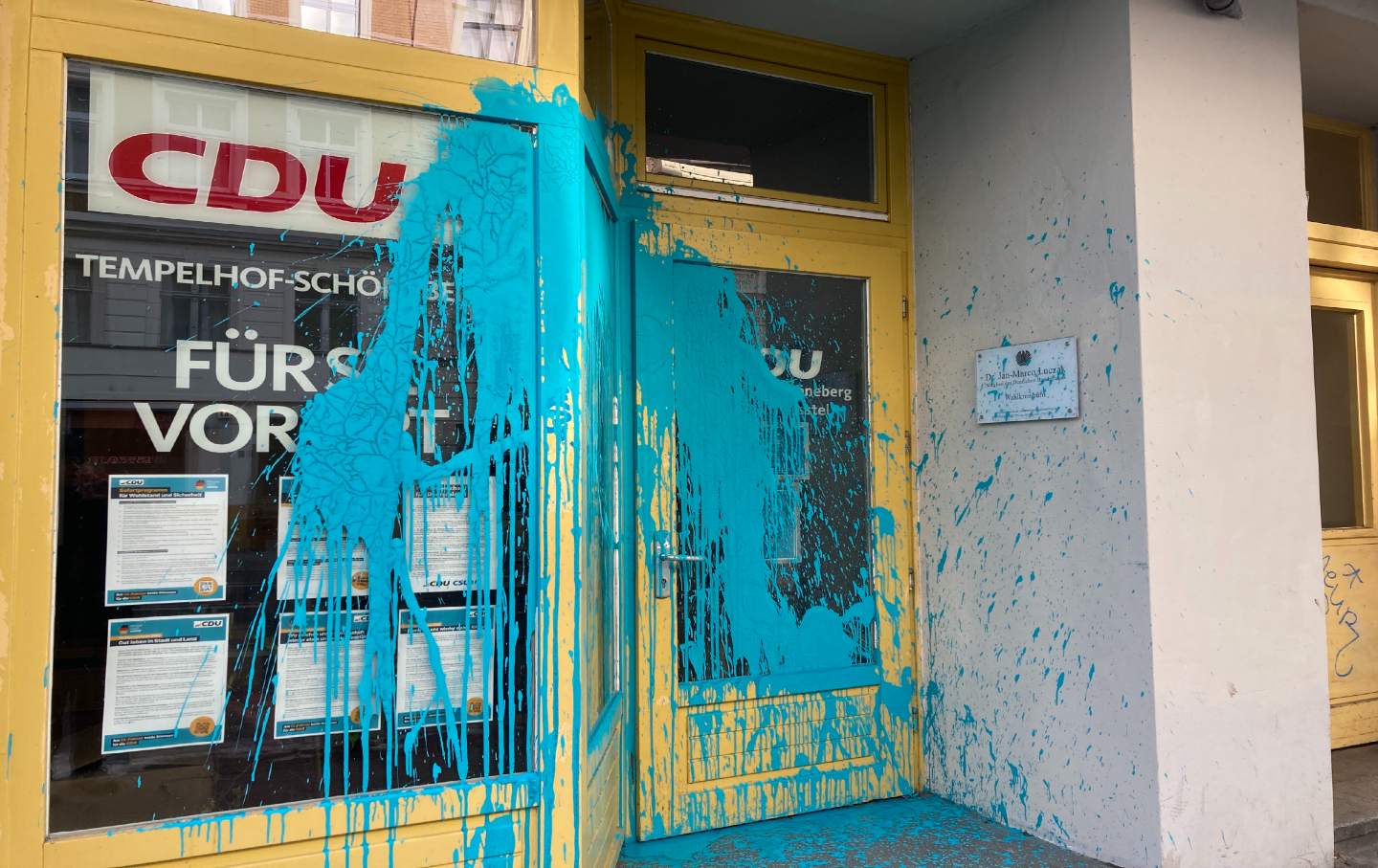
Berlin—Even before German federal elections were scheduled to take place this Sunday (February 23), the outcome seemed predictable. Friedrich Merz, the leader of the center-right Christian Democratic Union (CDU), would become chancellor. His party would form a coalition with the center-left parties—the Social Democratic Party (SPD) or the Greens or both. Every postwar government in Germany except for one has been a coalition government, and this has provided the country with a remarkable amount of stability. The only party that would never be included in a coalition, was the far-right Alternative for Germany (AfD). They were excluded by the “firewall”—an agreement among the other parties to refuse to collaborate with the AfD on anything. But on January 29, Merz cracked the firewall, introducing an anti-migrant resolution in the Bundestag that passed only thanks to support from the AfD.
The response from politicians, pundits, and the general public was volcanic. “The consensus that democratic parties do not cooperate with the extreme right was broken today,” Chancellor Olaf Scholz said. Condemnation came from figures in nearly all political parties, including Merz’s own. Former chancellor Angela Merkel even issued a rare public statement to say she considered it wrong “to knowingly allow a majority with AfD votes in the Bundestag for the first time.”
Protesters swiftly began taking to the streets across Germany, with over a million collectively protesting the far right. And the membership of center and far-left political parties shot up, with Die Linke (The Left)—once considered to be politically dead—measuring its highest number of members in 15 years, 17,470 new members registering the same day that Merz and the AfD cooperated. When the next stage of adopting the anti-migrant legislation failed a few days later, it was because some members of Merz’s own party refused to support it.
It seemed, during the week following, that a governing coalition between the CDU and the SPD or Greens was no longer possible. But given the opinion polls, like the one published on February 18, it is the only possibility, with support for the CDU/CSU at 30 percent, the AfD at 20 percent, the SPD at 16 percent, the Greens at 13 percent, Die Linke at 7 percent, the FDP at 5 percent, BSW (Sahra Wagenknecht Alliance, a new party whose members broke away from Die Linke) at 4 percent, and others at 5 percent.
The AfD, founded in 2013, is currently under observation by Germany’s domestic intelligence agency for suspected right-wing extremism, and three of its state branches have been designated “proven right-wing extremist” and are most popular in states that were part of the former East Germany.
The danger that an antidemocratic, racist, nationalist party poses is of course not merely theoretical in Germany. It is something recalled again and again—in speeches, at commemorative events, and through memorials that recognize the victims of National Socialism. Some critics of Germany’s “memory culture” have assessed it as less than genuine, a pose. This misunderstands its impact and meaning. Germany’s memory culture might be flawed and not always in line with the times, but in 2025, it is something that very much shapes the culture and voters’ decisions.
Merz, who attempted to become party leader twice before finally succeeding, wants to shift the CDU to the right of the political spectrum after Merkel, his longtime rival, brought it closer to the center. The CDU leader has signaled his anti-immigration positions for as long as he’s been in politics—which is to say for most of his life.
In the past few months, a series of violent attacks instigated by men who arrived in Germany as asylum seekers have dominated the news. Research has shown there is no correlation between an increase in migration and an increase in crime. But the attacks have been brutal and devastating, and Merz is one of the politicians whose reflex is to highlight his anti-immigration stance. German voters themselves don’t appear to prioritize controlling migration. A recent poll showed that they are most concerned about peace and security (48 percent), the economy (41 percent), and social justice (40 percent). Concerns about refugees and asylum policy came fourth (27 percent), just ahead of climate protection (23 percent).
The AfD’s strongest relationship with a political party so far is with US Republicans and Trump administration officials. Elon Musk has boosted the AfD on Twitter/X, addressed an AfD rally by video, and interviewed AfD leader Alice Weidel on his podcast. , At the Munich Security Conference earlier this month, JD Vance privately met with Weidel while rebuffing a meeting with the Chancellor Olaf Scholz, and during a 22-minute speech claimed that Germany was “dismissing voters’ concerns, shutting down their media,” and destroying democracy. In reality, 79 percent of German voters view the AfD negatively, and 71 percent said they agreed with the statement that the AfD is a threat to democracy. Vance’s speech, a US commentator observed, “was all for US domestic consumption.”
Germany’s relationship with the US is complex. The first question you have to answer when thinking of postwar relationships between the countries is: East or West? West Germany, rebuilt by the US both physically and politically in the post war era, was closely aligned with America up until the first Trump presidency beginning in 2017. The scale and velocity of the Trump administration’s latest interventions might be startling, but the general direction of it should not be a surprise.
The Trump administration’s statements have indeed had an impact on the elections—but probably not the one it had anticipated.
At a televised debate on February 16, AfD leader Alice Weidel was ridiculed by the other candidates. Hapless and unable to articulate the policies her party stands for, she suggested the it was up to the Federal Police to decide how to seal the country’s borders; she was only a politician. Weidel might be proud of Vance’s support for her, but that support amounted to interference in Germany’s elections, Merz pointed out. “All in all,” wrote commentator Nicholas Richter in Sueddeutsche Zeitung, the other party leaders “looked as if their parties could at least get along again after the election.” Which would mean they could form a coalition after all, with Weidel standing as a warning of what might happen if they don’t.
Germany is an outlier in political terms—while country after country has normalized the far right, Germany has not. It is not that Germany is immune to the far right. It is that, so far, the vast majority of politicians and civil society have prioritized opposing the far right strategically and pragmatically, often joining together with those they have little else in common with aside from opposition to right-wing extremism.
Popular
“swipe left below to view more authors”Swipe →The polls have not changed in any significant way since Scholz called for a confidence vote in the Bundestag on December 16, knowing this would pave the way to a general election his party would be unlikely to win. Support for each party has held fairly steady—a point up here, a point down there—save for Die Linke, which is now appears to have eked out enough support to meet, and possibly surpass, the 5 percent threshold needed to enter parliament again. Yet a weakness has been revealed. Merz may have regretted his choice, and the public response might have chastened him, but the country’s likely next chancellor showed poor judgement. And with a former ally—the United States—now transformed into a threat, Germany’s need for solid and principled leadership is greater than ever.
More from The Nation
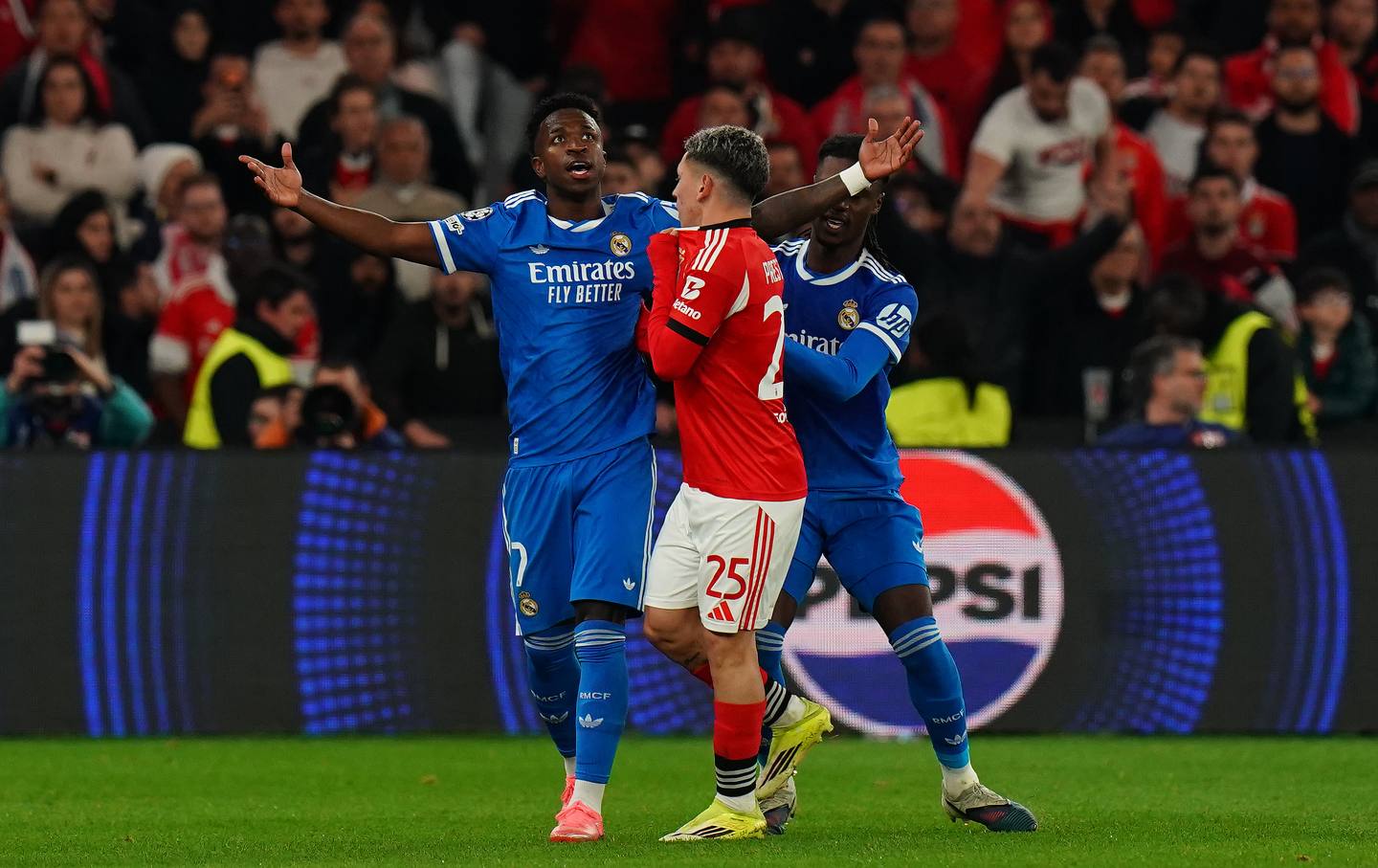
The Price of Being Black and Proud in European Soccer The Price of Being Black and Proud in European Soccer
The Brazilian star Vinicius Jr. has repeatedly been a victim of racist abuse from soccer fans. Now, it seems such vitriol can even come from players without much consequence.
Four Years: The Human Cost of the Invasion of Ukraine Four Years: The Human Cost of the Invasion of Ukraine
February 24 marks four years since Russia’s full-scale invasion of Ukraine. According to a recent analysis, combined military casualties (killed, wounded, or missing) could reach n...
Rubio, Rodeo, and Tall Tales of Empire Rubio, Rodeo, and Tall Tales of Empire
The secretary of state has provoked the ire of Britain’s first black woman lawmaker and put the spotlight once again on how the US has historically treated people of his own herit...
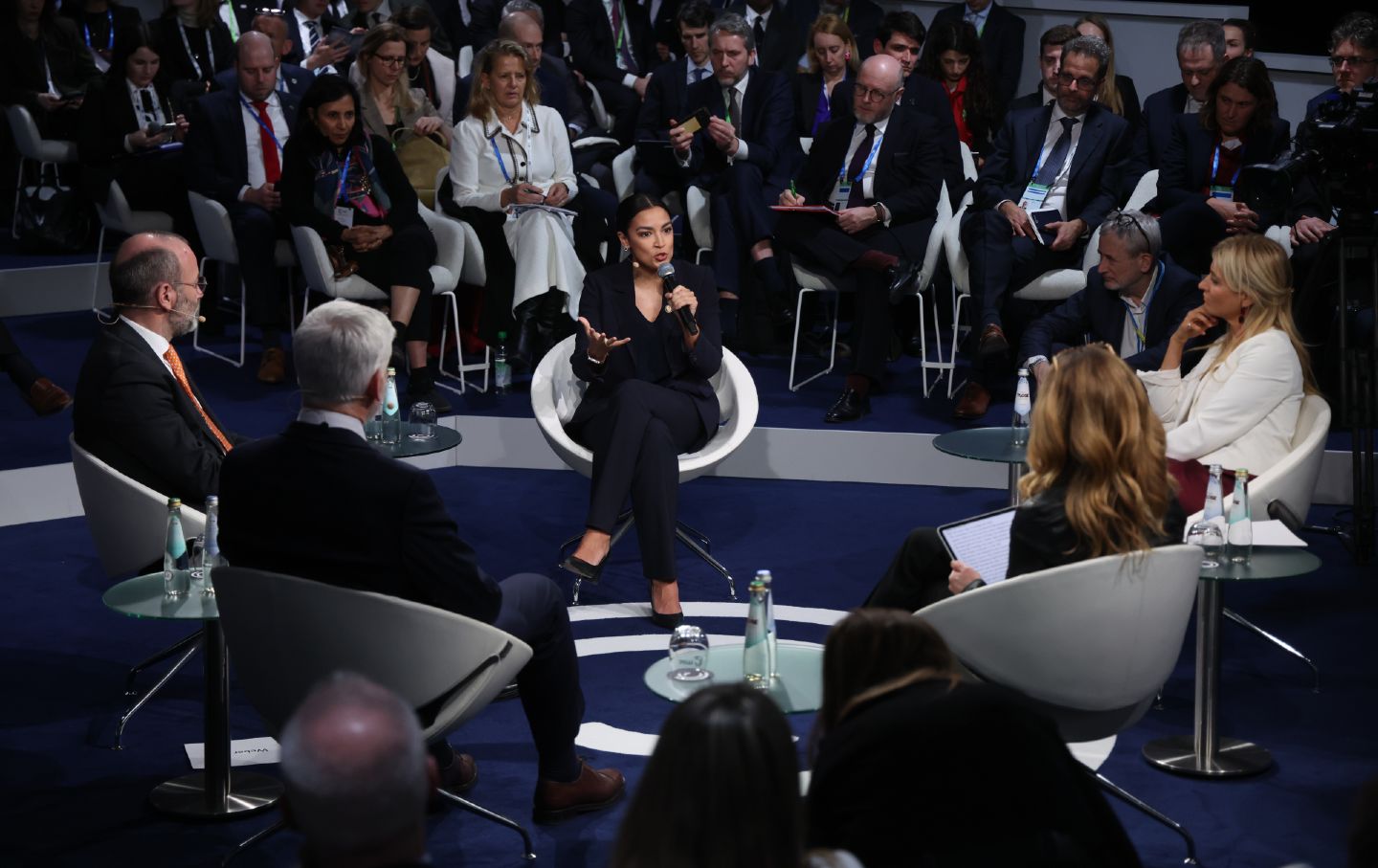
The Munich Security Conference Marks the End of the US-Led Order The Munich Security Conference Marks the End of the US-Led Order
US politicians flooded the summit—but Europe no longer sees the United States as a reliable partner.
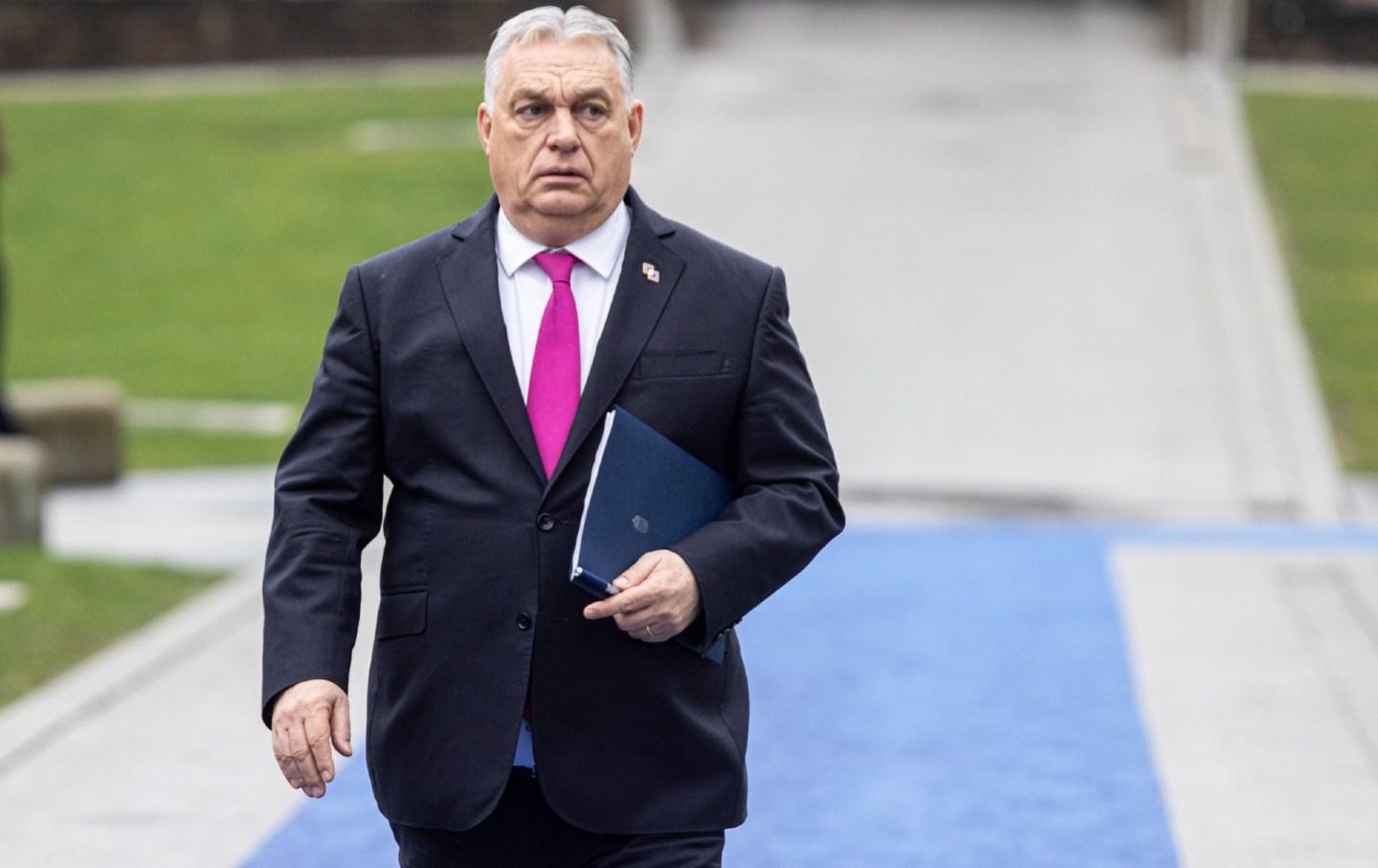
Is This Viktor Orbán’s Last Stand? Is This Viktor Orbán’s Last Stand?
After 16 years in power in Hungary, his Fidesz party is trailing in the polls by double digits behind a new opposition party.
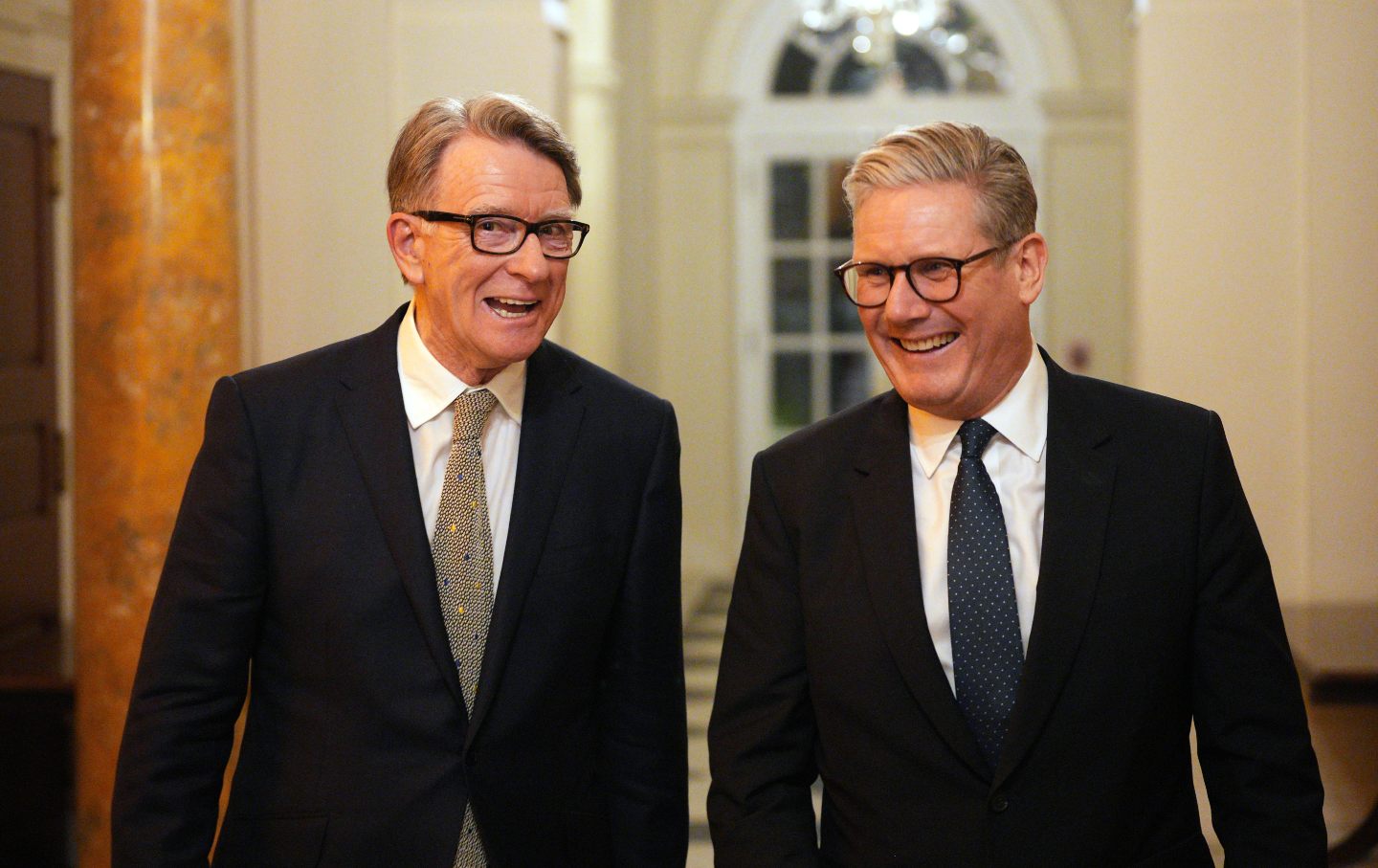
The UK’s Epstein Crisis The UK’s Epstein Crisis
If Keir Starmer is safe for now, it’s only for lack of alternatives within his party.

